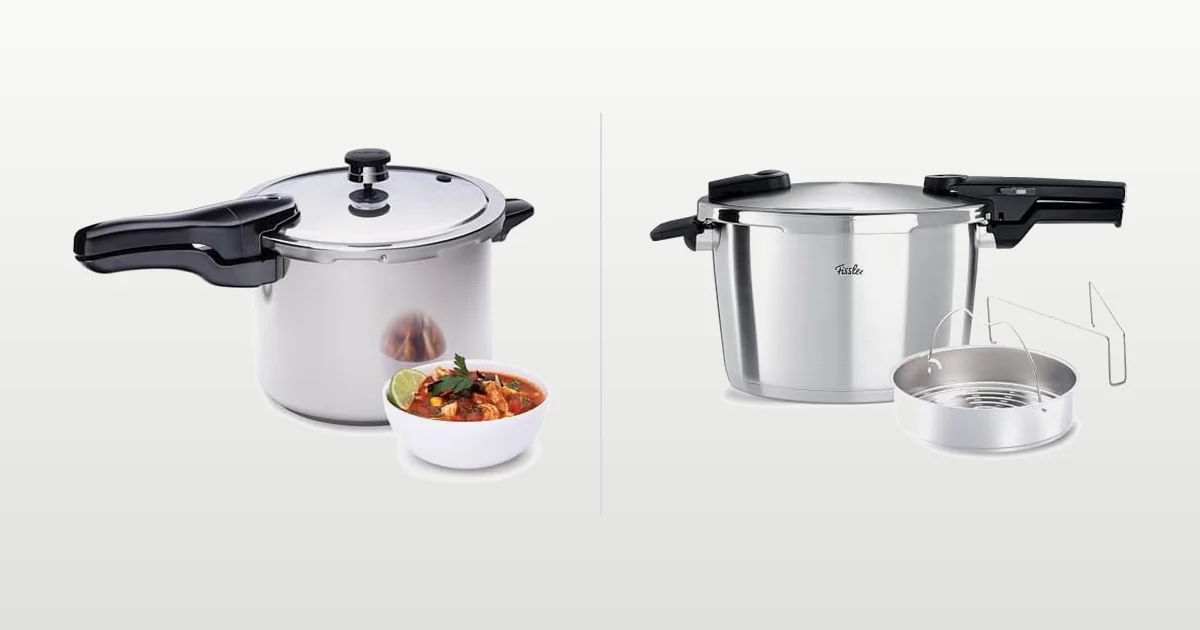
Affiliate Disclosure: As an Amazon Associate, we earn from qualifying purchases. This does not affect the price you pay.
Before anything else, check what your hob is. It decides which half of this page you can buy from.
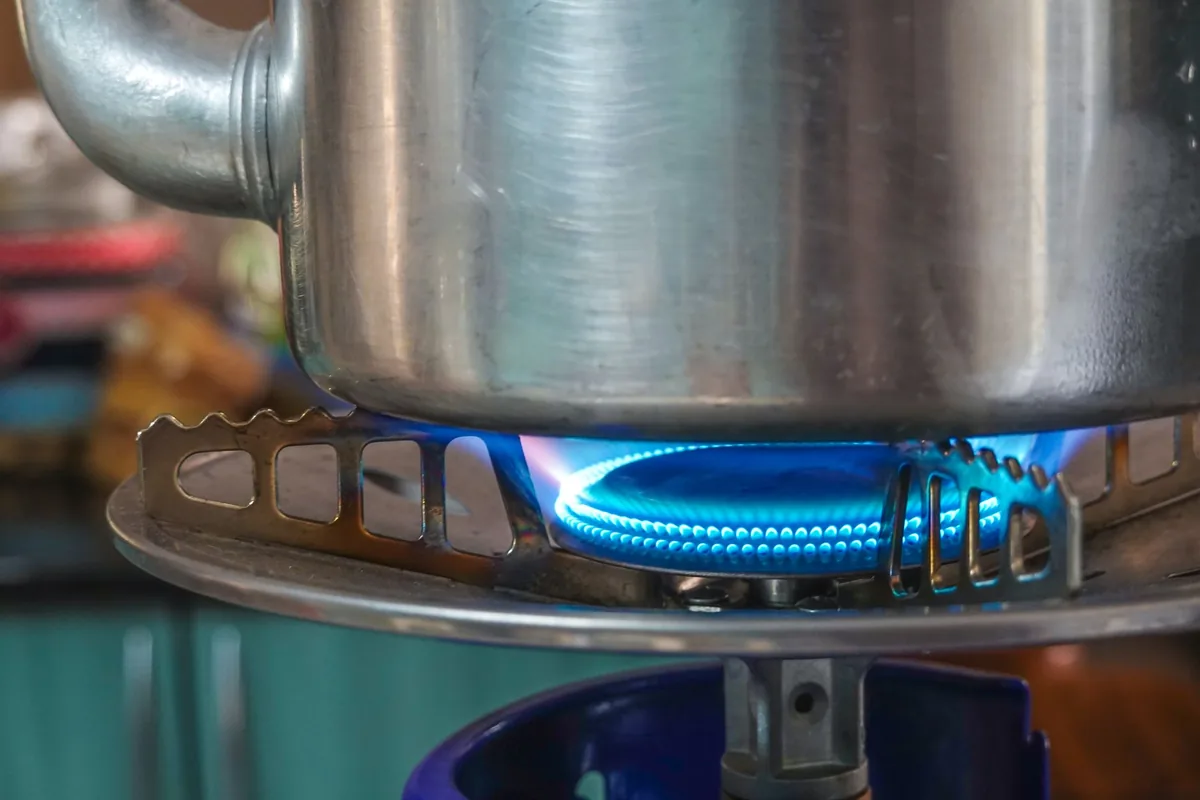
An induction hob heats by inducing a current in the pan itself, which requires a ferromagnetic base. Stainless steel has one. Aluminium does not. An aluminium pressure cooker on an induction hob does not cook slowly or unevenly — it sits there, cold, and nothing happens at all.
Four of the ten cookers here are aluminium, and they are the four cheapest. Not one of their listings mentions induction, in either direction. The single cooker on this page that states its hob compatibility outright is the Presto 01362: “ideal for use on regular, smooth-top and induction ranges”.
That matters more every year, because induction is displacing gas in new kitchens. It also cuts the other way: aluminium conducts heat around three times better than stainless, which is exactly why it survives in a category where beans scorch on the base and cannot be stirred.
Ten stovetop pressure cookers below, from $34.99 to $379.95, sorted by the specification that decides whether yours will work at all.
Our Quick Picks
 Best OverallPresto 01362 6-Quart Stainless
Stainless steel, explicitly rated for induction, with a cover lock that will not let you open it under pressure — the specification stated in full.
 Most Safety DetailKOBACH 8-Quart Stainless
Three independent steam outlets, an 8-quart capacity and the one thing nothing else here publishes — an operating pressure figure.
 Best BudgetIMUSA 4.2-Quart Aluminium
The aluminium olla de presion that has been a kitchen staple for generations, at $48.71.
At a Glance
Ten Stovetop Pressure Cookers, Compared by Hob
Capacity, what the pot is made of, whether it will work on your hob, and the one specification each listing chose to publish.
| # | Model | Capacity | Material | Hob | Detail | Standout | Main Drawback | Check Price |
|---|---|---|---|---|---|---|---|---|
| 1 |
 Presto 01362 6-Quart Stainless Presto 01362 6-Quart Stainless |
6 qt | Stainless steel | Induction, stated | Cover lock indicator | The only listing here naming induction compatibility outright | No pressure figure in psi published | View on Amazon |
| 2 |
 T-fal Clipso 6.3-Quart T-fal Clipso 6.3-Quart |
6.3 qt | Stainless steel | One-hand lid | Five-point safety | A lid that opens and closes with one hand | Induction not explicitly stated | View on Amazon |
| 3 |
 KOBACH 8-Quart Stainless KOBACH 8-Quart Stainless |
8 qt | Stainless steel | Three steam outlets | 17 psi stated | The only cooker here publishing an operating pressure | Unfamiliar brand at a mid price | View on Amazon |
| 4 |
 T-Fal Secure Trendy 8.5-Quart T-Fal Secure Trendy 8.5-Quart |
8.5 qt | Stainless steel | Secure locking | Large batch | The largest stainless cooker here at 8.5 quarts | $129.95 and no psi figure | View on Amazon |
| 5 |
 Fissler Vitaquick 8.5-Quart Fissler Vitaquick 8.5-Quart |
8.5 qt | Stainless steel | German engineering | 70% faster claim | German-made, with a stated nutrient retention claim | $379.95 — nearly four times the median | View on Amazon |
| 6 |
 Peterboo 6.34-Quart Stainless Peterboo 6.34-Quart Stainless |
6.34 qt | Stainless steel | Standard | Mid capacity | Stainless at 6.34 quarts for under seventy dollars | Very little published beyond capacity and material | View on Amazon |
| 7 |
 Universal Ultra 4.75-Quart Universal Ultra 4.75-Quart |
4.75 qt | Stainless steel | Compact | Small batch | A stainless cooker sized for one or two people | Small capacity limits batch cooking | View on Amazon |
| 8 |
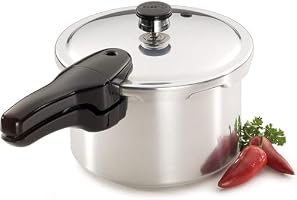 Presto 01241 4-Quart Aluminium Presto 01241 4-Quart Aluminium |
4 qt | Aluminium | Not induction | Bare listing | A trusted maker at fifty dollars — with almost no listing at all | Aluminium, so it will not work on induction | View on Amazon |
| 9 |
 IMUSA 4.2-Quart Aluminium IMUSA 4.2-Quart Aluminium |
4.2 qt | Aluminium | Not induction | Latin American staple | A category staple at under fifty dollars | Aluminium rules out induction hobs | View on Amazon |
| 10 |
 Hawkins Classic 1.5 Litre Hawkins Classic 1.5 Litre |
1.5 L | Aluminium | Not induction | 3.25-4.06 mm base | The only cooker here publishing its base thickness | 1.5 litres serves one or two people at most | View on Amazon |
Specifications and prices are taken from each manufacturer’s Amazon listing as displayed on 23 August 2026 through a United States connection, and may change. The Hob column records whether induction compatibility is stated by the manufacturer; where a listing is silent, that is recorded as unstated. Aluminium is not ferromagnetic and will not function on induction hobs regardless of what a listing does or does not say. Capacities are the manufacturer’s figures for total pot volume — a pressure cooker must never be filled beyond two-thirds, or half full for foaming foods such as beans and grains, so usable volume is substantially lower. Only one cooker here publishes an operating pressure; recipes generally assume 15 psi. This is a buying guide, not operating instructions — follow the manual that comes with your cooker. Sales ranks are shown as displayed and can be pooled across a variant family.
Scroll the table sideways to see every column
How We Chose These Ten
We researched current listings, compared manufacturer specifications and documentation, and examined recurring patterns in customer feedback. We did not carry out hands-on testing, and nothing below is presented as measured performance data.
- Genuinely stovetop, not electric — electric multicookers dominate this search and none are included here
- Material identified — because it determines hob compatibility, not just durability
- A verified live buy box — all ten confirmed purchasable in the United States on 23 August 2026
- No overlap with our seven electric pressure cooker guides — every cooker here is new to the site
- Both materials represented — six stainless and four aluminium, so the trade-off is visible
- Safety detail where a listing gives it — valve counts, interlocks and pressure figures recorded as stated
- Capacity spread — 1.5 litres to 8.5 quarts, from one person to stockpot
The Ten Stovetop Pressure Cookers in Detail
1. Presto 01362 6-Quart Stainless — Best Overall

“Ideal for use on regular, smooth-top and induction ranges.” That single sentence is the most useful thing on this page.
Key Specifications
| Capacity | 6 quarts |
|---|---|
| Material | Stainless steel |
| Hob compatibility | Regular, smooth-top and induction — stated |
| Safety | Cover lock indicator prevents opening under pressure |
| Regulation | Pressure regulator maintains cooking pressure automatically |
| Cleaning | Dishwasher safe |
| Included | 64-page instruction and recipe book |
| Price | $98.99 |
| Best For | Any kitchen, because it is the one that works on every hob |
Why We Recommend It
Induction compatibility is a material property, not a feature. An induction hob works by inducing a current in the pan itself, which requires a ferromagnetic base. Stainless steel has one. Aluminium does not — an aluminium pressure cooker on an induction hob simply sits there, cold, doing nothing. Four of the ten cookers on this page are aluminium.
The cover lock indicator is the safety feature that matters most. The catastrophic failure with any stovetop pressure cooker is opening it while pressurised. A mechanical interlock that physically prevents the lid turning until pressure has dropped removes the possibility rather than warning against it.
An automatic pressure regulator is the other half. Rather than you watching a gauge and adjusting the flame, the regulator vents excess pressure to hold the cooking pressure steady. It is why a modern stovetop cooker needs far less attention than the ones people remember from childhood.
The missing figure is psi. Most cookers here do not publish an operating pressure, and it matters because recipes are written for 15 psi. A cooker running lower cooks more slowly than the recipe expects, and nothing on most listings tells you which you have.
Pros
- Explicitly rated for induction, gas and smooth-top
- Stainless steel works on every hob type
- Cover lock indicator prevents opening under pressure
- Automatic pressure regulator holds pressure steady
- Dishwasher safe
- 64-page recipe book included
Cons
- No operating pressure in psi published
- $98.99 is above the aluminium models
- 6 quarts is mid-sized for large batches
- Stainless conducts heat less evenly than aluminium
- Heavier than an aluminium cooker
- No steam basket mentioned
Best for: Anyone who does not want to check whether it will work on their cooker.
2. T-fal Clipso 6.3-Quart — Best Lid

Most pressure cooker lids require lining up marks, pushing down and twisting with both hands. This one clips shut with one.
Key Specifications
| Capacity | 6.3 quarts |
|---|---|
| Material | Stainless steel |
| Lid | Clipso one-hand open and close |
| Safety | Five-point safety system |
| Valve | Adjustable pressure valve for steam release |
| Speed claim | Up to twice as fast as conventional cooking |
| Included | Steam basket and recipe booklet |
| Price | $111.99 |
| Best For | Anyone who has fought with a traditional twist-lock lid |
Why We Recommend It
The lid is where stovetop pressure cookers annoy people. A traditional lid has to be aligned to a mark and rotated against a gasket that resists, usually while the pot is hot and full. The Clipso mechanism closes with a single downward action, which sounds minor and is the difference between using the cooker on a weeknight and not.
Five separate safety mechanisms is a genuine specification. Modern pressure cookers layer redundant protections — a primary regulator, a secondary release, a gasket that extrudes through a slot at extreme pressure, a lid interlock. Naming a count tells you the design has multiple independent paths for pressure to escape rather than one.
An adjustable pressure valve means you can vary steam release rather than accepting one setting, which changes how quickly the cooker comes down at the end — and quick release versus natural release genuinely changes the result on beans and meat.
Induction is not stated, which for a stainless cooker is likely fine but is not confirmed. Where a listing does not say, we do not assume.
Pros
- One-handed lid opening and closing
- Five-point safety system named
- Adjustable pressure valve for release control
- Steam basket included
- Stainless steel construction
- 6.3 quarts suits family batches
Cons
- Induction compatibility not explicitly stated
- No psi figure published
- $111.99 is the second-highest non-premium price
- Clipso mechanism is more parts to fail
- Gasket replacement needed periodically
- Heavier than aluminium
Best for: Households that will use it weekly and want the lid to stop being a chore.
3. KOBACH 8-Quart Stainless — Most Safety Detail

Seventeen psi, published. Every other listing on this page leaves the operating pressure to your imagination.
Key Specifications
| Capacity | 8 quarts |
|---|---|
| Material | Stainless steel |
| Operating pressure | 17 psi, stated |
| Safety outlets | Three — safety release valve, gravity release, and a third outlet |
| Lid | Toothless design for one-handed use |
| Interior | Measurement lines with max and min water markers |
| Speed claim | Up to 70% faster than conventional cookware |
| Price | $89.99 |
| Best For | Large batches, with the safety system spelled out |
Why We Recommend It
Operating pressure is why recipes work or do not. Almost every pressure cooker recipe assumes 15 psi, which is the American standard. A cooker running at 10 or 12 psi will need noticeably longer than the recipe says, and one running at 17 will need slightly less. Publishing the figure is the difference between following a recipe and guessing at it.
Three steam outlets is a real safety architecture. A primary release valve handles normal operation; a gravity release handles the primary failing; a third path handles both failing. Redundancy is the entire safety philosophy of pressure cooking, and naming the count is more informative than the word “safe”.
Interior measurement lines with max and min water markers address the two ways people get this wrong: too little liquid and the cooker runs dry and scorches, too much and it cannot build a steam headspace. Marks inside the pot are a better answer than a line in a manual.
Eight quarts is genuinely large — stock, big batches of beans, a whole chicken with room. It is also more pot than a small household will fill, and an underfilled pressure cooker is inefficient rather than dangerous.
Pros
- Publishes its operating pressure at 17 psi
- Three independent steam outlets
- 8 quarts for stock and large batches
- Interior max and min water markers
- Toothless lid for one-handed operation
- Stainless steel, $89.99
Cons
- Unfamiliar brand with no service history
- Induction not explicitly stated
- 8 quarts is more than small households need
- 17 psi is above the 15 psi recipes assume
- Heavy when full
- Gasket availability unproven long term
Best for: Anyone cooking large batches who wants the safety system described rather than asserted.
4. T-Fal Secure Trendy 8.5-Quart — Biggest Stainless

Eight and a half quarts is enough for stock, a large joint, or beans for a month.
Key Specifications
| Capacity | 8.5 quarts |
|---|---|
| Material | Stainless steel |
| Range | T-Fal Secure line |
| Position | Largest stainless cooker in this roundup |
| Brand | T-Fal, established cookware maker |
| Rank | #7,053 in its category |
| Price | $129.95 |
| Best For | Batch cooking and stock, in stainless |
Why We Recommend It
Capacity in a pressure cooker is not the same as capacity in a pot. A pressure cooker must never be filled more than two-thirds full, and only half full for foods that foam — beans, grains, anything starchy. So 8.5 quarts is realistically 5.6 quarts of food, or 4.25 quarts of beans. That is the arithmetic nobody puts on a listing, and it is why the jump from 6 quarts to 8.5 is more meaningful than it looks.
A strong rank at #7,053 puts this among the best-selling cookers here, which for a large-capacity model is notable — big pots usually sell in smaller numbers.
Stainless again means hob-agnostic, though as with the Clipso the listing does not explicitly confirm induction. T-Fal’s stainless cookware generally is, but we record what is stated.
No psi figure and no named safety count is the specification gap at $129.95, especially set against the $89.99 KOBACH which publishes both.
Pros
- 8.5 quarts — largest stainless cooker here
- Strong rank at #7,053
- Established cookware brand with support
- Stainless steel construction
- Suits stock and large batch cooking
- Secure locking mechanism
Cons
- No operating pressure published
- Induction not explicitly confirmed
- $129.95
- Two-thirds fill rule makes 8.5 qt into 5.6 usable
- Heavy when full
- No safety-mechanism count given
Best for: Households making stock or batch-cooking beans and pulses regularly.
5. Fissler Vitaquick 8.5-Quart — Most Premium

Three hundred and eighty dollars, and the listing leads on nutrient retention rather than mechanism.
Key Specifications
| Capacity | 8.5 quarts |
|---|---|
| Material | Stainless steel |
| Origin | Made in Germany |
| Speed claim | Up to 70% faster |
| Nutrient claim | Preserves up to 90% of nutrients |
| Position | Most expensive cooker in this roundup |
| Rank | #137,014 in its category |
| Price | $379.95 |
| Best For | Buyers treating this as lifetime cookware |
Why We Recommend It
The nutrient claim is real but not unique to this cooker. Pressure cooking does preserve more water-soluble vitamins than boiling, because cooking times are shorter and less water is used and discarded. That is a property of pressure cooking generally rather than of this pot specifically, and every cooker on this page shares it to a similar degree.
What the money genuinely buys is construction and longevity. Fissler pressure cookers are built to be serviced — gaskets, valves and handles are replaceable parts with a supply chain behind them, and the pot itself is expected to outlive several sets of consumables. Over twenty years that arithmetic works; over five it does not.
The listing is unusually thin for the price. One substantive bullet point, no psi figure, no safety-mechanism count, no explicit induction statement. At $379.95 that is a fair criticism — the $89.99 KOBACH publishes considerably more.
Eight and a half quarts with the two-thirds rule gives about 5.6 usable quarts, the same as the T-Fal at a third of the price.
Pros
- German-made with a genuine service and parts network
- Built as lifetime cookware rather than a purchase
- 8.5 quart capacity
- Stainless steel construction
- Replaceable gaskets, valves and handles
- Established premium reputation
Cons
- $379.95 — nearly four times the median here
- Very thin listing detail for the price
- No psi figure, safety count or induction statement
- Nutrient claim applies to pressure cooking generally
- Low sales rank
- Same usable capacity as a $129.95 cooker
Best for: Someone buying cookware once, with a twenty-year horizon.
6. Peterboo 6.34-Quart Stainless — Best Mid Value

Seventy dollars for stainless steel, which is the material that decides whether it works on your hob.
Key Specifications
| Capacity | 6.34 quarts |
|---|---|
| Material | Stainless steel |
| Position | Cheapest stainless cooker here |
| Hob compatibility | Not explicitly stated, but stainless |
| Specification detail | Limited |
| Rank | #44,287 in its category |
| Price | $69.99 |
| Best For | Stainless construction at the lowest price it appears |
Why We Recommend It
Stainless at this price is the argument. The aluminium cookers on this page start at $34.99, and every one of them is unusable on an induction hob. If your kitchen has induction — and an increasing number do — then $69.99 is the entry price to this category rather than $34.99, and this is that entry.
Six point three four quarts is the practical family size, giving about 4.2 usable quarts under the two-thirds rule. That is a chicken, a large batch of stew, or beans for several meals.
The listing publishes very little else. No psi, no safety-mechanism count, no explicit induction confirmation, no lid mechanism description. We record the gaps rather than filling them, which on a pressure vessel is worth doing carefully.
Unknown brand on a pressure vessel deserves more caution than it would on a knife or a pan. Gaskets and valves are consumables, and a brand that disappears takes its replacement parts with it.
Pros
- Cheapest stainless cooker here at $69.99
- Stainless works on hobs aluminium cannot
- 6.34 quarts is a practical family size
- About 4.2 usable quarts under the fill rule
- Undercuts branded stainless by $30
- Straightforward design
Cons
- Very little published specification
- No psi figure or safety count
- Induction not explicitly confirmed
- Unknown brand on a pressure vessel
- Replacement gasket availability unproven
- Low rank
Best for: Induction kitchens on a budget, accepting an unproven brand.
7. Universal Ultra 4.75-Quart — Best Small

Four and three quarter quarts is about 3.1 usable, which is right for two people and wrong for stock.
Key Specifications
| Capacity | 4.75 quarts |
|---|---|
| Material | Stainless steel |
| Usable volume | About 3.1 quarts under the two-thirds rule |
| Suits | One or two people, small batches |
| Position | Smallest stainless cooker here |
| Rank | #27,736 in its category |
| Price | $59.99 |
| Best For | Small households who still want stainless |
Why We Recommend It
Buying too large is the common error in this category. A pressure cooker must not be filled beyond two-thirds, and it needs enough liquid to generate steam regardless of how little food is in it. So a large cooker used for small portions wastes energy heating a mostly empty vessel, and takes longer to come to pressure. Matching size to household is a real efficiency decision, not just a storage one.
Stainless at $59.99 in a small size is the cheapest way onto an induction hob in this roundup, undercutting the Peterboo by ten dollars with less capacity.
The listing publishes little beyond capacity and material, which is the recurring pattern at the budget end. No psi, no safety count, no lid detail.
Small pressure cookers come to pressure faster, which for weeknight cooking is a genuine practical advantage over an 8-quart pot you have to wait for.
Pros
- $59.99 for stainless in a small size
- Comes to pressure faster than large pots
- About 3.1 usable quarts suits one or two people
- Works on induction where aluminium cannot
- Cheapest route to stainless here
- Easier to store than an 8-quart
Cons
- 4.75 quarts is too small for stock or batch cooking
- Very little published specification
- No psi figure or safety detail
- Unknown brand
- Induction not explicitly confirmed
- Small capacity limits versatility
Best for: One or two person households cooking weeknight meals rather than batches.
8. Presto 01241 4-Quart Aluminium — Cheapest Presto
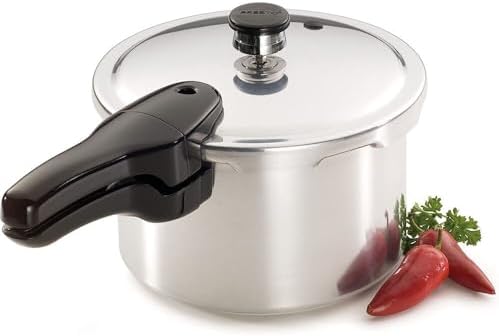
The entire feature list reads “Included Components: Cookware;Pressure Cookers;pressure-cookers” — printed twice.
Key Specifications
| Capacity | 4 quarts |
|---|---|
| Material | Aluminium |
| Induction | No — aluminium is not ferromagnetic |
| Suitable hobs | Gas and electric coil |
| Listing content | One bullet, repeated twice |
| Brand | Presto, long-established |
| Rank | #13,714 in its category |
| Price | $49.99 |
| Best For | Gas hobs, small households, and trust in the brand |
Why We Recommend It
This is the least informative listing in this roundup by a wide margin, and it is on a product from one of the most trusted names in the category. There is no material statement, no hob compatibility note, no safety description and no capacity explanation in the bullets. Everything below is drawn from the product title and the brand’s known construction.
Aluminium is the specification that matters and it is not mentioned. Aluminium is not ferromagnetic, so this will not work on an induction hob at all — not slowly, not poorly, not at all. On a gas or coil-electric hob it is excellent: aluminium conducts heat far more evenly than stainless, which is why it remains popular for pressure cooking despite the induction problem.
Presto’s reputation is doing the work here. The company has made pressure cookers for decades, parts are widely available, and gaskets for common models are easy to find years later. That is worth a great deal on a pressure vessel.
Four quarts is small, about 2.6 usable, which suits one or two people.
Pros
- Presto’s long track record and parts availability
- Aluminium conducts heat very evenly
- $49.99
- Excellent on gas and coil hobs
- Good rank at #13,714
- Small size comes to pressure quickly
Cons
- Will not work on induction at all
- Listing contains one repeated line and no real detail
- Material not stated in the bullets
- 4 quarts is only about 2.6 usable
- No safety features described
- No psi figure
Best for: Gas or coil hobs only, where Presto’s parts availability matters most.
9. IMUSA 4.2-Quart Aluminium — Best Budget

Forty-nine dollars for the aluminium pressure cooker that has been standard equipment in a great many kitchens for decades.
Key Specifications
| Capacity | 4.2 quarts |
|---|---|
| Material | Aluminium |
| Induction | No — aluminium will not induce |
| Suitable hobs | Gas and electric coil |
| Heat behaviour | Aluminium conducts more evenly than stainless |
| Position | Long-standing category staple |
| Rank | #12,705 in its category |
| Price | $48.71 |
| Best For | Beans, gas hobs, and cooking traditions built around this pot |
Why We Recommend It
Aluminium is a genuine cooking advantage, not just a cost saving. It conducts heat roughly three times better than stainless steel, which means fewer hot spots and less scorching on the base — and scorching is exactly what happens to beans and pulses in a pressure cooker. That is why aluminium persists in a category where stainless is nominally superior.
The induction problem is absolute. Aluminium is not ferromagnetic and an induction hob will not detect it, so this is a gas or coil-electric purchase and nothing else. If you have induction, or expect to move somewhere with it, this is not a compromise — it is a pot that will not heat.
Four point two quarts is about 2.8 usable under the two-thirds rule, and less than that for beans, which foam and require the half-full rule. In practice this is a two-person bean pot, which is exactly what it has always been.
Aluminium reacts with acidic foods over long exposure, so tomatoes and vinegar-heavy dishes are better cooked in the stainless models here.
Pros
- Aluminium conducts heat far more evenly than stainless
- $48.71 for a proven design
- Excellent for beans and pulses on gas
- Long-established category staple
- Good rank at #12,705
- Light compared with stainless
Cons
- Will not work on induction at all
- Aluminium reacts with acidic foods
- 4.2 quarts is about 2.8 usable, less for beans
- No psi figure or safety detail published
- Not dishwasher friendly like stainless
- Discolours over time
Best for: Gas hobs, bean cookery, and anyone replacing the pot they grew up with.
10. Hawkins Classic 1.5 Litre — Smallest

Base thickness stated in millimetres. Nothing else in this roundup publishes that number at all.
Key Specifications
| Capacity | 1.5 litres, about 1.6 quarts |
|---|---|
| Material | Pure virgin aluminium, mirror polished exterior |
| Base thickness | 3.25 to 4.06 mm, stated |
| Induction | No — aluminium |
| Serves | 1 or 2 people, per the listing |
| Rank | #7,197 in its category |
| Price | $34.99 |
| Best For | One person, dal and rice, on a gas hob |
Why We Recommend It
Base thickness is what stops food scorching, and it is a more meaningful figure than most of what appears on these listings. A thicker base spreads heat from the burner across the whole pot rather than concentrating it where the flame hits, which on a pressure cooker — where you cannot stir and cannot see — is the difference between cooked and burnt on the bottom. Three to four millimetres of aluminium is substantial for a pot this size.
One and a half litres is genuinely small and the listing says so plainly: ideal for one or two persons. Under the two-thirds rule that is about a litre of food. For dal, rice, a small curry or a single portion of beans it is right-sized and comes to pressure very quickly.
Hawkins is a household name across South Asia and this design has been in production for decades, which brings the same parts-availability advantage that Presto has in the United States.
Aluminium again means no induction, and mirror-polished aluminium will dull with use, which is cosmetic rather than functional.
Pros
- Publishes base thickness at 3.25–4.06 mm
- $34.99 — cheapest here
- Comes to pressure very quickly
- Right-sized for one person
- Decades-old design with parts availability
- Good rank at #7,197
Cons
- Will not work on induction
- 1.5 litres is about 1 litre of usable food
- Too small for batch cooking or stock
- Aluminium reacts with acidic foods
- Mirror polish dulls with use
- No psi figure or safety count
Best for: One-person households cooking dal, rice and small batches on gas.
Stainless Against Aluminium
Not a quality question. A compatibility question, with a real cooking trade behind it.
| Stainless steel | Aluminium | |
|---|---|---|
| Induction hob | Works | Will not heat at all |
| Gas and coil hobs | Works | Works |
| Heat conduction | Lower — more hot spots | About 3x better |
| Scorching risk on beans | Higher | Lower |
| Acidic foods | Fine | Reacts over long exposure |
| Dishwasher | Usually yes | Generally not |
| Cheapest here | $59.99 | $34.99 |
If you have induction the decision is made for you. If you have gas, aluminium is genuinely the better conductor and the reason it persists — but it rules out tomato-heavy cooking and it rules out ever moving to an induction kitchen without replacing the pot.
What Capacity You Actually Get
A pressure cooker is filled to two-thirds at most, and half for anything that foams.
| Stated size | Two-thirds fill | Half fill, for beans |
|---|---|---|
| 1.5 L Hawkins | 1.0 L | 0.75 L |
| 4 qt Presto | 2.6 qt | 2.0 qt |
| 6 qt Presto | 4.0 qt | 3.0 qt |
| 8 qt KOBACH | 5.3 qt | 4.0 qt |
| 8.5 qt T-Fal / Fissler | 5.6 qt | 4.25 qt |
This is the arithmetic that makes people buy too small. A 4-quart cooker holds about two and a half quarts of stew and two quarts of beans — which is dinner for two or three, not a batch. If batch cooking is the point, start at 6 quarts and treat 8 as the sensible ceiling for a domestic hob.
Best Alternatives
| Alternative | Why Consider It | Better For | Main Trade-Off |
|---|---|---|---|
| An electric pressure cooker | No hob needed, timer, walk away | Anyone who wants to set it and leave | Bulky, and another appliance to store |
| A Dutch oven | No pressure, no gaskets, lasts forever | Slow braises where time is not the issue | Three to four times slower |
| A pressure canner | Genuinely rated for canning, which cookers are not | Preserving at home | Very large and heavy |
| Tinned beans | No cooking, no equipment | Anyone whose main use was beans | Costs more per portion, less control |
What the Money Actually Buys
$34.99 to $49.99 — Hawkins, IMUSA, Presto 01241. All aluminium, all excellent conductors, none usable on induction. This tier is where the traditional bean-and-dal pots live, and two of the three come from makers with decades of parts availability behind them. The Presto listing here is the least informative in the roundup by a wide margin.
$59.99 to $98.99 — Universal, Peterboo, KOBACH, Presto 01362. The entry point for stainless, and therefore for induction. The KOBACH at $89.99 publishes more specification than anything else on this page including the $379.95 cooker, and the Presto 01362 is the only one that states hob compatibility outright.
$111.99 to $379.95 — T-fal Clipso, T-Fal Secure, Fissler Vitaquick. Here you buy lid mechanisms, capacity and, at the top, a serviceable pot with a real parts network. The Fissler’s listing is remarkably thin for the price — one substantive bullet and no psi, safety count or induction statement.
What to Check Before You Buy
Check Your Hob First, Everything Else Second
If you have induction, you need stainless steel, and that is the end of the discussion — aluminium is not ferromagnetic and an induction hob will not detect it or heat it at all. If you have gas or an electric coil, both materials work and aluminium is arguably the better cooking surface. Note that only one listing in this roundup states hob compatibility explicitly, so you will usually be inferring it from the material.
Understand the Two-Thirds Rule Before Choosing a Size
A pressure cooker must never be filled beyond two-thirds, because it needs headspace to build steam. For foods that foam — beans, lentils, grains, pasta — the limit is half, because foam can block the vent. So an 8-quart cooker is a 5.3-quart cooker for stew and a 4-quart cooker for beans. Buy for the volume you will actually cook, then add a third.
Look for an Operating Pressure in psi
Almost every pressure cooker recipe is written for 15 psi, the long-standing American standard. A cooker operating at 10 or 12 will need meaningfully longer than the recipe says, and one at 17 slightly less. Exactly one cooker in this roundup publishes its figure. Where none is given you will be calibrating by trial on your first few dishes, which is worth knowing in advance rather than discovering with a pot of undercooked beans.
Count the Independent Pressure Releases
Pressure cooking safety is built on redundancy: a primary regulator for normal operation, a secondary release if that fails, and usually a gasket designed to extrude through a slot at extreme pressure. Listings that name a count — three outlets, a five-point system — are telling you something concrete. Listings that only use the word “safe” are not.
A Lid Interlock Is Worth More Than a Warning
The serious failure mode with a stovetop cooker is opening it while still pressurised. A cover lock indicator that physically prevents the lid rotating until pressure has dropped removes the possibility rather than relying on you to check. If a listing describes one, that is a meaningful safety feature rather than a marketing line.
Consider What You Cook, Not Just How Much
Aluminium reacts with acidic foods over long exposure, so tomato-based dishes, wine reductions and vinegar-heavy braises are better in stainless. Aluminium’s advantage is conduction, which matters most for beans, pulses and anything starchy that scorches on a hot spot. Many households genuinely want both, and the cheaper pot is under fifty dollars.
Check That Gaskets Will Still Exist in Five Years
The gasket is a consumable and it will need replacing, typically every one to three years of regular use. On a pressure vessel that makes brand longevity a functional consideration rather than a matter of prestige — Presto, Hawkins, T-Fal and Fissler all have long-established parts supply. An unknown brand at a good price may become an unusable pot when its gasket perishes.
Common Mistakes
- Buying aluminium for an induction hob. It will not heat at all. This is the single most expensive error in this category.
- Filling past two-thirds. The cooker needs headspace to build steam; half full for beans and grains.
- Assuming a recipe’s timing applies to your cooker. Recipes assume 15 psi and almost no listing states its pressure.
- Buying too small. A 4-quart cooker holds about 2.6 quarts of food and 2 quarts of beans.
- Cooking tomato-heavy dishes in aluminium. It reacts over long exposure; use stainless for acidic food.
- Running it dry. A pressure cooker always needs liquid to generate steam, whatever the recipe volume suggests.
- Forcing the lid. If it will not turn, there is still pressure inside. That is the interlock working.
Who Should Buy Which
Buy the Presto 01362 if you are not certain about your hob. It is the only cooker here that states it works on regular, smooth-top and induction ranges, and it has a cover lock indicator and an automatic regulator for $98.99.
Buy the KOBACH if you want the specification spelled out. Seventeen psi published, three named steam outlets, interior water markers and 8 quarts for $89.99 — more disclosure than the $379.95 cooker.
Buy the IMUSA at $48.71 if you have gas and cook beans. Aluminium conducts far better and scorches far less, and this design has been standard equipment for generations.
Buy the T-fal Clipso if the lid is what has put you off — one-handed opening and closing, and a five-point safety system.
Buy the Hawkins at $34.99 if you cook for one. A litre and a half, a published base thickness, and it comes to pressure in moments.
Frequently Asked Questions
Will an aluminium pressure cooker work on an induction hob?
No — not slowly, not poorly, not at all. Induction hobs generate heat by inducing an electrical current in the base of the pan itself, which requires a ferromagnetic material. Aluminium is not ferromagnetic, so the hob will not detect the pot and will not switch on. This is worth checking before anything else because four of the ten cookers in this roundup are aluminium, they are the four cheapest, and not one of their listings mentions induction in either direction. If you have gas or an electric coil hob, aluminium is perfectly good and actually conducts heat about three times better than stainless steel.
How much can I actually put in a pressure cooker?
Two-thirds full at most, and half full for anything that foams — beans, lentils, grains, pasta, anything starchy. The cooker needs headspace above the food to build and hold steam, and foam from pulses can block the vent, which is the one thing you genuinely do not want. In practice that means an 8-quart cooker holds about 5.3 quarts of stew or 4 quarts of beans, and a 4-quart cooker holds about 2.6 and 2 respectively. This arithmetic is the main reason people buy one size too small, and it appears on none of these listings.
Why does operating pressure matter?
Because nearly every pressure cooker recipe is written for 15 psi, which has been the American standard for decades. Pressure determines temperature inside the pot, and temperature determines cooking time. A cooker running at 10 or 12 psi is cooking at a lower temperature and will need noticeably longer than the recipe states; one running at 17 psi will need slightly less. Exactly one cooker in this roundup publishes its figure. On the others you will calibrate by experience over your first few dishes, which is manageable but worth expecting.
Is a stovetop cooker better than an electric one?
They are different tools. A stovetop cooker reaches a higher pressure than most electric multicookers, comes up to pressure faster, browns better because you can use full hob heat, and has no electronics to fail. An electric cooker holds pressure without supervision, has a timer, and does not occupy a hob ring. If you cook actively and want speed and browning, stovetop wins; if you want to load it and walk away, electric does. The one practical caution is that stovetop cookers do need occasional attention to keep the heat steady, though a modern automatic regulator does most of that for you.
How long do the gaskets last, and can I replace them?
Typically one to three years of regular use, and yes — on any cooker worth owning. The gasket is a consumable rubber seal that hardens and shrinks with heat cycles, and a cooker that will not come to pressure has usually just reached the end of a gasket rather than failing. This makes brand longevity a functional issue rather than a matter of prestige: Presto, Hawkins, T-Fal and Fissler have all been making the same designs long enough that replacement seals are easy to find. An unknown brand at an attractive price becomes an unusable pot the day its gasket perishes and nothing fits.
Can I use a pressure cooker for canning?
No, not safely, and this is a genuinely important distinction. A pressure cooker and a pressure canner are different appliances: canning low-acid foods requires holding a specific verified pressure for a specific time to reach temperatures that destroy botulism spores, and that requires a gauge, a much larger and heavier vessel, and a design validated for the purpose. A cooker’s regulator cycles rather than holding a precise pressure, and the smaller vessel heats and cools too quickly. One product in this search was a T-fal 22-quart canner, which is a different thing from everything on this page. If preserving is your aim, buy a canner and follow tested processing times.
Final Verdict
The only cooker here that states it works on regular, smooth-top and induction ranges, with a cover lock indicator and an automatic regulator. $98.99.
17 psi published, three named steam outlets and interior water markers — more disclosure at $89.99 than the $379.95 cooker offers.
$48.71 for the pot that conducts three times better than stainless. Gas hobs only — and unbeatable for beans.
Buy the Presto 01362 at $98.99 unless you know your hob. It is the only cooker on this page that tells you outright which hobs it works on, and stainless steel means the answer is all of them. Add a cover lock that physically prevents opening under pressure and an automatic regulator, and it is the cooker you can buy without checking anything first.
If you have gas and you cook beans, buy the IMUSA at $48.71. Aluminium conducts about three times better than stainless, which is precisely what stops pulses catching on a base you cannot stir. It is a genuinely better cooking surface, and it will be useless the day you move to an induction kitchen.
The disclosure pattern here is worth noting. The $89.99 KOBACH publishes an operating pressure, a count of safety outlets and interior fill markers. The $379.95 Fissler publishes one substantive sentence. And the Presto 01241, from one of the most trusted names in the category, has a feature list consisting of the same line printed twice.
Check your hob, do the two-thirds arithmetic, and buy one size larger than you think. Those three things will matter more than anything else on this page.