Affiliate Disclosure: As an Amazon Associate, we earn from qualifying purchases. This does not affect the price you pay.
Every electric pressure cooker calls itself automatic, but they automate different amounts of the job. Nearly all of them run a timed program and switch to keep-warm. Far fewer regulate pressure continuously, and only a handful release the steam for you at the end — which is the step people actually find stressful.
That last point matters more than the program count. A cooker that finishes and vents on its own can genuinely be left; one that waits for you to come back and turn a valve cannot, no matter how many buttons it has.
We compared ten current models on what they automate: pressure regulation, steam release, keep-warm, safety cut-offs and feedback while running. This guide is for anyone who wants to start a cook and stop thinking about it.
Our Quick Picks
 Best Automatic RegulationNuwave Duet
Adjusts pressure continuously through the cycle rather than letting it drift and correcting late.
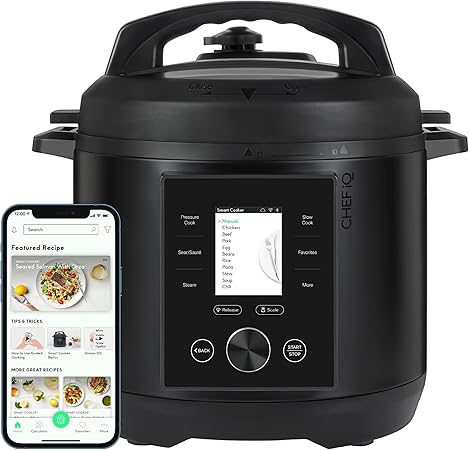 Best Automatic ReleaseCHEF iQ Smart Cooker
Automatically releases steam at the end of cooking — the one step almost every other cooker still leaves to you.
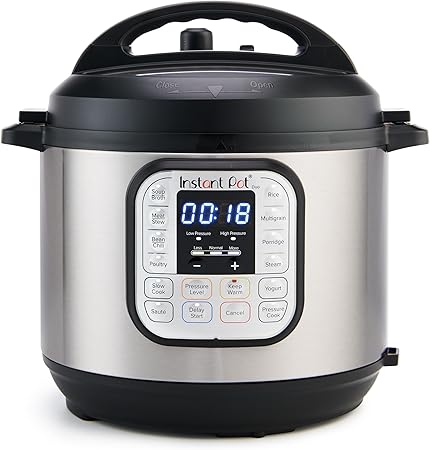 Best Value AutomaticInstant Pot Duo 7-in-1
Programs that run themselves and switch to keep-warm, at the lowest price here.
At a Glance
Automatic Pressure Cooker Comparison
Ten cookers compared on how much of the process actually runs without you.
| # | Model | Capacity | Automation | Best For | Inner Pot | Key Advantage | Main Drawback | Check Price |
|---|---|---|---|---|---|---|---|---|
| 1 |
 Nuwave Duet Nuwave Duet |
6 qt | Auto pressure control | Hands-off pressure holding | 18/10 stainless | Around 200 pressure adjustments per cycle | Heaviest here at 27 lb | View on Amazon |
| 2 |
 CHEF iQ Smart Cooker CHEF iQ Smart Cooker |
6 qt | Auto release + app | Removing the last manual step | Aluminum pot | Releases steam automatically | Relies on an app for the best of it | View on Amazon |
| 3 |
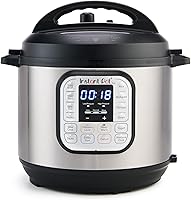 Instant Pot Duo 7-in-1 Instant Pot Duo 7-in-1 |
6 qt | 13 programs | Set it and leave it | Stainless (18/8) | Automatic keep-warm at the lowest price | Manual steam release | View on Amazon |
| 4 |
 Instant Pot Pro 10-in-1 Instant Pot Pro 10-in-1 |
6 qt | 28 programs | Automation across many dishes | Stainless steel | Twenty-eight programs plus gentle release | Above budget pricing | View on Amazon |
| 5 |
 COSORI 6QT 9-in-1 COSORI 6QT 9-in-1 |
6 qt | 13 presets | Automation with safeguards | Ceramic-coated | Overheat protection and lid safeguards | Ceramic coating wears | View on Amazon |
| 6 |
 Instant Pot Duo Plus 9-in-1 Instant Pot Duo Plus 9-in-1 |
6 qt | 15 programs | Knowing what it is doing | Stainless (18/8) | Shows pressure and temperature live | No app or auto release | View on Amazon |
| 7 |
 KINGBULL 8QT 12-in-1 KINGBULL 8QT 12-in-1 |
8 qt | 12 programs | Automating big batches | Nonstick pot | Eight quarts run automatically | Nonstick inner pot | View on Amazon |
| 8 |
 Instant Pot RIO Mini 4QT Instant Pot RIO Mini 4QT |
4 qt | 7-in-1 | Automation without bulk | Stainless steel | Progress indicator in a small unit | Fewer functions | View on Amazon |
| 9 |
 Instant Pot Duo Crisp 11-in-1 Instant Pot Duo Crisp 11-in-1 |
6 L | 15 programs | Automating two cooking stages | Stainless steel | Pressure then air fry, programmed | Heavy, two lids to store | View on Amazon |
| 10 |
 NESCO NPC-9 Smart Canner NESCO NPC-9 Smart Canner |
9.5 qt | Preset programs | Regulated canning cycles | Stainless steel | Automatically regulates pressure and temperature | Amazon lists an impossible weight | View on Amazon |
NESCO’s listing gives an item weight of 113.4 g, which is impossible for a 9.5-quart stainless canner. Nuwave’s "450-in-1" is marketing arithmetic rather than 450 distinct functions. Both are flagged in their reviews.
Scroll the table sideways to see every column
How We Chose These Automatic Pressure Cookers
We researched current listings, compared manufacturer specifications and documentation, and examined recurring patterns in customer feedback. We did not carry out hands-on testing, and nothing below is presented as measured performance data.
- Automatic steam release — whether the cook can finish without you turning a valve
- Pressure regulation — coarse element cycling against continuous adjustment
- Keep-warm behaviour — holding food safely once a program ends
- Safety automation — overheat protection, lid locks and float valves
- Feedback while running — whether you can see which stage it has reached
- Probe or sensor cooking — cooking to a temperature rather than a timer
- Inner pot material — how the pot ages under frequent automated use
- Capacity — matching batch size so you are not splitting cooks
- Listing accuracy — whether stated specifications hold together
- Support — brand track record and parts

The 10 Best Automatic Pressure Cookers
1. Nuwave Duet — Best Automatic Regulation

Most electric cookers hold pressure by cycling the element on and off in fairly coarse steps. Nuwave states this one makes around 200 adjustments per cycle, which is a much finer form of automation.
Key Specifications
| Capacity | 6 quarts |
|---|---|
| Automation | Dynamic Pressure Control, stated 200 adjustments per cycle |
| Power | 1500 W |
| Probe | Included, for cooking to a target temperature |
| Lids | Three removable |
| Inner pot | Triple-thick 18/10 stainless, non-coated |
| Weight | 27 lb |
| Best For | Cooking that regulates itself without supervision |
Why We Recommend It
The included probe extends that to temperature: set a target internal temperature and the cooker works to it rather than to a timer, which removes the guesswork from larger cuts.
Two honest caveats. At 27 lb it is by far the heaviest appliance here, and the "450-in-1" figure on the listing is marketing arithmetic rather than 450 distinct functions.
Pros
- Continuous pressure adjustment rather than coarse cycling
- Probe cooks to a target temperature
- Triple-thick non-coated 18/10 stainless pot
- Combo cooking automates pressure then crisping
Cons
- Heaviest unit here at 27 lb
- Three lids to store
- The 450-in-1 claim is marketing, not distinct functions
Best for: Cooks who want the appliance to manage pressure and temperature without them.
2. CHEF iQ Smart Cooker — Best Automatic Release
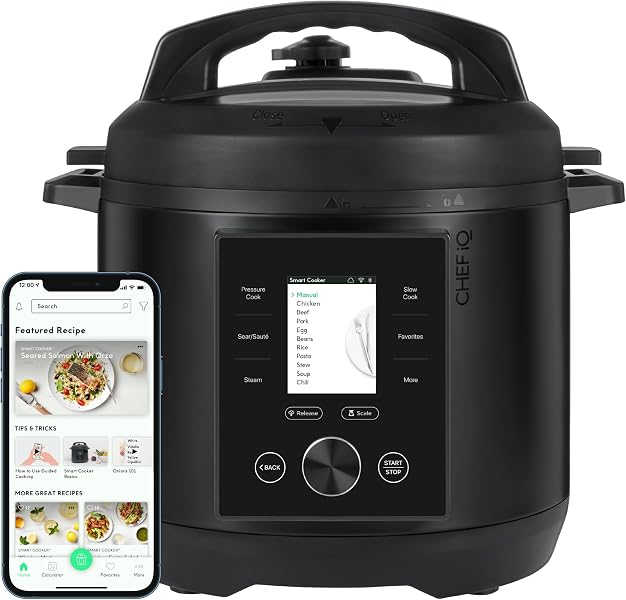
Every electric pressure cooker automates the cooking. Almost none automates the end of it — you still have to come back and turn a valve, which is the part people find stressful and the part that causes burns.
Key Specifications
| Capacity | 6 quarts |
|---|---|
| Pressure release | Automatic, with three release settings |
| Power | 1000 W |
| Scale | Built-in, four smart sensors |
| Connectivity | WiFi and Bluetooth |
| Functions | 10-in-1 |
| Weight | 10.4 lb |
| Best For | Genuinely unattended pressure cooking |
Why We Recommend It
This one releases automatically, with three release settings for different foods, so a cook can genuinely finish without you in the room.
The built-in scale adds a second layer of automation by weighing ingredients in the pot, so guided recipes adjust to what you actually put in.
Pros
- Automatic steam release with three settings
- Genuinely unattended from start to finish
- Built-in scale weighs ingredients in the pot
- App monitoring and guided cooking
Cons
- Best features depend on the app
- Aluminium pot rather than stainless
- More initial setup than a simple panel
Best for: Anyone who wants the cook to finish safely without them standing over it.

3. Instant Pot Duo 7-in-1 — Best Value Automatic
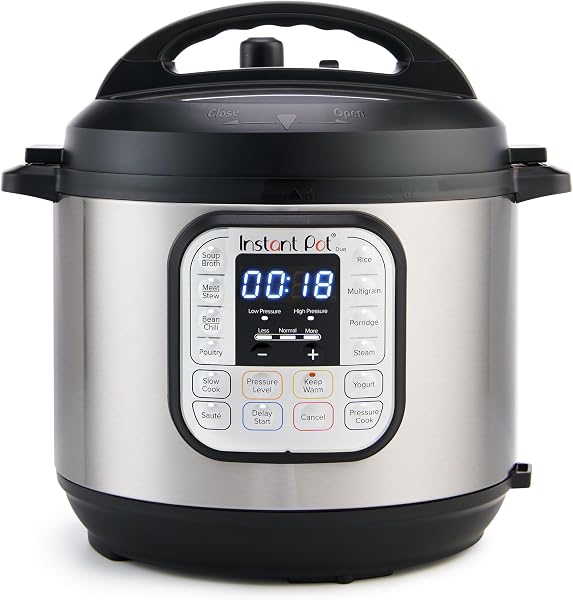
The core automation people actually want is simple: press a button, walk away, and have the food held safely when it finishes. The Duo does exactly that for less than anything else here.
Key Specifications
| Capacity | 6 quarts |
|---|---|
| Programs | 13 one-touch options |
| Power | 1000 W, 120 V |
| Automation | Automatic switch to keep-warm at end of cook |
| Inner pot | 18/8 stainless steel with tri-ply bottom |
| Weight | 14.6 lb |
| Best For | Straightforward automatic cooking on a budget |
Why We Recommend It
Thirteen programs cover the usual range, and automatic keep-warm means a cook that finishes at four o’clock is still hot at six.
What is not automated is the steam release — you still return to turn the Easy-Release switch, which is the main difference from the CHEF iQ.
Pros
- Automatic keep-warm after every program
- Thirteen programs at the lowest price
- Stainless tri-ply pot with no coating to fail
- The widest recipe support of any cooker
Cons
- Steam release is still manual
- Basic display with no pressure indicator
- Heaviest of the 6-quart Instant Pots at 14.6 lb
Best for: Anyone who wants reliable hands-off cooking without paying for connectivity.
4. Instant Pot Pro 10-in-1 — Best Hands-Off Range

If automation means not having to think about settings, breadth is what delivers it. Twenty-eight programs means there is usually a button that matches what you are cooking.
Key Specifications
| Capacity | 6 quarts |
|---|---|
| Programs | 28 one-touch options |
| Functions | 10 |
| Power | 1200 W |
| Steam release | Gentle release switch with diffusing cover |
| Inner pot | Stainless steel |
| Weight | 6 kg |
| Best For | Automating a wide range of dishes |
Why We Recommend It
The diffusing cover on the steam release is the underrated part: it turns a sharp, loud jet into a soft plume, which makes people far more willing to release steam promptly rather than waiting nervously.
Instant Pot states the Pro preheats 20% faster than slow cooking methods, so the unattended portion of the cook starts sooner.
Pros
- Twenty-eight programs covering most dishes
- Diffusing cover makes release quiet and gentle
- Stainless pot with no coating to wear
- Automatic keep-warm across all programs
Cons
- Priced above the budget bracket
- Steam release still requires you to act
- More programs than most households use
Best for: Cooks who want a button for everything and a calmer steam release.
5. COSORI 6QT 9-in-1 — Best Automatic Safety
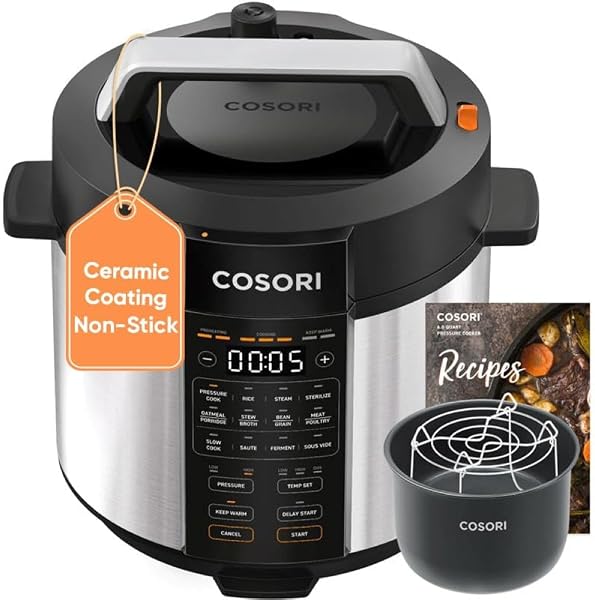
Leaving an appliance to run unattended is only comfortable if it protects itself. COSORI lists twelve safety features including overheat protection and a lid that cannot open under pressure.
Key Specifications
| Capacity | 6 quarts |
|---|---|
| Presets | 13 |
| Power | 1100 W |
| Safety | 12 stated features, double-layer anti-scalding lid, overheat protection |
| Venting | 30° backward-angled release, offset seal/vent button |
| Inner pot | Ceramic-coated, dishwasher safe |
| Weight | 11.9 lb |
| Best For | Unattended cooking with automatic safeguards |
Why We Recommend It
The venting design supports the same idea: the seal/vent button sits away from the valve and the release angles 30° backwards, so the automated part of the process ends somewhere your hand is not.
The ceramic-coated pot is dishwasher safe and releases food easily, though a coating will not last as long as bare stainless.
Pros
- Twelve stated safety features including overheat protection
- Double-layer anti-scalding lid
- Steam release angled away from the user
- Ceramic pot and lid are dishwasher safe
Cons
- Ceramic coating wears faster than stainless
- Steam release is still manual
- Fewer third-party recipes than Instant Pot
Best for: Cooks who leave an appliance running and want it to look after itself.
6. Instant Pot Duo Plus 9-in-1 — Best Automatic Feedback

Automation is unsettling when you cannot tell what is happening. The most common complaint about electric pressure cookers is that nothing appears to be going on for the first fifteen minutes.
Key Specifications
| Capacity | 6 quarts |
|---|---|
| Programs | 15 one-touch options |
| Functions | 9 |
| Power | 1000 W |
| Display | Dedicated time, temperature and pressure indicators |
| Inner pot | 18/8 stainless, anti-spin tri-ply base |
| Weight | 12.4 lb |
| Best For | Automatic cooking you can still monitor at a glance |
Why We Recommend It
This display solves that by showing time, temperature and pressure separately, so you can see the cooker is building pressure rather than doing nothing.
The anti-spin tri-ply pot is a small practical improvement — it stays put while you sauté rather than turning under the spoon.
Pros
- Shows pressure and temperature, not just a countdown
- Fifteen programs across nine functions
- Anti-spin tri-ply stainless pot
- Automatic keep-warm after every program
Cons
- No app or automatic steam release
- Presets cannot be edited
- Heavier than the basic Duo
Best for: First-time users who want automation they can actually follow.
7. KINGBULL 8QT 12-in-1 — Best Large Automatic

Automation matters more, not less, at larger volumes — an eight-quart batch is exactly what you do not want to be babysitting.
Key Specifications
| Capacity | 8 quarts |
|---|---|
| Programs | 12 one-touch options |
| Functions | 12-in-1 |
| Power | 1200 W |
| Display | LED timer with pressure indicators |
| Inner pot | Nonstick |
| Serves | Stated as up to 8 people |
| Weight | 14.3 lb |
| Best For | Automatic cooking at family or gathering scale |
Why We Recommend It
Twelve programs cover the standard range, and the LED display carries pressure indicators alongside the countdown so you can see which stage it has reached.
The nonstick inner pot makes cleaning an eight-quart batch considerably easier, at the cost of long-term durability compared with bare stainless.
Pros
- Eight quarts, so large batches need no splitting
- Twelve programs with automatic keep-warm
- LED display with pressure indicators
- Nonstick pot eases cleaning a large batch
Cons
- Nonstick coating will wear over time
- Less established brand than Instant Pot
- Large footprint
Best for: Larger households automating batch cooking.
8. Instant Pot RIO Mini 4QT — Best Compact Automatic

Most automatic cookers are six quarts, which is more than a small household needs. Four quarts automates the same way in a body that stores more easily.
Key Specifications
| Capacity | 4 quarts |
|---|---|
| Functions | 7 |
| Power | 800 W |
| Display | Progress indicator showing cooking status |
| Inner pot | Stainless steel |
| Serves | Stated as up to 4 servings |
| Weight | 10.9 lb |
| Best For | Automatic cooking for one to four people |
Why We Recommend It
The progress indicator is unusual at this size and price, showing whether the cooker is heating, cooking or releasing rather than leaving you guessing.
Instant Pot states the cooking surface matches an 8-inch pan, so sautéing before an automated cook is practical rather than token.
Pros
- Automatic keep-warm in a compact body
- Progress indicator shows cooking status
- Cooking surface equal to an 8-inch pan
- Easier to store than a 6-quart
Cons
- Seven functions rather than nine or ten
- Steam release is manual
- Still 10.9 lb despite the smaller size
Best for: Small households who want hands-off cooking without a large appliance.
9. Instant Pot Duo Crisp 11-in-1 — Best Automatic Crisping

Automation usually stops at soft. The second lid extends it: pressure cook a dish on a program, then run an air fry program on the same pot to crisp it.
Key Specifications
| Capacity | 6 litres |
|---|---|
| Functions | 11, including air fry, roast, bake and dehydrate |
| Programs | 15 one-touch options |
| Power | 1500 W |
| Lids | Two: pressure and air fry |
| Technology | EvenCrisp, stated 95% less oil than deep frying |
| Weight | 19.6 lb |
| Best For | Dishes that need tenderising then crisping |
Why We Recommend It
Instant Pot states EvenCrisp delivers the crunch of frying with 95% less oil, and fifteen programs cover both cooking modes.
The cost is bulk and a manual step in the middle — you have to physically change lids, so it is two automated stages rather than one continuous one.
Pros
- Automates both pressure cooking and crisping
- Fifteen programs across eleven functions
- Replaces two separate appliances
- Stainless inner pot
Cons
- You must swap lids manually between stages
- Heavy at 19.6 lb
- Second lid needs storage space
Best for: Cooks who want tender-then-crisp results without two appliances.
10. NESCO NPC-9 Smart Canner — Best Automatic Canner

Canning is the one application where automatic regulation is not a convenience but the entire point — the process depends on holding a specific pressure accurately for a set time.
Key Specifications
| Capacity | 9.5 quarts |
|---|---|
| Purpose | Electric pressure canner and cooker |
| Power | 1000 W |
| Automation | Automatically regulates pressure and temperature |
| Modes | Pressure cook, slow cook, steam and water bath |
| Safety | Safety lock lid, automatic float valve, pressure regulation |
| Display | Digital, with preset programs and timer |
| Best For | Home canning with automated control |
Why We Recommend It
NESCO states this regulates pressure and temperature automatically with built-in safety controls, a safety lock lid and an automatic float valve, and offers preset programs with a digital timer.
Two notes. Amazon lists the item weight as 113.4 g, which is impossible for a 9.5-quart stainless canner. And whatever the appliance, follow current tested canning guidance for the specific food you are preserving rather than relying on presets alone.
Pros
- Automatically regulates pressure and temperature
- Safety lock lid and automatic float valve
- Also slow cooks, steams and water baths
- Digital presets with a timer
Cons
- Amazon’s listed weight is not credible
- Large and single-purpose for most kitchens
- Canning still requires following tested guidance
Best for: Home preservers who want the pressure cycle regulated automatically.
CHEF iQ vs Instant Pot Duo
Full automation including the steam release, against the automation most people actually buy.
| Feature | CHEF iQ Smart Cooker | Instant Pot Duo 7-in-1 |
|---|---|---|
| Steam release | Automatic, three settings | Manual switch |
| Keep-warm | Automatic | Automatic |
| Can finish unattended | Yes | No, you must return to vent |
| Sensors | Built-in scale, four sensors | None |
| Inner pot | Aluminium | 18/8 stainless, tri-ply |
| Main advantage | Genuinely hands-off start to finish | Costs far less for the core automation |
| Main drawback | Best features need the app | Someone has to release the steam |
Choose the CHEF iQ if: being out of the house when the cook finishes is the whole point.
Choose the Duo if: you will be home anyway and want reliable automation without paying for connectivity.

Automatic Regulation or Automatic Release?
Two different kinds of automation, and they solve different problems.
| Feature | Nuwave Duet | CHEF iQ Smart Cooker |
|---|---|---|
| Automates | Pressure held continuously | The release at the end |
| Adjustments | Stated 200 per cycle | Three release settings |
| Probe | Included | No |
| Inner pot | Triple-thick 18/10 stainless | Aluminium |
| Weight | 27 lb | 10.4 lb |
| Main advantage | Tighter control during the cook | You need not return at the end |
| Main drawback | Very heavy, three lids | App-dependent, aluminium pot |
Choose the Nuwave if: consistency during the cook matters most, and you want probe cooking too.
Choose the CHEF iQ if: the thing you want automated is the end of the cook, not the middle.
Best Alternatives
| Alternative | Why Consider It | Better For | Main Trade-Off |
|---|---|---|---|
| Instant Pot Pro | 28 programs, diffusing steam cover | Automating varied dishes | Above budget pricing |
| COSORI 6QT 9-in-1 | Twelve stated safety features | Unattended cooking with safeguards | Ceramic coating wears |
| Instant Pot Duo Plus | Shows pressure and temperature live | Following what automation is doing | No auto release |
| KINGBULL 8QT | Eight quarts run automatically | Large households | Nonstick pot |
| NESCO NPC-9 | Regulates a canning cycle automatically | Home preserving | Listed weight is not credible |
How Automatic Is Automatic?
Basic automation means a timed program and an automatic switch to keep-warm. Every electric cooker here does this, and for most people it is the automation that actually matters day to day.
Regulated automation adds finer control during the cook — the Nuwave’s continuous pressure adjustment, or probe cooking to a target temperature rather than a clock.
Full automation means the cooker also ends the cook safely on its own. Only the CHEF iQ releases steam automatically here, and it is the difference between a cooker you can leave and one you must return to.
How to Choose an Automatic Pressure Cooker
Ask What Happens at the End of the Cook
This is the question that separates these appliances. Almost all of them start and run automatically; almost none finish automatically. If nobody will be home when the timer ends, automatic steam release is the feature to look for, and only one cooker here has it.
Keep-Warm Is the Automation You Will Use Daily
Every electric model here switches to keep-warm when a program ends, which is what makes a finish time flexible. It is unglamorous but it is the automation that actually changes how you cook, far more than program count.
Understand Come-to-Pressure Time
A ten-minute program does not take ten minutes. The cooker must first reach pressure, which can take 10 to 20 minutes depending on volume and temperature. Automation does not remove that, and a display showing pressure separately makes it far less confusing.
Look for Automatic Safety, Not Just Automatic Cooking
Unattended operation is only sensible if the appliance protects itself. Overheat protection, a lid that cannot open under pressure, and an automatic float valve are the features that make leaving it running reasonable. COSORI and NESCO both detail these explicitly.
Probe Cooking Beats Timer Cooking for Large Cuts
A timer assumes a starting temperature and a size. A probe measures what is actually happening inside the food. For roasts and larger cuts that difference is significant, and the Nuwave is the only model here that includes one.
Match Capacity So You Are Not Splitting Batches
Automation is undermined the moment you have to run a second cook. Six quarts suits four to six servings, four quarts suits one or two, and eight quarts stops larger households cooking twice.
Consider How the Pot Ages Under Heavy Use
An automatic cooker gets used more, because it is easy. Bare 18/8 or 18/10 stainless has no coating to fail; ceramic and nonstick clean more easily but wear, and that shows sooner on an appliance you run several times a week.
Do Not Automate Canning Without Checking Guidance
Electric canners such as the NESCO automate pressure regulation, but home canning of low-acid foods still depends on following current tested guidance for that specific food. Treat the automation as a way to hold conditions accurately, not as a substitute for the method.
Common Automatic Pressure Cooker Mistakes
- Assuming automatic means unattended. Almost every model still needs you to release the steam.
- Forgetting come-to-pressure time. The program clock starts only once pressure is reached.
- Overfilling. Never exceed two-thirds, or half for foaming foods such as beans and grains.
- Leaving food on keep-warm indefinitely. It is a holding setting, not storage.
- Buying programs instead of automation. Twenty-eight buttons do not make a cooker more hands-off.
- Ignoring the steam release design. It is where automation stops and risk begins.
- Choosing a coated pot for daily automated use. Coatings wear faster the more you cook.
- Trusting every specification field. One listing here gives an impossible weight for a stainless canner.
Who Should Buy an Automatic Pressure Cooker?
An automatic model earns its place if you:
- Cook on weeknights — where a program and keep-warm do the waiting for you
- Batch cook — repeatable results without timing anything yourself
- Cook dried beans and pulses — the clearest case for pressure cooking generally
- Are nervous about pressure cooking — automatic safeguards and release remove the scary part
- Cook large cuts — where probe cooking beats guessing at a timer
- Preserve at home — where regulated pressure is the entire requirement
Who May Be Better With Something Else?
If you enjoy cooking actively and adjust as you go, a stovetop pressure cooker reaches pressure faster, costs less and has nothing to program. If you want one function only, a dedicated appliance usually does it better. And if you would never leave an appliance running unattended anyway, you are paying for automation you will not use.
Frequently Asked Questions
What makes a pressure cooker automatic?
At minimum, a timed program that switches to keep-warm when it finishes — which every electric model here does. Beyond that, automation varies: some regulate pressure continuously during the cook, and a very small number release the steam automatically at the end. That last feature is what allows a cook to finish with nobody present.
Do automatic pressure cookers release steam by themselves?
Most do not. Nearly every electric cooker still requires you to turn a valve or switch once cooking ends. The CHEF iQ in this comparison releases automatically with three release settings, which is unusual and is the main reason it appears at the top of this list.
Is keep-warm the same as automatic cooking?
No, but it is the automation people use most. Keep-warm holds the food at serving temperature once a program ends, so the cook does not have to finish exactly when you are ready. It is a holding setting rather than a cooking one, and food should not be left on it indefinitely.
Why does the timer not start straight away?
Because the program time is cooking time at pressure, and the cooker must reach pressure first. That typically takes 10 to 20 minutes depending on volume and how cold the contents are. Models with a pressure indicator on the display make this much easier to follow.
Are automatic pressure cookers safe to leave running?
Modern models include lid locks that prevent opening under pressure, float valves, overheat protection and pressure regulation — COSORI lists twelve such features. Follow the manufacturer’s instructions, place the cooker on a heat-safe surface clear of cupboards, and never block the steam release.
Can I use an automatic pressure cooker for canning?
Only a model designed and tested for it. Most electric multicookers are not approved for canning low-acid foods. Dedicated electric canners such as the NESCO here automate pressure regulation, but you should still follow current tested canning guidance for the specific food you are preserving.
Is a probe better than a timer?
For large cuts, yes. A timer assumes a starting temperature and size, while a probe measures the actual internal temperature and stops when it is reached. For everyday beans, rice and stews a timer is entirely adequate, which is why probes are rare at this price.
Does more automation mean better cooking?
Not necessarily. Automation improves consistency and convenience, not flavour. Browning in the pot before pressure cooking still makes more difference to the result than any number of programs, and that step remains manual on every model here.
Final Verdict
Adjusts pressure continuously through the cycle and includes a probe, so both pressure and temperature are managed for you.
The only cooker here that vents automatically at the end, which is what makes a cook genuinely unattended.
Thirteen programs and automatic keep-warm at the lowest price, with a stainless pot and the widest recipe support.
Choosing an automatic pressure cooker comes down to five things: what happens when the program ends, whether pressure is regulated coarsely or continuously, whether the appliance protects itself while unattended, whether you can see what stage it has reached, and whether the pot will survive frequent use. Ask about the steam release first — it is the step most cookers leave to you, and the one that decides whether you can really walk away.