
Affiliate Disclosure: As an Amazon Associate, we earn from qualifying purchases. This does not affect the price you pay.
When people search for a healthier pressure cooker they are usually asking one of two things: what the pot is made of, and whether the cooking method lets them use less fat. Both are answerable from specifications, which is what this guide sticks to.
On materials, the split is simple. Uncoated 18/8 or 18/10 stainless has no non-stick layer to wear; ceramic and non-stick coatings release food more easily but degrade over time. On method, pressure cooking, steaming and sous vide all work without added fat, and air frying gives crisp textures with far less oil than deep frying.
We compared ten current models on inner pot material, fat-free cooking functions and batch size. This is a comparison of appliances and cooking methods — it is not nutritional or medical advice, and anyone with specific dietary needs should speak to a qualified professional.
Our Quick Picks
 Best OverallInstant Pot Pro 10-in-1
A bare stainless pot with steam and sous vide functions — nothing coated, and no fat required to cook.
 Best Stovetop StainlessPresto 01365 Stainless
Stainless steel and a tri-clad base, with no coatings, no plastic pot and no electronics at all.
 Best Uncoated PotNuwave Duet
A triple-thick 18/10 stainless pot that Nuwave states is non-coated — unusually explicit for this category.
At a Glance
Pressure Cookers Compared on Materials and Method
Ten cookers compared on inner pot material, coatings and the functions that need no added fat.
| # | Model | Capacity | Pot Material | Best For | Coating | Key Advantage | Main Drawback | Check Price |
|---|---|---|---|---|---|---|---|---|
| 1 |
 Instant Pot Pro 10-in-1 Instant Pot Pro 10-in-1 |
6 qt | Stainless | Steaming, sous vide and stews | No coating | Bare stainless pot plus sous vide | Above budget pricing | View on Amazon |
| 2 |
 Nuwave Duet Nuwave Duet |
6 qt | 18/10 stainless | Avoiding coatings entirely | Triple-thick, non-coated | Explicitly non-coated 18/10 stainless | Heaviest here at 27 lb | View on Amazon |
| 3 |
 Presto 01365 Stainless Presto 01365 Stainless |
6 qt | Tri-clad stainless | Simplest materials | Stainless, no electronics | All stainless, nothing coated or plastic-lined | No timer or programs | View on Amazon |
| 4 |
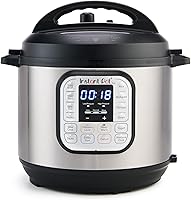 Instant Pot Duo 7-in-1 Instant Pot Duo 7-in-1 |
6 qt | 18/8 stainless | Everyday low-fat cooking | Tri-ply, uncoated | Stainless tri-ply pot at the lowest price | Basic display | View on Amazon |
| 5 |
 Instant Pot Duo Plus 9-in-1 Instant Pot Duo Plus 9-in-1 |
6 qt | 18/8 stainless | Chicken and fish | Anti-spin tri-ply | Sous vide for lean cuts | No app or connectivity | View on Amazon |
| 6 |
 Instant Pot Duo Mini 3 Qt Instant Pot Duo Mini 3 Qt |
3 qt | 18/8 stainless | Cooking single portions | Tri-ply, uncoated | Small batches, no leftovers to graze on | Around three portions | View on Amazon |
| 7 |
 COSORI 6QT 9-in-1 COSORI 6QT 9-in-1 |
6 qt | Ceramic-coated | Cooking with very little oil | Ceramic, stated non-BPA | Ceramic release means less oil needed | Coating wears over time | View on Amazon |
| 8 |
 Instant Pot Duo Crisp 11-in-1 Instant Pot Duo Crisp 11-in-1 |
6 L | Stainless | Crisp textures without frying | Stainless pot | Air fries with far less oil | Heavy, two lids to store | View on Amazon |
| 9 |
 Prestige Alpha Deluxe 3 L Prestige Alpha Deluxe 3 L |
3 L | Stainless | Small stainless batches | Stainless, induction base | All stainless in a small pot | 3 L suits one or two | View on Amazon |
| 10 |
 Instant Pot RIO Mini 4QT Instant Pot RIO Mini 4QT |
4 qt | Stainless | Small households | Stainless pot | Uncoated pot in a compact body | Fewer functions | View on Amazon |
Claims such as "non-BPA", "non-coated" and "95% less oil" are manufacturer statements taken from each listing, not measurements of our own. Nothing here is nutritional or medical advice.
Scroll the table sideways to see every column
How We Chose These Pressure Cookers
We researched current listings, compared manufacturer specifications and documentation, and examined recurring patterns in customer feedback. We did not carry out hands-on testing, and nothing below is presented as measured performance data.
- Inner pot material — uncoated stainless against ceramic and non-stick coatings
- Stated materials claims — whether the maker is explicit about coatings and BPA
- Fat-free cooking functions — steaming, sous vide and pressure cooking without oil
- Low-oil crisping — air frying as an alternative to deep frying
- Batch size — cooking deliberate portions rather than large leftovers
- Suitability for pulses — dried beans and lentils cooked from dry
- Temperature control — gentle methods for lean proteins that dry out
- Cleaning — which parts the maker states are dishwasher safe
- Listing accuracy — whether stated specifications hold together
- Support — brand track record and replacement parts

The 10 Best Pressure Cookers for Healthier Cooking
1. Instant Pot Pro 10-in-1 — Best Overall

If your interest is cooking methods that need little or no added fat, this covers the widest range: pressure cooking, steaming and sous vide all work without oil.
Key Specifications
| Capacity | 6 quarts |
|---|---|
| Inner pot | Stainless steel, uncoated |
| Power | 1200 W |
| Relevant functions | Pressure cook, steam, sous vide, slow cook, sauté |
| Programs | 28 one-touch options |
| Weight | 6 kg |
| Best For | Cooking without added fat in an uncoated pot |
Why We Recommend It
The uncoated stainless inner pot is the material point. There is no non-stick layer to degrade with heat or scratching, which is the concern most people are actually expressing when they ask about a healthier pressure cooker.
Sous vide is the addition over the cheaper Instant Pots, and it is genuinely useful for lean proteins such as chicken breast and fish that dry out under harsher methods.
Pros
- Uncoated stainless pot with no non-stick layer
- Steam, sous vide and pressure cook all need no added fat
- Sous vide suits lean proteins that overcook easily
- Stainless pot is dishwasher safe
Cons
- Priced above the budget bracket
- More programs than most people use
- Heavier and larger than the basic Duo
Best for: Cooks who want uncoated materials and low-fat methods in one appliance.
2. Nuwave Duet — Best Uncoated Pot

Most listings are vague about the inner pot. Nuwave states plainly that this one is triple-thick 18/10 stainless and non-coated, which is exactly the detail people looking for a healthier cooker are trying to establish.
Key Specifications
| Capacity | 6 quarts |
|---|---|
| Inner pot | Triple-thick 18/10 stainless steel, stated non-coated |
| Power | 1500 W |
| Probe | Included, for cooking to internal temperature |
| Functions | Pressure cook, air fry, combo cook, slow cook |
| Weight | 27 lb |
| Best For | Anyone specifically avoiding non-stick coatings |
Why We Recommend It
The included probe supports cooking to a target internal temperature rather than a timer, which matters for lean cuts that go from underdone to dry in a short window.
Its air fry function is a genuine low-oil route to crisp textures. The honest caveat is bulk — 27 lb and three lids need real space.
Pros
- Explicitly stated non-coated 18/10 stainless pot
- Triple-thick base resists warping and hot spots
- Probe allows cooking to internal temperature
- Air frying gives crisp results with little oil
Cons
- Heaviest appliance here at 27 lb
- Three lids to store
- The 450-in-1 figure is marketing, not distinct functions
Best for: Anyone whose main concern is avoiding non-stick coatings altogether.
3. Presto 01365 Stainless — Best Stovetop Stainless

If the question is really about materials, a stovetop stainless cooker is the least complicated answer available. There is no coating, no plastic inner pot and no electronics.
Key Specifications
| Capacity | 6 quarts (5.7 L) |
|---|---|
| Type | Stovetop |
| Material | Stainless steel, tri-clad base |
| Base | Aluminium core between stainless layers |
| Cooktops | Gas, electric, smooth-top and induction |
| Weight | 5 lb |
| Best For | The simplest possible materials |
Why We Recommend It
The tri-clad base spreads heat evenly, which reduces scorching — relevant because scorched food is one thing that genuinely does change what you are eating.
Presto states it cooks 3 to 10 times faster than ordinary methods, and shorter cooking with less water is the mechanism usually cited for pressure cooking retaining more of what is in the food, though outcomes vary by ingredient.
Pros
- All stainless with no coatings or plastic pot
- Tri-clad base reduces scorching
- Works on induction as well as gas and electric
- Only 5 lb, with nothing electronic to fail
Cons
- No timer, presets or keep-warm
- Needs you at the stove to manage heat
- Cannot sous vide or air fry
Best for: Cooks whose main concern is the materials touching their food.
4. Instant Pot Duo 7-in-1 — Best Value
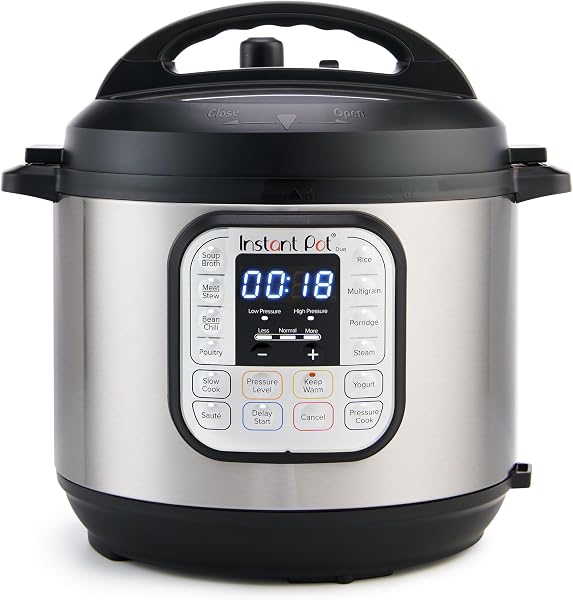
You do not have to spend much to get an uncoated pot. The Duo has used 18/8 stainless with a tri-ply base from the start, and that is the specification most people are looking for.
Key Specifications
| Capacity | 6 quarts |
|---|---|
| Inner pot | 18/8 stainless steel with tri-ply bottom, uncoated |
| Power | 1000 W, 120 V |
| Relevant functions | Pressure cook, steam, slow cook, sauté, rice |
| Programs | 13 one-touch options |
| Weight | 14.6 lb |
| Best For | Uncoated stainless cooking on a budget |
Why We Recommend It
The steam function handles vegetables and fish with no added fat, and the sauté function lets you brown with a small amount of oil rather than the larger quantity a frying pan needs.
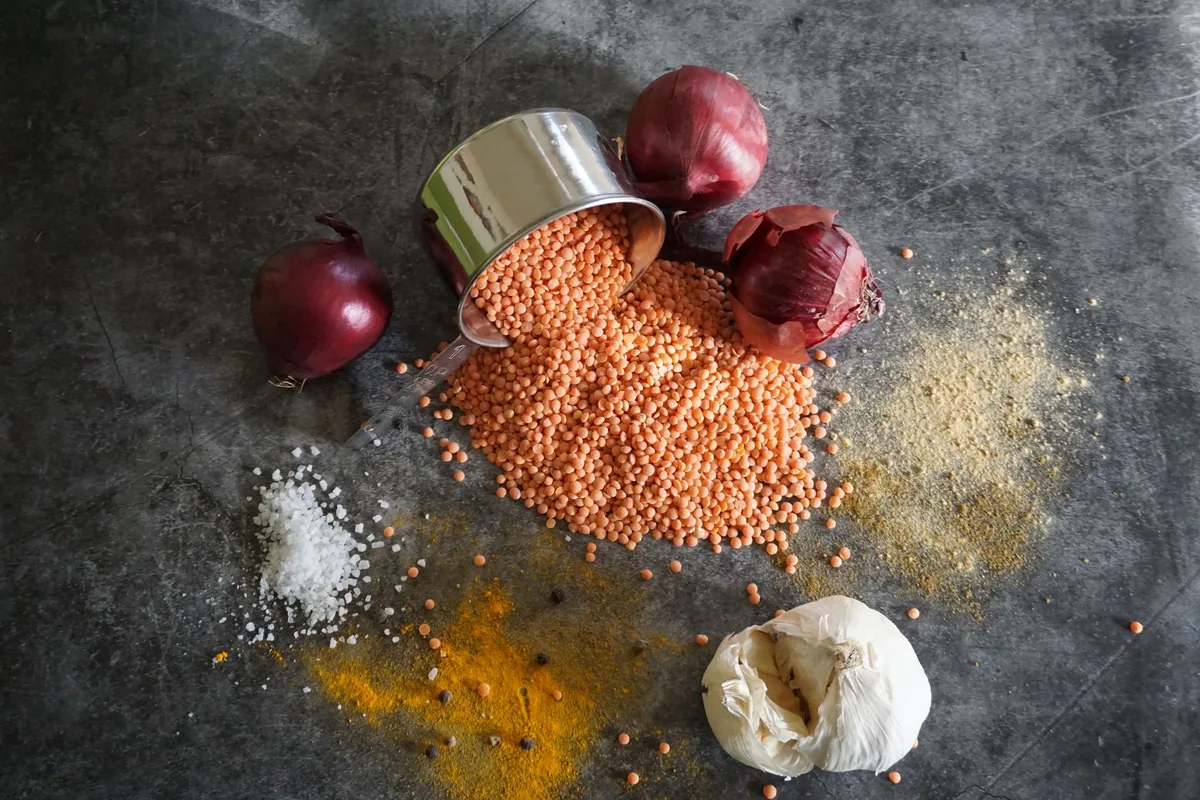
Dried beans and pulses are where pressure cooking is most useful for everyday eating — cheap, and cooked from dry in under an hour rather than needing an overnight soak.
Pros
- Uncoated 18/8 stainless tri-ply pot
- Steaming needs no added fat at all
- Cooks dried pulses from dry in under an hour
- Cheapest uncoated electric option here
Cons
- Basic display with no pressure indicator
- No sous vide function
- Heaviest 6-quart Instant Pot at 14.6 lb
Best for: Anyone wanting an uncoated stainless pot without paying a premium.
5. Instant Pot Duo Plus 9-in-1 — Best for Lean Proteins

Lean proteins are where cooking method matters most. Chicken breast and white fish have very little fat to protect them, so they go from underdone to dry quickly under high heat.
Key Specifications
| Capacity | 6 quarts |
|---|---|
| Inner pot | 18/8 stainless, anti-spin tri-ply base, uncoated |
| Power | 1000 W |
| Relevant functions | Sous vide, steam, pressure cook, slow cook |
| Programs | 15 one-touch options |
| Display | Time, temperature and pressure indicators |
| Weight | 12.4 lb |
| Best For | Cooking lean chicken and fish without drying them out |
Why We Recommend It
Sous vide holds a precise temperature, which is the most forgiving way to cook them, and the steam function handles vegetables alongside without added fat.
The display showing temperature and pressure separately is genuinely useful here, because low-temperature cooking depends on knowing the appliance has actually reached and held the target.
Pros
- Sous vide suits lean chicken and fish
- Steam function needs no added fat
- Uncoated anti-spin tri-ply stainless pot
- Display confirms temperature is being held
Cons
- No app or connectivity
- Sous vide needs bags and some planning
- Heavier than the basic Duo
Best for: Cooks focused on lean proteins that overcook easily.
6. Instant Pot Duo Mini 3 Qt — Best Portion Control

Cooking a smaller batch is a simple and often overlooked way to eat more deliberately — there is nothing left in the pot to go back to.
Key Specifications
| Capacity | 3 quarts |
|---|---|
| Inner pot | 18/8 stainless with tri-ply base, uncoated |
| Power | 700 W |
| Relevant functions | Pressure cook, steam, slow cook, sauté, rice |
| Programs | 11 one-touch options |
| Weight | 8.2 lb |
| Best For | Cooking deliberate portions rather than large batches |
Why We Recommend It
Three quarts suits two or three portions, uses the same uncoated 18/8 stainless tri-ply pot as its larger siblings, and steams vegetables and fish without any added fat.
It also cooks grains and pulses well, which are the cheapest way to build meals around plants rather than meat.
Pros
- Batch size matches what you plan to eat
- Same uncoated stainless pot as larger models
- Steams vegetables and fish with no oil
- Cooks grains and pulses from dry
Cons
- Around three portions per batch
- Too small for family batch cooking
- More controls than a simple stovetop pot
Best for: One or two-person households cooking deliberate portions.
7. COSORI 6QT 9-in-1 — Best Coated Alternative
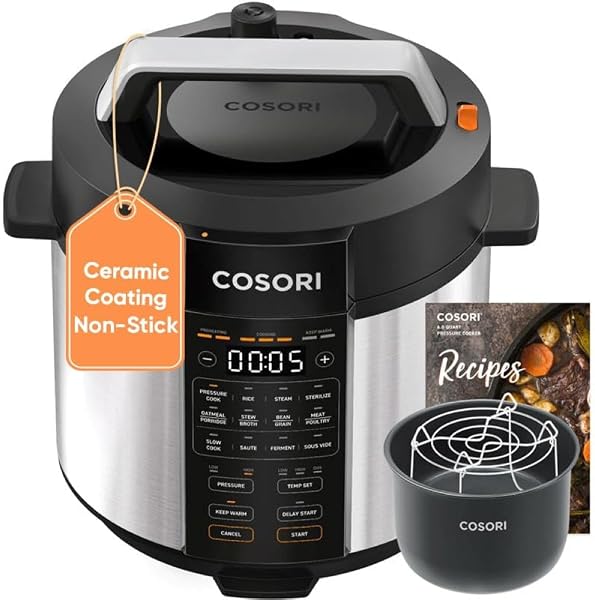
There are two reasonable positions on coatings. One is to avoid them entirely; the other is that a good release surface lets you cook with less oil, because you are not adding fat purely to stop food sticking.
Key Specifications
| Capacity | 6 quarts |
|---|---|
| Inner pot | Ceramic-coated, dishwasher safe |
| Power | 1100 W |
| Materials | Food-contact parts stated non-BPA |
| Relevant functions | Steam, pressure cook, slow cook, sous vide, ferment |
| Safety | 12 stated features |
| Weight | 11.9 lb |
| Best For | Cooking with minimal added oil |
Why We Recommend It
If that second position is yours, this is the pick. COSORI states the food-contact parts are non-BPA, and the ceramic pot is dishwasher safe.
The ferment function is a genuine extra for anyone making yoghurt or fermented foods at home. Be realistic that any coating wears, and treat it gently to extend its life.
Pros
- Ceramic release means less oil is needed
- Food-contact parts stated non-BPA
- Ferment and sous vide functions included
- Ceramic pot and lid are dishwasher safe
Cons
- Coating will wear over years of use
- Not the choice if you avoid coatings entirely
- Fewer third-party recipes than Instant Pot
Best for: Cooks who want minimal oil and are comfortable with a ceramic coating.
8. Instant Pot Duo Crisp 11-in-1 — Best Low-Oil Crisping

The hardest thing to give up when cooking with less fat is texture. Steamed and pressure-cooked food is soft, and that is why people drift back to frying.
Key Specifications
| Capacity | 6 litres |
|---|---|
| Inner pot | Stainless steel |
| Power | 1500 W |
| Relevant functions | Air fry, roast, bake, dehydrate, steam, pressure cook |
| Technology | EvenCrisp, stated 95% less oil than deep frying |
| Lids | Two |
| Weight | 19.6 lb |
| Best For | Crisp results without deep frying |
Why We Recommend It
Air frying addresses that directly — Instant Pot states EvenCrisp achieves the crunch of frying with 95% less oil, and the dehydrate function is useful for making your own dried fruit and vegetable snacks.
Two lids and 19.6 lb is the price of covering both methods in one appliance.
Pros
- Air fries with a stated 95% less oil than deep frying
- Stainless inner pot, uncoated
- Dehydrate function for homemade snacks
- Steam and pressure cook in the same pot
Cons
- Heavy at 19.6 lb
- Second lid needs storage space
- Air frying is still a dry-heat method, not a substitute for steaming
Best for: Cooks who want crisp textures without deep frying.
9. Prestige Alpha Deluxe 3 L — Best Small Stainless

Pulses and lentils are among the cheapest and most useful things a pressure cooker makes, and they do not need a large pot.
Key Specifications
| Capacity | 3 litres |
|---|---|
| Type | Stovetop |
| Material | Stainless steel |
| Base | Alpha induction base |
| Safety | Controlled gasket release system and safety valve |
| Weight | 4.6 lb |
| Best For | Small stainless batches of dal, pulses and vegetables |
Why We Recommend It
This is stainless throughout with no coating, induction-compatible, and small enough that a single-person batch of dal or beans sits at a sensible depth.
The controlled gasket release system is a genuine safety design: if normal steam escape is blocked, the gasket releases pressure in a controlled way.
Pros
- Stainless throughout with no coating
- Right size for single batches of pulses
- Induction-compatible base
- Controlled gasket release plus safety valve
Cons
- Three litres suits one or two people only
- No timer or programs
- Lid alignment takes practice
Best for: Cooks making small stainless batches of pulses and vegetables.
10. Instant Pot RIO Mini 4QT — Best Compact

Four quarts is a useful middle size: enough for four servings of a bean stew, small enough to store without negotiating for cupboard space.
Key Specifications
| Capacity | 4 quarts |
|---|---|
| Inner pot | Stainless steel |
| Power | 800 W |
| Relevant functions | Pressure cook, steam, slow cook, sauté, rice |
| Serves | Stated as up to 4 servings |
| Display | Progress indicator |
| Weight | 10.9 lb |
| Best For | Small households wanting steaming and pulses |
Why We Recommend It
The stainless pot is uncoated, the steam function needs no added fat, and Instant Pot states the cooking surface matches an 8-inch pan, so browning with minimal oil is practical.
Seven functions rather than ten keeps it simple, which for everyday vegetables, grains and pulses is all that is required.
Pros
- Uncoated stainless pot in a small body
- Four servings without a large appliance
- Progress indicator shows cooking status
- Cooking surface equal to an 8-inch pan
Cons
- Seven functions, no sous vide
- Steam release is manual
- Still 10.9 lb despite the smaller capacity
Best for: Small households cooking vegetables, grains and pulses regularly.
Uncoated Stainless or Ceramic Coating?
The materials question most people are really asking, with a reasonable case on each side.
| Feature | Instant Pot Duo (stainless) | COSORI 6QT (ceramic-coated) |
|---|---|---|
| Inner pot | 18/8 stainless, uncoated | Ceramic-coated |
| Coating to degrade | None | Yes, wears over time |
| Food release | Food can stick without oil | Releases with little or no oil |
| Searing | Browns well | Gentler on the coating, less aggressive searing |
| Lifespan | Indefinite with care | Limited by the coating |
| Main advantage | Nothing to wear off | Needs less oil to stop sticking |
| Main drawback | May need a little oil to prevent sticking | Coating is consumable |
Choose stainless if: your concern is the coating itself, and you are content to use a little oil or accept some sticking.
Choose ceramic if: your goal is minimising added fat, and you accept that the pot has a finite life.
Electric Multicooker or Stovetop Stainless?
The simplest materials against the widest range of low-fat methods.
| Feature | Presto 01365 (stovetop) | Instant Pot Pro (electric) |
|---|---|---|
| Materials | All stainless, no plastic pot | Stainless pot, plastic housing |
| Electronics | None | Full control panel |
| Fat-free methods | Pressure cooking, steaming | Pressure, steam, sous vide |
| Temperature control | You manage the burner | Programmed and held |
| Weight | 5 lb | 6 kg |
| Main advantage | Simplest possible construction | Sous vide and precise control |
| Main drawback | No timer or gentle low-temperature modes | More materials and components involved |
Choose stovetop stainless if: the materials are your main concern and you want nothing coated or electronic.
Choose the electric multicooker if: you want sous vide and precise temperature control for lean proteins.
Best Alternatives
| Alternative | Why Consider It | Better For | Main Trade-Off |
|---|---|---|---|
| Instant Pot Duo Plus | Sous vide in an uncoated pot | Lean chicken and fish | No app or connectivity |
| Instant Pot Duo Mini | Batches sized to a portion | Deliberate portion control | About three portions |
| Instant Pot Duo Crisp | Air fries with far less oil | Crisp textures without frying | Heavy, two lids |
| Prestige Alpha Deluxe 3 L | All stainless in a small pot | Single batches of pulses | Suits one or two only |
| Instant Pot RIO Mini 4QT | Uncoated pot, compact body | Small households | Fewer functions |
What Actually Differs Between These Cookers?
Uncoated stainless is the simplest answer on materials. The Instant Pot range, the Nuwave and the two stovetop models all use bare stainless with no non-stick layer to wear or degrade.
Coated pots release food more easily, which means less oil is needed to stop things sticking. COSORI uses a ceramic coating and states its food-contact parts are non-BPA. The trade-off is that any coating is consumable.
Cooking methods matter as much as materials. Steaming and sous vide use no fat at all, pressure cooking needs none, and air frying replaces deep frying with a stated fraction of the oil. Which functions a cooker has decides how much of your cooking can avoid added fat.
How to Choose a Pressure Cooker for Healthier Cooking
Decide Your Position on Coatings First
This single question sorts the field. If you want nothing coated, look for uncoated 18/8 or 18/10 stainless and check the listing says so explicitly — Nuwave is unusually clear about it. If you would rather minimise oil and accept a coating, ceramic models release food far more easily.
Check Which Fat-Free Methods It Offers
Steaming needs no oil and every model here can do it. Sous vide is gentler still and suits lean proteins, but only some models have it. Pressure cooking itself needs no added fat. The more of these a cooker offers, the more of your cooking can skip oil entirely.
Pulses Are the Strongest Everyday Case
Dried beans, lentils and chickpeas are inexpensive, keep indefinitely and cook from dry in well under an hour under pressure rather than needing an overnight soak. If you want one practical reason a pressure cooker changes how you eat, this is it.
Lean Proteins Need Gentle Control
Chicken breast and white fish have little fat to protect them and overcook quickly. Sous vide holds a set temperature and is the most forgiving method; steaming is next. Both are available on the Duo Plus and the Pro here.
Air Frying Is a Texture Solution, Not a Steaming Substitute
The reason people abandon low-fat cooking is usually texture. Air frying gives crisp results with a stated fraction of deep frying’s oil, which is genuinely useful — but it is a dry-heat method, not a lighter version of steaming. Treat it as an alternative to frying specifically.
Buy the Size You Intend to Eat
An underrated factor. A three or four-quart cooker produces the portions you planned; an eight-quart one produces leftovers that sit in the fridge inviting a second helping. Batch size is a simple lever, and it costs nothing.
Read Materials Claims as Manufacturer Statements
"Non-BPA", "non-toxic" and "non-coated" come from the listing, not from independent testing. They are worth having in writing, and worth treating as claims rather than verified findings.
Keep Perspective on What an Appliance Can Do
A cooker changes the method and the materials, not the ingredients. What you put in it matters far more than which model you buy, and nothing here is a substitute for advice from a qualified professional if you have specific dietary needs.
Common Mistakes When Buying for Healthier Cooking
- Assuming any appliance makes food healthier. It changes method and materials, not ingredients.
- Not checking whether the pot is coated. Many listings simply do not say, which is itself informative.
- Treating air frying as equivalent to steaming. It is a lower-oil alternative to frying, not a light method.
- Buying eight quarts when you cook for two. Batch size quietly drives how much you eat.
- Using metal utensils on a coated pot. It shortens the coating’s life considerably.
- Overfilling with beans or grains. Foaming foods need the half-full limit, not two-thirds.
- Taking marketing claims as tested findings. Non-BPA and non-toxic are statements, not certifications you have seen.
- Expecting nutritional advice from a spec sheet. For dietary needs, ask a qualified professional.
Who Should Buy a Pressure Cooker for Healthier Cooking?
A pressure cooker is genuinely useful if you want to:
- Cook dried pulses regularly — cheap protein and fibre, from dry, without soaking
- Steam vegetables and fish — no added fat required at all
- Cook whole grains — brown rice, barley and farro without constant attention
- Avoid non-stick coatings — where an uncoated stainless pot is the answer
- Cook lean proteins gently — sous vide and steam suit chicken breast and white fish
- Control portions — by cooking the amount you intend to eat
Who May Be Better With Something Else?
If you mainly want crisp roasted vegetables, an oven or air fryer does that better. If you want a simple steamer, a basket in a saucepan costs almost nothing. And if your interest is specifically the materials, a plain stainless stovetop pressure cooker gives you the simplest construction available, without electronics or a plastic housing.
Frequently Asked Questions
Which pressure cooker material is best?
Uncoated 18/8 or 18/10 stainless steel is the simplest choice, because there is no coating to wear or degrade. Ceramic and non-stick coatings release food more easily, which means less oil is needed, but they are consumable and will show wear over years of use. Stovetop stainless cookers avoid plastic housings entirely.
Does pressure cooking preserve nutrients?
The usual argument is that shorter cooking times with less water mean fewer water-soluble nutrients are lost compared with prolonged boiling. How much difference this makes varies considerably by ingredient and nutrient, so treat it as a reasonable general point rather than a guarantee. Steaming has a similar rationale.
What does BPA-free mean on a pressure cooker?
It is a manufacturer statement that food-contact plastics do not contain bisphenol A. COSORI states its food-contact parts are non-BPA. It is worth having in writing, but it is a claim from the listing rather than something independently verified, and it applies only to the parts specified.
Can you cook without oil in a pressure cooker?
Yes. Pressure cooking, steaming and sous vide all work with no added fat. The sauté function does need a little oil, though far less than a frying pan. A coated pot makes cooking without oil easier because food is less likely to stick.
Are dried beans really better than tinned?
They are considerably cheaper, hold their texture better, and let you control what is added — tinned varieties often contain added salt. Pressure cooking is what makes dried beans practical, taking them from dry to done in under an hour. Note that red kidney beans must be boiled properly first; follow the packet instructions.
Is air frying healthier than deep frying?
Air frying uses considerably less oil — Instant Pot states 95% less than deep frying for its EvenCrisp system. That is a meaningful reduction in added fat. It remains a dry-heat cooking method rather than a light one, so it is best seen as an alternative to frying rather than to steaming.
What size pressure cooker helps with portion control?
Three to four quarts produces two to four servings, which is the amount most people actually intend to eat. Larger cookers produce leftovers, which is excellent for meal prep but works against portion control if that is your aim. Size to your intention, not to the largest available.
Do I need sous vide for lean meat?
It helps but is not essential. Sous vide holds a precise temperature, which makes it very difficult to overcook chicken breast or fish. Steaming achieves something similar with less equipment. If you cook lean proteins often and find they dry out, sous vide is the function most likely to fix it.
Final Verdict
An uncoated stainless pot with steam, sous vide and pressure cooking — the widest range of methods that need no added fat.
All stainless with a tri-clad base, no coatings, no plastic pot and no electronics — the simplest construction here.
Triple-thick 18/10 stainless that the manufacturer explicitly states is non-coated, plus a probe for cooking to temperature.
Choosing a pressure cooker on these grounds comes down to five things: whether you want an uncoated pot or a coating that reduces oil, which fat-free functions the cooker offers, whether you cook pulses and grains often, whether lean proteins need gentler control, and what batch size matches how you actually eat. The appliance changes the method and the materials — what goes in it still matters most.