Affiliate Disclosure: As an Amazon Associate, we earn from qualifying purchases. This does not affect the price you pay.
Search for a gas pressure cooker and the results contain two completely different appliances, built on two different traditions, that happen to do the same job.
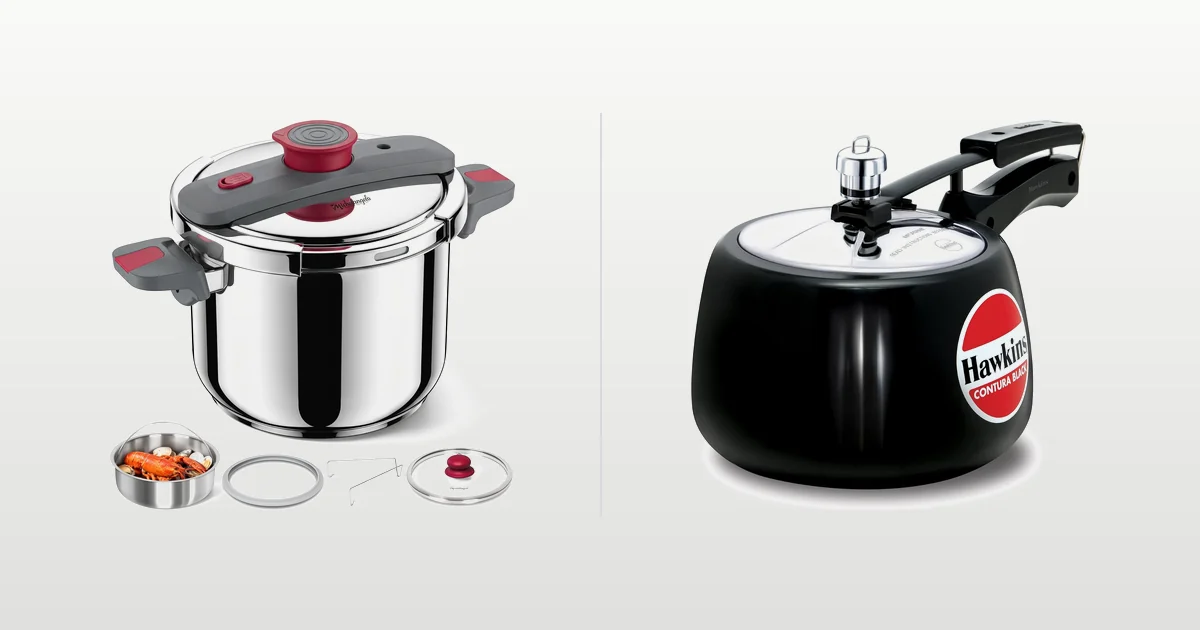
One is the outer-lid cooker familiar in American and European kitchens: a large stainless or aluminium pot, 6 to 8.5 quarts, with a lid that clamps down over the rim. The other is the inner-lid cooker standard across South Asia: a smaller pot, 1.5 to 4 litres, where the lid is tilted inside the rim and pulled up against it, so rising pressure seals it tighter.
The split runs right through the specifications. Every inner-lid cooker in this roundup states its capacity in litres and none exceeds 4. Every outer-lid one states quarts and none is below 6.3. Compare the headline numbers without noticing that and you will conclude one group is tiny, when really it is a different design sold to different recipes.
There is a second gap underneath. Only four of these ten publish an operating pressure at all, and where they do it ranges from 8.7 to 14.5 psi — against the 15 psi that American recipes assume. A cooker running at 11.6 psi needs roughly a fifth longer than the recipe says, and six cookers here will not tell you which side of that you are on.
Our Quick Picks
 Best OverallMICHELANGELO 8.5 Qt
The only cooker here that publishes two operating pressures and lets you choose between them.
 Cheapest HereHawkins Contura CB30
Thirty-seven forty-nine, hard anodised, and built on the inner-lid design that half this roundup uses.
 Highest RatedKOCH SYSTEME CS 8.5 Qt
Eighteen-ten stainless, three pressure settings and the only perfect rating in this roundup.
At a Glance
Ten Gas Pressure Cookers Compared
Lid design, pot material and stated pressure — with litres converted so the two traditions sit on one scale.
| # | Model | Capacity | Lid Design | Material | Pressure | Standout | Main Drawback | Check Price |
|---|---|---|---|---|---|---|---|---|
| 1 |
 MICHELANGELO 8.5 Qt MICHELANGELO 8.5 Qt |
8.5 qt | Outer lid | 304 stainless | 8.7 and 14.5 psi | Two pressure settings, both published | Largest and dearest here | View on Amazon |
| 2 |
 KOCH SYSTEME CS 8.5 Qt KOCH SYSTEME CS 8.5 Qt |
8.5 qt | Outer lid | 18/10 stainless | 3 settings stated | Perfect rating and 18/10 steel | 5.0 rating rests on few reviews | View on Amazon |
| 3 |
 TIBORANG 6.3 QT TIBORANG 6.3 QT |
6.3 qt | Outer lid | Stainless steel | 100 kPa, about 14.5 psi | Publishes its pressure in kPa | States it feeds only 2 to 3 people | View on Amazon |
| 4 |
 WantJoin 6.5 Qt WantJoin 6.5 Qt |
6.5 qt | Outer lid | Stainless steel | 11.6 psi | Publishes its psi, and it is below 15 | 11.6 psi means longer than recipe times | View on Amazon |
| 5 |
 IMUSA 7 Quart IMUSA 7 Quart |
7 qt | Outer lid | Aluminium | Not stated | Seven quarts for forty-eight dollars | Aluminium, so no induction and no acids | View on Amazon |
| 6 |
 Universal Ultra 6.3 Qt Universal Ultra 6.3 Qt |
6.3 qt | Outer lid | Anti-rust aluminium | Not stated | Highest rated cooker in the roundup | No pressure figure published | View on Amazon |
| 7 |
 Hawkins Contura CB30 Hawkins Contura CB30 |
3 L, about 3.2 qt | Inner lid | Hard anodised aluminium | Not stated | Thirty-seven dollars, and the lid seals from inside | Three litres is small by Western standards | View on Amazon |
| 8 |
 Hawkins B60 Hawkins B60 |
3 L, about 3.2 qt | Inner lid | Stainless steel | Not stated | Stainless with an inner lid, and induction capable | Lowest rating in the roundup | View on Amazon |
| 9 |
 Hawkins Triply HSST15 Hawkins Triply HSST15 |
1.5 L, about 1.6 qt | Inner lid | Triply stainless | Not stated | A three-layer base, rare at this size | One and a half litres is very small | View on Amazon |
| 10 |
 Prestige PRP4 Prestige PRP4 |
4 L, about 4.2 qt | Inner lid | Aluminium | Not stated | Four litres, the largest inner-lid pot here | Lowest rated but one, and plain aluminium | View on Amazon |
Specifications, prices and ratings are taken from each manufacturer’s Amazon listing as displayed on 20 August 2026 and may change. Litre-to-quart conversions are ours, at 1 litre = 1.0567 US quarts. The TIBORANG states 100 kPa, converted here at 6.895 kPa per psi to about 14.5 psi. Six of the ten publish no operating pressure at all. Lid design is recorded from each listing’s own description; the four inner-lid models are so described by their manufacturers. Three of the ten are Hawkins, which reflects how completely that brand occupies the inner-lid category rather than an editorial preference, and is disclosed here for the same reason the Ninja and Aroma concentrations were in earlier roundups. Pressure canners of 16 quarts and above were excluded as a different product class, as were replacement gaskets, sealing rings, a safety valve and an idli cooker returned by the same Amazon category. Every ASIN here is new to this site.
Scroll the table sideways to see every column
How We Chose These Gas Pressure Cookers
We researched current listings, compared manufacturer specifications and documentation, and examined recurring patterns in customer feedback. We did not carry out hands-on testing, and nothing below is presented as measured performance data.
- Lid design, stated by the manufacturer — inner-lid and outer-lid cookers are different appliances sold under one search term
- Capacity converted to one unit — the two traditions use litres and quarts, which makes the sizes look further apart than they are
- Published operating pressure — only four of these ten give one, and recipe timings depend on it
- Pot material against the food — bare aluminium reacts with acid; anodised and stainless do not
- Hob compatibility beyond gas — aluminium cannot work on induction, which matters if the kitchen changes
- Stovetop cookers only — pressure canners, gaskets, sealing rings, a safety valve and an idli cooker were excluded
The 10 Best Gas Pressure Cookers, Reviewed
1. MICHELANGELO 8.5 Qt — Best Overall

Most stovetop pressure cookers give you one pressure and do not tell you what it is. This one gives you two — 8.7 psi and 14.5 psi — and prints both.
Eight and a half quarts of uncoated 304 stainless, on a body that works on gas, electric and induction.
Key Specifications
| Capacity | 8.5 quarts, largest here |
|---|---|
| Lid | Outer lid, one-hand locking |
| Pressure | 8.7 psi low, 14.5 psi high |
| Material | 304 stainless steel, uncoated |
| Safety | 6-fold safety system |
| Dimensions | 14.57″D x 8.66″W x 11″H |
| Hob | Gas, electric and induction |
| Rating | 4.5 out of 5 stars |
| Best For | Cooking to a recipe that names a pressure |
Why We Recommend It
Published pressure is the specification this category mostly withholds, and it decides your timings. American recipes are written for 15 psi. A cooker running at 11.6 needs noticeably longer; one running at 8.7 needs longer again. If you do not know the figure, you are guessing at every cook.
Having a low setting as well is genuinely useful for the same reason the electric machines offer it: delicate vegetables and fish hold their shape at 8.7 psi and disintegrate at 14.5.
Uncoated 304 stainless is the right material for a pot that will be seared in and deglazed, and it will outlast any coating. At $119.99 it is the most expensive cooker in this roundup.
Pros
- Publishes two operating pressures, 8.7 and 14.5 psi
- 8.5 quarts, largest capacity here
- Uncoated 304 stainless, nothing to wear off
- Works on gas, electric and induction
- 6-fold safety system with one-hand locking
Cons
- $119.99, most expensive here
- 14.57 inches across, needs a large burner
- Heavy to lift when full
- No steamer basket stated
Best for: Anyone following recipes that specify a pressure rather than guessing.
2. KOCH SYSTEME CS 8.5 Qt — Highest Rated

Eighteen-ten stainless is a higher nickel content than the 304 used elsewhere here, which means better corrosion resistance and a finish that stays bright.
Three pressure settings, one-hand locking and dishwasher-safe construction, at 8.5 quarts.
Key Specifications
| Capacity | 8.5 quarts, joint largest |
|---|---|
| Lid | Outer lid, one-hand locking |
| Pressure | 3 settings stated |
| Material | Food-grade 18/10 stainless steel |
| Dimensions | 12.4″D x 12.4″W x 13.6″H |
| Hob | Induction compatible base |
| Cleaning | Dishwasher safe |
| Rating | 5.0 out of 5 stars |
| Best For | A large stainless cooker with graded pressure control |
Why We Recommend It
Three settings rather than two is more graded control than anything else in this roundup, and on a stovetop cooker that is unusual — most give you one pressure and a weight that rattles.
The 12.4-inch square footprint is more compact than the MICHELANGELO’s 14.57 inches for the same capacity, which matters on a crowded hob.
The 5.0 rating deserves a caveat. A perfect score almost always means a small number of reviews rather than universal agreement, and this is a new listing. Treat it as promising rather than proven, and weigh the 4.5 on the MICHELANGELO accordingly — that figure has more behind it.
Pros
- 18/10 stainless, higher grade than the 304 here
- Three pressure settings, most graded control here
- 8.5 quarts in a 12.4-inch footprint
- Dishwasher safe with an induction base
- One-hand locking lid
Cons
- 5.0 rating likely rests on very few reviews
- $109.99, second dearest here
- 13.6 inches tall with the lid on
- Newer brand with no track record
Best for: A large stainless cooker where graded pressure matters.
3. TIBORANG 6.3 QT — Best Value Stainless

TIBORANG states 100 kilopascals, which converts to about 14.5 psi — effectively the 15 psi that American recipes assume.
That is worth more than it sounds in a category where most cookers publish nothing.
Key Specifications
| Capacity | 6.3 quarts |
|---|---|
| Lid | Outer lid, rotate to open |
| Pressure | 100 kPa, about 14.5 psi |
| Material | Stainless steel |
| Weight | 3.5 kg |
| Dimensions | 11″D x 14″W x 10″H |
| Hob | Gas, electric and induction |
| Serves | 2–3 people, stated |
| Best For | Recipe-accurate pressure at a sensible price |
Why We Recommend It
It is also the only cooker here using kPa, which is a third unit alongside psi and the litres-versus-quarts split running through this roundup. One hundred kPa above atmospheric is 14.5 psi; if a listing gives you kPa, divide by 6.895.
Rotate-to-open is a simpler and more robust mechanism than a clamp, and the instructions on the listing are unusually plain: fill below the max line, high heat to pressure, then reduce.
The serving claim is oddly modest. TIBORANG says 6.3 quarts feeds two to three people, where a rival calls the same capacity seven servings of rice and beans. The truth is closer to the rival’s figure; treat the stated serving count as conservative rather than as a capacity limit.
Pros
- States 100 kPa, about 14.5 psi — near recipe standard
- Works on gas, electric and induction
- Rotate-to-open lid, simple and robust
- $77.99 for stainless at this capacity
- Clear operating instructions on the listing
Cons
- States it serves only 2 to 3 people, which reads conservative
- Publishes pressure in kPa, a third unit here
- 3.5 kg empty
- 4.2 stars, mid-pack
Best for: Cooks who want a known operating pressure without paying three figures.
4. WantJoin 6.5 Qt — Best Under $65

Sixty ninety-three is the cheapest stainless cooker in this roundup, and at 9.5 inches square it has the smallest footprint of anything here despite holding 6.5 quarts.
WantJoin publishes 11.6 psi, which most of its rivals do not.
Key Specifications
| Capacity | 6.5 quarts |
|---|---|
| Lid | Outer lid |
| Pressure | 11.6 psi, stated |
| Material | Stainless steel, multi-layer base |
| Dimensions | 9.5″D x 9.5″W x 6.2″H, smallest footprint here |
| Base | U-shaped multi-layer for even heat |
| Hob | Gas, electric and induction |
| Model | 24CM6.5L |
| Best For | Large capacity on a small hob, at the lowest stainless price |
Why We Recommend It
Eleven point six psi is the number to plan around, and it is below the 15 psi American recipes assume. Lower pressure means a lower internal temperature and therefore longer cooking — typically around a fifth to a quarter more time than a recipe written for 15 psi. That is not a fault, and the cooker is not worse for it, but a recipe followed literally will undercook.
Publishing the figure is what lets you correct for it, which is why this is a better position than the six cookers here that state nothing.
The multi-layer U-shaped base spreads heat across a gas flame rather than concentrating it, and the whole thing works on induction too.
Pros
- $60.93, cheapest stainless cooker here
- Smallest footprint at 9.5 inches square
- Publishes 11.6 psi so timings can be corrected
- Multi-layer base spreads a gas flame
- Gas, electric and induction compatible
Cons
- 11.6 psi is below the 15 psi recipes assume
- Recipe times need extending by roughly a fifth
- 4.2 stars, mid-pack here
- No pressure adjustment, single setting
Best for: Feeding a family from a small hob without paying for stainless twice.
5. IMUSA 7 Quart — Best Large Aluminium

Seven quarts at $47.99 is roughly half what the stainless cookers of similar size cost here, and IMUSA is a long-established name in Latin American cookware.
Aluminium is the reason it is cheap, and the reason it heats faster than any stainless pot in this roundup.
Key Specifications
| Capacity | 7 quarts |
|---|---|
| Lid | Outer lid, locking |
| Material | Aluminium |
| Pressure | Not stated |
| Safety | Automatic pressure regulation, safety valves |
| Dimensions | 17.1″D x 9.65″W x 7.09″H |
| Hob | Gas and electric, not induction |
| Model | A417-80810 |
| Best For | Big batches on a gas hob at the lowest possible price |
Why We Recommend It
Aluminium suits gas particularly well. It conducts heat far better than steel, so a flame that touches only the centre of the base still spreads across it — which is exactly the situation on a domestic gas ring under a 17-inch pot.
The two trade-offs are real and worth knowing. Aluminium is not magnetic, so this will not work on an induction hob at all — irrelevant for the keyword, relevant if you ever move. And bare aluminium reacts with acidic food: tomato, wine, vinegar and lemon will dull the surface and can pick up a metallic note on long cooks.
For beans, stocks, pulses and meat it is entirely appropriate, which is most of what a large pressure cooker gets used for.
Pros
- 7 quarts at $47.99, cheapest large capacity here
- Aluminium spreads a gas flame better than steel
- Automatic pressure regulation and safety valves
- Established cookware brand
- Light for its size
Cons
- Aluminium will not work on induction
- Reacts with tomato, wine and other acidic foods
- No operating pressure published
- 17.1 inches across, needs a big burner
Best for: Beans, stock and meat in quantity, on gas, cheaply.
6. Universal Ultra 6.3 Qt — Best Aluminium

Four point six is the highest rating in this comparison, above every stainless cooker here and above both 8.5-quart flagships.
Six point three quarts of treated aluminium with a five-layer safety system, at $68.99.
Key Specifications
| Capacity | 6.3 quarts |
|---|---|
| Lid | Outer lid |
| Material | Anti-rust aluminium |
| Safety | 5-layer safety system |
| Pressure | Not stated |
| Price | $68.99 |
| Hob | Gas and electric |
| Rating | 4.6 out of 5 stars, highest here |
| Best For | The best-reviewed cooker in this roundup, at a middling price |
Why We Recommend It
Anti-rust treatment addresses the main complaint about bare aluminium pots, which is that they dull and pit over time, particularly if they are put through a dishwasher.
It publishes no operating pressure, which puts it with the majority here rather than with the four cookers that do. For everyday use that matters less than it sounds — you learn your own cooker’s timings within a few meals — but it does mean a recipe cannot be followed literally the first time.
Like the IMUSA it is aluminium, so induction is out and acidic dishes are better cooked elsewhere.
Pros
- 4.6 stars, highest rating in this roundup
- Anti-rust treatment for a longer-lived aluminium pot
- 5-layer safety system
- $68.99 for 6.3 quarts
- Fast, even heating on a gas flame
Cons
- No operating pressure published
- Aluminium, so no induction
- Reacts with acidic ingredients
- Generic brand name with little history
Best for: The best-reviewed option here, if aluminium suits your cooking.
7. Hawkins Contura CB30 — Cheapest Here

Thirty-seven forty-nine is the lowest price in this roundup, and it buys a genuinely different machine from the stainless pots above.
The lid goes inside the rim rather than clamping over it. You tilt it in, pull it up against the underside, and pressure inside pushes it tighter as the cooker heats.
Key Specifications
| Capacity | 3 litres, about 3.2 quarts |
|---|---|
| Lid | Inner lid |
| Material | Hard anodised aluminium |
| Weight | 4.2 pounds |
| Dimensions | 7.76″D x 13.46″W x 7.32″H |
| Hob | Gas and electric stovetop compatible |
| Model | CB30 |
| Shape | Contura, curved sides |
| Best For | Dal, rice and small-batch cooking on a gas ring |
Why We Recommend It
That design is standard across South Asia and almost unknown in American kitchens, and it has a real advantage: the seal gets stronger under pressure rather than relying on a clamp to hold it shut. There is less hardware to fail.
Hard anodising is aluminium with a treated surface, harder than bare aluminium and considerably less reactive — which addresses the acidic-food problem the plain aluminium cookers here have.
Three litres is about 3.2 quarts, which after the fill limit means roughly two quarts of finished food. That is a dal-and-rice cooker, not a stock pot, and the Contura’s curved sides are shaped for stirring rather than stacking.
Pros
- $37.49, cheapest cooker in this roundup
- Inner lid seals tighter as pressure rises
- Hard anodised, so far less reactive than bare aluminium
- 4.2 pounds, easy to handle
- Curved Contura body suits stirring
Cons
- 3 litres is about 3.2 quarts, small for Western recipes
- No operating pressure published
- Inner lid takes practice to seat
- Hard anodised aluminium is not induction compatible
Best for: Dal, rice, pulses and everyday small-batch cooking on gas.
8. Hawkins B60 — Best Inner-Lid Stainless

Most inner-lid cookers are aluminium. This is stainless, which changes two things: it will not react with acidic food at all, and it works on induction.
One point eight kilograms and dishwasher safe.
Key Specifications
| Capacity | 3 litres, about 3.2 quarts |
|---|---|
| Lid | Inner lid |
| Material | Stainless steel |
| Weight | 1.8 kg |
| Cleaning | Dishwasher safe |
| Hob | Gas, electric and induction |
| Model | B60 |
| Rating | 4.1 out of 5 stars, lowest here |
| Best For | Inner-lid cooking on an induction hob as well as gas |
Why We Recommend It
Non-reactivity matters more on this style of cooker than it first appears, because the food most often cooked in one — tomato-based curries, tamarind, lemon dal — is exactly the acidic category that dulls bare aluminium.
Stainless is slower to heat and less even than aluminium over a gas ring, which is the trade. On a 3-litre pot that difference is small.
At 4.1 stars it carries the lowest rating in this roundup. Inner-lid cookers do have a learning curve — seating the lid correctly is a knack rather than a mechanism — and that shows up in reviews from buyers meeting the design for the first time.
Pros
- Inner lid in stainless rather than aluminium
- Completely non-reactive with acidic food
- Works on induction as well as gas
- 1.8 kg and dishwasher safe
- Hawkins, the established name in this design
Cons
- 4.1 stars, lowest rating in the roundup
- Inner lid has a genuine learning curve
- Stainless heats less evenly than aluminium on gas
- No operating pressure published
Best for: Acidic curries and dal, on gas or induction.
9. Hawkins Triply HSST15 — Smallest Here

A triply base is three bonded layers — stainless, aluminium, stainless — so the pot gets aluminium’s heat spread with stainless surfaces on both faces.
It is the construction good saucepans use, and it is unusual to find it on a pressure cooker at all, let alone a 1.5-litre one.
Key Specifications
| Capacity | 1.5 litres, about 1.6 quarts, smallest here |
|---|---|
| Lid | Inner lid |
| Base | Triply, three bonded layers |
| Material | Stainless steel |
| Weight | 1.57 kg |
| Hob | Gas, electric and induction |
| Model | HSST15 |
| Price | $63.20 |
| Best For | Cooking for one, or a second cooker for a single dish |
Why We Recommend It
On gas that layered base is the single most useful thing in this roundup. A gas ring heats a circle in the middle of the pot; a single-layer stainless pot develops a hot spot there and scorches, while a triply base moves that heat outward before it reaches the food.
One and a half litres is about 1.6 quarts, which after fill limits is one generous portion. That sounds like a limitation and often is not: a small cooker comes to pressure faster, and a second small cooker running a dal alongside a larger pot is how these are commonly used.
At $63.20 for 1.6 quarts it is by some distance the most expensive cooker here per unit of capacity.
Pros
- Triply bonded base, best construction in this roundup
- Handles a gas ring’s hot spot without scorching
- Works on gas, electric and induction
- 1.57 kg, genuinely small and light
- Non-reactive stainless throughout
Cons
- 1.5 litres is about 1.6 quarts, one portion
- Dearest cooker here per quart of capacity
- Inner lid learning curve
- No operating pressure published
Best for: One person, or a second pot running a side dish.
10. Prestige PRP4 — Best Inner-Lid Aluminium

Four litres is about 4.2 quarts and the largest inner-lid pot in this roundup, which puts it within reach of a family meal rather than a single dish.
At 3.1 pounds it is also the lightest cooker here.
Key Specifications
| Capacity | 4 litres, about 4.2 quarts |
|---|---|
| Lid | Inner lid |
| Material | Aluminium |
| Weight | 3.1 pounds, lightest here |
| Dimensions | 5″D x 12″W x 9″H |
| Hob | Gas stovetop compatible |
| Model | PPAPC4 |
| Rating | 4.0 out of 5 stars |
| Best For | The largest inner-lid capacity, at the lowest weight |
Why We Recommend It
Prestige is the other long-established maker of inner-lid cookers alongside Hawkins, and the PRP4 is one of its plainest models: aluminium, one pressure, a weight on top, and nothing else.
Plain aluminium rather than hard anodised is the compromise at this price. It will react with tomato and tamarind over long cooks in a way the anodised Hawkins will not, and it will dull with time. For pulses, rice and meat it is entirely fine.
Four point zero stars is the lowest rating in this roundup, and like the other inner-lid cookers here that partly reflects buyers meeting the design for the first time rather than the pot failing.
Pros
- 4 litres, largest inner-lid capacity here
- 3.1 pounds, lightest cooker in the roundup
- Established name in inner-lid design
- Very simple mechanism with little to fail
- $49.88
Cons
- 4.0 stars, lowest rating in this roundup
- Plain aluminium reacts with acidic food
- Not induction compatible
- No operating pressure published
Best for: Family-sized inner-lid cooking on gas, at low cost and low weight.
Inner Lid or Outer Lid?
The two traditions in this roundup, side by side. Both are stovetop, both work on gas, and they are not competing for the same buyer.
| Inner lid | Outer lid | |
|---|---|---|
| Models here | Hawkins Contura, Hawkins B60, Hawkins Triply, Prestige PRP4 | MICHELANGELO, KOCH SYSTEME, TIBORANG, WantJoin, IMUSA, Universal Ultra |
| Count | 4 of 10 | 6 of 10 |
| Capacity stated in | Litres, 1.5 to 4 | Quarts, 6.3 to 8.5 |
| Same range in quarts | 1.6 to 4.2 qt | 6.3 to 8.5 qt |
| How it seals | Lid sits inside the rim; pressure tightens it | Lid clamps over the rim |
| Typical use | Dal, rice, pulses, curries, one or two dishes | Stock, beans in bulk, large joints, family batches |
| Price here | $37.49–$63.20 | $47.99–$119.99 |
Convert the litres and the gap narrows but does not close: the largest inner-lid pot here is 4.2 quarts and the smallest outer-lid one is 6.3. These are genuinely different capacities for genuinely different cooking. The inner-lid design has the more elegant sealing principle — pressure pushes the lid up against the rim, so the seal strengthens as the cooker works rather than depending on a clamp to hold it — and there is correspondingly less hardware to fail. The cost is a knack: seating the lid takes practice, and the three lowest ratings in this roundup all belong to inner-lid cookers, which is what learning curves look like in review scores.
What Pressure Does It Actually Run At?
American recipes assume 15 psi. Here is what these ten actually claim, where they claim anything.
| Cooker | Stated pressure | In psi | Against recipe timing |
|---|---|---|---|
| MICHELANGELO 8.5 Qt | 8.7 and 14.5 psi | 8.7 / 14.5 | High setting is close to standard |
| TIBORANG 6.3 QT | 100 kPa | ~14.5 | Close to standard |
| WantJoin 6.5 Qt | 11.6 psi | 11.6 | Needs roughly a fifth longer |
| KOCH SYSTEME 8.5 Qt | 3 settings, values not given | — | Unknown without the manual |
| The other six | Nothing published | — | Unknown |
This is the specification that most affects whether a recipe works, and six of ten cookers here do not state it. The physics is simple: lower pressure means a lower boiling point inside the pot, which means a lower cooking temperature and therefore longer times. A cooker at 11.6 psi is not defective and is not worse — it just is not what the recipe was written for, and the fifteen-minute bean cook becomes about eighteen. Where the figure is published you can correct for it on the first attempt. Where it is not, you learn your own cooker over three or four meals, which is what most people end up doing anyway.
Best Alternatives
| Alternative | Why Consider It | Better For | Main Trade-Off |
|---|---|---|---|
| An electric multicooker | Presets, a timer and no watching | Set-and-forget cooking | Slower to pressure, and a circuit board that can fail |
| A pressure canner | Doubles as a very large cooker | Preserving as well as cooking | 16 quarts and up, heavy, and overkill for a meal |
| A Dutch oven | No pressure, no valves, nothing to service | Braises where time is not the constraint | Two to four times the cooking time |
| A stovetop pressure frying pan | Shallow, so it browns better before sealing | Chicken and cuts that need a wide base | Small volume and harder to find |
| Cooking pulses from tinned | No equipment at all | Occasional use | More expensive per portion, and softer texture |
What Each Price Tier Actually Buys
$37 to $50 — Hawkins Contura, IMUSA 7 Qt, Prestige PRP4. Aluminium in both traditions. The Hawkins is hard anodised, which makes it far less reactive than the plain aluminium on the other two, and it is the cheapest cooker here. The IMUSA is the outlier of the tier: seven quarts for $47.99, roughly half what stainless costs at that size.
$53 to $69 — Hawkins B60, WantJoin 6.5 Qt, Hawkins Triply, Universal Ultra. The most interesting tier. It contains the cheapest stainless outer-lid cooker, the only triply base in the roundup, the highest-rated cooker here, and the only inner-lid stainless. Four quite different answers at nearly the same money.
$78 — TIBORANG 6.3 QT. Stainless, induction-capable and, unusually, honest about running at about 14.5 psi. If you want to follow recipes literally without experimenting, this is the cheapest cooker here that tells you enough to do it.
$110 to $120 — KOCH SYSTEME, MICHELANGELO. Both 8.5 quarts, both stainless, both with graded pressure settings. The MICHELANGELO publishes its two pressures; the KOCH states three settings without values but uses higher-grade 18/10 steel.
The pattern: price buys capacity and steel grade. It does not reliably buy a published operating pressure, and it does not buy a better rating — the highest-rated cooker here costs $68.99.
How to Choose a Gas Pressure Cooker
Work Out Which Tradition You Are Buying
An inner-lid cooker seals from inside the rim and is normally 1.5 to 4 litres; an outer-lid cooker clamps over the rim and is normally 6 quarts and up. They suit different food and different quantities. If a listing gives litres, expect the smaller inner-lid style; if it gives quarts, expect the larger outer-lid one. Convert before comparing: multiply litres by 1.0567.
Look for a Published Operating Pressure
Only four of these ten give one, and it ranges from 8.7 to 14.5 psi. Recipes are generally written for 15. A cooker at 11.6 psi needs roughly twenty per cent more time; one at 8.7 needs more again. Where the figure is published you can adjust on the first cook rather than the fourth, which is the whole value of it being printed.
Match the Pot Material to What You Cook
Bare aluminium conducts heat best and costs least, and it reacts with tomato, tamarind, wine and lemon. Hard anodised aluminium keeps most of the conductivity without the reactivity. Stainless is entirely non-reactive and works on induction, but spreads heat worst over a gas flame unless it has a layered base.
On Gas, the Base Construction Matters More Than the Body
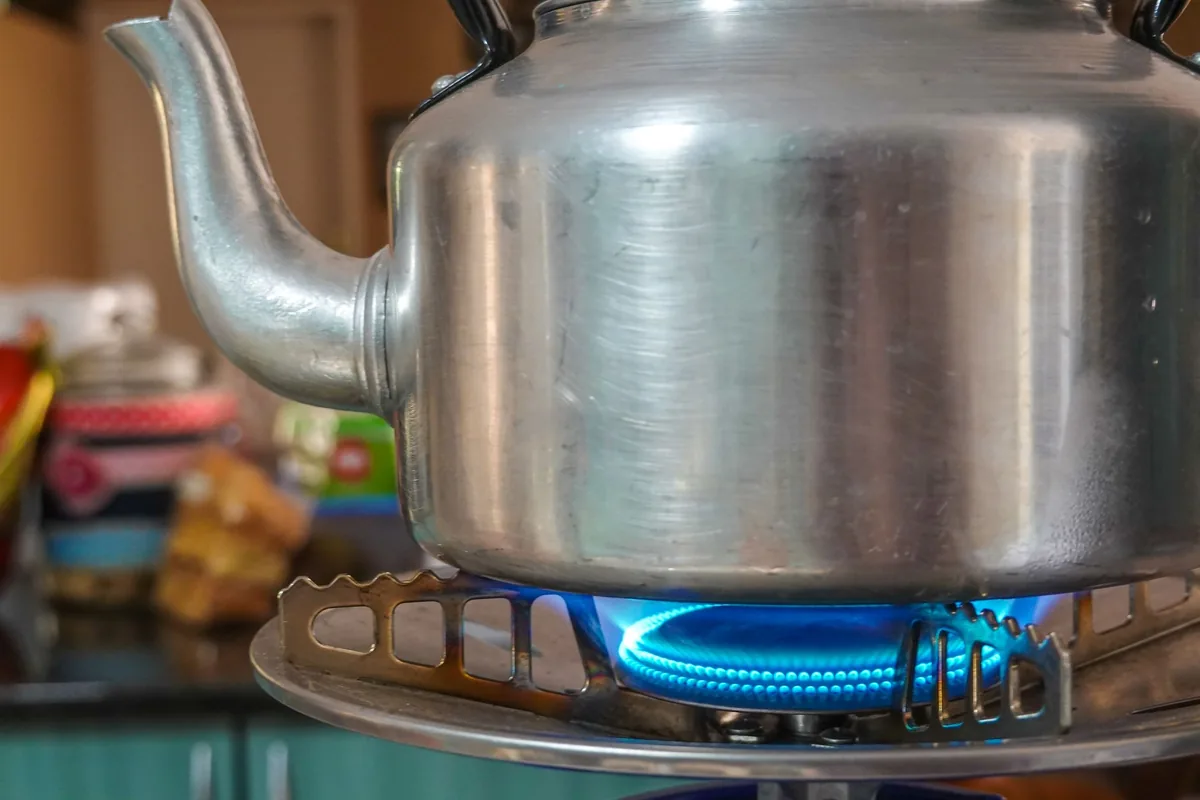
A gas ring heats a circle in the middle of the pot, not the whole base. A single-layer stainless pot develops a hot spot there and scorches; aluminium spreads the heat naturally; a triply or multi-layer base gives you stainless surfaces with an aluminium core doing the spreading. One cooker here has a triply base and two more state multi-layer bases.
Check Induction Compatibility Even If You Cook on Gas
Aluminium is not magnetic and will not work on an induction hob at all. That is irrelevant today if you have gas, and expensive later if you move or the kitchen is replaced. Six cookers here state induction compatibility; the aluminium ones cannot.
Remember the Fill Limit Before Choosing a Size
Pressure cookers fill to about two thirds for most food and about half for pulses and grains, which foam. A 3-litre inner-lid cooker therefore produces around two litres of finished dal, and a 6.3-quart outer-lid one around four quarts of stew. Size up from the portions you actually want, not from the number on the pot.
Common Gas Pressure Cooker Buying Mistakes
- Comparing litres with quarts. Every inner-lid cooker here states litres and every outer-lid one states quarts, which exaggerates a real difference.
- Assuming every cooker reaches 15 psi. Stated pressures here run from 8.7 to 14.5, and six cookers publish nothing at all.
- Following recipe times literally on an unknown cooker. Lower pressure means lower temperature and longer cooking, not a faulty pot.
- Cooking tomato or tamarind in bare aluminium. It dulls the surface and can leave a metallic note; hard anodised and stainless do not.
- Buying aluminium and then changing to induction. Aluminium is not magnetic and simply will not work on an induction hob.
- Expecting an inner lid to seat first time. It is a knack, and it is why the lowest ratings in this roundup sit on inner-lid cookers.
- Filling to the rim. Two thirds for most food, half for beans, lentils and grains, which foam and can block the vent.
Which Gas Pressure Cooker Should You Buy?
Buy the MICHELANGELO 8.5 Qt if you want to cook to a recipe rather than to experience. It publishes both its pressures — 8.7 and 14.5 psi — and gives you the choice, in uncoated 304 stainless.
Buy the Hawkins Contura CB30 if you cook dal, rice and pulses. Thirty-seven dollars, hard anodised so it copes with acidic food, and the inner-lid seal that tightens as it works.
Buy the KOCH SYSTEME CS if you want the largest capacity in the best steel. Eighteen-ten stainless, 8.5 quarts, three pressure settings.
Buy the IMUSA 7 Quart if you cook beans and stock in bulk on gas and want to spend as little as possible. Seven quarts for $47.99.
Buy the TIBORANG 6.3 QT if you want a stated pressure without paying three figures. One hundred kPa is about 14.5 psi, close to what recipes assume.
Buy the Hawkins Triply if you cook for one, or want a second pot for a side dish. The only triply base here, and the best construction in the roundup.
Buy the Universal Ultra if reviews carry the most weight for you. Four point six stars is the highest rating in this comparison.
Frequently Asked Questions
What is the difference between an inner lid and an outer lid pressure cooker?
On an outer-lid cooker, familiar in American and European kitchens, the lid sits over the rim and clamps down. On an inner-lid cooker, standard across South Asia, the lid is tilted through the opening and pulled up against the underside of the rim, so pressure inside pushes it tighter as the cooker heats. The inner-lid design has fewer parts and a seal that strengthens under pressure; it also takes practice to seat. Four of the ten cookers in this roundup are inner-lid and six are outer-lid.
How many PSI should a stovetop pressure cooker reach?
Fifteen psi is the figure American recipes are written for, and it is what most timing charts assume. In practice this roundup ranges from 8.7 to 14.5 psi among the cookers that publish a figure, and six of the ten publish nothing at all. Lower pressure is not a fault: it means a lower internal temperature and therefore longer cooking. A cooker at 11.6 psi needs roughly a fifth more time than a 15 psi recipe specifies.
Why do some pressure cookers use litres and others quarts?
Because they come from different manufacturing traditions. The inner-lid cookers in this roundup are all made for markets that use litres and are all 4 litres or under; the outer-lid cookers are all sold in quarts and are all 6.3 quarts or over. The conversion is one litre to 1.0567 US quarts, so a 3-litre cooker is about 3.2 quarts. Doing that conversion is the only way to compare the two groups sensibly.
Is aluminium or stainless steel better for a gas pressure cooker?
On gas specifically, aluminium has a real advantage: it conducts heat far better, so the circle of flame under the pot spreads across the whole base instead of creating a hot spot. The drawbacks are that bare aluminium reacts with acidic food such as tomato, tamarind and lemon, and that it cannot work on induction. Hard anodised aluminium keeps most of the conductivity and much less of the reactivity. Stainless is non-reactive and induction-capable but wants a layered or triply base to spread a gas flame evenly.
Can a gas pressure cooker be used on induction?
Only if it is magnetic, which in practice means stainless steel or a stainless-clad base. Every aluminium cooker in this roundup, including the hard anodised one, will not work on an induction hob at all. Six of the ten here state induction compatibility. If your kitchen might change, that is worth checking now, because it is the one incompatibility you cannot work around later.
How full can you fill a pressure cooker?
About two thirds for most foods, and about half for anything that foams: beans, lentils, split peas, pasta, rice and other grains. Foam can block the vent, which is the failure mode the fill line exists to prevent. This means the usable volume is always well below the rated one, so a 3-litre inner-lid cooker makes roughly two litres of dal and a 6.3-quart outer-lid one roughly four quarts of stew.
Are stovetop pressure cookers better than electric ones?
They are different rather than better. A stovetop cooker reaches pressure faster, generally runs at a higher pressure, browns better because the base sits directly on a flame, and has no electronics to fail. An electric multicooker offers presets, a timer and the ability to walk away, which a stovetop cooker does not — you have to be there to drop the heat when it comes to pressure. If you cook attentively, stovetop wins on speed and durability.
How do you know when a stovetop pressure cooker is at pressure?
By the weight or the indicator, depending on the design. Most cookers here use a weighted valve that begins to rock and hiss when the operating pressure is reached; that is the point at which you turn the heat down to the lowest setting that keeps it gently rocking, and start timing. Turning it down too far loses pressure; leaving it high wastes gas and forces steam out continuously. Cookers with a rising pressure indicator show it visually instead.
Final Verdict
The only cooker here that publishes both its operating pressures — 8.7 and 14.5 psi — in uncoated 304 stainless at 8.5 quarts.
Thirty-seven forty-nine, hard anodised so acidic food is not a problem, and the inner-lid seal that tightens under pressure.
Eighteen-ten stainless with three pressure settings, and the only perfect rating in this roundup — on few reviews.
Gas pressure cooker is one search term covering two engineering traditions. The outer-lid pot that clamps shut, 6.3 to 8.5 quarts, sold in quarts and built for stock and beans in bulk. And the inner-lid pot that seals from inside the rim, 1.5 to 4 litres, sold in litres and built for dal, rice and a curry for two.
Neither is better. They are answers to different kitchens, and the reason they look so far apart on a results page is partly that nobody converts the units — the largest inner-lid cooker here is 4.2 quarts, which is closer to the outer-lid group than 4 litres makes it sound.
Underneath both sits the specification that actually governs your cooking, and six of these ten do not print it. Operating pressure ranges from 8.7 to 14.5 psi where it is stated, against the 15 psi your recipe assumes. So pick the tradition that matches what you cook, pick the material that matches your hob and your ingredients, and if you can, pick a cooker that tells you what pressure it runs at. That last one will save you three ruined dinners learning it the other way.