Affiliate Disclosure: As an Amazon Associate, we earn from qualifying purchases. This does not affect the price you pay.
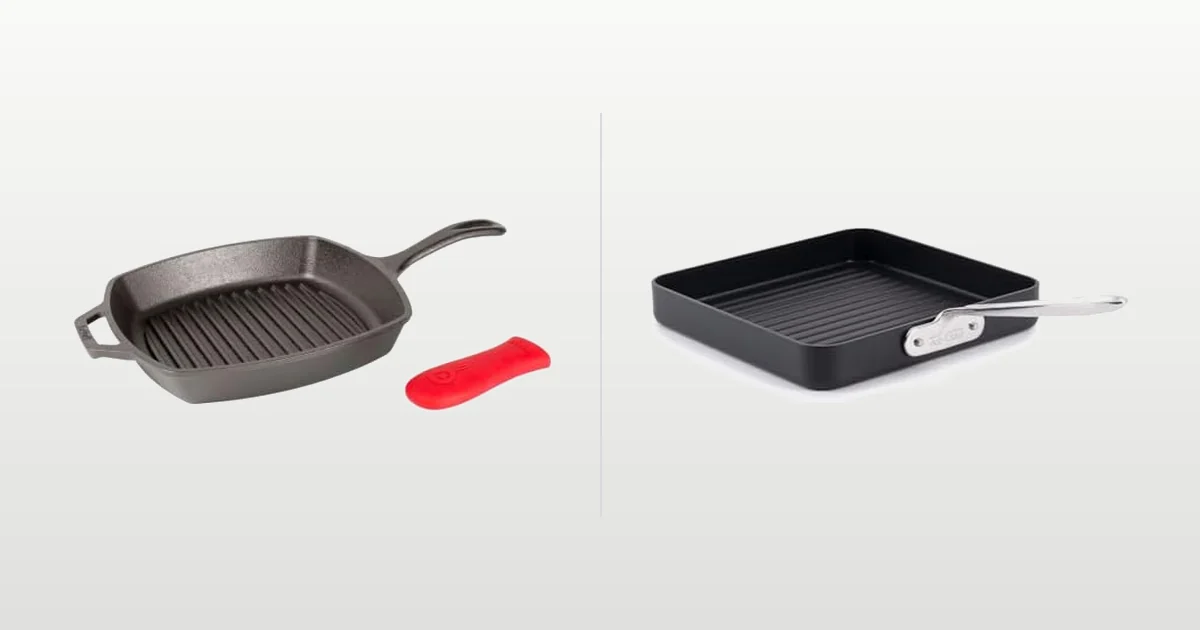
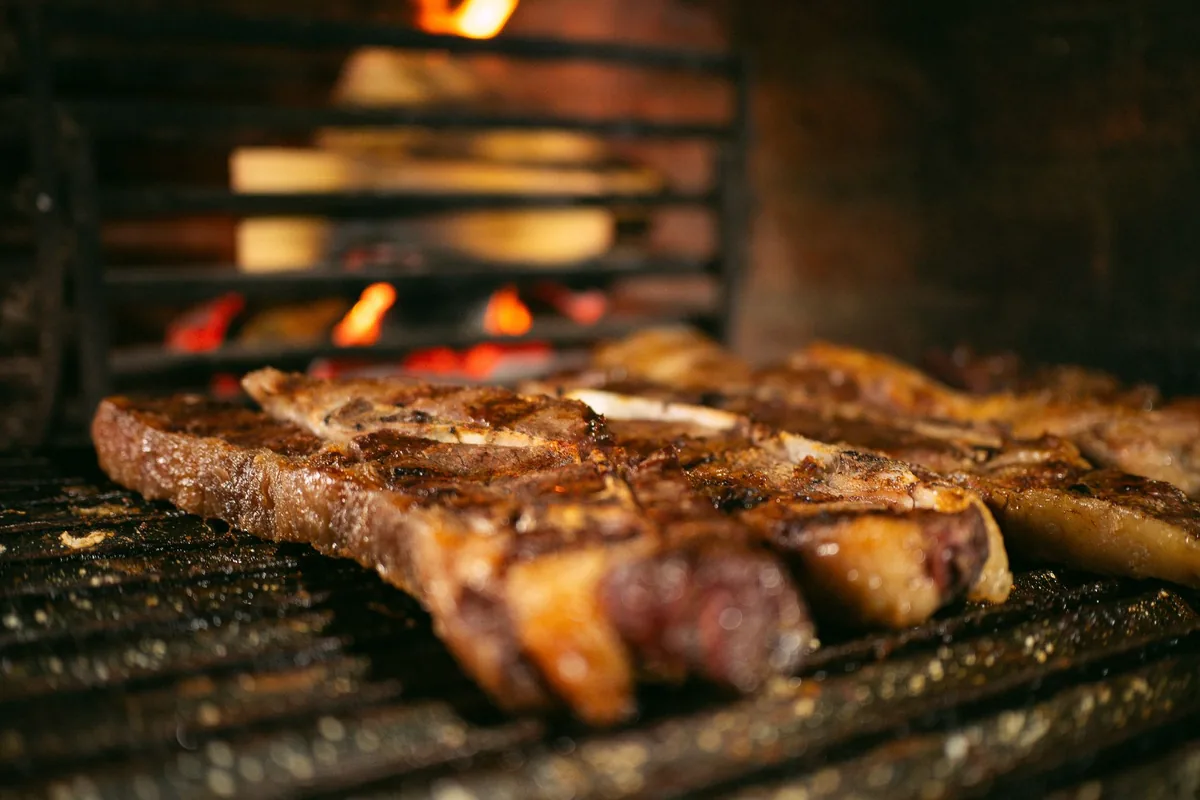
A grill pan has one job: to get hot enough to sear. Browning runs properly above about 300°F at the food’s surface, and since cold meat cools the pan the instant it lands, the pan has to start considerably hotter than that.
So the specification that matters is how hot the pan is allowed to get. Six of these ten never say.
On the three cast-iron pans that silence is meaningful rather than evasive — there is no coating to degrade, which is why Lodge can rate them for campfires. On the three coated pans that publish nothing, including a $69.99 one from a major brand, it is simply missing.
Four listings do publish a figure, and one of them publishes two. The All-Clad HA1’s product title reads “Oven Safe 350F”; its own fourth bullet reads “Oven safe up to 500°F”. We are reporting both, because a buyer cannot tell from the page which governs.
The other three are consistent: 500°F for the tri-ply stainless, 500°F for the second All-Clad, and 900°F for the HexClad — the only coated pan here that goes past where PTFE gives up.
$19.99 to $125.00 below. The pan with no ceiling at all costs $24.90.
Our Quick Picks
 Best for SearingLodge Square Cast Iron 10.5 Inch
Ten and a half inches of bare seasoned iron, usable on a stovetop, in an oven, on a grill or in a campfire, for $24.90.
 Highest Heat LimitHexClad Hybrid BBQ Grill Pan
A laser-etched hexagonal surface combining stainless steel with a ceramic coating, oven-safe to 900°F and metal-utensil safe.
 Best StainlessTramontina Tri-Ply Clad 11 Inch
Eighteen-ten stainless with an aluminium core, NSF certified, oven safe to 500°F, with a lifetime warranty — for under thirty dollars.
At a Glance
Ten Pans, and How Hot Each Admits to Being
Material, size, published oven limit and induction compatibility. Two pans here look nearly identical and only one works on induction.
| # | Model | Material | Size | Oven Limit | Induction | Standout | Main Drawback | Check Price |
|---|---|---|---|---|---|---|---|---|
| 1 |
 Lodge Square Cast Iron 10.5 Inch Lodge Square Cast Iron 10.5 Inch |
Cast iron | 10.5 in | No stated ceiling | Yes | Iron and oil only — there is no coating to fail | Bare iron needs seasoning and cannot be left wet | View on Amazon |
| 2 |
 HexClad Hybrid BBQ Grill Pan HexClad Hybrid BBQ Grill Pan |
Hybrid steel/ceramic | 13 in | 900°F | Yes | 900°F is the only ceiling here that exceeds cast iron’s working range | $125.00, the most expensive pan on this page | View on Amazon |
| 3 |
 Tramontina Tri-Ply Clad 11 Inch Tramontina Tri-Ply Clad 11 Inch |
Tri-ply stainless | 11 in | 500°F | Yes | NSF certified with a lifetime warranty at $29.63 | Bare stainless will stick without preheating and fat | View on Amazon |
| 4 |
 Lodge Reversible Grill/Griddle 16.75 Inch Lodge Reversible Grill/Griddle 16.75 Inch |
Cast iron | 16.75 x 9.5 in | No stated ceiling | Yes | Grill ridges on one side, flat griddle on the other | At 16.75 inches it needs two burners to heat evenly | View on Amazon |
| 5 |
 SENSARTE Nonstick 9.5 Inch SENSARTE Nonstick 9.5 Inch |
Die-cast aluminium | 9.5 in | Not stated | Yes | Pour spouts on both sides drain rendered fat | No oven temperature is published anywhere | View on Amazon |
| 6 |
 KitchenAid Hard Anodized 11.25 Inch KitchenAid Hard Anodized 11.25 Inch |
Hard anodized aluminium | 11.25 in | Not stated | Yes | Triple-layer nonstick, with the rivets coated too | No oven temperature is published anywhere | View on Amazon |
| 7 |
 All-Clad HA1 Expert 11 Inch All-Clad HA1 Expert 11 Inch |
Hard anodized + steel base | 11 in | 500°F | Yes | Steel-reinforced base makes this the induction-capable HA1 | 500°F is the ceiling of PTFE, not a design choice | View on Amazon |
| 8 |
 All-Clad HA1 Nonstick 11×11 All-Clad HA1 Nonstick 11×11 |
Hard anodized aluminium | 11 x 11 in | 350°F or 500°F | No | The listing publishes two different oven limits | Not induction compatible, and the title and bullets disagree | View on Amazon |
| 9 |
 Lodge Pro-Grid Reversible 20 Inch Lodge Pro-Grid Reversible 20 Inch |
Cast iron | 20 x 10.5 in | No stated ceiling | Yes | Twenty inches converts a barbecue into a flat-top griddle | Twenty inches will not fit many domestic ovens | View on Amazon |
| 10 |
 ESLITE LIFE 9.5 Inch with Lid ESLITE LIFE 9.5 Inch with Lid |
Die-cast aluminium | 9.5 in | Not stated | Yes | The only pan here supplied with both a lid and tongs | No oven temperature is published anywhere | View on Amazon |
Materials, dimensions, prices and specifications are taken from each manufacturer’s Amazon listing as displayed on 24 August 2026 through a United States connection, and may change. One listing publishes two conflicting oven limits — the All-Clad HA1’s product title states 350°F while its bullet points state 500°F — and both are reported here as published rather than resolved in the manufacturer’s favour. Six listings publish no oven temperature at all. For the three cast-iron pans that is consistent with a material rated for open fires; for the three coated pans it is an omission, and we have marked it as such rather than assuming a figure. Note also that the two All-Clad pans differ on induction compatibility despite near-identical pricing and description. Sales ranks are shown as displayed and can be pooled across a variant family.
Scroll the table sideways to see every column
How We Chose These Ten
We researched current listings, compared manufacturer specifications and documentation, and examined recurring patterns in customer feedback. We did not carry out hands-on testing, and nothing below is presented as measured performance data.
- The published oven limit recorded, or its absence marked — it is the specification the category exists around
- Contradictions reported rather than resolved — one listing gives two figures and we print both
- Cast iron, stainless, hard anodized and hybrid all represented — the material decides the ceiling
- Induction compatibility checked individually — two near-identical pans here differ on it
- A verified live buy box — all ten confirmed purchasable in the United States on 24 August 2026
- Reversible and lidded formats included — because ridges are wrong for eggs and thin for thick chops
- No overlap with our published cookware and grill guides — every pan here is new to the site
The Ten Pans in Detail
1. Lodge Square Cast Iron 10.5 Inch — Best for Searing

A grill pan exists to sear, and searing is a high-temperature reaction. That is why the pan with no coating is the one with no limit.
Key Specifications
| Material | Cast iron, pre-seasoned |
|---|---|
| Size | 10.5 inch square |
| Oven limit | None stated — rated for campfires |
| Coating | None — iron and oil only |
| Free from | PFOA, PTFE and PFAS |
| Compatible with | Stovetop, oven, grill and open fire |
| Grease handling | Ridges channel fat away from the food |
| Rank | #5,486 in its category |
| Price | $24.90 |
| Best For | Getting a steakhouse crust, which needs more heat than a coating survives |
Why We Recommend It
The Maillard reaction — the browning that produces crust and the flavours people describe as ‘steakhouse’ — runs properly above about 300°F at the surface, and a good sear means putting the pan considerably hotter than that so the meat does not cool it below the threshold on contact. Cast iron does this well for two reasons: it stores a lot of heat for its size, so it does not crash when cold meat lands on it, and it has no surface treatment that can be damaged by the temperature you need.
Six of the ten pans on this page publish no oven temperature at all. On this one that absence is meaningful rather than evasive: there is nothing to degrade, which is why the listing can offer it for campfire use.
The trade is maintenance. Seasoning is polymerised oil, and it is built up by use and stripped by long soaking or harsh detergent. Dry it on the hob after washing and it lasts decades.
$24.90 is the second cheapest pan here and outlasts everything above it.
Pros
- No coating means no temperature ceiling
- Stores heat, so it does not crash when meat lands
- Oven, grill and campfire rated
- PFOA, PTFE and PFAS free by construction
- Ridges channel grease away from the food
- $24.90, and effectively permanent
Cons
- Needs seasoning and cannot soak
- Heavy for its size
- Slow to heat compared with aluminium
- Bare iron reacts with long acidic cooking
- Square 10.5 inches is single-burner
- Rank #5,486
Best for: The sear itself, which is the only reason to own a grill pan.
2. HexClad Hybrid BBQ Grill Pan — Highest Heat Limit

Nine hundred degrees is not a number coated cookware usually gets to publish.
Key Specifications
| Material | Tri-ply with aluminium core; steel and TerraBond ceramic surface |
|---|---|
| Size | Approximately 13 inches diameter, 4 inches high |
| Oven limit | 900°F (glass lids 400°F) |
| Surface | Laser-etched hexagonal pattern |
| Utensils | Metal utensil safe |
| Weight | 3 lb |
| Compatibility | All cooktops including induction |
| Warranty | Lifetime against manufacturing defects, excluding commercial use |
| Rank | #37,481 in its category |
| Price | $125.00 |
| Best For | Nonstick release at temperatures no other coated pan here allows |
Why We Recommend It
The reason most nonstick pans stop at 500°F is chemistry. PTFE coatings begin to break down as they approach that range, which is why the two All-Clad pans here state 500°F and why the cheaper coated pans mostly state nothing at all. HexClad’s approach is structural rather than chemical: a laser-etched hexagonal grid of raised stainless steel with ceramic in the valleys, so the food mostly rides on steel peaks while the coating sits below the contact plane.
That geometry is also why it is metal-utensil safe, which no PTFE pan on this page is. A metal spatula runs across the steel ridges rather than into the coating.
Note the lid caveat: the pan takes 900°F, the tempered glass lids take 400°F. The listing states this and it is easy to miss.
Rank #37,481 is the lowest on this page. At $125.00, in a category where $24.90 buys a pan with no ceiling at all, that is not surprising.
Pros
- 900°F — highest published limit here
- Metal utensil safe, unlike every PTFE pan here
- Tri-ply with an aluminium core for even heat
- 13 inches, largest single pan here
- Induction compatible and dishwasher friendly
- Lifetime warranty against defects
Cons
- $125.00 — most expensive on this page
- Glass lids are limited to 400°F, not 900
- Rank #37,481, lowest here
- Hybrid surfaces still need care to preserve release
- Warranty excludes commercial use
- Heavier than the aluminium pans
Best for: Anyone who wants coated-pan release without a coated-pan temperature limit.
3. Tramontina Tri-Ply Clad 11 Inch — Best Stainless

This is the only uncoated pan here that is not cast iron, and that combination is worth understanding.
Key Specifications
| Material | Tri-ply clad, 18/10 stainless with aluminium core |
|---|---|
| Size | 11 inch square |
| Oven limit | 500°F, stated |
| Coating | None |
| Certification | NSF certified |
| Warranty | Lifetime |
| Handle | Riveted ergonomic stainless |
| Cleaning | Dishwasher safe |
| Origin | Made in Brazil |
| Rank | #489 in its category |
| Price | $29.63 |
| Best For | A pan with no coating to fail and no seasoning to maintain |
Why We Recommend It
Tri-ply means a layer of aluminium sandwiched between two layers of stainless steel, and it exists because the two metals fail at opposite things. Stainless is durable, non-reactive and easy to clean but conducts heat poorly, so a pure stainless pan develops fierce hot spots over a burner. Aluminium conducts superbly but reacts with acid and marks easily. Cladding them puts the conducting layer where it works and the durable layer where it touches food.
NSF certification plus a lifetime warranty at $29.63 is an unusual combination on this page; the only other NSF-grade credential here belongs to pans costing two and three times as much.
Bare stainless sticks if you rush it. Preheat until a drop of water beads and skitters rather than boiling off, then add fat, then the food. Done that way it releases; done cold it welds.
Rank #489 is the second best on this page.
Pros
- No coating to degrade and no seasoning to maintain
- NSF certified with a lifetime warranty
- Tri-ply construction with an aluminium core
- 500°F oven limit, published
- Dishwasher safe, which cast iron is not
- $29.63, rank #489
Cons
- Sticks badly if not preheated properly
- 500°F is below cast iron’s working range
- Stores less heat than iron, so it crashes on cold meat
- Discolours over time with high heat
- Ridges are harder to scrub than a flat pan
- Handle gets hot in the oven
Best for: Cooks who want durability without the maintenance rituals of iron.
4. Lodge Reversible Grill/Griddle 16.75 Inch — Best Two-Burner

Ridges are wrong for some food, and a reversible plate is the honest answer to that.
Key Specifications
| Material | Cast iron, pre-seasoned |
|---|---|
| Size | 16.8 in x 9.5 in x 0.8 in |
| Configuration | Spans two burners |
| Sides | Grill ridges one face, flat griddle the other |
| Oven limit | None stated |
| Compatibility | Gas, electric, induction, grill and campfire |
| Free from | PFAS |
| Origin | Made in the USA |
| Rank | #1,024 in its category |
| Price | $39.85 |
| Best For | Cooking for four, and for anything a ridged pan handles badly |
Why We Recommend It
A grill pan’s ridges do two things: they mark the food and they hold it above rendered fat. Both are useful for steak, chops and thick vegetables. Both are actively unhelpful for eggs, pancakes, bacon or a smashburger, where you want maximum contact with a flat hot surface — a burger pressed onto ridges browns in stripes and steams between them. Flipping the plate over solves this completely, which is why the reversible format has survived for a century.
Two burners is a genuine requirement, not a suggestion. Sixteen and three-quarter inches over a single ring gives you a scorching centre and cold ends; cast iron spreads heat well but not that well.
Made in the USA and rank #1,024, the third best rank on this page.
0.8 inches thick means real thermal mass — this does not lose temperature when you load it.
Pros
- Grill and flat griddle in one plate
- Spans two burners for cooking for four
- 0.8 inches thick — holds heat under a full load
- No coating and no stated temperature ceiling
- Made in the USA
- Rank #1,024
Cons
- Needs two burners to heat evenly
- Heavy and awkward to wash in a sink
- Will not fit some smaller ovens
- Needs seasoning maintenance
- Slow to preheat because of its mass
- No pour spouts
Best for: Families, breakfasts and anyone who wants ridges some days and a flat top others.
5. SENSARTE Nonstick 9.5 Inch — Cheapest Here

Twenty dollars, a named coating and pour spouts. The missing number is the oven temperature.
Key Specifications
| Material | Die-cast aluminium |
|---|---|
| Coating | Switzerland ILAG nonstick, PFOA and PFOS free |
| Size | 9.5 inch square |
| Oven limit | Not stated |
| Handle | Bakelite, stays cool to the touch |
| Base | Magnetic stainless, induction compatible |
| Spouts | Both sides, for draining fat |
| Rank | #888 in its category |
| Price | $19.99 — cheapest here |
| Best For | Low-fat cooking on a budget, at stovetop temperatures |
Why We Recommend It
Pour spouts are the underrated feature on a grill pan. Ridges lift food above the fat it renders, which is the point — but that fat then pools in the channels, and by the time you have cooked four chops there can be a quarter inch of hot grease sliding about. Without a spout you tip it over the pan wall or fish it out; with one you pour it off between batches. Two spouts means you can do it left- or right-handed.
ILAG is a real Swiss coating manufacturer, and naming the supplier is more information than most budget cookware gives. PFOA and PFOS free is stated; PTFE is not mentioned either way.
The absence of an oven temperature is the caveat. A bakelite handle is a strong hint that this is a stovetop pan, since bakelite is a thermoset that chars rather than melts but is not oven-rated by default. Treat it as a hob pan unless the manufacturer says otherwise.
Rank #888 at the lowest price here.
Pros
- $19.99, cheapest on this page
- Pour spouts on both sides
- Named Swiss ILAG coating rather than an unspecified one
- Cool-touch bakelite handle
- Induction-compatible magnetic base
- Rank #888
Cons
- No oven temperature published
- Bakelite handle suggests stovetop only
- 9.5 inches is the smallest here
- Coatings wear where iron and steel do not
- Die-cast aluminium stores less heat than iron
- No lid
Best for: Everyday chops and vegetables on the hob, at a price that makes wear tolerable.
6. KitchenAid Hard Anodized 11.25 Inch — Best Coated Build

Coating the rivets is a small detail that tells you where this pan’s engineering budget went.
Key Specifications
| Material | Hard anodized aluminium |
|---|---|
| Base | Thick forged base, induction compatible |
| Coating | Triple layer nonstick, extending across the handle rivets |
| Size | 11.25 inch |
| Oven limit | Not stated |
| Cleaning | Dishwasher safe |
| Colour | Matte black |
| Rank | #7,587 in its category |
| Price | $69.99 |
| Best For | People who want food release everywhere, including around the rivets |
Why We Recommend It
Rivets are the standard weak point of a coated pan. Handles are riveted rather than welded because rivets survive thermal cycling, but each rivet head is a bare protruding lump inside the cooking surface where food catches and burns on. Extending the nonstick over the rivet heads removes the one place a nonstick pan reliably sticks. Very few makers bother.
Hard anodizing is an electrochemical process that grows a hard oxide layer into the aluminium rather than sitting on top of it, so the substrate under the nonstick is far more scratch-resistant than plain aluminium.
Triple-layer nonstick lasts longer than single-layer, though every PTFE-type coating is a consumable rather than permanent.
Still no published oven temperature, which at $69.99 from a major brand is a real omission — both All-Clad pans here publish 500°F, and the HexClad publishes 900°F.
Pros
- Nonstick extends over the handle rivets
- Hard anodized substrate resists scratching
- Triple-layer coating rather than single
- Thick forged induction-compatible base
- Dishwasher safe
- 11.25 inches, larger than most single-burner pans here
Cons
- No oven temperature published
- $69.99 for a coated pan with an undisclosed limit
- Rank #7,587
- Coating is a consumable however many layers
- No pour spouts
- No lid or warranty term stated
Best for: Cooks who want the most durable coated pan and stay on the hob.
7. All-Clad HA1 Expert 11 Inch — Best Induction Coated

The important line in this listing is one word different from its sibling’s: induction.
Key Specifications
| Material | Hard anodized aluminium with optimised stainless steel base |
|---|---|
| Coating | PTFE nonstick, described as long-lasting |
| Size | 11 x 11 inches |
| Oven limit | 500°F, stated in the bullets |
| Induction | Yes |
| Handles | Double riveted stainless |
| Walls | Low, open surface for easy flipping |
| Warranty | Limited lifetime |
| Origin | Designed in Canonsburg PA, made in China |
| Rank | #21,651 in its category |
| Price | $79.99 |
| Best For | Induction hobs, where the cheaper HA1 will not work at all |
Why We Recommend It
All-Clad sells two HA1 grill pans at almost the same price and they are not interchangeable. This Expert version has an optimised stainless steel base bonded to the hard-anodized aluminium; the standard HA1, also on this page at $79.95, states plainly that it works on any stovetop except induction. Aluminium is not ferromagnetic, so an induction hob cannot couple to it at all — the pan does not merely work poorly, it does not heat. If your hob is induction, one of these two pans is inert.
500°F is the honest ceiling for a PTFE surface, and All-Clad publishes it on both. It is enough for finishing a steak in the oven and short of what a hard sear wants.
Low walls are a real design decision on a grill pan — you flip with a spatula, and a high wall means fighting the rim.
Limited lifetime warranty, though nonstick wear is normally excluded from such terms.
Pros
- Induction compatible, unlike the standard HA1
- 500°F published in the bullets
- Stainless base bonded for warp resistance
- Low walls make flipping easy
- Double riveted stainless handles
- Limited lifetime warranty
Cons
- 500°F is below a hard sear
- $79.99 for a coated pan
- Rank #21,651
- Made in China despite the US design line
- PTFE requires silicone, nylon or wood utensils
- Coating is a consumable
Best for: Induction hobs, where the cheaper All-Clad simply will not heat.
8. All-Clad HA1 Nonstick 11×11 — Reported As Listed

This listing’s own title says “Oven Safe 350F”. Its fourth bullet says “Oven safe up to 500°F”. Both are on the same page.
Key Specifications
| Material | Heavy gauge hard anodized aluminium |
|---|---|
| Coating | PTFE nonstick |
| Size | 11 x 11 inches, single burner |
| Oven limit in the title | 350°F |
| Oven limit in the bullets | 500°F |
| Induction | No — any stovetop except induction |
| Handles | Double riveted stainless |
| Warranty | Limited lifetime |
| Rank | #44,101 in its category |
| Price | $79.95 |
| Best For | Non-induction hobs, if you treat 350°F as the working figure |
Why We Recommend It
We are reporting this as published rather than choosing one figure. The two numbers differ by 150 degrees and the gap matters: 350°F is a baking temperature, comfortably below what finishing a steak in the oven asks for, while 500°F is at the practical ceiling of PTFE. Which one governs your warranty and your coating is not something a buyer can determine from the listing, and a manufacturer as established as All-Clad publishing two answers on one page is worth knowing before you spend $79.95. If you buy it, the prudent course is to treat 350°F as the working limit, because that is the figure in the product title.
The second thing to check is induction. The bullets state this works on any stovetop except induction — unlike the HA1 Expert on this page, which is otherwise nearly identical and $0.04 dearer.
Rank #44,101 is the lowest on this page.
Heavy gauge aluminium and low walls are genuinely good; the pan is not the problem here.
Pros
- Heavy-gauge aluminium spreads heat evenly
- Low walls make flipping straightforward
- Double riveted stainless handles
- Limited lifetime warranty
- Dishwasher safe
- Well-regarded construction from an established maker
Cons
- The listing publishes two different oven limits — 350°F and 500°F
- Not induction compatible
- $79.95, nearly identical in price to the induction-capable Expert
- Rank #44,101, lowest here
- PTFE needs non-metal utensils
- Coating is a consumable
Best for: Gas and electric hobs — and check the induction and temperature lines before ordering.
9. Lodge Pro-Grid Reversible 20 Inch — Largest Here

The real job here is outdoors, and it is one no ordinary pan does.
Key Specifications
| Material | Cast iron, pre-seasoned |
|---|---|
| Size | 20 in x 10.5 in x 0.8 in |
| Sides | Grill ridges one face, flat griddle the other |
| Oven limit | None stated |
| Primary use | Converts a barbecue grill into a flat-top |
| Also fits | Stovetops, ovens and campfires |
| Free from | PFOA, PTFE and PFAS |
| Rank | #5,664 in its category |
| Price | $49.90 |
| Best For | Outdoor cooking, where a barbecue grate cannot hold small food |
Why We Recommend It
A barbecue grate has gaps, and gaps lose food. Sliced onions, prawns, eggs, smashburgers, chopped vegetables and anything smaller than a chop either falls through or sticks across two bars. A cast-iron plate laid across the grate turns the whole barbecue into a flat-top, which is why this format exists and why the listing leads with converting your grill rather than with stovetop use.
Twenty inches is the largest surface on this page by a wide margin — it will span two burners with room to spare and cook for six.
Measure your oven before assuming it fits. Twenty inches of iron is longer than many domestic oven cavities are wide, and the pan is not flexible about it.
Same material logic as the smaller Lodges: no coating, so no ceiling, and it will outlive the person who buys it.
Pros
- Twenty inches — largest surface here
- Turns a barbecue grate into a flat-top
- Reversible grill and griddle faces
- No coating and no stated temperature ceiling
- 0.8 inches thick for real heat retention
- PFOA, PTFE and PFAS free
Cons
- Twenty inches will not fit many ovens
- Very heavy to lift when hot
- Needs two burners indoors
- Awkward to wash in a domestic sink
- Needs seasoning maintenance
- Rank #5,664
Best for: Barbecues, camp cooking and feeding six people from one surface.
10. ESLITE LIFE 9.5 Inch with Lid — Best Complete Set

A lid on a grill pan sounds redundant. It is not, and nothing else here has one.
Key Specifications
| Material | Die-cast aluminium |
|---|---|
| Coating | Granite nonstick, SGS approved, PTFE and PFOA free |
| Size | 9.5 inch square |
| Oven limit | Not stated |
| Included | Lid and tongs |
| Spouts | Double pour spouts |
| Base | Magnetised, induction compatible |
| Maker | Stated 30 years in nonstick cookware |
| Rank | #10,612 in its category |
| Price | $29.99 |
| Best For | Anyone who wants to cover the pan, which changes what it can cook |
Why We Recommend It
Ridges lift food off the surface, which means only the ridge tops transfer heat and the rest of the food cooks by air. That is fine for a thin steak and poor for a thick chicken breast or a bone-in chop, which browns on the outside long before the middle is safe. Covering the pan traps heat and steam around the food and cooks it through from all sides, so you sear on the ridges and then cover to finish — the same logic as finishing in an oven, without needing an oven temperature the maker has not published.
PTFE and PFOA free is worth noting. This is a granite-style coating rather than a fluoropolymer, which is a different chemistry from the All-Clad and KitchenAid pans here.
Tongs included is a small thing that stops people using a fork, which is how coated pans get punctured.
No oven temperature published, which given the lid is the specification you would most want.
Pros
- Lid included — unique on this page
- Tongs included, which spares the coating
- PTFE and PFOA free granite coating
- Double pour spouts for draining fat
- Induction-compatible magnetised base
- $29.99 for the complete set
Cons
- No oven temperature published
- Lid material and its own limit unstated
- 9.5 inches is small for a bone-in chop
- Granite coatings still wear
- Die-cast aluminium holds less heat than iron
- Rank #10,612
Best for: Thick cuts, where covering the pan does the job an oven would.
What Each Pan Admits About Heat
Sorted by published ceiling. Note where the silences fall.
| Pan | Material | Published Oven Limit | Price |
|---|---|---|---|
| HexClad Hybrid BBQ | Steel + ceramic | 900°F | $125.00 |
| Tramontina Tri-Ply | Stainless | 500°F | $29.63 |
| All-Clad HA1 Expert | Hard anodized | 500°F | $79.99 |
| All-Clad HA1 11×11 | Hard anodized | 350°F and 500°F | $79.95 |
| Lodge Square 10.5" | Cast iron | None stated | $24.90 |
| Lodge Reversible | Cast iron | None stated | $39.85 |
| Lodge Pro-Grid 20" | Cast iron | None stated | $49.90 |
| KitchenAid Hard Anodized | Hard anodized | Not stated | $69.99 |
| SENSARTE 9.5" | Die-cast aluminium | Not stated | $19.99 |
| ESLITE LIFE 9.5" | Die-cast aluminium | Not stated | $29.99 |
The pattern is not random. Cast iron publishes no ceiling because it has no meaningful one — the listings offer campfire use instead. Coated pans cluster at 500°F because that is roughly where PTFE begins to break down, which makes the three coated pans publishing nothing at all the ones to question. And the HexClad’s 900°F is a structural claim rather than a chemical one: a laser-etched steel grid carries the contact while the ceramic sits below it. The cheapest pan on this page and the most expensive are the two least constrained by temperature.
Two All-Clad Pans, Four Cents Apart, One Works on Induction
These two listings describe nearly the same pan at nearly the same price. One of them will not heat on an induction hob at all.
| HA1 Expert 11" | HA1 Nonstick 11×11" | |
|---|---|---|
| Price | $79.99 | $79.95 |
| Induction | Yes | No |
| Base | Stainless steel reinforced | Heavy gauge aluminium |
| Oven limit stated | 500°F | 350°F in title, 500°F in bullets |
| Coating | PTFE nonstick | PTFE nonstick |
| Handles | Double riveted stainless | Double riveted stainless |
| Warranty | Limited lifetime | Limited lifetime |
| Rank | #21,651 | #44,101 |
Aluminium is not ferromagnetic, so an induction hob cannot couple to it — the standard HA1 does not merely perform poorly on induction, it does not heat. The Expert version adds a bonded stainless base to solve exactly that. Four cents separates them and the listings are otherwise near-identical in language, which makes this the easiest expensive mistake on this page to make. If your hob is induction, buy the Expert; if it is gas or electric, either will work and you should decide what to make of the 350/500 discrepancy.
Best Alternatives
| Alternative | Why Consider It | Better For | Main Trade-Off |
|---|---|---|---|
| A plain cast iron skillet | Full surface contact browns better than ridges | Steak crust, where marks do not matter | No fat drainage, no grill lines |
| A carbon steel pan | Lighter than iron, heats faster, seasons the same way | Cooks who find cast iron heavy | Needs the same maintenance, warps if shocked |
| An electric indoor grill | Thermostatted, self-contained, lid presses the food | Flats, paninis and hands-off cooking | Rarely gets hot enough for a real sear |
| An actual barbecue | Real fire, real smoke, no ceiling at all | Anything you would rather cook outdoors | Weather, fuel and twenty minutes of setup |
What the Money Actually Buys
$19.99 to $29.99 — SENSARTE, Lodge Square, Tramontina, ESLITE. The strongest band on this page. It contains the only uncoated stainless pan, an NSF certification, a lifetime warranty, a cast-iron pan with no temperature ceiling, and the only pan supplied with a lid. Nothing above it improves the sear.
$39.85 to $49.90 — the two reversible Lodges. You are buying surface area and a flat griddle face, not a better grill. Both span two burners and one converts a barbecue into a flat-top.
$69.99 to $79.99 — KitchenAid and the two All-Clads. Coated pans with better substrates, better handles and, in two cases, published limits. This is also where the induction trap and the 350/500 discrepancy live.
$125.00 — HexClad. The only coated pan here that goes past 500°F, and the only one safe with metal utensils. Whether a hybrid surface is worth five times a Lodge is a question about washing up, not about cooking.
What to Check Before You Buy
Find the Oven Limit, and Notice If There Isn’t One
This is the specification a grill pan is judged on and six listings in this roundup omit it. The omission means different things depending on material. Cast iron has no coating to degrade, so its listings offer campfire compatibility instead of a number — that is a real answer. A coated aluminium pan does have a ceiling, because PTFE-type surfaces begin breaking down as they approach 500°F, so a coated pan that publishes nothing is withholding the figure that determines both how you can cook and what voids the warranty. One listing here publishes two different limits, 150 degrees apart, in its title and its bullets.
Match the Material to the Temperature You Actually Want
Searing wants the pan well above the browning threshold before the food lands, because cold meat drops the surface temperature immediately. Cast iron suits this best: it stores a great deal of heat for its size so it does not crash under a load, and it has nothing on its surface to damage. Tri-ply stainless heats more evenly and cleans more easily but stores less heat and stops at 500°F. Coated aluminium is the easiest to live with and the most temperature-limited. There is no single right answer, but choosing a coated pan and then cooking at searing temperatures is choosing to destroy it.
Check Induction Compatibility on the Specific Model
Two pans in this roundup come from the same maker, in the same line, at the same size, four cents apart in price — and one of them states plainly that it works on any stovetop except induction. Aluminium is not ferromagnetic, so an induction hob cannot couple to it at all; the pan does not underperform, it simply does not heat. The version that works has a bonded stainless base added for precisely this reason. Because the two listings otherwise use nearly identical language, this is the easiest costly mistake in the category. Read the compatibility line on the exact model, not on the product family.
Decide Whether You Want Ridges Every Day
Ridges do two useful things — they mark the food and hold it above rendered fat — and they are actively unhelpful for anything that wants full contact. Eggs, pancakes, bacon and smashburgers all cook worse on ridges, browning in stripes and steaming in the valleys between. If a grill pan is going to be one of only two or three pans you own, a reversible plate with a flat griddle on the reverse solves this completely and two of the pans here offer it. If you already own a good flat skillet, buy a dedicated ridged pan and use the right one for the job.
Look for Pour Spouts and Somewhere for Fat to Go
The whole point of ridges is that fat renders out and drains away from the food, and that fat then has to live somewhere. After three or four chops there can be a quarter of an inch of very hot grease sliding around the channels, which spits when you add the next batch and pours unpredictably when you tilt the pan. Spouts on both sides let you drain it deliberately, left- or right-handed, between batches. It is a cheap feature that appears on two of the budget pans here and on none of the expensive ones, which is a fair summary of how cookware pricing works.
Consider a Lid for Thick Cuts
Because ridges hold food above the pan surface, only the ridge tops actually conduct heat into it and the rest cooks by hot air. That is fine for a thin steak and poor for a bone-in chop or a thick chicken breast, which will char on the outside well before the centre is safe. The usual fix is to sear on the hob and finish in the oven — which requires knowing the pan’s oven limit, and six listings here do not give one. A lid does the same job on the hob by trapping heat and steam around the food. Exactly one pan in this roundup comes with one.
Weigh the Maintenance Honestly
Cast iron will outlive you and asks for a routine: wash without long soaking, dry it on the heat rather than in a rack, and wipe a trace of oil over it. Seasoning is polymerised oil bonded to the metal, built up by cooking and stripped by sitting wet or by aggressive detergent. Stainless asks for nothing but sticks if you do not preheat it properly — heat until a water drop beads and skitters, then add fat, then food. Nonstick asks for nothing at all and is a consumable: every coated pan in this roundup will need replacing eventually, and the ones asking $70 to $125 will need it on the same schedule as the ones asking $20.
Common Mistakes
- Buying a coated pan and cooking at searing heat. PTFE gives out around 500°F.
- Assuming both pans in a product line take induction. Two here differ, four cents apart.
- Not preheating stainless properly. Water should bead and skitter before the fat goes in.
- Cooking eggs or pancakes on ridges. They brown in stripes and steam between.
- Letting fat pool in the channels. It spits, and it pours where you did not aim.
- Soaking cast iron overnight. That is how seasoning comes off.
- Using a metal spatula on nonstick. Only one pan here is rated for it.
Who Should Buy Which
Buy the Lodge Square at $24.90 if you want the best sear. No coating means no ceiling, and the thermal mass is what stops the pan crashing when the steak lands.
Buy the Tramontina at $29.63 if you do not want to season anything. NSF certified, lifetime warranty, 500°F published, and nothing on the surface that can wear out.
Buy the HexClad at $125.00 if you want release without the limit. 900°F and metal-utensil safe, which nothing else coated here offers.
Buy the Lodge Reversible at $39.85 if this is your only large pan. Ridges one side, flat griddle the other, across two burners.
Buy the ESLITE at $29.99 if you cook thick, bone-in cuts. The lid finishes what the ridges cannot, without needing an oven temperature nobody published.
Frequently Asked Questions
Is a cast iron or nonstick grill pan better?
It depends entirely on whether you want to sear. Searing means getting the pan well above the browning threshold before the food lands, and cast iron is built for it: it stores a lot of heat for its size, so it does not crash in temperature when cold meat hits it, and it has no surface coating that heat can damage — which is why the cast iron listings in this roundup offer campfire compatibility rather than an oven limit. Nonstick is far easier to live with, needs no seasoning and releases delicate food, but PTFE-type coatings begin breaking down as they approach 500°F, and a coated pan used at searing temperatures is a coated pan you are destroying. If you want a steakhouse crust, buy iron; if you want convenience, buy coated and accept the ceiling.
What temperature can a grill pan go in the oven?
It varies enormously and six of the ten listings in this roundup never say. Cast iron effectively has no ceiling, which is why its listings mention open fires instead of a figure. Tri-ply stainless is typically rated to 500°F. Coated pans cluster at 500°F too, because that is roughly where PTFE surfaces begin to degrade. One hybrid pan here publishes 900°F, achieved structurally rather than chemically — food rides on raised steel while the ceramic sits below the contact plane. Read the figure on your specific pan rather than assuming, and be aware that one listing in this roundup gives two different numbers, 350°F in its product title and 500°F in its bullet points.
Why does my food stick to the grill pan?
On stainless, almost always because the pan was not hot enough when the food went in. The test is a drop of water: if it boils and evaporates, the pan is too cool; if it forms a bead that skitters across the surface, it is ready — then add the fat, then the food. On cast iron, sticking usually means the seasoning is thin or has been stripped by long soaking or harsh detergent, and the fix is to cook fatty things in it for a while. On any grill pan, food also sticks because it is moved too early: proteins bond to hot metal and then release again once a crust has formed, so a steak that will not lift after thirty seconds will usually lift freely after ninety.
Do grill pans actually work as well as a barbecue?
For the sear itself, a heavy grill pan on a hot hob is genuinely comparable, and in some ways more controllable — the heat is steady, you can see what you are doing, and there is no fuel to manage. What it cannot reproduce is smoke. Barbecue flavour comes largely from fat dripping onto a heat source and vaporising back up onto the food, and in a pan that fat simply pools in the channels. So a grill pan gives you crust, grill marks and fat drainage indoors in any weather, but not smokiness. If you want the outdoor result, two cast-iron plates in this roundup are designed to sit on a barbecue grate and turn it into a flat-top.
Are grill marks worth anything, or are they just cosmetic?
Mostly cosmetic, and it is worth being honest about that. Browning is what produces flavour, and browning happens where the food touches hot metal — on a ridged pan that is the ridge tops only, perhaps a fifth of the surface. A flat skillet browns the entire underside and therefore produces more flavour, not less. What ridges genuinely give you is fat drainage, which keeps the food from sitting and frying in what it renders, and a presentation people associate with grilling. If flavour is the only goal, a flat cast iron skillet beats a ridged one. If you want the stripes and the drainage, the ridges are the trade.
How do I clean and maintain a cast iron grill pan?
Wash it, dry it with heat, and oil it lightly. The details matter more than they sound. Washing with a little soap is fine — the received wisdom against it dates from when soap contained lye — but do not leave the pan soaking, because standing water lifts the seasoning and starts rust. Ridged pans need a stiff brush or a chain-mail scrubber to get into the channels. Dry it by putting it back on the hob for a minute rather than in a rack, since residual water in the ridges is what causes rust spots. Then wipe a very thin film of oil over the cooking surface while it is warm. Done routinely, the seasoning improves rather than degrades over years.
Final Verdict
Bare seasoned iron with no coating and therefore no ceiling, rated for stovetops, ovens, grills and open fires. $24.90.
900°F published and metal-utensil safe, achieved with a laser-etched steel grid rather than a coating that has to survive the heat. $125.00.
Tri-ply clad with an aluminium core, NSF certified, 500°F published and a lifetime warranty — with nothing on the surface to wear out. $29.63.
A grill pan is bought to sear, and searing is a question about temperature. Six of these ten listings never answer it.
For the three cast-iron pans that silence is fair — there is no coating to fail, which is why they are sold for campfires. For the three coated pans it is a gap, and one of them costs $69.99.
One listing answers twice, 350°F in the title and 500°F in the bullets, which is a 150-degree spread the buyer is left to resolve.
The two pans least constrained by heat are the cheapest cast iron at $24.90 and the hybrid at $125.00. Unless you need nonstick release, the $24.90 one will still be searing long after every coated pan on this page has been replaced.