Affiliate Disclosure: As an Amazon Associate, we earn from qualifying purchases. This does not affect the price you pay.
Search for a small range hood and you get two appliances that share almost nothing except the name.
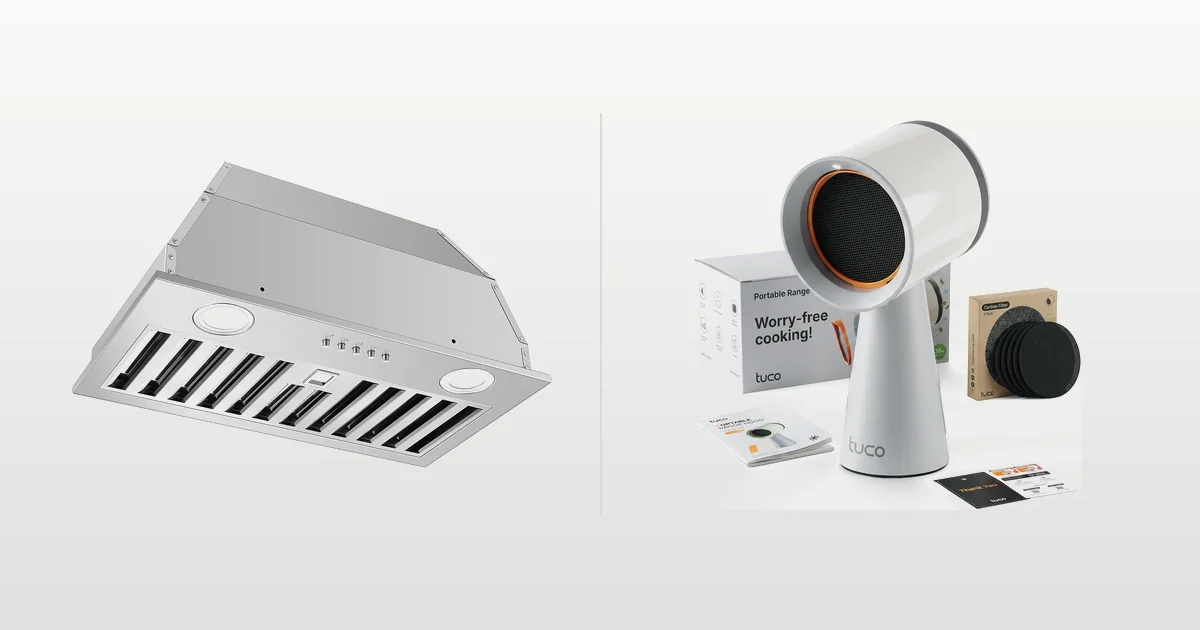
One is a plug-in countertop unit: three or four pounds, no installation, sits beside the pan, filters the grease and pushes the same air back into the room. The other is a fitted 20 or 24-inch hood that screws under a cabinet or onto a wall and can be ducted outside.
The gap between them is not marginal. The countertop units here state 95 CFM. The 20-inch insert states 600. That is more than six times the airflow, and the small plug-in hoods are also the loudest things in this roundup at 65 dB, against 45 to 60 dB for everything fitted.
Which means the weakest hoods make the most noise — the exact opposite of what you would assume.
Neither type is wrong. If you rent, or cook at a table, or have no wall to fix anything to, a countertop unit is the only option and 95 CFM beside the pan beats nothing at all. But it is worth knowing which of the two you are buying, because the listings put them side by side and call both of them small.
Our Quick Picks
 Most AirflowJOEAONZ 20-Inch Insert
Six hundred CFM from a 20-inch body — the most air moved by any small hood here, by a factor of six.
 Best Fitted 24-InchZomagas 24-Inch Under Cabinet
Two hundred and eighty CFM at 55 dB, in a body under four inches tall that screws under a standard wall cabinet.
 Best Portable AirflowAMZCHEF 4-Speed Portable
Two hundred and fifty CFM from a plug-in unit — more than double any other countertop hood here.
At a Glance
Ten Small Range Hoods Compared
Airflow and noise set against how the hood mounts — because that is what decides both.
| # | Model | Airflow | Noise | Mounting | Power | Standout | Main Drawback | Check Price |
|---|---|---|---|---|---|---|---|---|
| 1 |
 JOEAONZ 20-Inch Insert JOEAONZ 20-Inch Insert |
600 CFM | 60 dB | Built-in insert | 6 W stated | Six times the airflow of a countertop unit | Needs a cabinet or custom hood to sit inside | View on Amazon |
| 2 |
 Zomagas 24-Inch Under Cabinet Zomagas 24-Inch Under Cabinet |
280 CFM | 55 dB | Under cabinet | Not stated | Under four inches tall | Ducting is a job, not a plug | View on Amazon |
| 3 |
 Zomagas 24-Inch Wall Mount Zomagas 24-Inch Wall Mount |
450 CFM | 55 dB | Wall mount chimney | Not stated | 450 CFM for a hundred dollars | Chimney needs 36 inches of wall height | View on Amazon |
| 4 |
 AMZCHEF 4-Speed Portable AMZCHEF 4-Speed Portable |
250 CFM | 55 dB | Plug in, no install | Not stated | 250 CFM with no installation at all | Price was not shown on the listing | View on Amazon |
| 5 |
 RecPro RV Range Hood RecPro RV Range Hood |
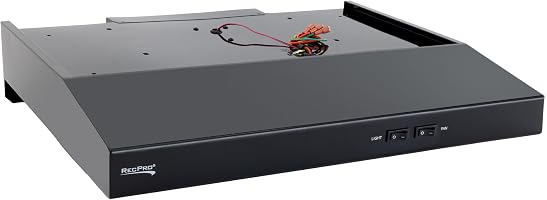
118 CFM | 45 dB | Hard-wired | 60 W | Forty-five decibels, quietest in the roundup | Hard-wired, and built for 12 V-era RV joinery | View on Amazon |
| 6 |
 TUCO Portable PRO TUCO Portable PRO |
95 CFM | 65 dB | Plug in, no install | 36 W | Five-layer filtration in a 3-pound body | 95 CFM at 65 dB is the weakest ratio here | View on Amazon |
| 7 |
 AirHood Wired AirHood Wired |
Not stated | Not stated | Plug in, no install | Not stated | The only one that looks like an object you would leave out | Publishes neither CFM nor a noise figure | View on Amazon |
| 8 |
 Wumorlt Self-Clean Wumorlt Self-Clean |
95 CFM | 65 dB | Plug in, no install | 200 W | A self-cleaning cycle and a ring LED | 200 watts for 95 CFM, the worst ratio here | View on Amazon |
| 9 |
 BREETEE Compact BREETEE Compact |
95 CFM | 65 dB | Plug in, no install | 36 W | Two point eight pounds | Lowest rating in the roundup | View on Amazon |
| 10 |
 AMZCHEF 3-Speed Desktop AMZCHEF 3-Speed Desktop |
Not stated | Not stated | Plug in, no install | Not stated | Seventy-two dollars with a three-stage filter | Publishes no airflow or noise figure | View on Amazon |
Specifications, prices and ratings are taken from each manufacturer’s Amazon listing as displayed on 20 August 2026 and may change. Airflow and noise are the manufacturers’ stated figures, not measurements, and are not independently comparable between brands. Three listings publish no airflow figure: two state nothing at all and the AirHood states fan speed in RPM instead, which describes blade rotation rather than air moved. The JOEAONZ insert states 6 watts alongside 600 CFM, which is not credible for that airflow and is shown as stated. One listing did not display a price when checked. Stainless backsplashes, splatter guards, a dryer vent coupling and a range hood light cover returned by the same Amazon category were excluded as they are not range hoods.
Scroll the table sideways to see every column
How We Chose These Small Range Hoods
We researched current listings, compared manufacturer specifications and documentation, and examined recurring patterns in customer feedback. We did not carry out hands-on testing, and nothing below is presented as measured performance data.
- Airflow in CFM, where it is published — three of these ten do not publish it, and one substitutes fan RPM
- Noise against airflow, not on its own — the weakest hoods here are also the loudest, which the listings never point out
- How it mounts — plug-in, under-cabinet, wall chimney, insert and hard-wired are not interchangeable
- Whether it can duct outside — recirculating filters grease but leaves heat and steam in the room
- Genuinely small only — 30-inch hoods, the standard size, were excluded as a different cut
- Range hoods only — backsplashes, splatter guards, vent couplings and light covers from the same category were excluded

The 10 Best Small Range Hoods, Reviewed
1. JOEAONZ 20-Inch Insert — Most Airflow

Twenty inches wide is genuinely small, and 600 CFM is genuinely powerful. Those two facts do not usually appear on the same product.
The countertop units further down this list move 95 CFM. This moves six times as much air, from a body only four inches wider than some of them.
Key Specifications
| Airflow | 600 CFM, highest here |
|---|---|
| Noise | 60 dB, stated as 60 dB or less |
| Width | 20 inches |
| Mounting | Built-in insert or wall mount |
| Dimensions | 11.26″D x 20.47″W x 13.27″H |
| Conversion | Ducted or ductless |
| Body | Laser-welded brushed stainless steel |
| Stated wattage | 6 watts — see note |
| Best For | A narrow run where the extraction still has to work |
Why We Recommend It
The reason it can is that it ducts. A plug-in countertop hood recirculates: it filters grease and pushes the same air back into the room, so the steam and the heat stay with you. An insert can be plumbed to an outside wall, which is the only arrangement that actually removes anything.
Deep-groove stainless filters and a laser-welded body put it above the pressed-metal construction typical at this size, and 60 dB at 600 CFM is a reasonable trade.
Two things to be clear about. An insert is not a finished appliance — it goes inside an existing cabinet or a custom-built hood, so it needs joinery you may not have. And the listing states 6 watts, which for a 600 CFM motor is not credible; treat it as a data-entry error rather than an efficiency claim.
Pros
- 600 CFM, six times the countertop units here
- 20 inches wide, fits a narrow run
- Ducted or ductless convertible
- Laser-welded stainless body with deep-groove filters
- 60 dB or less at full airflow
Cons
- Needs an existing cabinet or custom hood to mount into
- Listing states 6 watts, which cannot be right for 600 CFM
- $147.96, dearest small hood here
- Installation is a joinery job, not a plug-in
Best for: A narrow cabinet run where the hood still has to shift real air.
2. Zomagas 24-Inch Under Cabinet — Best Fitted 24-Inch

Most kitchens with a small hob have a 24-inch gap above it rather than the standard 30. This fills exactly that, at 3.94 inches tall so it steals almost no cabinet space.
Two hundred and eighty CFM at 55 dB is a better ratio than any countertop unit here manages.
Key Specifications
| Airflow | 280 CFM |
|---|---|
| Noise | 55 dB |
| Width | 24 inches |
| Height | 3.94 inches |
| Mounting | Under cabinet |
| Conversion | Ducted or ductless convertible |
| Filters | 2 detachable aluminium mesh, 3-layer |
| Weight | 6.1 kg |
| Best For | A 24-inch cabinet run over a small hob |
Why We Recommend It
Fifty-five decibels at 280 CFM is the number to hold against the plug-in hoods below. They move 95 CFM at 65 dB. This moves three times the air and is, on the stated figures, meaningfully quieter — ten decibels is roughly half the perceived loudness.
Push-button controls, LED lighting and two detachable aluminium mesh filters that go in the dishwasher make it straightforward to live with.
It converts between ducted and ductless, though only the ducted arrangement genuinely removes steam and heat. Fitting it means screwing into cabinet base and, ideally, running duct to an outside wall.
Pros
- 280 CFM at 55 dB, the best ratio in this roundup
- Only 3.94 inches tall under the cabinet
- 24 inches wide for a small hob
- Dishwasher-safe aluminium mesh filters
- Ducted or ductless convertible
Cons
- Installation needs screwing and ideally ducting
- No wattage published on the listing
- Push buttons rather than touch control
- 280 CFM is modest against a fitted 30-inch hood
Best for: A 24-inch cabinet gap above a small or two-burner hob.
3. Zomagas 24-Inch Wall Mount — Best Value Fitted

Four hundred and fifty CFM at $103.91 is the best airflow-per-dollar figure in this roundup, and it comes at the same 55 dB as the 280 CFM under-cabinet model above.
It is a chimney hood, so it mounts to the wall rather than under a cupboard.
Key Specifications
| Airflow | 450 CFM |
|---|---|
| Noise | 55 dB |
| Width | 24 inches |
| Mounting | Wall mount chimney |
| Dimensions | 18.3″D x 23.6″W x 36.3″H |
| Conversion | Ducted or ductless convertible |
| Finish | Rust-proof stainless steel |
| Lighting | LED |
| Best For | A small hob with open wall above it rather than a cabinet |
Why We Recommend It
That distinction decides whether you can buy it at all. A chimney hood needs open wall above the hob — this one stands 36.3 inches tall including its flue. If a wall cabinet sits above your cooker, the hood physically will not go there, and you want the under-cabinet model instead.
Where the wall is open, a chimney hood is the better arrangement: the flue houses the duct run and the canopy sits closer to a natural capture position over the pan.
Twenty-four inches wide keeps it in the small class, and the stainless is rust-proofed, which matters directly above steam.
Pros
- 450 CFM, the best airflow per dollar here
- 55 dB despite the higher airflow
- 24 inches wide, sized for a small hob
- Rust-proof stainless with LED lighting
- Ducted or ductless convertible
Cons
- Needs 36.3 inches of open wall, so no cabinet above
- No wattage published
- Chimney is far more visible than an under-cabinet hood
- Ducting run is a real installation job
Best for: A small hob with open wall above it, not a cabinet.
4. AMZCHEF 4-Speed Portable — Best Portable Airflow

The other countertop hoods here state 95 CFM. This one states 250, and at 55 dB rather than 65 — more air and less noise than any other plug-in unit in the roundup.
It also has an adjustable arm that raises the intake to clear a wok or a tall stockpot.
Key Specifications
| Airflow | 250 CFM, highest of the portables |
|---|---|
| Noise | 55 dB, quietest of the portables |
| Speeds | 4 |
| Height | Adjustable arm, clears pots and woks up to 12 inches |
| Dimensions | 15.6″D x 10.1″W x 7.4″H |
| Extras | Detachable fume-capture shield |
| Body | Stainless steel |
| Install | None — plug in and cook |
| Best For | Rented kitchens where nothing can be fixed to a wall |
Why We Recommend It
Two hundred and fifty CFM in a plug-in body genuinely narrows the gap to a fitted hood. It is close to the 280 CFM of the fitted 24-inch model above, and it needs no screws, no duct and no landlord’s permission.
The detachable shield in front of the intake is the part that makes it work: a countertop hood sits beside the pan rather than above it, so without something to direct the plume most of the steam simply goes past. The shield traps it and steers it into the filter.
Two limits. It recirculates — there is no duct, so heat and moisture stay in the room even when the grease does not. And the listing did not display a price when we checked, so confirm before ordering.
Pros
- 250 CFM, more than double the other portables
- 55 dB, quietest portable here
- Adjustable arm clears a wok or tall pot
- Detachable fume-capture shield directs the plume
- No installation of any kind
Cons
- Price not displayed on the listing when checked
- Recirculates only, so heat and steam stay in the room
- 15.6 inches deep takes real counter space
- No wattage published
Best for: Renters and anyone who cannot fit a hood to the wall.
5. RecPro RV Range Hood — Quietest Here
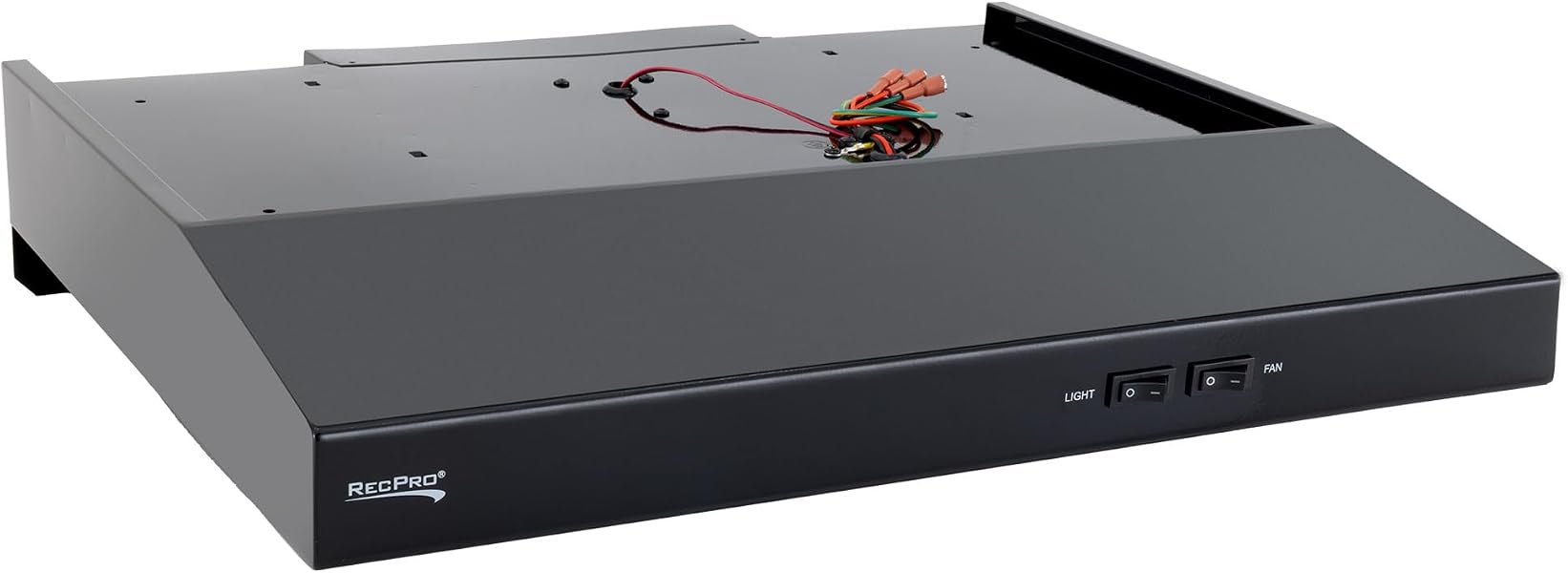
Forty-five decibels is the quietest figure in this roundup by ten, and it is not a coincidence: an RV hood has to run in a space where the cook, the bed and everything else are within eight feet of each other.
Three inches deep and 22 inches wide, with a charcoal filter and LED light.
Key Specifications
| Airflow | 118 CFM |
|---|---|
| Noise | 45 dB, quietest here |
| Wattage | 60 watts |
| Dimensions | 19″D x 22″W x 3″H |
| Filter | Charcoal |
| Lighting | LED |
| Install | Hard-wired |
| Finish | Black or stainless |
| Best For | Campervans, boats and any very small fixed kitchen |
Why We Recommend It
It is worth considering for small flats as well as vehicles. A studio kitchen has exactly the RV problem — the cooking smell has nowhere to go and the noise is unavoidable — and 118 CFM at 45 dB is a better answer to that than 95 CFM at 65 dB, which is what the countertop units offer.
The charcoal filter is the giveaway that this recirculates rather than ducts, which is standard for the class.
Installation is hard-wired, so there is no plug: it needs to be wired into a circuit, which in a house means an electrician unless you are competent to do it yourself.
Pros
- 45 dB, quietest hood in this roundup
- 118 CFM, above the 95 CFM countertop units
- Only 3 inches deep
- Charcoal filter and LED light included
- Available in black or stainless
Cons
- Hard-wired, so no plug and no easy install
- Charcoal filter means recirculating only
- 118 CFM is low against any fitted hood
- Designed around RV rather than domestic fitting
Best for: Campervans, boats, studios and very small fixed kitchens.

6. TUCO Portable PRO — Best Countertop Build

Thirty-six watts and three pounds, with a five-layer filter stack, a built-in oil collector and LED lighting. It plugs into a socket and starts working.
At 5 inches wide it takes less counter than a kettle.
Key Specifications
| Airflow | 95 CFM |
|---|---|
| Noise | 65 dB |
| Wattage | 36 watts, lowest here |
| Filtration | 5-layer quad-core condensation filter |
| Dimensions | 7″D x 5″W x 14.5″H |
| Weight | 3 pounds |
| Materials | ABS and aluminium |
| Install | None, plug and play |
| Best For | Air-frying, hot pot and cooking at a table |
Why We Recommend It
The real use case for a unit like this is not replacing a hood. It is cooking where no hood exists — a hot pot at the dining table, an air fryer on an island, a portable induction ring in a room with no extraction at all.
The oil collector is the practical detail: grease condenses and drains into a cup you empty, rather than accumulating inside the machine.
Ninety-five CFM at 65 decibels is the weakest ratio in this roundup, and it is worth being blunt about it. The fitted 24-inch hood here moves three times the air at ten decibels less. What you are buying is the absence of installation, not extraction performance.
Pros
- 36 watts, lowest power draw here
- 3 pounds and 5 inches wide
- Five-layer filter with a built-in oil collector
- No installation at all
- Rust-proof ABS and aluminium construction
Cons
- 95 CFM at 65 dB, the weakest ratio in the roundup
- Recirculates, so heat and steam stay in the room
- Sits beside the pan rather than over it
- $109.99 is a lot for 95 CFM
Best for: Table cooking, hot pot and kitchens with no extraction at all.
7. AirHood Wired — Best Design

AirHood is the design-led entry in this category: a low, wide mint-green box that sits behind a pan and looks deliberate rather than improvised.
The oil filter is 3-ply stainless and goes in the dishwasher, which is a better answer than the disposable pads several rivals use.
Key Specifications
| Airflow | Not stated |
|---|---|
| Noise | Not stated |
| Fan speed | 3 speeds, 3100–5000 RPM |
| Filter | 3-ply stainless steel oil filter, dishwasher safe |
| Dimensions | 5.51″D x 13.15″W x 8.7″H |
| Weight | 3.9 pounds |
| Colours | Mint green among others |
| Install | None, plug and play |
| Best For | Small kitchens where the thing has to look good on the counter |
Why We Recommend It
At 13.15 inches wide and 5.51 deep it is the widest and shallowest of the countertop units, which suits it to sitting behind a hob rather than beside it.
What it will not tell you is how much air it moves. Every other portable hood in this roundup publishes a CFM figure. This one publishes fan speed instead — 3100 to 5000 RPM — which describes how fast the blade spins, not how much air arrives at the filter. Blade speed without blade geometry is not a comparable number.
It also publishes no noise figure, and at up to 5000 RPM that is the specification you would most want.
Pros
- The best-looking unit in this roundup
- 3-ply stainless oil filter, dishwasher safe
- Wide, shallow body sits behind the hob
- 3.9 pounds and no installation
- Colour options rather than black plastic
Cons
- Publishes no CFM figure at all, only RPM
- No noise figure published either
- $99.99 without a stated airflow number
- Recirculates only
Best for: Small kitchens where a visible appliance has to look intentional.
8. Wumorlt Self-Clean — Best Self-Clean

Grease is what kills these units. Filters clog, airflow drops, and the machine quietly becomes an expensive fan. A self-cleaning cycle is a direct answer to that, and nothing else here has one.
The ring LED around the intake also lights the pan, which the boxier units do not.
Key Specifications
| Airflow | 95 CFM |
|---|---|
| Noise | 65 dB |
| Wattage | 200 watts |
| Filtration | 5-layer |
| Features | Self-cleaning mode, ring LED light |
| Dimensions | 8.27″D x 6.5″W x 14.7″H |
| Weight | 4 pounds |
| Body | ABS |
| Best For | Anyone who will not clean a filter by hand |
Why We Recommend It
The cleaning question matters more on a countertop hood than a fitted one, because it sits inches from the pan and takes the full plume. A five-layer stack collects a lot in a month of frying.
At $79.98 it is among the cheaper units and comes with the fullest feature list of the portables.
The power figure is the odd one. Two hundred watts for 95 CFM, against 36 watts for the same 95 CFM from the TUCO and BREETEE units. Either the motor is far less efficient or the figure includes the heater used by the self-cleaning cycle; the listing does not say which.
Pros
- Self-cleaning mode, unique among the portables here
- Ring LED lights the pan
- 5-layer filtration at $79.98
- 4 pounds with no installation
- Fullest feature set of the countertop units
Cons
- 200 watts for 95 CFM, against 36 W elsewhere for the same airflow
- 95 CFM at 65 dB, the weakest ratio class here
- ABS body
- Recirculates only
Best for: Frying often, and not wanting to scrub a filter.
9. BREETEE Compact — Lightest Here
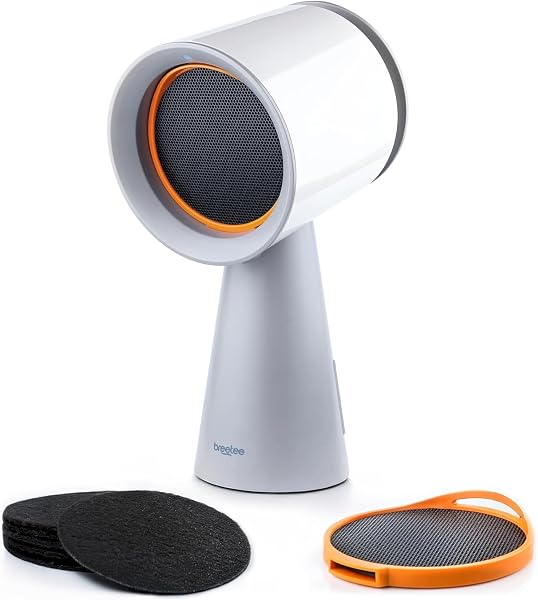
At 2.8 pounds this is the lightest hood in the roundup and the easiest to pick up and reposition, which for a countertop unit is most of the point.
The filter stack combines an aluminium quad-core with a polymer layer and activated carbon.
Key Specifications
| Airflow | 95 CFM |
|---|---|
| Noise | 65 dB |
| Wattage | 36 watts |
| Weight | 2.8 pounds, lightest here |
| Filtration | Aluminium quad-core with polymer layer and activated carbon |
| Dimensions | 8″D x 6.5″W x 14.5″H |
| Body | Plastic, off-white |
| Rating | 4.2 out of 5 stars, lowest here |
| Best For | Moving the extraction to wherever you are cooking |
Why We Recommend It
Activated carbon is the part worth having. A grease filter catches oil; it does nothing about smell. Carbon adsorbs the odour compounds, which on a recirculating hood is the difference between the kitchen smelling of last night’s fish or not. Only some of the portables here specify it.
Thirty-six watts and plug-and-play, at $84.99.
It shares the class limitation — 95 CFM at 65 dB — and carries 4.2 stars, the lowest rating in this roundup, so it is the least proven of the countertop units here.
Pros
- 2.8 pounds, lightest hood in the roundup
- Activated carbon layer for odour, not just grease
- 36 watts
- No installation of any kind
- $84.99 with a 5-layer stack
Cons
- 4.2 stars, lowest rating here
- 95 CFM at 65 dB
- Plastic body
- Recirculates only, so heat stays in the room
Best for: Cooking in more than one spot, or a kitchen too small for anything fixed.
10. AMZCHEF 3-Speed Desktop — Cheapest Here

Seventy-two dollars is the lowest price in this roundup, for a three-speed unit with a three-stage filter and an oil collector.
AMZCHEF also makes the 250 CFM four-speed model higher up this list, so the brand is not a one-product operation.
Key Specifications
| Airflow | Not stated |
|---|---|
| Noise | Not stated |
| Speeds | 3 |
| Filtration | 3-stage: polymer, grease and carbon |
| Extras | Built-in oil collector |
| Price | $71.99, cheapest here |
| Install | None, plug and play |
| Rating | 4.3 out of 5 stars |
| Best For | Trying a countertop hood for as little as possible |
Why We Recommend It
As a way of finding out whether a countertop hood helps in your kitchen, this is the cheapest honest answer. If it does help, the 250 CFM version from the same brand is the obvious upgrade.
What it does not publish is any performance figure. No CFM, no decibels, no wattage. Its own stablemate states 250 CFM at 55 dB; this listing states nothing, which given the price difference suggests the figures would not flatter it.
Where a listing in this category gives no airflow number, the safe assumption is the 95 CFM class rather than the 250.
Pros
- $71.99, cheapest hood in this roundup
- 3-stage filtration including carbon
- Built-in oil collector
- No installation at all
- Same brand as the 250 CFM model here
Cons
- No CFM, noise or wattage figure published anywhere
- Assume the 95 CFM class rather than the 250
- Recirculates only
- No dimensions or weight published
Best for: Finding out cheaply whether a countertop hood earns its space.
Plug-In or Fitted?
The two halves of this roundup, side by side. Both are sold as small range hoods.
| Plug-in countertop | Fitted 20–24 inch | |
|---|---|---|
| Models here | TUCO PRO, Wumorlt, BREETEE, AirHood, AMZCHEF x2 | JOEAONZ 20″, Zomagas 24″ x2, RecPro RV |
| Stated airflow | 95 CFM, or 250 on one, or not stated | 118 to 600 CFM |
| Stated noise | 65 dB on the 95 CFM units | 45 to 60 dB |
| Can it duct outside | No, recirculating only | Yes, all four convert |
| Installation | None | Screws, and ideally a duct run |
| Price here | $71.99–$109.99 | $99.95–$147.96 |
The middle two rows are the ones to read together. The plug-in units that state 95 CFM also state 65 dB; the fitted hoods move between 118 and 600 CFM at 45 to 60 dB. On the manufacturers’ own figures the weakest hoods in this roundup are the loudest, and the strongest is quieter than all but one of them. That is not a manufacturing failure — a small fan close to your ear at full speed is simply louder than a bigger one in a cabinet — but it does mean noise is not the price you pay for power here. It is the price you pay for not installing anything.

Ducted or Recirculating?
Only the fitted hoods here can be ducted. It is the single decision that changes what the hood actually does.
| Ducted | Recirculating | |
|---|---|---|
| Removes grease | Yes | Yes, via filters |
| Removes smell | Yes | Partly, only with a carbon filter |
| Removes steam and heat | Yes | No, both stay in the room |
| Models here | JOEAONZ, both Zomagas, if you run the duct | All six countertop units, plus RecPro |
| Needs | An outside wall and a duct run | A socket |
| Filter upkeep | Grease filter, washable | Grease plus carbon, carbon replaced periodically |
The row that matters is steam and heat. A recirculating hood is a grease filter with a fan — useful, and much better than nothing over a frying pan, but the moisture and the warmth go straight back into the kitchen. In a small room that is exactly the problem you were trying to solve. If you can run a duct, do. If you cannot, choose a unit that specifies an activated carbon layer rather than just a grease filter, because carbon is the only part of a recirculating stack that addresses smell — and check it, because not every listing here specifies one.
Best Alternatives
| Alternative | Why Consider It | Better For | Main Trade-Off |
|---|---|---|---|
| Opening a window with a box fan | Costs almost nothing and moves real air | Occasional frying in a rented flat | Weather-dependent, and no grease filtration at all |
| An over-the-range microwave with a vent | One appliance in the cabinet gap | Kitchens with a 30-inch gap already | Usually weak extraction and mostly recirculating |
| A downdraft extractor | No overhead unit at all | Islands and hobs under windows | Expensive, and fights the natural rise of hot air |
| An air purifier near the hob | Helps with smoke particles and lingering smell | Renters who cannot fit anything | Not designed for grease, and filters clog fast |
| Cooking with a lid, or an air fryer | Removes the plume at source | Everyday cooking rather than searing | Changes what you can cook, not how you extract |
What Each Price Tier Actually Buys
$72 to $85 — AMZCHEF 3-Speed, Wumorlt, BREETEE. Plug-in countertop units in the 95 CFM class, or not stating airflow at all. What separates them is features rather than performance: a self-cleaning cycle on the Wumorlt, an activated carbon layer and 2.8 pounds on the BREETEE, the lowest price on the AMZCHEF.
$99 to $110 — AirHood, TUCO PRO, RecPro RV, AMZCHEF 4-Speed, Zomagas 24-inch pair. The most interesting tier, because it contains both types. The same hundred dollars buys either a 95 CFM plug-in unit or a fitted 280 to 450 CFM hood that ducts outside. On airflow it is not close; on convenience it is not close either, in the other direction.
$148 — JOEAONZ 20-inch insert. Six hundred CFM, which is more than double anything else here and six times the countertop class. You are paying for a proper ducted extraction in a narrow width, and accepting that it has to be built into cabinetry.
The pattern: price does not track airflow in this category, because the two product types overlap in price and differ by a factor of six in performance. The 450 CFM wall-mount hood costs less than three of the 95 CFM plug-in units.
How to Choose a Small Range Hood
Decide First Whether You Can Fix Anything to the Wall
This single question splits the category. If you rent, or the hob moves, or there is nothing above the cooker to screw into, you are buying a plug-in countertop unit and the rest of the decision is about filtration and noise. If you can fit something, everything fitted here outperforms everything plug-in by a wide margin.
Read CFM and Decibels Together, Never Separately
In this roundup the 95 CFM units run at 65 dB and the 600 CFM insert runs at 60. Airflow per decibel is the number that matters, and no listing calculates it for you. Where a listing gives one figure and not the other — three do here — treat the missing one as unfavourable, because a good number tends to get printed.
Match the Mounting Type to Your Wall, Not to the Price
Under-cabinet hoods screw to the base of a wall cupboard. Chimney hoods need open wall — the 24-inch model here stands 36.3 inches tall. Inserts go inside existing cabinetry or a custom hood. These are not interchangeable, and a hood you cannot physically mount is a return, not a bargain.
Prefer Ducted if the Wall Allows It
Recirculating hoods filter grease and return the air. In a small kitchen the heat and moisture are half the problem, and only a duct removes them. All four fitted hoods here convert between ducted and ductless, so the capability is there if the outside wall is.
On a Recirculating Unit, Insist on Activated Carbon
A grease filter does nothing for smell. Carbon is the layer that adsorbs odour compounds, and it is the difference between a kitchen that smells of last night and one that does not. Some listings here specify it and some describe only a grease or polymer stack. Carbon is also consumable, so budget for replacements.
Where a Countertop Hood Sits Decides Whether It Works
A fitted hood sits above the pan and catches a rising plume. A countertop unit sits beside it and has to pull the plume sideways, against its natural direction. That is why the better portables here have a shield or an adjustable arm to direct the flow. Without something to steer it, most of the steam goes past the intake.

Common Small Range Hood Buying Mistakes
- Assuming small means one kind of appliance. This roundup contains 95 CFM plug-ins and a 600 CFM insert, both marketed as small range hoods.
- Reading noise without airflow. The 95 CFM units here are the loudest at 65 dB; the 600 CFM insert is quieter.
- Buying a chimney hood for a cabinet gap. The 24-inch wall-mount model here is 36.3 inches tall and needs open wall.
- Buying an insert without cabinetry. An insert is a component, not a finished appliance; it needs something to sit inside.
- Expecting a recirculating hood to remove steam. It filters grease and returns the air, heat and moisture included.
- Ignoring a missing CFM figure. Three listings here do not publish one, and one substitutes fan RPM, which is not the same thing.
- Placing a countertop unit beside the pan and expecting it to catch the plume. Without a shield or an arm to direct it, most of the steam goes past.
Which Small Range Hood Should You Buy?
Buy the JOEAONZ 20-inch insert if you can build it in. Six hundred CFM in a 20-inch width, ducted, at 60 dB — nothing else small comes close on extraction.
Buy the Zomagas 24-inch under-cabinet if you have a 24-inch cabinet gap. Two hundred and eighty CFM at 55 dB in a body under four inches tall.
Buy the Zomagas 24-inch wall mount if the wall above your hob is open. Four hundred and fifty CFM for a hundred and four dollars is the best airflow per dollar here.
Buy the AMZCHEF 4-Speed portable if you cannot install anything. Two hundred and fifty CFM at 55 dB is more than double any other plug-in unit, with an arm that clears a wok.
Buy the RecPro RV hood if noise is the deciding factor. Forty-five decibels, quietest in the roundup, in a three-inch-deep body.
Buy the BREETEE if you want the lightest unit with a carbon layer for smell, at 2.8 pounds.
Buy the AMZCHEF 3-Speed if you just want to find out whether a countertop hood helps, for $71.99.

Frequently Asked Questions
What counts as a small range hood?
Two quite different things, which is the confusion at the centre of this category. One is a plug-in countertop unit, typically three to four pounds, that needs no installation and recirculates. The other is a fitted hood in a 20 or 24-inch width, against the standard 30, that mounts under a cabinet or on a wall and can usually be ducted outside. In this roundup they overlap in price and differ by up to six times in stated airflow.
How many CFM does a small kitchen need?
The common guidance is roughly 100 CFM per linear foot of hob for an electric cooker, so a 24-inch hob suggests about 200 CFM as a floor, and gas or heavy searing wants more. Measured against that, the fitted hoods here at 280 to 600 CFM are adequate to generous, and the 95 CFM countertop units are below it. That does not make them useless — 95 CFM directly beside a pan removes more than nothing — but it is worth knowing where the figure sits.
Are portable countertop range hoods any good?
They work, within real limits. They filter grease and, where a carbon layer is fitted, some of the smell, and they need no installation at all, which for renters is the whole argument. The limits are that they recirculate, so heat and steam stay in the room; they sit beside the pan rather than above it, so they fight the plume’s natural direction; and in this roundup they state 95 CFM at 65 dB, the weakest airflow and the highest noise of anything here.
Why is my small range hood so loud?
Because it is a small fan spinning fast, close to you. Noise in this category tracks fan speed and proximity rather than power: the 95 CFM countertop units here state 65 dB while the 600 CFM insert states 60 and a 118 CFM RV hood states 45. A bigger fan moving more air slowly, mounted further from your head and inside a cabinet, is quieter than a small one at 5000 RPM eighteen inches from your ear.
Is a ducted or ductless small hood better?
Ducted, whenever the wall allows it. A ductless hood passes air through a grease filter and usually a carbon filter and returns it to the room, which deals with grease and some smell but leaves the heat and the moisture behind. In a small kitchen that moisture is a large part of the problem. All four fitted hoods in this roundup convert between the two, so the decision is about whether you have an outside wall, not about which hood to buy.
Can I fit a 24-inch range hood myself?
The under-cabinet type, often yes if you are comfortable with a drill and an electrical connection; it screws to the underside of a wall cabinet. The wall-mount chimney type is more involved because it carries its own flue and needs 36 inches of clear wall. An insert is the hardest, because it is a component that has to be built into cabinetry or a custom hood. Ducting to an outside wall is a separate job again, and where the electrical connection is hard-wired rather than plugged, that is electrician territory.
Do small range hoods need a carbon filter?
Only the recirculating ones, and then yes if smell matters to you. A grease filter, usually aluminium mesh, catches oil droplets and washes in the dishwasher. It does nothing about odour. Activated carbon adsorbs the odour compounds and is the only part of a ductless stack that addresses smell. It is consumable, so it needs replacing periodically, and not every listing in this roundup specifies that a carbon layer is included.
What is CFM and why do some listings not give it?
Cubic feet per minute — the volume of air the hood moves. It is the primary performance figure for any extractor. Three of the ten listings here do not publish one: two state nothing, and one states fan speed of 3100 to 5000 RPM instead, which describes how fast the blade turns rather than how much air reaches the filter. Blade speed without blade geometry is not comparable between machines, so where CFM is absent it is safest to assume the lower class.
Final Verdict
Six hundred CFM in a 20-inch width, ducted, at 60 dB — six times what the countertop units here manage.
Two hundred and eighty CFM at 55 dB, in a body under four inches tall that fits a standard 24-inch cabinet gap.
Two hundred and fifty CFM at 55 dB with an adjustable arm, from a unit that needs no installation at all.
Small range hood is one phrase covering two appliances. A plug-in countertop unit at 95 CFM and 65 decibels, and a fitted 20 or 24-inch hood at 280 to 600 CFM and 45 to 60 decibels. They sit next to each other in the search results at overlapping prices, and the difference in what they actually do is a factor of six.
The counterintuitive part is the noise. You would expect the powerful hoods to be the loud ones. In this roundup it runs the other way: the quietest hood moves more air than the loudest, because a small fan spinning fast beside your head is louder than a bigger one turning slowly inside a cabinet.
So start with the wall, not the price. If you can screw something to it, buy fitted and duct it if you can. If you cannot — and for a lot of small kitchens that is simply the situation — buy the plug-in unit with the highest stated CFM and a carbon layer, put a shield or an arm between it and the pan, and take the 95 CFM knowing what it is. It is still better than nothing, which is what the alternative usually is.