Affiliate Disclosure: As an Amazon Associate, we earn from qualifying purchases. This does not affect the price you pay.
The assumption behind buying a range hood is that power and quiet are opposites — that the more air a hood moves, the more noise you have to live with.
In this roundup it is the other way round. The hood that moves the most air is also the quietest. A 980 CFM insert states 50 decibels. A 100 CFM under-cabinet hood states 65. Nearly ten times the airflow, fifteen decibels less noise.
Two things explain it. An insert sits buried inside cabinetry, which muffles the motor before the sound reaches the room, while an under-cabinet hood has nothing between its fan and your ears. And a larger, better motor moves a given volume of air at lower fan speed — and fan speed is what you actually hear.
There is a second complication: this category states noise in two different units. Most hoods here use decibels; two Broan models use sones. Six and a half sones sounds modest next to 65 dB until you convert it — it is roughly 67 dB, the loudest figure in this comparison.
Every hood below has both figures given as stated and, where sones are used, converted. Read the two columns together and the ranking is not the one the prices suggest.
Our Quick Picks
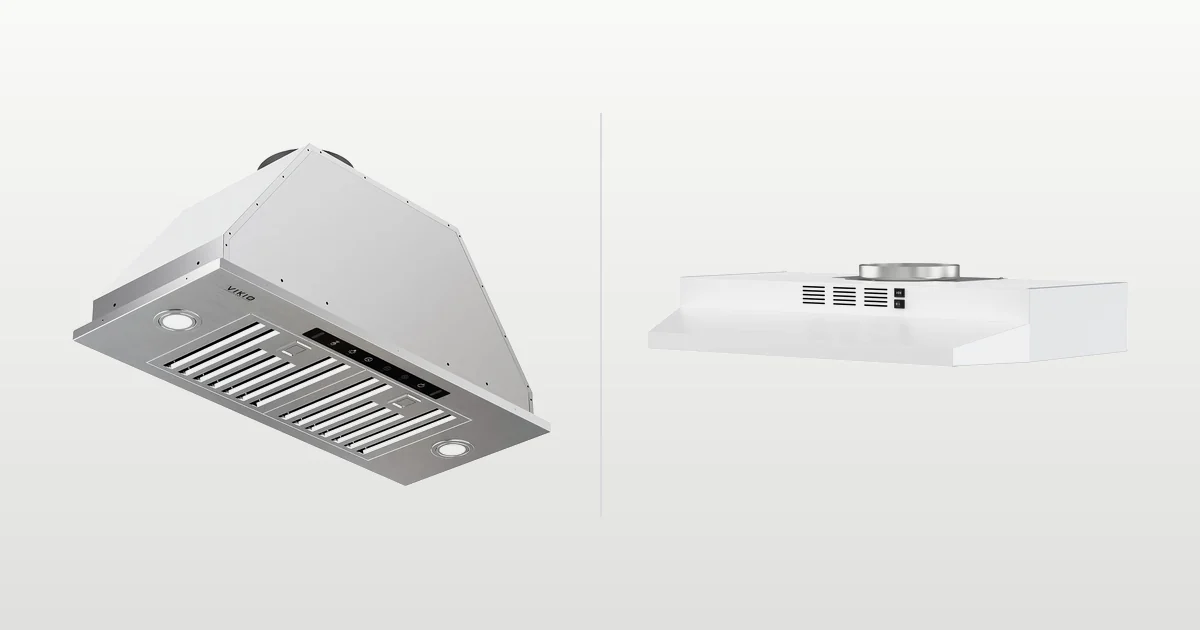
 Best OverallVIKIO HOME Insert 30
Nine hundred and eighty CFM at fifty decibels — the most air and the least noise of anything in this roundup.
 Best Under $80FIREGAS 30-Inch White
Three hundred CFM at 57 decibels for seventy-four ninety-nine — the best airflow per dollar in this roundup.
 Quietest at PowerBroan-NuTone PM300SS
Three sones — roughly 56 decibels — at 300 CFM, from the one brand here with a professional acoustic pedigree.
At a Glance
Ten Cabinet Range Hoods Compared
Airflow against noise, with sones converted to decibels so the whole roundup sits on one scale.
| # | Model | Airflow | Noise | Mounting | Power | Standout | Main Drawback | Check Price |
|---|---|---|---|---|---|---|---|---|
| 1 |
 VIKIO HOME Insert 30 VIKIO HOME Insert 30 |
980 CFM | 50 dB | Insert | 70 W | Most airflow and least noise, at once | Insert, so it needs cabinetry to sit in | View on Amazon |
| 2 |
 IKTCH Insert 30 IKTCH Insert 30 |
900 CFM | 60 dB | Insert | 230 W | Twenty-seven pounds of stainless | 230 watts, the highest draw here | View on Amazon |
| 3 |
 EVERKITCH Under Cabinet EVERKITCH Under Cabinet |
900 CFM | 64 dB | Under cabinet | 184 W | 900 CFM without needing cabinetry built | 64 dB, second loudest here | View on Amazon |
| 4 |
 Zomagas Insert 30 Zomagas Insert 30 |
600 CFM | 65 dB | Insert | Not stated | Insert performance at half insert prices | 65 dB, joint loudest in this roundup | View on Amazon |
| 5 |
 Broan-NuTone PM300SS Broan-NuTone PM300SS |
300 CFM | 3 sones | Power pack insert | Not stated | Three sones, half the loudness of its own stablemate | Stated in sones, which nothing else here uses | View on Amazon |
| 6 |
 FIREGAS 30-Inch White FIREGAS 30-Inch White |
300 CFM | 57 dB | Under cabinet | 50 W | 300 CFM and 57 dB for seventy-five dollars | Two speeds only, and a painted finish | View on Amazon |
| 7 |
 COMFEE’ 30-Inch COMFEE’ 30-Inch |
100 CFM | 65 dB | Under cabinet | Not stated | A known brand at ninety dollars | 100 CFM, the least airflow here | View on Amazon |
| 8 |
 Broan-NuTone 413001 Broan-NuTone 413001 |
1 CFM stated | 55 dB | Under cabinet | 75 W | The default ductless hood, and a genuine spares supply | Its listing states an airflow of 1 CFM | View on Amazon |
| 9 |
 Broan-NuTone F403011 Broan-NuTone F403011 |
190 CFM | 6.5 sones | Under cabinet | 75 W | Four different duct configurations | Loudest here, and the least airflow | View on Amazon |
| 10 |
 CIARRA 30-Inch Ductless CIARRA 30-Inch Ductless |
200 CFM | 6.5 sones | Under cabinet | Not stated | Under four inches tall | 6.5 sones, joint loudest here | View on Amazon |
Specifications, prices and ratings are taken from each manufacturer’s Amazon listing as displayed on 20 August 2026 and may change. Airflow and noise are manufacturers’ stated figures, not measurements, and are not independently comparable between brands. Sone-to-decibel conversions are ours, using the standard loudness relation phon = 40 + 33.22 x log10(sones); 3 sones is about 56 dB and 6.5 sones about 67 dB. The Broan-NuTone 413001 listing states an airflow of 1 CFM, which is a data-entry error rather than a specification, and is shown as stated. One listing did not display a price when checked. The CFM-per-linear-foot guidance referenced is a common rule of thumb, not a regulation. A Broan LB30SS returned by the same category was excluded because it is a stainless range liner with no motor, not a range hood, as were backsplashes, splatter guards and a light cover.
Scroll the table sideways to see every column
How We Chose These Cabinet Range Hoods
We researched current listings, compared manufacturer specifications and documentation, and examined recurring patterns in customer feedback. We did not carry out hands-on testing, and nothing below is presented as measured performance data.
- Airflow and noise read together — the two do not trade off in this roundup the way buyers assume
- Noise converted to one unit — two hoods here state sones and the rest state decibels, which hides the loudest models
- Under-cabinet or insert — one screws to a cupboard you already have, the other needs cabinetry built for it
- Whether it can duct outside — a recirculating hood filters grease but returns the heat and steam to the room
- Filter and spares availability — a ductless hood is only as good as the charcoal filters you can still buy for it
- Complete hoods only — a range liner with no motor, backsplashes and a light cover were excluded
The 10 Best Cabinet Range Hoods, Reviewed
1. VIKIO HOME Insert 30 — Best Overall

Nine hundred and eighty CFM and fifty decibels appear on the same listing, which on the face of it should not happen.
The under-cabinet hoods in this roundup move 190 to 900 CFM at 57 to 67 decibels. This moves more than any of them and is quieter than all of them.
Key Specifications
| Airflow | 980 CFM, highest here |
|---|---|
| Noise | 50 dB, lowest here |
| Wattage | 70 watts |
| Mounting | Insert or built-in |
| Dimensions | 11.75″D x 27.7″W x 13.63″H |
| Weight | 25.4 pounds |
| Motor | Dual-intake |
| Controls | Gesture and touch |
| Best For | Heavy cooking where the hood must not dominate the room |
Why We Recommend It
The reason is where it sits. An insert is buried inside cabinetry or a custom hood canopy, and that enclosure does what a sound baffle does — the motor noise never reaches the room directly. A dual-intake motor also moves a given volume at lower fan speed than a single intake, and fan speed is what you hear.
Seventy watts for 980 CFM is efficient, and gesture control means you are not pressing greasy buttons mid-cook.
The catch is what an insert is. It is not a finished hood; it is the working part that goes inside a cabinet or a joinery-built canopy. If you do not already have that, the true cost includes making one.
Pros
- 980 CFM, most airflow in this roundup
- 50 dB, least noise in this roundup
- Dual-intake motor moves more air at lower fan speed
- 70 watts, efficient for the airflow
- Gesture and touch controls
Cons
- Needs an existing cabinet or custom canopy
- $265.33, second dearest here
- 25.4 pounds to lift into position
- Installation is a joinery and ducting job
Best for: Serious cooking under existing cabinetry or a custom canopy.
2. IKTCH Insert 30 — Best Built

Twenty-seven pounds is the heaviest hood here, and in this category weight is mostly a proxy for gauge of steel and size of motor.
Nine hundred CFM at 60 decibels, with touch controls and removable stainless baffle filters.
Key Specifications
| Airflow | 900 CFM |
|---|---|
| Noise | 60 dB |
| Wattage | 230 watts, highest here |
| Mounting | Built-in insert |
| Dimensions | 11.77″D x 27.75″W x 11.4″H |
| Weight | 27 pounds, heaviest here |
| Controls | Touch, with removable filters |
| Conversion | Ducted or ductless |
| Best For | A hood that will still be working in fifteen years |
Why We Recommend It
IKTCH is one of the few names in this part of the market with a real reputation, and the build shows it: laser-welded stainless, filters that come out and go in a dishwasher, and an enclosure solid enough not to resonate at full speed, which is what makes a cheap hood sound worse than its decibel figure suggests.
At 11.4 inches tall it is shorter than the VIKIO insert, which matters when you are fitting it into a canopy of fixed height.
It draws 230 watts, the most in this roundup and more than three times the VIKIO for slightly less air. That is a real running-cost difference if the hood is on for an hour a day.
Pros
- 27 pounds, the most substantial build here
- 900 CFM at 60 dB
- Laser-welded stainless with dishwasher-safe filters
- Only 11.4 inches tall for a canopy fit
- Established name in this part of the market
Cons
- 230 watts, highest draw in the roundup
- $299.00, joint most expensive here
- Needs cabinetry or a canopy to sit inside
- 27 pounds is awkward to lift overhead
Best for: Anyone buying a hood once and expecting it to last.
3. EVERKITCH Under Cabinet — Most Powerful Under-Cabinet

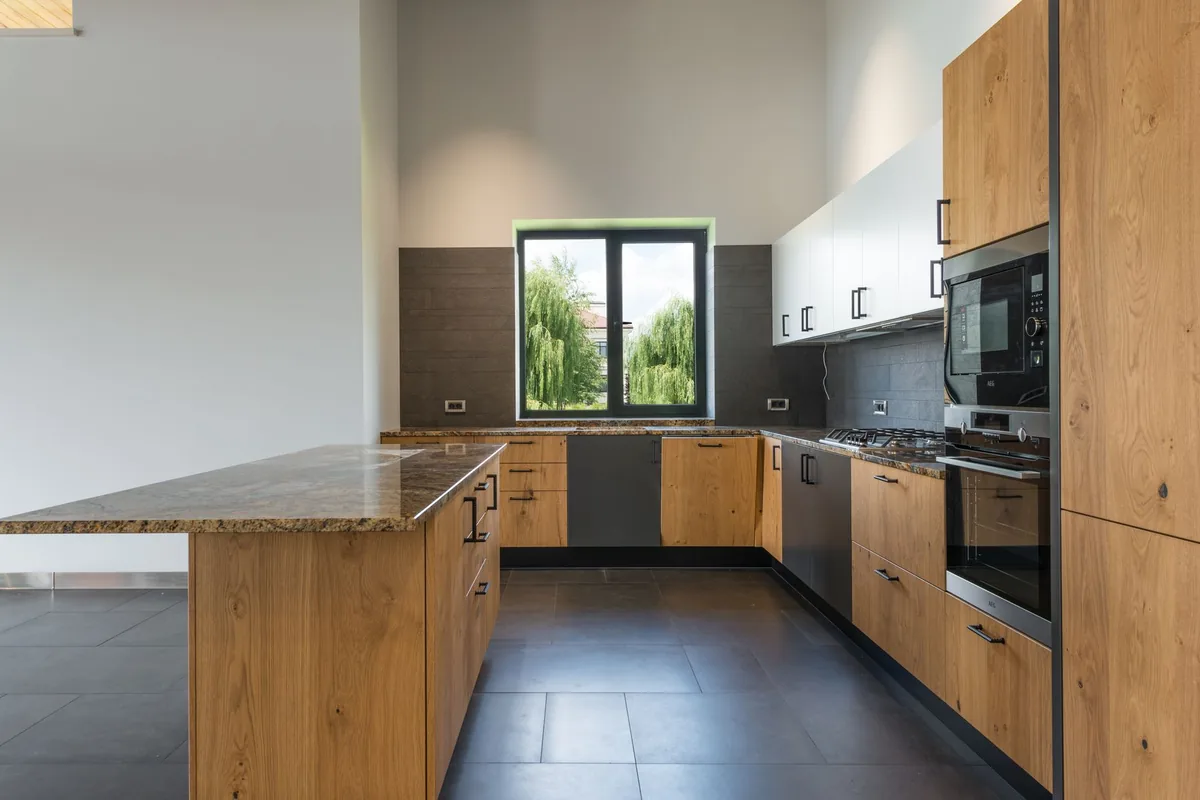
Both 900-plus CFM hoods above are inserts and need something built to house them. This moves the same 900 CFM and screws to the underside of a wall cabinet you already have.
For most kitchens that is the difference between a weekend job and a joinery project.
Key Specifications
| Airflow | 900 CFM |
|---|---|
| Noise | 64 dB |
| Wattage | 184 watts |
| Mounting | Under cabinet |
| Dimensions | 19.7″D x 29.8″W x 6″H |
| Weight | 36 pounds, heaviest here |
| Features | Gesture and touch control, timer, auto fan shut-off |
| Model | EVK243 |
| Best For | Heavy cooking where no cabinetry can be rebuilt |
Why We Recommend It
Gesture control, a timer and an auto fan shut-off that keeps running after you finish cooking are all sensible additions on a hood this powerful — the run-on is what clears the residual steam you would otherwise leave behind.
The price of skipping the cabinetry is noise. At 64 decibels it is the second loudest hood here, against 50 for the VIKIO insert moving 980 CFM. An under-cabinet hood has nothing between its motor and the room, so the same airflow costs you around fourteen decibels — which is a substantial difference in perceived loudness.
At 36 pounds it is also the heaviest thing in this roundup to hold overhead while you find the screws.
Pros
- 900 CFM without needing any cabinetry built
- Gesture and touch control with a timer
- Auto fan shut-off clears residual steam
- Fits a standard 30-inch cabinet gap
- Stainless steel with noise-reduction design
Cons
- 64 dB, second loudest here despite the price
- 36 pounds, heaviest hood in the roundup
- $299.00, joint most expensive
- 19.7 inches deep, a large projection
Best for: Heavy cooking in a kitchen where the cabinets stay as they are.
4. Zomagas Insert 30 — Best Value Insert

The other two inserts here cost $265.33 and $299.00 and move 980 and 900 CFM. This costs $156.94 and moves 600.
Six hundred CFM is comfortably enough for a domestic 30-inch hob — the common guidance is around 100 CFM per linear foot, so a 30-inch cooker suggests roughly 250 as a floor.
Key Specifications
| Airflow | 600 CFM |
|---|---|
| Noise | 65 dB, joint loudest here |
| Mounting | Built-in insert |
| Width | 30 inches |
| Conversion | Ducted or ductless |
| Body | Stainless steel |
| Price | $156.94 |
| Rating | 4.6 out of 5 stars, highest here |
| Best For | Insert installation without insert prices |
Why We Recommend It
Which makes this the sensible insert for most kitchens. Nine hundred CFM is worth having if you sear and wok regularly; if you mostly boil, roast and fry occasionally, you are paying a hundred and forty dollars for headroom you will never open up.
It converts between ducted and ductless like the others, and the stainless body is the same basic construction.
It is also the loudest hood here at 65 dB, which is a useful corrective to the idea that an insert is quiet by definition. Sitting inside cabinetry helps, but it does not make up for a cheaper motor: the VIKIO insert moves 380 more CFM at fifteen decibels less.
It carries 4.6 stars, the highest rating in this roundup.
Pros
- 600 CFM for $156.94, cheapest insert here
- Ample airflow for a domestic 30-inch hob
- Ducted or ductless convertible
- Stainless steel construction
- 4.6 stars, highest rating in this roundup
Cons
- 65 dB, joint loudest hood in this roundup
- No wattage published
- 600 CFM against 900 and 980 for the dearer inserts
- Still needs cabinetry or a canopy
Best for: Most domestic kitchens fitting an insert into existing joinery.
5. Broan-NuTone PM300SS — Quietest at Power

Broan states 3 sones. Every other hood in this roundup except two states decibels, so the first job is converting: 3 sones is roughly 56 dB.
That makes it quieter than every under-cabinet hood here, at 300 CFM.
Key Specifications
| Airflow | 300 CFM |
|---|---|
| Noise | 3 sones, roughly 56 dB |
| Mounting | Custom power pack insert |
| Fan | 2-speed |
| Lighting | Integrated |
| Brand | Broan-NuTone |
| Price | $186.98 |
| Type | Power pack for custom hoods |
| Best For | A custom canopy where noise matters more than headline airflow |
Why We Recommend It
The comparison worth making is against Broan’s own F403011 further down this list. That hood states 6.5 sones, which is about 67 dB, and moves 190 CFM. This one states 3 sones at 300 CFM. Same manufacturer: more air, and roughly half the perceived loudness, because sones are a linear loudness scale — 6.5 sones really is about twice as loud as 3.
A power pack is the motor, filter and light assembly designed to be dropped into a custom-built canopy, which is why Broan sells it as a component rather than a hood.
Three hundred CFM is modest against the 900s here, but paired with 3 sones it is arguably the best-balanced unit in the roundup for a normal kitchen.
Pros
- 3 sones, roughly 56 dB, quietest per CFM here
- 300 CFM is ample for domestic cooking
- Broan-NuTone, the established name in extraction
- 2-speed fan with integrated lighting
- Designed to drop into a custom canopy
Cons
- Stated in sones while most rivals use decibels
- 300 CFM against 900 for the powerful inserts
- A component, not a finished hood
- $186.98 for modest airflow
Best for: A custom canopy in a kitchen you actually live in.

6. FIREGAS 30-Inch White — Best Under $80

Seventy-four ninety-nine buys 300 CFM at 57 decibels in a 30-inch under-cabinet body. That is more airflow than the $104 Broan and the $89 CIARRA, at a lower stated noise level than either.
At nine pounds it is also the lightest hood here by a wide margin, which makes fitting it a one-person job.
Key Specifications
| Airflow | 300 CFM |
|---|---|
| Noise | 57 dB |
| Wattage | 50 watts |
| Mounting | Under cabinet |
| Dimensions | 17.5″D x 29.9″W x 4.7″H |
| Weight | 9 pounds, lightest here |
| Speeds | 2 |
| Finish | White |
| Best For | A functional hood at the lowest sensible price |
Why We Recommend It
Three hundred CFM is genuinely adequate for a 30-inch domestic hob, so this is not a compromise hood in the way the price suggests. It is the standard job done plainly: two speeds, a grease filter, a light and a fan that works.
Fifty watts is also the lowest meaningful draw here, which over years of daily use is not nothing.
What you give up is finish and adjustability. Two speeds rather than three or four, painted white rather than stainless, and no timer, gesture control or run-on function. For a rental, a second kitchen or a budget refit that is exactly the right set of compromises.
Pros
- $74.99, cheapest hood in this roundup
- 300 CFM at 57 dB, better than hoods costing more
- 9 pounds, easily fitted by one person
- 50 watts, lowest meaningful draw here
- 4.7 inches tall under the cabinet
Cons
- Two speeds only
- Painted white rather than stainless
- No timer, run-on or gesture control
- Unfamiliar brand with no stated warranty
Best for: Rentals, second kitchens and budget refits that still need real extraction.
7. COMFEE’ 30-Inch — Best Slim Profile

COMFEE’ sits under Midea, one of the largest appliance manufacturers in the world, which in a category full of unfamiliar names is worth something on its own.
Eighty-nine ninety-eight for a slim 30-inch under-cabinet hood that converts between ducted and ductless.
Key Specifications
| Airflow | 100 CFM, lowest here |
|---|---|
| Noise | 65 dB, joint loudest here |
| Mounting | Under cabinet |
| Width | 30 inches |
| Conversion | Ducted or ductless convertible |
| Body | Stainless steel |
| Brand | COMFEE’, part of Midea |
| Price | $89.98 |
| Best For | A straightforward branded hood at a low price |
Why We Recommend It
The slim profile is the practical selling point: a low-projection body takes less headroom under the cabinet and is less likely to be something you knock your head on over the hob.
The figures are the problem. One hundred CFM is the lowest airflow in this roundup by a distance, and 65 dB is joint loudest. The $74.99 FIREGAS states three times the airflow at eight decibels less.
One hundred CFM also sits below the common guidance of roughly 100 CFM per linear foot of hob, which for a 30-inch cooker suggests about 250 as a floor. Whatever the extra fifteen dollars buys here, it is the brand and the profile rather than the extraction.
Pros
- Backed by Midea, a major appliance manufacturer
- $89.98 for a 30-inch stainless body
- Slim, low-projection profile under the cabinet
- Ducted or ductless convertible
- Simple to fit in a standard cabinet gap
Cons
- 100 CFM, lowest airflow in this roundup
- 65 dB, joint loudest here
- No wattage stated
- Below the usual CFM-per-foot guidance for a 30-inch hob
Best for: Light cooking where brand and slim profile matter more than airflow.
8. Broan-NuTone 413001 — Best Ductless

This is the hood that gets specified when there is no exterior wall behind the cooker — an interior kitchen, a flat with no through-wall route, a listed building where you cannot cut an opening.
It is ductless by design rather than convertible, which is an honest position: it filters and recirculates and does not pretend otherwise.
Key Specifications
| Airflow | Listed as 1 CFM — see note |
|---|---|
| Noise | 55 dB |
| Wattage | 75 watts |
| Mounting | Under cabinet |
| Type | Ductless, non-convertible |
| Lighting | Integrated |
| Brand | Broan-NuTone |
| Model | 413001 |
| Best For | Flats and interior walls where ducting is impossible |
Why We Recommend It
The argument for Broan here is spares. A ductless hood consumes charcoal filters, and a filter you cannot buy in five years turns the hood into a light fitting. Broan-NuTone is the largest ventilation manufacturer in North America, its part numbers persist, and its filters are stocked everywhere.
That matters more on a ductless hood than on any other type in this roundup.
Its listing states an airflow of 1 CFM. That is a data-entry error rather than a specification — a fan moving one cubic foot of air a minute would not be ventilation at all. Broan does publish 55 dB and 75 watts, so the noise figure is usable and the airflow one has to be treated as missing.
Because it does not convert, if you ever gain the ability to duct you replace the hood rather than reconfigure it.
Pros
- Ductless by design, for kitchens with no duct route
- Broan-NuTone spares and filters widely stocked
- Established model with a long production history
- Integrated lighting
- 55 dB stated, mid-pack for noise here
Cons
- Listing states 1 CFM, which cannot be right
- Ductless only, not convertible to ducted
- Charcoal filters are a recurring cost
- Recirculating leaves heat and steam in the room
Best for: Interior kitchens and flats where a duct run is genuinely impossible.
9. Broan-NuTone F403011 — Most Duct Options

Four-way convertible means it will vent through a 3.25-inch vertical duct, a 10-inch horizontal one, or recirculate. In a replacement job that is the specification that decides whether the hood fits your existing pipework or you re-plumb the wall.
Broan is the incumbent in most American kitchens, so a like-for-like swap usually is like-for-like.
Key Specifications
| Airflow | 190 CFM |
|---|---|
| Noise | 6.5 sones, roughly 67 dB |
| Wattage | 75 watts |
| Duct options | 3.25″ vertical, 10″ horizontal, or ductless |
| Dimensions | 17.5″D x 30″W x 6″H |
| Weight | 12 pounds |
| Model | F403011 |
| Rating | 4.5 out of 5 stars |
| Best For | Replacing an old hood into existing ductwork |
Why We Recommend It
Seventy-five watts, twelve pounds and a 4.5 rating from a hood that has been in production long enough to be a known quantity.
The numbers are the weak point, and they are worth stating plainly. One hundred and ninety CFM is among the lowest airflow figures here, and 6.5 sones is roughly 67 decibels — the loudest. Broan’s own PM300SS insert further up this list manages 300 CFM at 3 sones, which is more air at about half the loudness, from the same manufacturer.
Buy this for the duct flexibility and the replacement fit, not for the performance.
Pros
- Four duct configurations, including two ducted routes
- Fits most existing Broan cutouts and pipework
- 4.5 stars over a long production history
- 75 watts and 12 pounds
- $104.00 from the category’s biggest name
Cons
- 190 CFM, among the lowest airflow here
- 6.5 sones, roughly 67 dB, the loudest here
- Stated in sones while most rivals use decibels
- Broan’s own insert beats it on both figures
Best for: Swapping an old hood into ductwork that already exists.
10. CIARRA 30-Inch Ductless — Slimmest Here

Three point nine four inches is the slimmest body here, and in a kitchen where the cabinet sits low over the hob that is the specification that decides whether a hood fits at all.
Two hundred CFM, mechanical push-button controls and a stainless body at 13 pounds.
Key Specifications
| Airflow | 200 CFM |
|---|---|
| Noise | 6.5 sones, roughly 67 dB |
| Height | 3.94 inches, slimmest here |
| Mounting | Under cabinet |
| Dimensions | 19.68″D x 29.76″W x 3.94″H |
| Weight | 13 pounds |
| Controls | Mechanical push button |
| Type | Ductless |
| Best For | A tight gap between cabinet and hob |
Why We Recommend It
Push buttons are worth a word in their favour: they work with wet or greasy hands, they give tactile feedback, and there is no touch panel to stop responding after a few years of steam. On a hood, mechanical is not automatically the cheap option.
Six point five sones is roughly 67 decibels, joint loudest in this roundup alongside the Broan F403011, and it moves 200 CFM to the FIREGAS’s 300 at 57 dB. The slim profile costs you acoustic space as well as physical space — there is less room inside for a larger, slower fan.
The listing did not display a price when we checked, so confirm before ordering.
Pros
- 3.94 inches tall, slimmest hood in the roundup
- Mechanical push buttons work with greasy hands
- Stainless steel at 13 pounds
- 200 CFM is workable for light domestic cooking
- Low profile suits a tight cabinet-to-hob gap
Cons
- 6.5 sones, roughly 67 dB, joint loudest here
- 200 CFM against 300 from a cheaper rival
- Price was not displayed when checked
- Ductless only
Best for: A kitchen where the gap between cabinet and hob is genuinely tight.
Airflow Against Noise, on One Scale
Every hood here, sorted by stated airflow, with noise converted to decibels where the listing uses sones. If power cost you quiet, this table would slope one way. It does not.
| Hood | Airflow | Noise as stated | In dB | Mounting |
|---|---|---|---|---|
| VIKIO HOME Insert | 980 CFM | 50 dB | 50 | Insert |
| IKTCH Insert | 900 CFM | 60 dB | 60 | Insert |
| EVERKITCH | 900 CFM | 64 dB | 64 | Under cabinet |
| Zomagas Insert | 600 CFM | 65 dB | 65 | Insert |
| Broan PM300SS | 300 CFM | 3 sones | ~56 | Power pack insert |
| FIREGAS | 300 CFM | 57 dB | 57 | Under cabinet |
| CIARRA | 200 CFM | 6.5 sones | ~67 | Under cabinet |
| Broan F403011 | 190 CFM | 6.5 sones | ~67 | Under cabinet |
| COMFEE’ | 100 CFM | 65 dB | 65 | Under cabinet |
| Broan 413001 | 1 CFM stated — see note | 55 dB | 55 | Under cabinet |
The top row and the bottom three are the whole argument. The 980 CFM insert is the quietest hood in this comparison; the 100 CFM and 190 CFM hoods are among the loudest. The fourth column is what makes it visible — without converting sones you would read 6.5 as a smaller number than 65 and reach the opposite conclusion. Note also that an insert is not automatically quiet: the Zomagas insert states 65 dB, joint loudest here, which shows the enclosure helps but does not substitute for the motor. What actually predicts quiet in this roundup is motor quality and mounting together, not airflow.
Under-Cabinet or Insert?
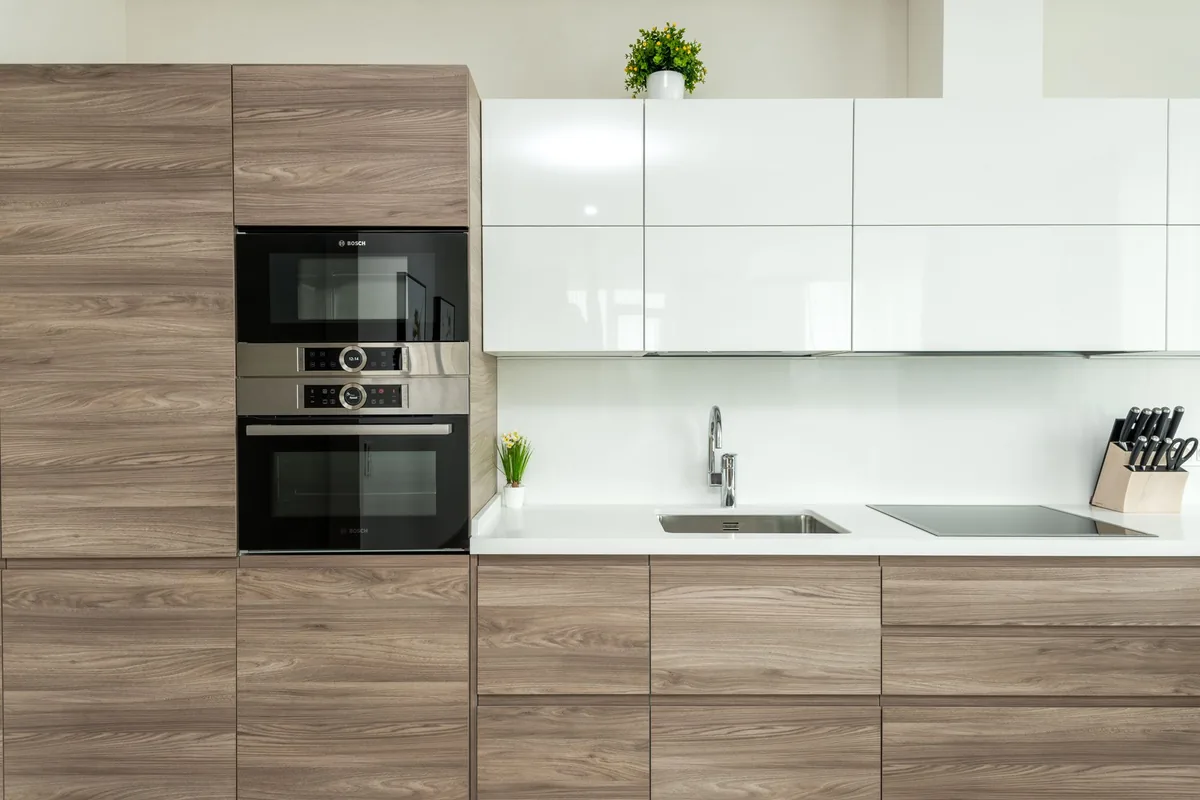
The two mounting types in this roundup are not interchangeable, and the choice is usually made for you by what is already above your hob.
| Under cabinet | Insert or power pack | |
|---|---|---|
| Models here | EVERKITCH, FIREGAS, COMFEE’, CIARRA, both Broan under-cabinet | VIKIO, IKTCH, Zomagas, Broan PM300SS |
| What it needs | An existing wall cabinet to screw under | A cabinet or custom canopy built to house it |
| Airflow range here | 100 to 900 CFM | 300 to 980 CFM |
| Noise range here | 55 to ~67 dB | 50 to 65 dB |
| Visible when fitted | The whole hood | Only the underside and filters |
| Price here | $74.99–$299.00 | $156.94–$299.00 |
If you have a cupboard above the cooker and no intention of changing it, you are buying under-cabinet and the decision is which one. If you are having joinery made, or there is already a canopy, an insert gives you a quieter hood at the same airflow and shows almost nothing when fitted. The one thing not to do is buy an insert expecting to hang it on a wall — it is a component rather than a finished appliance, and the cost of the cabinetry to house it is not on the product page.
Best Alternatives
| Alternative | Why Consider It | Better For | Main Trade-Off |
|---|---|---|---|
| A wall-mount chimney hood | Sits closer to a natural capture position, often quieter | Kitchens with open wall above the hob | Needs the wall clear, so no cupboard above the cooker |
| An over-the-range microwave with a vent | Two appliances in one cabinet gap | Kitchens genuinely short of space | Extraction is usually weak and often recirculating only |
| A downdraft extractor | No overhead unit at all | Islands and hobs under a window | Expensive, and it works against the natural rise of hot air |
| An island or ceiling hood | Handles a hob with no wall behind it | Island cooking | Needs a ceiling duct run and is the most expensive option |
| A retrofit power pack in your existing canopy | Keeps joinery you already like | Refurbishing rather than replacing | Only works if you already have a canopy to fit it into |
What Each Price Tier Actually Buys
$75 to $104 — FIREGAS, COMFEE’, Broan 413001, Broan F403011, CIARRA. Standard 30-inch under-cabinet hoods. The spread inside this tier is wider than the prices suggest: the $74.99 FIREGAS states 300 CFM at 57 dB, while the $89.98 COMFEE’ states 100 CFM at 65 dB and the $104 Broan states 190 CFM at roughly 67. What the Broans buy instead is duct flexibility and a spares supply that will still exist in a decade.
$157 to $187 — Zomagas Insert, Broan PM300SS. The tier where inserts start, and two very different answers. Zomagas gives you 600 CFM at 65 dB for $156.94; Broan gives you 300 CFM at 3 sones, about 56 dB, for $186.98. Raw airflow or genuine quiet, at roughly the same money.
$265 to $299 — VIKIO Insert, IKTCH Insert, EVERKITCH. Nine hundred CFM and up. The VIKIO is the standout of the roundup at 980 CFM and 50 dB for 70 watts; the IKTCH trades efficiency for build at 230 watts and 27 pounds of stainless; the EVERKITCH delivers 900 CFM without needing any cabinetry, at the cost of 64 dB.
The pattern: price buys airflow reliably in this category but buys quiet only unevenly. The cheapest hood here is quieter than the $104 one, and the dearest insert is quieter than everything.
How to Choose a Cabinet Range Hood
Convert Sones to Decibels Before Comparing Anything
Two hoods in this roundup state sones and eight state decibels, and the two scales are not intuitively comparable. The relation is phon = 40 + 33.22 x log10(sones), which puts 3 sones at about 56 dB and 6.5 sones at about 67. Sones are also linear in perceived loudness, so 6.5 really is about twice as loud as 3 — a distinction decibels hide.
Work Out the Airflow You Need, Then Stop
A common rule of thumb is roughly 100 CFM per linear foot of hob, so a 30-inch cooker suggests about 250 CFM as a floor, more for gas or heavy searing. On that basis the 600 CFM insert here is ample for most kitchens and the 900s are headroom. Two hoods in this roundup, at 100 and 190 CFM, sit below the guideline for the width they are sold to cover.
Let the Cabinet Decide the Mounting Type
If a wall cupboard already sits above the hob and is staying, buy under-cabinet. If joinery is being made, or a canopy already exists, buy an insert — it is quieter for the same airflow and almost invisible once fitted. An insert bought without somewhere to put it is a component, not an appliance, and the housing is not included in the price.
Check the Duct Route Before the Hood
Ducted extraction removes grease, smell, steam and heat. Recirculating removes grease and, with a carbon filter, some smell — the heat and moisture stay. Most hoods here convert between the two, but one is ductless by design and cannot be converted later. Establish whether you have a route to an outside wall before you choose, because it narrows the list considerably.
On a Ductless Hood, Buy the Filters as Well as the Fan
Charcoal filters are consumable and typically want replacing every few months of regular cooking. A hood whose filters are discontinued in three years becomes a light fitting with a fan in it. This is the strongest argument for the established manufacturer in a ductless installation, where part numbers persisting matters more than the headline specification.
Read the Listing Against Itself
One hood in this roundup states an airflow of 1 CFM, which is obviously an entry error rather than a specification. Where a number is absurd, treat it as missing rather than assuming the worst, and lean on the figures the same listing does publish. Where a listing gives no airflow at all, assume the lower end of the class.

Common Cabinet Range Hood Buying Mistakes
- Assuming more airflow means more noise. In this roundup the 980 CFM hood is the quietest and a 100 CFM hood is joint loudest.
- Comparing sones with decibels directly. 6.5 sones is roughly 67 dB, which makes it the loudest hood here, not the quietest-sounding.
- Buying an insert without cabinetry to house it. An insert is a component; the canopy or cupboard it needs is not on the product page.
- Assuming an insert is automatically quiet. One insert here states 65 dB, joint loudest in the roundup.
- Ignoring the CFM-per-foot guideline. Two hoods here sit below roughly 250 CFM while being sold to cover a 30-inch hob.
- Choosing ductless without checking it converts. One hood here is ductless by design and cannot be ducted later.
- Forgetting charcoal filters are consumable. On a ductless hood, filter availability matters more than the spec sheet.
Which Cabinet Range Hood Should You Buy?
Buy the VIKIO HOME insert if you have or are making cabinetry for it. Nine hundred and eighty CFM at 50 dB on 70 watts is the best combination of figures in this roundup by a distance.
Buy the FIREGAS 30-inch if you want a working hood cheaply. Three hundred CFM at 57 dB for $74.99, which beats hoods costing more on both numbers.
Buy the Broan-NuTone PM300SS if quiet matters more than headline airflow. Three sones, about 56 dB, at 300 CFM, from the name with the acoustic pedigree.
Buy the EVERKITCH if you want 900 CFM and cannot rebuild any cabinetry. It screws under an existing cupboard and accepts 64 dB as the price.
Buy the IKTCH insert if you are buying once. Twenty-seven pounds of laser-welded stainless with dishwasher-safe baffle filters.
Buy the Zomagas insert if you want insert installation at half the price — 600 CFM for $156.94, accepting 65 dB.
Buy the Broan-NuTone 413001 if ducting is genuinely impossible. Ductless by design, from the manufacturer whose filters you will still be able to buy.

Frequently Asked Questions
How many CFM does a 30-inch range hood need?
A common rule of thumb is roughly 100 CFM per linear foot of hob, which puts a 30-inch cooker at about 250 CFM as a starting point, with more wanted for gas, wok cooking or frequent searing. Measured against that, the 600 CFM insert in this roundup is ample for most kitchens and the 900 CFM models are headroom rather than necessity. Two hoods here state 100 and 190 CFM, which sit below the guideline for the width they are sold to cover.
What is a sone and how does it compare to decibels?
A sone is a unit of perceived loudness rather than sound pressure, and it is used across the ventilation industry precisely because it is linear: 6 sones sounds about twice as loud as 3. Decibels are logarithmic and do not behave that way. The conversion is phon = 40 + 33.22 x log10(sones), which makes 3 sones roughly 56 dB and 6.5 sones roughly 67 dB. Two hoods in this roundup state sones and eight state decibels, so converting is necessary before any comparison.
Are range hood inserts quieter than under-cabinet hoods?
Usually, but not automatically. An insert sits inside cabinetry or a custom canopy, and that enclosure absorbs motor noise before it reaches the room, while an under-cabinet hood has nothing between its fan and your ears. In this roundup the quietest hood is a 980 CFM insert at 50 dB. But one insert here states 65 dB, joint loudest of the ten, which shows the enclosure helps and does not substitute for a better motor.
What is the difference between an insert and an under-cabinet hood?
An under-cabinet hood is a finished appliance that screws to the underside of an existing wall cupboard. An insert, sometimes called a power pack, is the working part only — motor, filters and light — designed to be built into a cabinet or a custom canopy that you supply. The insert is usually quieter and almost invisible once fitted, but the cabinetry it needs is not included in the price and may be a joinery job.
Is a ducted or ductless cabinet hood better?
Ducted, whenever a route to an outside wall exists. Ducted extraction removes grease, odour, steam and heat. A ductless hood passes air through a grease filter and usually a charcoal filter and returns it to the room, so it handles grease and some smell but leaves the moisture and warmth behind. Most hoods in this roundup convert between the two; one is ductless by design and cannot be converted later, which is worth knowing before you fit it.
How often do charcoal filters need replacing?
Typically every three to six months with regular cooking, though it depends heavily on how much frying you do. They only apply to ductless or recirculating installations — a ducted hood uses a washable metal grease filter and no charcoal. Because charcoal is consumable, filter availability is a genuine buying criterion for a ductless hood: a discontinued part number turns the appliance into a fan with a light.
Why does my range hood seem louder than its rating?
Several reasons, and none of them mean the figure was wrong. Ratings are usually quoted at a specific speed, often not the highest. Ductwork adds noise of its own, and a run with tight bends or an undersized diameter adds a lot. A thin enclosure resonates at full fan speed in a way a heavier one does not, which is part of what you pay for in a well-built hood. And if the hood states sones rather than decibels, the number may simply be higher than it looks.
Can I install a cabinet range hood myself?
An under-cabinet hood is within reach for a competent DIYer: it screws to the base of a wall cupboard and connects to a power supply. The complications are the electrical connection where it is hard-wired rather than plugged, and the duct run, which means cutting through an external wall and is a different order of job. An insert is harder again, because it has to be built into cabinetry or a canopy. If in doubt, the ducting is the part to hand over.
Final Verdict
Nine hundred and eighty CFM at 50 dB on 70 watts — the most air, the least noise and the best efficiency in this roundup.
Three hundred CFM at 57 dB for $74.99, which beats the $89 and $104 hoods here on both figures.
Three sones, roughly 56 dB, at 300 CFM — more air and about half the loudness of Broan’s own under-cabinet model.
Range hoods are sold as a trade between power and quiet, and in this roundup that trade does not exist. The 980 CFM insert states 50 decibels. The 100 CFM under-cabinet hood states 65. The hood that moves nearly ten times the air is the quieter of the two, because a better motor turns more slowly for a given volume and an insert sits inside cabinetry that muffles it.
The reason that is easy to miss is the units. Two hoods here state sones rather than decibels, and 6.5 sones reads like a small number until you convert it to roughly 67 dB and find it is the loudest thing in the comparison — louder than a hood moving nearly five times the air.
So convert everything to one scale first. Then work out the airflow you actually need, which for a 30-inch hob is around 250 CFM rather than 900. Then let the cabinet decide the mounting type, because that part is not really a choice. Do it in that order and the hood you end up with is usually cheaper and quieter than the one you would have picked from the front of the listing.