Affiliate Disclosure: As an Amazon Associate, we earn from qualifying purchases. This does not affect the price you pay.
An espresso machine with a grinder built in does two jobs that used to need two boxes. It turns whole beans into coffee ground fine enough for espresso, and it pushes hot water through that coffee under pressure. Buy one, and the grinder is no longer a separate decision. It is also no longer a separate specification, and that is where this page starts.
Ask a stand-alone espresso grinder how it adjusts and it will tell you: a number of steps, a burr size, a range. Ask the ten all-in-one machines below, and the answers thin out fast. We read every title, bullet and spec field for one thing: how many grind settings does the listing say the built-in grinder has?
Four of the ten give a number. The CASABREWS MARENZA says “30 adjustable grind settings”. Both Ninja Luxe Café machines say “25 settings”. The De’Longhi La Specialista Arte Evo says “15 grind settings”.
The other six do not, and they include the three machines most people actually buy. The Breville Barista Express offers a “grind size dial” that is “simple and intuitive”. The Barista Pro and Barista Touch say “Adjustable Grinding”. That is the whole of it. Those three Brevilles carry 35,234 of the 40,041 ratings on this page, about 88% of them, and not one of their listings counts its own grind steps. The three fully automatic bean-to-cup machines, one from De’Longhi and two from Philips, give no count either. The two Philips listings describe their grinders in one identical sentence: “Automatically grinds, tamps and brews at the push of a button”.
So the brands that number their grinders are the challengers: newer listings and smaller rating records. The brands that stay quiet are the ones with the long track record. A bigger number on the box is not evidence of a better grinder, and silence is not evidence of a worse one. A setting is whatever the maker decides a click is. Thirty steps across a narrow range can be coarser in practice than fifteen across a wide one, and no listing here gives the range.
The ten also split by format, though not quite along the line you might expect. Seven have a portafilter, the handle you lock into the group head: the three Brevilles, the De’Longhi La Specialista, the CASABREWS and, despite their push-button reputation, both Ninjas, which ship with a portafilter and a tamper. Only three are true bean-to-cup machines that grind, dose, tamp and brew behind a closed door: the De’Longhi Magnifica Duo, the Philips 2300 and the Philips 3300.
The ten span budget machines to premium flagships. Three of them sit in the same middle tier.
Our Quick Picks
 Best OverallBreville Barista Express
The deepest record on the page by far, 4.4 across 27,892 ratings, with PID temperature control, a 54mm portafilter and an integrated tamper.
 Best Guided PortafilterNinja Luxe Café Premier
25 stated grind settings, weight-based dosing and assisted tamping on a real portafilter, with 4.2 across 2,536 ratings.
 Best Bean-to-CupDe’Longhi Magnifica Duo
20 preset hot and iced drinks, hot and cold milk foam and a 2-year warranty plus 1 on registration; 4.6 across 113 ratings.
At a Glance
Ten Machines, With the Grind Count Each Listing Admits To
Read the Grind Settings column against the Ratings column. The numbers are printed by the newcomers; the long records belong to machines that print none.
| # | Model | Format | Grind Settings | Rating (Ratings) | Best Sellers Rank | Standout | Main Drawback | Check Price |
|---|---|---|---|---|---|---|---|---|
| 1 |
 Breville Barista Express |
Portafilter (54mm), integrated tamper | Not stated (“grind size dial”) | 4.4 (27,892) | #1 in Semi-Automatic Espresso Machines | PID control; #1 in Semi-Automatic Espresso Machines | No grind count; 1 year limited warranty | View on Amazon |
| 2 |
 Ninja Luxe Café Premier |
Portafilter, assisted tamp | 25 | 4.2 (2,536) | #2 in Espresso Machine & Coffeemaker Combos | Weight-based dosing; espresso, drip and cold brew | No single basket listed; warranty not stated | View on Amazon |
| 3 |
 De’Longhi Magnifica Duo |
Bean-to-cup | Not stated | 4.6 (113) | #1 in Super-Automatic Espresso Machines | 20 hot and iced recipes; hot and cold foam | Joint dearest here; only 113 ratings | View on Amazon |
| 4 |
 CASABREWS MARENZA |
Portafilter (58mm basket) | 30 | 4.6 (27) | #79 in Semi-Automatic Espresso Machines | Most stated settings; live pressure on the LCD | 27 ratings; sold by CASABREWS, not Amazon | View on Amazon |
| 5 |
 De’Longhi La Specialista Arte Evo |
Portafilter | 15 | 4.9 (43) | #3 in Commercial Espresso Machines & Coffee Makers | Only listing to state 9-bar extraction; 3 temperatures | Top average on just 43 ratings | View on Amazon |
| 6 |
 Breville Barista Pro |
Portafilter | Not stated (“Adjustable Grinding”) | 4.4 (3,433) | #6 in Semi-Automatic Espresso Machines | ThermoJet heat-up in 3 seconds; PID +/- 2°C | Tamper not in the accessory list | View on Amazon |
| 7 |
 Ninja Luxe Café Pro |
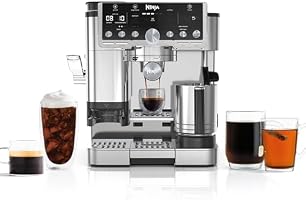
Portafilter, integrated tamper | 25 | 4.2 (775) | #1 in Espresso Machine & Coffeemaker Combos | Independent hot water; XL jug for two drinks | 27.07 lb, heaviest stated; warranty not stated | View on Amazon |
| 8 |
 Breville Barista Touch |
Portafilter (54mm) | Not stated (“Adjustable Grinding”) | 4.2 (3,909) | #22 in Coffee Machines | Auto steam wand; 8 saved custom drinks | Premium step up from the Express; no grind count | View on Amazon |
| 9 |
 Philips 2300 LatteGo |
Bean-to-cup | Not stated | 4.4 (55) | #348 in Coffee Machines | Three-part LatteGo; AquaClean filter up to 5,000 cups | Burr type and warranty not stated; 55 ratings | View on Amazon |
| 10 |
 Philips 3300 LatteGo |
Bean-to-cup | Not stated | 3.8 (1,258) | #3 in Super-Automatic Espresso Machines | Cheapest bean-to-cup; 6 presets incl. iced coffee | Lowest average here; warranty not stated | View on Amazon |
Ratings and specifications are taken from each manufacturer’s Amazon listing as displayed on 5 October 2026 through a United States connection, and may change. Grind settings are as printed by each seller. A setting count is not a range: no listing states how fine or coarse its finest and coarsest settings are, so 30 steps and 15 steps cannot be compared directly. “Not stated” means the captured title, bullets and spec table give no count; the Barista Express mentions a dial and the Pro and Touch say “Adjustable Grinding”. Both Philips listings say only that the machine “Automatically grinds, tamps and brews”, with no burr type. Format follows each listing’s included parts: both Ninjas list a portafilter. Portafilter sizes are given only where stated; the CASABREWS states a 58mm filter basket. Dimensions conflict on one listing: the Philips 3300 labels its 17.04-inch side as width, where the near-identical Philips 2300 labels it as length. All ten were sold by Amazon.com except the CASABREWS, sold by CASABREWS.
Scroll the table sideways to see every column
How We Chose These Ten
We researched current listings, compared manufacturer specifications and documentation, and examined recurring patterns in customer feedback. We did not carry out hands-on testing, and nothing below is presented as measured performance data.
- One machine, one grinder — every product here grinds whole beans and brews espresso in the same appliance. Separate grinder-and-machine bundles, pod machines and drip brewers with grinders were not in the running.
- The grinder read first — for each listing we recorded the stated burr type, the stated number of grind settings, how the dose is measured and who does the tamping. When a listing says nothing, we say “Not stated” and treat the silence as information.
- Format from the box contents — we classed each machine as portafilter or bean-to-cup from what its listing says comes in the box, not from the brand’s marketing. That moved both Ninjas into the portafilter group.
- Ratings only with their sample size — every rating below carries its count. The page runs from 27 ratings to 27,892, and a 4.9 on 43 is not the same evidence as a 4.4 on 27,892.
- Verified stock and price — each machine was in stock in the amazon.com buy box on 5 October 2026, at the price shown. Nine were sold by Amazon.com.
The Ten Espresso Machines With Grinders in Detail
1. Breville Barista Express BES870XL — Best Overall

The machine most people buy, with the record to show for it: 4.4 across 27,892 ratings, PID control, a 54mm portafilter and an integrated tamper, and not one number on its grinder.
Key Specifications
| Format | Semi-automatic, 54mm stainless steel portafilter |
|---|---|
| Grinder | Integrated conical burr; grinds directly into the portafilter |
| Grind settings | Not stated (“grind size dial”) |
| Dose | “Adjustable Grind Amount and Manual Override” |
| Tamp | Integrated tamper; Razor dose trimming tool |
| Temperature | Digital temperature regulation (PID) |
| Hopper and tank | 1/2 lb bean hopper; 67 oz water tank |
| Warranty | 1 Year Limited Product Warranty |
| Rating | 4.4 across 27,892 ratings |
| Rank | #1 in Semi-Automatic Espresso Machines; #861 overall; 4K+ bought in past month |
| Best For | A first serious espresso setup that will be dialled in by hand |
Why We Recommend It
No machine on this page comes close to its record. 4.4 across 27,892 ratings is more than seven times the next-largest sample, the Barista Touch’s 3,909, and on its own it is about 70% of every rating on this page. It ranks #1 in Semi-Automatic Espresso Machines and #861 across the whole of Amazon, the best overall rank here by a wide margin. 4K+ bought in the past month. Whatever its faults, tens of thousands of owners have lived with them and still rate it above four stars.
It tells you almost nothing about its grinder’s steps. The listing describes an “Integrated precision conical burr grinder” that grinds on demand straight into the portafilter, and a “grind size dial that’s both simple and intuitive”. It never says how many positions that dial has, or how fine it goes. That is the finding this page is built on: the best-selling machine here, from the brand with 88% of the page’s ratings, does not count its own grind settings.
What it does print is the dose and the tamp, and that is the more useful half. Grinding is only the first step; the coffee then has to be measured and pressed. The Express lists “Adjustable Grind Amount and Manual Override”, so you can set how long it grinds or stop it yourself. It includes an “Integrated Tamper” and the “Razor Dose Trimming Tool”, which shaves the puck to a set height. Of the three Brevilles, this is the only one whose box contents name a tamper. The basket set covers 1 and 2 cups in single and dual wall, so pressurised baskets are there for pre-ground coffee or a slow start.
What to weigh against it. The warranty is a “1 Year Limited Product Warranty”, half the term the Pro, the Touch and the De’Longhis state. The steam wand is manual, which is good for latte art and slower for a household that wants a flat white at 7 a.m. without practice. At 22.09 lb and 15.9 inches tall, it needs clearance under the cupboards to fill the hopper. And it sits in the same tier as the De’Longhi La Specialista and the Ninja Premier, both of which do number their grinders.
Pros
- 4.4 across 27,892 ratings, the largest sample by far
- #1 in Semi-Automatic Espresso Machines; #861 overall
- PID temperature control and low pressure pre-infusion
- Integrated tamper and Razor dose trimming tool included
- Adjustable grind amount with manual override
Cons
- No grind setting count anywhere in the listing
- 1 year limited warranty, the shortest from a major brand here
- Manual steam wand only
- No heat-up time stated
- 15.9 inches tall with the hopper on top
Best for: A buyer who wants to learn espresso on the most proven machine in the category and is happy to dial in by taste.
2. Ninja Luxe Café Premier 3-in-1 ES601 — Best Guided Portafilter

A real portafilter with the hard parts automated: 25 stated grind settings, weight-based dosing and assisted tamping, at practically the Barista Express’s price.
Key Specifications
| Format | Portafilter with assisted tamper |
|---|---|
| Grinder | Built-in conical burr |
| Grind settings | 25 |
| Dose | Weight-based dosing (Barista Assist Technology) |
| Drinks | 2 espresso styles (double, quad); 3 drip styles; 2 cold styles |
| Milk | Dual Froth System; 4 presets including cold foam, or manual |
| Baskets | Double basket and Luxe basket (no single basket listed) |
| Warranty | Not stated |
| Rating | 4.2 across 2,536 ratings |
| Rank | #2 in Espresso Machine & Coffeemaker Combos; 2K+ bought in past month |
| Best For | Households that want portafilter espresso without learning to dose and tamp |
Why We Recommend It
This is the machine that numbers what Breville leaves blank. “A built-in conical burr grinder features 25 settings for precise, versatile grinding based on your specific drink.” It names the burr type and the step count, and it says why the count is there: the same grinder serves espresso, drip and cold brew. A machine that makes a drip coffee and a quad shot from one hopper needs a wider spread of grinds than an espresso-only machine, so the 25 is doing more work here than it would on a Breville.
The dose is weighed, which is the stated feature no Breville matches. “Barista Assist Technology” covers “automatic precision grinding to weight-based dosing, assisted tamping for the perfectly pressed puck, and active real-time temperature and pressure adjustments based on your selected drink.” Breville’s listings dose by grind time. Weighing is the method serious home baristas use with a scale, and here it is built in. The listing does not say what the scale reads to, or the target dose, so treat it as a convenience you cannot audit from the listing.
It is still a portafilter machine, and that matters. The box includes a “Portafilter, Milk Jug, Double Basket, Luxe Basket, Assisted Tamper”. You lock in a handle, the machine grinds into it, you pull the assisted tamper, and you brew. That keeps the shot visible and the puck in your hand, which is what separates it from the three bean-to-cup machines on this page. Note what is missing: no single basket appears in the list, and the stated espresso styles are “double shot or quad shot”. If you drink single ristrettos, look at the Ninja Pro, whose box adds one.
The record is broad and the gaps are in the paperwork. 4.2 across 2,536 ratings, #2 in Espresso Machine & Coffeemaker Combos and 2K+ bought in the past month. The listing carries a sales claim, “#1 Best Selling Espresso Maker in 2025 Year to Date”, sourced to Circana dollar sales for this model. It states no weight and no warranty term. It sits in the same tier as the Barista Express. The choice between the two is the choice this page is about: a stated grind count and an automated dose, or the longest track record in the category.
Pros
- 25 stated grind settings on a conical burr
- Weight-based dosing and assisted tamping
- Real portafilter, not a closed bean-to-cup
- Espresso, drip and cold brew from one hopper
- Four milk presets including cold foam
Cons
- No single basket in the listed box contents
- Warranty term not stated
- Weight not stated
- Scale resolution and target dose not stated
- Lower average than the Barista Express
Best for: A household that wants portafilter espresso plus drip and cold brew, with the dose and tamp handled for them.
3. De’Longhi Magnifica Duo ECAM33080SXB — Best Bean-to-Cup

The most drinks on the page from one button, 20 preset hot and iced recipes, with hot and cold milk foam and the longest stated warranty, on a listing that never counts its grind settings.
Key Specifications
| Format | Fully automatic bean-to-cup |
|---|---|
| Grinder | Integrated conical burr |
| Grind settings | Not stated |
| Drinks | 20 preset hot and iced recipes |
| Brewing | 3 technologies: espresso, drip coffee, cold brew |
| Cold brew | “under 3 minutes” (Cold Extraction Technology) |
| Milk | LatteCrema Hot and Cool; removable, dishwasher safe |
| Warranty | 2 Years + 1 extra year with Product Registration |
| Rating | 4.6 across 113 ratings |
| Rank | #1 in Super-Automatic Espresso Machines; 1K+ bought in past month |
| Best For | One-touch hot and iced drinks with no portafilter at all |
Why We Recommend It
This is the bean-to-cup machine that says the most. “Discover a menu of 20 preset hot & iced drink recipes including espresso, drip coffee, iced lattes, cold brew, and more at the press of a button.” Twenty is the largest menu on the page; the Philips 2300 offers 4 presets, the Barista Touch 5 and the Philips 3300 6. It reaches them with “3 brewing technologies for authentic espresso, drip coffee, and cold brew”, which is the same three-in-one idea as the Ninja Premier, delivered without a portafilter.
The grinder gets a sentence about durability and none about adjustment. “The integrated conical burr grinder is built for long-lasting performance, delivering the highest standard of quality and freshness.” That names the burr type, which neither Philips does, but gives no setting count, no range and no word on how you change it. On a bean-to-cup machine that silence matters less than on a portafilter one. The machine doses and brews for you, so the grind setting is something you set once for your beans and then leave.
Cold drinks are where it pulls ahead of the other bean-to-cups. “Enjoy cold brew in under 3 minutes with Cold Extraction Technology.” The De’Longhi La Specialista, from the same maker, claims under 5. The milk system is “LatteCrema Hot and Cool”, which froths dairy or plant milk “into velvety smooth hot or cold foam”, and it is “Removable and dishwasher-safe”. Neither Philips lists cold foam or cold brew; the 3300 offers “iced coffee” as a preset. If iced lattes are half of what the household drinks, this is the bean-to-cup that says so.
The record is short, and the rank is strong. 4.6 across 113 ratings is a high average on a small sample; the listing’s release date is June 2026. It shows #1 in Super-Automatic Espresso Machines and #5,402 overall, and 1K+ bought in the past month says it is moving. It ties the Barista Touch as the dearest machine here. It weighs 20.8 lb and is 17.5 inches deep, so measure from the wall.
Pros
- 20 preset hot and iced recipes, the most here
- Espresso, drip and cold brew; cold brew in under 3 minutes
- Hot and cold milk foam; dishwasher-safe milk parts
- 2 years plus 1 extra year with registration
- Conical burr grinder named
Cons
- No grind setting count or range stated
- Joint dearest machine here
- Only 113 ratings; released June 2026
- Premium step up from the Philips 3300
- No portafilter, so no hands-on control of the shot
Best for: A household that wants hot and iced coffee drinks at the press of a button and never wants to hold a portafilter.
4. CASABREWS MARENZA Espresso Machine With Built-in Grinder — Most Grind Settings

The cheapest machine here states the most: 30 grind settings, a 58mm basket, a 20-bar pump, 1450W and a screen that shows live pressure, on just 27 ratings.
Key Specifications
| Format | Semi-automatic, 58mm filter basket |
|---|---|
| Grinder | Automatic conical burr; grinds into the portafilter |
| Grind settings | 30 (suggested start: setting 10) |
| Pump and power | 20-bar Italian pump; 1450W |
| Display | LCD showing brew time and real-time pressure |
| Milk | 10 mm manual steam wand |
| Water tank | 57 oz, detachable |
| Warranty | 1-Year Manufacturer |
| Rating | 4.6 across 27 ratings |
| Rank | #79 in Semi-Automatic Espresso Machines; 100+ bought in past month |
| Best For | Hands-on espresso at the lowest price on the page |
Why We Recommend It
The lowest price on the page comes with the highest grind count. “With 30 adjustable grind settings, you have complete control to maximize coffee flavor.” That is five more than either Ninja and double the De’Longhi La Specialista. The listing goes further than any other here and tells you where to start: “We suggest setting the grind setting to 10 initially.” It also gives a maintenance interval: “clean the grinder every 18-25 days”. No other listing on this page says how often to clean its grinder.
The screen is the best-documented feedback on the page. “The LCD display tracks brew time and real-time pressure, letting you fine-tune grind and brew settings for consistent results.” Shot time and pressure are the two numbers you need to dial in a grinder: too fast and low means grind finer, too slow and high means coarser. The Barista Pro’s LCD shows progress animations; this one claims to show the pressure itself. The “20-Bar Pressure System” is a pump rating, not the pressure at the puck; the pump can make up to that, and espresso is conventionally brewed nearer 9 bar. Only the De’Longhi La Specialista states the extraction figure.
The basket and the milk wand are both a size up. It uses a “58mm Filter Basket”, the only 58mm on the page; the Barista Express and Touch state 54mm. A wider, shallower puck is the commercial standard. The dose guide is simple: after tamping, “your coffee dose is perfectly calibrated when the tamper’s metal rim sits flush with the filter basket edge”. The steam wand is described as “10 mm” and manual. The water tank is 57 oz, 10 oz less than the Brevilles’ 67 oz, and the listing also claims a “complete PFAS-free water circuit”.
The evidence behind it is thin. 4.6 across 27 ratings is the smallest sample on this page, and the machine ranks #232,034 overall and #79 in Semi-Automatic Espresso Machines. It is the only one of the ten not sold by Amazon.com; the seller is CASABREWS. It states no weight, no temperature control and no heat-up time. The warranty is one year. It is the entry-level machine on the page. You are buying the most stated numbers on the page with the least proof that they hold up.
Pros
- 30 stated grind settings, the most here
- Suggested starting setting and grinder cleaning interval
- LCD shows brew time and real-time pressure
- 58mm filter basket, the only one here
- 1450W stated; 10 mm steam wand
Cons
- Only 27 ratings
- Sold by CASABREWS, not Amazon.com
- No temperature control stated
- 20-bar is a pump rating, not brew pressure
- Weight not stated
Best for: A hands-on beginner-to-intermediate who wants the most adjustment and feedback for the least money, and accepts a short track record.
5. De’Longhi La Specialista Arte Evo EC9250M — Best Stated Pressure

The only listing that separates pump pressure from brew pressure, with 15 grind settings, 3 temperature settings and cold brew in under 5 minutes, on a 4.9 average across 43 ratings.
Key Specifications
| Format | Semi-automatic portafilter |
|---|---|
| Grinder | Built-in conical burr |
| Grind settings | 15 |
| Pressure | 15-bar pump; “optimal 9-bar pressure during extraction” |
| Temperature | Active temperature control, 3 settings |
| Cold brew | “under 5 minutes” (Cold Extraction Technology) |
| Milk | Commercial-style steam wand |
| Warranty | 2 Year Manufacturer Warranty |
| Rating | 4.9 across 43 ratings |
| Rank | #3 in Commercial Espresso Machines & Coffee Makers; 100+ bought in past month |
| Best For | Hands-on espresso with clearly stated pressure and temperature |
Why We Recommend It
This listing gets the pressure right. “Choose from 3 temperature settings and benefit from a 15-bar Italian pump that ensures optimal 9-bar pressure during extraction.” It is the only one of the ten that tells you both numbers. A pump rating says what the pump can produce. The extraction figure says what the coffee sees, and 9 bar is the conventional target for espresso. The CASABREWS quotes 20 bar and stops. The Brevilles quote no bar figure at all. If you have read our espresso machine roundup, this is the distinction it is built around.
Its 15 settings are the fewest stated, which is not the same as the worst. “BUILT-IN CONICAL BURR GRINDER: Delivers a precise, consistent dose of freshly ground coffee with 15 grind settings for single or double espresso and cold brew drinks.” Fifteen against the CASABREWS’s 30 looks like half the control. But the listing ties those 15 to espresso and cold brew only, not drip, so the steps may be spread across a narrower band than a machine that also has to grind for a drip carafe. No listing gives the range, so this stays a possibility, not a finding.
It does cold brew and serious milk. “Enjoy cold brew in under 5 minutes”, using technology the listing says was “developed with the Specialty Coffee Association”. The steam wand is “Commercial-style”, pitched for “consistently smooth micro-foam, perfect for latte art at home”. That puts it in the hands-on camp with the Barista Express and the CASABREWS, not the push-button camp with the Ninjas. The listing does not state portafilter size, tank size, hopper size or wattage, and its five bullets include one given over to a sales claim: “#1 Worldwide Espresso Machine Maker”.
The 4.9 is the best average on the page and one of the smallest samples. 43 ratings is not enough to separate a great machine from an early wave of happy buyers. It ranks #3 in Commercial Espresso Machines & Coffee Makers and #11,871 overall, with 100+ bought in the past month. At 25.8 lb it is the second-heaviest stated weight here, after the Ninja Pro. The warranty is two years. It sits in the same tier as the Barista Express: a stated pressure, three temperatures, a grind count and a longer warranty, against a record more than 600 times larger.
Pros
- Only listing to state 9-bar extraction pressure
- 15 stated grind settings on a conical burr
- Three temperature settings
- Cold brew in under 5 minutes
- Commercial-style steam wand
Cons
- 4.9 average on only 43 ratings
- Fewest stated grind settings of the four that count
- Portafilter, tank, hopper and wattage not stated
- 25.8 lb
- Tamping method not stated
Best for: A hands-on buyer who wants the brewing pressure and temperature spelled out, and is willing to trust a short record.
6. Breville Barista Pro BES878BSS — Fastest Stated Heat-Up

The Barista Express with a 3-second ThermoJet heat-up, a stated +/- 2°C PID, an LCD and a two-year warranty, and still no grind count.
Key Specifications
| Format | Semi-automatic portafilter |
|---|---|
| Grinder | Integrated conical burr |
| Grind settings | Not stated (“Adjustable Grinding”) |
| Heating | ThermoJet; extraction temperature in 3 seconds |
| Temperature | PID, +/- 2°C |
| Display | LCD with grinding and extracting progress |
| Hopper and tank | 1/2 lb bean hopper; 67 oz water tank |
| Warranty | 2 Year Limited Product Warranty |
| Rating | 4.4 across 3,433 ratings |
| Rank | #6 in Semi-Automatic Espresso Machines; 800+ bought in past month |
| Best For | Express owners-in-waiting who hate waiting for the machine |
Why We Recommend It
The Pro sells time. “ThermoJet heating system achieves precise extraction temperature in 3 seconds with instantaneous transition from espresso to steam.” The Barista Express states no heat-up time at all. For a household that makes one drink at a time, the difference is minutes in the morning and no wait between pulling a shot and steaming milk. That is the clearest single reason to step up from the Express.
It also states its temperature tolerance, which almost nobody does. “Digital temperature regulation (PID) delivers water at precisely the right temperature +/- 2°C.” The Express and Touch say PID; only the Pro puts a number on it. Two degrees either way is a usable window for espresso. It is a spec you can hold the maker to, unlike most of the adjectives in this category.
The grinder is described the same way as the Touch’s, which is to say barely. “With a single touch, the integrated precision conical burr grinder on bean-to-cup espresso machine delivers the right amount of coffee on demand.” The capacity line adds “Adjustable Grinding”. No count, no range. The listing calls this a “bean-to-cup espresso machine”, but it is a portafilter machine: you lock in the handle, tamp and brew. And here is a detail worth noticing: its included accessories list baskets, the Razor trimming tool, a 480 ml jug, a cleaning kit and a water filter, but no tamper. The Express names an “Integrated Tamper”; the Pro’s listing does not mention one. Check the box contents before you assume.
The record and the warranty both favour it. 4.4 across 3,433 ratings is the same average as the Express on a sample about an eighth the size, and it ranks #6 in Semi-Automatic Espresso Machines with 800+ bought in the past month. The warranty is “2 Year Limited”, double the Express’s. At 19.5 lb it is the lightest Breville, and 1680W is the joint-highest stated power on the page. It sits between the Express and the Touch.
Pros
- ThermoJet: extraction temperature in 3 seconds
- PID with a stated +/- 2°C tolerance
- Instant switch from espresso to steam
- 2 year limited warranty
- 4.4 across 3,433 ratings
Cons
- No grind setting count
- No tamper named in the accessory list
- LCD shows progress, not pressure
- Portafilter size not stated
- A step up from the Barista Express
Best for: A buyer who wants the Breville record and PID with no wait between espresso and milk.
7. Ninja Luxe Café Pro 4-in-1 ES701 — Most Versatile
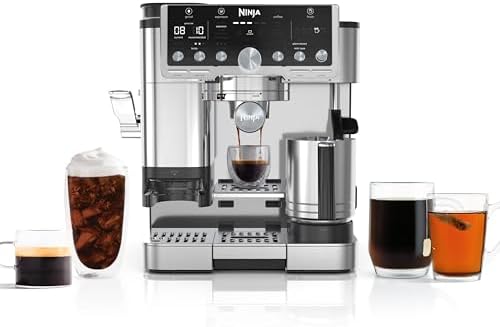
The Premier plus a single basket, an integrated tamper lever, an XL milk jug for two drinks and an independent hot water system.
Key Specifications
| Format | Portafilter with integrated tamper lever |
|---|---|
| Grinder | Built-in conical burr |
| Grind settings | 25 |
| Drinks | 4-in-1: espresso, drip coffee, cold brew, hot water |
| Milk | Dual Froth Pro: magnetic spinning whisk plus steamer; XL jug |
| Baskets | Single, double and Luxe baskets |
| Weight | 27.07 lb |
| Warranty | Not stated |
| Rating | 4.2 across 775 ratings |
| Rank | #1 in Espresso Machine & Coffeemaker Combos; #2,348 overall; 2K+ bought in past month |
| Best For | Two-drink mornings, tea drinkers and single-shot espresso |
Why We Recommend It
The step up from the Premier buys four specific things. A “Single Basket” in the box, which the Premier does not list. An “integrated tamper for mess-free tamping at the pull of a lever”. An “XL milk jug” that “lets you make enough for two drinks at once”. And an “independent hot water system, perfect for tea, pour-overs, and americanos”. If none of those four matter, the Premier is the same grinder for less.
The grinder line is word for word the Premier’s. “A built-in conical burr grinder features 25 settings for precise, versatile grinding based on your specific drink.” The same Barista Assist Technology claims “automatic precision grinding to weight-based dosing” and “active real-time temperature and pressure adjustments based on your selected drink”. Like the Premier, it does not state the grind range, the scale’s resolution, a bar figure or a temperature. You get a number of steps and a promise that the machine handles the rest.
It is the heaviest machine on the page. 27.07 lb, against 22.09 lb for the Barista Express and 17.63 lb for the Philips 3300. It stands 14.84 inches tall, shorter than any Breville, and the listing makes a point of “Onboard accessory storage” to keep the baskets and tools off the counter. The box is the most complete here: portafilter, three baskets, tamper, brush, cleaning disc, funnel, descaling powder, cleaning tablets and a hard water testing kit. The cold-pressed espresso function, which brews “at a lower temperature, pressure, and pace”, is pitched at espresso martinis and iced lattes.
The record is newer and smaller than the Premier’s. 4.2 across 775 ratings, released in August 2025. It ranks #1 in Espresso Machine & Coffeemaker Combos and #2,348 overall, the second-best overall rank on the page after the Barista Express, with 2K+ bought in the past month. No warranty term is stated, and the manufacturer field reads SharkNinja. It is the only portafilter machine here that also makes drip coffee and dispenses hot water from a separate system.
Pros
- 25 stated grind settings and weight-based dosing
- Integrated tamper lever; single basket included
- Independent hot water system
- XL milk jug makes two drinks at once
- Espresso, drip, cold brew and hot water
Cons
- 27.07 lb, the heaviest stated here
- Warranty term not stated
- Grind range, bar figure and temperature not stated
- 775 ratings, newer than the Premier
- Costs more than the Premier for the same grinder
Best for: A household making two milk drinks at once, plus tea or americanos, that still wants a portafilter.
8. Breville Barista Touch BES880BSS — Best Touchscreen

The Breville that automates the milk: a touchscreen, an auto steam wand with set temperature and texture, and 8 saved drinks.
Key Specifications
| Format | Semi-automatic, 54mm stainless steel portafilter |
|---|---|
| Grinder | Integrated conical burr |
| Grind settings | Not stated (“Adjustable Grinding”) |
| Heating | ThermoJet; extraction temperature in 3 seconds |
| Temperature | Digital temperature regulation (PID) |
| Milk | Automatic steam wand; programmable temperature and texture |
| Interface | Touchscreen; 5 pre-programmed drinks; 8 custom settings |
| Warranty | 2 year repair warranty (2 Year Limited in the bullets) |
| Rating | 4.2 across 3,909 ratings |
| Rank | #22 in Coffee Machines; 900+ bought in past month |
| Best For | Milk-drink households who want Breville espresso without learning the wand |
Why We Recommend It
The Touch spends its extra money on milk, not on the grinder. “Auto steam wand allows you to adjust milk temperature and texture, delivering barista-quality microfoam.” That is the one stated difference from the Barista Pro that changes how the machine is used every morning. The Express and the Pro give you a manual wand to learn. The Touch lets you set the milk and walk off, which is what the Ninjas and the bean-to-cup machines offer, on a Breville portafilter machine.
The grinder is described in the same words as the Pro’s. “With a single touch, the integrated precision conical burr grinder on bean-to-cup espresso machine delivers the right amount of coffee on demand for full flavor.” The capacity line says “Adjustable Grinding”. As the joint dearest machine here, it still does not tell you how many grind settings it has. All three Brevilles share that silence, and the Touch is the one where it is hardest to excuse.
The touchscreen turns the workflow into three steps. “Touchscreen display simplifies your favorite café coffee into 3 easy steps: Grind, Brew and Milk.” You can “Adjust coffee strength, milk texture and temperature” and “Create and save up to 8 personalized coffees”, on top of 5 pre-programmed café favourites. In a house where several people drink different things, saved profiles do the work a written note on the fridge used to do. It also lists a hot water function, which the Express and Pro listings do not.
The record is the second-largest here and the average is mid-table. 4.2 across 3,909 ratings, #22 in Coffee Machines, 900+ bought in the past month. That is a lower average than the Express or the Pro on a similar-sized sample to the Pro’s. The warranty reads two ways: “2 year repair warranty” in the spec field and “2 Year Limited” in the bullets. At 15.5 inches it is the widest machine on the page, and 16.0 inches tall. It is the premium step above both the Express and the Pro.
Pros
- Automatic steam wand with programmable temperature and texture
- Touchscreen with 8 custom saved drinks
- ThermoJet heat-up in 3 seconds; PID
- 54mm stainless steel portafilter
- 4.2 across 3,909 ratings
Cons
- No grind setting count on a flagship
- Joint dearest machine here
- Lower average than the Express and Pro
- No tamper in the listed accessories
- 15.5 inches wide, the widest here
Best for: A milk-drink household that wants a Breville portafilter with the steaming automated and drinks saved per person.
9. Philips 2300 Series EP2330/14 With LatteGo — Easiest Milk Clean-Up

A fully automatic machine that grinds, tamps and brews at one touch, with a three-part milk system that rinses in 10 seconds, on just 55 ratings and no stated warranty.
Key Specifications
| Format | Fully automatic bean-to-cup |
|---|---|
| Grinder | Automatic; burr type not stated |
| Grind settings | Not stated |
| Drinks | 4 presets: espresso, coffee, latte, hot water |
| Milk | LatteGo: 3 parts, no internal tubes; dishwasher safe |
| Water | AquaClean filter; no descaling for up to 5,000 cups |
| Weight | 17.64 lb |
| Warranty | Not stated |
| Rating | 4.4 across 55 ratings |
| Rank | #348 in Coffee Machines; 200+ bought in past month |
| Best For | Latte drinkers who hate cleaning milk systems |
Why We Recommend It
The Philips sells the cleaning, and it is specific about it. “LatteGo is the fastest to clean milk system ever: 3 parts, no internal tubes or hidden compartments. Dishwasher safe or can be rinsed clean in 10 seconds.” Milk systems are where automatic machines become a chore; tubes and hidden channels hold milk that has to be flushed. Three parts and no tubes is a claim you can check by looking at the photos. Together with the 3300’s identical bullet, it is the most concrete cleaning statement on this page.
The grinder gets one sentence, and it is shared with the Philips 3300. “Automatically grinds, tamps and brews at the push of a button.” That is all. No burr type, which eight of the other nine name; the ninth is the Philips 3300, whose listing uses this exact sentence. No setting count; no range. The adjustments the listing does offer are to the drink, not the grind: “Easily adjust the strength and volume of your beverage.” On a bean-to-cup machine that is a reasonable design choice, since the machine doses for you. It still means you cannot compare its grinder with anything else on this page.
The menu is short and the water care is long. “4 PRESETS”: espresso, coffee, latte and hot water. That is the smallest menu here, against 20 on the Magnifica Duo. The water story is stronger: with the “AquaClean filter”, changed when the machine prompts, you “will not need to descale your machine for up to 5,000² cups”. The superscript in the listing points to a footnote that the captured bullets do not include, so read the conditions before relying on it. The HomeID app adds recipes, not settings the listing names.
The evidence is thin and the paperwork is incomplete. 4.4 across 55 ratings. It ranks #348 in Coffee Machines and #478,654 overall, the weakest rank on the page, though 200+ were bought in the past month. No warranty is stated anywhere in the listing, and no list price was shown. It sits above the Philips 3300, whose listing repeats the same grinder, LatteGo and AquaClean wording and adds two presets, and below the Magnifica Duo, which adds cold brew, cold foam and 16 more presets.
Pros
- LatteGo: 3 parts, no tubes, rinses in 10 seconds
- Grinds, tamps and brews automatically
- AquaClean: no descaling for up to 5,000 cups, per the listing
- 4.4 average, above the Philips 3300’s 3.8
- Narrow 9.69-inch footprint
Cons
- Burr type and grind settings not stated
- No warranty stated
- Only 4 presets
- Only 55 ratings; weakest rank here
- No cold brew or cold foam listed
Best for: A latte drinker who wants push-button coffee and the simplest milk clean-up on the page.
10. Philips 3300 Series EP3341/50 With LatteGo — Cheapest Bean-to-Cup

The lowest-priced fully automatic machine here, with 6 presets and the same grinder and LatteGo wording as the 2300, on the lowest average on the page: 3.8 across 1,258 ratings.
Key Specifications
| Format | Fully automatic bean-to-cup |
|---|---|
| Grinder | “Automatically grinds, tamps and brews”; burr type not stated |
| Grind settings | Not stated |
| Drinks | 6 presets: espresso, coffee, iced coffee, cappuccino, latte macchiato, hot water |
| Milk | LatteGo: 3 parts, no internal tubes; dishwasher safe |
| Water | AquaClean filter; no descaling for up to 5,000 cups |
| Weight | 17.63 lb |
| Warranty | Not stated |
| Rating | 3.8 across 1,258 ratings |
| Rank | #3 in Super-Automatic Espresso Machines; 800+ bought in past month |
| Best For | A first bean-to-cup at the lowest bean-to-cup price on the page |
Why We Recommend It
Two Philips machines, one grinder sentence. The 3300 says it “Automatically grinds, tamps and brews at the push of a button with our intuitive full color display.” The 2300 says the same words, minus “full color”. Neither names a burr type, a setting count or a range. The LatteGo bullet is word for word the same on both, “3 parts, no internal tubes or hidden compartments”, and so is the AquaClean promise of no descaling for “up to 5,000” cups when the filter is changed on prompt. What separates them is the menu, the price and the record.
It is the cheapest bean-to-cup here, after the biggest markdown on the page. The listing shows the largest reduction from list price of any machine here. That makes it the budget pick against the Philips 2300 and the Magnifica Duo. If you want a machine that does everything behind a closed door on a modest budget, this is the only bean-to-cup that fits.
The rating is the lowest here, on a real sample. 3.8 across 1,258 ratings is the only average on the page below 4.2. The sample is large enough to mean something: the fifth-largest here, after the three Brevilles and the Ninja Premier, and more than 22 times the 2300’s 55. So the two Philips cannot be ranked on stars: the 2300’s higher 4.4 rests on far fewer owners. The 3300 ranks #3 in Super-Automatic Espresso Machines and #33,356 overall, with 800+ bought in the past month against the 2300’s 200+.
Two claims need their footnotes. The listing calls it “the No.1 Super Automatic Espresso Machine in the US and Canada combined” and makes a payback claim against a “daily coffee shop run”. Both carry asterisks pointing to footnotes the captured bullets do not include. No warranty is stated. At 17.63 lb it is the lightest stated weight on the page, 0.01 lb under the 2300. Its size field reads 9.68 inches deep by 17.04 wide by 14.6 high, which turns the 2300’s listed width and length the other way round, so check the photos for which side faces you.
Pros
- Lowest-priced fully automatic machine here
- Largest markdown from list on the page
- 6 presets including iced coffee
- LatteGo: 3 parts, no tubes, rinses in 10 seconds
- 1,258 ratings; 800+ bought last month
Cons
- 3.8 across 1,258 ratings, the lowest average here
- Burr type and grind settings not stated
- No warranty stated
- No cold brew or cold foam listed
- No.1 and payback claims rest on unshown footnotes
Best for: A buyer who wants push-button lattes on a budget and accepts a mixed rating record.
What Each Listing Says Its Grinder Does
The grinder is the reason to buy one of these machines instead of a plain espresso maker, so it is the first thing we read. We looked for four facts in every listing: the burr type, the number of settings, how the dose is measured and who tamps. Here is what was printed.
| Machine | Format | Burr stated | Settings stated | Dose | Tamp | Ratings |
|---|---|---|---|---|---|---|
| CASABREWS MARENZA | Portafilter | Conical | 30 | Grinds into portafilter; rim-flush guide | Tamper referenced | 27 |
| Ninja Luxe Café Pro | Portafilter | Conical | 25 | Weight-based | Integrated lever | 775 |
| Ninja Luxe Café Premier | Portafilter | Conical | 25 | Weight-based | Assisted tamper | 2,536 |
| De’Longhi La Specialista | Portafilter | Conical | 15 | “Precise, consistent dose” | Not stated | 43 |
| Breville Barista Express | Portafilter | Conical | Not stated | Adjustable amount, manual override | Integrated tamper | 27,892 |
| Breville Barista Pro | Portafilter | Conical | Not stated | “Right amount” on demand | Not in accessory list | 3,433 |
| Breville Barista Touch | Portafilter | Conical | Not stated | “Right amount” on demand | Not in accessory list | 3,909 |
| De’Longhi Magnifica Duo | Bean-to-cup | Conical | Not stated | Automatic | Automatic | 113 |
| Philips 2300 | Bean-to-cup | Not stated | Not stated | Automatic | Automatic (stated) | 55 |
| Philips 3300 | Bean-to-cup | Not stated | Not stated | Automatic | Automatic (stated) | 1,258 |
Four count, six do not, and the line runs between the newcomers and the incumbents. The four machines that print a grind count carry 3,381 ratings between them. The six that do not carry 36,660. The best-selling machine on the page, the Barista Express, with 27,892 ratings on its own, describes a “grind size dial” and nothing more. If grind steps were what buyers chose on, the market would look different.
Eight name a conical burr, and that is the useful agreement. Every portafilter machine on the page says conical burr. So does the Magnifica Duo. A burr grinder crushes beans between two cutting surfaces set a fixed distance apart, which gives a far more even grind than a spinning blade, and evenness is what espresso needs. The two Philips listings share one sentence, “Automatically grinds, tamps and brews at the push of a button”, and name no burr type. For a deeper look at burr types and stated steps on stand-alone grinders, see our espresso grinder for home roundup.
Why a setting count is weaker evidence than it looks. A grind setting is a position on a dial or a step in a menu. The maker decides how far apart the steps are and where the first and last ones sit. Thirty steps spread from Turkish to cafetière are coarser, step to step, than fifteen spread across the espresso band alone. None of these ten listings gives the range, the step size or the burr diameter. So 30 against 15 against “dial” tells you which makers chose to print a number. It does not tell you which grinder can find the right espresso grind for your beans.
Portafilter or Bean-to-Cup: Who Does the Work
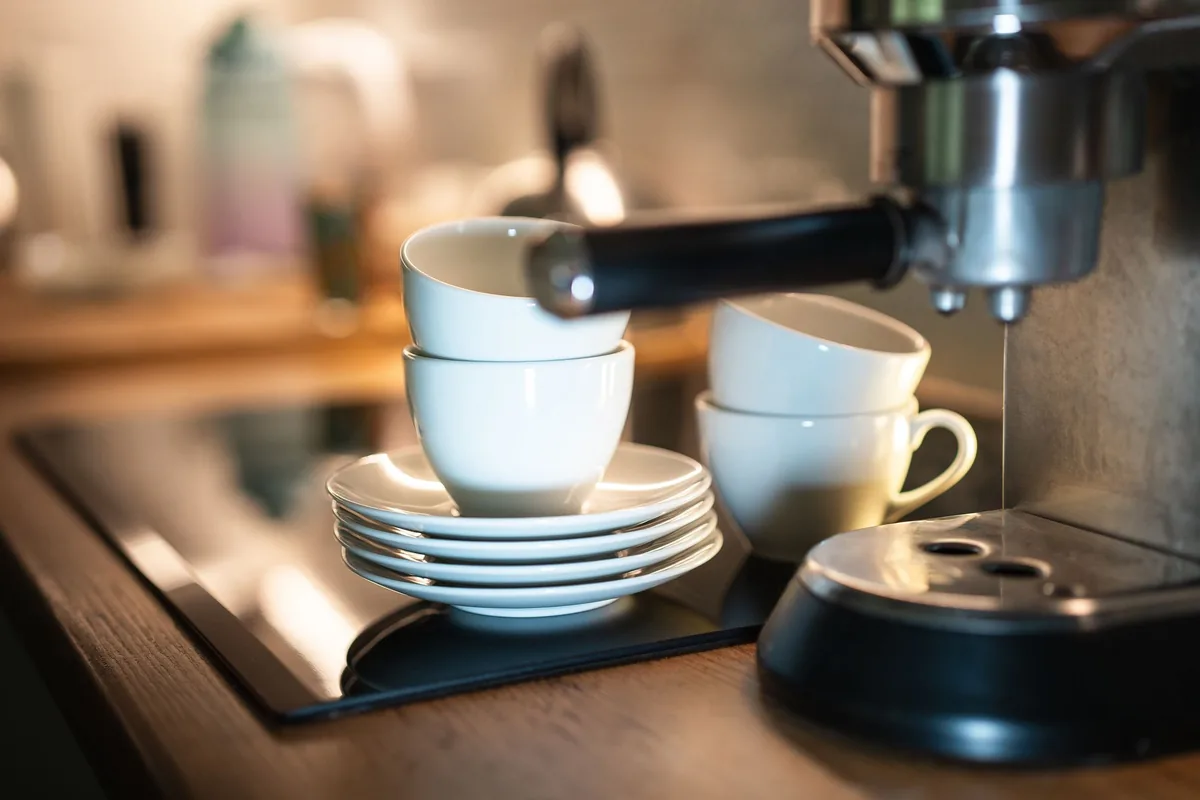
The keyword hides two very different machines. The best espresso machine with a built-in grinder can mean a semi-automatic, where the grinder fills a portafilter and you finish the job, or a fully automatic bean-to-cup, where you press a button and a cup fills. Seven of these ten are the first kind. Three are the second.
| Machine | Format | Milk system as described | Drinks stated | Cold options |
|---|---|---|---|---|
| CASABREWS MARENZA | Portafilter | 10 mm manual steam wand | Single or double shots; hot water | None stated |
| Breville Barista Express | Portafilter | Manual steam wand | Single or double shots | None stated |
| De’Longhi La Specialista | Portafilter | Commercial-style wand | Single or double; cold brew | Cold brew under 5 min |
| Ninja Luxe Café Premier | Portafilter | Whisk plus steamer, 4 presets | Double, quad; 3 drip styles | Cold pressed; cold brew; cold foam |
| Ninja Luxe Café Pro | Portafilter | Magnetic whisk plus steamer; XL jug | Espresso, drip, hot water | Cold pressed; cold brew |
| Breville Barista Pro | Portafilter | Manual steam wand | 1 or 2 cup volumetric | None stated |
| Breville Barista Touch | Portafilter | Auto steam wand, set temp and texture | 5 presets, 8 custom; hot water | None stated |
| Philips 3300 | Bean-to-cup | LatteGo, 3 parts, no tubes | 6 presets | Iced coffee preset |
| Philips 2300 | Bean-to-cup | LatteGo, 3 parts, no tubes | 4 presets | None stated |
| De’Longhi Magnifica Duo | Bean-to-cup | LatteCrema Hot and Cool | 20 hot and iced presets | Cold brew under 3 min; cold foam |
The Ninjas are the surprise in the portafilter column. They are often grouped with automatic machines because they weigh, tamp and froth for you. But their box lists a “Portafilter” and baskets, and the tamping is “at the pull of a lever” or “assisted”. You still lock a handle into the group and knock out a puck. That makes them the middle ground of this page: a portafilter workflow with the skill steps automated.
Portafilter machines give you control and ask for practice. On the Barista Express, the CASABREWS and the La Specialista, you set the grind, check the dose, tamp, brew and steam. When a shot runs too fast you grind finer; too slow, coarser. That loop is where the grind setting earns its place, and where a live readout like the CASABREWS’s pressure display or the Barista Pro’s progress animations helps. These machines also suit latte art: four of the seven name a manual or commercial-style wand.
Bean-to-cup machines give you consistency and ask for trust. The Magnifica Duo and the two Philips grind, dose, tamp and brew behind a closed door. You choose a drink and a strength. You do not see the puck, and you cannot change the dose beyond the strength setting. None of the three states a grind setting count, which fits: on these machines the grind is set once for a bag of beans and rarely touched. What you get is the same cup every time, from anyone in the house, with the milk handled too.
Heat, Pressure and the Numbers Behind the Shot
A grinder makes the coffee. Water temperature and pressure decide what comes out of it. These are the figures the listings print, and the gaps where they print nothing.
| Machine | Temperature control | Heat-up stated | Pressure stated | Power | Pre-infusion |
|---|---|---|---|---|---|
| Breville Barista Express | PID | Not stated | Not stated | 1600W | Low pressure |
| Breville Barista Pro | PID, +/- 2°C | 3 seconds (ThermoJet) | Not stated | 1680W | Low pressure |
| Breville Barista Touch | PID | 3 seconds (ThermoJet) | Not stated | 1680W | Low pressure |
| De’Longhi La Specialista | Active, 3 settings | Not stated | 15-bar pump; 9-bar extraction | Not stated | Not stated |
| CASABREWS MARENZA | Not stated | Not stated | 20-bar pump; live pressure on LCD | 1450W | Not stated |
| Ninja Luxe Café Premier | Active, per drink | Not stated | Active, per drink (no figure) | Not stated | Not stated |
| Ninja Luxe Café Pro | Active, per drink | Not stated | Active, per drink (no figure) | Not stated | Not stated |
| De’Longhi Magnifica Duo | Not stated | Not stated | Not stated | Not stated | Not stated |
| Philips 3300 | Not stated | Not stated | Not stated | Not stated | Not stated |
| Philips 2300 | Not stated | Not stated | Not stated | Not stated | Not stated |
Breville is quiet about the grinder and loud about the heat. All three Brevilles state PID, a digital controller that holds the brew water at a set temperature. Two state a 3-second heat-up. One, the Pro, puts a tolerance on it: +/- 2°C. No other brand on the page states a temperature figure of any kind. If you believe temperature stability matters more to a shot than the number of grind steps, and most espresso writing does, the Brevilles are the best-documented machines here rather than the worst.
Pressure is stated twice, and only once properly. The CASABREWS quotes a 20-bar pump. The La Specialista quotes a 15-bar pump and a 9-bar extraction. Espresso is conventionally brewed around 9 bar at the coffee; a pump rated higher has headroom, and the machine regulates down. A pump number on its own says little about the shot. The Ninjas promise “active real-time temperature and pressure adjustments” without a figure. The Brevilles describe low pressure pre-infusion, a gentle ramp at the start of the shot, and give no bar figure at all.
Counter Space, Water and Beans
An espresso machine with a grinder is the largest coffee appliance most kitchens own, and it lives on the counter permanently. These are the listed dimensions, as each listing labels them, and the capacities where stated.
| Machine | Height | Width | Length | Weight | Tank | Hopper |
|---|---|---|---|---|---|---|
| CASABREWS MARENZA | 15.0 in | 8.9 in | 11.8 in | Not stated | 57 oz | Not stated |
| Philips 3300 | 14.6 in | 17.04 in | 9.68 in | 17.63 lb | Not stated | Not stated |
| De’Longhi Magnifica Duo | 14.0 in | 9.5 in | 17.5 in | 20.8 lb | Not stated | Not stated |
| Philips 2300 | 14.61 in | 9.69 in | 17.05 in | 17.64 lb | Not stated | Not stated |
| De’Longhi La Specialista | 15.87 in | 11.22 in | 14.37 in | 25.8 lb | Not stated | Not stated |
| Ninja Luxe Café Pro | 14.84 in | 12.48 in | 13.39 in | 27.07 lb | Not stated | Not stated |
| Breville Barista Express | 15.9 in | 12.5 in | 13.8 in | 22.09 lb | 67 oz | 1/2 lb |
| Ninja Luxe Café Premier | 14.57 in | 13.39 in | 12.99 in | Not stated | Not stated | Not stated |
| Breville Barista Pro | 16.0 in | 14.0 in | 13.0 in | 19.5 lb | 67 oz | 1/2 lb |
| Breville Barista Touch | 16.0 in | 15.5 in | 12.7 in | 21.8 lb | 67 oz | 1/2 lb |
The two formats have two shapes, and one listing labels its shape backwards. The three bean-to-cup machines share almost the same two numbers: about 9.5 to 9.7 inches on one side and 17.0 to 17.5 on the other. The Magnifica Duo and Philips 2300 list the short side as width, a narrow, deep machine. The Philips 3300’s size field reads 9.68 inches deep by 17.04 wide, the same box turned sideways. The portafilter machines, with one exception, are wider and shallower: 11.22 to 15.5 inches wide and 12.7 to 14.37 inches long. The exception is the CASABREWS, the smallest footprint on the page at 8.9 by 11.8 inches. Amazon’s length and width fields are not always used consistently, so check the product photos for which side faces you. A standard counter is about 24 inches deep, which leaves room for any of these, but a bean-to-cup pushed against a backsplash may stick out further than you expect.
Best Alternatives
| Alternative | Why Consider It | Better For | Main Trade-Off |
|---|---|---|---|
| A separate espresso machine and grinder | Each part can be chosen, upgraded or repaired on its own; see our espresso machine roundup | Buyers who expect to outgrow a built-in grinder | Two boxes, two plugs and more counter space |
| A single-dose espresso grinder | Grinds exactly the beans you weigh, with little left behind; see our single dose grinder roundup | Switching between beans or decaf day to day | Still needs a separate machine |
| A milk frother with a simpler espresso maker | Covers lattes and cappuccinos for far less; see our milk frother roundup | Milk-drink households on a tight budget | No built-in grinder; pre-ground coffee goes stale |
| A dedicated cold brew maker | Makes a large batch overnight for iced drinks all week; see our cold brew roundup | Iced coffee drinkers who rarely want espresso | No espresso, and it takes hours |
What Each Step Up Actually Buys
Entry level — CASABREWS MARENZA. The entry point and the most stated adjustment: 30 grind settings, a 58mm basket, a 20-bar pump, 1450W and a screen showing live pressure. What you do not get is evidence: 27 ratings, a third-party seller and no stated temperature control.
Middle tier — Barista Express, La Specialista, Ninja Premier. Three machines in the same tier, and three different philosophies. The Express is the proven hands-on machine: PID, an integrated tamper, 27,892 ratings, no grind count. The La Specialista is the documented one: 15 settings, 9-bar extraction, three temperatures, 43 ratings. The Premier is the guided one: 25 settings, weighed dose, assisted tamp, drip and cold brew, 2,536 ratings. This is the most competitive tier on the page, and the one where reading the listings pays most.
Upper-middle tier — Philips 3300, Ninja Pro, Barista Pro, Philips 2300. Here the formats split. The Philips 3300 is the cheapest bean-to-cup, with 6 presets. The Ninja Pro adds an extra basket, tamper lever, XL jug and hot water. The Barista Pro adds a 3-second heat-up and +/- 2°C PID. The Philips 2300 shares the 3300’s tube-free LatteGo with two fewer presets but a 4.4 average on 55 ratings. Each adds one specific convenience rather than a better grinder.
Flagships — Barista Touch, Magnifica Duo. The two flagships. The Touch adds an automatic steam wand and saved drinks to a Breville portafilter. The Duo adds 20 hot and iced presets, cold foam and cold brew to a bean-to-cup. Neither states a grind setting count.
The range is wide, and the grind count runs the other way. The entry-level machine states the most settings. The two dearest state none. Money on this page buys automation, milk systems, heat-up speed and track record. It does not buy a better-documented grinder.
What to Check Before You Buy
Decide How Much of the Job You Want
This is the first decision and it narrows the page to a handful. If you want to grind, dose, tamp and steam yourself, look at the Barista Express, the CASABREWS or the La Specialista. If you want a portafilter but not the learning curve, the Ninja Premier and Ninja Pro weigh and tamp for you. If you want to press a button and walk away, the Magnifica Duo and the two Philips do everything behind the panel. The Barista Pro and Touch sit between the first two groups, with the Touch automating the milk.
Read the Grind Count as a Hint, Not a Score
Four listings print a number: 30, 25, 25 and 15. Six do not. A count tells you how many positions the maker defined, not how fine the finest one is or how far apart they are. A machine that also grinds for drip coffee needs coarse settings an espresso-only machine does not. The Barista Express’s rating record suggests a missing number is not a missing ability. What matters is that the grinder reaches a fine enough espresso grind for your beans, and no listing proves that on paper.
Check How the Dose Is Measured
Grind setting decides how fine. Dose decides how much. The Ninjas weigh it. The Barista Express grinds for a set time with an adjustable amount and a manual override, then the Razor trims the puck to height. The CASABREWS gives a visual check: the tamper rim flush with the basket. Bean-to-cup machines dose internally and let you change strength. If consistency from one cup to the next matters more than fine control, weighed or automatic dosing is the feature to pay for.
Look for Temperature Control, and a Figure if You Can Get One
Six of the ten state some form of temperature control: PID on the Brevilles, three settings on the La Specialista, active adjustment on the Ninjas. Only the Barista Pro states a tolerance, +/- 2°C. The CASABREWS and all three bean-to-cup machines state nothing. Stable brew temperature is one of the biggest influences on how a shot tastes, so on a hands-on machine, a stated PID or a choice of settings is worth more than a few extra grind steps.
Match the Milk System to the Drinks You Make
Manual steam wands on the Express, Pro, La Specialista and CASABREWS are best for latte art and take practice. The Touch’s automatic wand lets you set temperature and texture. The Ninjas use a whisk and steamer, with presets and cold foam on the Premier and an XL jug for two drinks on the Pro. Both Philips use the same LatteGo, three parts and no tubes. The Magnifica Duo froths hot and cold. If most of what your house drinks is milk, this choice will matter more every morning than the grinder.
Measure the Counter, Both Ways and Up
Bean-to-cup machines here measure roughly 9.5 by 17 inches, and their listings disagree on which side is the width, so measure for both orientations. Portafilter machines are wider, up to 15.5 inches. The Brevilles stand 15.9 to 16.0 inches tall before you open the hopper lid. Measure the gap under your wall cupboards and the depth to the backsplash, and leave room in front to lock in a portafilter or pull out a drip tray. Plan an outlet that does not share a circuit with the kettle.
Read the Warranty Line and the Rating Count Together
Warranties on this page run from not stated, on both Philips and both Ninjas, through one year on the Express and the CASABREWS, to two years on the Pro, Touch and La Specialista, and two years plus one with registration on the Magnifica Duo. Rating samples run from 27 to 27,892. A long warranty on a new machine with few ratings is some reassurance; a short warranty on a machine with a huge record is a different kind. A machine with neither a warranty term nor a large record, like the Philips 2300 at 55 ratings, asks the most trust.
Common Mistakes
- Buying on the grind count. 30 settings on the entry-level machine and none stated on the flagships; the count measures the listing, not the grind.
- Reading a pump rating as brew pressure. The CASABREWS says 20-bar; only the La Specialista states the 9-bar that reaches the coffee.
- Assuming the Ninjas are push-button bean-to-cup. Both ship with a portafilter and a tamper; you still lock in a handle and knock out a puck.
- Trusting a 4.9 on 43 ratings over a 4.4 on 27,892. The La Specialista’s average is the best here; its sample is about 650 times smaller than the Express’s.
- Assuming every Breville includes a tamper. Only the Barista Express lists an integrated tamper; the Pro and Touch accessory lists do not.
- Sharing a circuit. Four listings state 1450W to 1680W, most of a 15-amp circuit’s roughly 1,800 watts.
Who Should Buy Which
Buy the Breville Barista Express if you want the proven way in. 4.4 across 27,892 ratings, #1 in Semi-Automatic Espresso Machines, PID, an integrated tamper and a 54mm portafilter. The listing will not count its grind steps; nearly 28,000 owners suggest that has not stopped them. Note the one-year warranty.
Buy the Ninja Luxe Café Premier if you want a portafilter without the skill steps. 25 grind settings, weight-based dosing, assisted tamping, plus drip and cold brew, with 4.2 across 2,536 ratings. It lists no single basket and no warranty term.
Buy the De’Longhi Magnifica Duo if you want one button and iced drinks. 20 hot and iced presets, cold brew in under 3 minutes, hot and cold foam and a 2 years plus 1 warranty. 4.6 across 113 ratings is a short record.
Buy the CASABREWS MARENZA if you want the most adjustment on a budget. 30 grind settings, a 58mm basket and a screen that shows live pressure. 4.6 across 27 ratings, sold by CASABREWS, with no stated temperature control.
Buy the De’Longhi La Specialista Arte Evo if you want the brewing conditions spelled out. 15 settings, a stated 9-bar extraction, three temperatures and cold brew, with a two-year warranty. The 4.9 rests on 43 ratings.
Buy the Breville Barista Pro if waiting for the machine annoys you. ThermoJet heat-up in 3 seconds, PID at +/- 2°C, an LCD and a two-year warranty, with 4.4 across 3,433 ratings. Check that a tamper is in the box.
Buy the Ninja Luxe Café Pro if two people want lattes at once. The Premier’s 25-setting grinder plus an XL jug, a single basket, a tamper lever and independent hot water. 4.2 across 775 ratings; 27.07 lb.
Buy the Breville Barista Touch if you want Breville espresso and automatic milk. An auto steam wand with set temperature and texture, a touchscreen and 8 saved drinks. 4.2 across 3,909 ratings. It is the premium step above the Express and the widest machine here.
Buy the Philips 2300 if cleaning the milk system is what puts you off. LatteGo has three parts and no tubes, and AquaClean promises no descaling for up to 5,000 cups with filter changes. 4.4 across 55 ratings, and no stated warranty.
Buy the Philips 3300 if you want bean-to-cup on the smallest budget. The biggest markdown from list on the page, 6 presets including iced coffee and the same LatteGo as the 2300. 3.8 across 1,258 ratings is the lowest average here, and no warranty is stated.
Frequently Asked Questions
What is the best espresso machine with grinder?
For most people, the Breville Barista Express BES870XL. It has by far the largest rating record in the category, 4.4 stars across 27,892 ratings, and ranks #1 in Semi-Automatic Espresso Machines. It states PID temperature control, low pressure pre-infusion, a 54mm stainless steel portafilter, an integrated tamper and a conical burr grinder that grinds straight into the portafilter with an adjustable amount and manual override. Its one notable silence is the grinder: the listing mentions a grind size dial but never says how many settings it has. If you want the dosing and tamping done for you, the Ninja Luxe Café Premier states 25 grind settings, weight-based dosing and assisted tamping, with 4.2 stars across 2,536 ratings. If you want no portafilter at all, the De’Longhi Magnifica Duo offers 20 hot and iced presets and a 2 years plus 1 warranty, with 4.6 stars across 113 ratings.
What is the best espresso machine with grinder for home?
It depends on how much of the job you want to do at home. For a hands-on home barista, the Breville Barista Express is the proven choice, with 4.4 stars across 27,892 ratings, PID and an integrated tamper. For a busy household that wants portafilter espresso without practice, the Ninja Luxe Café Premier weighs the dose and assists the tamp, and also makes drip coffee and cold brew in sizes from 6 to 18 oz. For a home where several people want different milk drinks, the Breville Barista Touch saves up to 8 custom drinks and automates the steam wand. For one-button coffee, the De’Longhi Magnifica Duo offers 20 presets. Measure the space first: bean-to-cup machines here run about 17 inches on their long side, and the Brevilles stand 15.9 to 16.0 inches tall, which matters under wall cupboards. Give the machine its own outlet; four listings state 1450W to 1680W.
What is the best espresso machine with built in grinder that does everything automatically?
Three machines on this page are true fully automatic, bean-to-cup designs that grind, dose, tamp and brew behind a closed panel. The De’Longhi Magnifica Duo has the most stated features: 20 preset hot and iced drinks, espresso, drip and cold brew, cold brew in under 3 minutes, hot and cold milk foam, and a 2 years plus 1 extra year warranty with registration; it has 4.6 stars across 113 ratings. The Philips 2300 has the simplest milk clean-up, a three-part LatteGo with no tubes, but states no warranty and has 55 ratings. The Philips 3300 is the cheapest, with the same LatteGo and grinder wording as the 2300 and 6 presets including iced coffee, but 3.8 stars across 1,258 ratings and no stated warranty. None of the three states a grind setting count. The Ninja Luxe Café machines are often grouped with these, but they ship with a portafilter and a tamper.
How many grind settings does an espresso machine with a grinder need?
Fewer than the marketing implies, and the count matters less than the range. On this page the CASABREWS MARENZA states 30 settings, both Ninja Luxe Café machines state 25, and the De’Longhi La Specialista Arte Evo states 15. The three Brevilles, the Magnifica Duo and both Philips state no number at all. A setting is a step the maker defines, and none of these listings says how fine the finest step is or how far apart the steps are. A machine that also grinds for drip coffee, like the Ninjas, needs coarse settings that an espresso-only grinder can skip, so its count may cover a wider job rather than finer control. What you need is enough fine steps in the espresso range to slow a fast shot or speed a slow one. The best evidence a grinder manages that is a long rating record, not a big number on the listing.
Is a semi-automatic or a fully automatic espresso machine with grinder better?
Neither is better; they suit different mornings. A semi-automatic, portafilter machine, like the Breville Barista Express, the CASABREWS or the De’Longhi La Specialista, leaves you to dose, tamp, brew and steam. That takes practice, but it lets you adjust each shot and pour latte art with a manual wand. A fully automatic bean-to-cup machine, like the De’Longhi Magnifica Duo or the Philips 2300, does all of that behind a panel and gives the same drink to anyone who presses the button. The Ninja Luxe Café Premier and Pro sit between the two: a real portafilter, but with weighed dosing and assisted tamping. Both formats reach the flagship tier on this page, so price will not make the choice for you. Decide how much of the job you want to do, then pick the model.
Is an espresso machine with a built-in grinder worth it over a separate grinder?
For most home kitchens, yes, mainly for space and simplicity. One appliance, one plug and one footprint replace two, and the grinder delivers straight into the portafilter or the brew unit with no transfer. The machines here also tie the grind to the workflow: the Ninjas weigh the dose, and the Barista Express lets you set the grind amount. The trade-offs are real, though. A built-in grinder cannot be upgraded or replaced on its own, so if it fails or you outgrow it, the whole machine is affected. Single-dosing different beans is awkward with a hopper. And as this page shows, built-in grinders are poorly documented: only four of ten listings state a setting count and none states the range. If you expect to get serious about espresso, a separate machine and grinder gives more room to grow. If you want good espresso without a second box, a built-in grinder is the sensible route.
Final Verdict
4.4 across 27,892 ratings, PID, an integrated tamper and a 54mm portafilter. No grind count, and the record says that has not mattered.
25 stated settings, weight-based dosing and assisted tamping, plus drip and cold brew; 4.2 across 2,536 ratings.
20 hot and iced presets, cold foam, cold brew in under 3 minutes and a 2 years plus 1 warranty; 4.6 across 113 ratings.
Four of these ten listings count their grind settings, and they are the four with the least to show for it. The CASABREWS says 30, the Ninjas 25 each, the La Specialista 15. Together they carry 3,381 ratings. The six that print no count carry 36,660, led by a Barista Express with 27,892 on its own. The machines that people have bought, used and rated for years are the ones that never number the dial.
That does not make the count worthless, but it does make it a weak reason to choose. No listing states a grind range, a step size or a burr diameter, so a 30 and a 15 cannot be ranked. What the listings do state is more useful: who weighs the dose, who tamps, whether the temperature is held by PID or chosen from three, whether the pressure figure is the pump or the puck, and how the milk is made. Those are the differences you will notice every morning.
If you buy one espresso machine with a grinder from this page, make it the Breville Barista Express: 4.4 across 27,892 ratings, #1 in Semi-Automatic Espresso Machines, PID temperature control, an integrated tamper and a 54mm portafilter, with a grinder whose steps the listing never counts and nearly 28,000 owners have learned to use anyway.