Affiliate Disclosure: As an Amazon Associate, we earn from qualifying purchases. This does not affect the price you pay.
Walk down this category and one number is shouted louder than any other. Fifteen bar. Twenty bar. Twenty is better than fifteen, and both are better than nine.
Except that espresso is defined at about nine bars of pressure, and the only machine on this page that advertises nine is the $454.70 Italian one with the commercial portafilter and the highest rating in the roundup.
Sort the machines that publish a figure and the correlation runs backwards. 20 bar costs $99.97. Fifteen bar costs $79.99. Nine bar costs $454.70. And the two most expensive machines here — a $694.99 Breville and a $739.99 Philips — do not print a pressure figure anywhere in their listings at all.
The explanation is simple once you know it. Fifteen and twenty bar describe what the pump can generate at its maximum, not what reaches your coffee; machines quoting them bleed the excess away through an over-pressure valve before it hits the puck. Past roughly ten bar, more pressure does not extract more — it starts forcing channels through the grounds and the shot gets worse.
So the bar figure is not a lie. It is simply not a ranking. Below, the specifications that are: what grinds the coffee, how wide the portafilter is, and whether the machine holds its temperature.
Our Quick Picks
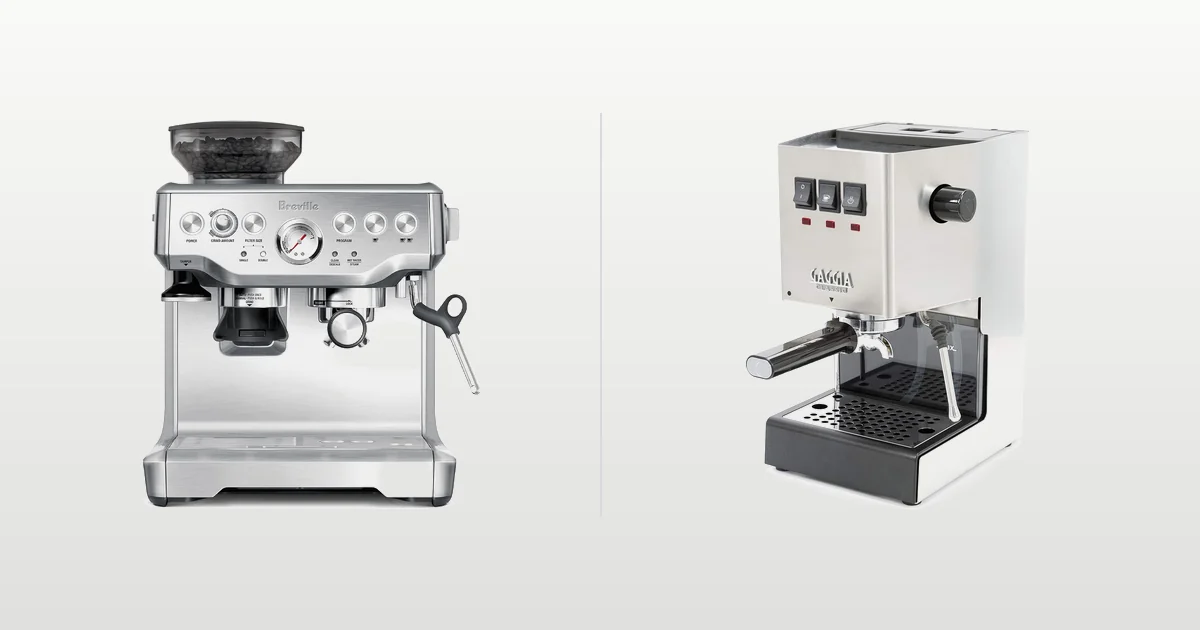
 Best OverallBreville BES870XL Barista Express
A 54-millimetre portafilter, a built-in adjustable burr grinder and a razor dose-trimming tool — the complete first setup.
 Best Real EspressoGaggia Classic Evo Pro
Nine bar, a 58-millimetre commercial portafilter and a three-way solenoid valve, in a steel box made in Italy.
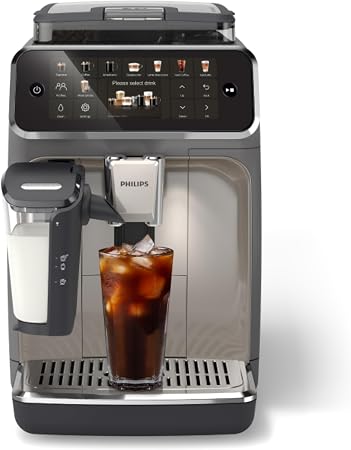 Most AutomatedPHILIPS 5500 LatteGo
Twenty drinks from a colour touchscreen, and a two-part milk carafe with no tubes to clean.
At a Glance
Ten Espresso Machines Compared
Machine type first, then the pressure each one claims — read together, they explain most of the price differences here.
| # | Model | Type | Stated Pressure | Portafilter | Grinder | Standout | Main Drawback | Check Price |
|---|---|---|---|---|---|---|---|---|
| 1 |
 Breville BES870XL Barista Express Breville BES870XL Barista Express |
Semi-automatic pump | Not stated | 54 mm stainless | Built-in conical burr, adjustable | Grinder, dose trimmer and machine in one | $694.99 and 22 pounds | View on Amazon |
| 2 |
 Gaggia Classic Evo Pro Gaggia Classic Evo Pro |
Semi-automatic pump | 9 bar | 58 mm commercial | None — buy separately | The only machine here that states 9 bar | No grinder, and you will need one | View on Amazon |
| 3 |
 De’Longhi Magnifica Start De’Longhi Magnifica Start |
Super-automatic | Not stated | Internal, sealed | Built-in conical burr, 13 settings | #1 in Super-Automatic Espresso Machines | Manual frother, not automatic | View on Amazon |
| 4 |
 Chefman CraftBrew Chefman CraftBrew |
Semi-automatic pump | 15 bar | Two shot baskets | None | A 1.5-litre tank at eighty dollars | 15 bar is a pump maximum, not brew pressure | View on Amazon |
| 5 |
 PHILIPS 5500 LatteGo PHILIPS 5500 LatteGo |
Super-automatic | Not stated | Internal, sealed | Built-in burr | 20 presets and a milk system that rinses itself | $739.99, dearest here | View on Amazon |
| 6 |
 CHULUX Slim 20 Bar CHULUX Slim 20 Bar |
Semi-automatic pump | 20 bar | Not stated | None | PID temperature control at under $100 | 20 bar is the headline, not the reality | View on Amazon |
| 7 |
 Mr. Coffee 4-Shot Steam Mr. Coffee 4-Shot Steam |
Steam, not pump | Steam pressure, no pump | Extra-large, 4 shots | None | #1 in Steam Espresso Machines | Steam brewing is not true espresso | View on Amazon |
| 8 |
 Nespresso Essenza Mini Nespresso Essenza Mini |
Capsule | Not stated | Capsule, no portafilter | None — capsules | The smallest footprint of any machine here | Capsules only, forever | View on Amazon |
| 9 |
 OutIn Mino Portable OutIn Mino Portable |
Battery pump, portable | Not stated | Stainless, integrated | None | Self-heating, battery powered, IP67 | $159.99 for one cup at a time | View on Amazon |
| 10 |
 SHARDOR 3.5 Bar Compact SHARDOR 3.5 Bar Compact |
Steam, low pressure | 3.5 bar | Not stated | None | A steam machine and carafe for forty dollars | 3.5 bar cannot make true espresso | View on Amazon |
Specifications, prices and ratings are taken from each manufacturer’s Amazon listing as displayed on 21 August 2026 and may change. Pressure is reproduced exactly as stated and is not comparable between machines: the Gaggia’s 9 bar describes brewing pressure, while the 15 and 20 bar figures elsewhere describe pump maximums that an over-pressure valve reduces before extraction. Five machines here publish no pressure figure at all, including the two most expensive. Other listing problems we have flagged rather than corrected: the Philips 5500 gives an item weight of 3.6 pounds for a 17-inch bean-to-cup machine with a 1.8-litre tank, which is impossible; the OutIn Mino states 32.4 watt-hours in its wattage field, which is a battery capacity rather than a power rating; and the Nespresso Essenza Mini’s listing consists almost entirely of a note directing the reader to the manual. Amazon files these products across four separate subcategories — Semi-Automatic, Super-Automatic, Steam Espresso and Espresso Machines — and rank positions below refer to whichever subcategory each listing is placed in. Two near-duplicate machines and a second Nespresso were excluded.
Scroll the table sideways to see every column
How We Chose These Espresso Machines
We researched current listings, compared manufacturer specifications and documentation, and examined recurring patterns in customer feedback. We did not carry out hands-on testing, and nothing below is presented as measured performance data.
- What actually grinds the coffee — grind matters more than pressure, and a machine without a grinder needs one bought alongside
- Stated pressure, recorded but not ranked on — 9 bar is the standard; 15 and 20 describe the pump, not the puck
- Portafilter diameter — 58 mm is the commercial standard and opens up every professional accessory
- Temperature stability — PID control keeps the boiler within about a degree; a thermostat swings several
- Every machine type represented — pump, super-automatic, steam, capsule and battery portable are different products
- Milk system design — manual wands make better foam; automatic ones make it every day without you
The 10 Best Espresso Machines, Reviewed
1. Breville BES870XL Barista Express — Best Overall

The Barista Express is the machine most people should buy first, and the reason is the hopper on top. Espresso is far more sensitive to grind than to anything else, and a separate grinder good enough for it costs as much again as a cheap machine.
This puts an adjustable conical burr grinder, a 54 mm portafilter and a dose-trimming tool in one body.
Key Specifications
| Type | Semi-automatic pump |
|---|---|
| Stated pressure | Not stated in the listing |
| Portafilter | 54 mm stainless steel |
| Grinder | Built-in conical burr, adjustable grind amount with manual override |
| Baskets | Single and dual wall, 1 and 2 cup |
| Hopper and tank | 1/2 lb beans; 67 oz water |
| Wattage | 1600 watts |
| Weight | 22.1 pounds |
| Best For | Anyone starting espresso properly and buying once |
Why We Recommend It
Notice what the listing does not advertise: a bar figure. Breville does not put a pressure number in its headline specifications at all, where machines costing an eighth as much lead with 15 and 20 bar. That is not modesty; it is a sign that the manufacturer expects buyers to be looking at other things.
The Razor dose trimming tool is the underrated inclusion. Espresso needs a level, correctly weighed puck, and the single most common beginner failure is an overfilled basket that the shower screen then compresses unevenly. A trimmer levels the dose to a repeatable height.
Single and dual wall baskets matter more than they sound. Dual wall (pressurised) baskets force crema artificially and forgive a bad grind; single wall baskets do not, and are what you graduate to. Shipping both means the machine can grow with you.
At 22.1 pounds and nearly 16 inches tall, this is a permanent counter resident. Measure the height under your wall cabinets before ordering.
Pros
- Built-in adjustable conical burr grinder, the expensive part solved
- 54 mm stainless portafilter, near-commercial size
- Razor dose trimming tool included
- Both pressurised and non-pressurised baskets supplied
- 67 oz tank and a half-pound hopper
- Integrated tamper
- The standard recommendation for a first real machine
Cons
- $694.99
- 22.1 pounds and 15.9 inches tall
- No pressure figure published anywhere in the listing
- 4.3 stars
- Steep learning curve compared with a capsule machine
Best for: The one-purchase answer for someone who wants to learn espresso properly.
2. Gaggia Classic Evo Pro — Best Real Espresso
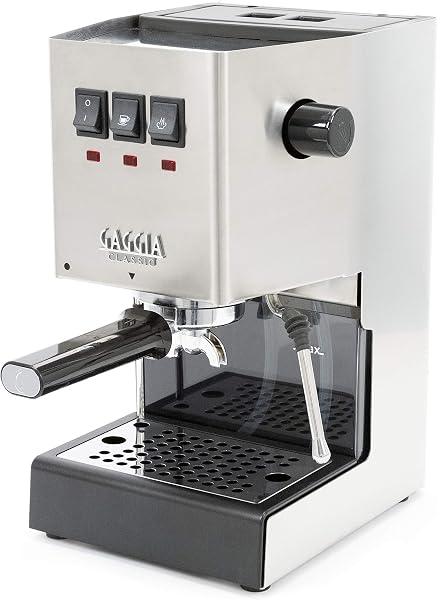
This is the machine that makes sense of the whole category. It is the second most expensive product on this page at $454.70, it is the highest rated at 4.4 stars, and it advertises nine bar — a lower figure than any pump machine here except the steam units.
That is not a weakness. Nine bar is the specification.
Key Specifications
| Type | Semi-automatic pump |
|---|---|
| Stated pressure | 9 bar |
| Portafilter | 58 mm stainless, commercial size |
| Valve | Commercial three-way solenoid |
| Housing | Solid steel, made in Italy |
| Serviceability | Self-serviceable |
| Wattage | 1200 watts |
| Weight | 20 pounds |
| Best For | Anyone who intends to keep the machine for a decade and fix it themselves |
Why We Recommend It
Espresso is defined at roughly nine bars of pressure. It is the figure commercial machines are built around and the point at which water passes through a compacted puck fast enough to extract properly and slowly enough not to channel through it. More pressure does not extract more; past about ten bar it starts forcing channels through the coffee and the shot gets worse.
So when a $99 machine advertises 20 bar, it is quoting the pump’s maximum, not what reaches the coffee — and almost every such machine bleeds it back down with an over-pressure valve before it gets there.
The 58 mm portafilter is the other serious specification. It is the commercial standard, which means every tamper, basket and accessory in the professional world fits it. Most home machines use 51 or 54 mm, where the choice is far narrower.
Self-serviceable, with a three-way solenoid valve that releases pressure after the shot so the puck comes out dry. These are the details that make a machine last twenty years.
There is no grinder. Budget for one, because this machine will expose a bad one instantly.
Pros
- States 9 bar, the actual espresso standard, rather than a pump maximum
- 58 mm commercial portafilter fits professional accessories
- Commercial three-way solenoid valve leaves a dry puck
- Solid steel housing, made in Italy
- Designed to be self-serviced
- 4.4 stars, the highest in this roundup
Cons
- No grinder included, and it needs a good one
- $454.70 before you buy a grinder
- 20 pounds
- Steepest learning curve here
- No automation of any kind
Best for: Serious home espresso, and machines that outlive their owners’ interest.
3. De’Longhi Magnifica Start — Best Super-Automatic

A super-automatic grinds, doses, tamps and brews without you touching the coffee. This is the best-selling one in its subcategory, at $399.95.
De’Longhi’s listing also claims the number one worldwide espresso machine maker position, citing an independent research institute for 2025 sales.
Key Specifications
| Type | Super-automatic bean-to-cup |
|---|---|
| Stated pressure | Not stated in the listing |
| Grinder | Conical burr, 13 grind settings |
| One-touch recipes | 3 — espresso, coffee, americano |
| Frother | Manual steam wand |
| Tank | 60 fluid ounces |
| Wattage | 1250 watts |
| Rank | #1 in Super-Automatic Espresso Machines |
| Best For | Espresso every morning with no technique and no cleanup ritual |
Why We Recommend It
Thirteen grind settings is the specification that matters on a bean-to-cup. The grinder is sealed inside and you will never see the coffee, so the only lever you have over extraction is that dial. Machines offering three or five settings in this class are noticeably harder to dial in for a given bean.
The frother is manual, and that is a genuine choice to weigh. A steam wand you operate yourself makes better milk than an automatic system once you learn it, and is more work every single morning. The Philips further down this page automates it entirely.
No pressure figure appears anywhere, which is consistent across the serious machines here and conspicuously different from the sub-$100 ones.
What you give up against a portafilter machine is control and the ritual. What you gain is a real espresso in ninety seconds without weighing, tamping or cleaning a basket.
Pros
- #1 in Super-Automatic Espresso Machines
- Grinds, doses, tamps and brews automatically
- 13 grind settings, generous for a bean-to-cup
- Three one-touch recipes with adjustable intensity
- 60 oz tank
- Water hardness test included for descaling setup
- Manual wand makes better milk than most automatic systems
Cons
- $399.95
- Manual frother means milk is still your job
- Sealed grinder gives you no view of the coffee
- 4.2 stars
- Plastic body at this price
- 19.6 pounds and 17 inches deep
Best for: Daily espresso with none of the technique, and milk you still steam yourself.
4. Chefman CraftBrew — Best Budget Pump

Seventy-nine ninety-nine for a pump machine with a steam wand, two baskets, a touch panel and a detachable 1.5-litre tank. At 4.4 stars it is the joint highest-rated machine in this roundup.
It advertises fifteen bar, which needs translating.
Key Specifications
| Type | Semi-automatic pump |
|---|---|
| Stated pressure | 15 bar |
| Baskets | Two shot baskets |
| Steam wand | Yes, for latte and cappuccino |
| Controls | Touch control panel |
| Tank | 1.5 litres, detachable |
| Wattage | 1350 watts |
| Dimensions | 10.8″D x 8.9″W x 11.9″H |
| Best For | A first espresso machine where the budget is the constraint |
Why We Recommend It
Fifteen bar is what the pump can produce, not what reaches your coffee. Espresso extracts at around nine, and machines like this one use an over-pressure valve to bleed the excess away before it hits the puck. The larger number sells better, so it goes on the box.
That is not dishonest and it is not a reason to avoid the machine — it is a reason not to rank machines by it. The $454.70 Gaggia on this page advertises nine.
A 1.5-litre tank is genuinely generous at this price, larger than several machines here costing four times as much, and detachable so you fill it at the tap rather than carrying the machine.
What eighty dollars does not buy is a grinder, and espresso from pre-ground supermarket coffee will be mediocre in any machine. Budget for a burr grinder or accept the ceiling.
Pros
- 4.4 stars, joint highest here, at $79.99
- 1.5-litre detachable tank, larger than pricier rivals
- Two shot baskets included
- Steam wand for milk drinks
- Touch control panel
- Compact 8.9-inch width
Cons
- 15 bar is the pump maximum, not the brewing pressure
- No grinder, and pre-ground coffee limits the result
- Portafilter diameter not stated
- Baskets are likely pressurised, which fakes crema
- #11 in Semi-Automatic Espresso Machines
Best for: The sensible cheap entry, if you understand what fifteen bar means.
5. PHILIPS 5500 LatteGo — Most Automated
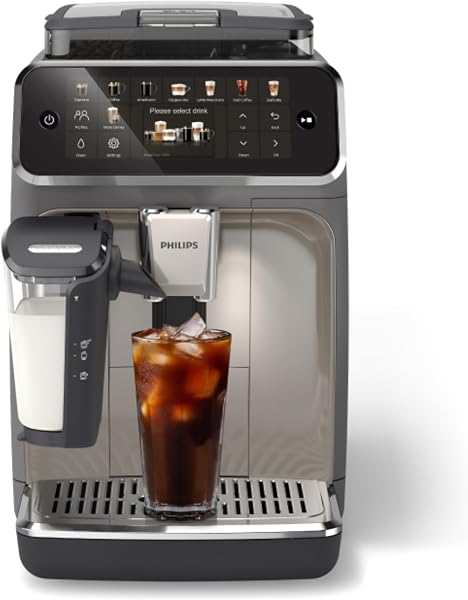
Twenty presets covering espresso, coffee, latte, cappuccino, iced drinks and hot water, all from a colour touchscreen, with the machine grinding and tamping itself. It is the most expensive product in this roundup at $739.99.
The interesting engineering is the milk system.
Key Specifications
| Type | Super-automatic bean-to-cup |
|---|---|
| Stated pressure | Not stated in the listing |
| Presets | 20, hot and iced, plus hot water |
| Milk system | LatteGo, two parts, no tubes |
| Controls | Colour touch display |
| Start-up | Ready to brew in 3 seconds |
| Tank | 1.8 litres |
| Wattage | 1500 watts |
| Best For | A household where several people want different drinks and nobody wants to learn |
Why We Recommend It
LatteGo is a two-part carafe with no tubes, and tubes are where automatic milk systems fail. A conventional auto-frother draws milk through a narrow pipe that has to be flushed after every drink and descaled regularly; milk residue in a tube you cannot see is the single most common hygiene complaint about super-automatics. Two parts that come apart and go in the dishwasher solves it.
Three seconds to ready is a meaningful daily difference against machines that take a minute to come to temperature.
The listed weight of 3.6 pounds is plainly wrong for a 17-inch bean-to-cup machine with a 1.8-litre tank; comparable machines weigh fifteen to twenty. Treat that field as a data-entry error.
Twenty presets is more than any household uses, and the honest comparison is against the De’Longhi at $340 less, which makes the same espresso with a manual wand and three presets.
Pros
- 20 presets including iced drinks and hot water
- LatteGo milk system has no tubes to clean
- Colour touchscreen
- Ready to brew in 3 seconds
- 1.8-litre tank
- Quiet brewing
- #2 in Super-Automatic Espresso Machines
Cons
- $739.99, the most expensive machine in this roundup
- Listed weight of 3.6 pounds is clearly an error
- 4.2 stars
- 20 presets is far more than most people use
- No pressure or grind-setting count published
Best for: Households wanting café drinks at a touch, with no technique and no tubes.
6. CHULUX Slim 20 Bar — Best Value Features
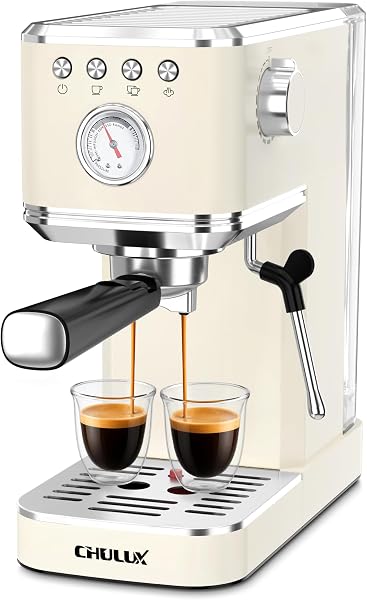
Ignore the twenty bar on the front and read the specification list instead, because there are two things on it that genuinely matter and almost never appear at this price: PID temperature control and pre-infusion.
Ninety-nine ninety-seven, 5.5 inches wide, 4.3 stars.
Key Specifications
| Type | Semi-automatic pump |
|---|---|
| Stated pressure | 20 bar Italian pump |
| Temperature | PID control |
| Pre-infusion | Yes |
| Steam wand | Yes, for microfoam |
| Width | 5.5 inches |
| Tank | 40 fluid ounces |
| Wattage | 1400 watts |
| Best For | The most real espresso specifications available under a hundred dollars |
Why We Recommend It
PID is the specification enthusiasts pay for. A basic machine uses a thermostat that lets boiler temperature swing several degrees either side of target; a PID controller holds it within about one. Espresso extraction is sharply temperature-sensitive, so a stable boiler is the difference between shots that taste the same every morning and shots that do not.
Pre-infusion wets the puck at low pressure before full pressure arrives, which lets the grounds swell and settle so the water cannot carve a channel straight through. It is one of the biggest single improvements to shot consistency, and it is a software feature that costs a manufacturer almost nothing to include and most omit.
The twenty bar figure is the least meaningful thing here, and it is what the listing leads with. Espresso brews at nine; twenty is the pump’s ceiling.
At 5.5 inches wide it is the narrowest full-size machine in this roundup, which for a small kitchen may matter more than any of the above.
Pros
- PID temperature control, rare at any price under $300
- Pre-infusion for more even extraction
- 5.5 inches wide, narrowest full-size machine here
- Steam wand for microfoam
- 40 oz tank
- $99.97
- #5 in Semi-Automatic Espresso Machines
Cons
- Leads with a 20 bar figure that means little
- Portafilter size not stated
- No grinder included
- 4.3 stars
- Unfamiliar brand for a machine with these specifications
Best for: The best specification-per-dollar here, once you look past the headline number.
7. Mr. Coffee 4-Shot Steam — Best Steam Machine

Amazon files this under a separate subcategory — Steam Espresso Machines — and it is the best seller in it. The distinction is mechanical and worth understanding before you buy.
A steam machine boils water until steam pressure forces it through the coffee. There is no pump.
Key Specifications
| Type | Steam espresso, no pump |
|---|---|
| Pressure | Generated by steam, typically 3–4 bar |
| Portafilter | Extra-large, up to 4 shots |
| Frothing | Integrated frothing wand |
| Included | Stainless frothing pitcher, water pitcher with markings, scoop |
| Wattage | 1200 watts |
| Dimensions | 11.2″D x 11.2″W x 15″H |
| Rank | #1 in Steam Espresso Machines |
| Best For | Cuban coffee, moka-style strength, and four cups at once |
Why We Recommend It
That caps the pressure at roughly three to four bar, against the nine bar that defines espresso. The result is a strong, dark, slightly bitter coffee that is genuinely delicious in its own right — it is how Cuban coffee is made, and the listing says so directly — but it is not espresso and will not produce true crema.
Four shots at once is the practical advantage, and no pump machine in this roundup can do it. For a family all wanting coffee at the same time, that changes the morning.
The water pitcher with measurement markings is a small sensible touch: steam machines brew whatever volume of water you put in, so the measure is the dose control.
At $64.99 it is the cheapest machine here with a proper frothing pitcher included, and the frothing wand works the same way a pump machine’s does.
Pros
- #1 in Steam Espresso Machines
- Brews up to 4 shots in one go, unique here
- Stainless frothing pitcher included
- Excellent for Cuban-style coffee
- $64.99
- Integrated frothing wand
- Simple mechanism with little to go wrong
Cons
- Steam pressure is roughly 3–4 bar, not the 9 bar espresso requires
- No real crema
- Cannot match a pump machine on extraction
- 4.2 stars
- No grinder
Best for: Strong dark coffee for several people at once — just not espresso.
8. Nespresso Essenza Mini — Best Capsule Machine

Four and a third inches wide and 4.4 pounds. Nothing else in this roundup approaches that, and for a great many kitchens the footprint is the whole decision.
It makes a genuinely good, entirely consistent espresso, because the variables have all been removed at the factory.
Key Specifications
| Type | Capsule |
|---|---|
| Stated pressure | Not stated in the listing |
| Capsules | Nespresso Original line |
| Tank | 0.6 litres, removable |
| Width | 4.33 inches |
| Wattage | 1150 watts |
| Weight | 4.4 pounds |
| Rank | #8 in Semi-Automatic Espresso Machines |
| Best For | Consistent espresso in a small space with no learning and no mess |
Why We Recommend It
That is the trade in one sentence. The grind, the dose and the tamp are sealed inside a capsule, so your first shot and your thousandth are identical — and you have no ability to change anything about them. On a portafilter machine every one of those is yours to get wrong and yours to improve.
The Original line is the more open of Nespresso’s two systems, with third-party compatible capsules widely available, unlike the barcoded Vertuo format. That is worth knowing because the capsules, not the machine, are the real cost of ownership.
The listing is notably bare — a single bullet point directing you to the manual — so pressure, capsule capacity and drink sizes all go unstated.
At $187.32 it costs more than the CHULUX with PID control and does considerably less, which is the price of never having to learn anything.
Pros
- Smallest machine here at 4.33 inches wide and 4.4 pounds
- Completely consistent results with no technique
- Nothing to grind, tamp or clean
- Original line has wide third-party capsule support
- Removable 0.6-litre tank
- Ready almost instantly
Cons
- Capsules only, permanently — the real ongoing cost
- No control over grind, dose or tamp
- Listing states almost no specifications
- $187.32 buys far more machine elsewhere on this page
- 4.2 stars
Best for: Tiny kitchens and anyone who wants espresso without a hobby attached.
9. OutIn Mino Portable — Best Portable

Most portable espresso makers are hand pumps that require you to supply both the pressure and the hot water. This one carries a battery, heats the water itself from room temperature, and is rated IP67 against rain and dust.
Six hundred and eighty-five grams, and about the size of a large water bottle.
Key Specifications
| Type | Portable battery-powered pump |
|---|---|
| Heating | Self-heating from room-temperature water |
| Battery | 3 x 3000 mAh, up to 6 cups from cold water |
| Rating | IP67 waterproof and dustproof |
| Portafilter | Stainless steel |
| Cup | BPA-free Tritan |
| Size | 2.64 x 7.68 inches |
| Weight | 685 g |
| Best For | Camping, road trips, hotel rooms and offices without a kitchen |
Why We Recommend It
Self-heating is the specification that makes it usable. A camping espresso maker that needs boiling water first is really a stove accessory; one that takes cold water and does the rest is a standalone machine. The listing rates it at up to six cups of 50 ml from room-temperature water per charge.
IP67 is a genuine outdoor rating, not a marketing adjective — dust-tight and able to survive immersion. Very little kitchen equipment carries one.
The wattage field reads 32.4 watt-hours, which is a battery capacity rather than a power rating, and is a good example of how loosely these specification fields are completed across this category.
At $159.99 for one small cup at a time, this is a second machine bought for a specific situation, not a kitchen machine. Judged as that, nothing else here competes.
Pros
- Battery powered with genuine self-heating from cold water
- IP67 waterproof and dustproof
- 685 g and genuinely packable
- Stainless portafilter, not plastic
- Up to 6 cups per charge
- BPA-free Tritan cup included
Cons
- $159.99 for a single-cup portable machine
- One 70 ml cup at a time
- 4.1 stars, lowest in this roundup
- Wattage field states a battery capacity, not power
- No milk frothing of any kind
Best for: Camping, travel and offices — the only machine here that leaves the house.
10. SHARDOR 3.5 Bar Compact — Cheapest Here

Thirty-nine ninety-nine, and the listing is refreshingly careful with its language: it promises "espresso-style" coffee with "delicate crema", not espresso.
Three and a half bar is the stated pressure, which is the lowest figure on this page.
Key Specifications
| Type | Steam, low pressure |
|---|---|
| Stated pressure | 3.5 bar |
| Boiler | Die-cast aluminium, 800 W |
| Controls | Single knob for brew and steam |
| Capacity | 4 cups |
| Steam wand | Adjustable |
| Dimensions | 8.3″D x 6″W x 11.8″H |
| Included | Carafe, milk frother |
| Best For | Milky coffee drinks on the smallest possible budget |
Why We Recommend It
That honesty is worth more than a 20 bar claim. At 3.5 bar this brews closer to a moka pot than a café machine: strong, dark, a little bitter, without the body or the crema that nine bar through a fine grind produces.
Whether that matters depends entirely on what you drink. Under milk, in a latte or cappuccino, the difference narrows considerably. Drunk straight as an espresso, it is obvious.
A die-cast aluminium boiler at this price is a better material than expected, and 800 watts heats it quickly for its size.
The single knob is a real usability feature. Brew, steam and off on one control means nothing to learn and very little to break — a fair trade at forty dollars against machines with touch panels and menus.
The included carafe makes this the only cheap machine here that serves four cups without swapping vessels.
Pros
- $39.99, cheapest machine in this roundup
- States its 3.5 bar honestly rather than quoting a pump maximum
- Die-cast aluminium boiler
- Single-knob operation with almost nothing to learn
- Four-cup carafe included
- Adjustable steam wand
- 4.3 stars
Cons
- 3.5 bar produces espresso-style coffee, not espresso
- No real crema
- No grinder and no pressure gauge
- Portafilter size not stated
- #14 in Semi-Automatic Espresso Machines despite the rating
Best for: Milky drinks on the tightest budget, with realistic expectations.
What the Bar Number Actually Tells You
Sorted by advertised pressure, against price. The correlation runs the wrong way.
| Machine | Stated pressure | Price | Rating |
|---|---|---|---|
| CHULUX Slim | 20 bar | $99.97 | 4.3 |
| Chefman CraftBrew | 15 bar | $79.99 | 4.4 |
| Gaggia Classic Evo Pro | 9 bar | $454.70 | 4.4 |
| SHARDOR Compact | 3.5 bar | $39.99 | 4.3 |
| Mr. Coffee 4-Shot | Steam, no pump figure | $64.99 | 4.2 |
| Breville Barista Express | Not stated | $694.99 | 4.3 |
| PHILIPS 5500 LatteGo | Not stated | $739.99 | 4.2 |
| De’Longhi Magnifica Start | Not stated | $399.95 | 4.2 |
| Nespresso Essenza Mini | Not stated | $187.32 | 4.2 |
| OutIn Mino | Not stated | $159.99 | 4.1 |
Read the top three rows together. Twenty bar is the cheapest pump machine here; nine bar is the dearest and the joint highest rated. Then read the bottom five: the machines at $694.99, $739.99 and $399.95 do not mention pressure at all. That is the tell. A manufacturer confident in its portafilter, its boiler and its grinder sells you those; a manufacturer competing at $80 sells you the biggest number it can legitimately print. Nine bar is not a weaker specification than twenty — it is the specification, and the others are quoting a different measurement entirely.
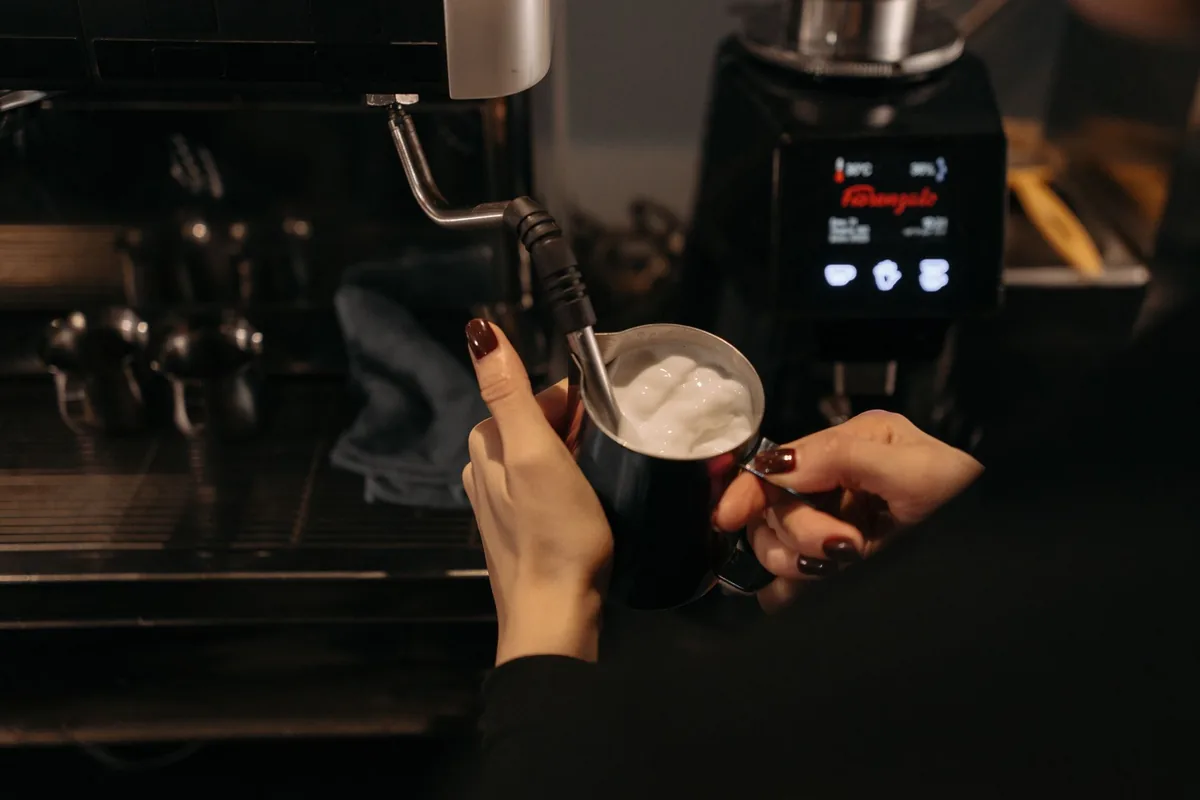
Five Machine Types, Doing Genuinely Different Things
Amazon files these across four subcategories, and the mechanical differences are larger than the price differences.
| Type | Machines here | How it makes pressure | What you control |
|---|---|---|---|
| Semi-automatic pump | Breville, Gaggia, Chefman, CHULUX | Electric pump, regulated to ~9 bar | Grind, dose, tamp, timing — everything |
| Super-automatic | De’Longhi, Philips | Internal pump, fully managed | Grind setting and drink size only |
| Steam | Mr. Coffee, SHARDOR | Boiler steam, roughly 3–4 bar | Dose and water volume |
| Capsule | Nespresso Essenza Mini | Pump, factory-set | Nothing — it is sealed in the capsule |
| Portable battery | OutIn Mino | Battery-driven pump | Grind and dose, one cup at a time |
The steam row is the one that catches people out. A steam machine has no pump: it boils water until steam pressure pushes it through the coffee, which caps it around three to four bar. That makes strong, dark, slightly bitter coffee — genuinely good, and how Cuban coffee is traditionally made — but it is not espresso and will not give real crema. Amazon puts these in a separate Steam Espresso Machines subcategory for exactly that reason, and both machines here that sit in it are honest about their pressure. At the other end, the capsule machine removes every variable including the ones you might want, which is either the whole appeal or the whole objection depending on the buyer.
Best Alternatives
| Alternative | Why Consider It | Better For | Main Trade-Off |
|---|---|---|---|
| A moka pot | Strong stovetop coffee for under $30, no electronics | Espresso-adjacent coffee cheaply | Around 1.5 bar, so no crema and a different drink |
| An AeroPress | Fast, forgiving, portable, and about $32 | One strong clean cup | Not espresso, and no milk texturing |
| A manual lever press | Real 9 bar pressure by hand, no electricity | Enthusiasts who want control without a pump | You supply the force and the hot water |
| A pod machine | Total consistency, no learning, no cleanup | Convenience above all | Capsules are the permanent cost, and you control nothing |
| A good grinder and your existing machine | Grind matters more than the machine below $200 | Anyone already owning a cheap pump machine | Another appliance, and it is the expensive half |
What Each Price Tier Actually Buys
$39.99 to $64.99 — SHARDOR, Mr. Coffee. Steam machines rather than pump machines, and both are honest about it. Three and a half bar produces strong espresso-style coffee that works well under milk and will not fool anyone drunk straight. The Mr. Coffee brews four shots at once, which nothing else here does.
$79.99 to $99.97 — Chefman CraftBrew, CHULUX Slim. Real pump machines with steam wands. The Chefman is the joint highest-rated machine in the roundup with a 1.5-litre tank; the CHULUX quietly includes PID temperature control and pre-infusion, which are specifications from several hundred dollars higher up.
$159.99 to $187.32 — OutIn Mino, Nespresso Essenza Mini. Convenience formats. One is a battery-powered machine that heats its own water and goes camping; the other is 4.33 inches wide and makes a perfect, unchangeable shot from a capsule.
$399.95 to $454.70 — De’Longhi Magnifica Start, Gaggia Classic Evo Pro. The fork in the road. The De’Longhi grinds, doses and tamps for you with thirteen grind settings; the Gaggia does none of that and instead gives you 9 bar, a 58 mm commercial portafilter, a solenoid valve and a machine you can service yourself for twenty years.
$694.99 to $739.99 — Breville Barista Express, PHILIPS 5500. Complete solutions. Breville puts a proper adjustable burr grinder and a dose trimmer around a 54 mm portafilter; Philips automates all twenty drinks and solves the milk-tube hygiene problem with a two-part carafe.
The pattern: the two joint highest-rated machines here cost $79.99 and $454.70. Money buys grinders, portafilter size, temperature stability and automation. It does not buy bar pressure, which runs in the opposite direction.
How to Choose an Espresso Machine
Ignore the Bar Figure Entirely
Espresso extracts at around nine bars. Machines advertising fifteen or twenty are quoting the pump’s maximum output, which an over-pressure valve reduces before the water reaches your coffee. On this page the only machine that advertises nine is also the dearest pump machine and the joint highest rated, while the two most expensive machines publish no figure at all. Use the number to identify which end of the market a machine is competing in, and nothing else.
Budget for the Grinder Before the Machine
Grind size and consistency affect an espresso shot more than any other variable, including the machine. A $455 Gaggia fed pre-ground supermarket coffee will be beaten by a $100 machine with a decent burr grinder. Three machines here include a grinder; the other seven do not, and pairing one of them with a good burr grinder is the honest budget. If money is tight, buy a cheaper machine and a better grinder rather than the reverse.
Decide How Much You Want to Do Yourself
This is the real fork. A semi-automatic hands you grind, dose, tamp and shot timing — every one of which you can improve and every one of which you can get wrong. A super-automatic does all of it and leaves you a grind dial and a drink size. A capsule machine removes even those. None is better; they are different hobbies, and the machine you will actually use every morning at seven is the one that matches your appetite for ritual.
Check the Portafilter Diameter
Fifty-eight millimetres is the commercial standard, which means bottomless portafilters, precision baskets, distribution tools and tampers from the professional world all fit. Home machines commonly use 51 or 54 mm, where the accessory market is far thinner. Only one machine in this roundup states 58 mm and one states 54; several never mention it at all, which usually indicates a smaller, pressurised basket.
Understand Pressurised Baskets
Most cheap machines ship a dual-wall or pressurised basket, which forces the coffee through a single small hole to generate back-pressure artificially. It produces a thick foam that looks like crema from almost any grind, which makes the machine forgiving and the coffee mediocre. Non-pressurised baskets produce real crema and demand a proper grind. One machine here supplies both, which is the right way to let a beginner progress.
Look for Temperature Stability, Not Wattage
Extraction is sharply temperature-sensitive, and a basic thermostat lets the boiler swing several degrees around its target, which is why shots vary morning to morning on cheap machines. A PID controller holds it within about a degree. It is the specification enthusiasts upgrade for, and exactly one machine in this roundup has it — a $99.97 one whose listing mentions it fourth, after the twenty bar pump.
Common Espresso Machine Buying Mistakes
- Ranking machines by bar pressure. Espresso brews at nine; fifteen and twenty describe the pump, not the puck.
- Buying the machine and not the grinder. Grind is the biggest variable, and seven machines here include none.
- Expecting espresso from a steam machine. Three to four bar makes strong coffee, not espresso, and no real crema.
- Mistaking a pressurised basket’s foam for crema. It is generated by a valve, not by extraction.
- Assuming a capsule machine can be improved. Grind, dose and tamp are sealed in at the factory.
- Ignoring the counter height. The serious machines here are 15 to 17 inches tall and live under a cupboard.
- Overlooking milk system cleaning. Automatic frothers with internal tubes are the standard hygiene complaint about super-automatics.
- Buying more automation than you want. Twenty presets is more drinks than most households order in a month.
Which Espresso Machine Should You Buy?
Buy the Breville Barista Express if you want to learn espresso and buy once. An adjustable burr grinder, a 54 mm portafilter, a dose trimmer and both basket types in one machine.
Buy the Gaggia Classic Evo Pro if you want the real thing and intend to keep it. Nine bar, a 58 mm commercial portafilter, a solenoid valve and a machine you can service yourself — then budget for a grinder.
Buy the Chefman CraftBrew if the budget is eighty dollars. Joint highest rated here, with a 1.5-litre tank and a steam wand.
Buy the CHULUX Slim if you want the most real specifications per dollar. PID temperature control and pre-infusion for $99.97, in a 5.5-inch-wide body.
Buy the De’Longhi Magnifica Start if you want espresso every morning without technique, and are happy steaming milk yourself.
Buy the PHILIPS 5500 if several people want different drinks and nobody wants to learn anything. Twenty presets and a milk carafe with no tubes to clean.
Buy the Nespresso Essenza Mini if space is the constraint, or the Mr. Coffee if you want four strong cups at once for $64.99.
Buy the OutIn Mino if the machine needs to leave the house, or the SHARDOR if forty dollars is the budget and the coffee goes under milk.
Frequently Asked Questions
How many bars of pressure does an espresso machine need?
About nine, and that has been the standard since espresso machines moved from steam to pumps. Nine bars pushes water through a compacted puck of finely ground coffee fast enough to extract the oils and dissolved solids that give espresso its body and crema, and slowly enough that the water does not carve a channel straight through. Machines advertising fifteen or twenty bars are quoting the maximum their pump can generate, not the pressure at the coffee — almost all of them use an over-pressure valve to bleed it back down. On this page the only machine advertising nine bar is also the most expensive pump machine and the joint highest rated, while the two dearest machines print no figure at all.
Is a steam espresso machine the same as a pump machine?
No, and it is the most common confusion in this category. A steam machine has no pump: it heats water in a sealed boiler until steam pressure forces it through the grounds, which caps pressure at roughly three to four bar. The result is strong, dark and slightly bitter — excellent for Cuban coffee and perfectly good under milk in a latte — but it is not espresso and it will not produce genuine crema. Amazon maintains a separate Steam Espresso Machines subcategory for these, and both steam machines in this roundup state their low pressure openly rather than quoting a pump figure they do not have.
Do I need a separate grinder?
Unless the machine has one built in, yes, and it matters more than the machine does. Espresso requires a very fine, very consistent grind, and pre-ground supermarket coffee is neither — it is ground for drip brewing and stales within days of opening. A blade grinder cannot produce espresso grind at all, since it chops rather than grinds and produces dust and chunks together. Three machines in this roundup include a burr grinder; the other seven need one bought alongside. If the budget is tight, a cheaper machine with a good grinder beats an expensive machine with bad coffee every time.
What is the difference between semi-automatic and super-automatic?
How much of the work is yours. A semi-automatic gives you a portafilter: you grind, dose, tamp, lock it in and control the shot. Everything is adjustable and everything can go wrong, which is the appeal for people who want to improve and the frustration for people who want coffee. A super-automatic grinds, doses, tamps and brews internally at the touch of a button, leaving you a grind setting and a drink size. The espresso from a good super-automatic is consistent and perfectly pleasant; it will not reach the ceiling a well-dialled semi-automatic can, and it will never require you to learn anything.
What is a pressurised basket and does it matter?
It is a dual-wall filter basket that forces the coffee through a single small outlet, generating back-pressure artificially rather than relying on the resistance of a properly ground puck. The effect is that almost any grind produces a thick foam that looks like crema, which makes cheap machines forgiving. The cost is that it is not real extraction, and the coffee underneath tends to be thin. Non-pressurised single-wall baskets produce true crema but demand a correct grind and dose. One machine in this roundup ships both, which lets a beginner start forgiving and progress.
Why does my espresso taste sour or bitter?
Sour usually means under-extraction and bitter usually means over-extraction, and grind is the first thing to change. If the shot runs fast and tastes sour and thin, grind finer. If it runs slowly and tastes harsh and dry, grind coarser. A useful reference point is around 18 grams of coffee producing about 36 grams of espresso in roughly 25 to 30 seconds — which requires a scale reading to 0.1 g, since whole-gram resolution cannot hold that ratio. Temperature is the other culprit, and it is why PID control appears on enthusiast machines.
How much should I spend on an espresso machine?
It depends far more on what you want to do than on what you want to drink. Under $100 buys a working pump machine with a steam wand, and one on this page includes PID temperature control and pre-infusion at $99.97 — pair it with a decent grinder and the results are respectable. Around $400 to $700 is where you choose between automation and control: a super-automatic that does everything, or a serious semi-automatic with a commercial portafilter that does nothing for you. Note that the two joint highest-rated machines in this roundup cost $79.99 and $454.70, so price is not predicting satisfaction here.
Are automatic milk frothers worth it?
They are worth it for daily convenience and generally not for quality. A manual steam wand, once you learn it, produces finer and more controllable microfoam than most automatic systems, and it is what every café uses. An automatic system makes acceptable foam every morning without any skill, which for most households is the more useful property. The thing to check is cleaning: conventional automatic frothers draw milk through a narrow internal tube that must be flushed after every drink, and milk residue in a tube you cannot see is the standard hygiene complaint. One machine in this roundup uses a two-part carafe with no tubes at all, which is a genuine design answer to that problem.
Final Verdict
An adjustable burr grinder, a 54 mm portafilter and a dose trimmer — the complete first setup.
Nine bar, a 58 mm commercial portafilter and a machine built to be serviced for decades.
Joint highest rated here at $79.99, with a 1.5-litre tank and a steam wand.
The number on the front of the box is the least useful specification in this category. Espresso brews at about nine bar; the machines advertising twenty are describing their pump’s ceiling, and the ones that say nothing at all are the two most expensive products on this page.
Sorted honestly, the correlation is almost perfectly inverted: 20 bar costs $99.97, 15 bar costs $79.99, and 9 bar costs $454.70 and holds the highest rating here.
So buy on what actually moves a shot. Grind first — it matters more than the machine, and seven of these ten do not include a grinder. Then portafilter size, temperature stability and how much of the work you genuinely want to do at seven in the morning. And notice, before you spend four figures, that a $99.97 machine on this page quietly includes PID control and pre-infusion, and mentions both of them only after the twenty bar pump.