Affiliate Disclosure: As an Amazon Associate, we earn from qualifying purchases. This does not affect the price you pay.
A pour over dripper is a cone or a basket with holes in it. There is not much to go wrong and not much to differentiate, which is why most comparisons of them end up discussing colour.
The decision that actually persists is the one nobody frames as a decision: you are choosing a filter format, and the formats do not interchange.
Across the ten brewers below you will find four incompatible filter sizes — #1, #2, #4 and #6 — plus Chemex’s own bonded paper and Kalita’s fluted wave, neither of which fits anything else. Buy the dripper and you have committed to buying that shape of paper, at that price, from wherever stocks it, for as long as you own it.
Those papers are not equivalent either. Chemex bonded filters are markedly heavier than a V60 cone, which is precisely why Chemex coffee is cleaner and slower. The filter is not an accessory to the brewer; on a pour over it is most of the brewer.
Four of these ten sidestep the question entirely with a permanent metal or mesh filter, and that changes the coffee too — more body, more oils, and sediment in the last inch.
Our Quick Picks
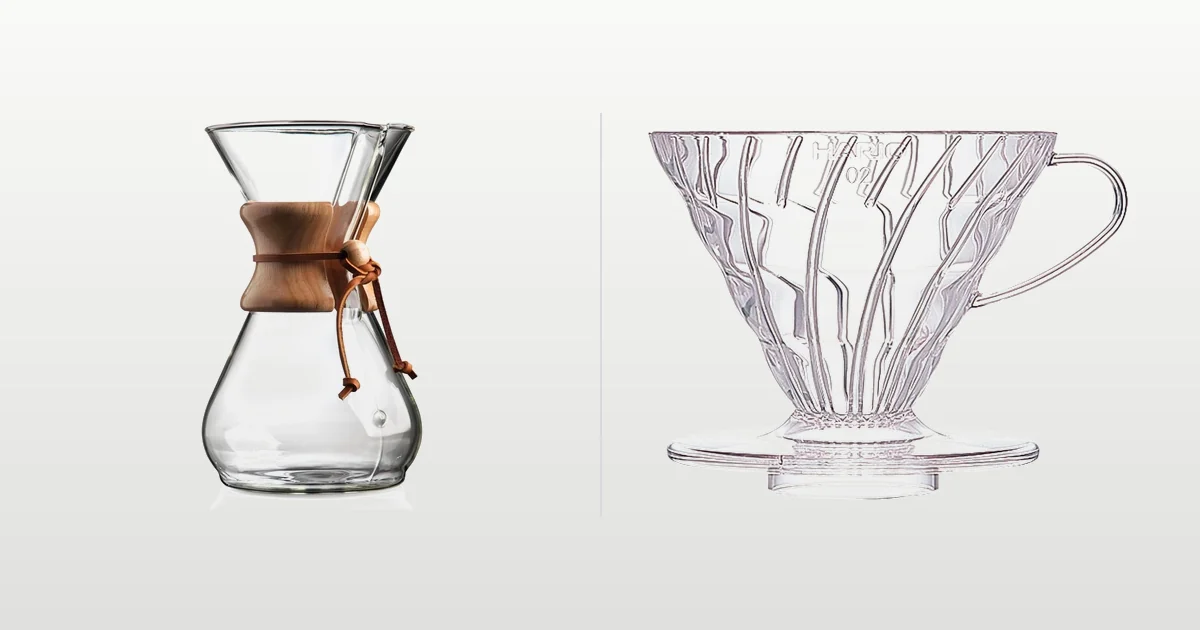
 Best OverallChemex Classic 8-Cup
One piece of borosilicate glass and a filter nobody else makes — the most committed choice in this roundup.
 Cheapest HereHario V60 02 Plastic
Identical geometry to the ceramic V60 at half the price — and arguably the better brewer of the two.
 Most ForgivingKalita Wave 185
A flat bottom and three small holes instead of a cone and one big one — which makes the pour matter far less.
At a Glance
Ten Pour Over Coffee Makers Compared
Filter format first, because that is the commitment — then material, capacity and what each one asks of your pour.
| # | Model | Filter Format | Filter Type | Material | Capacity | Standout | Main Drawback | Check Price |
|---|---|---|---|---|---|---|---|---|
| 1 |
 Chemex Classic 8-Cup Chemex Classic 8-Cup |
Chemex bonded | Paper only | Borosilicate glass | 40 fl oz | Its own proprietary bonded filter | Filters cost more than any rival’s | View on Amazon |
| 2 |
 Hario V60 02 Ceramic Hario V60 02 Ceramic |
V60 cone, #2 | Paper | Ceramic | 4 cups | Ceramic holds heat through the brew | Needs preheating or it steals heat | View on Amazon |
| 3 |
 Hario V60 02 Plastic Hario V60 02 Plastic |
V60 cone, #2 | Paper | Plastic | 400 ml | The same cone geometry for thirteen dollars | Plastic, and it looks it | View on Amazon |
| 4 |
 Hario Switch 02 Hario Switch 02 |
V60 cone, #2 | Paper | Stainless and glass | 200 ml | Immersion and percolation in one dripper | Smallest capacity in the roundup | View on Amazon |
| 5 |
 Kalita Wave 185 Kalita Wave 185 |
Kalita wave, #1 | Wave paper | Heat-resistant glass | 16–26 oz | Flat bottom and three small holes | Wave filters are harder to find | View on Amazon |
| 6 |
 Cosori Pour Over 8-Cup Cosori Pour Over 8-Cup |
#4 basket | Reusable steel | Glass and steel | 2.1 pounds stated | Double-layer steel means no paper ever | Metal filters pass more oils and fines | View on Amazon |
| 7 |
 AGOGO 34 oz Set AGOGO 34 oz Set |
#4 basket | Reusable 304 steel | Glass | 1000 ml | A full set at thirty-one dollars | Same sediment trade as any metal filter | View on Amazon |
| 8 |
 OXO Brew Single Serve OXO Brew Single Serve |
#2, reusable | Reusable | Tritan and PP | 360 ml | Brews straight into your mug | Lowest rating in the roundup | View on Amazon |
| 9 |
 DOWAN Porcelain Dripper DOWAN Porcelain Dripper |
Cone, paper | Paper | Porcelain | 4 cups | Porcelain at twelve dollars | No filter size stated on the listing | View on Amazon |
| 10 |
 LHUKSGF Flat-Bottom Ceramic LHUKSGF Flat-Bottom Ceramic |
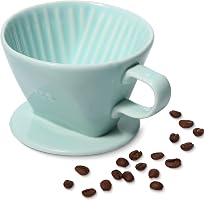
3-hole flat | Reusable | Ceramic | Single cup | Flat bottom and three holes for fourteen dollars | No stated capacity or filter size | View on Amazon |
Specifications, prices and ratings are taken from each manufacturer’s Amazon listing as displayed on 21 August 2026 and may change. Filter format and size are taken from each listing’s structured fields where present; three listings state no filter size at all, and Chemex’s own three sizes are inconsistently labelled across its listings, with the 3-cup marked Reusable while the 6-cup and 8-cup are marked Paper. Capacity is reproduced as stated, which is why one reads 2.1 pounds. Descriptions of how each geometry behaves — cone versus flat bottom, paper versus metal — reflect widely accepted brewing behaviour rather than claims made in these listings. Gooseneck kettles, scales, spreaders and a YETI rambler accessory returned by the same Amazon category were excluded as they are not brewers.
Scroll the table sideways to see every column
How We Chose These Pour Over Coffee Makers
We researched current listings, compared manufacturer specifications and documentation, and examined recurring patterns in customer feedback. We did not carry out hands-on testing, and nothing below is presented as measured performance data.
- Filter format, first and foremost — four incompatible sizes appear here, and the choice is permanent
- Paper or reusable — paper gives clarity and an ongoing cost; metal gives body, no cost and sediment
- Cone or flat bottom — a flat bed with small holes is far more forgiving of an uneven pour
- Material and its thermal behaviour — ceramic and porcelain hold heat but must be preheated; plastic is inert
- Capacity, single cup or carafe — most of this category brews one mug, which is a real limitation for two people
- Brewers only — kettles, scales and accessories from the same category were excluded
The 10 Best Pour Over Coffee Makers, Reviewed
1. Chemex Classic 8-Cup — Best Overall

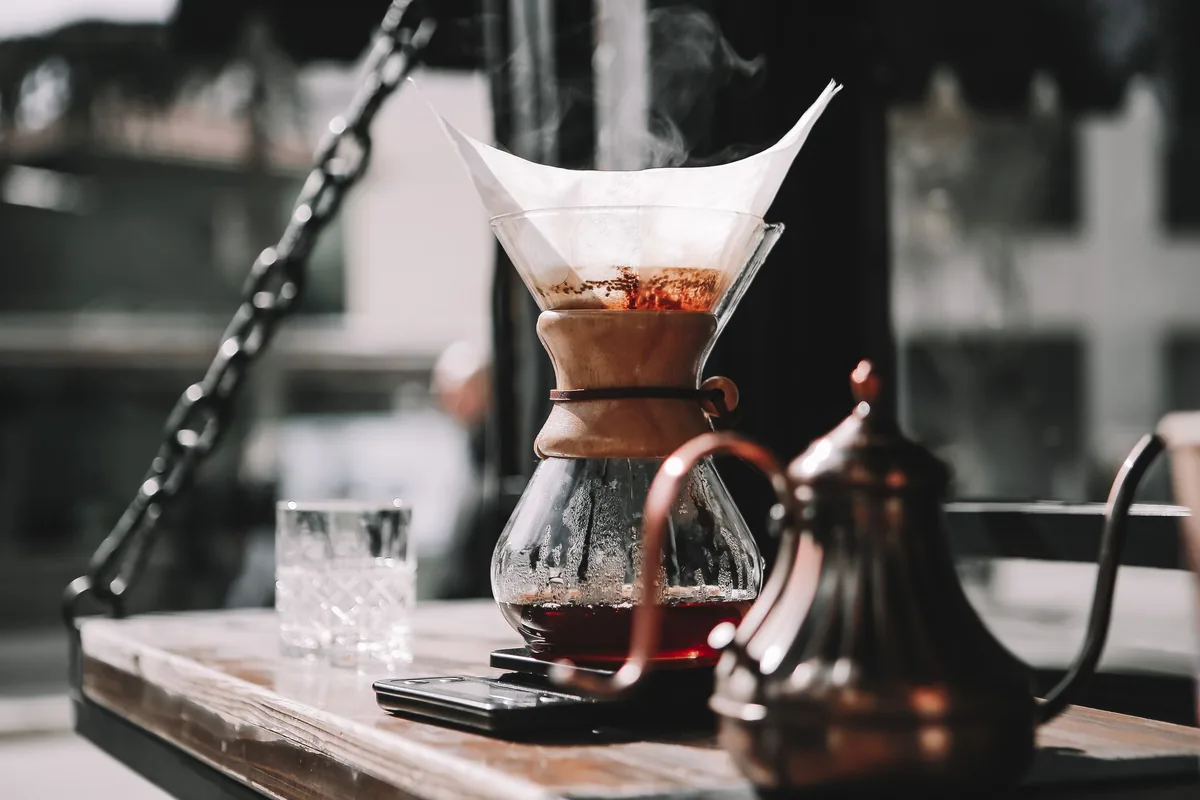
The Chemex is one piece of glass with a wooden collar, and it has been made the same way since 1941. It brews and serves from the same vessel, which nothing else here does.
What it also does is commit you to Chemex’s own bonded filters.
Key Specifications
| Filter format | Chemex bonded, #6 size |
|---|---|
| Filter type | Paper only, no reusable option |
| Capacity | 40 fluid ounces |
| Material | Non-porous borosilicate glass |
| Dimensions | 6.4″D x 9.6″W |
| Weight | 1.3 pounds |
| Cleaning | Dishwasher safe |
| Model | CM-8A |
| Best For | A clean, bright cup, and a brewer that doubles as a carafe |
Why We Recommend It
Those filters are the product as much as the glass is. They are roughly twenty to thirty per cent heavier than a standard cone paper, which is why Chemex coffee is famously clean — the thicker paper traps more oils and fine particles than a V60 filter does.
It also means a slower drawdown, so the same grind that works in a V60 will over-extract here. Chemex users generally grind a notch coarser.
And it means an ongoing cost with no way out. There is no reusable Chemex filter that preserves the character of the brewer, and the bonded papers are the dearest filters in this roundup. Buying the glass is buying the filter subscription.
Pros
- Brews and serves from one piece of glass
- Bonded filter produces the cleanest cup here
- Non-porous borosilicate holds no odours
- Dishwasher safe
- A design essentially unchanged since 1941
Cons
- Proprietary bonded filters, dearest here
- No reusable filter option that works properly
- Slower drawdown needs a coarser grind
- $48.95, most expensive in this roundup
Best for: Anyone who wants the cleanest cup and will keep buying the filters.
2. Hario V60 02 Ceramic — Best Ceramic

The V60 is a 60-degree cone with a large single hole and spiral ribs, and it is the reference point the rest of this category is measured against.
Ceramic is the version worth having if you brew larger volumes.
Key Specifications
| Filter format | V60 cone, size 02 |
|---|---|
| Filter type | Paper |
| Material | Ceramic |
| Capacity | Up to 4 cups |
| Dimensions | 4.7″D x 5.5″W x 4″H |
| Weight | 13.1 ounces |
| Model | V60-02W |
| Rating | 4.6 out of 5 stars |
| Best For | Consistent temperature through a longer brew |
Why We Recommend It
The material changes the brew more than it looks like it should. A pour over takes two and a half to four minutes, and the dripper is in contact with the water throughout. Plastic is thermally inert and adds nothing; ceramic, once preheated, holds warmth and keeps the slurry temperature steadier over a longer brew.
The trade is that ceramic must be preheated. Pour hot water through it before you start or it will pull several degrees out of your first pour, which is the opposite of the intended effect.
V60 papers are cheap, universally stocked and made by several manufacturers, which is the practical argument for this format over the Chemex.
Pros
- The reference pour over cone
- Ceramic holds temperature through a long brew
- V60 papers are cheap and widely stocked
- 13.1 ounces, solid and stable
- 4.6 stars
Cons
- Must be preheated or it steals heat
- Ceramic chips if knocked
- $24.50 against $12.80 for the same shape in plastic
- Single large hole is less forgiving of pour speed
Best for: Larger pour overs where temperature stability matters.
3. Hario V60 02 Plastic — Cheapest Here

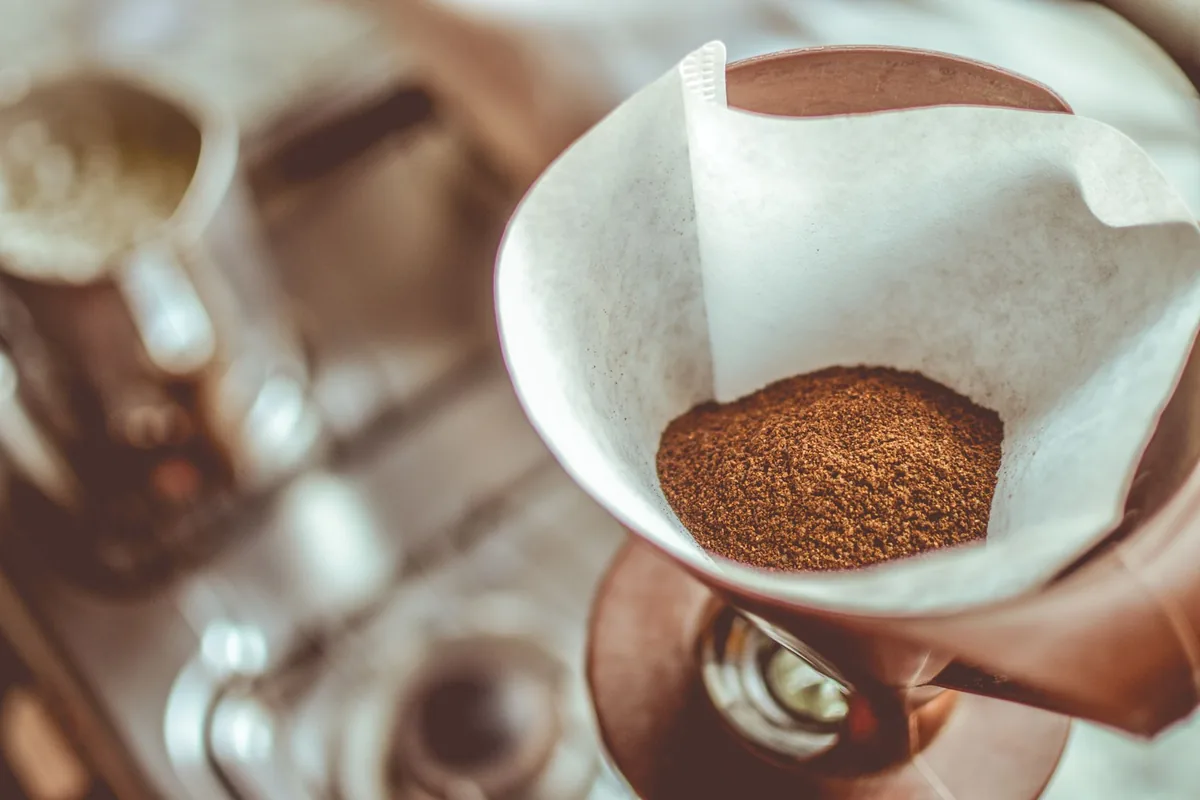
Twelve eighty for exactly the same 60-degree cone, the same spiral ribs and the same single large hole as the ceramic version.
The brew geometry is what makes a V60 a V60, and this has all of it.
Key Specifications
| Filter format | V60 cone, size 02 |
|---|---|
| Filter type | Paper |
| Material | Plastic |
| Capacity | 400 ml |
| Dimensions | 4.33″D x 4.8″W x 4.92″H |
| Weight | 0.11 kg |
| Model | VDR-03-T |
| Price | $12.80, cheapest here |
| Best For | Travel, camping, and getting the V60 result cheaply |
Why We Recommend It
There is a real argument that plastic is the better V60. It is thermally inert, so it neither steals heat from the first pour nor needs preheating — the water simply passes through at the temperature you poured it. For a single cup brewed in under three minutes, that consistency is worth more than the ceramic’s heat retention.
At 0.11 kg it also travels, which is why it is the version that ends up in camping kits and office drawers.
What you give up is appearance and durability. It will scratch, it will stain over years, and it does not look like anything.
Pros
- $12.80, cheapest brewer in this roundup
- Same cone geometry as the ceramic V60
- No preheating needed, thermally inert
- 0.11 kg, genuinely portable
- V60 papers are cheap and everywhere
Cons
- Plastic will scratch and stain over time
- No thermal mass for longer brews
- Looks like what it costs
- Single large hole punishes an uneven pour
Best for: The V60 result at the lowest possible price, or for travel.
4. Hario Switch 02 — Most Versatile

A standard V60 drains as you pour, so the coffee is percolating throughout. A french press steeps everything together and then separates. The Switch is a V60 with a valve, so it does both.
Close the valve and it is an immersion brewer; open it and it drains like a normal V60.
Key Specifications
| Filter format | V60 cone, size 02 |
|---|---|
| Mechanism | Switchable valve at the base |
| Modes | Immersion, percolation, or hybrid |
| Capacity | 200 ml |
| Material | Stainless steel and heatproof glass |
| Included | 40 size-02 filters |
| Model | SSD-200-B |
| Rating | 4.6 out of 5 stars |
| Best For | Anyone who wants to experiment without buying two brewers |
Why We Recommend It
The hybrid is what people actually use it for. Steep for the first ninety seconds with the valve shut, then open it and let the rest drain through the paper. You get the body and forgiveness of immersion with the clarity of a paper-filtered pour over, which neither method gives on its own.
It also removes the biggest source of pour-over failure, which is an uneven pour: with the valve shut, how you pour barely matters.
Two hundred millilitres is the constraint. That is one mug, and the 02 size means it cannot be stretched. Forty filters are included, which is a sensible start.
Pros
- Immersion, percolation or both from one brewer
- Hybrid brewing forgives an uneven pour
- Uses standard, cheap V60 02 papers
- 40 filters included
- 4.6 stars, joint highest here
Cons
- 200 ml is one mug and cannot be stretched
- $31.38 for a single-cup brewer
- The valve is a moving part that can eventually leak
- More decisions than a plain cone
Best for: Experimenting with brew style without buying two brewers.
5. Kalita Wave 185 — Most Forgiving

A V60 is a steep cone with one large hole, so the water’s path depends heavily on where and how fast you pour. The Kalita Wave is flat-bottomed with three small holes, which changes the brew from a pour-dependent process into a much more forgiving one.
The fluted wave filter sits in the flat base and touches the walls only at the ridges.
Key Specifications
| Filter format | Kalita wave, size 185 |
|---|---|
| Filter type | Wave paper, fluted |
| Base | Flat, with three small holes |
| Capacity | 16–26 fluid ounces |
| Material | Heat-resistant glass |
| Weight | 0.12 kg |
| Price | $19.88 |
| Rating | 4.5 out of 5 stars |
| Best For | Repeatable results without perfecting your pour |
Why We Recommend It
The result is that two people pouring differently get closer to the same cup. The flat bed means the coffee sits in an even layer rather than a deep cone, and the three restricted holes govern flow rate more than your kettle does.
That air gap between the fluted filter and the glass also insulates the slurry, which helps hold temperature without preheating.
Wave filters are the catch. They are not interchangeable with cone papers, they cost more, and they are stocked in far fewer places. Buying a Kalita is a longer-term commitment to sourcing a less common filter.
Pros
- Flat bed makes results far more repeatable
- Three small holes control flow, not your pour
- Fluted filter insulates the brew
- 16 to 26 oz covers one or two cups
- $19.88
Cons
- Wave filters are dearer and harder to find
- Not interchangeable with cone papers
- Glass version is fragile
- Less control for anyone who wants to steer the brew
Best for: Consistent coffee without practising your pour technique.
6. Cosori Pour Over 8-Cup — Best Reusable Filter

Every paper brewer in this roundup carries an ongoing cost. This one does not: a double-layer stainless mesh basket that rinses out and goes back in.
Eight cups into a glass carafe, at $29.99.
Key Specifications
| Filter format | #4 basket |
|---|---|
| Filter type | Reusable, double-layer stainless steel |
| Capacity | 8 cups |
| Material | Glass carafe with steel filter |
| Dimensions | 4.44″D x 2.16″W x 8.5″H |
| Ongoing cost | None |
| Price | $29.99 |
| Rating | 4.4 out of 5 stars |
| Best For | Never buying a coffee filter again |
Why We Recommend It
Metal changes the coffee, and it is worth knowing how before you buy. Paper traps the coffee oils and the very fine particles; steel lets both through. The result has more body and a heavier mouthfeel, closer to a french press, and some sediment at the bottom of the cup.
Whether that is better is genuinely a matter of taste rather than quality. What is not in dispute is that it costs nothing to run and produces no waste.
The double layer is the detail that separates good metal filters from bad ones — a single mesh passes noticeably more grit.
Pros
- No filters to buy, ever
- Double-layer mesh passes less grit than single
- 8-cup glass carafe included
- More body than any paper brewer here
- $29.99 with no ongoing cost
Cons
- Metal passes oils and fines, so expect sediment
- Not the clean cup paper produces
- Capacity field states 2.1 pounds
- Mesh needs proper cleaning or it clogs with oils
Best for: Anyone who resents buying filters and likes a heavier cup.
7. AGOGO 34 oz Set — Best Carafe Set

Thirty-four ounces is enough for three or four mugs, which puts this closer to the Chemex in role than to the single-cup drippers that dominate this category.
Three hundred and four stainless for the filter rather than unspecified steel.
Key Specifications
| Filter format | #4 basket |
|---|---|
| Filter type | Reusable, 304 stainless steel |
| Capacity | 1000 ml, 34 fluid ounces |
| Material | Glass carafe |
| Dimensions | 6.2″D x 9.5″W x 6.2″H |
| Price | $30.99 |
| Rating | 4.6 out of 5 stars, joint highest |
| Format | Complete set |
| Best For | A carafe brewer for a household rather than a cup |
Why We Recommend It
Most pour over gear is built around one cup, and that is a real limitation when two people want coffee. A litre carafe with a permanent filter means you brew once, pour twice, and never touch a paper.
At 4.6 stars it is joint highest rated in this roundup, alongside the two Harios and the DOWAN.
The trade is the same as any metal filter: more oils, more body, and fine sediment in the last inch of the cup. If you want Chemex clarity at this volume, you want the Chemex and its papers.
Pros
- 1000 ml serves three or four mugs
- 304 stainless filter, no papers needed
- 4.6 stars, joint highest here
- Complete set with carafe
- No ongoing filter cost
Cons
- Metal filter means oils and sediment
- 9.5 inches wide on the counter
- Glass carafe is fragile
- $30.99 is upper-middle here
Best for: Brewing for two or more without buying filters.
8. OXO Brew Single Serve — Best Single Cup

OXO’s answer to pour over is to remove the pouring. A water tank sits above the grounds and meters the flow through small holes, so the brew rate is set by the design rather than by your hand.
Three hundred and sixty millilitres, straight into the mug it is standing on.
Key Specifications
| Filter format | #2, reusable |
|---|---|
| Filter type | Reusable |
| Capacity | 360 ml |
| Material | Tritan and polypropylene |
| Dimensions | 5.25″ cube |
| Design | Sits directly on a mug |
| Price | $19.97 |
| Rating | 4.0 out of 5 stars, lowest here |
| Best For | One mug, at a desk, with no kettle technique |
Why We Recommend It
For an office or a desk that is a genuinely sensible design. Pour over normally needs a gooseneck kettle and a steady technique; this needs a mug and hot water from anywhere.
Tritan and polypropylene make it effectively unbreakable, which matters more in a shared kitchen than at home.
At 4.0 stars it is the lowest-rated product in this roundup, and the usual criticism of auto-metering drippers applies: taking the pour out of your hands also takes the control, so there is no way to adjust if the coffee comes out weak.
Pros
- Meters the water for you, no technique needed
- Brews directly into your mug
- Unbreakable Tritan and polypropylene
- Reusable filter, nothing to buy
- 5.25-inch cube, fits a desk drawer
Cons
- 4.0 stars, lowest rating in this roundup
- No control over pour rate if the result is off
- 360 ml is one mug
- Plastic construction throughout
Best for: Desks, offices and anywhere a gooseneck kettle is not happening.
9. DOWAN Porcelain Dripper — Best Porcelain

Twelve twenty-nine for porcelain, at 4.6 stars — joint highest rating in this roundup and the second cheapest item in it.
Porcelain is denser and less porous than standard ceramic, so it holds heat well and takes no flavour from repeated use.
Key Specifications
| Filter format | Cone, paper |
|---|---|
| Filter type | Paper |
| Material | Porcelain |
| Capacity | 4 cups |
| Price | $12.29 |
| Rating | 4.6 out of 5 stars, joint highest |
| Type | Non-electric manual dripper |
| Filter size | Not stated — see note |
| Best For | A solid dripper at the lowest price with a real material |
Why We Recommend It
For anyone who wants the thermal behaviour of the ceramic V60 without paying $24.50, this is the obvious alternative, and the reviews back it.
Like any ceramic or porcelain dripper it wants preheating before the first pour, or it will pull several degrees out of the water.
The listing does not state a filter size, which is the one specification you need before buying papers. It takes standard cone filters, but confirm the size against your mug and carafe before stocking up — a #2 and a #4 cone are not interchangeable.
Pros
- $12.29, second cheapest here
- 4.6 stars, joint highest rating
- Porcelain is dense and takes no flavour
- Holds heat like a much dearer dripper
- Standard cone papers
Cons
- No filter size stated on the listing
- Needs preheating like any ceramic
- Will break if dropped
- Listing publishes almost no dimensions
Best for: The thermal benefits of ceramic at half the price.
10. LHUKSGF Flat-Bottom Ceramic — Best Flat-Bottom Value
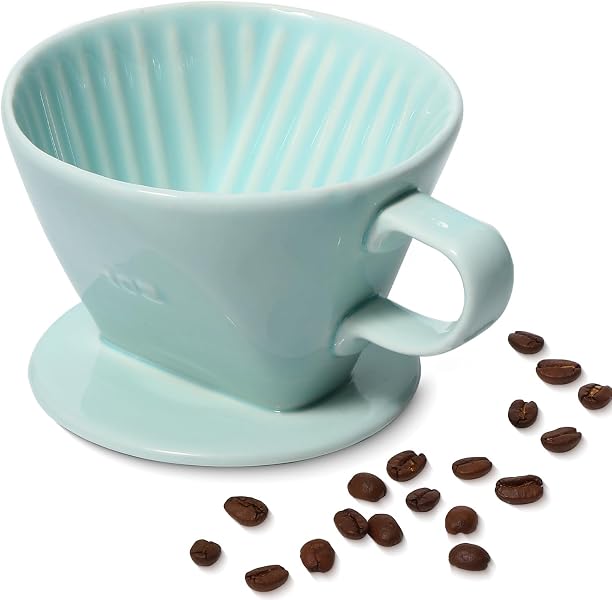
The flat-bottom, three-hole geometry is what makes the Kalita Wave forgiving, and this reproduces it in ceramic at $13.99 against the Kalita’s $19.88.
It also ships as a reusable filter rather than committing you to wave papers.
Key Specifications
| Base | Flat, three holes |
|---|---|
| Filter type | Reusable |
| Material | Ceramic |
| Colour | Green among others |
| Price | $13.99 |
| Rating | 4.5 out of 5 stars |
| Capacity | Not stated |
| Filter size | Not stated |
| Best For | Flat-bottom brewing without committing to wave filters |
Why We Recommend It
That last point is the real argument for it. The Kalita’s weakness is filter availability — fluted wave papers are dearer and stocked in fewer shops than cone papers. A flat-bottom dripper with a reusable insert gives you the geometry without the supply problem.
Ceramic holds heat once preheated, and at $13.99 it is among the cheapest brewers in this roundup.
The listing publishes neither a capacity nor a filter size, which across this category is the pattern rather than the exception, and means you cannot plan paper purchases from the page.
Pros
- Flat-bottom geometry at $13.99
- Reusable filter avoids the wave paper problem
- Ceramic holds heat through the brew
- 4.5 stars
- Colour options rather than plain white
Cons
- No capacity stated on the listing
- No filter size stated either
- Unfamiliar brand
- Ceramic chips if knocked
Best for: Flat-bottom brewing without a wave filter commitment.
Four Filter Formats, None Interchangeable
This is the commitment you are making. The formats below do not fit each other’s brewers.
| Format | Brewers here | Paper cost | Availability |
|---|---|---|---|
| Chemex bonded, #6 | Chemex Classic 8-Cup | Highest here | Chemex only, specialist stockists |
| V60 cone, #2 | Hario V60 ceramic, V60 plastic, Hario Switch | Low | Everywhere, several manufacturers |
| Kalita wave, #1 fluted | Kalita Wave 185 | Higher than cone | Fewer stockists |
| #4 basket | Cosori, AGOGO | None, both reusable | — |
| Reusable, no paper | OXO Brew, LHUKSGF, Cosori, AGOGO | None | — |
| Cone, size not stated | DOWAN | Low, if it takes standard cones | Confirm size before buying papers |
The V60 row is the one to notice. Because Hario’s cone became the de facto standard, size 02 papers are made by several manufacturers, sold everywhere and cheap — which is a genuine long-term advantage that has nothing to do with how the dripper brews. Chemex sits at the other end: the bonded filter is the reason the coffee is so clean, and it is also a single-source consumable at the highest price here. Neither is wrong. But the paper is a recurring purchase and the dripper is not, so over five years the filter format matters more to your wallet than the twenty dollars between these brewers.
Cone or Flat Bottom, Paper or Metal
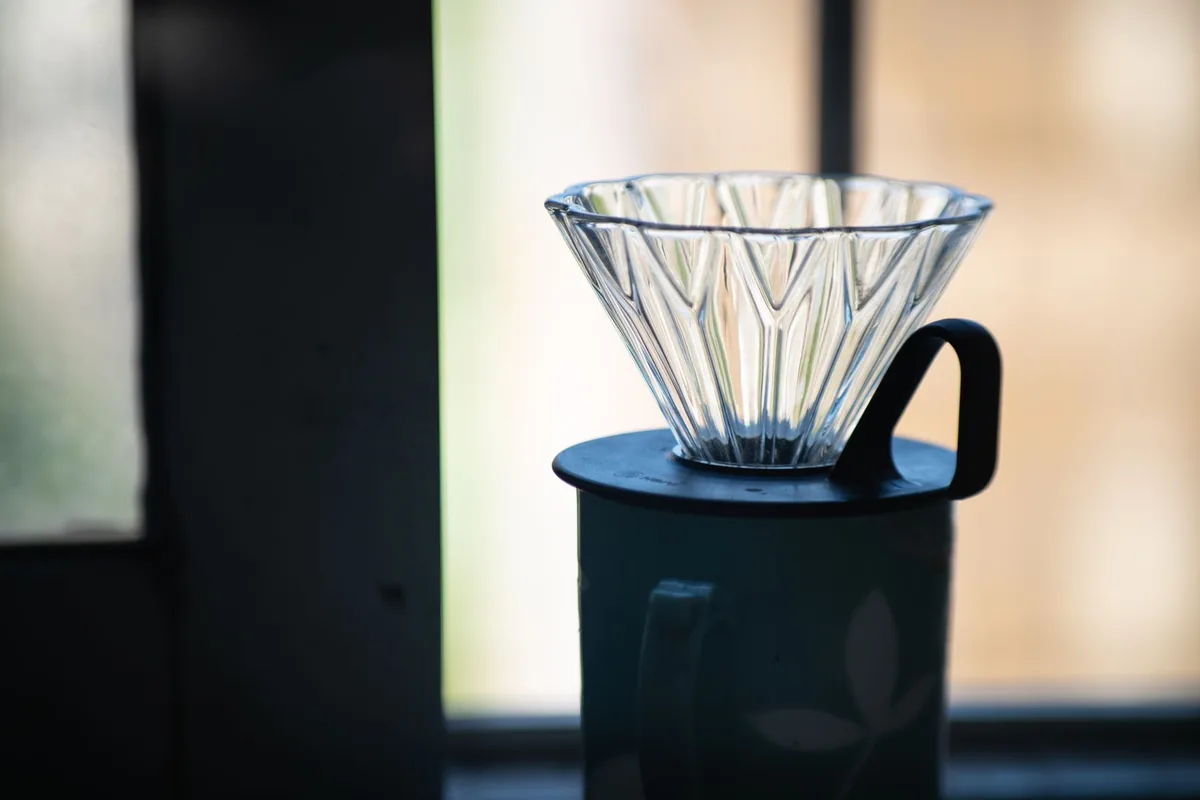
Two geometry choices decide how forgiving the brewer is and how the coffee tastes.
| Cone, one large hole | Flat bottom, three holes | Metal filter | |
|---|---|---|---|
| Brewers here | Both V60s, Hario Switch, Chemex, DOWAN | Kalita Wave, LHUKSGF | Cosori, AGOGO, OXO |
| Flow governed by | Your pour, largely | The holes, largely | The mesh |
| Forgiving of a bad pour | No | Yes | Fairly |
| Clarity of cup | High with paper | High with paper | Lower, oils pass through |
| Body | Light | Light to medium | Heaviest here |
| Ongoing cost | Papers | Wave papers, dearer | None |
If your pour overs come out inconsistent from one day to the next, the answer is more likely a flat-bottom brewer than a better kettle. A cone with a single large hole hands control to you, which is the appeal for anyone who wants to steer the brew and the frustration for anyone who does not. The metal-filter column is a separate axis: it removes the ongoing cost and adds body and sediment, so it is a taste decision rather than a skill one. The one brewer here that spans both, the Hario Switch, closes its valve to brew by immersion and then opens it to drain through paper — forgiveness and clarity at once.
Best Alternatives
| Alternative | Why Consider It | Better For | Main Trade-Off |
|---|---|---|---|
| A drip coffee machine | Hands-off and makes a full carafe | Mornings and volume | Less control, and most brew below ideal temperature |
| A french press | No paper, full body, very simple | Anyone who likes a heavy cup | Sediment, and it must be decanted or it over-extracts |
| An AeroPress | Fast, forgiving, and it travels well | One strong cup in two minutes | Single serve only, and a different flavour profile |
| A moka pot | Strong, espresso-adjacent, uses no filters | Stovetop brewing | Easy to scorch, and not a pour over result |
| Instant coffee | Nothing to buy or clean | Genuine emergencies | Not comparable, and everyone knows it |
What Each Price Tier Actually Buys
$12 to $14 — Hario V60 plastic, DOWAN porcelain, LHUKSGF ceramic. Remarkably good value. The V60 plastic has the exact geometry of the $24.50 ceramic version and arguably brews more consistently because it steals no heat. The DOWAN is porcelain at 4.6 stars for $12.29. Nothing above this tier brews fundamentally better coffee.
$19 to $25 — Kalita Wave, OXO Brew, Hario V60 ceramic. Where you buy a property rather than an upgrade: flat-bottom forgiveness, automatic water metering, or ceramic thermal mass. Three different answers to three different frustrations.
$29 to $32 — Cosori, AGOGO, Hario Switch. Carafes and cleverness. The two carafe sets brew for three or four people with permanent filters; the Switch adds immersion brewing to a standard V60 cone.
$48.95 — Chemex Classic 8-Cup. A brewer that serves as a carafe, a filter nothing else uses, and the cleanest cup in this comparison. It is also the only product here with a mandatory ongoing cost you cannot design around.
The pattern: the two joint highest-rated brewers here cost $12.29 and $24.50. Price buys volume, materials and specific behaviours, not better extraction.
How to Choose a Pour Over Coffee Maker
Choose the Filter Format Before the Brewer
Four incompatible sizes appear in this roundup and the choice is permanent. V60 size 02 cones are the safest default: made by several manufacturers, stocked everywhere and cheap. Chemex bonded and Kalita wave are both excellent and both single-format consumables you will need to keep sourcing.
Decide Between Clarity and Body
Paper traps coffee oils and fine particles, giving a clean, bright cup. Metal lets both through, giving more body and some sediment, closer to a french press. Four brewers here use permanent metal or mesh filters and cost nothing to run. Neither is better; they are different drinks, and it is worth knowing which you prefer before buying the brewer.
If Your Results Vary, Buy a Flat Bottom
A cone with one large hole gives you control and punishes an uneven pour. A flat bed with three small holes lets the geometry govern the flow instead, so two people pouring differently get closer to the same cup. That is the single biggest consistency upgrade in this category, and it costs less than a gooseneck kettle.
Preheat Anything Ceramic or Porcelain
A cold ceramic dripper will pull several degrees out of your first pour, which is the opposite of what its thermal mass is meant to do. Rinse it through with hot water first — which also rinses the paper, removing the papery taste. Plastic drippers are thermally inert and need neither.
Check Whether It Brews More Than One Cup
Most of this category is built around a single mug, and 200 to 360 ml is common. If two people want coffee at the same time, you need one of the carafe brewers — the Chemex at 40 ounces or the two 34-ounce sets here. Buying a single-cup dripper for a two-person household is the most common regret in this category.
Weigh the Coffee Before Upgrading Anything
Pour over is more sensitive to dose and ratio than to equipment. A set of cheap scales and a consistent ratio — around 1 gram of coffee to 16 of water is a common starting point — will change your results more than moving between any two brewers on this page.
Common Pour Over Buying Mistakes
- Ignoring the filter format. Four incompatible sizes appear here, and the dripper commits you to one of them permanently.
- Assuming Chemex filters are like other papers. They are heavier, dearer and single-source, which is exactly why the coffee is so clean.
- Buying a cone when you want consistency. A single large hole hands control to your pour; a flat bottom with three holes does not.
- Expecting a metal filter to taste like paper. It passes oils and fines, so the cup has more body and some sediment.
- Not preheating a ceramic dripper. Cold ceramic steals heat from the first pour, which defeats the point of the material.
- Buying single-serve for a two-person household. Most brewers here make 200 to 360 ml, which is one mug.
- Upgrading the brewer instead of buying scales. Dose and ratio matter more than any dripper on this page.
Which Pour Over Coffee Maker Should You Buy?
Buy the Chemex Classic 8-Cup if you want the cleanest cup and a brewer that serves as a carafe — and you accept that its bonded filters are a permanent, single-source cost.
Buy the Hario V60 02 plastic if you want the best value in this roundup. The same geometry as the ceramic version at $12.80, thermally inert, and papers available everywhere.
Buy the Kalita Wave 185 if your results are inconsistent. A flat bed and three small holes make the pour matter far less.
Buy the Hario Switch if you want to experiment. Immersion, percolation or both, on standard cheap V60 papers.
Buy the Cosori or AGOGO if you never want to buy a filter again and prefer a heavier cup.
Buy the DOWAN if you want porcelain thermal behaviour for twelve dollars, at 4.6 stars.
Buy the OXO Brew if it lives at a desk. It meters the water so the pour cannot go wrong.
Frequently Asked Questions
Are pour over filters interchangeable?
Mostly not, and it is the most consequential thing about choosing a dripper. This roundup contains four incompatible sizes — #1, #2, #4 and #6 — plus Chemex’s proprietary bonded filter and Kalita’s fluted wave paper, neither of which fits any other brewer. Size 02 V60 cones are the closest thing to a standard: several manufacturers make them, they are stocked almost everywhere and they are cheap, which is a real long-term advantage independent of how the dripper brews.
Is a metal or paper pour over filter better?
They make different coffee. Paper traps the coffee’s oils and its finest particles, producing a clean, bright, tea-like cup with no sediment. Metal mesh lets both through, giving noticeably more body and a heavier mouthfeel closer to a french press, along with a little sediment at the bottom. Four brewers in this roundup use permanent metal filters and cost nothing to run; six use paper. It is a taste preference rather than a quality difference.
What is the difference between a V60 and a Kalita Wave?
Geometry, and therefore how forgiving they are. A V60 is a 60-degree cone with one large hole, so the water’s path and the contact time depend heavily on how you pour — which gives an experienced brewer control and gives everyone else inconsistency. A Kalita Wave has a flat bottom and three small holes, so the coffee sits in an even bed and the holes govern the flow rate more than your kettle does. Wave filters are dearer and harder to find than cone papers.
Do you need a gooseneck kettle for pour over?
It helps on a cone and matters much less on a flat bottom. A gooseneck gives a slow, precise stream that lets you wet the grounds evenly and control the flow, which is exactly what a V60 rewards. On a flat-bottom brewer the three restricted holes do more to govern the rate than your pour does. And one brewer in this roundup meters the water itself, specifically so that no kettle technique is required at all.
Why does my pour over taste weak or sour?
Usually under-extraction, from too coarse a grind, water that is not hot enough, or a pour that drains too fast. Sour and thin generally means the water spent too little time in contact with the coffee; bitter and harsh means too much. Before changing equipment, weigh the coffee and the water — around 1 gram to 16 is a common starting ratio — because dose and ratio account for more variation than any dripper on this page.
What is blooming and does it matter?
Blooming is the first small pour, roughly twice the weight of the coffee, left for thirty to forty-five seconds before you continue. Fresh coffee releases carbon dioxide when it meets water, and that gas pushes water away from the grounds and causes uneven extraction. Letting it escape first makes the rest of the brew far more even. It matters most with freshly roasted coffee and hardly at all with beans that have been open for a month.
Should a pour over dripper be ceramic, plastic or glass?
Ceramic and porcelain hold heat through a longer brew but must be preheated, or they steal several degrees from the first pour and do the opposite of what you bought them for. Plastic is thermally inert, needs no preheating and travels well, which is why a lot of experienced brewers use the plastic V60 rather than the ceramic one. Glass looks best and behaves much like ceramic. For a single cup brewed in under three minutes, the difference is small.
Can you make more than one cup with a pour over?
Only with the right brewer, and most of this category is not it. Capacities here run from 200 ml to 40 fluid ounces, and the majority sit at one mug. The Chemex at 40 ounces and the two 34-ounce carafe sets are the brewers that serve three or four people; everything else brews one cup at a time and needs to be repeated. It is worth checking before buying, because it is the limitation people notice second, after the filter format.
Final Verdict
The cleanest cup here, brewed and served from one piece of glass — if you accept a permanent, single-source filter.
The exact geometry of the ceramic V60 at $12.80, thermally inert, on papers stocked everywhere.
A flat bed and three small holes, so the coffee comes out the same whether or not your pour is perfect.
Pour over drippers look almost identical and mostly brew alike. The decision that outlasts the purchase is the filter: four incompatible sizes appear in this roundup, plus Chemex’s own bonded paper and Kalita’s fluted wave, and the dripper commits you to one of them for as long as you own it.
So work backwards. If you want the cleanest possible cup and do not mind a single-source consumable, the Chemex is the answer and always has been. If you want cheap papers available anywhere, buy into the V60 cone — and the $12.80 plastic version brews as well as the $24.50 ceramic one, arguably better, because it steals no heat. If you never want to buy a filter again, take a metal one and accept more body and a little sediment.
And if the real problem is that your coffee is different every morning, the fix is not a better dripper. It is a flat-bottomed one, or a set of scales — both of which cost less than most of the brewers on this page.