Affiliate Disclosure: As an Amazon Associate, we earn from qualifying purchases. This does not affect the price you pay.
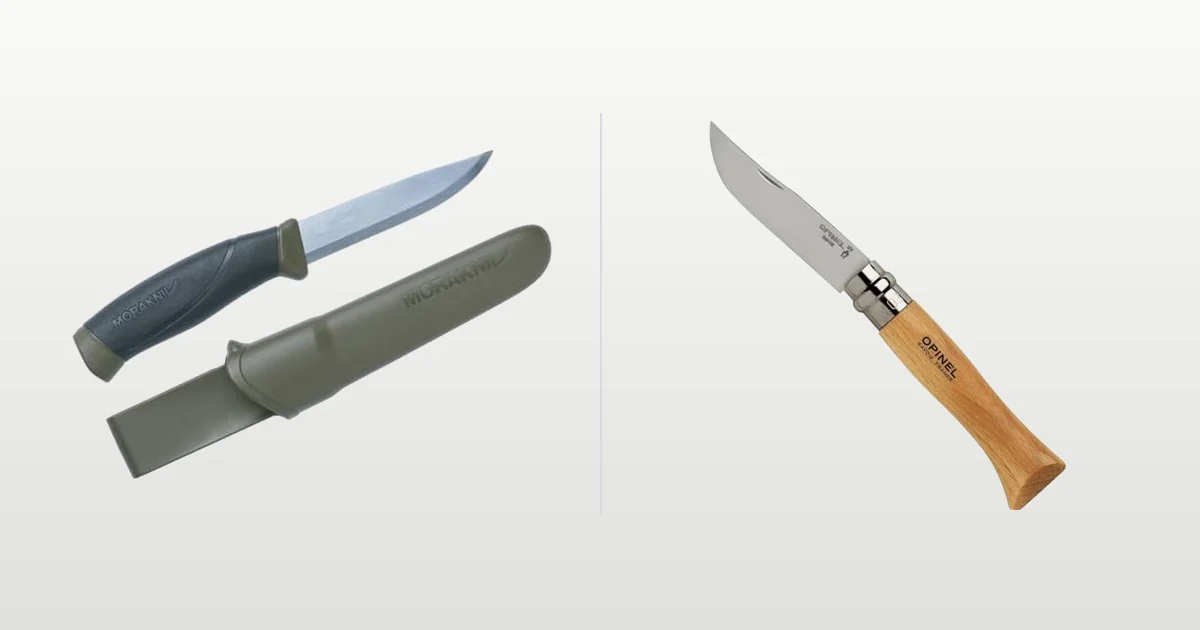
Search for a large camp knife and the market answers with a four-inch Morakniv. It is the best-known camp knife in the world, it costs $15.58, and it is not large by any reading of the word.
Only one product on this page is genuinely large — a ten-inch Kershaw machete — and it is a chopper rather than a camp knife. Blade lengths across the rest run from 3.35 to 6 inches, and the median is about four.
That is not the market being unhelpful. It is the market answering a different and better question: what does a camp knife actually do? Overwhelmingly the answer is food preparation, cutting cord, shaving tinder and light carving, and a four-inch blade does all of that better than a ten-inch one would. The job a large blade is good at — chopping — is a job an axe already owns.
So this page splits three ways. Bushcraft fixed blades around four inches, which is what most people mean. Genuinely large choppers, of which there is one. And camp kitchen knives, including a folding Opinel that outsells everything else here and a set that ships with a chopping board.
Ten below, $9.99 to $124.95.
Our Quick Picks
 Best OverallMorakniv Companion 4.1 Inch
Four point one inches of 1095 carbon on a friction-grip polymer handle with a finger guard, in a clip sheath, for fifteen dollars.
 Best SpecifiedONETIGRIS TrailForge
Japanese AUS-8 at HRC 58–60 with a full-length tang and a ScandiGrind single bevel, 3.2 mm thick and 8.83 inches overall.
 Genuinely LargeKershaw Camp 10 Machete
Ten inches of full-tang 65Mn carbon tool steel in a recurve profile, with a glass-filled nylon handle and a built-in hand guard.
At a Glance
Ten Camp Knives, Measured
Blade length, steel where named, construction, and the one specification each maker leads on.
| # | Model | Blade | Steel | Build | Spec | Standout | Main Drawback | Check Price |
|---|---|---|---|---|---|---|---|---|
| 1 |
 Morakniv Companion 4.1 Inch Morakniv Companion 4.1 Inch |
4.1 in | 1095 carbon | 2.0 mm | 8.5 in | The default camp knife, and it is four inches long | Not large by any reading of the word | View on Amazon |
| 2 |
 Kershaw Camp 10 Machete Kershaw Camp 10 Machete |
10 in | 65Mn | Full tang | Recurve | Ten inches of full-tang recurve — the only truly large blade here | A machete is a chopper, not a camp knife | View on Amazon |
| 3 |
 ONETIGRIS TrailForge ONETIGRIS TrailForge |
AUS-8 | HRC 58-60 | 3.2 mm | Scandi | Every figure published, with a true Scandi grind | 8.83 inches overall is compact | View on Amazon |
| 4 |
 Gerber StrongArm Camp Gerber StrongArm Camp |
420HC | Full tang | MOLLE | Striking pommel | A MOLLE-compatible sheath and a pommel you can hammer with | $99.99 is the most expensive here | View on Amazon |
| 5 |
 Jorgensen 8.25 Inch Bushcraft Jorgensen 8.25 Inch Bushcraft |
3.5 in | SK5 | 60-62 HRC | 4.29 oz | SK5 at 60–62 HRC, the hardest blade on this page | 3.5 inches is the shortest blade here | View on Amazon |
| 6 |
 Morakniv Craftline Basic 511 Morakniv Craftline Basic 511 |
3.6 in | High carbon | 3.9 oz | Combi-sheath | A working knife made in Sweden for eleven dollars | A trade knife, not an outdoors one | View on Amazon |
| 7 |
 Mossy Oak 2-Piece Bowie Set Mossy Oak 2-Piece Bowie Set |
6 in | 10.5 in | 7 oz | Full tang | A six-inch clip point and a smaller companion, both full tang | Bowie clip points are poor for camp cooking | View on Amazon |
| 8 |
 Opinel No. 08 Opinel No. 08 |
3.35 in | 12C27 | Virobloc | Beechwood | A folding knife in a search for a large fixed blade | It is neither large nor a fixed blade | View on Amazon |
| 9 |
 GSI Outdoors Rakau 3-Piece GSI Outdoors Rakau 3-Piece |
6 in chef | Bamboo board | 22.5 oz | Sharpener | A chef knife, a cutting board and a sharpener in one packed case | $124.95 for a camp kitchen set | View on Amazon |
| 10 |
 OXO Outdoor Santoku 5.5 Inch OXO Outdoor Santoku 5.5 Inch |
5.5 in | Japanese | Locking sheath | Non-slip | A locking sheath, which is what makes a kitchen knife portable | A kitchen knife with no outdoor capability | View on Amazon |
Specifications and prices are taken from each manufacturer’s Amazon listing as displayed on 24 August 2026 through a United States connection, and may change. Blade lengths are the manufacturers’ own and run 3.35 to 10 inches; only one product here exceeds six inches. Hardness figures are given only where published, on three of ten. Two products in this roundup are camp kitchen items — a santoku and a three-piece set with a cutting board — and one is a folding pocket knife rather than a fixed blade; all three appear in this search and all three answer the practical question of what a camp knife is used for. Full tang is recorded where the maker states it; both Morakniv knives here are partial tang, which is standard for the pattern and not a defect. Sales ranks are shown as displayed.
Scroll the table sideways to see every column
How We Chose These Ten
We researched current listings, compared manufacturer specifications and documentation, and examined recurring patterns in customer feedback. We did not carry out hands-on testing, and nothing below is presented as measured performance data.
- Blade length recorded for every product — because the search asks for large and the field mostly is not
- Steel named where the maker gives it — seven of ten do, which is unusually good for this category
- Hardness recorded where published — three of ten give an HRC figure, ranging 58 to 62
- A verified live buy box — all ten confirmed purchasable in the United States on 24 August 2026
- No overlap with our published survival, hunting and bushcraft guides — every product here is new to the site
- Grind type noted where stated — a Scandi grind and a chef’s grind are opposite answers to different jobs
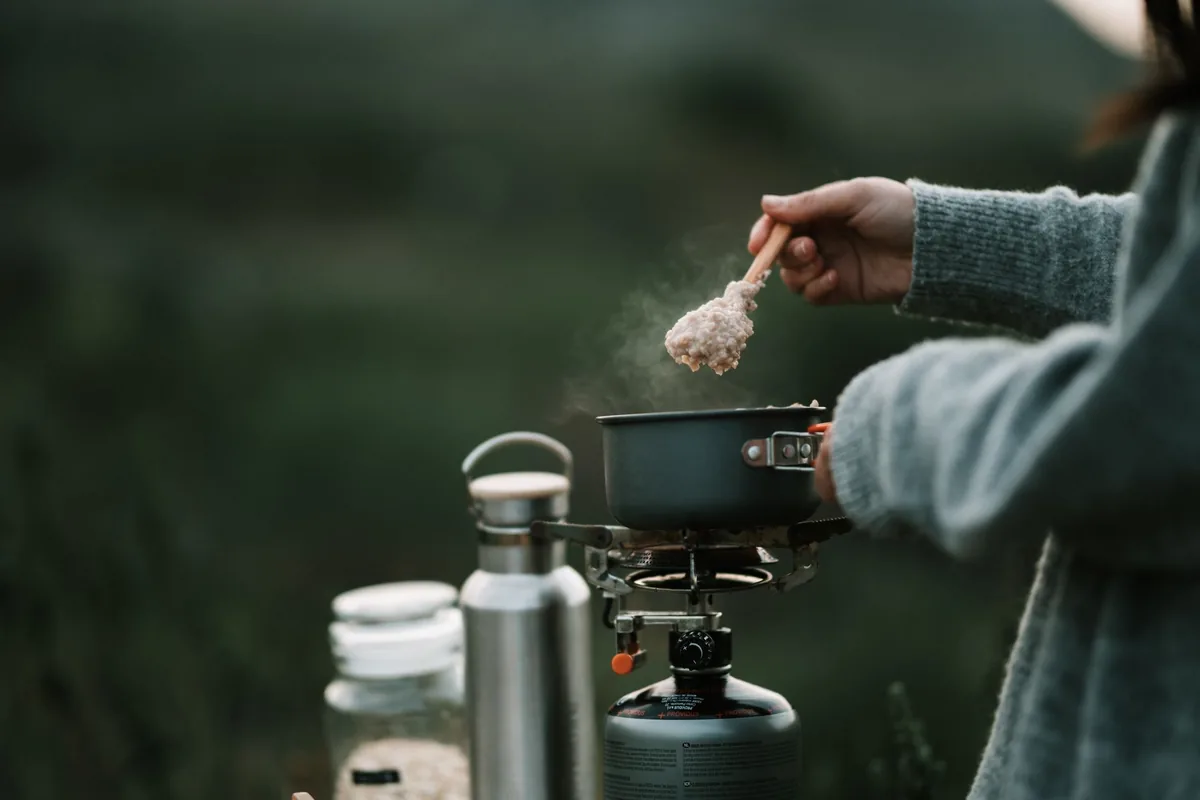
- Kitchen knives included deliberately — because camp cooking is what most camp knives spend their lives doing
The Ten Knives in Detail
1. Morakniv Companion 4.1 Inch — Best Overall

This is the knife most experienced campers actually carry, and it is four point one inches long. That is the finding this page is built on.
Key Specifications
| Blade length | 4.1 inches / 104 mm |
|---|---|
| Blade thickness | 0.08 inch / 2.0 mm |
| Total length | 8.5 inches / 217 mm |
| Steel | 1095 carbon |
| Handle | Ergonomic polymer with a soft friction grip and finger guard |
| Sheath | Polymer with a belt clip, easy to clean |
| Origin | Made in Sweden |
| Rank | #10,819 in its category |
| Price | $15.58 |
| Best For | Almost everyone. It is the knife this whole category orbits |
Why We Recommend It
Search for a large camp knife and the market answers with a Mora. Not because anyone is being obtuse, but because a camp knife’s real workload is food preparation, cutting cord, shaving tinder, opening packaging and light carving — and four inches does all of that better than eight would. A large blade is worse at every one of those tasks and better at chopping, which is a job an axe already owns.
Two millimetres of blade stock is thin, and deliberately so. A thin blade slices cleanly through food and wood shavings where a thick one wedges. The trade is that a Companion is not a batoning knife — it will do it in a pinch, and it is not what the geometry is for.
The friction-grip handle and finger guard are why this knife is trusted by people who use it in the cold with wet hands. Grip security matters more on a camp knife than anything else on the spec sheet.
1095 carbon will rust if left wet and takes a keener edge than any stainless here, sharpening back on almost anything.
Pros
- The category’s default for good reason
- 4.1 inches suits food, cord and tinder
- Publishes blade, thickness and total length
- Friction grip with a finger guard
- 1095 carbon takes an exceptional edge
- $15.58 and made in Sweden
Cons
- Not large in any sense
- 1095 carbon rusts if stored damp
- 2.0 mm stock is too thin for hard batoning
- Partial tang, not full
- Polymer handle looks cheap
- No fire steel included
Best for: Almost everyone. Buy it first and find out whether you want more.
2. Kershaw Camp 10 Machete — Genuinely Large

Ten inches. If you searched for a large camp knife and meant it literally, this is the answer on this page.
Key Specifications
| Blade length | 10 inches — longest here by 4 inches |
|---|---|
| Profile | Recurve — the belly curves in then out |
| Steel | 65Mn carbon tool steel, full tang |
| Handle | Glass-filled nylon with a tan sure-grip overmould |
| Safety | Built-in hand guard |
| Sheath | Glass-filled nylon |
| Maker | Kershaw, since 1974 |
| Rank | #22,235 in its category |
| Price | $49.42 |
| Best For | Clearing brush and chopping — the one product here that is actually large |
Why We Recommend It
A recurve is the reason it chops as well as it does. The blade curves inward behind the tip and then swells outward again, which does two things: it concentrates the impact into the forward belly where blade speed is highest, and the inward section acts like a hook that draws springy material into the edge rather than letting it slide off. On brush, saplings and vines that is a large practical difference over a straight machete.
65Mn is a carbon tool steel with manganese for hardenability — a striking-tool steel rather than a slicing one, chosen because it absorbs repeated impact without cracking.
A built-in hand guard is not optional at this length. A ten-inch blade generates real momentum, and a missed swing with a wet hand slides forward hard.
Understand what you are giving up. This is a poor knife for food preparation, for carving and for anything requiring control near the tip. It is a chopper, and it should sit alongside a small knife rather than replace one.
Pros
- 10-inch full-tang blade — genuinely large
- Recurve concentrates impact and hooks springy growth
- 65Mn carbon tool steel absorbs repeated impact
- Built-in hand guard for a fast blade
- Glass-filled nylon sheath included
- Kershaw record since 1974
Cons
- Useless for food prep or fine work
- Needs space to swing safely
- 65Mn will rust without care
- No published weight or overall length
- Rank #22,235
- Should be paired with a small knife, not replace one
Best for: Clearing brush and chopping, alongside a small knife for everything else.
3. ONETIGRIS TrailForge — Best Specified
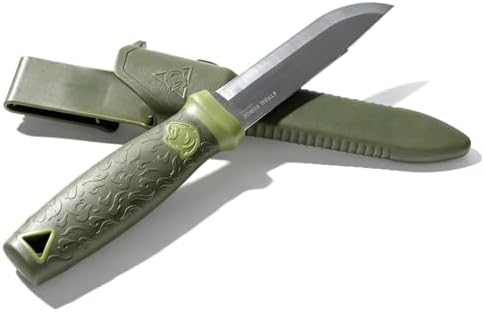
A Scandi grind, full tang, HRC 58–60 and 3.2 mm of stock, for fourteen dollars. Every one of those is stated.
Key Specifications
| Steel | Japanese AUS-8, HRC 58–60 |
|---|---|
| Construction | Full-length metal tang for fracture resistance |
| Grind | ScandiGrind single bevel |
| Why Scandi | A single flat bevel to the edge — superb on wood, easy to sharpen freehand |
| Blade thickness | 0.13 inch / 3.2 mm |
| Overall length | 8.83 inches / 224 mm |
| Stated uses | Wood and rope cutting, fine work, camp kitchen |
| Rank | #30,759 in its category |
| Price | $13.99 |
| Best For | Anyone who wants a Scandi grind and full published specification |
Why We Recommend It
A Scandi grind is a single flat bevel running from the edge up the blade, with no secondary micro-bevel. Two consequences follow. It bites into wood and stays in the cut rather than skating, which is why it is the traditional Nordic bushcraft geometry for carving and feather sticks. And it is the easiest grind in the world to sharpen freehand, because you lay the whole bevel flat on the stone and the angle sets itself — no judgement required.
Three point two millimetres against the Mora’s two makes this the more robust of the two Scandinavian-style knives here, and a more credible batoning blade.
AUS-8 at 58–60 HRC is a good pairing — a mid-grade Japanese stainless run reasonably hard, so it resists rust and holds an edge better than the softer budget steels elsewhere on this page.
At $13.99 with full tang and a published hardness this is the best specification per dollar in this roundup, from an unfamiliar brand.
Pros
- Scandi grind is superb on wood and trivial to sharpen
- Full tang with 3.2 mm stock
- Publishes AUS-8, HRC 58–60 and overall length
- AUS-8 resists rust better than carbon
- $13.99 — best specification per dollar here
- Sheath included
Cons
- Unfamiliar brand with no service record
- Rank #30,759
- 8.83 inches overall is compact, not large
- Scandi grind is poor for food slicing
- No blade length published separately
- No weight given
Best for: Anyone who wants a Scandi grind and the numbers to go with it.
4. Gerber StrongArm Camp — Best Sheath

The sheath is the reason to buy this. MOLLE compatibility means it goes exactly where you want it and stays there.
Key Specifications
| Steel | 420HC, full tang, plain edge |
|---|---|
| Handle | Rubberised diamond-texture grip |
| Pommel | Striking pommel for hammering |
| Sheath | MOLLE-compatible, multiple carry configurations |
| Origin | Made in USA |
| Heritage | Gerber, 85 years |
| Rank | #21,821 in its category |
| Price | $99.99 |
| Best For | Anyone who needs the knife mounted somewhere specific |
Why We Recommend It
Carry position is an underrated part of a camp knife. A belt sheath is fine until you are wearing a pack with a hip belt, at which point the knife is either under the belt or digging into you. A MOLLE-compatible sheath mounts to pack webbing, a chest rig or a belt in several orientations, so the knife can sit where it is reachable with the pack on. Gerber ship it with the mounting hardware rather than selling it separately.
A striking pommel is a flat exposed butt of the tang that you can hammer with — tent pegs, a stuck blade, a stubborn joint. It is only possible on a full-tang knife, and it is the small feature that most often justifies one.
420HC with Gerber’s heat treatment is a modest stainless that they get more from than the grade suggests, and it resharpens easily.
Ninety-nine ninety-nine is a lot in a category where the default costs fifteen, and rank #21,821 is respectable. You are paying for the sheath system and for US manufacture.
Pros
- MOLLE sheath mounts almost anywhere
- Striking pommel for hammering
- Full tang 420HC, made in USA
- Diamond-texture rubberised grip
- Gerber’s 85-year track record
- Multiple carry configurations included
Cons
- $99.99 — most expensive on this page
- No blade length or weight published
- 420HC is a modest steel for the money
- Rank #21,821
- Not large despite the Camp name
- Tactical styling will not suit everyone
Best for: Anyone carrying a pack who needs the knife somewhere other than a belt.
5. Jorgensen 8.25 Inch Bushcraft — Hardest Steel

Sixty to sixty-two HRC for under ten dollars, with every dimension published. That combination should not exist.
Key Specifications
| Blade length | 3.5 inches |
|---|---|
| Total length | 8.25 inches |
| Blade thickness | 3/32 inch |
| Weight | 4.29 oz |
| Steel | SK5 at 60–62 HRC — hardest here |
| Construction | Full tang |
| Sheath | Interlocking design with multiple carry options |
| Handle | Non-slip ergonomic with an identification marking |
| Rank | #25,511 in its category |
| Price | $9.99 |
| Best For | Edge retention on a budget, if you accept a short blade |
Why We Recommend It
SK5 is a Japanese high-carbon tool steel, broadly comparable to 1080, and run at 60–62 it is genuinely hard — harder than anything else on this page. That means excellent edge retention through repeated cutting, and it means brittleness. A blade this hard will chip rather than roll if you baton it into a knot or lever with it, so treat it as a cutting knife rather than a chopping one.
Four point two nine ounces makes it the lightest fixed blade here, and 3.5 inches makes it the shortest. Neither is a criticism for a knife whose job is food, cord and carving.
The interlocking sheath with multiple carry options is unusually thoughtful at this price, and the identification marking on the handle is aimed at group camping where four people own the same knife.
Rank #25,511 at $9.99 makes this the best-value blade on the page on paper. The unknown is heat-treatment consistency from an unfamiliar maker, which is precisely what a published HRC figure cannot guarantee.
Pros
- SK5 at 60–62 HRC — hardest here
- Publishes length, thickness and weight
- Full tang at $9.99
- Interlocking sheath with multiple carry options
- 4.29 oz, lightest fixed blade here
- Handle marking for group camping
Cons
- Hard steel chips rather than rolls
- 3.5 inches is the shortest blade here
- SK5 is carbon and will rust
- Unfamiliar brand, heat treatment unverified
- Rank #25,511
- Not suited to batoning or prying
Best for: Cutting, carving and food work where edge retention matters most.
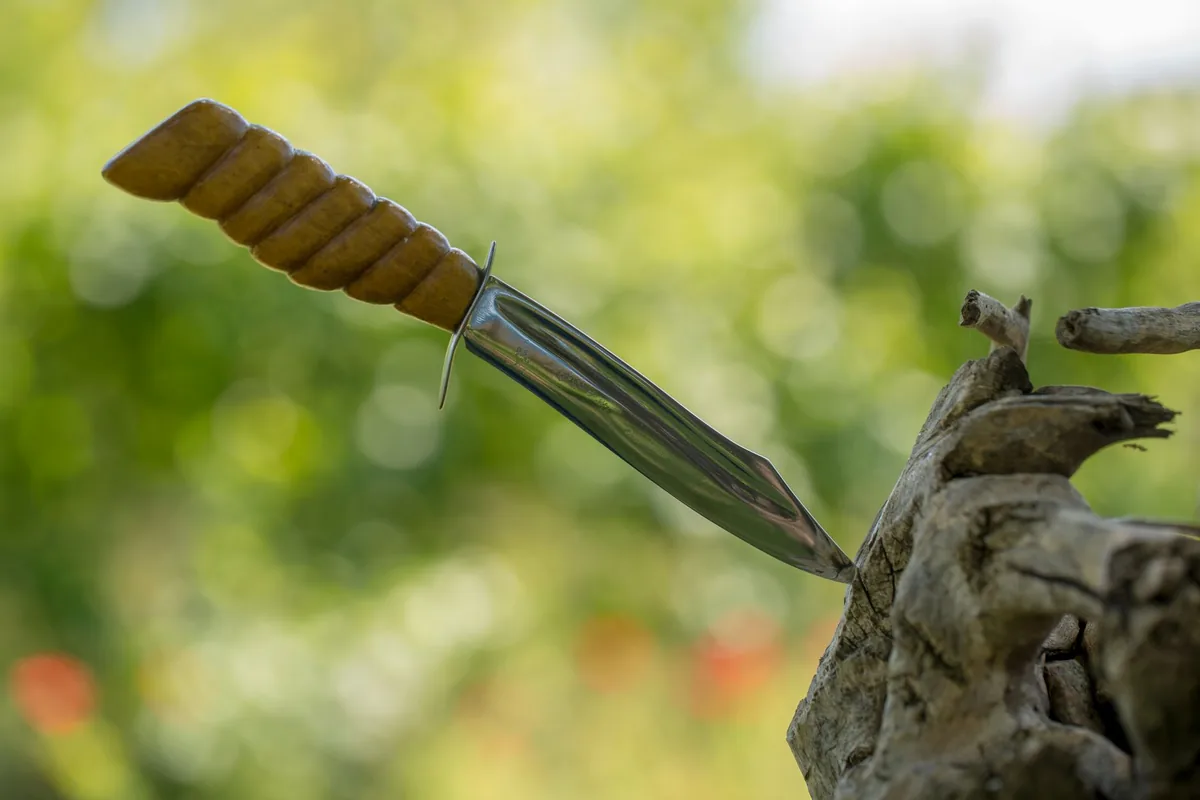
6. Morakniv Craftline Basic 511 — Cheapest

Rank #5,634 and eleven dollars. It is a Swedish trade knife that happens to be excellent in a camp.
Key Specifications
| Blade length | 3.6 inches / 9.1 cm |
|---|---|
| Blade thickness | 0.08 inch / 2 mm |
| Total length | 8.25 inches / 20.9 cm |
| Weight | 3.9 oz / 110 g |
| Steel | High carbon, easy to sharpen, exceptional toughness |
| Handle | Impact-resistant TPE rubber with a finger guard |
| Sheath | Hard plastic Combi-Sheath with a quick-connect for a second knife |
| Origin | Made in Sweden, limited lifetime warranty |
| Rank | #5,634 — best on this page |
| Price | $10.99 |
| Best For | A knife you will not mind losing, from a maker who does not make bad ones |
Why We Recommend It
The Craftline is Morakniv’s tradesman range rather than their outdoor line — sold to carpenters, electricians and site workers who use a knife hard, treat it as a consumable, and replace it without sentiment. That is exactly why it works for camping. It is tough, it sharpens on anything, the handle grips in the wet, and losing one costs eleven dollars.
The Combi-Sheath is genuinely clever. It has a quick-connection that lets you clip a second knife and sheath to it, so a knife and a saw, or two knives, ride as one unit on a belt rather than as two things to lose.
Every dimension published — blade, thickness, total length and weight — which for an eleven-dollar knife puts most of this page to shame.
A limited lifetime warranty from Sweden at this price is the part that makes the ranking make sense.
Pros
- Rank #5,634, best on this page
- $10.99 with a limited lifetime warranty
- Publishes blade, thickness, length and weight
- Combi-Sheath clips to a second knife
- Impact-resistant TPE handle with finger guard
- Made in Sweden
Cons
- A trade knife, so plain and unglamorous
- Partial tang rather than full
- 3.6 inches is short
- 2 mm stock is thin for batoning
- Carbon steel needs drying
- No fire steel or extras
Best for: Anyone who wants a genuinely good knife they can afford to lose.
7. Mossy Oak 2-Piece Bowie Set — Biggest Pair

Two knives, one large and one small, and that pairing is closer to how camp knives are actually used than any single blade.
Key Specifications
| Large knife | 10-1/2 inches overall, 6-inch blade, 7 oz |
|---|---|
| Second knife | Smaller clip point, included |
| Construction | Full tang on both |
| Profile | Clip point |
| Handle | Cloud-patterned laser grips |
| Sheaths | Included for both |
| Rank | #9,929 in its category |
| Price | $19.99 |
| Best For | A large and a small blade together for twenty dollars |
Why We Recommend It
Most experienced campers carry two. A larger blade for chopping, splitting kindling and heavy cutting, and a small one for food, carving and anything requiring control. Trying to do both with one knife means compromising on each, which is why the single-blade question this search asks is slightly the wrong question. At $19.99 this set answers it directly, if crudely.
A clip point is the classic Bowie profile — the spine drops away in a concave curve toward a fine point. It gives excellent piercing and a delicate tip, and it costs you belly, which is what you want for slicing and skinning. For camp cooking it is the wrong shape; for general utility it is fine.
Full tang on both is stated, and the six-inch blade at 7 ounces is genuinely substantial.
Rank #9,929 at $19.99 is strong, and no steel grade appears anywhere on the listing.
Pros
- Two blades, large and small, for $19.99
- 6-inch clip point is genuinely substantial
- Full tang on both knives
- Sheaths included for both
- Rank #9,929, second best here
- Publishes overall length, blade length and weight
Cons
- Clip point is poor for food and slicing
- Steel grade never named
- Fine tips on clip points snap easily
- Decorative handle grips over function
- Two knives to keep track of
- No sharpener included
Best for: Anyone who accepts that camp needs two blades rather than one big one.
8. Opinel No. 08 — The Folder

It folds, it has a wooden handle, and it ranks #4,819. It is also the knife more people take camping in Europe than anything else on this page.
Key Specifications
| Type | Folding knife — not a fixed blade |
|---|---|
| Steel | Sandvik 12C27 modified stainless |
| Lock | Virobloc twist ring, patented, in use since 1955 |
| Handle | Sustainably sourced beechwood |
| Size | No. 8 — the most sold size in the range |
| Origin | French Alps, since 1890 |
| Rank | #4,819 in its category |
| Price | $16.21 |
| Best For | Camp food preparation, which is what it is genuinely superb at |
Why We Recommend It
It is here because it answers the question the search is really asking, which is what to cut things with in a camp. An Opinel is a superb food knife — thin, extremely sharp, easy to sharpen, and it slices bread, cheese, sausage and vegetables far better than any thick fixed blade in this roundup. What it will not do is chop, baton or take lateral load.
The Virobloc is the reason it has survived since 1955. A twisting collar rotates over the blade tang to lock it open, and rotates the other way to lock it closed in the handle. It is mechanically trivial, almost impossible to break, and it means the knife cannot open in a pack.
Sandvik 12C27 is a fine-grained Swedish stainless that takes a genuinely keen edge and resists rust well — better steel than most of the fixed blades here.
The beechwood handle swells when wet, which can stiffen the action. That is the one real quirk, and it is why the INOX version exists.
Pros
- Rank #4,819 — best-selling knife on this page
- Sandvik 12C27 takes an exceptional edge
- Virobloc lock is nearly unbreakable
- Superb for camp food preparation
- $16.21 and made in France since 1890
- Locks closed as well as open
Cons
- Not a fixed blade and not large
- Cannot chop, baton or take lateral load
- Beechwood swells when wet and stiffens
- No sheath — it lives in a pocket
- Thin blade is easy to snap if misused
- Not a bushcraft tool
Best for: Camp cooking, which is most of what a camp knife actually does.
9. GSI Outdoors Rakau 3-Piece — Best Camp Kitchen

A cutting board and a sharpener. That is a camp kitchen set, and it is a fair reading of what a camp knife is for.
Key Specifications
| Contents | 6-inch stainless chef knife with sheath, bamboo cutting board, compact sharpener |
|---|---|
| Packed size | 11.4 x 7.1 x 2.2 inches |
| Weight | 22.5 oz |
| Handles | Waterproof wood |
| Construction | Full-tang knife with an ergonomic handle |
| Audience | Campers, overlanders and vanlifers |
| Maker | GSI Outdoors, since 1985 |
| Rank | #104,869 in its category |
| Price | $124.95 |
| Best For | Cooking properly at a campsite rather than surviving in one |
Why We Recommend It
The board is the piece that makes it a system. Anyone who has tried to chop an onion on a picnic table, a log or the lid of a coolbox knows that the knife is rarely the limiting factor — the surface is. Including a bamboo board sized to pack with the knife turns a knife into a place to actually prepare food, and bamboo is hard, light and does not absorb moisture the way soft woods do.
A six-inch chef knife is the right blade for this job, and it is the opposite of every bushcraft knife on this page: thin, broad, with a curved belly for rocking cuts and no interest whatever in wood.
Twenty-two and a half ounces packed is heavy for backpacking and irrelevant for car camping or a van, which is exactly the audience GSI name.
At $124.95 it is the most expensive product here and rank #104,869 the lowest, which is what a specialist three-piece set in a niche looks like.
Pros
- Includes a bamboo board, which changes everything
- 6-inch chef knife is right for actual cooking
- Compact sharpener included
- Packs to a stated 11.4 x 7.1 x 2.2 inches
- Full tang with waterproof wood handles
- GSI Outdoors since 1985
Cons
- $124.95 — most expensive here
- 22.5 oz is too heavy for backpacking
- Rank #104,869
- Useless for any bushcraft task
- Steel grade not named
- Three items to keep together
Best for: Car camping and van life, where cooking properly is the point.
10. OXO Outdoor Santoku 5.5 Inch — Best Single Food Knife

A locking sheath is the entire reason a kitchen knife can go in a bag, and almost no kitchen knife has one.
Key Specifications
| Blade length | 5.5 inches, santoku profile |
|---|---|
| Steel | Japanese stainless |
| Profile | Asian-style chef knife for slicing, dicing, mincing and scooping |
| Sheath | Locking, protects the knife and retains the edge |
| Handle | Comfortable non-slip, secure when wet |
| Care | Hand wash in warm soapy water and dry promptly |
| Rank | #32,226 in its category |
| Price | $22.99 |
| Best For | Taking one proper food knife camping and nothing else |
Why We Recommend It
Loose blades in luggage are how people get cut unpacking. A slip-on blade guard works loose; a locking sheath does not, and it also stops the edge being dulled by everything else it rattles against. OXO have essentially taken a decent santoku and solved the one problem that stops people taking a real knife camping.
A santoku is the right shape for camp cooking. Flatter than a Western chef knife, so it push-cuts rather than rocks — which suits a small unstable board — with a tall blade that gives knuckle clearance and a broad face for scooping chopped food into a pan.
Non-slip handle and hand-wash care are both stated, and the latter is the honest limitation: this is a kitchen knife on a camping trip, not a knife that will tolerate neglect.
At $22.99 and rank #32,226 it is the cheapest way to have a genuinely good food knife in a camp kit, which for most people is what a camp knife needs to be.
Pros
- Locking sheath makes it genuinely portable
- Santoku profile suits a small camp board
- Tall blade gives knuckle clearance
- Non-slip handle when wet
- $22.99 for a proper food knife
- Sheath protects the edge in transit
Cons
- No outdoor or bushcraft capability at all
- Hand wash and dry promptly
- Steel grade named only as Japanese stainless
- Rank #32,226
- Not a fixed-blade survival tool
- No belt carry option
Best for: Anyone whose camp knife is genuinely just for cooking.
Four Inches Against Ten
The knife the market recommends, and the one the search asked for.
| Morakniv Companion | Kershaw Camp 10 | |
|---|---|---|
| Blade length | 4.1 in | 10 in |
| Profile | Scandinavian bushcraft | Recurve machete |
| Tang | Partial | Full |
| Good for food | Yes | No |
| Good for chopping | No | Yes |
| Weight class | Light | Heavy |
| Rank | #10,819 | #22,235 |
| Price | $15.58 | $49.42 |
These are not competing products. The Mora prepares food, shaves tinder, cuts cord and carves; the Kershaw clears brush and chops saplings. Trying to make either do the other’s job is where people end up disappointed. If you genuinely want one knife, the four-inch blade covers far more of a normal camping day — and if you want to chop, the honest answer is a hatchet rather than a machete.

Every Blade Length, Shortest First
The word large is honoured by exactly one of these.
| Knife | Blade | Steel | Hardness | Rank | Price |
|---|---|---|---|---|---|
| Opinel No. 08 | 3.35 in, folding | Sandvik 12C27 | No | #4,819 | $16.21 |
| Jorgensen Bushcraft | 3.5 in | SK5 | 60–62 HRC | #25,511 | $9.99 |
| Morakniv Craftline 511 | 3.6 in | High carbon | No | #5,634 | $10.99 |
| Morakniv Companion | 4.1 in | 1095 carbon | No | #10,819 | $15.58 |
| ONETIGRIS TrailForge | Not stated | AUS-8 | 58–60 HRC | #30,759 | $13.99 |
| Gerber StrongArm Camp | Not stated | 420HC | No | #21,821 | $99.99 |
| OXO Outdoor Santoku | 5.5 in | Japanese stainless | No | #32,226 | $22.99 |
| GSI Rakau Set | 6 in chef | Stainless | No | #104,869 | $124.95 |
| Mossy Oak Bowie Set | 6 in | Not named | No | #9,929 | $19.99 |
| Kershaw Camp 10 | 10 in | 65Mn | No | #22,235 | $49.42 |
Note the top of the ranking column. The two best-selling products in this search are a folding pocket knife at 3.35 inches and a Swedish trade knife at 3.6 inches, both under seventeen dollars. Neither is large, neither is a survival tool, and between them they represent what people who camp actually buy.
Best Alternatives
| Alternative | Why Consider It | Better For | Main Trade-Off |
|---|---|---|---|
| A hatchet and a small knife | The correct tools for chopping and for cutting, separately | Anyone who wants both jobs done properly | Two items to carry |
| A folding saw | Cuts wood far faster and safer than any blade chops it | Processing branches and firewood | Does not cut anything else |
| A kitchen knife with a sheath | Vastly better at the job camp knives mostly do | Car camping and van life | No outdoor capability at all |
| A multi-tool | Pliers, saw, screwdrivers and a blade in one | Repairs and fiddly jobs | The blade is a compromise on every axis |
What the Money Actually Buys
$9.99 to $19.99 — Jorgensen, Morakniv Craftline, ONETIGRIS, Morakniv Companion, Opinel, Mossy Oak Bowie set. Six of the ten, containing both best-selling products on the page, the hardest steel here at 60–62 HRC, and the best-documented knife at $13.99. There is very little reason to spend more unless you want a specific feature.
$22.99 to $49.42 — OXO santoku, Kershaw Camp 10. Two specialists. The santoku is a proper food knife with a locking sheath; the Kershaw is the only genuinely large blade here. Both do one thing well and neither pretends to be general purpose.
$99.99 to $124.95 — Gerber StrongArm Camp, GSI Rakau set. Where you pay for systems rather than blades. The Gerber’s MOLLE sheath mounts anywhere on a pack; the GSI includes a bamboo board and a sharpener, which turns a knife into a camp kitchen.
What to Check Before You Buy
Decide What the Knife Is Actually For
Three different jobs hide behind the phrase camp knife, and they want different tools. Food preparation wants a thin, broad blade with a curved belly — a kitchen knife, essentially. Bushcraft wants a stiff four-inch Scandi-ground fixed blade for carving, tinder and light batoning. Chopping wants an axe, or failing that a machete. Every product on this page is good at one of those and mediocre at the other two. Work out which one describes your camping before comparing steels.
Understand the Scandi Grind
A Scandi grind is a single flat bevel running from the cutting edge up the blade, with no secondary micro-bevel. It is the traditional Nordic bushcraft geometry and it does two things exceptionally. It bites into wood and stays in the cut instead of skating off, which is why it excels at carving and feather sticks. And it is trivial to sharpen freehand, because you lay the whole bevel flat on the stone and the angle sets itself. What it is poor at is slicing food, where the thick shoulder behind the edge wedges. Two knives here use it.
Partial Tang Is Not a Defect on a Mora
Both Morakniv knives here are partial tang and both are among the most respected camp knives in existence, which confuses people who have absorbed the rule that full tang is essential. The rule matters for knives that will be batoned or pried with, where impact travels through the tang. A Mora is a slicing and carving knife with a 2 mm blade, and its tang is more than adequate for that. If you intend to hammer a knife through logs, buy full tang. If you intend to carve and cook, the pattern has a century of use behind it.
Blade Thickness Tells You the Intended Job
The knives here run from 2.0 mm to 3.2 mm of blade stock, and that range is the difference between two philosophies. Two millimetres slices beautifully and flexes under lateral load. Three point two millimetres is stiff enough to baton and wedges when you try to cut an onion. Neither is better; they are optimised for opposite tasks. If a listing publishes thickness — four here do — it tells you more about how the knife will behave than the steel grade does.
Carbon Rusts and Sharpens; Stainless Does Not and Will Not
Seven of these ten name a steel and they split cleanly. The carbon steels — 1095, SK5, 65Mn, and Morakniv’s unspecified high carbon — take a keener edge, sharpen back on almost anything, and will develop rust spots within days if put away wet. The stainless steels — AUS-8, 420HC, Sandvik 12C27 — tolerate neglect and are slightly more work to bring back. For a knife that lives in a damp pack between trips, stainless is the pragmatic choice; for a knife you maintain, carbon rewards you.
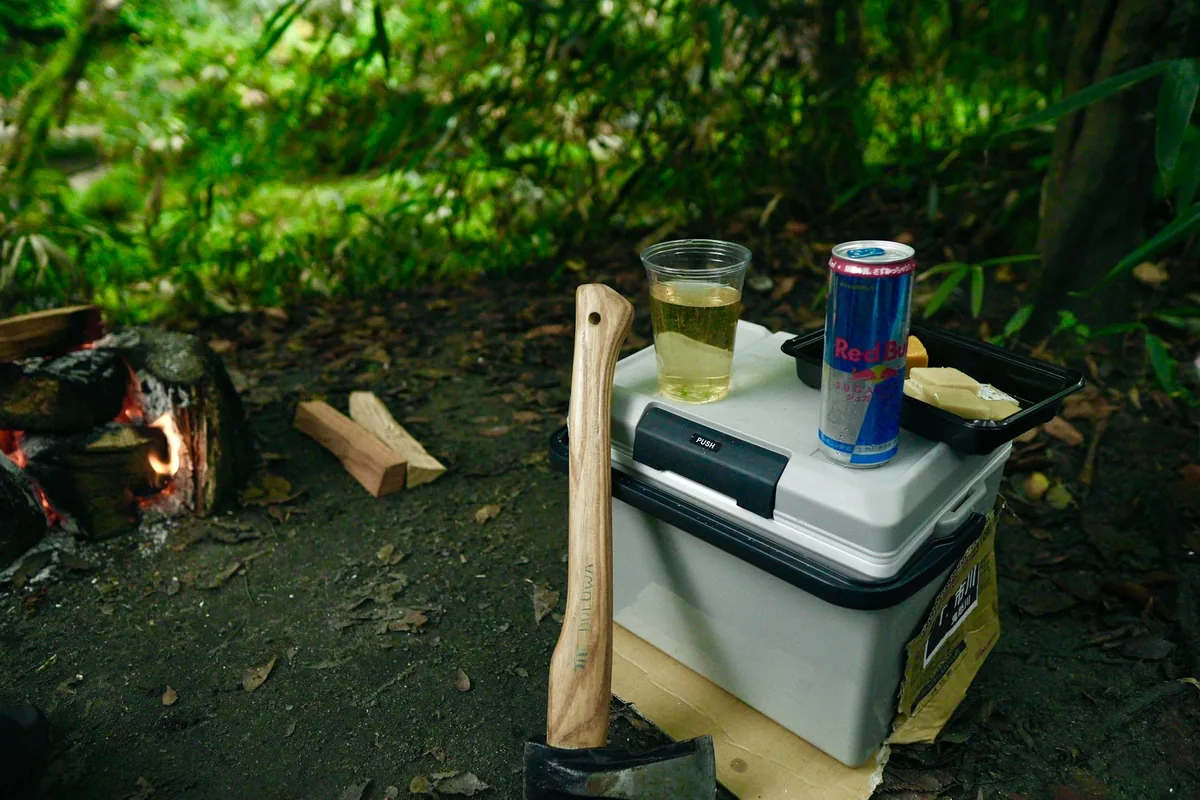
The Limiting Factor at a Campsite Is the Surface
Worth saying because it changes what you should buy. Chopping an onion on a picnic table, a log or a coolbox lid is the actual problem, not the knife, and a superb blade on a terrible surface still produces a bad result. One product here ships with a bamboo cutting board sized to pack alongside the knife, which is a more useful upgrade to your camp cooking than any amount of blade steel. If you cook properly when camping, solve the board before you solve the knife.
A Sheath That Locks Is What Makes a Knife Portable
Loose blades in luggage are how people cut themselves unpacking, and slip-on blade guards work their way off in a pack. Two products here address it directly — one with a locking sheath on a kitchen knife, one with a MOLLE-compatible sheath that mounts to pack webbing in several orientations. A third has a Combi-Sheath with a quick-connection that lets a second knife clip on so the pair travel as one unit. On a knife that lives in a bag rather than on a belt, the sheath is not an accessory.
Common Mistakes
- Buying large because the search said large. Only one product here exceeds six inches.
- Expecting one knife to chop and cook. They are opposite geometries; buy two, or buy a hatchet.
- Dismissing partial tang. It is standard on a Mora and irrelevant unless you baton.
- Ignoring blade thickness. 2 mm slices and flexes; 3.2 mm batons and wedges.
- Putting carbon steel away wet. 1095 and SK5 spot within days.
- Solving the knife and not the board. The surface is usually what limits camp cooking.
- Carrying a blade with a slip-on guard. It comes off in a pack, and then you reach in.
Who Should Buy Which
Buy the Morakniv Companion at $15.58 unless you have a specific reason not to. It is the default camp knife for good reason: 4.1 inches, a friction grip with a finger guard, 1095 carbon that takes a superb edge, and every dimension published.
Buy the ONETIGRIS TrailForge at $13.99 for the most specification per dollar. Full tang, AUS-8 at HRC 58–60, a genuine Scandi grind and 3.2 mm of stock — all stated.
Buy the Kershaw Camp 10 at $49.42 if you actually meant large. Ten inches of full-tang recurve in 65Mn tool steel, with a hand guard — and pair it with something small.
Buy the Opinel No. 08 at $16.21 if your camping involves more cheese than firewood. Sandvik 12C27, an unbreakable lock and the best rank on this page.
Buy the GSI Rakau set at $124.95 if you cook properly. The bamboo board is the upgrade, not the knife.

Frequently Asked Questions
What size should a camp knife be?
Around four inches for a general-purpose fixed blade, which is why the best-known camp knives in the world sit at 3.6 and 4.1 inches. That length handles food preparation, cutting cord, shaving tinder, opening packaging and light carving, which between them account for the overwhelming majority of what a knife does at a campsite. Longer blades are worse at all of those and better at chopping, and chopping is a job an axe or a folding saw does far more safely and efficiently than any knife. In this roundup only one product exceeds six inches, and the two best-selling items are 3.35 and 3.6 inches. If you want one knife, four inches is the answer the market has settled on.
Do I need a full tang camp knife?
Only if you intend to baton with it. Full tang means the steel runs the entire length and width of the handle, so impact travelling down the blade is carried by one continuous piece of metal — which is exactly what hammering a knife through a log requires. Both Morakniv knives in this roundup are partial tang, and they are among the most respected camp knives ever made, because their job is carving and slicing rather than being struck. If a knife will be used for food, cord and tinder, partial tang is entirely adequate and has a century of hard use behind it. If it will be hammered, buy full tang and accept the extra weight.
What is a Scandi grind and do I want one?
It is a single flat bevel running from the cutting edge up the blade with no secondary micro-bevel, and it is the traditional Nordic bushcraft geometry. Two properties follow. It bites into wood and holds the cut rather than skating off the surface, which makes it excellent for carving, feather sticks and shaping. And it is the easiest grind to sharpen freehand, because you lay the entire bevel flat on the stone and the correct angle sets itself with no judgement required. The drawback is food: the thick shoulder behind the edge wedges in dense vegetables where a thin kitchen grind glides. If your camping is wood-focused you want one; if it is cooking-focused you do not.
Carbon steel or stainless for a camp knife?
It depends on how the knife is stored between trips rather than how it is used. The carbon steels here — 1095, SK5, 65Mn and Morakniv’s high carbon — take a keener edge, are easier to sharpen back on basic stones, and will develop rust spots within days if put away damp, which a knife in a pack after a wet weekend usually is. The stainless grades — AUS-8, 420HC, Sandvik 12C27 — tolerate neglect and take slightly more effort to sharpen. For most people who camp a few times a year and do not clean gear immediately, stainless is the pragmatic choice. For anyone who maintains their tools, carbon gives a better edge.
Is a folding knife acceptable as a camp knife?
For food and general cutting, absolutely, and the best-selling product in this entire search is a folding Opinel. It slices bread, cheese, sausage and vegetables better than any thick fixed blade in this roundup, its Virobloc collar locks both open and closed so it cannot open in a pack, and it costs sixteen dollars. What a folder cannot do is take lateral load, be batoned, or survive being pried with, because a pivot is a hinge and hinges fail in ways that solid steel does not. If your camping involves cooking and light tasks, a folder is genuinely sufficient. If it involves processing wood, carry a fixed blade.
Why do camping knife sets include a cutting board?
Because the board is usually the real constraint, not the knife. Anyone who has tried to chop an onion on a picnic table, a log, a coolbox lid or their own knee knows that a superb blade on an unstable, unhygienic surface still produces a poor result and takes twice as long. One three-piece set in this roundup packs a bamboo board and a compact sharpener alongside a six-inch chef knife, sized so the whole thing travels as a unit. Bamboo is the sensible material: hard, light, and it does not absorb moisture the way softer woods do. For anyone who cooks properly while camping it is a more meaningful upgrade than any blade steel.
Final Verdict
Four point one inches, 1095 carbon, friction grip with a finger guard, every dimension published. $15.58.
Full tang, AUS-8 at HRC 58–60, a genuine Scandi grind and 3.2 mm of stock, all stated. $13.99.
Ten inches of full-tang 65Mn recurve with a hand guard — the only product here that is actually large. $49.42.
The market’s answer to ‘large camp knife’ is a four-inch Morakniv, and the market is right. A camp knife spends its life on food, cord, tinder and light carving, and four inches does every one of those better than ten. The one job a big blade wins is chopping, and an axe wins that more convincingly still.
Only one product here is genuinely large, and it is a recurve machete for clearing brush — a good tool, and not a camp knife.
The two best sellers on this page are a folding pocket knife and a Swedish trade knife, both under seventeen dollars and neither remotely large. That is what people who actually camp buy.
Buy the Companion, spend the difference on a hatchet if you want to chop, and a cutting board if you want to cook.