Affiliate Disclosure: As an Amazon Associate, we earn from qualifying purchases. This does not affect the price you pay.
Something has happened to this category, and the listings show it plainly. A dutch oven is now sold as a bread oven.
Of the pots below, one is titled a bread oven outright, four more put sourdough or bread baking in the title or the first bullet, and the category leader sells itself on a self-basting lid for braises. Twenty years ago these were stew pots that happened to bake bread. The marketing has swapped the order.
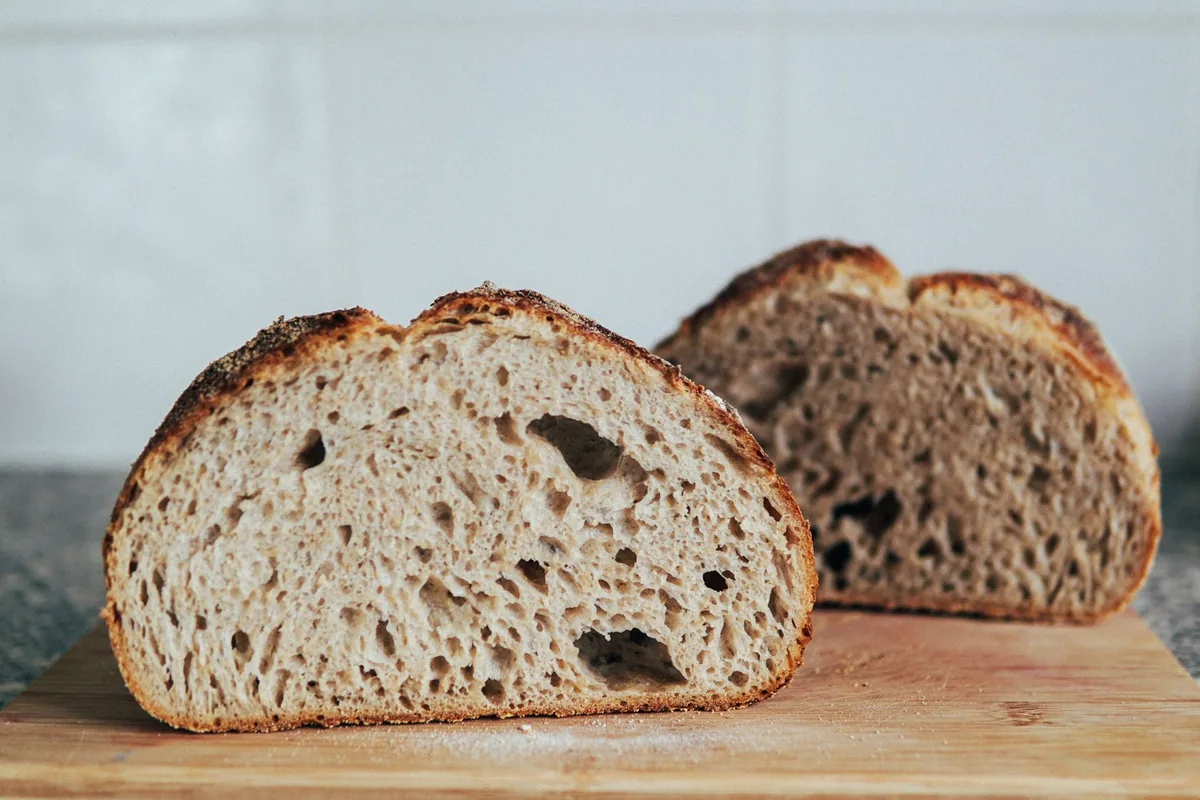
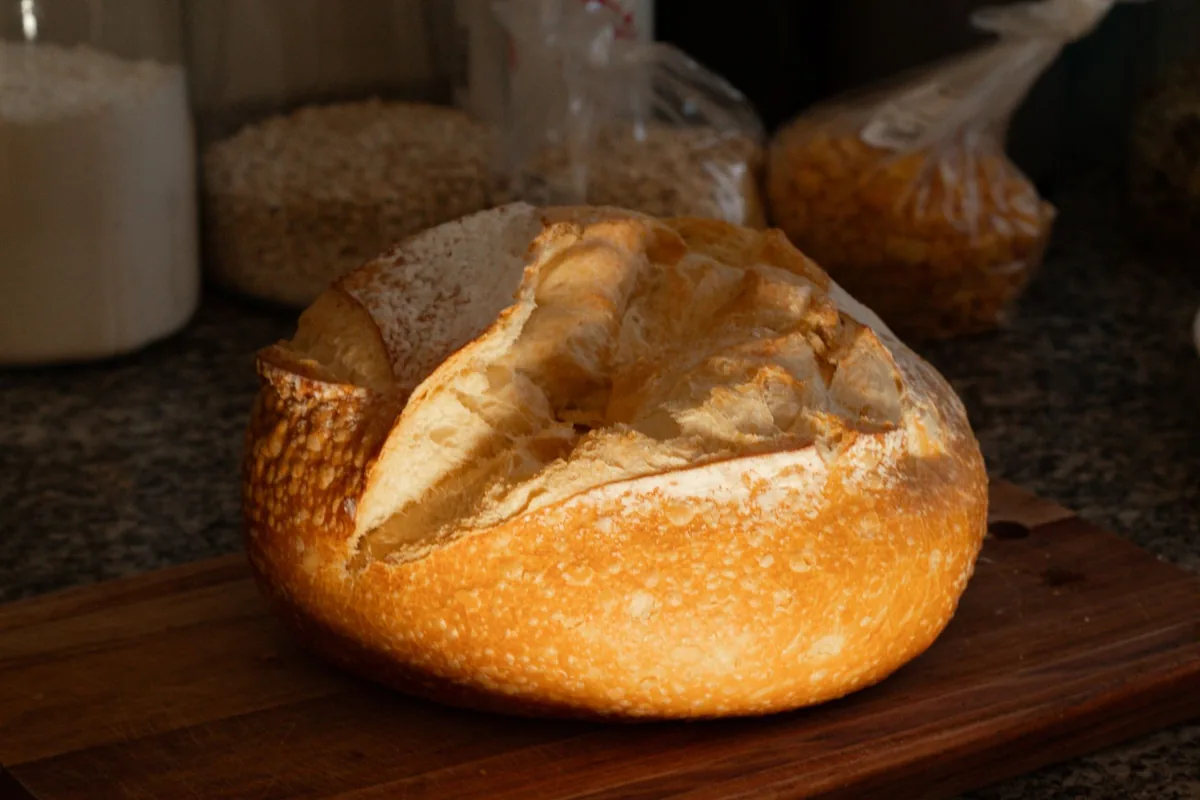
The reason is sound. A domestic oven cannot inject steam, and bread needs a humid first ten minutes to expand properly. A heavy lidded pot traps the loaf’s own moisture and does the same job — which is the closest a home kitchen gets to a bakery oven, for around thirty-five dollars.
Which brings up the other number. These ten span $27.72 to $325.80, and the listings describe them in almost identical words: enamelled cast iron, even heat distribution, superior retention, oven safe. The best seller is $34.99 at 4.7 stars. The Le Creuset is $325.80 at 4.7 stars.
Below, what actually differs — the lid interior, the enamel colour inside, and in two cases whether it is cast iron at all.
Our Quick Picks
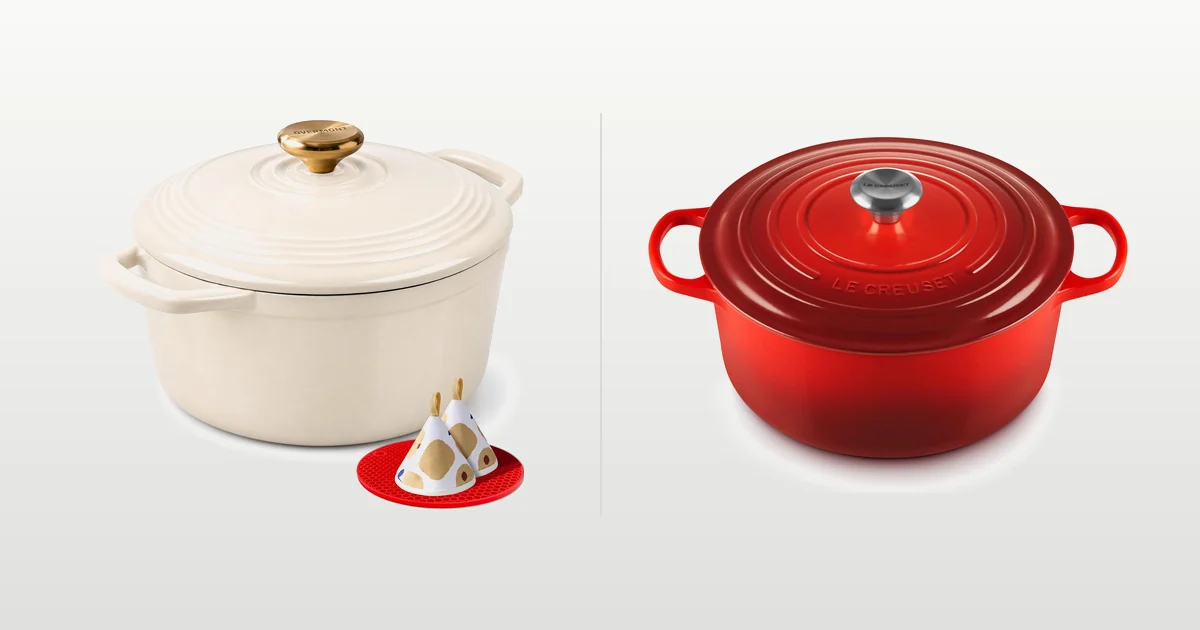
 Best OverallOvermont 5.5 QT
The best-selling dutch oven in the category, with a self-basting lid, a cookbook and potholders, at $34.99.
 Most PremiumLe Creuset Round 7.25 qt
The pot the category is measured against, with a sand-coloured interior that lets you watch a sauce develop.
 Best for SourdoughUmite Chef Bread Oven 6 QT
A dutch oven designed around bread first: a domed lid for oven spring, and the highest rating on this page.
At a Glance
Ten Dutch Ovens Compared
Material first, because two of these are not enamelled cast iron — then capacity, lid design and the weight you will be lifting.
| # | Model | Material | Capacity | Lid | Weight | Standout | Main Drawback | Check Price |
|---|---|---|---|---|---|---|---|---|
| 1 |
 Overmont 5.5 QT Overmont 5.5 QT |
Enamelled cast iron | 5.5 quarts | Self-basting, continuous condensation | Not stated | #288 in all of Kitchen & Dining | Weight never published | View on Amazon |
| 2 |
 Le Creuset Round 7.25 qt Le Creuset Round 7.25 qt |
Enamelled cast iron | 7.25 qt / 6.7 litres | Tight-fitting, circulates steam | 6.13 kg | Light interior so you can see the fond | $325.80 — nine times the best seller | View on Amazon |
| 3 |
 Umite Chef Bread Oven 6 QT Umite Chef Bread Oven 6 QT |
Enamelled cast iron | 6 quarts | Dome lid | Not stated | Highest rated here at 4.8 stars | Dome shape is less useful for braising | View on Amazon |
| 4 |
 Mueller DuraCast 6 Quart Mueller DuraCast 6 Quart |
Enamelled cast iron | 6 quarts | Raised condensation nodes | 12.5 pounds | 500°F rating, stated | $51.86, dearer than most here | View on Amazon |
| 5 |
 Amazon Basics 4.3 Quart Amazon Basics 4.3 Quart |
Enamelled cast iron | 4.3 quarts | Not described | 11.2 pounds | 500°F oven safe and 11.2 lb stated | 4.3 quarts is small for a whole chicken | View on Amazon |
| 6 |
 EDGING CASTING 2-in-1 EDGING CASTING 2-in-1 |
Bare, pre-seasoned cast iron | 5 quarts | Skillet lid | Not stated | The lid is a usable skillet | Bare iron means seasoning and no acidic food | View on Amazon |
| 7 |
 IMUSA 7.5 Quart Caldero IMUSA 7.5 Quart Caldero |
Cast aluminium | 7.5 quarts | Plain lid | 1.7 kg | 7.5 quarts at under four pounds | It is not cast iron at all | View on Amazon |
| 8 |
 nuovva 6.4 Quart nuovva 6.4 Quart |
Enamelled cast iron | 6.4 quarts | Not described | 6.46 kg | Sold in four colours | Lid interior never described | View on Amazon |
| 9 |
 EDGING CASTING Oval 7 Qt EDGING CASTING Oval 7 Qt |
Enamelled cast iron | 7 quarts | Not described | 17.5 pounds | Oval shape suits batards and joints | 17.5 pounds, heaviest here | View on Amazon |
| 10 |
 Umite Chef 5 QT Umite Chef 5 QT |
Enamelled cast iron | 5 quarts | Precision-engineered airtight | Listed as 0.37 kg, which is impossible | #2 in Dutch Ovens | Weight field is plainly wrong | View on Amazon |
Specifications, prices and ratings are taken from each manufacturer’s Amazon listing as displayed on 21 August 2026 and may change. Two products in this roundup are not enamelled cast iron and are labelled as such: the EDGING CASTING 2-in-1 is bare pre-seasoned cast iron, and the IMUSA caldero is cast aluminium, which is why it weighs 1.7 kg where comparable cast iron pots weigh six to eight. The Umite Chef 5 QT lists an item weight of 0.37 kg, which is impossible for a five-quart cast iron pot and is recorded here as a listing error rather than corrected. Five listings publish no weight at all and six state no oven temperature ceiling, which matters for sourdough baking at 450–500°F. Capacity is reproduced as stated; the EDGING CASTING round pot gives 7 litres in its specification field and 7 quarts in its bullets. Amazon’s Dutch Ovens node also contains a Le Creuset cookware cleaner and a stoneware mini cocotte, both filtered out before verification. Three further pots were excluded as brand duplicates.
Scroll the table sideways to see every column
How We Chose These Dutch Ovens
We researched current listings, compared manufacturer specifications and documentation, and examined recurring patterns in customer feedback. We did not carry out hands-on testing, and nothing below is presented as measured performance data.
- What it is actually made of — two here are not enamelled cast iron, and both behave differently
- Lid interior design — self-basting nodes or ridges are the one real functional difference between lids
- Whether the weight is published — five listings do not, on pots weighing up to 17.5 pounds
- Stated oven ceiling — sourdough is baked at 450–500°F, and six listings never say what the pot tolerates
- Capacity against household — an oversized pot reduces a braise too fast and dries the top of the meat
- Shape — one oval pot here, which changes what loaves and joints will fit
The 10 Best Dutch Ovens, Reviewed
1. Overmont 5.5 QT — Best Overall

Thirty-four ninety-nine, 4.7 stars, and #288 in the whole of Kitchen & Dining. This is the dutch oven most people buy, and the Le Creuset further down this page costs nine times as much.
Key Specifications
| Material | Enamelled cast iron |
|---|---|
| Capacity | 5.5 quarts |
| Serves | Families of 3 to 5, per the listing |
| Lid | Heavy self-basting, continuous condensation ridges |
| Included | Cookbook and cotton potholders |
| Colour | Warm white |
| Rank | #1 in Dutch Ovens, #288 in Kitchen & Dining |
| Rating | 4.7 out of 5 stars |
| Best For | The default choice, and a genuinely good one |
Why We Recommend It
The self-basting lid is the feature worth understanding, because it is the one genuine functional difference between dutch oven lids and several listings here do not have it.
The underside of a self-basting lid is moulded with ridges or nodes. Steam rising from a braise condenses on the cool lid, collects on those ridges, and falls back onto the food as droplets rather than running to the edge and down the side. Over three hours that is the difference between meat that bastes itself continuously and meat that dries on top.
Five and a half quarts is the size to buy if you are buying one, and Overmont’s stated three to five people is honest. It takes a whole chicken, a large loaf, or a stew for a family.
The cookbook and potholders are not padding at this price — cast iron handles get to oven temperature and enamelled pots have no cool grip anywhere.
The listing publishes no weight, which matters on a pot that will be somewhere between eleven and seventeen pounds.
Pros
- #1 in Dutch Ovens and #288 in all of Kitchen & Dining
- 4.7 stars at $34.99
- Self-basting lid with continuous condensation ridges
- 5.5 quarts, the right size for one pot
- Cookbook and potholders included
- Enamelled, so no seasoning needed
Cons
- No weight published anywhere in the listing
- No stated oven temperature limit
- Unfamiliar brand
- Warm white shows staining more than dark colours
- Enamel chips if knocked, and cannot be repaired
Best for: Almost everyone. It is the best seller at 4.7 stars for a reason.
2. Le Creuset Round 7.25 qt — Most Premium

Three hundred and twenty-five dollars and eighty cents, against $34.99 for the best seller above. Both are enamelled cast iron. Both are 4.7 stars.
So it is worth being precise about what the money buys, and one line in the listing gives it away: "light coloured smooth interior".
Key Specifications
| Material | Enamelled cast iron |
|---|---|
| Capacity | 7.25 qt / 6.7 litres |
| Interior | Light coloured, smooth |
| Lid | Tight fitting, circulates steam back into the food |
| Seasoning | None required |
| Enamel | Resists dulling, staining, chipping and cracking |
| Weight | 6.13 kg |
| Rating | 4.7 out of 5 stars |
| Best For | Anyone buying one pot for thirty years, who cooks sauces as well as stews |
Why We Recommend It
Interior colour is the most under-discussed specification in this category. A light sand-coloured enamel lets you see exactly how dark the fond — the browned residue on the base — has gone. That is what you deglaze into a sauce, and the line between deeply savoury and burnt is a shade of brown you cannot judge against black enamel.
Every other pot in this roundup has a dark or unstated interior.
The enamel itself is the other difference, and it is the one that justifies the price over decades rather than months. Le Creuset’s resists chipping and cracking in a way budget enamel does not, and a chipped enamel pot is finished — you cannot repair it, and exposed iron under enamel rusts.
At 6.13 kg for 7.25 quarts it is markedly lighter than several smaller pots here, which reflects thinner, better-controlled casting.
Whether that is worth $291 more than the Overmont is a question about how long you intend to own it.
Pros
- Light interior lets you judge fond and sauce colour
- Enamel resists dulling, staining, chipping and cracking
- No seasoning required
- Lid circulates steam back into the food
- 6.13 kg for 7.25 quarts, light for its size
- 4.7 stars and a multi-generational reputation
Cons
- $325.80, nine times the category best seller
- Same 4.7 rating as a $34.99 pot
- #12 in Dutch Ovens despite the name
- Enamel still chips if you drop it
- 7.25 quarts is more than most households need
Best for: A once-in-a-lifetime purchase, if you make pan sauces as well as stews.
3. Umite Chef Bread Oven 6 QT — Best for Sourdough

Four point eight stars, the highest in this roundup — above the $325.80 Le Creuset — on a pot explicitly built for bread rather than braising.
That is not an accident of one listing. It is where this whole category has moved.
Key Specifications
| Material | Enamelled cast iron |
|---|---|
| Capacity | 6 quarts |
| Lid | Dome |
| Designed for | Homemade sourdough and artisan loaves |
| Included | Dome lid, cotton potholders |
| Colour | Cream white |
| Rating | 4.8 out of 5 stars |
| Rank | #13 in Dutch Ovens |
| Best For | Sourdough, which is what most of this category is now sold on |
Why We Recommend It
The dutch oven is now sold as a sourdough tool, and the reason is genuine physics rather than fashion. A domestic oven cannot inject steam, and bread needs a humid first ten minutes to stay soft enough to expand — that expansion is oven spring, and it is what produces an open crumb and a blistered crust. A heavy lidded pot traps the loaf’s own moisture and creates that steam environment around it.
It is the closest a home kitchen gets to a steam-injected bakery oven, and it costs thirty-eight dollars.
The domed lid is the bread-specific part. A tall dome gives the loaf room to rise before it touches anything; a shallow braising lid can flatten a well-proved boule.
The trade is that a dome is less good at braising, where a low, tight-fitting lid keeps condensation close to the food.
Cotton potholders are included, which on a pot you handle at 450°F is genuinely necessary.
Pros
- 4.8 stars, the highest rating in this roundup
- Domed lid gives a loaf room for oven spring
- Traps steam for a proper crust and open crumb
- 6 quarts, right for a standard boule
- Potholders included
- $37.99
Cons
- Dome shape is less effective for braising than a low lid
- No weight or oven temperature limit published
- #13 in Dutch Ovens
- Cream enamel shows staining
- One of three Umite Chef pots in this category
Best for: Sourdough bakers, which on this page is most of the market.
4. Mueller DuraCast 6 Quart — Best Lid Design

Mueller states two things most listings here leave out: a specific oven temperature ceiling of 500°F, and exactly how its lid self-bastes.
Key Specifications
| Material | Enamelled cast iron, PFOA-free porcelain |
|---|---|
| Capacity | 6 quarts |
| Lid | Self-basting with raised condensation nodes |
| Oven safe | 500°F, stated |
| Seasoning | None required, non-stick from new |
| Weight | 12.5 pounds |
| Colour | Emerald |
| Rank | #6 in Dutch Ovens |
| Best For | Long braises, where a self-basting lid earns its money |
Why We Recommend It
The 500°F figure matters for bread specifically. Sourdough is typically baked with a preheat at 450 to 500°F, and a pot with an unstated ceiling — which is most of this page — leaves you guessing whether the enamel or, more often, a knob or handle will tolerate it. Several enamelled pots have phenolic knobs rated well below 500.
Raised condensation nodes are the self-basting mechanism described precisely. Steam condenses on the underside of the lid, gathers at the tip of each node, and drips back down onto the food instead of running to the rim. Mueller calls it "the feature most pots skip", which is fair — several listings here do not mention their lid interior at all.
PFOA-free porcelain enamel and no seasoning is the standing advantage of enamelled over bare cast iron, and it is why enamelled dominates this category now.
At $51.86 it costs half again what the best seller does, for a stated temperature rating and a described lid.
Pros
- Raised condensation nodes described explicitly
- 500°F oven rating, actually stated
- PFOA-free porcelain enamel
- No seasoning required, non-stick from new
- 6 quarts
- 12.5 pounds published
- Marketed for sourdough as well as braising
Cons
- $51.86, half again the price of the best seller
- 4.6 stars, below cheaper pots here
- #6 in Dutch Ovens
- Heavy at 12.5 pounds
- Dark emerald exterior shows chips
Best for: Long braises and sourdough, from the listing that explains itself best.
5. Amazon Basics 4.3 Quart — Best Small Size

Four point three quarts is the smallest practical size in this roundup, and there is a genuine argument for it that the marketing never makes.
Key Specifications
| Material | Enamelled cast iron |
|---|---|
| Capacity | 4.3 quarts |
| Oven safe | 500°F |
| Handles | Dual, heavy duty |
| Enamel | Smooth finish |
| Weight | 11.2 pounds |
| Colour | White |
| Rank | #4 in Dutch Ovens |
| Best For | Two or three people, or a second smaller pot |
Why We Recommend It
A dutch oven that is too large cooks badly. A braise needs the liquid to come partway up the meat; in an oversized pot the same stew spreads thin, the liquid reduces too fast, and the top of the meat sits dry in the air. Six or seven quarts is right for a family; for two people, 4.3 is genuinely the better pot.
It is also eleven pounds instead of seventeen, which is the difference between lifting it out of an oven comfortably and not.
Both the weight and the 500°F rating are published, which puts this listing ahead of most here on basic disclosure.
What it does not describe is the lid interior — no mention of condensation ridges or nodes, which suggests a plain lid.
The real argument for Amazon Basics on a $40 enamelled pot is what happens if the enamel arrives chipped, which in this category is the common failure. Returns are the least painful here of any brand on the page.
Pros
- 500°F oven rating stated
- 11.2 pounds, the lightest cast iron pot here
- 4.3 quarts suits two or three people properly
- Straightforward returns if enamel arrives chipped
- #4 in Dutch Ovens
- Dual heavy-duty handles
Cons
- No self-basting lid described
- 4.3 quarts will not take a large chicken or a big loaf
- White enamel stains visibly
- 4.6 stars
- No cookbook or potholders included
Best for: Two or three people, or as a second pot alongside a larger one.
6. EDGING CASTING 2-in-1 — Best Bare Cast Iron

Nine of the ten pots in this roundup are enamelled. This one is bare cast iron, and it behaves differently enough to be a separate decision.
Key Specifications
| Material | Bare cast iron, pre-seasoned |
|---|---|
| Capacity | 5 quarts |
| Lid | Doubles as a skillet |
| Handles | Two integrated loop handles |
| Seasoning | Pre-seasoned; needs maintaining |
| Uses | Soups, stews, baking, frying |
| Colour | Black |
| Rank | #16 in Dutch Ovens |
| Best For | Campfires, high-heat searing, and anyone who already maintains cast iron |
Why We Recommend It
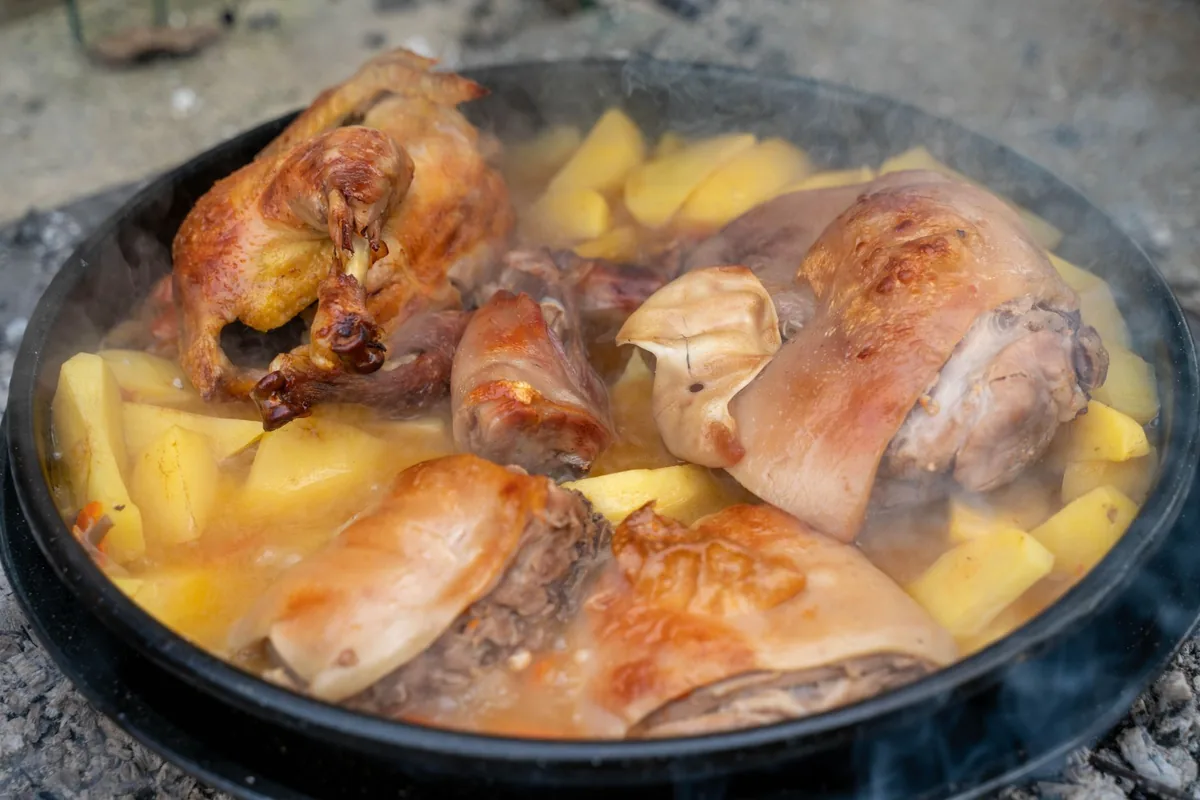
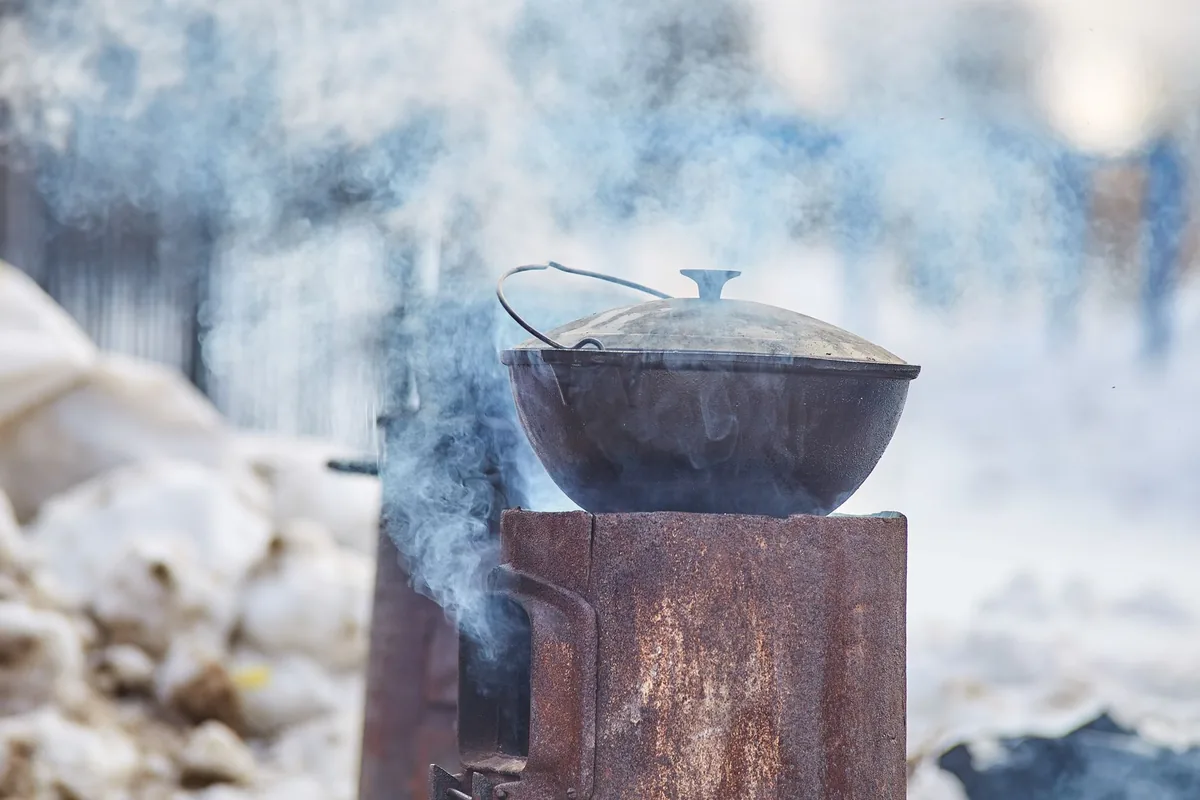
Bare iron takes heat that enamel cannot. Enamel is glass fused to iron, and it will craze or chip under a fierce empty preheat or a sharp temperature change. Bare iron does not care — it can go into a fire, take a screaming-hot sear, and be scrubbed with salt.
The cost is seasoning and acid. The pre-seasoned surface is a polymerised oil layer that has to be maintained, and a long tomato or wine braise will strip it and leave a metallic taste. Enamelled pots have neither problem, which is exactly why they now dominate the category.
The skillet lid is a genuinely good idea. It is a shallow cast iron pan in its own right, so the same purchase gives you a pot, a lid and a frying pan — and inverted over a campfire it works as an oven.
Two loop handles rather than a knob and handles means everything is grabbed with mitts, which is standard for bare iron.
Pros
- Bare cast iron tolerates fierce heat and open fires
- Lid doubles as a usable skillet
- Pre-seasoned from new
- Can be scrubbed and re-seasoned indefinitely
- 5 quarts
- $33.99
Cons
- Seasoning must be maintained, unlike enamel
- Acidic braises strip the seasoning and taste metallic
- No weight published
- Loop handles get oven-hot
- #16 in Dutch Ovens
Best for: Campfires, hard searing, and cooks who already keep cast iron.
7. IMUSA 7.5 Quart Caldero — Lightest Here

The specification that stands out is the weight: 1.7 kilograms for 7.5 quarts, where a cast iron pot of that size is seven or eight kilograms.
It is not cast iron. It is cast aluminium, and Amazon files it under Dutch Ovens.
Key Specifications
| Material | Cast aluminium |
|---|---|
| Capacity | 7.5 quarts |
| Weight | 1.7 kg |
| Surface | Seasons over time |
| Oven safe | Yes, without the lid |
| Origin | Made in Colombia |
| Rank | #10 in Dutch Ovens |
| Price | $27.72 |
| Best For | Large-volume cooking without the weight, and Latin American dishes |
Why We Recommend It
A caldero is a traditional Latin American pot and a genuinely different tool. Aluminium conducts heat about four times better than iron, so it heats fast and evenly and responds quickly when you turn the flame down — the opposite of cast iron’s slow, heavy thermal mass.
That makes it better at some things and worse at others. Rice, beans, sofrito and anything needing responsive control suit it. A three-hour braise, where the point is thermal inertia holding a low steady temperature, suits cast iron.
And it will not bake bread the way the pots above it do, because it lacks the mass to hold a preheat when a cold wet loaf goes in.
Bare aluminium seasons over time like bare iron, darkening as it is used. It is also reactive, so long acidic cooking is not ideal.
At under four pounds it is the only pot here anyone can lift full with one hand.
Pros
- 1.7 kg for 7.5 quarts — by far the lightest here
- Aluminium heats fast and responds quickly to the flame
- Excellent for rice, beans and sofrito
- $27.72, cheapest in this roundup
- Made in Colombia to a traditional design
- Oven safe without the lid
Cons
- Not cast iron, despite the category it sits in
- Lacks the thermal mass for long braises or bread
- Reactive with acidic food
- Bare surface needs seasoning
- Lid is not oven safe
Best for: Rice and beans, and anyone who cannot lift eight kilograms of iron.
8. nuovva 6.4 Quart — Best Colour Range

Nuovva’s first bullet makes the argument this whole category rests on and rarely states outright: enamelled cast iron is "a great alternative to the traditional bare cast iron pot for busy working individuals".
Key Specifications
| Material | Enamelled cast iron |
|---|---|
| Capacity | 6.4 quarts |
| Colours | Red, blue, grey, green |
| Maintenance | No seasoning, described as low maintenance |
| Weight | 6.46 kg |
| Uses | Oven, hob, braising, casseroles |
| Rank | #9 in Dutch Ovens |
| Price | $49.99 |
| Best For | A pot that goes to the table, in a colour you actually chose |
Why We Recommend It
That is the honest summary of why enamel won. Bare cast iron demands seasoning, cannot take long acidic cooking, and rusts if left wet. Enamel needs none of that — you wash it like any other pot. In exchange it chips, it cannot take an empty screaming preheat, and when the enamel goes the pot is finished.
For most households that trade is obviously right, which is why nine of these ten are enamelled.
Four colours is more choice than most of this page offers, and it matters because a dutch oven is one of the few pots that goes from oven to table.
Six point four quarts at 6.46 kg is a sensible weight-to-volume ratio — lighter than the 7-quart pots here and only slightly smaller.
The lid interior is not described, so assume it is plain rather than self-basting.
Pros
- Four colour options, unusual in this category
- 6.4 quarts at 6.46 kg, a good weight-to-volume ratio
- No seasoning and low maintenance
- Goes from oven to table
- #9 in Dutch Ovens
- Oven and hob safe
Cons
- Lid interior not described, so probably not self-basting
- No oven temperature ceiling stated
- $49.99
- 4.6 stars
- Enamel chips like every pot here
Best for: A pot chosen partly for how it looks on the table.
9. EDGING CASTING Oval 7 Qt — Best Oval

Every other pot in this roundup is round. This one is oval, and the shape is a real decision rather than a style choice.
Key Specifications
| Material | Enamelled cast iron |
|---|---|
| Shape | Oval |
| Capacity | 7 quarts |
| Enamel | Resists staining, rust and odours |
| Designed for | Artisan-style loaves and larger cuts |
| Weight | 17.5 pounds |
| Colour | Pistachio green |
| Rank | #17 in Dutch Ovens |
| Best For | Batard loaves and joints that do not fit a round pot |
Why We Recommend It
Bread is the clearest case. A round pot suits a boule; a batard — the long oval loaf — will not fit one without being squashed into a circle, which loses the shape you proved it into. An oval pot lets a batard bake as a batard.
The same applies to meat. A leg of lamb, a rolled joint or a whole fish are long rather than round, and forcing them into a circular pot means bending them or cutting them.
The trade is hob performance. Round hob rings heat a round pot evenly; an oval pot has two ends that sit outside the ring, so the middle runs hotter than the tips. On an oven braise that hardly matters, and on a long stovetop reduction it does.
Seventeen and a half pounds is the heaviest pot on this page, and that is eight kilos before any food goes in. Consider where it will live, because it will not be moved often.
Pros
- Oval shape takes batard loaves and long joints
- 7 quarts, joint largest capacity here
- Enamel resists staining, rust and odours
- Weight published at 17.5 pounds
- Sold explicitly for sourdough
- $35.99 for a large pot
Cons
- 17.5 pounds, the heaviest pot in this roundup
- Oval shape heats less evenly on a round hob ring
- Lid interior not described
- #17 in Dutch Ovens
- One of three EDGING CASTING pots in this category
Best for: Long loaves and long joints, in an oven rather than on a hob.
10. Umite Chef 5 QT — Best Airtight Lid

Second in Dutch Ovens at $35.99, and the specification it leads with is the lid seal rather than the lid interior.
Key Specifications
| Material | Enamelled cast iron |
|---|---|
| Capacity | 5 quarts |
| Lid | Precision-engineered, airtight |
| Included | Cotton oven mitts |
| Uses | Stews, sauces, casseroles, rice |
| Colour | Cream white |
| Weight | Listed as 0.37 kg, which cannot be correct |
| Rank | #2 in Dutch Ovens |
| Best For | Rice and anything where a tight seal matters |
Why We Recommend It
An airtight seal and a self-basting surface are different features and it is worth separating them. A tight seal stops steam escaping at the rim, which keeps liquid in the pot — that is what matters for rice, where the water is measured and must not boil away. Self-basting nodes are about where the condensed steam lands, which matters for a braise.
This listing describes the first and not the second.
The weight field reads 0.37 kg. That is 13 ounces, for a five-quart cast iron pot that will actually weigh ten to twelve pounds. It is a data-entry error, and it is the kind worth noticing because weight is a real purchase consideration in this category — several pots here are genuinely difficult to lift from a hot oven.
Cotton mitts included, like the Overmont, and equally necessary.
Cream white enamel is the most common finish here and the one that shows staining soonest.
Pros
- #2 in Dutch Ovens
- Airtight lid seal, good for rice and reductions
- Cotton oven mitts included
- 5 quarts, a sensible single-pot size
- $35.99
- Enamelled, so no seasoning
Cons
- Weight listed as 0.37 kg, which is impossible for cast iron
- Lid interior not described as self-basting
- No oven temperature ceiling stated
- Cream enamel stains
- One of three Umite Chef pots in this category
Best for: Rice and tight-lidded cooking, from the category’s number two.
$27.72 to $325.80, in Almost the Same Words
Sorted by price. Read the rating column alongside it.
| Pot | Material | Price | Rating | Rank |
|---|---|---|---|---|
| IMUSA Caldero 7.5 qt | Cast aluminium | $27.72 | 4.5 | #10 |
| EDGING CASTING 2-in-1 | Bare cast iron | $33.99 | 4.6 | #16 |
| Overmont 5.5 QT | Enamelled cast iron | $34.99 | 4.7 | #1 |
| Umite Chef 5 QT | Enamelled cast iron | $35.99 | 4.6 | #2 |
| EDGING CASTING Oval 7 qt | Enamelled cast iron | $35.99 | 4.6 | #17 |
| Umite Chef Bread Oven 6 QT | Enamelled cast iron | $37.99 | 4.8 | #13 |
| Amazon Basics 4.3 qt | Enamelled cast iron | $39.89 | 4.6 | #4 |
| nuovva 6.4 qt | Enamelled cast iron | $49.99 | 4.6 | #9 |
| Mueller DuraCast 6 qt | Enamelled cast iron | $51.86 | 4.6 | #6 |
| Le Creuset 7.25 qt | Enamelled cast iron | $325.80 | 4.7 | #12 |
The highest-rated pot on this page costs $37.99 and the second highest costs $34.99. The most expensive costs $325.80 and matches the $34.99 one exactly on rating. That does not mean they are the same pot — ratings measure whether buyers got what they expected, not how a pot performs in year fifteen — but it does mean the rating column cannot help you here. What separates them is chip resistance over decades, interior colour, and lid design, and only the last of those appears in most listings.
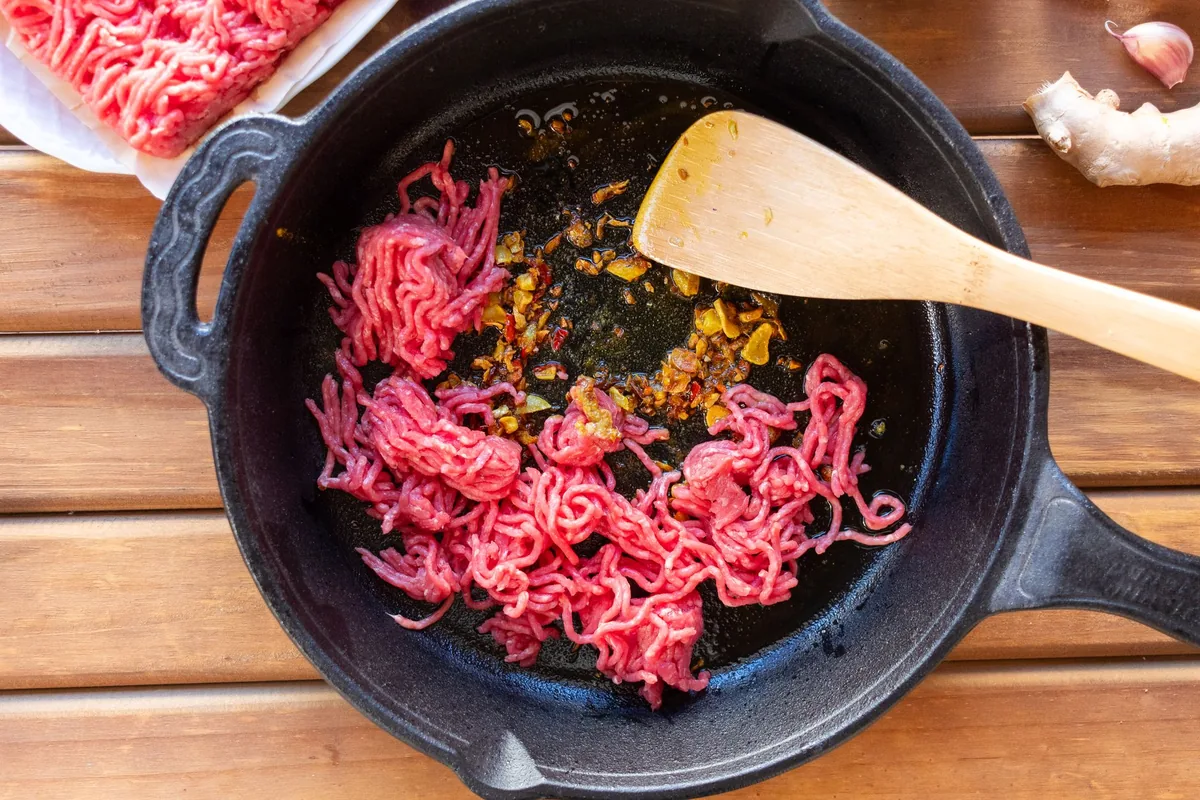
The Lid Is the Only Real Functional Difference
All ten are heavy pots with lids. What the underside of that lid does varies.
| Lid type | Pots here | What it does | Best for |
|---|---|---|---|
| Self-basting nodes or ridges | Overmont, Mueller DuraCast | Condensed steam drips back onto the food | Long braises |
| Airtight seal | Umite Chef 5 QT | Stops steam escaping at the rim | Rice, measured liquids |
| Domed | Umite Chef Bread Oven | Gives a loaf room for oven spring | Sourdough |
| Skillet lid | EDGING CASTING 2-in-1 | Lifts off and works as a frying pan | Camping, versatility |
| Steam-circulating | Le Creuset | Returns moisture to the food | Braises and roasts |
| Not described | Amazon Basics, nuovva, EDGING oval, IMUSA | Assume plain | General use |
Four of these ten listings say nothing at all about the underside of the lid, which almost certainly means it is smooth. On a three-hour braise a smooth lid lets condensation run to the rim and down the outside, so the top of the meat dries while the bottom stews. Ridges or nodes return that moisture to the food. It is a cheap moulding detail that costs nothing to include and is the single most useful thing to look for — and Mueller is right when it calls it “the feature most pots skip”.
Best Alternatives
| Alternative | Why Consider It | Better For | Main Trade-Off |
|---|---|---|---|
| A bare cast iron combo cooker | Takes fiercer heat, lid doubles as a skillet, cheaper | Camping and high-heat searing | Seasoning to maintain, and no long acidic braises |
| A stainless clad stockpot | Lighter, non-reactive, easier to handle | Stocks and boiling | No thermal mass, so braises need watching |
| A slow cooker | Set and forget, uses little power | Unattended all-day braises | Cannot sear or bake bread |
| A stoneware casserole | Even gentle heat, goes to the table | Oven-only baking | Cannot go on a hob, and thermal shock cracks it |
| A pizza steel and a cloche | Better bread than any pot, arguably | Serious bread baking only | Does nothing else at all |
What Each Price Tier Actually Buys
$27.72 to $35.99 — IMUSA, EDGING 2-in-1, Overmont, Umite Chef 5 QT, EDGING oval. The tier that contains the category’s number one and number two, and both are 4.6 to 4.7 stars. It also contains the two pots that are not enamelled cast iron — a bare iron combo cooker and a cast aluminium caldero — which are cheaper for structural reasons rather than quality ones.
$37.99 to $39.89 — Umite Chef Bread Oven, Amazon Basics. The highest-rated pot on this page sits here at 4.8 stars, built around sourdough with a domed lid. The Amazon Basics is the only one whose returns process you can rely on if the enamel arrives chipped, which in this category is the common failure.
$49.99 to $51.86 — nuovva, Mueller DuraCast. Where listings start disclosing properly. Mueller states a 500°F ceiling and describes its condensation nodes; nuovva offers four colours and a sensible weight-to-volume ratio.
$325.80 — Le Creuset. Nine times the best seller for the same 4.7 rating. What it buys is enamel that resists chipping over decades and a light interior you can judge a fond against — neither of which shows up in a first-year review.
The pattern: the two highest-rated pots here cost $37.99 and $34.99. Price buys enamel durability, interior colour and disclosure. It does not buy a better braise this year, which is exactly why the ratings do not separate them.
How to Choose a Dutch Oven
Check the Underside of the Lid
It is the only meaningful functional difference between these pots and four listings here do not mention it. A lid moulded with ridges or nodes collects condensing steam and drips it back onto the food; a smooth lid lets it run to the rim and down the outside. Over a three-hour braise that decides whether the meat above the liquid line bastes itself or dries out. Look for the words self-basting, condensation nodes or ridges — and where a listing is silent, assume smooth.
Buy Five to Six Quarts Unless You Know Otherwise
Bigger is not safer here. A braise needs the liquid partway up the meat, and in an oversized pot the same stew spreads thin, reduces too fast, and leaves the top of the meat dry. Five to six quarts feeds four to six people and takes a standard sourdough boule. Go smaller only if you cook for two, and larger only if you routinely cook joints — remembering that the 7-quart pot here weighs 17.5 pounds before any food goes in.
Enamelled Unless You Have a Reason
Enamelled cast iron needs no seasoning, handles acidic braises, and washes like any other pot. Bare cast iron takes fiercer heat and open flame, costs less, and can be scrubbed and restored indefinitely — but its seasoning strips under a long tomato or wine braise, leaving a metallic taste. Nine of these ten are enamelled and that reflects what most households actually want. Choose bare iron for camping, for hard searing, or if you already maintain cast iron happily.
Look for a Stated Oven Ceiling if You Bake Bread
Sourdough is baked with a preheat around 450 to 500°F, and six listings in this roundup never say what their pot tolerates. The limiting part is usually not the enamel but the knob or handle — phenolic knobs on some enamelled pots are rated well below 500 and will scorch or fail. Two pots here state 500°F explicitly. Where nothing is stated and you intend to bake bread, that silence is worth treating as a risk.
Consider the Interior Colour
This is the specification almost nobody discusses and it changes how you cook. A light, sand-coloured interior lets you see exactly how dark the fond on the base has gone — and fond is what you deglaze into a pan sauce, with a narrow line between deeply savoury and burnt. Against a black or dark enamel interior you are judging by smell. One pot in this roundup states a light interior, and it is the most expensive one.
Find the Weight Before You Buy
Five listings here publish no weight at all, and one publishes 0.37 kg for a five-quart cast iron pot, which is impossible. The pots that do state it range from 11.2 to 17.5 pounds empty — add a shoulder of lamb and litres of stock and the heaviest becomes something you lift out of a hot oven with mitts on and limited grip. If you have any wrist or shoulder trouble, this is the specification that should decide the purchase.
Common Dutch Oven Buying Mistakes
- Buying too large. An oversized pot spreads a braise thin, reduces it too fast and dries the meat above the liquid.
- Ignoring the lid interior. Four listings here never mention it, and a smooth lid does not baste.
- Assuming everything in the category is cast iron. One pot here is cast aluminium and weighs a quarter as much.
- Baking sourdough in a pot with no stated oven ceiling. The knob usually fails before the enamel does.
- Preheating an enamelled pot empty and fierce. Enamel is glass, and it crazes where bare iron would not.
- Long tomato or wine braises in bare cast iron. Acid strips the seasoning and the food tastes metallic.
- Not checking the weight. The heaviest pot here is 17.5 pounds before food.
- Treating a chipped enamel pot as usable. Exposed iron under enamel rusts, and it cannot be repaired.
Which Dutch Oven Should You Buy?
Buy the Overmont 5.5 QT if you want one pot and no further thought. #1 in the category, 4.7 stars, a self-basting lid and potholders, for $34.99.
Buy the Umite Chef Bread Oven if sourdough is the reason you are shopping. Highest rated here at 4.8 stars, with a domed lid that gives a loaf room to rise.
Buy the Le Creuset if you are buying once for thirty years and make pan sauces. The light interior and the chip-resistant enamel are what the money is for.
Buy the Mueller DuraCast if you braise seriously. It describes its condensation nodes and states a 500°F ceiling, which most of this page does not.
Buy the Amazon Basics if you cook for two or three, or want the easiest returns on a pot that commonly arrives chipped.
Buy the EDGING CASTING 2-in-1 if you want bare cast iron and a lid that works as a skillet.
Buy the EDGING CASTING oval if you bake batards or cook long joints that will not fit a round pot.
Buy the IMUSA caldero if you cook rice and beans, or cannot lift eight kilograms of iron.

Frequently Asked Questions
Why is everyone using a dutch oven for sourdough?
Because a domestic oven cannot inject steam and bread needs it. During the first ten minutes of baking, a loaf expands rapidly — oven spring — and it can only do that while its crust stays soft and pliable. Professional bakeries inject steam to keep it soft. A heavy lidded pot achieves the same thing by trapping the loaf’s own moisture around it, then you remove the lid for the second half so the crust dries, browns and blisters. It is the closest a home kitchen gets to a steam-injected oven, which is why so many pots in this category are now sold as bread ovens.
Is an expensive dutch oven worth it?
It depends on your time horizon, and the ratings will not tell you. In this roundup the $325.80 Le Creuset and the $34.99 category leader are both rated 4.7 stars, because ratings measure whether buyers got what they expected in the first year. What premium enamel actually buys is resistance to chipping and crazing over decades — and a chipped enamel pot is finished, since exposed iron rusts and cannot be repaired. It also buys a light interior, which lets you judge fond for a sauce. If you cook stews occasionally, a $35 pot is genuinely fine.
Enamelled or bare cast iron — which should I buy?
Enamelled, for most people. It requires no seasoning, washes like any other pot, and handles acidic ingredients — a long tomato or red wine braise will strip the seasoning off bare cast iron and leave a metallic taste. Bare iron’s advantages are real but specific: it tolerates fierce empty preheats and open fires that would craze enamel, it costs less, and it can be scrubbed back and re-seasoned indefinitely. Nine of the ten pots in this roundup are enamelled, which reflects what households actually choose.
What size dutch oven do I need?
Five to six quarts for most households, and resist buying larger. A braise works when the liquid comes partway up the meat; in an oversized pot the same quantity spreads into a shallow layer, reduces too quickly, and the meat above the liquid dries out. Five to six quarts feeds four to six people and comfortably takes a standard sourdough boule. Buy 4 to 4.5 quarts if you cook for two. Consider weight as well — the seven-quart pot in this roundup weighs 17.5 pounds empty.
Can you put a dutch oven in the oven at 500°F?
Usually, but check, because the limiting component is rarely the pot. Enamel and cast iron both handle 500°F easily; the knob on the lid often does not. Some enamelled pots ship with phenolic or plastic knobs rated to 375 or 400°F, which will scorch, discolour or fail at bread-baking temperatures. Only two listings in this roundup state a 500°F ceiling explicitly and six state nothing at all. If you plan to bake sourdough, either buy one that states its limit or check whether the knob can be swapped for a metal one.
Why did my enamel chip, and can it be repaired?
Enamel is glass fused to iron, and it chips from impact or from thermal shock — dropping the lid onto the rim, banging metal utensils against the edge, or plunging a hot pot into cold water. It cannot be repaired. Once the enamel is broken the iron underneath is exposed and will rust, and while a small chip on the outside is cosmetic, one on the cooking surface means the pot is on borrowed time. Prevention is straightforward: wooden or silicone utensils, let it cool before washing, and never preheat an enamelled pot empty on high heat.
Do I need to season an enamelled dutch oven?
No, and that is the main reason enamelled pots have taken over the category. The porcelain enamel surface is already non-porous and non-stick enough for normal cooking, and it will not rust. Bare cast iron does need seasoning — a polymerised oil layer built up over time and maintained after each wash — and it needs re-seasoning whenever acidic cooking strips it. If a listing describes a pot as pre-seasoned rather than enamelled, that is bare iron and it comes with the maintenance attached.
What is a self-basting lid and does it matter?
The underside of a self-basting lid is moulded with small ridges, nodes or spikes. Steam rising from the food condenses on the cool lid, gathers at the tip of each node, and falls straight back down onto the food instead of running sideways to the rim and down the outside of the pot. Over a long braise that keeps the meat above the liquid line continuously moistened rather than drying in the air. It costs a manufacturer nothing extra to mould and roughly half the listings in this roundup do not mention having it at all.
Final Verdict
#1 in the category at 4.7 stars, with a self-basting lid, for $34.99.
A light interior for judging fond and enamel built to survive decades — at nine times the price.
The highest rating on this page, with a domed lid built for oven spring.
This category has quietly changed what it is for. Half the listings here lead with sourdough, one is titled a bread oven, and the reason is genuine: a heavy lidded pot is the only practical way to get bakery steam into a domestic oven, and it costs about thirty-five dollars.
The prices, meanwhile, span nine-fold for pots described in the same handful of phrases. The ratings cannot separate them — the $325.80 pot and the $34.99 one both sit at 4.7 — because a first-year review cannot measure the thing premium enamel is actually for, which is not chipping in year fifteen.
So buy on what the listings do disclose. Look under the lid for ridges or nodes, because four of these say nothing about it and a smooth lid does not baste. Take five to six quarts unless you have a specific reason. And if you are baking bread, find a pot that states its oven ceiling — because it is usually the knob, not the iron, that gives up first.