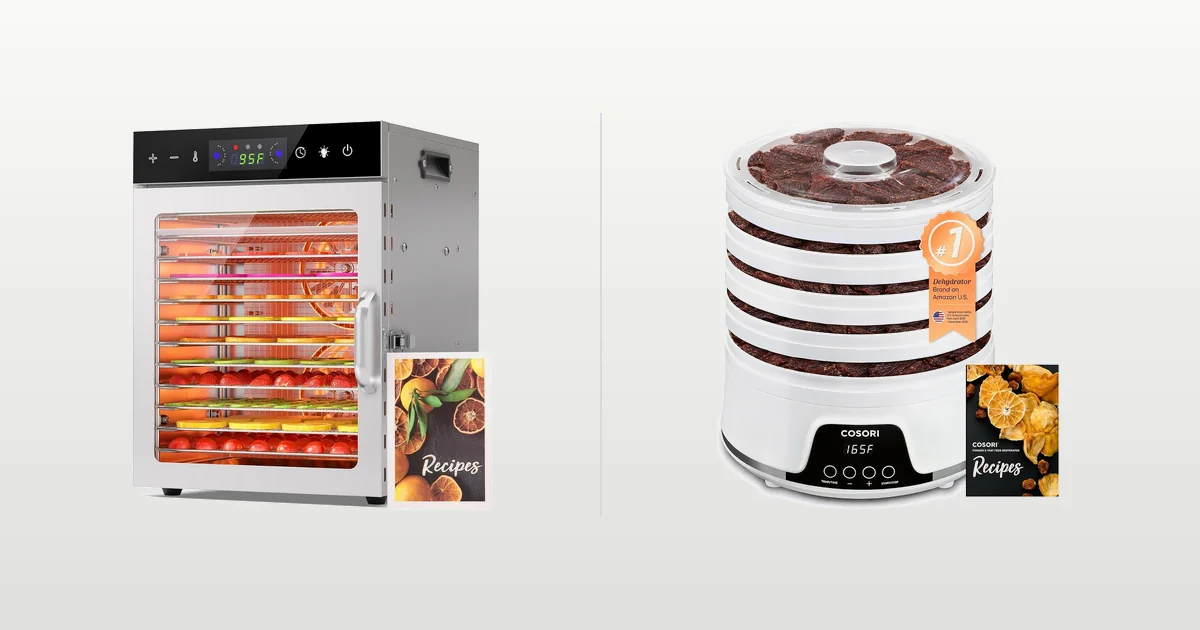
Affiliate Disclosure: As an Amazon Associate, we earn from qualifying purchases. This does not affect the price you pay.
Dehydrators are sold on tray count. Every listing leads with it, and it is close to the least useful number on the page.
The specification that decides what the machine can actually do is the temperature ceiling, and in this roundup it ranges from 158°F to 196°F. That looks like a narrow band. It is not, because two specific numbers sit inside it: USDA guidance is to bring meat to 160°F, or 165°F for poultry, before drying it, since dehydrator temperatures are generally not relied on for pathogen destruction.
Three of the ten machines below stop at 158°F — under both figures. All three are marketed for jerky, and one has jerky in its product title. A fourth does not publish a ceiling at all.
That does not make them bad dehydrators. It means jerky in those machines requires heating the meat in an oven or a pan first, which is the recommended practice regardless of machine but is optional only on the six here that reach 160°F or more. Which side of that line a dehydrator falls on is worth more than four extra trays, and it is the first thing to check.
Our Quick Picks
 Best OverallHOPERAN BZ-1520
Twelve stainless trays and a range that runs from 86°F to 196°F — the only machine here with headroom above every food-safety figure.
 Best Under $50Cosori CFD-N051-W
The only dehydrator here under fifty dollars whose ceiling reaches the 165°F poultry figure.
 Best ExpandableNESCO FD-75A Snackmaster Pro
Starts at five trays and expands to twelve, with a top-mounted fan and the longest track record of anything here.
At a Glance
Ten Food Dehydrators Compared
Tray count and material set against the specification that matters more — how hot each machine actually gets.
| # | Model | Trays | Max Temp | Wattage | Material | Standout | Main Drawback | Check Price |
|---|---|---|---|---|---|---|---|---|
| 1 |
 HOPERAN BZ-1520 HOPERAN BZ-1520 |
12 stainless | 196°F | 800 W | Stainless steel | Highest ceiling and most trays here | Tallest and dearest in the roundup | View on Amazon |
| 2 |
 Ausegia DSC-08C Ausegia DSC-08C |
8 stainless | 190°F | 800 W | Full stainless | The only listing that states usable area | Trays are fewer than the HOPERAN’s twelve | View on Amazon |
| 3 |
 NESCO FD-75A Snackmaster Pro NESCO FD-75A Snackmaster Pro |
5, up to 12 | 160°F | 600 W | Plastic | Grows from 5 trays to 12 | Ceiling is 160°F, no poultry margin | View on Amazon |
| 4 |
 PSIIDAN FD-1033 PSIIDAN FD-1033 |
8 stainless | 167°F | 650 W | ABS and stainless | 4.9 stars, the highest here | No stated bottom of the range | View on Amazon |
| 5 |
 Cosori CFD-N051-W Cosori CFD-N051-W |
5 round | 165°F | 350 W | BPA-free PP | Only sub-$50 machine that reaches 165°F | Round trays waste area | View on Amazon |
| 6 |
 OSTBA GGJ-261B OSTBA GGJ-261B |
5 trays | 160°F | 240 W | Plastic and stainless | 240 watts, lowest here | Meets the beef figure with nothing spare | View on Amazon |
| 7 |
 FOHERE FD-1024 FOHERE FD-1024 |
5 x 11.42 in | 158°F | 400 W | PC and stainless | Widest trays under $45 | 158°F is below both USDA jerky figures | View on Amazon |
| 8 |
 Konfintos GGJ-300A Konfintos GGJ-300A |
5 trays | 158°F | 250 W | BPA-free ABS | 3.9 lbs and 7.28 inches deep | Sold for jerky, but stops at 158°F | View on Amazon |
| 9 |
 Commercial Chef CCD100W6 Commercial Chef CCD100W6 |
5 round, 9.25 in | 158°F | 280 W | BPA-free plastic | $35.99 with a stated warranty | Five round trays, about 2.3 sq ft total | View on Amazon |
| 10 |
 vassillias FD704MJY-1 vassillias FD704MJY-1 |
5 trays | Not stated | 280 W | Plastic | 4.7 stars at $35.99 | No temperature range published at all | View on Amazon |
Specifications, prices and ratings are taken from each manufacturer’s Amazon listing as displayed on 20 August 2026 and may change. Temperature figures are the manufacturers’ stated maximums; the vassillias listing publishes none. The 160°F and 165°F figures referenced throughout are USDA Food Safety and Inspection Service guidance for heating meat and poultry before dehydrating, not a rating of these machines. Only Ausegia publishes a usable drying area; the 2.3 sq ft figure quoted for the Commercial Chef is calculated from its stated 9.25-inch tray diameter. Silicone tray liners, mesh sheets and other accessories returned by the same Amazon category were excluded as they are not dehydrators.
Scroll the table sideways to see every column
How We Chose These Food Dehydrators
We researched current listings, compared manufacturer specifications and documentation, and examined recurring patterns in customer feedback. We did not carry out hands-on testing, and nothing below is presented as measured performance data.
- Stated maximum temperature — the one specification that decides whether the machine can do the jerky heating step itself
- Whether the range is published at all — one listing here gives no temperature figure anywhere
- Usable area rather than tray count — a 9.25-inch round tray and a full rectangular tray are not the same object
- Tray material — stainless or plastic, and whether it matches the temperature the machine claims
- Wattage against run length — dehydrators run for eight to twenty-four hours, so draw compounds
- Complete machines only — silicone liners, mesh sheets and tray accessories from the same category were excluded
The 10 Best Food Dehydrators, Reviewed
1. HOPERAN BZ-1520 — Best Overall

Nine of the ten dehydrators in this roundup stop somewhere between 158°F and 167°F. This one runs to 196°F, and starts at 86°F, which is low enough for herbs and yoghurt and high enough that meat safety is never the machine’s limitation.
Twelve stainless trays is also double what most of this list offers.
Key Specifications
| Trays | 12, stainless steel |
|---|---|
| Temperature range | 86–196°F, the widest here |
| Wattage | 800 watts, joint highest |
| Voltage | 110 volts |
| Dimensions | 11.9″D x 12.2″W x 16.1″H |
| Material | Stainless steel |
| Model | BZ-1520 |
| Rating | 4.5 out of 5 stars |
| Best For | Jerky and large batches without a second pass in the oven |
Why We Recommend It
The range is the whole argument. USDA guidance for jerky is to bring meat to 160°F, or 165°F for poultry, before drying. Three machines in this roundup cannot reach either figure. This one clears both by thirty degrees, so if you dry meat regularly the oven step stops being the thing that decides your workflow.
Stainless trays matter more here than elsewhere too: at 196°F you are running well above what the plastic-tray machines are rated for.
The costs are height and price. At 16.1 inches it is the tallest machine here and will not slide under a wall cabinet, and at $142.99 it is the most expensive.
Pros
- Widest temperature range here, 86°F to 196°F
- Twelve stainless steel trays, double most of this list
- 800 watts, joint highest
- Clears both USDA jerky figures with room to spare
- Low enough at the bottom end for herbs
Cons
- Most expensive in the roundup at $142.99
- 16.1 inches tall, will not fit under a cabinet
- No usable drying area published
- Bulky to store between uses
Best for: Anyone who dries meat often and wants the machine, not the oven, to do the heating.
2. Ausegia DSC-08C — Largest Drying Area

Every other listing in this roundup sells on tray count. Tray count tells you almost nothing, because a tray can be a 9.25-inch circle or a full rectangle, and the difference between those two is roughly fourfold.
Ausegia is the only one that states the figure that follows from it: up to 9 square feet of usable area, across eight trays.
Key Specifications
| Trays | 8, full stainless steel |
|---|---|
| Usable drying area | Up to 9 sq ft, stated |
| Temperature range | Up to 190°F |
| Wattage | 800 watts, joint highest |
| Voltage | 110 volts |
| Body | Full stainless steel |
| Model | DSC-08C |
| Rating | 4.6 out of 5 stars |
| Best For | Big batches where area, not tray count, is the constraint |
Why We Recommend It
Nine square feet against a rival’s five round trays is not a close comparison. Five 9.25-inch circular trays, which is what the Commercial Chef here uses, works out at about 2.3 square feet in total. This is close to four times that, from a machine that costs three times as much.
It reaches 190°F, so like the HOPERAN it clears both USDA jerky figures without needing the oven, and the body is full stainless rather than stainless trays in a plastic shell.
It has eight trays rather than twelve, and no dimensions are published on the listing, so if counter clearance is tight you are buying blind on footprint.
Pros
- Only listing here that states usable drying area
- Up to 9 sq ft, roughly four times the smallest here
- Full stainless steel body, not just the trays
- 190°F ceiling clears both USDA jerky figures
- 800 watts, joint highest
Cons
- No dimensions published on the listing
- Eight trays rather than the HOPERAN’s twelve
- No stated bottom of the temperature range
- Under a hundred dollars but still triple the budget machines
Best for: Batch drying where total area matters more than the number of trays.
3. NESCO FD-75A Snackmaster Pro — Best Expandable

Every other machine here is fixed at whatever tray count you buy. The Snackmaster ships with five and takes up to twelve, so a garden glut or a hunting season does not mean a second dehydrator.
The fan sits in the top rather than the base, which stops juices dripping into the heating element — the failure mode that kills bottom-fan machines.
Key Specifications
| Trays | 5 supplied, expandable to 12 |
|---|---|
| Temperature range | 95–160°F |
| Wattage | 600 watts |
| Fan | Top-mounted, Converga-Flow |
| Dimensions | 13″D x 13″W x 10″H |
| Weight | 3.5 kg |
| Included | Fruit roll sheets, Clean-a-Screens, jerky seasoning sample |
| Model | FD-75A |
| Best For | Starting small and scaling up without replacing the machine |
Why We Recommend It
Buying capacity you do not need yet is the most common mistake in this category, and this is the only machine here that lets you avoid it. Five trays now, twelve later, same powerhead.
NESCO states its Converga-Flow airflow circulates heat without tray rotation, which is the practical difference between a machine you load and leave and one you have to shuffle halfway through. It is also made in the USA apart from the powerhead, and ships with fruit roll sheets, mesh screens and a jerky seasoning sample rather than making you buy them separately.
The ceiling is 160°F. That meets the USDA figure for beef jerky exactly and falls five degrees short of the poultry figure, so chicken and turkey jerky still need the oven step.
Pros
- Expands from 5 trays to 12 on the same powerhead
- Top-mounted fan keeps drips out of the element
- Converga-Flow needs no tray rotation
- Ships with roll sheets, screens and seasoning
- Made in the USA apart from the powerhead
Cons
- 160°F ceiling leaves no margin for poultry
- Plastic body and trays
- 13-inch square footprint is wide for five trays
- Round trays waste area against rectangular ones
Best for: Anyone who wants to start with five trays and still have room to grow.
4. PSIIDAN FD-1033 — Highest Rated

Four point nine is an unusually high rating for a small appliance, and it is the highest in this roundup by four tenths of a star.
The specification behind it is sensible rather than showy: eight stainless trays, 650 watts, and a ceiling of 167°F that sits just above both USDA jerky figures.
Key Specifications
| Trays | 8, stainless steel |
|---|---|
| Temperature | Adjustable up to 167°F |
| Timer | 48 hours |
| Wattage | 650 watts |
| Materials | ABS body with stainless steel trays |
| Colour | Grey and silver |
| Model | FD-1033 |
| Rating | 4.9 out of 5 stars, highest here |
| Best For | Long unattended runs at a temperature that clears both jerky figures |
Why We Recommend It
The 48-hour timer is the feature to notice. Jerky takes four to twelve hours; fruit leather and tomatoes can take a full day; mushrooms and citrus slices longer still. Most machines here give you a dial and expect you to be in the house. Two days of programmable run time removes that.
At 167°F it clears 160°F for beef and 165°F for poultry, which only three other machines here do — and it does it for thirty dollars less than the HOPERAN.
No lower limit is published, which matters if you want to dry herbs gently, and the body is ABS rather than the full stainless of the Ausegia.
Pros
- Highest rating in the roundup at 4.9
- 48-hour timer for long unattended runs
- 167°F clears both USDA jerky figures
- Eight stainless steel trays
- Cheaper than the other machines that clear 165°F
Cons
- No bottom of the temperature range stated
- ABS body rather than full stainless
- No dimensions published
- No usable drying area published
Best for: Long runs you want to programme and walk away from.
5. Cosori CFD-N051-W — Best Under $50

Below fifty dollars the ceilings in this category collapse. The three cheapest machines here stop at 158°F, which is under both USDA jerky figures.
Cosori is the exception: 165°F for $49.99, which is the poultry figure exactly and five degrees above the beef one.
Key Specifications
| Trays | 5, BPA-free |
|---|---|
| Temperature range | 95–165°F |
| Wattage | 350 watts |
| Voltage | 120 volts |
| Material | Polypropylene, food safe |
| Dimensions | 12.2″D x 12.2″W x 8.98″H |
| Tray shape | Round |
| Model | CFD-N051-W |
| Best For | Jerky on a budget without giving up the temperature ceiling |
Why We Recommend It
That single specification is why this is the budget pick rather than one of the cheaper machines. A dehydrator that tops out at 158°F can never be the heating step for jerky; one that reaches 165°F can. The gap is seven degrees and about seven dollars.
It also runs down to 95°F for herbs, uses 350 watts, and Cosori is a name with real support behind it, which none of the sub-$45 listings here can claim.
The trays are round, and round trays inside a 12.2-inch square body waste the corners. Five of them is also the smallest tray count in the roundup, shared with four other machines.
Pros
- Reaches 165°F, the USDA poultry figure, for under $50
- Runs down to 95°F for herbs
- Established brand with real support
- BPA-free food-safe trays
- Compact at just under 9 inches tall
Cons
- Round trays waste the corners of a square footprint
- Only 5 trays
- 350 watts, modest for the category
- Plastic trays rather than stainless
Best for: Budget buyers who still want the temperature ceiling jerky needs.
6. OSTBA GGJ-261B — Lowest Power Draw

Dehydrating is not a fast process. Fruit leather runs eight to twelve hours, tomatoes longer, and the machine is drawing power the whole time. Wattage matters more here than in almost any other countertop appliance because of how long it runs.
At 240 watts this is the lowest draw in the roundup — less than a third of the two 800-watt machines.
Key Specifications
| Trays | 5 |
|---|---|
| Temperature range | 95–160°F |
| Wattage | 240 watts, lowest here |
| Voltage | 120 volts |
| Materials | Plastic with stainless steel |
| Dimensions | 9.45″D x 10.24″W x 8.27″H |
| Colour | Black, clear and silver |
| Model | GGJ-261B |
| Best For | Long runs where the electricity bill is the concern |
Why We Recommend It
A twelve-hour run at 240 watts uses about 2.9 kWh; the same run at 800 watts uses 9.6. Over a season of drying that is a real difference, and the 800-watt machines are not three times faster.
The ceiling is 160°F, which meets the USDA beef jerky figure exactly. It has clear sides so you can watch progress without opening the stack, and at 9.45 by 10.24 inches it has the second smallest footprint here.
Meeting 160°F exactly means no margin: it is five degrees short of the poultry figure, and any thermostat drift eats into the beef one.
Pros
- 240 watts, lowest draw in the roundup
- Meets the 160°F USDA beef jerky figure
- Small footprint at 9.45 by 10.24 inches
- Clear sides show progress without opening
- Stainless in the tray construction
Cons
- No margin above 160°F, and short of the poultry figure
- Only 5 trays
- Lowest wattage means slower runs
- 4.3 stars, among the lower ratings here
Best for: Drying that runs for hours at a time on a metered supply.
7. FOHERE FD-1024 — Widest Budget Trays

Tray width is the specification that decides how much you can lay out in one pass, and at 11.42 inches these are the widest in the budget half of this roundup — noticeably more usable than the 9.25-inch circles on the Commercial Chef.
They are rectangular rather than round, which is the other half of the same advantage.
Key Specifications
| Trays | 5, stackable, 11.42 inches |
|---|---|
| Temperature range | 95–158°F |
| Wattage | 400 watts |
| Voltage | 120 volts |
| Materials | Polycarbonate and stainless steel |
| Dimensions | 8.27 in D x 11.42 in W x 8.66 in H |
| Tray shape | Rectangular |
| Model | FD-1024 |
| Best For | Fruit, herbs and vegetables where 158°F is enough |
Why We Recommend It
Rectangular trays use the whole footprint. A round tray inside a square machine throws away the corners; four of the ten machines here are round, and this is not one of them. Four hundred watts is also respectable for the price, and the trays combine polycarbonate with stainless steel.
The ceiling is 158°F, and that is the thing to weigh. It is below the USDA figure of 160°F for beef and 165°F for poultry, so this machine cannot be the heating step for jerky. For fruit, herbs, vegetables and fruit leather — which is what most dehydrators actually get used for — it makes no difference at all.
At 4.2 stars it also carries the lowest rating in this roundup.
Pros
- Widest trays in the budget tier at 11.42 inches
- Rectangular trays use the full footprint
- 400 watts, high for the price
- Polycarbonate and stainless construction
- Slim 8.27-inch depth
Cons
- 158°F ceiling is below both USDA jerky figures
- 4.2 stars, lowest rating here
- Only 5 trays
- No timer stated on the listing
Best for: Fruit, vegetables and herbs, where the temperature ceiling never comes up.
8. Konfintos GGJ-300A — Most Compact

At 7.28 inches deep and under four pounds, this is the only dehydrator here that is genuinely easy to put away between uses. Most of this roundup is a permanent counter resident.
It rates 4.7 stars, joint second highest in the group, and draws 250 watts.
Key Specifications
| Trays | 5 |
|---|---|
| Temperature range | 95–158°F |
| Wattage | 250 watts |
| Voltage | 120 volts |
| Material | BPA-free ABS, food safe |
| Dimensions | 7.28 in D x 11.81 in W x 7.87 in H |
| Weight | 3.9 lbs |
| Model | GGJ-300A |
| Best For | Small kitchens and occasional drying |
Why We Recommend It
Small, light, cheap and well rated is a combination that suits anyone who dries a tray of herbs or apple rings every few weeks rather than running batches every weekend.
One caveat is worth stating plainly, because the listing does not. This machine is titled and sold for jerky, and its ceiling is 158°F — below the USDA figure of 160°F for beef and 165°F for poultry. You can still make jerky with it, but the meat has to be brought up to temperature in the oven or a pan first. That is the recommended practice with any dehydrator; the difference is that with this one it is not optional.
ABS plastic and five small trays also put a firm ceiling on batch size.
Pros
- Smallest footprint here at 7.28 inches deep
- 3.9 lbs, genuinely storable
- 4.7 stars, joint second highest
- 250 watts, second lowest draw
- BPA-free food-safe ABS
Cons
- Marketed for jerky but stops at 158°F
- ABS plastic throughout
- Only 5 small trays
- No timer stated
Best for: Occasional drying in a kitchen with no spare counter.
9. Commercial Chef CCD100W6 — Best Value

Thirty-five ninety-nine buys five 9.25-inch trays, a stated 104–158°F range and a one-year warranty, which is more disclosure than several machines three times the price manage.
At 3.3 pounds it is the lightest here, and at 9.43 by 9.92 inches the smallest footprint.
Key Specifications
| Trays | 5, BPA-free, 9.25 inch diameter |
|---|---|
| Temperature range | 104–158°F |
| Wattage | 280 watts |
| Voltage | 120 volts |
| Dimensions | 9.43 in D x 9.92 in W x 7.01 in H |
| Weight | 3.3 lbs, lightest here |
| Warranty | 1 year |
| Model | CCD100W6 |
| Best For | A first dehydrator at the lowest sensible price |
Why We Recommend It
As a first dehydrator it does the job. Fruit, vegetables, herbs and fruit leather all sit comfortably inside its range, and the price is low enough that finding out whether you will keep using it costs almost nothing.
Two numbers should shape your expectations. The first is area: five 9.25-inch circles work out at roughly 2.3 square feet in total, against the 9 square feet the Ausegia states. That is a difference in kind, not degree.
The second is the ceiling. Its own listing describes it as a jerky maker and its range stops at 158°F, under both USDA figures. As with the other 158°F machines, jerky means pre-heating the meat elsewhere first.
Pros
- Cheapest machine here that publishes its full range
- One-year warranty stated
- Lightest in the roundup at 3.3 lbs
- Smallest footprint at 9.43 by 9.92 inches
- BPA-free trays
Cons
- About 2.3 sq ft of tray area in total
- 158°F ceiling, under both USDA jerky figures
- Round trays waste the corners
- Bottom of the range is 104°F, high for delicate herbs
Best for: A first dehydrator, or occasional fruit and vegetable drying.
10. vassillias FD704MJY-1 — Cheapest Here

Joint cheapest with the Commercial Chef, and better rated at 4.7 stars. Five trays, 280 watts, and a white plastic body.
What it does not have is a published temperature range — not in the title, not in the specifications, nowhere on the listing.
Key Specifications
| Trays | 5 |
|---|---|
| Temperature range | Not stated on the listing |
| Wattage | 280 watts |
| Material | Plastic |
| Colour | White |
| Model | FD704MJY-1 |
| Price | $35.99, joint cheapest here |
| Rating | 4.7 out of 5 stars |
| Best For | Fruit and herbs, if you accept an unpublished ceiling |
Why We Recommend It
The rating is genuine and the price is the lowest here, so for drying apple rings, banana chips and herbs this is a reasonable amount of machine for the money.
But in a category where the temperature ceiling is the specification that decides what the machine can safely do, not publishing it is a meaningful omission. Every other machine in this roundup states at least a maximum. Three of them state 158°F, which is honest and lets you plan around it. This one leaves you to find out.
Buy it for fruit, vegetables and herbs, where the ceiling does not matter. Do not buy it as a jerky machine on the assumption that it reaches 160°F, because nothing on the listing says it does.
Pros
- Joint cheapest in the roundup at $35.99
- 4.7 stars, joint second highest here
- 280 watts, low draw for long runs
- Five stacking trays
- Light and simple to store
Cons
- No temperature range published anywhere on the listing
- No dimensions or weight stated
- Plastic body and trays
- Unknown brand with no stated warranty
Best for: Fruit and herbs, where the unpublished ceiling never becomes a problem.
158°F or 165°F: Which Side of the Line?
USDA guidance is to heat meat to 160°F, and poultry to 165°F, before dehydrating. Here is where these ten machines sit against those two numbers.
| Reaches 165°F+ | Reaches 160°F | Stops at 158°F | Not stated | |
|---|---|---|---|---|
| Models here | HOPERAN 196°F, Ausegia 190°F, PSIIDAN 167°F, Cosori 165°F | NESCO 160°F, OSTBA 160°F | FOHERE, Konfintos, Commercial Chef | vassillias |
| Beef jerky | Clears it | Meets it exactly | Below it | Unknown |
| Poultry jerky | Clears it | Five degrees short | Seven degrees short | Unknown |
| Oven pre-heat | Recommended, not forced | Recommended, no margin | Required in practice | Assume required |
| Price here | $49.99–$142.99 | $50.99–$80.51 | $35.99–$42.99 | $35.99 |
The cheapest way over the line is the Cosori at $49.99, which reaches 165°F exactly — about seven dollars and seven degrees more than the machines beneath it. The two 800-watt stainless machines clear both figures by thirty degrees. And the honest reading of the bottom column is that a 158°F dehydrator is a fruit, vegetable and herb machine that can also make jerky if you do the heating elsewhere, which is what the USDA advises you to do anyway.
Tray Count or Tray Area?
Nine of these ten listings sell on the number of trays. Only one states how much drying area you get, and the two figures are not proxies for each other.
| Round trays | Rectangular trays | Stated area | |
|---|---|---|---|
| Models here | Cosori, NESCO, Commercial Chef | FOHERE, Konfintos, OSTBA and the stainless machines | Ausegia only |
| Corner space | Wasted inside a square body | Used | Published as up to 9 sq ft |
| Worked example | Commercial Chef: five 9.25-inch circles ≈ 2.3 sq ft | FOHERE: five 11.42-inch trays | Ausegia: 9 sq ft across 8 trays |
| Tray count says | 5, 5, 5 | 5, 5, 5 | 8 |
| Area actually says | Least here | Middle | Roughly four times the Commercial Chef |
Five trays can mean 2.3 square feet or something close to double that, depending entirely on tray shape and diameter, and no listing except the Ausegia will tell you which. Where a diameter is published you can work it out — the Commercial Chef’s 9.25-inch circles come to about 67 square inches each. Where it is not, tray count on its own is close to meaningless, and comparing a five-tray machine to an eight-tray machine on that basis will mislead you in both directions.
Best Alternatives
| Alternative | Why Consider It | Better For | Main Trade-Off |
|---|---|---|---|
| Oven on its lowest setting | You already own it | Trying dehydrating once | Most ovens start near 170°F, too hot, and it ties up the oven for hours |
| Air fryer with a dehydrate mode | One appliance, no extra storage | Small batches of fruit or jerky | One shallow basket, so capacity is a fraction of a tray stack |
| Freeze dryer | Far longer shelf life and better texture | Serious food storage | Ten to twenty times the price and a large footprint |
| Sun drying racks | No electricity at all | Herbs and chillies in a hot dry climate | Weather-dependent, slow, and needs protection from insects |
| Vacuum sealing fresh | No moisture removal needed | Short-term storage of what you have | Refrigeration still required, and no shelf-stable result |
What Each Price Tier Actually Buys
$35 to $43 — Commercial Chef, vassillias, FOHERE, Konfintos. Five plastic trays, 250 to 400 watts, and a ceiling of 158°F or unpublished. These are fruit, vegetable and herb machines. Three of the four are marketed for jerky and none of them reaches the USDA figure for it.
$49 to $51 — Cosori, OSTBA. The same five trays, but the ceiling crosses the line: 165°F on the Cosori and 160°F on the OSTBA. Roughly ten dollars more than the tier below, for the single specification that changes what the machine can do.
$80 — NESCO Snackmaster Pro. Still 160°F and still plastic, but 600 watts, a top-mounted fan, no tray rotation, and expandability from five trays to twelve. You are paying for capacity that grows and an airflow design the cheaper machines do not have.
$100 to $143 — Ausegia, PSIIDAN, HOPERAN. Stainless trays, 650 to 800 watts, eight to twelve trays and ceilings of 167°F to 196°F. Every machine in this tier clears both USDA figures, and the Ausegia is the only one in the roundup that tells you its drying area.
The pattern: the jump that changes what the machine can do is the ten dollars between the $40 tier and the $50 tier. Everything above that buys capacity, materials and speed — useful, but not the same kind of upgrade.
How to Choose a Food Dehydrator
Read the Maximum Temperature First
Before tray count, before wattage, before brand. USDA guidance is 160°F for meat and 165°F for poultry before drying. A machine that stops at 158°F can never be the heating step, and three of the ten here do exactly that while being sold for jerky. If the listing does not publish a maximum at all, treat that as a 158°F machine until proven otherwise.
Work Out the Area, Not the Tray Count
Five trays tells you nothing until you know their shape and size. A 9.25-inch round tray is about 67 square inches; a full rectangular tray in the same footprint is considerably more. Only one listing here publishes a total drying area. Where a diameter is given you can calculate it; where nothing is given, assume the smaller answer.
Match the Tray Material to the Temperature
The machines that run to 190°F and 196°F here use stainless steel trays. The plastic-tray machines mostly stop at 158°F to 165°F. That correlation is not an accident, and a cheap machine claiming a very high ceiling on plastic trays would be the combination to distrust.
Take Wattage Seriously Because Runs Are Long
A dehydrator is not a kettle. Twelve hours at 240 watts is about 2.9 kWh; the same run at 800 watts is 9.6. Higher wattage does buy faster drying and bigger loads, but it is not proportional, and the difference compounds across a drying season in a way it never does with a five-minute appliance.
Prefer a Top-Mounted or Rear Fan
Bottom-fan machines let juices drip into the heating element, which is the common way these fail. The NESCO here states a top-mounted fan and Converga-Flow airflow that removes the need to rotate trays halfway through. Rear-fan designs achieve the same thing. It is worth checking, because most listings will not volunteer it.
Buy Expandable if You Are Unsure of the Size
The most common mistake here is buying twelve trays for a hobby you have not started, or five for a garden that produces far more than that. The Snackmaster is the only machine in this roundup that starts at five and takes twelve on the same powerhead, which is the sensible answer when you genuinely do not know yet.
Common Food Dehydrator Buying Mistakes
- Comparing machines on tray count. Five 9.25-inch circles is about 2.3 square feet; one listing here states 9 square feet across eight trays. Tray count hides that entirely.
- Assuming a jerky machine reaches jerky temperature. Three of these ten are marketed for jerky and stop at 158°F, below both USDA figures.
- Skipping the pre-heat step. USDA guidance is to bring meat to 160°F, or poultry to 165°F, before drying — recommended on every machine, unavoidable on the 158°F ones.
- Ignoring the bottom of the range. Herbs want 95°F to 105°F. One machine here starts at 104°F, which is high for delicate leaves.
- Treating wattage as speed. An 800-watt machine is not three times faster than a 240-watt one, but it does cost three times as much to run per hour.
- Buying for the batch size you imagine. Most people dry fruit and herbs, not fifteen pounds of venison. Expandable beats aspirational.
- Overlooking where the fan sits. A bottom-mounted fan collects the juice that drips off the trays above it.
Which Food Dehydrator Should You Buy?
Buy the HOPERAN BZ-1520 if you dry meat regularly. Twelve stainless trays and a range up to 196°F, the only machine here with real headroom above both USDA figures.
Buy the Ausegia DSC-08C if total capacity is the point. It is the only listing in this roundup that states its drying area — up to 9 square feet — and it reaches 190°F in a full stainless body.
Buy the NESCO FD-75A if you are not sure how much drying you will do. Five trays now, twelve later, with a top-mounted fan and no tray rotation.
Buy the PSIIDAN FD-1033 if you want long unattended runs. Highest rated here at 4.9, with a 48-hour timer and a 167°F ceiling that clears both jerky figures.
Buy the Cosori CFD-N051-W if you want jerky on a budget. The only sub-$50 machine here that reaches 165°F.
Buy the OSTBA GGJ-261B if the running cost matters. Two hundred and forty watts, the lowest here, and still a 160°F ceiling.
Buy the Commercial Chef CCD100W6 if you want to try dehydrating for as little as possible. Thirty-six dollars, a published range and a one-year warranty.
Frequently Asked Questions
What temperature should a food dehydrator reach?
It depends entirely on what you are drying. Herbs want 95°F to 105°F, fruit and vegetables 125°F to 140°F, and meat is the demanding case: USDA Food Safety and Inspection Service guidance is to heat meat to 160°F, and poultry to 165°F, before dehydrating, because dehydrator temperatures are generally not relied on for pathogen destruction. In this roundup four machines reach 165°F or higher, two reach 160°F, three stop at 158°F, and one publishes no figure at all.
Can you make jerky in a dehydrator that only reaches 158°F?
Yes, but the meat has to be brought up to temperature first — in an oven or a pan — because the machine itself never reaches the 160°F the USDA names for beef or the 165°F for poultry. That pre-heating step is the recommended practice with any dehydrator, so the real difference is that on a 165°F machine you have the option and on a 158°F machine you do not. Three of the ten machines here stop at 158°F, and all three are marketed for jerky.
Is tray count a good way to compare dehydrators?
No, and it is what almost every listing leads with. A tray can be a 9.25-inch circle or a full rectangle, and the difference is roughly fourfold. The Commercial Chef here has five 9.25-inch round trays, which works out at about 2.3 square feet in total; the Ausegia states up to 9 square feet across eight. Only that one listing publishes an area figure, so where a tray diameter is given it is worth calculating, and where nothing is given, assume the smaller answer.
Do round or rectangular dehydrator trays work better?
Rectangular trays use the whole footprint; round trays inside a square body waste the corners, and most also have a hole in the middle for airflow. Four of the ten machines here are round, including two of the better-known names. Round stacking designs do have an advantage in that they are usually expandable — the NESCO goes from five trays to twelve — so the trade is area against flexibility.
How much electricity does a food dehydrator use?
More than people expect, because the runs are long rather than because the draw is high. The machines here range from 240 to 800 watts. A twelve-hour run at 240 watts is roughly 2.9 kWh; the same run at 800 watts is about 9.6 kWh. Higher wattage does dry faster and handle bigger loads, but not in proportion to the draw, so if you dehydrate often the lower-wattage machines are meaningfully cheaper to live with.
Where should the fan be on a dehydrator?
Top or rear, not bottom. Juices drip off the trays as food dries, and on a bottom-fan machine they land in the heating element, which is the usual way these fail. The NESCO in this roundup states a top-mounted fan and airflow that removes the need to rotate trays partway through a run. Most listings do not mention fan position at all, which is worth noticing.
What can you actually dehydrate?
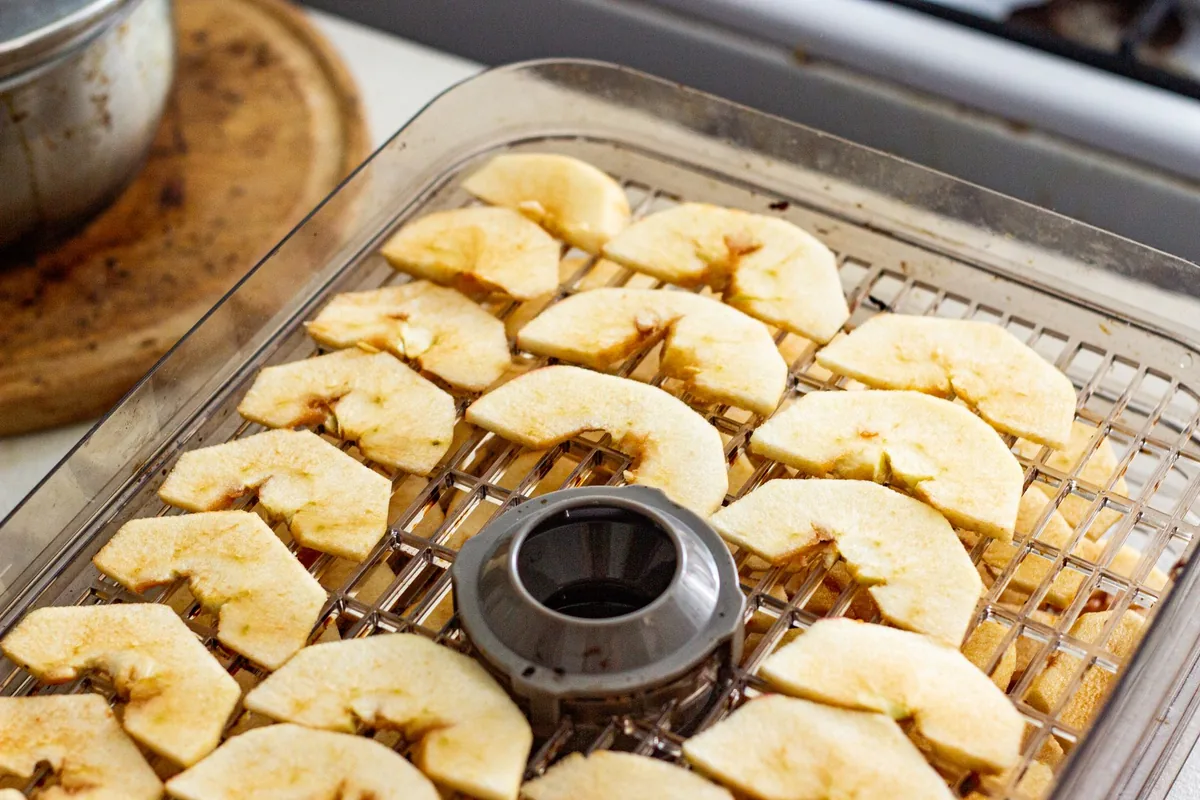
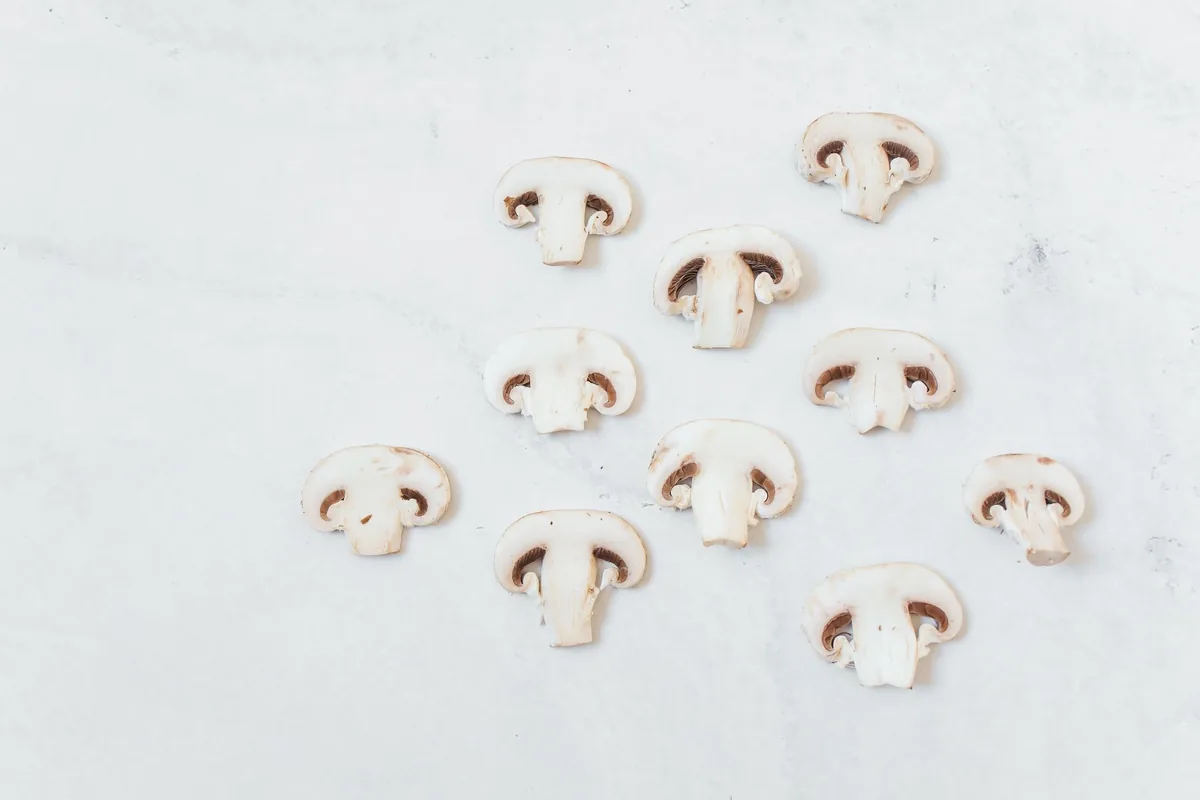
Fruit, vegetables, herbs, fruit leathers, jerky, mushrooms, citrus slices, pet treats and yoghurt all appear across these listings. In practice most people buy a dehydrator for jerky and end up using it mostly for fruit and herbs, which is why the temperature ceiling matters less than it first appears — but it is worth deciding which of those you are actually buying for before you pick a machine.
How long does dehydrating take?
Hours, not minutes. Herbs can be done in two to four hours, fruit slices take six to twelve, jerky four to twelve depending on thickness, and mushrooms or thick tomato slices can run a full day. That is why a timer is worth more here than on most appliances — the PSIIDAN in this roundup offers 48 hours of programmable run time — and why wattage compounds into a real running cost.
Final Verdict
Twelve stainless trays and 86°F to 196°F — the only machine here with genuine headroom above both USDA jerky figures.
The cheapest way across the 165°F line, at $49.99, when the three machines below it stop at 158°F.
Five trays now and twelve later on the same powerhead, with a top-mounted fan and no tray rotation.
The tray count is on the front of every dehydrator listing and it is the number least worth reading. It does not tell you the drying area, because a tray can be a 9.25-inch circle or a full rectangle, and only one of these ten listings will tell you which.
The number that does the work is the temperature ceiling. In this roundup it separates four machines that clear the USDA figure of 165°F for poultry from three that stop at 158°F while being sold for jerky, and one that does not publish a figure at all. The gap between those groups is about ten dollars.
So decide what you are drying. If it is fruit, vegetables and herbs, the $36 machines are genuinely enough and the ceiling never comes up. If it is meat, spend the extra ten dollars and buy a machine that reaches at least 160°F — then pre-heat the meat anyway, because that is what the guidance says regardless of what the machine can do.