
Affiliate Disclosure: As an Amazon Associate, we earn from qualifying purchases. This does not affect the price you pay.
Two numbers decide whether a pocket knife suits you, and neither is the price. The first is blade steel, which sets how long the edge lasts between sharpenings. The second is blade length, which in many places decides whether you can legally carry it at all.
Most listings in this category bury both. Of the ten knives below, four do not state their steel grade beyond “stainless”, five do not publish a weight, and one gives two different blade lengths on the same page. We have flagged every gap rather than filling it with a guess.
The knives run from a 1.34-inch keychain folder to a 3.66-inch spring-assisted blade, and from an entry-grade 3CR13 to D2 tool steel. That range matters more than the $7.99 to $39.69 price spread, because the cheapest knife here is not a worse version of the dearest one — it is a different tool for a different job.
Our Quick Picks
 Best OverallKershaw Clash 1605CKTST
The only knife here from a long-established American knife brand, and the one with the most complete published specification.
 Best BudgetGrand Way 0207 W
Just under ten dollars, with 10,900 ratings behind it — more feedback than any other knife here.
 Best Blade SteelMossy Oak D2 Orange
The only D2 blade in this roundup, in a three-ounce package with a high-visibility handle.
At a Glance
Ten EDC Folders Compared
Blade length, steel grade, opening mechanism and weight, with the gaps in each listing shown rather than hidden.
| # | Model | Blade Length | Blade Steel | Opening | Weight | Standout | Main Drawback | Check Price |
|---|---|---|---|---|---|---|---|---|
| 1 |
 Kershaw Clash 1605CKTST Kershaw Clash 1605CKTST |
3.1 in | 8Cr13MoV | SpeedSafe assisted | 4.3 oz | Assisted opening from a real knife brand | Assisted opening is restricted in some states | View on Amazon |
| 2 |
 Buck Knives 371 Stockman Buck Knives 371 Stockman |
2.75 in | 420J2 | Manual, nail nick | 3.1 oz | Three blades, no pocket clip needed | 420J2 is a soft steel | View on Amazon |
| 3 |
 Grand Way 0207 W Grand Way 0207 W |
3.66 in | Stainless | Spring assisted | 6.3 oz | Most-reviewed knife in this roundup | Heaviest here, and the longest blade | View on Amazon |
| 4 |
 Mossy Oak Mini G10 Mossy Oak Mini G10 |
2.5 in | 3CR13 | Manual, liner lock | Not published | 6-inch overall length disappears in a pocket | 3CR13 is an entry-grade steel | View on Amazon |
| 5 |
 Mossy Oak D2 Orange Mossy Oak D2 Orange |
3 in | D2 tool steel | Manual | 3 oz | D2 holds an edge far longer than the rest | Only 133 ratings so far | View on Amazon |
| 6 |
 Grand Way Gentleman’s 6651 Grand Way Gentleman’s 6651 |
3 in (see note) | 440C | Manual, liner lock | Not published | 440C at a mid-range price | Listing gives two different blade lengths | View on Amazon |
| 7 |
 GOOD WORKER Karambit GOOD WORKER Karambit |
2.9 in | Stainless | Spring assisted | 4.6 oz | Finger ring makes it almost impossible to drop | Karambit shape reads as a weapon | View on Amazon |
| 8 |
 Grand Way USMC Jack 6699 Grand Way USMC Jack 6699 |
3.15 in | 440C at 60 HRC | Manual | Not published | Hardness published at 60 HRC | Straight back blade is less versatile | View on Amazon |
| 9 |
 FUNBRO Small FUNBRO Small |
1.34 in | Stainless | Manual | 2.08 oz | Smallest and lightest here | Blade too short for real work | View on Amazon |
| 10 |
 GOOD WORKER 6620 B GOOD WORKER 6620 B |
2.8 in | Stainless | Bearing pivot, no spring | Not published | Five tools, no spring mechanism | Serrated tanto is awkward for fine cuts | View on Amazon |
Specifications, prices and ratings are taken from each seller’s Amazon listing as displayed on 20 August 2026 and may change. “Not published” means the listing does not state that figure — we have not estimated it. Grand Way’s 6651 gives a 3.54-inch blade in its title and 3 inches in its specification table; both are shown. Blade-length and assisted-opening rules vary by state and by city; nothing here is legal advice.
Scroll the table sideways to see every column
How We Chose These Pocket Knives
We researched current listings, compared manufacturer specifications and documentation, and examined recurring patterns in customer feedback. We did not carry out hands-on testing, and nothing below is presented as measured performance data.
- Blade steel actually named — a grade you can compare, not just the word stainless
- Blade length published — because it is the figure carry law turns on
- Opening mechanism — assisted, manual or bearing pivot, each with different legal exposure
- Weight where stated — a knife you stop carrying is worth nothing
- Depth of the review record — 10,900 ratings is stronger evidence than 133
- Internal consistency of the listing — a listing contradicting itself on blade length is a mark against it
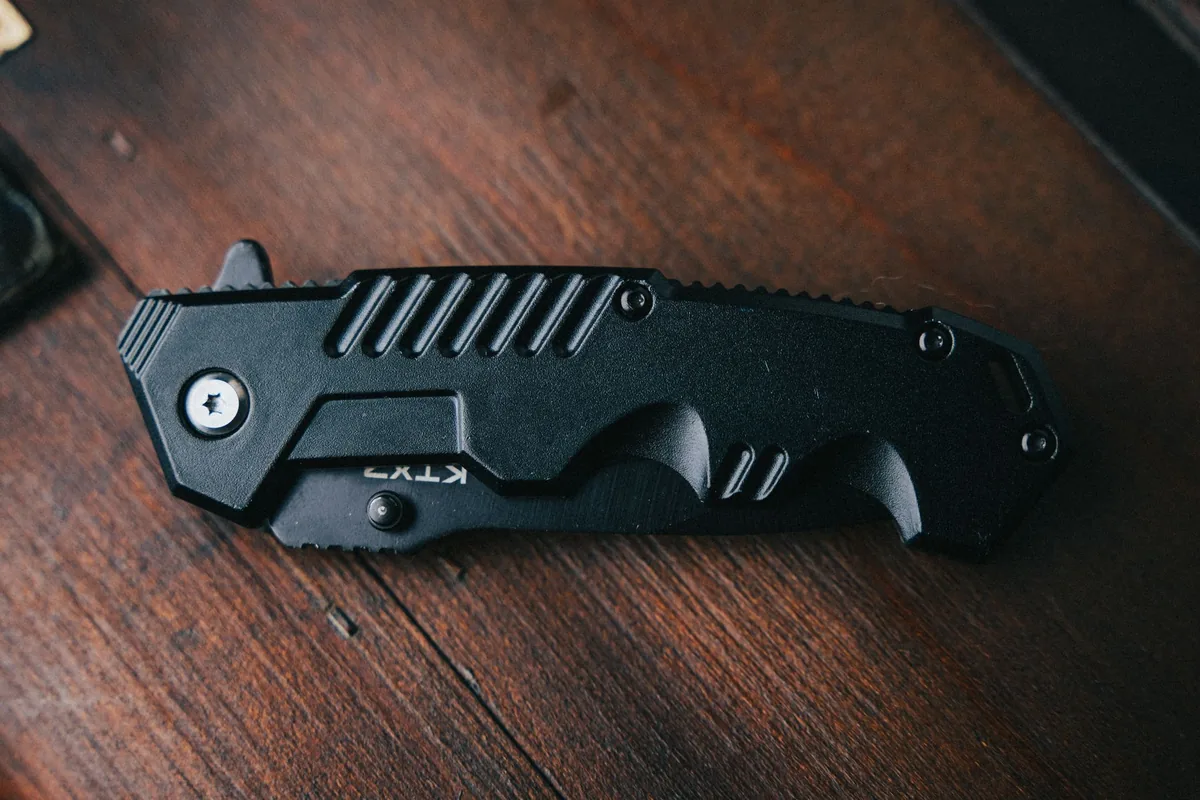
The 10 Best Pocket Knives for Men, Reviewed
1. Kershaw Clash 1605CKTST — Best Overall

Kershaw publishes what most sellers in this category will not: blade steel, blade length, closed length, overall length and weight, all in one place. That alone separates it from the unbranded folders that dominate this search.
8Cr13MoV is a mid-tier Chinese stainless that sharpens easily and holds a working edge. It is not a premium steel, and Kershaw does not claim it is.
Key Specifications
| Blade length | 3.1 inches |
|---|---|
| Blade steel | 8Cr13MoV |
| Blade shape | Drop point, partially serrated |
| Closed length | 4.25 inches |
| Overall length | 7.5 inches |
| Weight | 4.3 oz |
| Handle | Glass-filled nylon, index-finger indentation |
| Opening | SpeedSafe assisted opening with flipper |
| Model | 1605CKTST |
| Rating | 4.8 out of 5 from 7,903 ratings |
| Best For | One knife that does everything well |
Why We Recommend It
The SpeedSafe assisted mechanism and flipper tab open the blade one-handed with a push. That is genuinely useful when your other hand is holding something — and it is also the feature that carries legal restrictions in several states, which is covered below.
At 4.3 oz this is the second-heaviest knife here. The partially serrated edge cuts rope and webbing well but is harder to sharpen than a plain edge; if you mostly open boxes, the plain-edge version is the better buy.
Pros
- Highest rating here at 4.8, across 7,903 ratings
- Full specification published, unlike most rivals
- SpeedSafe assisted opening with flipper
- Glass-filled nylon handle with finger indentation
- Established brand with a real warranty and service path
Cons
- Assisted opening restricted in some states
- Serrated section is hard to resharpen
- 4.3 oz is heavy for pocket carry
- Dearest knife in this roundup
Best for: Anyone who wants one dependable EDC folder and does not want to think about it again.
2. Buck Knives 371 Stockman — Best Traditional

A stockman pattern gives you three blade shapes in one handle — a clip point for general cutting, plus two smaller blades for detail work. It is the pattern that was standard pocket carry for most of the twentieth century, and it still makes sense.
Because it has no spring and no pocket clip, it also sidesteps the assisted-opening restrictions that complicate several other knives here.
Key Specifications
| Blades | Three: 2-3/4 inch clip point plus two secondary blades |
|---|---|
| Blade steel | 420J2 |
| Closed length | 3-7/8 inches |
| Weight | 3.1 oz |
| Handle | Burlwood inlay with nickel silver bolsters |
| Opening | Manual, nail nick — no spring, no clip |
| Warranty | Buck Forever Warranty |
| Model | 0371BWS-B |
| Maker since | 1902 |
| Rating | 4.7 out of 5 from 2,028 ratings |
| Best For | Traditional carry without any assisted mechanism |
Why We Recommend It
420J2 is the honest weak point. It is a soft, highly corrosion-resistant steel that dulls faster than the D2 or 440C options below. The trade is that it sharpens back to keen in a couple of minutes on a basic stone, and it will not rust in a pocket.
The Forever Warranty is not marketing filler — Buck has been trading since 1902 and honours it. On a $36.99 knife that materially changes the value calculation.
Pros
- Three blade shapes in one 3.1 oz package
- No spring mechanism, so fewer carry restrictions
- Buck Forever Warranty behind it
- Burlwood and nickel silver look far dearer than the price
- Lightest of the two premium picks
Cons
- 420J2 dulls faster than D2 or 440C
- No pocket clip, so it rides loose in a pocket
- Two-handed opening only
- Nail nicks are fiddly with cold or gloved hands
Best for: Traditionalists, gift buyers, and anyone in a jurisdiction that restricts assisted openers.
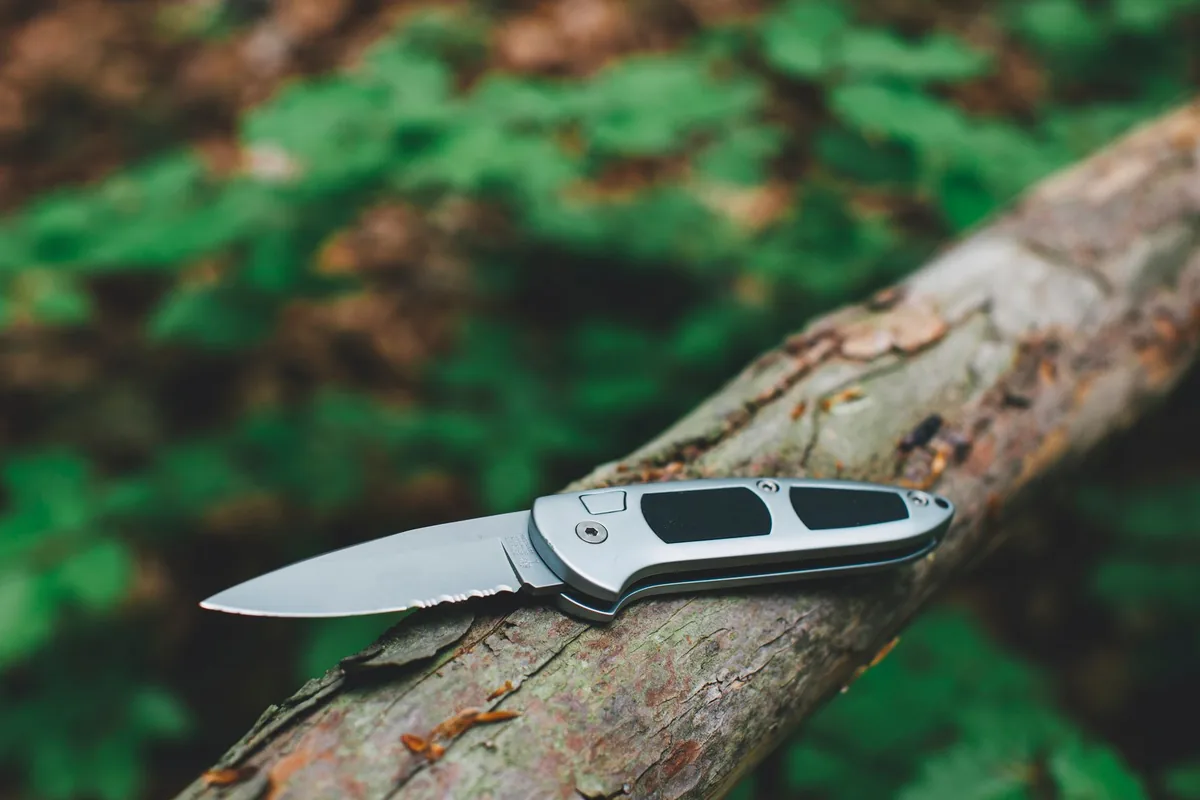
3. Grand Way 0207 W — Best Budget

Ten thousand nine hundred ratings at 4.6 is the strongest evidence base in this roundup by a wide margin. At $9.98 that combination is hard to argue with.
You are buying size and value rather than refinement: 3.66 inches of blade and 8.66 inches overall makes this the largest knife here.
Key Specifications
| Blade length | 3.66 inches |
|---|---|
| Blade steel | Stainless, grade not specified in listing |
| Blade shape | Clip point, plain edge |
| Overall length | 8.66 inches |
| Weight | 6.3 oz |
| Handle | Wood |
| Opening | Spring assisted |
| Extras | Glass breaker, pocket clip |
| Model | 0207 W |
| Rating | 4.6 out of 5 from 10,900 ratings |
| Best For | A cheap, large, hard-working folder |
Why We Recommend It
Two cautions on this one. First, the listing specifies only “stainless steel” without a grade, so you cannot compare its edge retention against the 440C and D2 knives below. Second, and more important, it combines a spring-assisted mechanism with a 3.66-inch blade — the two attributes most often restricted in state and city carry law. Read the legality section before ordering this one.
At 6.3 oz it is also the heaviest knife here by nearly two ounces, which is noticeable clipped to a trouser pocket all day.
Pros
- 10,900 ratings, the largest evidence base here
- Under $10
- Largest blade and overall length in the roundup
- Glass breaker and pocket clip included
- Wood handle at a price where plastic is normal
Cons
- Steel grade not specified in the listing
- 6.3 oz is the heaviest here
- 3.66-inch assisted blade is the most carry-restricted combination in this group
- No published closed length
Best for: Buyers who want maximum knife per dollar and have checked their local blade-length limit.
4. Mossy Oak Mini G10 — Best Compact

At six inches open and 2.5 inches of blade, this sits well under the three-inch threshold that most restrictive jurisdictions use, and it has no spring. That makes it the least legally complicated knife in this roundup.
G10 is a genuine upgrade over moulded plastic — a fibreglass laminate that grips well wet and does not deform.
Key Specifications
| Blade length | 2.5 inches |
|---|---|
| Blade thickness | 7/64 inch (2.8 mm) |
| Blade steel | 3CR13 stainless, stonewashed |
| Blade shape | Drop point |
| Handle length | 3.5 inches |
| Overall length | 6 inches |
| Handle | Black G10 with ergonomic groove |
| Lock | Liner lock |
| Extras | Bottle opener, glass breaker, cord cutter |
| Model | MO17037AE |
| Rating | 4.6 out of 5 from 7,383 ratings |
| Best For | Carrying every day without noticing it |
Why We Recommend It
3CR13 is an entry-grade stainless, softer than the 440C and D2 options here. The matte stonewashed finish hides scratches and cuts reflection, which is a real benefit on a working knife.
Mossy Oak does not publish a weight for this model, which is the one specification you would want given that portability is its entire argument. Everything else about it is documented properly.
Pros
- 2.5-inch blade and no spring, the least restricted here
- G10 handle rather than moulded plastic
- Six inches overall, genuinely pocketable
- 7,383 ratings at 4.6
- Liner lock, bottle opener and glass breaker included
Cons
- 3CR13 is the softest steel in this group
- Weight not published
- Small handle is cramped for large hands
- Not enough blade for heavy cutting
Best for: Everyday carry where the knife must be unobtrusive and legally uncomplicated.
5. Mossy Oak D2 Orange — Best Blade Steel

D2 is a semi-stainless tool steel that holds an edge substantially longer than the 3CR13, 420J2 and unspecified stainless used by most knives here. If you cut a lot and dislike sharpening, this is the specification that matters.
Three ounces with a 3-inch blade is a good ratio — it carries like the compact knives but cuts like a full-size one.
Key Specifications
| Blade length | 3 inches |
|---|---|
| Blade steel | D2 tool steel |
| Blade shape | Drop point |
| Open length | 7.5 inches |
| Closed length | 4.3 inches |
| Weight | 3 oz |
| Handle | Nylon and fibreglass, textured, orange |
| Rating | 4.2 out of 5 from 133 ratings |
| Best For | Edge retention on a budget |
Why We Recommend It
The orange handle is a practical choice rather than a styling one: a dropped knife in leaf litter or a toolbox is much easier to find. It also reads as a tool rather than a weapon, which is not nothing.
The caution is the evidence base. 133 ratings at 4.2 is the thinnest record in this roundup, and 4.2 is also the lowest score here. D2 is harder to sharpen than softer steels and will spot with rust if left wet, so it asks slightly more of the owner.
Pros
- Only D2 tool steel blade in this roundup
- Excellent edge retention for the price
- 3 oz with a full 3-inch blade
- High-visibility handle is easy to find if dropped
- Closed length published at 4.3 inches
Cons
- Only 133 ratings, thinnest record here
- Lowest rating in the group at 4.2
- D2 is semi-stainless and can spot with rust
- Harder to resharpen than softer steels
Best for: People who cut daily and would rather sharpen once a month than once a week.
6. Grand Way Gentleman’s 6651 — Best Wood Handle

440C is a proper knife steel with a fifty-year track record — harder and more wear-resistant than the 420J2 and 3CR13 used elsewhere in this group, and still easy enough to sharpen at home.
Paired with a wood handle and a drop point blade, this is the knife here that looks least like a tactical product, which matters if you use it in an office or at a dinner table.
Key Specifications
| Blade length — specification table | 3 inches |
|---|---|
| Blade length — product title | 3.54 inches — see note below |
| Blade steel | 440C stainless |
| Blade shape | Drop point, compound bevel |
| Overall length | 7.99 inches |
| Handle | Wood |
| Lock | Liner lock |
| Model | 6651 |
| Rating | 4.4 out of 5 from 3,675 ratings |
| Best For | A smarter-looking knife that still works |
Why We Recommend It
Note the blade length discrepancy. The product title advertises a 3.54-inch blade; the specification table on the same listing says 3 inches. That is not a trivial gap — three inches is the exact threshold several jurisdictions use for carry limits. We have listed both rather than pick one, and if you are buying to stay under a local limit, verify with the seller before ordering.
Weight is not published, which given the wood handle and 7.99-inch overall length is a gap worth noting.
Pros
- 440C steel at a mid-range price
- Drop point blade, the most versatile shape
- Wood handle suits non-tactical settings
- 3,675 ratings at 4.4
- Liner lock and manual opening, fewer carry restrictions than assisted models
Cons
- Title and spec table give different blade lengths
- Weight not published
- The discrepancy matters if you are near a 3-inch legal limit
- Wood handle needs more care than G10
Best for: Buyers who want a knife that does not announce itself, in a real knife steel.
7. GOOD WORKER Karambit — Best Grip Security

The finger ring is the entire point. Hook an index finger through it and the knife cannot be dropped or twisted out of your hand, which is genuinely useful cutting cordage in the wet or wearing gloves.
The curved blade pulls material into the edge as you draw it, so it slices rope, webbing and packaging efficiently.
Key Specifications
| Blade length | 7.4 cm (approximately 2.9 inches) |
|---|---|
| Blade shape | Karambit, curved, compound bevel |
| Blade steel | Stainless, grade not specified in listing |
| Closed size | 5 inches |
| Weight | 4.6 oz |
| Opening | Spring assisted |
| Handle | With finger ring for forward and reverse grip |
| Rating | 4.7 out of 5 from 983 ratings |
| Best For | Grip security in wet or gloved hands |
Why We Recommend It
Be clear-eyed about what this looks like. The karambit is a fighting-derived shape, the listing markets it for self-defence, and a curved ringed blade will be read as a weapon rather than a tool by most people who see it. Combined with a spring-assisted mechanism, that makes it the least suitable knife here for carrying in public.
It is also poor at the most common EDC task. A curved blade cannot make a flat controlled cut, so opening boxes and slicing an apple are both awkward.
Pros
- Finger ring makes the knife very hard to drop
- Curved edge excels at cutting cord and webbing
- 4.7 rating across 983 ratings
- Compact at 5 inches closed
- Spring assisted opening
Cons
- Reads as a weapon, not a tool
- Curved blade is poor for flat everyday cuts
- Spring assist plus tactical shape is a carry-law risk
- Steel grade not specified
Best for: Outdoor and work use where grip security matters more than appearance.
8. Grand Way USMC Jack 6699 — Best Rescue Features

Hardness is the specification almost no seller in this price bracket publishes, and it is the one that tells you whether a steel has been heat-treated properly. 440C at 60 HRC is a genuinely hard working edge.
Combined with the glass breaker, this is the knife in the group best suited to living in a car door pocket.
Key Specifications
| Blade length | 3.15 inches |
|---|---|
| Blade steel | 440C stainless |
| Hardness | 60 HRC, per listing |
| Blade shape | Straight back, V-grind |
| Overall length | 8.07 inches |
| Extras | Glass breaker, pocket clip |
| Model | 6699 / 6495 |
| Rating | 4.5 out of 5 from 3,056 ratings |
| Best For | Vehicle and emergency carry |
Why We Recommend It
The straight back blade with a V-grind gives a long uninterrupted cutting edge and a strong spine you can push against with a thumb. It is less versatile than a drop point for fine tip work, but better for slicing.
At 3.15 inches the blade sits just over the three-inch mark that several jurisdictions use as a threshold, so check the legality section before choosing this for pocket carry.
Pros
- Publishes hardness at 60 HRC, almost unheard of here
- 440C, a proven knife steel
- Glass breaker for vehicle emergencies
- 3,056 ratings at 4.5
- Manual opening, so no assisted-opening restriction
Cons
- 3.15-inch blade exceeds some local limits
- Weight not published
- Straight back is weaker for fine tip work
- Model number listed two different ways
Best for: Keeping in a vehicle, or anyone who wants a hard edge and a glass breaker.
9. FUNBRO Small — Best Keychain Size

At 1.34 inches of blade this is far below every carry threshold in the country, and at 2.08 oz you will not notice it on a keyring. That combination is exactly why it has 6,183 ratings.
Treat it as a permanently available box cutter rather than a knife you would rely on.
Key Specifications
| Blade length | 1.34 inches |
|---|---|
| Blade steel | Stainless, grade not specified in listing |
| Blade edge | Compound bevel |
| Overall length | 3.94 inches |
| Weight | 2.08 oz |
| Handle | ABS |
| Colour | Black |
| Rating | 4.5 out of 5 from 6,183 ratings |
| Best For | Keychain and pocket-lint duty |
Why We Recommend It
It is the cheapest item in this roundup at $7.99, and the listing is honest about the format — it describes itself as a mini box cutter as much as a knife.
The ABS handle is the weakest material here and the steel grade is unstated. Neither matters much at this size and price, but do not expect it to behave like the Kershaw or the Buck.
Pros
- Smallest and lightest here by a wide margin
- 1.34-inch blade is under every common legal threshold
- 6,183 ratings at 4.5
- Cheapest item in the roundup at $7.99
- Genuinely disappears on a keyring
Cons
- Blade too short for anything but light cutting
- ABS handle, the cheapest material here
- Steel grade not specified
- No pocket clip
Best for: A backup blade on a keyring, or a first knife for a cautious buyer.
10. GOOD WORKER 6620 B — Best Multi-Function

This is the only knife here designed explicitly around the legal thresholds: no spring mechanism and a blade under three inches. The listing says so directly, and it is why it earns a place despite an unremarkable steel.
A bearing pivot gives you fast one-handed opening without an assisted mechanism, which is the neat solution to that constraint.
Key Specifications
| Blade length | 2.8 inches |
|---|---|
| Blade shape | Tanto point, serrated |
| Blade steel | Stainless, grade not specified in listing |
| Overall length | 6.7 inches |
| Pivot | Bearing pivot system, manual |
| Tools | Blade, glass breaker, strap cutter, pocket clip, lanyard hole |
| Handle | Aluminium |
| Model | 6620 B |
| Rating | 4.5 out of 5 from 364 ratings |
| Best For | Carrying one thing that does five jobs |
Why We Recommend It
On the legality claim. The listing states that pocket knives without a spring and with blades under three inches are “generally legal to own and carry” in all states. That is the seller’s summary, not legal advice, and city ordinances can be stricter than state law. Verify against your own jurisdiction rather than relying on a product listing.
The serrated tanto is the compromise. A tanto tip is strong for piercing and the serrations chew through webbing, but neither helps with the flat, controlled cuts that make up most everyday use.
Pros
- No spring and a sub-3-inch blade, the least restricted combination
- Bearing pivot opens fast one-handed
- Glass breaker and strap cutter built in
- Aluminium handle rather than plastic
- Designed around carry thresholds rather than ignoring them
Cons
- Serrated tanto is poor for flat everyday cuts
- Steel grade not specified
- Only 364 ratings
- Weight not published
Best for: Commuters and drivers who want a rescue tool that is straightforward to carry.
Assisted Opening or Manual?
This is the decision with legal consequences attached, so it is worth making deliberately rather than by accident.
| Spring assisted | Manual / bearing pivot | |
|---|---|---|
| Models here | Kershaw Clash, Grand Way 0207 W, GOOD WORKER Karambit | Buck 371, both Mossy Oaks, Grand Way 6651 and 6699, FUNBRO, GOOD WORKER 6620 B |
| One-handed opening | Yes, fastest | Yes with a bearing pivot or flipper; slower with a nail nick |
| Legal exposure | Restricted in several states and cities | Generally the least restricted format |
| Moving parts | Spring can wear or fail | Fewer parts to fail |
| Typical price here | $9.98–$39.69 | $7.99–$36.99 |
If you want fast one-handed opening without the legal complication, the bearing pivot on the GOOD WORKER 6620 B is the middle path — it opens quickly under thumb pressure with no spring in the mechanism. Assisted opening is genuinely faster and genuinely more restricted, and no review can tell you which matters more where you live. Check your own state and city rules first, then choose.
Under Three Inches, or Over?
Three inches is the threshold that appears most often in local blade-length rules, which makes it the most useful line to sort these knives along.
| Under 3 inches | 3 inches and over | |
|---|---|---|
| Models here | FUNBRO 1.34 in, Mossy Oak Mini 2.5 in, GOOD WORKER 6620 B 2.8 in, Karambit approx 2.9 in | Mossy Oak D2 3 in, Grand Way 6651 3 in or 3.54 in, Kershaw 3.1 in, Grand Way 6699 3.15 in, Grand Way 0207 W 3.66 in |
| Everyday cutting | Fine for boxes, cord, food | More capable for larger tasks |
| Carry simplicity | Simplest | Depends on jurisdiction |
| Pocket presence | Barely noticeable | Noticeable, especially at 6.3 oz |
For most people a blade between 2.5 and 3 inches does everything a pocket knife is actually asked to do — opening packaging, cutting cord, trimming, food prep in a pinch. Blades beyond three inches buy capability you may rarely use, at the cost of carrying something that is restricted in more places. Note the Grand Way 6651 straddles the line depending on which figure in its listing you believe, which is precisely why that discrepancy matters.
Best Alternatives
| Alternative | Why Consider It | Better For | Main Trade-Off |
|---|---|---|---|
| Multi-tool with a blade | Pliers, drivers and a knife in one | Repairs and fiddly jobs | Bulkier, and the blade is usually mediocre |
| Fixed-blade belt knife | Stronger, nothing to fold or fail | Camping, hunting, batoning | Far more restricted to carry in public |
| Utility knife with replaceable blades | Always surgically sharp | Boxes, carpet, drywall | Blade snaps under lateral load |
| Swiss Army style pocket knife | Scissors, opener, driver alongside the blade | Travel and general use | Thicker in the pocket, softer steel |
| Keychain box cutter | Smallest possible option | Parcels and packaging only | Not a knife in any meaningful sense |
What Blade Steel Actually Buys You
Unspecified “stainless” — four knives here. Grand Way 0207 W, the Karambit, FUNBRO and GOOD WORKER 6620 B all decline to name a grade. That is not automatically bad steel, but it means you cannot compare edge retention, and you should assume entry-grade until told otherwise.
3CR13 and 420J2 — the soft, tough end. The Mossy Oak Mini and the Buck 371. Both dull comparatively quickly and both sharpen back to keen in a couple of minutes on a basic stone. 420J2 in particular is very corrosion resistant, which is why traditional pocket knives have used it for decades.
8Cr13MoV — the sensible middle. The Kershaw Clash. Holds a working edge noticeably better than 3CR13, still sharpens easily at home. This is the steel most mid-price production folders use, and for good reason.
440C — the proven performer. Grand Way’s 6651 and 6699. A knife steel with a fifty-year record, harder and more wear-resistant than the entry grades. The 6699 goes further and publishes a hardness of 60 HRC, which almost nothing else at this price does.
D2 — the edge-retention pick. The Mossy Oak D2. A semi-stainless tool steel that stays sharp substantially longer than everything else here. The costs are real: harder to resharpen, and it can spot with rust if you put it away wet.
How to Choose a Pocket Knife
Start With Your Local Blade-Length Rule, Not the Knife
Blade length limits and assisted-opening rules are set at state level and often tightened at city level, and they are the one factor that can make an otherwise perfect knife useless to you. Three inches is the most common threshold, but it is not universal. Find your local rule first, then shortlist. Nothing in this article is legal advice, and a seller’s claim that a knife is “legal in all states” is a marketing summary, not a legal opinion.
Pick the Steel for How Often You Want to Sharpen
D2 holds an edge longest and is the most work to bring back. 440C and 8Cr13MoV sit in the middle. 3CR13 and 420J2 dull fastest and sharpen quickest. There is no best answer — if you enjoy maintaining a knife, a softer steel is genuinely pleasant to own; if you resent it, pay for D2.
Treat an Unnamed Steel as an Unknown
Four of the ten listings here say only “stainless steel”. That covers everything from excellent to barely adequate. It does not mean avoid the knife — the $9.98 Grand Way has 10,900 ratings at 4.6 — but it does mean you cannot compare it on edge retention, so buy it on price and reviews instead.
Match Blade Shape to What You Cut
Drop point is the default for good reason: strong tip, useful belly, handles nearly everything. Straight back gives a longer slicing edge. Tanto is strong at the tip but poor for flat cuts. Karambit is specialised and awkward for ordinary tasks. Serrations help on rope and webbing and hinder on everything else, and they are hard to resharpen.
Weight Decides Whether You Actually Carry It
The spread here runs from 2.08 oz to 6.3 oz — a threefold difference. A 6.3 oz knife clipped to a trouser pocket is noticeable all day, and a knife left in a drawer has no value at all. Five of these listings do not publish a weight, which is worth holding against them.
Read the Rating Count, Not Just the Rating
4.6 across 10,900 ratings and 4.2 across 133 are not comparable claims. The first is a settled verdict; the second is an early signal. Both appear in this roundup and the difference should shift your confidence considerably.

Common Pocket Knife Buying Mistakes
- Buying before checking the local blade-length rule. The single most expensive mistake here, because it can make the knife unusable rather than merely disappointing.
- Treating “stainless steel” as a specification. It describes a family, not a grade, and tells you nothing about edge retention.
- Assuming a seller’s legality claim is legal advice. City ordinances are frequently stricter than state law.
- Buying serrations by default. They help with rope and webbing and hurt everywhere else, and most owners cannot resharpen them.
- Choosing a tactical shape for office use. A karambit or a black serrated tanto reads as a weapon; a wood-handled drop point does not.
- Ignoring weight. A knife you stop carrying because it drags on your pocket has failed regardless of its specification.
- Trusting a high rating on very few ratings. 133 ratings is an early signal, not a track record.
Which Pocket Knife Should You Buy?
Buy the Kershaw Clash if you want one knife from an established brand, with a full published specification and fast assisted opening — and your jurisdiction permits assisted openers.
Buy the Buck 371 Stockman if you want traditional carry with no spring mechanism, three blade shapes and a warranty that outlasts you. It is also the sensible pick where assisted openers are restricted.
Buy the Grand Way 0207 W if budget is the binding constraint and you have confirmed a 3.66-inch assisted blade is legal where you carry. 10,900 ratings is the strongest evidence in this group.
Buy the Mossy Oak D2 if you cut every day and want the longest interval between sharpenings, and you accept a thin review record.
Buy the Mossy Oak Mini or the GOOD WORKER 6620 B if you want the least legally complicated carry — short blade, no spring, unremarkable appearance.
Buy the FUNBRO if you want a blade permanently available on a keyring and nothing more.
Frequently Asked Questions
What blade length is legal to carry?
It varies by state and often by city, and there is no single national rule. Three inches is the threshold that appears most frequently in local ordinances, which is why this roundup sorts the knives around it. Four of the ten here are under three inches. Check your own state and municipal rules before buying — a seller’s claim that a knife is legal everywhere is a marketing summary, not legal advice.
Are spring assisted knives legal?
In many places yes, in several states and cities no, and the rules are distinct from blade-length rules. Three knives in this roundup are spring assisted: the Kershaw Clash, the Grand Way 0207 W and the GOOD WORKER Karambit. If assisted opening is restricted where you live, the bearing pivot on the GOOD WORKER 6620 B gives fast one-handed opening without a spring.
What is the best blade steel for a pocket knife?
For edge retention, D2 — the Mossy Oak D2 is the only one here that uses it. For balance, 8Cr13MoV or 440C. For easy sharpening and rust resistance, 3CR13 or 420J2. The right answer depends on whether you would rather sharpen often and easily, or rarely and with more effort.
Why do some listings not state the steel grade?
Because naming a grade invites comparison. Four of the ten listings here say only “stainless steel”. It does not mean the knife is bad — the $9.98 Grand Way has 10,900 ratings at 4.6 — but you cannot compare it on edge retention, so judge those knives on price and review depth instead.
Is a drop point or a tanto blade better?
For everyday carry, a drop point. It has a strong tip, a useful curved belly for slicing, and it handles the widest range of tasks. A tanto has a very strong point for piercing but a straight edge that is poor at flat controlled cuts. Six of the ten knives here are drop points, which reflects how well the shape suits general use.
Do I need a serrated edge?
Only if you regularly cut rope, webbing or seatbelts. Serrations tear through fibrous material far better than a plain edge, but they are worse at clean cuts and much harder to resharpen without specialist equipment. If in doubt, buy plain.
How heavy should a pocket knife be?
Light enough that you keep carrying it. The knives here range from 2.08 oz to 6.3 oz, and that difference is very noticeable over a day. Around 3 oz is a good target for a full-size folder — both the Buck 371 and the Mossy Oak D2 hit roughly that with useful blades.
What does a glass breaker actually do?
It is a hardened point on the handle butt, intended to shatter vehicle side glass in an emergency. Three knives here include one. It is genuinely useful on a knife kept in a car, and irrelevant on one that lives in a desk drawer.
Final Verdict
The only knife here from an established knife brand with a complete published specification, and the highest rating in the group across 7,903 ratings.
Under ten dollars with 10,900 ratings behind it — provided a 3.66-inch assisted blade is legal where you carry.
The only D2 blade in the roundup, at three ounces, for buyers who would rather not sharpen often.
Blade steel and blade length are the two specifications that decide whether a pocket knife suits you, and they are the two most often left vague. Four of these listings will not name their steel. One gives two different blade lengths on the same page. Five omit the weight entirely.
So work in this order. Find your local blade-length and assisted-opening rules, because they can eliminate half a shortlist before you have compared anything. Decide how often you are willing to sharpen, which sets the steel. Match the blade shape to what you genuinely cut, not to what looks capable. Then check the weight, and read the rating count rather than just the rating.
Do that and the field narrows quickly — usually to a plain-edge drop point of about three inches, in a steel you can name, from a listing that told you the truth about all three.