Affiliate Disclosure: As an Amazon Associate, we earn from qualifying purchases. This does not affect the price you pay.
One listing on this page says the quiet part out loud. The 8-inch turning peel describes itself as “not a replacement for your large launching peel” — an admission, in the seller’s own copy, that you are expected to own two.
It is more honest than that even. There are really three jobs, and no single peel does all of them well.
Launching wants wood. A raw dough is wet, and wet dough grips smooth metal within a minute or two — it wets the surface, bonds, and folds itself into a calzone as you try to launch. Wood is porous and slightly rough, so a floured wooden surface holds a cushion of flour between board and dough.
Retrieving wants metal. A baked pizza sits stuck to a hot stone, and getting under it is a wedge problem. A wooden lip is typically half an inch thick — that is a ramp, and it shoves the pizza. A tapered aluminium edge is a fraction of a millimetre and goes underneath cleanly.
Turning wants something small. Every oven has a hot side, and a bake can last ninety seconds. You cannot rotate a pizza with a 14-inch paddle because there is no room inside the oven to move it.
Ten below, $17.96 to $59.99. Two makers here argue directly against each other’s material, and both are half right.
Our Quick Picks
 Best for LaunchingJIAFUEO Bamboo 12 Inch
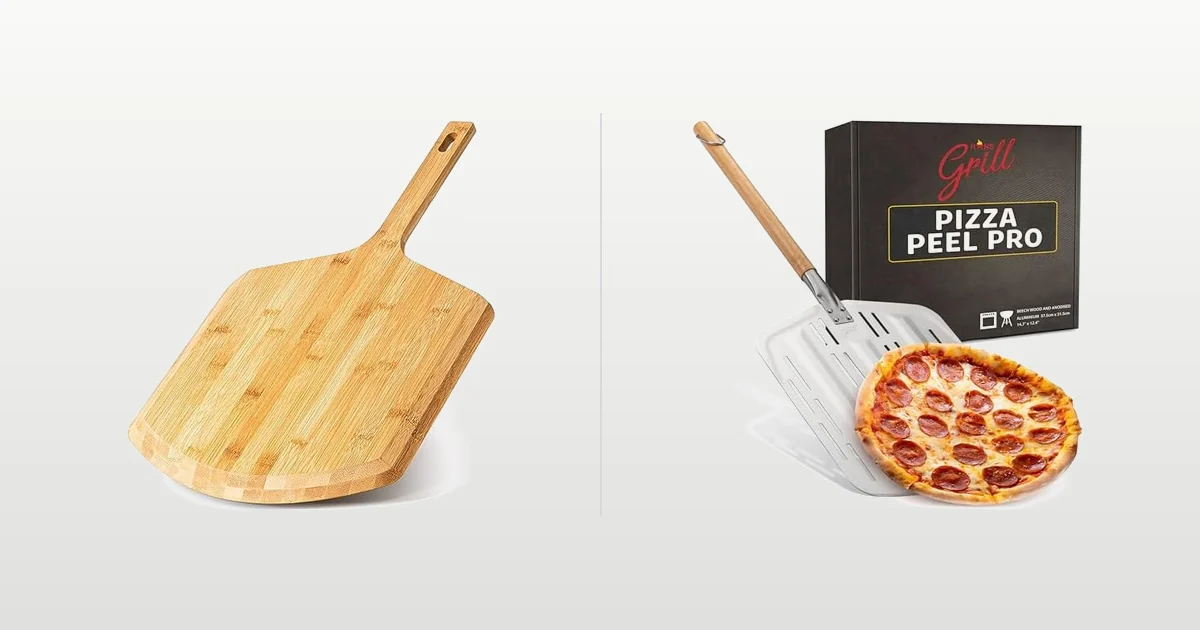
Twelve inches of smooth bamboo, 17.5 inches long and 1.6 pounds, with a square front edge that lets you see the dough as it goes.
 Best for RetrievingChef Pomodoro Aluminum 12×14
Commercial-grade aluminium with an ultra-thin leading edge, on a handle that folds flat so the peel fits a drawer.
 Best Turning Peel8-Inch Turning Peel
A compact 8-inch round head on a long handle, for rotating a pizza inside the oven — and the listing is explicit that this is a second peel, not a first.
At a Glance
Ten Peels, Sorted by Which Job They Do
Size, material, the feature each maker leads on, and which of the three jobs it is actually for.
| # | Model | Size | Material | Detail | Spec | Standout | Main Drawback | Check Price |
|---|---|---|---|---|---|---|---|---|
| 1 |
 JIAFUEO Bamboo 12 Inch JIAFUEO Bamboo 12 Inch |
12 in | Bamboo | 17.5 in | 1.6 lb | Raw wood is what stops a wet dough sticking | Wood cannot slide under a cooked pizza | View on Amazon |
| 2 |
 Chef Pomodoro Aluminum 12×14 Chef Pomodoro Aluminum 12×14 |
12×14 in | Ultra-thin | 24 in | Folds flat | An ultra-thin edge that slides under a baked pizza | Raw dough will stick to it | View on Amazon |
| 3 |
 8-Inch Turning Peel 8-Inch Turning Peel |
8 in round | Anodised | Long handle | Hanging hook | Its own listing says it is not a replacement for a launching peel | It cannot launch or retrieve a pizza | View on Amazon |
| 4 |
 Hans Grill Pizza Peel PRO Hans Grill Pizza Peel PRO |
12 in | Anodised | Beechwood | Perforated | Perforations shed the flour that would otherwise burn in your oven | Perforations make it a poor serving board | View on Amazon |
| 5 |
 Mooues Aluminum 12 Inch Set Mooues Aluminum 12 Inch Set |
12×14 in | Aluminium | Rocker cutter | Storage bag | Rank #1,473, and it comes with a rocker cutter and a bag | The listing attacks wood, which is half wrong | View on Amazon |
| 6 |
 New Star Restaurant-Grade Wood New Star Restaurant-Grade Wood |
16×14 in | Basswood | 24 in | Tapered | Basswood with a tapered half-inch blade, and no secreting oils | Hand wash only and it will stain | View on Amazon |
| 7 |
 16 Inch Natural Bamboo 16 Inch Natural Bamboo |
16 in | Bamboo | Contoured | Serving | Sixteen inches of bamboo that doubles as a serving board | Sixteen inches is a lot of peel to store | View on Amazon |
| 8 |
 Ooni 14 Inch Bamboo Ooni 14 Inch Bamboo |
14 in | Bamboo | Moisture-resistant | Ooni fit | Sized and specified to match a named range of ovens | Only worth the premium if you own one | View on Amazon |
| 9 |
 Ooni 12 Inch Perforated Ooni 12 Inch Perforated |
12 in | Aluminium | Long handle | 950°F | Built for ovens that reach 950°F, and the handle says so | $59.99 is the most expensive here | View on Amazon |
| 10 |
 Epicurean 21 x 14 Inch Epicurean 21 x 14 Inch |
21×14 in | Composite | NSF | 350°F | Rated to 350°F, which is well below any pizza oven | That rating is the whole caveat | View on Amazon |
Specifications and prices are taken from each manufacturer’s Amazon listing as displayed on 24 August 2026 through a United States connection, and may change. One peel here is rated to 350°F, which is below the temperature of any oven used to bake pizza; brief launching contact differs from holding a peel inside a hot cavity, and the rating is reported as published. Note that two listings make opposing material claims — one states that aluminium releases pizza more easily than wood, another that wooden peels splinter and absorb moisture. Both are accurate about different moments: a baked base releases from metal, a raw dough releases from wood. Peel width should exceed your largest pizza, because dough spreads while it waits. Sales ranks are shown as displayed and can be pooled across a variant family; four listings here share a rank with a sibling size.
Scroll the table sideways to see every column
How We Chose These Ten
We researched current listings, compared manufacturer specifications and documentation, and examined recurring patterns in customer feedback. We did not carry out hands-on testing, and nothing below is presented as measured performance data.
- Job identified for every peel — launching, retrieving or turning — almost nothing does two well
- Material recorded — wood, bamboo, aluminium and composite behave completely differently against dough
- A verified live buy box — all ten confirmed purchasable in the United States on 24 August 2026
- No overlap with our published pizza stone, pan and cutter guides — every peel here is new to the site
- Perforation noted where present — because burnt flour on a stone is the commonest complaint
- Temperature ratings reported where stated — one peel is rated to 350°F and says so
- A turning peel included deliberately — it is the tool most home pizza makers do not own and should
The Ten Peels in Detail
1. JIAFUEO Bamboo 12 Inch — Best for Launching

A raw dough sticks to metal and releases from wood. That single fact decides which peel you launch with.
Key Specifications
| Material | Premium bamboo, polished smooth |
|---|---|
| Dimensions | 17.5 in L x 12 in W x 0.47 in thick |
| Weight | 1.6 lb |
| Front edge | Square — described as good for beginners |
| Why square | You can see how far the dough has travelled as you launch |
| Second use | Serving and slicing board |
| Care | Wipe clean; polished surface |
| Rank | #3,848, pooled with a 14-inch sibling |
| Price | $19.95 |
| Best For | Getting a raw, wet dough off the peel and into the oven |
Why We Recommend It
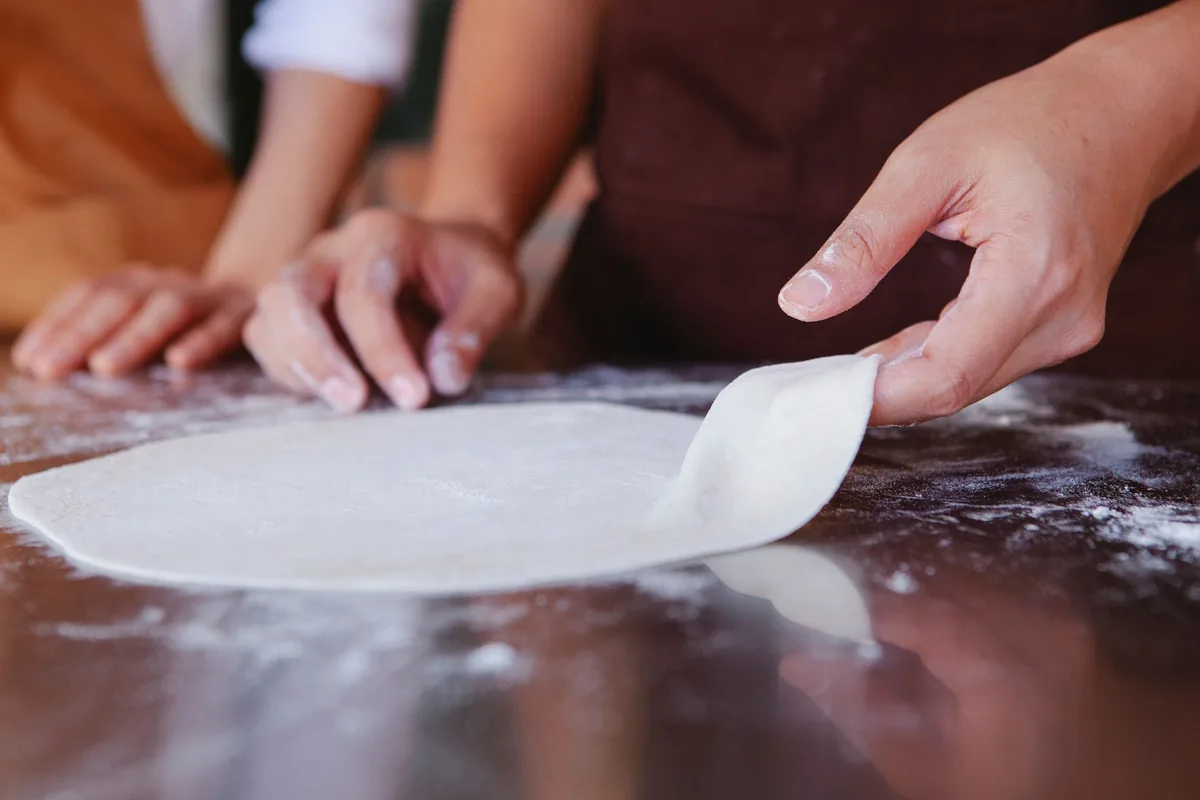
Wood is porous and slightly rough at a microscopic level, so a floured wooden surface holds a thin cushion of flour and air between the board and the dough. Metal is smooth and thermally conductive: dough sits flat against it, the moisture in the base wets the surface, and within a minute or two the whole thing has glued itself down. Every pizzaiolo who has ever folded a pizza into a calzone mid-launch learned this the hard way.
The square front edge is genuinely better for beginners. A tapered peel disappears under the dough and you lose track of where the leading edge is; a square edge stays visible, so you can judge the launch. It is fractionally harder to slide under things, which matters for retrieving and not at all for launching.
One point six pounds is light, and weight matters here because you are holding it out at arm’s length, loaded, over a hot oven.
Note the pooled rank — #3,848 is shared with the 14-inch version of the same peel.
Pros
- Wood releases wet dough where metal grips it
- Publishes length, width, thickness and weight
- Square edge keeps the launch visible
- 1.6 lb is light at arm’s length
- Doubles as a serving and slicing board
- $19.95
Cons
- Cannot slide under a cooked pizza
- Rank pooled with a 14-inch sibling
- Hand wash only — bamboo splits in a dishwasher
- Thick edge is wrong for retrieving
- Absorbs odours and stains over time
- Needs flouring before every launch
Best for: Launching. Buy a metal one as well if you want to get the pizza back out.
2. Chef Pomodoro Aluminum 12×14 — Best for Retrieving

The thin edge is the product. Everything else on this peel is packaging.
Key Specifications
| Material | Commercial-grade aluminium |
|---|---|
| Edge | Ultra-thin leading edge |
| Size | 12 x 14 inches, 24 inches overall |
| Handle | Folds flat for storage in drawers or on hooks |
| Compatibility | Home ovens, Ooni, wood-fired, Big Green Egg, Weber, Traeger, stones |
| Durability | Will not warp or crack like wood; rust resistant |
| Maker’s claim | States aluminium releases pizza more easily than wood |
| Rank | #5,098, pooled with a 16-inch sibling |
| Price | $29.99 |
| Best For | Getting a finished pizza out of the oven in one piece |
Why We Recommend It
Retrieving is a wedge problem. A baked pizza sits flat on a stone with its underside crisped and slightly stuck, and to lift it you have to get something between the base and the stone without tearing the crust. Wood is typically half an inch thick at the lip — that is a ramp, and it shoves the pizza rather than sliding beneath it. A tapered aluminium edge is a fraction of a millimetre and goes under cleanly.
Chef Pomodoro claim aluminium releases pizza more easily than wood, and that is true of a cooked pizza and false of a raw one. A baked base is dry and rigid and slides off metal readily. A wet dough bonds to it. The two claims on this page are not contradictory; they are about different moments.
A folding handle is the practical feature — a 24-inch peel does not fit in a kitchen drawer and a 14-inch one does.
Rank #5,098 is pooled with the 16-inch model.
Pros
- Ultra-thin edge slides under a baked base
- Folding handle fits a drawer
- Will not warp, crack or splinter
- Works with home ovens and outdoor ovens alike
- Rust resistant commercial aluminium
- $29.99
Cons
- Raw dough sticks to bare aluminium
- Rank pooled with a 16-inch sibling
- Hinge is a moving part that collects dough
- Metal conducts heat to the handle joint
- Needs flour even to attempt a launch
- No perforations, so flour rides in with the pizza
Best for: Retrieving, and launching only if you flour it heavily and work fast.
3. 8-Inch Turning Peel — Best Turning Peel

The listing states it plainly: this is not a replacement for your large launching peel. That is the most honest sentence on this page.
Key Specifications
| Head | 8-inch round, compact |
|---|---|
| Purpose | Rotating pizza inside the oven for even bake |
| Material | Commercial-grade hard-anodised aluminium, sandblasted |
| Handle | Extended and heat resistant |
| Storage | Integrated silicone hanging hook |
| Maker’s own words | ‘Not a replacement for your large launching peel’ |
| Rank | #6,856 in its category |
| Price | $17.96 |
| Best For | Any oven with a hot spot — which is every oven |
Why We Recommend It
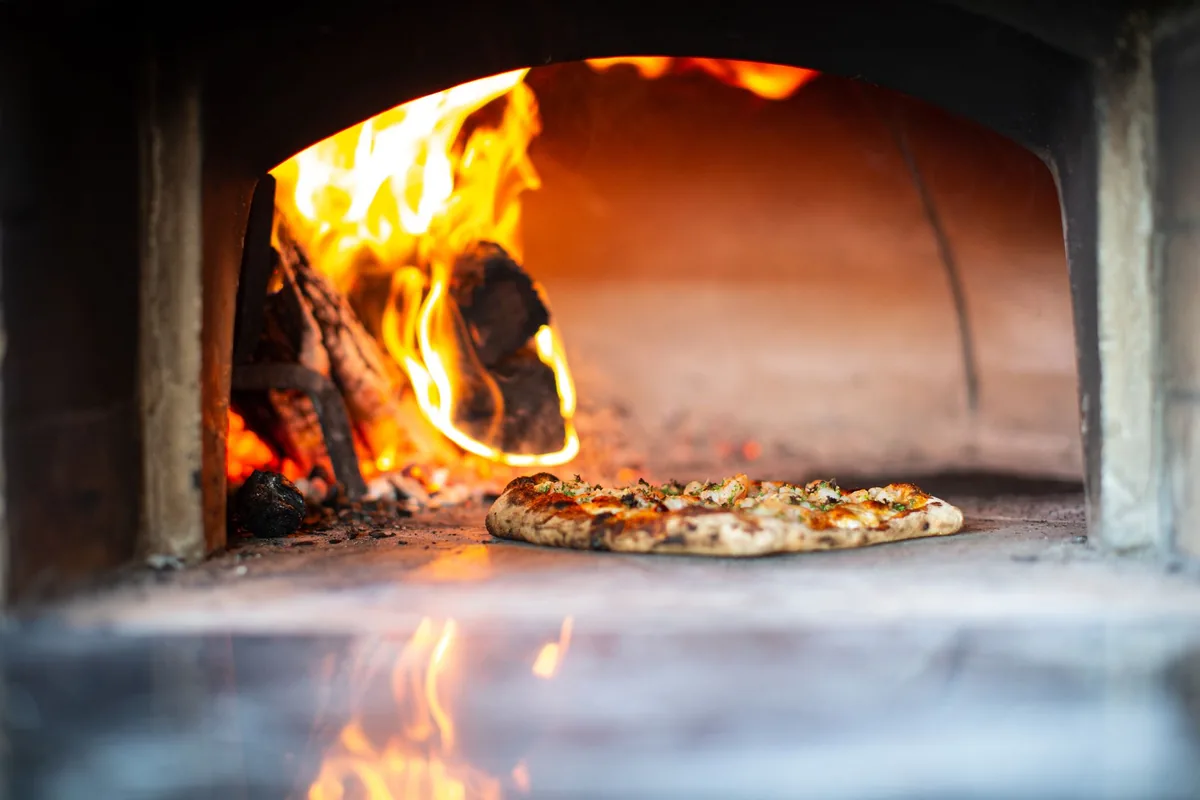
Turning is a separate operation and it needs a separate tool. Every pizza oven has a hot side — the flame in a wood or gas oven, the element in an electric one — and a pizza left facing it burns on one edge while the far side stays pale. The fix is to rotate the pizza once or twice during a bake that may last only ninety seconds. You cannot do that with a fourteen-inch paddle, because there is no room to manoeuvre it inside the oven.
A small round head slides under one edge and pivots the pizza without lifting it out, and the long handle keeps your forearm out of a 900-degree opening.
Hard anodising is worth having here because this tool goes fully inside the oven repeatedly. Anodising grows a hard oxide layer into the aluminium rather than coating it, so there is nothing to burn off or flake.
At $17.96 it is the cheapest peel on this page, and it is the one most home pizza makers do not own and should.
Pros
- Solves the hot-spot problem no launching peel can
- Honest that it is a second tool, not a first
- Hard-anodised for repeated in-oven use
- Long handle keeps hands clear of the opening
- Silicone hanging hook for storage
- $17.96 — cheapest here
Cons
- Cannot launch or retrieve a pizza
- Only useful alongside another peel
- 8 inches is too small for anything else
- Rank #6,856
- Round head is awkward for square pizzas
- Unbranded
Best for: Anyone whose pizzas come out darker on one side than the other.
4. Hans Grill Pizza Peel PRO — Best Perforated

Excess flour does not vanish. It falls onto the stone, sits at 800 degrees, and burns — and then your next pizza tastes of it.
Key Specifications
| Material | Premium anodised aluminium |
|---|---|
| Perforations | Allow excess flour to fall away before launching |
| Second benefit | Lets steam escape from under the base |
| Handle | Turned beechwood, long, for heat safety |
| Edge | Tapered metal for sliding and turning |
| Weight | Light |
| Rank | #4,257, pooled with a bamboo sibling |
| Price | $34.98 |
| Best For | Anyone whose oven floor is going black with burnt flour |
Why We Recommend It
That is the real argument for perforations. Launching requires flour or semolina between dough and peel, and most of it comes off the peel with the pizza. On a stone or an oven floor that surplus carbonises within seconds, producing acrid smoke and a layer of black grit that transfers to the base of everything you cook afterwards. A perforated peel lets you shake most of it off before the pizza leaves the paddle.
The steam claim is real too but secondary. Holes under a raw base let a little moisture escape while the pizza is waiting, which slightly reduces the chance of it welding itself to the peel.
Anodised aluminium with a beechwood handle is the correct combination — metal where it needs to be thin and hard, wood where you hold it, because aluminium conducts heat straight to your hand.
Rank #4,257 is pooled with Hans Grill’s bamboo peel, so it describes the pair rather than this model.
Pros
- Perforations shed flour before it hits the stone
- Reduces burnt flour smoke and grit
- Anodised aluminium with a beechwood handle
- Tapered edge also works for turning
- Light for its size
- Human customer service stated on the listing
Cons
- Rank pooled with a bamboo sibling
- Perforations trap dough and are fiddly to clean
- Useless as a serving or cutting board
- Raw dough still sticks to metal
- $34.98 is mid-high for a 12-inch peel
- Holes weaken the leading edge slightly
Best for: Anyone launching with plenty of flour who is tired of the smoke.
5. Mooues Aluminum 12 Inch Set — Best Rank

Rank #1,473 by a wide margin, and a listing that argues wood is the wrong material. It is half right.
Key Specifications
| Material | Food-grade aluminium |
|---|---|
| Size | 12 x 14 inches |
| Included | Rocker cutter with cover, storage bag |
| Maker’s claim | States wooden peels splinter and are not moisture resistant |
| Packaging | Pizza-box style presentation |
| Note | Ships with a blue protective film to be removed before use |
| Rank | #1,473 — best on this page |
| Price | $20.99 |
| Best For | The volume choice, with a cutter thrown in |
Why We Recommend It
The criticisms of wood are accurate. Wooden peels do splinter along the leading edge with use, they do absorb moisture, they cannot go in a dishwasher, and a thick wooden lip genuinely is worse at sliding under a cooked pizza. All of that is true.
What the listing omits is why anyone uses wood anyway, which is that a wet dough releases from it and grips aluminium. Both materials have a job. A page selling only one of them will only tell you half the story, and this listing is a clear example.
A rocker cutter is a genuine upgrade over a wheel. A wheel drags toppings across the pizza as it rolls; a curved blade pressed straight down cuts through in one motion without moving anything. It is what pizzerias use.
The blue film warning is worth reading — anodised and polished aluminium ships with a protective film that is easy to miss and unpleasant if heated.
Pros
- Rank #1,473 — far ahead of anything here
- Rocker cutter included, better than a wheel
- Storage bag included
- $20.99 for a peel and a cutter
- 12 x 14 inches suits most home ovens
- Aluminium will not warp or splinter
Cons
- Listing argues against wood without explaining the trade
- Raw dough sticks to bare aluminium
- Blue protective film is easy to miss
- No perforations
- No thickness or weight published
- Handle length not stated
Best for: Buyers who want the popular choice and a proper cutter with it.
6. New Star Restaurant-Grade Wood — Best Commercial

Basswood, and the listing explains why: fine even texture, less prone to cracking, and free of secreting oils.
Key Specifications
| Material | Basswood — sturdy, lightweight, fine even texture |
|---|---|
| Why basswood | Less prone to cracking and free of secreting oils |
| Plate | 16 in L x 14 in W |
| Handle | 8 inches, 24 inches overall |
| Blade | Tapered half-inch, designed to slide under and lift |
| Also used for | Cakes, bread, cupcakes, muffin pans |
| Care | Hand wash only |
| Rank | #4,432 in its category |
| Price | $37.50 |
| Best For | Anyone who wants the peel a pizzeria actually uses |
Why We Recommend It
Oil is the part most buyers never consider. Some woods contain natural resins and oils that migrate to the surface over time, and on a board that touches raw dough repeatedly that means flavour transfer and eventually rancidity. Basswood is close-grained, low in extractives and dimensionally stable, which is why it has been the commercial peel material for a century.
A tapered half-inch blade is thick by metal standards and thin for wood, and New Star are explicit that it is designed to slide under and lift from a distance. It will not match aluminium for retrieving; it is the best a wooden peel can do.
Twenty-four inches overall with an eight-inch handle gives real reach, which matters in a deck oven and matters at home if your oven is at chest height.
Hand wash only, and it will darken. A commercial peel is a consumable that lasts years rather than an heirloom.
Pros
- Basswood is close-grained and free of secreting oils
- Tapered half-inch blade for a wooden peel
- 24 inches overall gives genuine reach
- Restaurant-grade construction
- Also works for bread, cakes and muffin pans
- Rank #4,432
Cons
- Hand wash only
- Will stain and darken with use
- Half-inch lip cannot match metal for retrieving
- $37.50
- No weight published
- Splinters eventually along the edge
Best for: Anyone who wants a proper commercial wooden peel for launching.
7. 16 Inch Natural Bamboo — Largest Wood

Sixteen inches is the size that matters if you make sixteen-inch pizzas, and undersizing a peel is the commonest mistake here.
Key Specifications
| Size | 16 inches |
|---|---|
| Material | Premium bamboo, polished smooth |
| Handle | Contoured for grip |
| Dual use | Launching peel and serving or cutting board |
| Care | Wipe clean |
| Rank | #3,786 in its category |
| Price | $39.98 |
| Best For | Sixteen-inch pizzas, and serving them from the same board |
Why We Recommend It
The peel must be wider than the pizza, not equal to it. A 14-inch dough on a 14-inch peel has no margin, and dough spreads while it waits — by the time you launch, the edge is hanging over and stuck to nothing. It then catches on the way off, folds, and the toppings slide. A peel an inch or two wider than your largest pizza removes the problem entirely.
Bamboo is technically a grass, and it behaves better than most hardwoods for this: dense, dimensionally stable, naturally moisture resistant, and it does not splinter as readily along a thin edge.
Doubling as a serving board is where the extra size pays a second time — a 16-inch board holds a whole pizza for cutting at the table.
Storage is the real cost. Sixteen inches by roughly two feet long does not fit in a drawer, and unlike the folding aluminium peels here there is no way to shorten it.
Pros
- 16 inches suits large pizzas with margin
- Bamboo is stable and moisture resistant
- Doubles as a serving and cutting board
- Contoured handle for grip
- Rank #3,786
- Wipe clean rather than hand wash and dry
Cons
- Too large to store in most kitchens
- Handle does not fold
- No thickness or weight published
- Cannot retrieve a cooked pizza
- $39.98 — expensive for bamboo
- Will stain from tomato and oil
Best for: Anyone making 16-inch pizzas who wants to serve from the same board.
8. Ooni 14 Inch Bamboo — Best Oven Match

Ooni name the three ovens this fits. That is more useful than it sounds, because peel width is limited by the oven mouth.
Key Specifications
| Size | 14 inches, for pizzas up to 14 inches |
|---|---|
| Material | Moisture-resistant smooth bamboo |
| Dual use | Serving and slicing board |
| Compatibility | Ooni Pro 16, Karu 16, Koda 16 — named |
| Maker’s tip | Lightly flour the paddle before laying the dough |
| Rank | #11,069 in its category |
| Price | $44.98 |
| Best For | Ooni owners who want a peel sized to the oven mouth |
Why We Recommend It
Outdoor pizza ovens have narrow openings — deliberately, to hold heat — and a peel wider than the mouth simply will not go in. Buying a 16-inch peel for a 14-inch oven mouth is a common and expensive mistake, and it is why a manufacturer stating compatibility by model is worth paying a little for.
The flouring instruction is the correct one and Ooni give it plainly: flour the paddle before the dough goes on, not after. Flouring a peel that already has wet dough on it does nothing, because the contact has already been made.
Moisture-resistant bamboo is the same material argument as the peels above, from a brand with more to lose from a bad one.
At $44.98 it is the second most expensive peel here, and rank #11,069 reflects that it is bought almost entirely by Ooni owners.
Pros
- States compatibility with three named ovens
- Sized to fit a narrow oven mouth
- Moisture-resistant bamboo
- Doubles as a serving and slicing board
- Clear instruction on when to flour
- Brand accountability from an oven maker
Cons
- $44.98 — expensive for a bamboo paddle
- Rank #11,069
- Only compelling if you own an Ooni
- No thickness or weight published
- Cannot retrieve a cooked pizza
- 14 inches limits pizza size
Best for: Ooni owners. Everyone else can buy the same material for less.
9. Ooni 12 Inch Perforated — Best for Hot Ovens

Nine hundred and fifty degrees. At that temperature the handle stops being a convenience and becomes the safety feature.
Key Specifications
| Material | Aluminium, perforated |
|---|---|
| Perforations | Let excess flour fall away and steam escape quickly |
| Handle | Long and strong, for 950°F oven temperatures |
| Positioning | Described as the step beyond a basic peel |
| Size | 12 inches |
| Rank | #18,881 in its category |
| Price | $59.99 |
| Best For | High-temperature outdoor ovens where handle length is safety |
Why We Recommend It
Domestic ovens top out around 500°F and outdoor pizza ovens run to 950°F, and the difference in radiant heat at the mouth is enormous. Reaching in with a short-handled peel means your hand and forearm crossing that opening, and the flux at nine hundred degrees will blister skin faster than you can withdraw. Ooni’s peels are long because their ovens are hot, and they state the connection explicitly.
Perforated aluminium is the professional choice for the reasons given further up this page — flour falls away rather than burning on the stone, and steam escapes from under a waiting base.
Twelve inches is small for the price, and that is the trade for a brand-matched tool. Generic perforated peels at 12 inches cost half as much.
Rank #18,881 at $59.99 makes this the most expensive peel on the page and the only one whose listing is built around a temperature figure.
Pros
- Handle length specified against a 950°F oven
- Perforations shed flour before launch
- Steam escapes from under a waiting base
- Professional-grade aluminium
- From the maker of the ovens it suits
- Genuinely addresses high-heat safety
Cons
- $59.99 — most expensive here
- Only 12 inches for the money
- Rank #18,881
- Perforations are fiddly to clean
- Raw dough still sticks to metal
- Overkill for a 500°F domestic oven
Best for: Outdoor oven owners, where a long handle is a burn you did not get.
10. Epicurean 21 x 14 Inch — Read the Temperature

Temperature resistant to 350°F. A domestic oven bakes pizza at 500 and an outdoor oven at 900.
Key Specifications
| Material | Modified natural composite, nonporous |
|---|---|
| Size | 21 x 14 inches, 3/16 inch thick |
| Heat limit | 350°F / 175°C — stated |
| Certification | NSF |
| Care | Dishwasher safe |
| Edge | Beveled front, reversible |
| Origin | Made in USA from sustainably harvested trees |
| Rank | #37,377 in its category |
| Price | $46.99 |
| Best For | Prep, cutting and serving — read the temperature rating first |
Why We Recommend It
We report specifications as published, and this one deserves attention. Epicurean’s composite is a genuinely good material — nonporous, knife-friendly, dishwasher safe, NSF certified for commercial food contact, and it will not crack or warp. It is also rated to 350°F, which is below the temperature of any oven you would bake a pizza in.
In practice a launching peel spends only seconds in the oven, and brief contact is not the same as sustained exposure. But retrieving a pizza means holding the peel inside the cavity while you work it under the base, and a 21-inch board resting on a 500-degree stone is a different proposition from a quick launch.
Where it excels is everything outside the oven. Prep, cutting directly on the surface, serving, and going in the dishwasher afterwards — none of which any wooden peel here can do.
Treat it as a board that can launch rather than a peel that can serve, and buy something metal for retrieving.
Pros
- Nonporous, knife-friendly and dishwasher safe
- NSF certified for commercial food contact
- Will not crack or warp like wood
- Reversible with a beveled front edge
- 21 x 14 inches gives real margin
- Made in USA from sustainable timber
Cons
- Rated to only 350°F — below any pizza bake
- Not suited to holding inside a hot oven
- $46.99 and rank #37,377
- 3/16 inch edge is thick for retrieving
- Composite look divides opinion
- Too large for most drawers
Best for: Prep, cutting and serving. Check the temperature rating before you rely on it.
Wood Against Metal, and Why Both Listings Are Half Right
Two makers on this page argue against each other. Neither is lying.
| JIAFUEO Bamboo | Chef Pomodoro Aluminium | |
|---|---|---|
| Raw dough releases | Yes | No — it grips |
| Slides under a baked base | No — thick lip | Yes — ultra-thin edge |
| Splinters over time | Yes | No |
| Dishwasher | No | Wipe clean |
| Folds for storage | No | Yes |
| Doubles as a board | Yes | No |
| Rank | #3,848 | #5,098 |
| Price | $19.95 | $29.99 |
Mooues’ listing says wooden peels splinter and absorb moisture, which is true. The bamboo listings say wood releases dough, which is also true. They are describing different moments in the same fifteen minutes. If you only ever buy one peel, buy wood — a failed launch ruins the pizza, whereas a difficult retrieve merely annoys you. If you buy two, this pair for fifty dollars covers the whole job.
Which Peel Does Which Job
Three jobs, ten peels, and very little overlap.
| Peel | Material | Launch | Retrieve | Turn | Price |
|---|---|---|---|---|---|
| 8-Inch Turning Peel | Anodised alu | No | No | Yes | $17.96 |
| JIAFUEO Bamboo 12" | Bamboo | Yes | No | No | $19.95 |
| Mooues Aluminium 12" | Aluminium | Poorly | Yes | No | $20.99 |
| Chef Pomodoro 12×14 | Aluminium | Poorly | Yes | No | $29.99 |
| Hans Grill PRO | Perforated alu | Better | Yes | Somewhat | $34.98 |
| New Star Basswood | Basswood | Yes | Poorly | No | $37.50 |
| 16" Bamboo Board | Bamboo | Yes | No | No | $39.98 |
| Ooni 14" Bamboo | Bamboo | Yes | No | No | $44.98 |
| Epicurean 21×14 | Composite | Yes | No | No | $46.99 |
| Ooni 12" Perforated | Perforated alu | Better | Yes | Somewhat | $59.99 |
The perforated metal peels are the closest thing to a compromise: the holes shed flour, which makes launching from metal less hopeless, and the thin edge still retrieves. They are not as good at launching as wood and they are the only single purchase that does two jobs adequately. Note that no peel on this page turns except the one designed to.
Best Alternatives
| Alternative | Why Consider It | Better For | Main Trade-Off |
|---|---|---|---|
| A rimless baking sheet | You may already own one, and it launches adequately | Occasional home pizza | Thick edge, no handle, hot to hold |
| Parchment paper | Launch on the paper and pull it out after 30 seconds | Beginners and very wet doughs | Paper scorches above about 450°F |
| A stiff cutting board | Free, and works for a single launch | Trying pizza once before committing | No handle means hands near the oven |
| A peel and stone set | Matched sizes, usually cheaper together | Anyone starting from nothing | Bundled peels are often the weakest part |
What the Money Actually Buys
$17.96 to $29.99 — turning peel, JIAFUEO bamboo, Mooues aluminium, Chef Pomodoro. The value tier, and genuinely the whole toolkit. A bamboo peel to launch, an aluminium one to retrieve and a turning peel costs under sixty dollars for all three and covers every job on this page properly.
$34.98 to $46.99 — Hans Grill perforated, New Star basswood, 16-inch bamboo, Ooni bamboo, Epicurean. Where the specialists sit. The perforated peel solves burnt flour; the basswood is what pizzerias actually use; the 16-inch handles large pizzas with margin.
$59.99 — Ooni 12-inch perforated. The most expensive peel here and the smallest at that price. What you are buying is a handle specified against a 950°F oven, which is a safety consideration rather than a performance one.
What to Check Before You Buy
Buy Wood to Launch and Metal to Retrieve
This is the whole decision and it is not a preference. A raw dough is wet; smooth aluminium wets out under it and the dough bonds within a minute or two, at which point launching folds it. Wood is porous and microscopically rough, so a light dusting of flour or semolina sits between the surfaces and the dough slides. Conversely a baked base is dry and rigid and releases from metal readily, and getting under it requires an edge measured in fractions of a millimetre — which wood, at half an inch, cannot provide. If you buy one peel, buy wood, because a failed launch destroys the pizza and a clumsy retrieve merely irritates.
The Peel Must Be Wider Than the Pizza
Undersizing is the commonest and most avoidable mistake. Dough spreads while it sits on the peel, so a 14-inch base on a 14-inch peel will be overhanging by the time you launch, and the overhang catches on the peel edge, folds under, and takes the toppings with it. An inch or two of margin on each side removes the problem completely. It also means you can shake the peel to check the dough is moving freely before committing — which is the single most useful habit in home pizza making.
Perforations Are About Burnt Flour
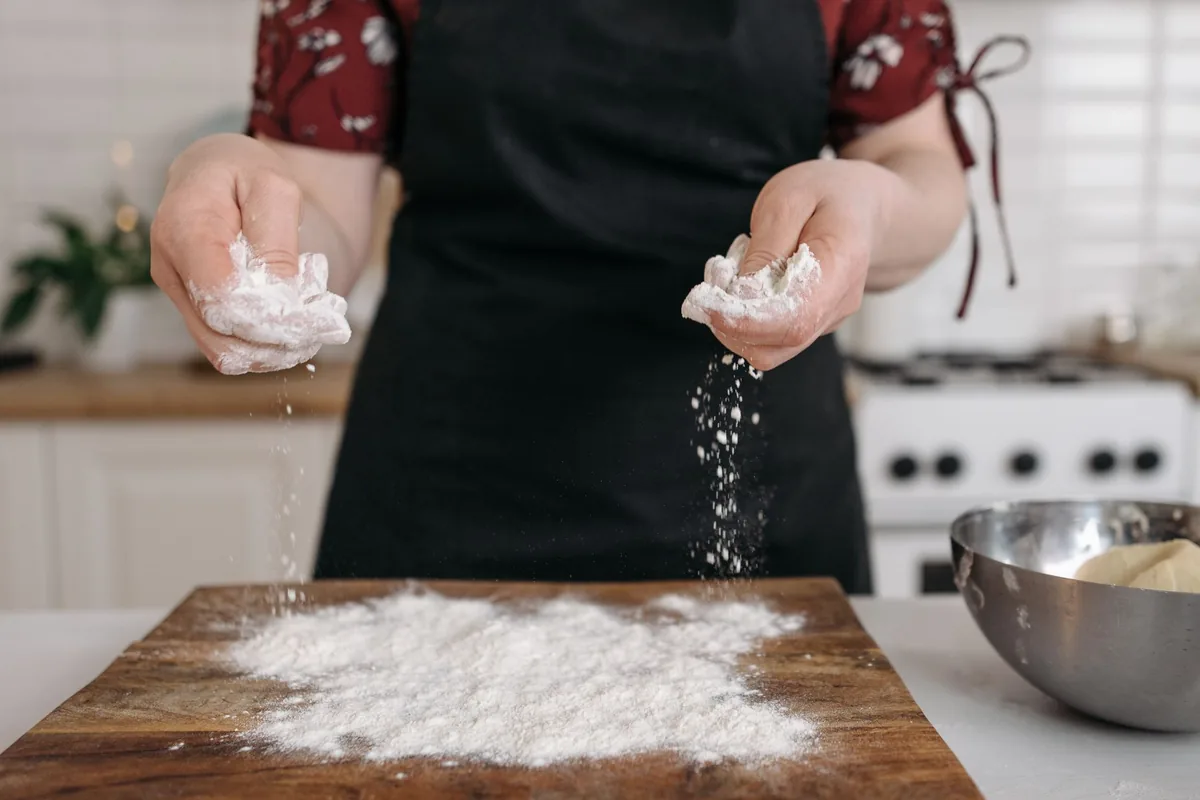
Launching requires flour or semolina, most of which travels into the oven with the pizza and lands on the stone, where at 700 or 800 degrees it carbonises within seconds. That produces acrid smoke, a black layer on the stone, and grit that transfers to the base of everything you bake afterwards. A perforated peel lets you shake the surplus off before the pizza leaves the paddle. Two peels here are perforated and both state the reasoning; the trade is that perforations trap dough and are fiddly to clean.
You Probably Need a Turning Peel
It is the tool most home pizza makers do not own, and the one that most improves results. Every oven has a hot side — the flame in a gas or wood oven, the element in an electric one — and a pizza that does not rotate burns on one edge while the opposite side stays pale. In a 90-second Neapolitan bake there is no time to remove and reload, and a 14-inch paddle cannot be manoeuvred inside the oven anyway. A small round head on a long handle rotates the pizza in place. It costs $17.96 here.
Check the Handle Length Against the Oven
A domestic oven runs around 500°F and an outdoor pizza oven around 950°F, and the radiant heat at the mouth differs enormously. Reaching into a 950-degree opening with a short peel puts your hand and forearm across that flux, which will blister skin faster than you can withdraw. One maker here specifies handle length explicitly against a 950°F oven and says so. For outdoor ovens, treat handle length as a safety specification rather than a convenience.
Watch for Temperature Ratings on Composites
Wood and metal have no meaningful ceiling for this use. Composite materials do, and one peel here is rated to 350°F — well below any pizza bake. In practice a launching peel is inside the oven for only a few seconds and brief contact is not sustained exposure, but retrieving means holding the peel in the cavity while you work it under the base. Where a manufacturer publishes a temperature rating, read it and decide which of the three jobs the peel is actually for.
Basswood Is the Commercial Choice for a Reason
Not all wood behaves the same against food. Some species contain resins and natural oils that migrate to the surface over time, which on a board repeatedly in contact with raw dough means flavour transfer and eventually rancidity. Basswood is close-grained, dimensionally stable and low in extractives, which is why it has been the standard commercial peel timber for a century — and one listing here states exactly that, describing its peels as free of secreting oils. Bamboo, technically a grass, performs similarly and resists moisture slightly better.
Common Mistakes
- Launching a raw dough from bare metal. It bonds within a minute and folds as you launch.
- Retrieving with a wooden peel. A half-inch lip shoves the pizza rather than sliding under it.
- Matching peel size to pizza size. Dough spreads while it waits; you need margin.
- Flouring after the dough is on. The contact has already been made; flour the peel first.
- Skipping the turning peel. One burnt edge and one pale edge is a rotation problem.
- Ignoring a stated temperature rating. One peel here is rated to 350°F.
- Using a short handle on an outdoor oven. At 950°F that is a burn, not an inconvenience.
Who Should Buy Which
Buy the JIAFUEO bamboo at $19.95 if you buy only one. Launching is the job that ruins pizzas when it goes wrong, and wood is what makes launching work. The square edge also makes it easier to judge.
Buy the Chef Pomodoro aluminium at $29.99 as the second. An ultra-thin edge to get the pizza back out, and a handle that folds so it fits a drawer.
Buy the 8-inch turning peel at $17.96 whatever else you choose. It is the cheapest thing on this page and it fixes the uneven bake that no launching peel can.
Buy the Hans Grill PRO at $34.98 if you want one peel to do two jobs. Perforations make metal launching viable and the thin edge still retrieves.
Buy the New Star basswood at $37.50 if you want what a pizzeria uses. Close-grained, oil-free, 24 inches of reach.

Frequently Asked Questions
Should I get a wood or a metal pizza peel?
Wood to launch, metal to retrieve, and if you only buy one make it wood. The reason is what happens to a raw dough on each surface. Smooth aluminium wets out under a wet dough within a minute or two and the two bond, so when you try to launch, the dough drags and folds itself into a calzone. Wood is porous and microscopically rough, so a light dusting of flour or semolina sits between the board and the dough and it slides off cleanly. The reverse is true once the pizza is baked: a dry, rigid base releases from metal easily, and lifting it off a stone needs an edge measured in fractions of a millimetre, which a half-inch wooden lip cannot provide. Two listings in this roundup argue for opposite materials and both are accurate; they are describing different moments.
What size pizza peel do I need?
Wider than your largest pizza, by an inch or two on each side. Matching the peel to the pizza is the commonest mistake in this category, because dough spreads while it sits waiting on the peel. A 14-inch base on a 14-inch peel is overhanging by the time you launch, and the overhanging edge catches on the peel and folds under, taking the toppings with it. Margin also lets you shake the peel before committing, which is the single most useful habit in home pizza making — if the dough moves freely, it will launch; if it does not, you can lift the stuck edge and add flour before disaster. Bear in mind that outdoor pizza ovens have deliberately narrow mouths, so check the oven opening as well as the pizza.
What is a turning peel and do I need one?
It is a small round head, typically seven to nine inches, on a long handle, used to rotate a pizza inside the oven rather than to launch or retrieve it. You almost certainly need one, and most home pizza makers do not own one. Every oven has a hot side — the flame in a gas or wood-fired oven, the element in an electric one — and a pizza that stays in one orientation chars on the side facing the heat while the opposite edge stays pale and soft. In a Neapolitan bake lasting ninety seconds there is no time to remove and reload the pizza, and a full-size paddle cannot be manoeuvred inside the oven chamber. The turning peel in this roundup states in its own listing that it is not a replacement for a launching peel, which is unusually honest.
Are perforated pizza peels worth it?
If burnt flour bothers you, yes. Launching requires flour or semolina between the dough and the peel, and most of that surplus travels into the oven with the pizza and lands on the stone. At the 700 to 900 degrees a pizza oven runs at, it carbonises within seconds, producing acrid smoke, a blackened stone, and grit that transfers onto the base of whatever you bake next. Perforations let you shake most of the loose flour off before the pizza leaves the paddle. They also let steam escape from under a waiting base, which slightly reduces sticking. The drawbacks are that dough works into the holes and is fiddly to clean out, and that perforated peels cannot double as serving boards.
Why does my pizza stick to the peel?
Almost always because it sat too long, or because the peel was floured after the dough went on. Dough releases moisture continuously, and the longer it rests on a surface the more it wets that surface and bonds to it — which is why professional practice is to top a pizza in under a minute and launch immediately. Flouring afterwards does nothing, because the contact has already been made underneath where the flour cannot reach; one manufacturer here states the correct sequence plainly, which is to flour the paddle before laying the dough on it. Semolina works better than flour because the coarser grains act like ball bearings. And shake the peel every fifteen seconds while topping: if the dough stops moving, lift the edge and get flour underneath before it sets.
Can I use a baking sheet instead of a peel?
For an occasional home pizza, yes, and it is a reasonable way to find out whether you enjoy making them before buying tools. A rimless baking sheet or the back of a rimmed one will launch a pizza adequately, though the thick edge makes it clumsy and the absence of a handle puts your hands closer to the oven than is comfortable. Parchment paper is the better improvised approach: build the pizza on the paper, launch paper and all, and pull the paper out after about thirty seconds once the base has set. Note that parchment scorches above roughly 450°F, so this works in a domestic oven and not in an outdoor pizza oven running at 900.
Final Verdict
Bamboo releases a wet dough where metal grips it, with a square edge that keeps the launch visible. $19.95.
An ultra-thin aluminium edge that slides under a baked base, on a handle that folds into a drawer. $29.99.
The cheapest peel here, and the one that fixes an uneven bake no launching peel can. $17.96.
One listing on this page admits it: the turning peel is “not a replacement for your large launching peel”. Take that as the honest summary of the whole category. There are three jobs here and no peel does all three.
Wood launches because a wet dough will not release from metal. Metal retrieves because a half-inch wooden lip cannot get under a baked base. A small round head turns because a fourteen-inch paddle will not fit inside the oven alongside a pizza.
If you buy one, buy wood — a failed launch ruins the pizza, and a clumsy retrieve only annoys you.
If you buy three, the bamboo, the aluminium and the turner on this page come to under seventy dollars together, and between them they cover everything.