
Affiliate Disclosure: As an Amazon Associate, we earn from qualifying purchases. This does not affect the price you pay.
The machine is the cheap part. A 4.5-litre deep fryer needs four and a half litres of oil before it will cook anything, and that oil is a recurring cost the fryer is not — you buy it, you heat it, and eventually you dispose of it and buy more.
Which means the specifications that decide what a deep fryer costs you to own are the ones about oil, and most listings barely mention them. Only one machine here filters and drains its oil automatically, which extends its life considerably. One splits its tank so you can heat half. Two hold under two and a half litres, so a full change is a fraction of the cost.
The rest ask you to fill the whole tank every time, whether you are frying for six people or two.
The other gap is disclosure. Only three of these ten publish a wattage, and only two give a full temperature range — which matters because chips crisp at 350–375°F and doughnuts want considerably less.
Our Quick Picks
 Best Oil ManagementAll-Clad Easy Clean Pro
The only fryer here that filters and drains its own oil — which is the recurring cost, not the machine.
 Best Small BatchPresto FryDaddy
The highest-rated fryer here, and the one that uses the least oil to do its job.
 Best ValueAmazon Basics 3.2 Qt
One of only three fryers here that publishes a wattage, and one of two that gives a full temperature range.
At a Glance
Ten Deep Fryers Compared
Oil capacity, power and basket arrangement, with what each machine does about the oil once you have used it.
| # | Model | Oil Capacity | Power | Baskets | Oil Handling | Standout | Main Drawback | Check Price |
|---|---|---|---|---|---|---|---|---|
| 1 |
 All-Clad Easy Clean Pro All-Clad Easy Clean Pro |
Large | Not published | Basket and lid | Patented oil filtration | Filters and drains the oil for you | Most expensive machine here | View on Amazon |
| 2 |
 Elite Gourmet Dual Split Elite Gourmet Dual Split |
4.5 qt total | 1700 W | Two 2-qt baskets | Split tank halves the oil | Fry two foods without mixing flavours | 15.5 inches tall | View on Amazon |
| 3 |
 Presto FryDaddy Presto FryDaddy |
4 servings | Not published | Scoop, no basket | Uses the least oil here | Highest rated fryer in the roundup | No basket, and no temperature control | View on Amazon |
| 4 |
 Hamilton Beach Professional Hamilton Beach Professional |
4.7 qt oil | Not published | Three baskets | Splatter-free lid | Three baskets and 12 cups of food | 21.4 inches wide | View on Amazon |
| 5 |
 Chefman 4.5 Litre XL Chefman 4.5 Litre XL |
4.5 L | Not published | Basket strainer | Adjustable temperature | Largest single-basket capacity here | One large tank to fill and heat | View on Amazon |
| 6 |
 Amazon Basics 3.2 Qt Amazon Basics 3.2 Qt |
3.2 qt / 3.0 L | 1500 W | Basket | 265–375°F stated | Publishes both wattage and temperature range | Plain specification, no extras | View on Amazon |
| 7 |
 Pukomc 3L Pukomc 3L |
3 L | 1500 W | Cool-touch handles | See the oil without opening | Watch the food without releasing steam | Brand has no record | View on Amazon |
| 8 |
 Alpha Living ED-1400 Alpha Living ED-1400 |
4.5 L | Not published | 2-qt and 4-qt baskets | Two basket sizes supplied | Different basket sizes for different batches | 9.5 lbs and no wattage stated | View on Amazon |
| 9 |
 OVENTE FDM2201BR OVENTE FDM2201BR |
2 L | 1500 W | 275–375°F stated | Smallest oil volume of the dial fryers | Least oil to fill of any adjustable fryer | 2 litres limits batch size | View on Amazon |
| 10 |
 VEVOR Commercial VEVOR Commercial |
2 x 11 L | 3000 W | Dual tanks | Twice the power of any domestic unit | Genuinely commercial capacity and power | 34.8 lbs and the lowest rating here | View on Amazon |
Specifications and ratings are taken from each manufacturer’s Amazon listing as displayed on 20 August 2026 and may change. Only three of these ten publish a wattage and only two state a full temperature range; those gaps are marked rather than estimated. Non-electric stovetop fry pots returned by the same category were excluded, as they are a different product class. VEVOR’s stated 11 L per tank is a water capacity; oil capacity is lower, as the listing notes. Where a machine has no temperature control at all, as with the Presto FryDaddy, that is stated rather than described as automatic control.
Scroll the table sideways to see every column
How We Chose These Deep Fryers
We researched current listings, compared manufacturer specifications and documentation, and examined recurring patterns in customer feedback. We did not carry out hands-on testing, and nothing below is presented as measured performance data.
- What happens to the oil — filtration, split tanks and small volumes all reduce the real running cost
- Oil capacity stated separately from food capacity — one listing gives both; most give neither clearly
- Whether a temperature range is published — chips need 350–375°F, doughnuts much less, and only two listings state both ends
- Basket arrangement — one large basket, two split tanks and three stacked baskets suit different cooking
- Electric only — stovetop fry pots returned by the same category were excluded
- Footprint and weight — a fryer full of hot oil should never be lifted or moved
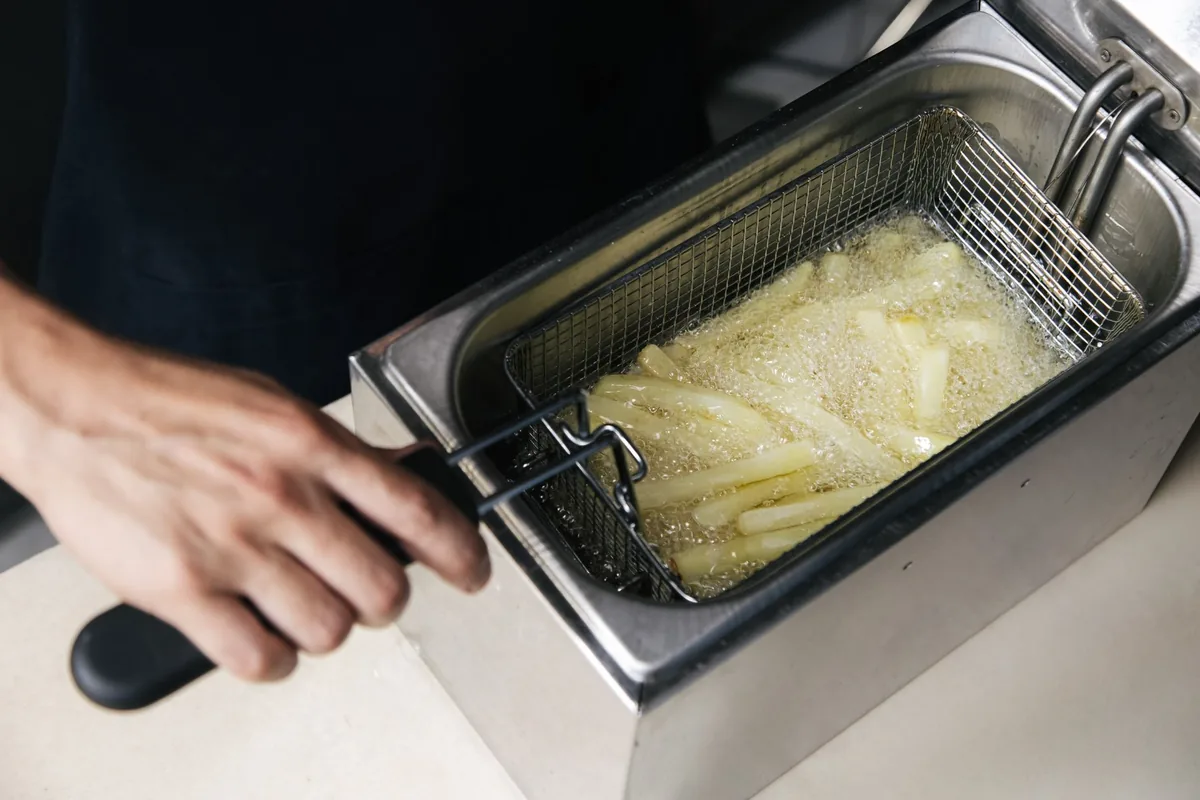
The 10 Best Deep Fryers, Reviewed
1. All-Clad Easy Clean Pro — Best Oil Management

Every other fryer here leaves you with a tank of used oil and a decision: strain it through a sieve into a jar, or pour it away and buy more. All-Clad automates that — the oil filters and drains into a sealed container on its own.
Filtered oil lasts several times longer than unfiltered oil, because it is the suspended food particles that break it down and make it smell.
Key Specifications
| Oil handling | Patented automatic oil filtration and draining |
|---|---|
| Temperature | Adjustable, precise control per listing |
| Included | Basket and lid |
| Body | Stainless steel |
| Weight | 10.8 lbs |
| Dimensions | 18.2″D x 13.7″W x 14.7″H |
| Model | Easy Clean Pro |
| Rating | 4.3 out of 5 stars |
| Best For | Frying often enough that oil cost matters |
Why We Recommend It
That matters more than it sounds. A large fryer needs several litres of oil to work at all, and that oil is a recurring cost the machine is not. Anything that extends its life is money back rather than a convenience feature.
It is the most expensive fryer in this roundup by a wide margin, and at 18.2 inches deep the largest footprint apart from the commercial unit. The 4.3 rating is mid-pack. You are paying for the oil system, and whether that pays back depends entirely on how often you fry.
Pros
- Automatic oil filtration and draining, unique here
- Filtered oil lasts substantially longer
- Basket and lid included
- All-Clad build and support
- Precise adjustable temperature
Cons
- Most expensive fryer in the roundup
- 18.2 inches deep
- No wattage published
- 4.3 rating is mid-pack for the price
Best for: Regular fryers who are tired of straining oil through a sieve.
2. Elite Gourmet Dual Split — Best Dual Zone

A split tank solves two problems at once. It lets you fry fish and chips without the chips tasting of fish, and — more usefully — it lets you fill and heat only one side when you are cooking for one or two.
Halving the oil you use per session is the single biggest running-cost saving available in this roundup that does not involve a filtration system.
Key Specifications
| Total capacity | 4.5 quarts |
|---|---|
| Baskets | Two 2-quart, split tank |
| Wattage | 1700 watts, highest of the domestic units |
| Design | Dual zone, independent |
| Body | Stainless steel |
| Dimensions | 15.13″D x 9.25″W x 15.5″H |
| Rating | 4.5 out of 5 stars |
| Best For | Frying two things, or using half the oil |
Why We Recommend It
Seventeen hundred watts is the highest of the domestic fryers here, and a 4.5 rating is second highest in the group.
At 15.5 inches tall it is the highest domestic unit here, which matters because a fryer full of hot oil should not be lifted down from a shelf. It wants a permanent spot at counter level.
Pros
- Split tank lets you heat half the oil
- Two foods fried without mixing flavours
- 1700 W, highest of the domestic fryers
- 4.5 rating, second highest here
- Stainless steel construction
Cons
- 15.5 inches tall
- Two smaller baskets rather than one large one
- No stated temperature range
- Cleaning two tanks instead of one
Best for: Households frying for one or two as often as for a crowd.
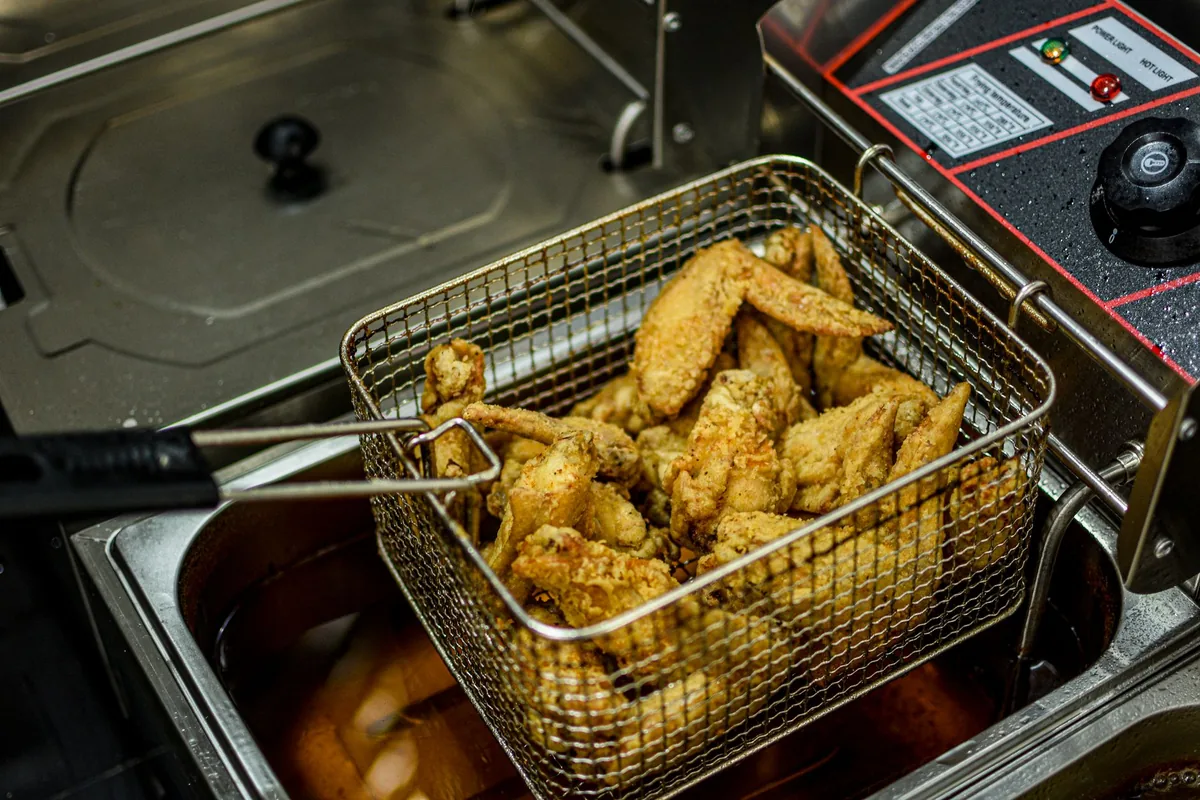
3. Presto FryDaddy — Best Small Batch

A 4.6 rating is the highest in this roundup, and the design explains why: the FryDaddy holds a small, fixed amount of oil, heats it automatically to frying temperature, and stays there. There is nothing to set and very little to clean.
Because the oil volume is small, the running cost is small. Filling a 4.5-litre fryer to cook a handful of chips is the most common waste in this category, and this sidesteps it entirely.
Key Specifications
| Capacity | Four servings |
|---|---|
| Temperature | Automatic, fixed — no dial |
| Included | Handy scoop, no basket |
| Weight | 3 lbs, lightest here |
| Dimensions | 8.38″D x 8.13″W x 7.38″H |
| Model | 05420 |
| Rating | 4.6 out of 5 stars, highest here |
| Best For | Frying small amounts without filling a tank |
Why We Recommend It
Presto includes a scoop rather than a basket, which suits the small format — you lift food out rather than raising a basket.
There is no temperature control at all. The thermostat holds one frying temperature and that is your only option. For chips, doughnuts and chicken pieces that is genuinely fine; for anything needing a lower temperature it is not.
Pros
- Highest rating in the roundup at 4.6
- Uses the least oil of any fryer here
- 3 lbs and 8 inches square, easily stored
- Nothing to set or adjust
- Long-running Presto design
Cons
- No adjustable temperature at all
- No basket, only a scoop
- Four servings is the ceiling
- No wattage published
Best for: Small households frying small amounts, often.
4. Hamilton Beach Professional — Best Multi-Basket

Hamilton Beach publishes both figures that matter and most listings do not: 4.7 quarts of oil, and up to 12 cups of food. Oil capacity tells you the running cost; food capacity tells you how many people you can feed.
Three baskets means you can hold cooked food above the oil while the next batch goes in, rather than piling it on a plate to go soft.
Key Specifications
| Oil capacity | 4.7 quarts / 19 cups |
|---|---|
| Food capacity | Up to 12 cups |
| Baskets | Three |
| Design | Splatter-free frying, per listing |
| Weight | 13 lbs |
| Body | Aluminium with stainless |
| Dimensions | 14.1″D x 21.4″W x 10.5″H |
| Rating | 4.4 out of 5 stars |
| Best For | Feeding a crowd in batches |
Why We Recommend It
Two smaller baskets can also be run side by side for different foods, which is a middle path between a single tank and the Elite Gourmet’s split tanks.
Twenty-one inches wide is the widest domestic fryer here, and 4.7 quarts is a lot of oil to fill, heat and eventually dispose of. This is a fryer for feeding people regularly, not occasionally.
Pros
- Publishes both oil and food capacity
- Three baskets for batch frying
- 4.7 quarts is genuinely crowd-sized
- Established brand
- Splatter-reducing design
Cons
- 21.4 inches wide, widest domestic unit here
- 4.7 quarts of oil is expensive to fill
- 13 lbs
- No wattage published
Best for: Regular entertaining and family batch frying.
5. Chefman 4.5 Litre XL — Best Large Single

Where the Elite Gourmet splits 4.5 litres into two tanks and Hamilton Beach into three baskets, this keeps it as one — which is the right arrangement if you fry large items that need room rather than several small batches.
At 6.25 inches wide it is also the narrowest fryer in the roundup, because it builds upward rather than outward.
Key Specifications
| Capacity | 4.5 litres |
|---|---|
| Basket | Basket strainer included |
| Temperature | Adjustable |
| Body | Stainless steel |
| Weight | 7.1 lbs |
| Dimensions | 12″D x 6.25″W x 11.25″H |
| Rating | 4.3 out of 5 stars |
| Best For | Large batches in one basket |
Why We Recommend It
The basket strainer and adjustable dial are the practical basics, and 7.1 lbs makes it manageable to move when cool.
One tank means you fill all 4.5 litres every time, even to fry a small portion. If most of your frying is for one or two people, the split-tank Elite Gourmet will cost you considerably less in oil over a year.
Pros
- Largest single-basket capacity here
- Narrowest fryer in the roundup at 6.25 inches
- Adjustable temperature and basket strainer
- 7.1 lbs, easy to handle
- Stainless steel body
Cons
- Must fill all 4.5 litres regardless of batch size
- No wattage published
- No stated temperature range
- 4.3 rating is mid-pack
Best for: Frying large items that need a full-depth basket.
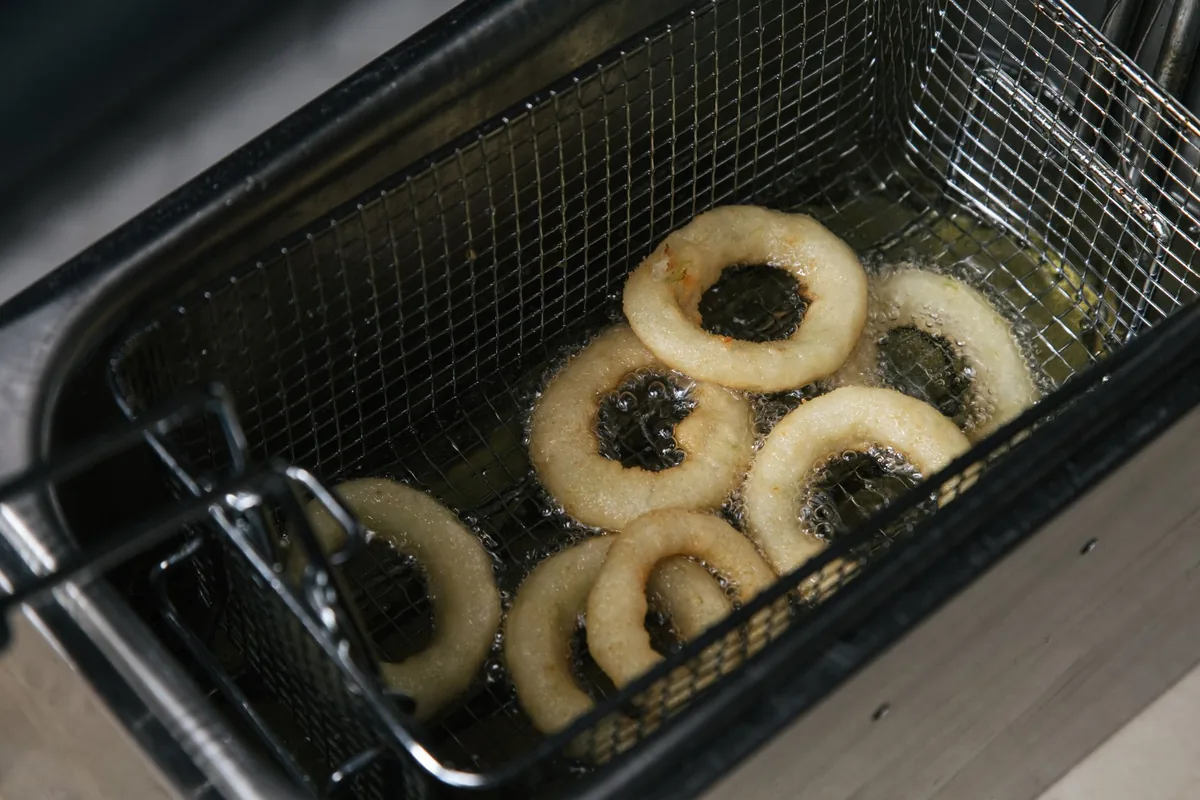
6. Amazon Basics 3.2 Qt — Best Value

Most fryers here say “adjustable temperature” and leave it there. Amazon Basics gives both ends — 265°F to 375°F — which tells you it will hold a low temperature for doughnuts as well as reaching the 350–375°F where chips actually crisp.
It also publishes 1500 watts, which two thirds of this roundup does not.
Key Specifications
| Capacity | 3.2 quarts / 3.0 litres |
|---|---|
| Wattage | 1500 watts |
| Temperature range | 265°F to 375°F (130°C to 190°C) |
| Basket | Included |
| Body | Stainless steel |
| Weight | 5.6 lbs |
| Dimensions | 15.91″D x 8.9″W x 9.37″H |
| Rating | 4.4 out of 5 stars |
| Best For | Knowing exactly what you are buying |
Why We Recommend It
Three litres is the sensible middle: enough for a family portion, not so much that filling it is an event.
The specification is otherwise plain — a basket, a dial, a stainless body, no oil filtration or split tanks. At this price that is a fair exchange, and a 4.4 rating suggests it does the basics properly.
Pros
- Publishes wattage and a full temperature range
- 3 litres suits most households
- 1500 W heats quickly
- Stainless steel body
- 4.4 rating
Cons
- No oil filtration or split tank
- Plain specification with no extras
- 15.91 inches deep
- Single basket only
Best for: Anyone who wants the numbers stated and no surprises.
7. Pukomc 3L — Best Viewing Lid

Frying with the lid on cuts splatter dramatically, but on most fryers it also means cooking blind. A viewing window solves that, and it is a more useful feature on a deep fryer than on almost any other appliance because lifting the lid releases steam and oil spatter together.
Cool-touch handles are the other safety detail worth having on a vessel holding three litres of oil at 375°F.
Key Specifications
| Capacity | 3 litres |
|---|---|
| Wattage | 1500 watts |
| Lid | Viewing lid, prevents oil splashing |
| Handles | Cool touch |
| Temperature | Adjustable |
| Body | Stainless steel |
| Weight | 6.5 lbs |
| Dimensions | 16.5″D x 7.9″W x 9.3″H |
| Model | MMF635S1-1 |
| Rating | 4.4 out of 5 stars |
| Best For | Frying with the lid down |
Why We Recommend It
Fifteen hundred watts is stated plainly, which puts it alongside the Amazon Basics and OVENTE for transparency.
Pukomc has no track record, and on an appliance holding hot oil that is worth weighing more heavily than it would on a kettle. The 4.4 rating is reassuring but young.
Pros
- Viewing lid lets you fry covered and still watch
- Cool-touch handles on a hot-oil appliance
- 1500 W stated plainly
- 3 litres suits most households
- Stainless steel body
Cons
- Brand has no track record
- No stated temperature range
- 16.5 inches deep
- Single basket
Best for: Anyone who fries with the lid down to control splatter.
8. Alpha Living ED-1400 — Best Basket Options

Two basket sizes in the box is a small but genuinely practical idea. A large basket half-full lets food drift and stick together; a smaller basket keeps a modest portion contained and easier to lift and drain.
It is a cheaper way to get some of the flexibility that the Elite Gourmet’s split tank provides, though the oil volume stays the same either way.
Key Specifications
| Capacity | 4.5 litres |
|---|---|
| Baskets | 2-quart and 4-quart, both included |
| Body | Stainless steel |
| Weight | 9.5 lbs |
| Dimensions | 10.75″D x 12″W x 7.87″H |
| Model | ED-1400 |
| Rating | 4.3 out of 5 stars |
| Best For | Varying batch sizes in one tank |
Why We Recommend It
At 7.87 inches tall it is the lowest-profile 4.5-litre fryer here, which suits a counter under a wall cabinet.
No wattage is published, so heat-up time cannot be compared. At 9.5 lbs it is also on the heavy side for a domestic unit, which is a consideration when it is full of oil.
Pros
- Two basket sizes supplied
- Lowest-profile 4.5 litre fryer here
- Stainless steel construction
- Baskets suit different batch sizes
- 4.5 litre capacity
Cons
- No wattage published
- 9.5 lbs before oil
- Single oil tank regardless of basket used
- Brand record is thin
Best for: Households whose batch sizes vary week to week.
9. OVENTE FDM2201BR — Best Compact Electric

Two litres is less than half what the 4.5-litre fryers need, which means less oil to buy, less to heat and less to dispose of. Combined with a stated 275 to 375°F range, it is the most economical adjustable fryer in this roundup to actually run.
Only the Presto FryDaddy uses less oil, and that has no temperature control at all.
Key Specifications
| Capacity | 2 litres, smallest adjustable fryer here |
|---|---|
| Wattage | 1500 watts |
| Temperature range | 275°F to 375°F |
| Body | Stainless steel |
| Weight | 5.5 lbs |
| Dimensions | 13.75″D x 8.25″W x 8.25″H |
| Model | FDM2201BR |
| Rating | 4.2 out of 5 stars |
| Best For | Adjustable frying with minimal oil |
Why We Recommend It
Fifteen hundred watts into two litres also means it reaches temperature faster than the large tanks.
The 4.2 rating is the lowest of the domestic fryers here, and two litres genuinely limits batch size — frying for more than two people means working in rounds.
Pros
- Smallest oil volume of any adjustable fryer here
- Publishes both wattage and full temperature range
- 1500 W into 2 litres heats quickly
- 5.5 lbs and compact
- Cheapest fryer in the roundup
Cons
- 4.2 rating, lowest of the domestic units
- 2 litres means frying in rounds for a family
- Single small basket
- Stainless shows oil marks
Best for: One or two people who want temperature control and low running cost.
10. VEVOR Commercial — Best Commercial

Three thousand watts across two 11-litre tanks is commercial specification. It recovers temperature between batches in a way domestic fryers cannot, which is the difference that matters when you are frying continuously rather than making one round of chips.
Two separate tanks means two oil types or two foods, at full capacity each.
Key Specifications
| Tanks | Two separate |
|---|---|
| Water capacity | Max 11.6 qt / 11 L each |
| Wattage | 3000 watts, double any domestic unit here |
| Body | Stainless steel |
| Weight | 34.8 lbs |
| Dimensions | 20.5″D x 22.4″W x 14″H |
| Rating | 4.0 out of 5 stars |
| Best For | Market stalls, catering and continuous service |
Why We Recommend It
Understand the practical costs before buying this for a kitchen. Filling both tanks takes a great deal of oil. It weighs 34.8 lbs empty. It occupies 20.5 by 22.4 inches of counter permanently. And at 3000 watts it will need appropriate electrical supply rather than sharing a socket.
It also carries the lowest rating in this roundup at 4.0, which for a commercial-grade unit at this price is worth weighing.
Pros
- Two 11-litre tanks for genuine commercial volume
- 3000 W recovers temperature between batches
- Two oil types or two foods at once
- Stainless commercial construction
- Built for continuous service
Cons
- Lowest rating in the roundup at 4.0
- 34.8 lbs and a 20.5 x 22.4 inch footprint
- Very large volume of oil to fill and replace
- 3000 W needs suitable electrical supply
Best for: Market stalls, catering and small commercial kitchens.
What Actually Determines Running Cost
Four different approaches to the same problem, and they are not equally effective.
| Approach | Models here | What it saves | Cost |
|---|---|---|---|
| Automatic oil filtration | All-Clad Easy Clean Pro | Extends oil life several times over | Highest price here |
| Split tank | Elite Gourmet Dual | Heat and fill half the oil | Two tanks to clean |
| Small fixed volume | Presto FryDaddy, OVENTE 2 L | Least oil per change | Limited batch size |
| Large single tank | Chefman, Alpha Living, Hamilton Beach | Nothing — full fill every time | Cheapest to buy |
If you fry occasionally, a large single tank is fine and the cheapest way in — you are simply not changing the oil often enough for it to matter. If you fry weekly, the arithmetic changes: filtration or a split tank pays for itself in oil you do not buy, and a small fixed-volume fryer like the FryDaddy avoids the problem altogether by never holding much oil in the first place.
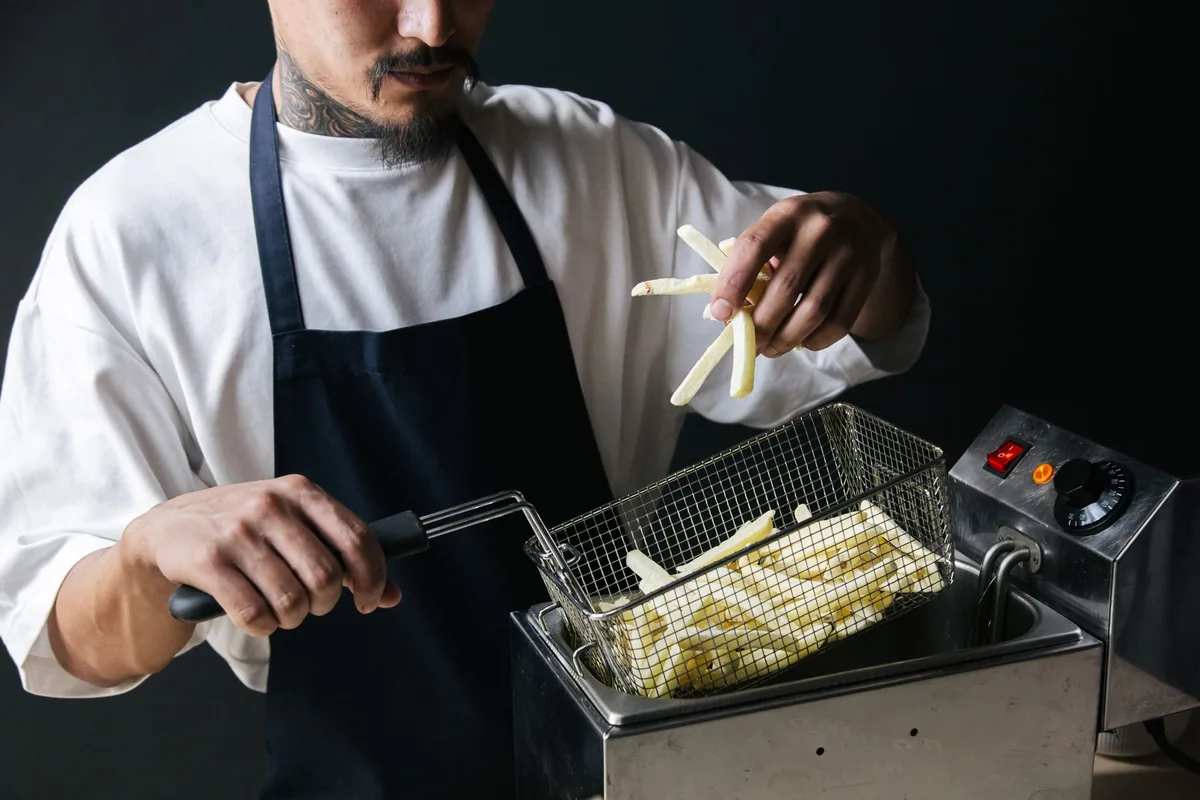
Do You Need Temperature Control?
Two machines here have none at all, and for some cooking that is genuinely fine.
| Fixed temperature | Adjustable | |
|---|---|---|
| Models here | Presto FryDaddy | The other nine |
| Chips and fries | Yes | Yes |
| Chicken pieces | Yes | Yes |
| Doughnuts and batter | Harder to control | Yes |
| Stated range where given | — | 265–375°F and 275–375°F |
| Rating here | 4.6, highest in the roundup | 4.0–4.5 |
Note that the fixed-temperature machine has the highest rating in this roundup. Frying is mostly done in a narrow band around 350 to 375°F, and a thermostat that simply holds that removes a variable rather than taking one away. If you make doughnuts, tempura or anything at a lower temperature, you need the dial — and you should look for one of the two machines that publishes both ends of its range rather than just saying “adjustable”.
Best Alternatives
| Alternative | Why Consider It | Better For | Main Trade-Off |
|---|---|---|---|
| Air fryer | No oil at all, no disposal | Chips, frozen food, wings | Does not actually fry; different texture |
| Heavy pan and a thermometer | You may already own both | Occasional frying | No thermostat; oil temperature drifts |
| Electric skillet | Shallow frying with less oil | Cutlets, fritters, shallow work | Not deep enough for battered food |
| Stovetop fry pot | Cheap, no electronics | Occasional use on a gas hob | No thermostat, and needs a hob |
| Pressure fryer | Restaurant fried chicken texture | Chicken specifically | Expensive, and a safety learning curve |
How Much Oil Each Machine Actually Needs
Smallest volume — Presto FryDaddy, OVENTE 2 L. The FryDaddy holds a small fixed amount for four servings; the OVENTE takes two litres. Both are cheap to fill and cheap to change, and both limit you to small batches. For one or two people frying regularly, this tier costs the least to run by a wide margin.
Three litres — Amazon Basics, Pukomc. The practical middle. Enough for a family portion, not so much that a change of oil is an event. Both publish 1500 watts, and the Amazon Basics publishes a full 265–375°F range.
Four and a half litres — Chefman, Alpha Living, Elite Gourmet, Hamilton Beach. Crowd capacity. The important distinction inside this tier is arrangement: Chefman and Alpha Living use one tank, so you fill all of it every time. Elite Gourmet splits it in two. Hamilton Beach publishes 4.7 quarts of oil against 12 cups of food, which is the clearest disclosure in the roundup.
Commercial — VEVOR, two tanks at 11 litres each. A different category. Three thousand watts, 34.8 lbs, and a quantity of oil that only makes sense if you are frying for money.
The thing nobody advertises: oil breaks down from suspended food particles as much as from heat. Straining it after each use extends its life considerably whatever fryer you own, and All-Clad is the only machine here that does it for you.
How to Choose a Deep Fryer
Size the Tank to Your Usual Batch, Not Your Largest
You fill the tank every time regardless of how much food goes in. A 4.5-litre fryer used mostly for two people wastes oil on every session. Buy for the batch you cook weekly and accept working in rounds on the rare occasions you cook for eight.
Work Out What Happens to the Oil
This is the running cost. Automatic filtration extends oil life several times over; a split tank lets you use half; a small fixed volume avoids the problem. A large single tank does nothing at all, which is fine if you fry rarely and expensive if you fry weekly.
Look for a Stated Temperature Range, Not Just “Adjustable”
Only two machines here give both ends. Chips and chicken want 350 to 375°F; doughnuts and tempura want considerably less. A fryer that only states “adjustable temperature” is not telling you whether it can go low enough for the second group.
Match the Basket Arrangement to How You Cook
One large basket suits big items that need depth. Two split tanks let you fry two foods without shared flavours and halve the oil. Three stacked baskets let you hold cooked food above the oil while the next batch fries. These are genuinely different tools.
Plan Where It Will Live Permanently
A fryer full of hot oil must not be lifted or carried, and cooled oil still has to be dealt with before the machine can be moved. The units here run from 3 lbs to 34.8 lbs and up to 22 inches wide. Decide the permanent spot before buying.
Treat a Missing Wattage as a Gap
Seven of these ten publish none, which makes heat-up time impossible to compare. It matters most on the large tanks, because 4.5 litres of cold oil takes considerably longer to reach frying temperature than 2 litres does.
Common Deep Fryer Buying Mistakes
- Buying the largest tank you can afford. You fill it every time, whatever you are cooking.
- Ignoring what happens to the oil. It is the recurring cost, and the machine is not.
- Accepting “adjustable temperature” without a range. Only two listings here state both ends.
- Reusing oil without straining it. Suspended particles break oil down faster than heat does.
- Confusing oil capacity with food capacity. Only one listing here publishes both.
- Buying a fryer you will need to move. Hot oil makes a full fryer effectively immovable.
- Assuming a commercial unit is simply a better domestic one. It needs suitable electrical supply, permanent space and a great deal of oil.
Which Deep Fryer Should You Buy?
Buy the All-Clad Easy Clean Pro if you fry regularly. Automatic oil filtration and draining is the only feature here that genuinely reduces the cost of owning a fryer, and it pays back with use.
Buy the Presto FryDaddy if you fry small amounts often. Highest rated here, uses the least oil, and there is nothing to set — provided you never need a lower temperature.
Buy the Elite Gourmet Dual Split if your batch sizes vary. Heating half the tank for a small portion is the simplest saving available short of filtration.
Buy the Amazon Basics 3.2 Qt if you want the specification stated plainly — wattage, full temperature range, three litres, and no surprises.
Buy the Hamilton Beach Professional if you fry for a crowd and want three baskets to work in sequence.
Buy the OVENTE 2 L if you want adjustable temperature with the lowest running cost of any dial-controlled fryer here.
Buy the VEVOR only if you are frying commercially. It is not a large domestic fryer; it is a small commercial one.
Frequently Asked Questions
How much oil does a deep fryer use?
As much as its tank holds, every time you use it. The fryers here range from a small fixed volume in the Presto FryDaddy up to 4.5 litres domestically and 11 litres per tank on the commercial VEVOR. This is the main running cost of owning a deep fryer, and it is why tank size should match your usual batch rather than your largest one.
How long can you reuse frying oil?
It depends far more on straining than on time. Oil breaks down from suspended food particles as much as from heat, so filtering it after each use extends its life considerably. The All-Clad Easy Clean Pro in this roundup is the only machine that filters and drains automatically; with every other fryer here you are straining it through a sieve yourself.
What temperature should a deep fryer be?
Chips, chicken and most battered food want 350 to 375°F. Doughnuts, tempura and delicate items want lower. Only two fryers here publish a full range — Amazon Basics at 265 to 375°F and OVENTE at 275 to 375°F. The others say only “adjustable”, which does not tell you how low they go.
Is a deep fryer better than an air fryer?
They do different things. A deep fryer cooks food in hot oil, which is what produces the texture people mean by fried. An air fryer circulates hot air and produces something crisp but different, with no oil to buy, heat or dispose of. If you want genuine fried texture, only a deep fryer delivers it; if you want convenience and no oil, the air fryer wins outright.
What size deep fryer do I need?
Two to three litres suits one to three people; 4.5 litres suits a family or entertaining. Remember you fill the tank regardless of batch size, so a large fryer used mostly for small portions wastes oil every session. The split-tank Elite Gourmet here is the compromise — 4.5 litres available, half of it usable on its own.
Do I need a fryer with a basket?
For most frying, yes — a basket lets you lower and lift food in one motion and drain it above the oil. The Presto FryDaddy here uses a scoop instead, which suits its small fixed volume. Hamilton Beach supplies three baskets and Alpha Living supplies two sizes, both of which help when batch sizes vary.
Can you move a deep fryer after use?
Not while it contains hot oil, and that takes a long time to cool. Plan a permanent home before buying. The machines here range from 3 lbs to 34.8 lbs empty, and up to 22.4 inches wide, so the footprint is a long-term commitment rather than something you store between uses.
Why do so few listings state the wattage?
It is a genuine gap in this category — only three of the ten fryers here publish one. It matters most on the larger tanks, because 4.5 litres of cold oil takes considerably longer to reach frying temperature than 2 litres. Where wattage is stated it is 1500 W domestically and 3000 W on the commercial unit.
Final Verdict
The only fryer here that filters and drains its own oil — the single feature that reduces what a deep fryer actually costs to own.
Highest rated in the roundup, uses the least oil of any machine here, and has nothing to set or adjust.
Three litres with both the wattage and a full 265–375°F range published, which two thirds of this category declines to state.
Deep fryers are priced like appliances and run like consumables. The tank has to be full for the machine to work, and every litre in it was bought, will be heated repeatedly, and will eventually be poured away. That is where the money goes, and almost nothing on the box addresses it.
So decide in this order. Size the tank to the batch you actually cook most weeks, not the biggest meal you can imagine. Work out what the machine does about used oil — filtration, a split tank, or nothing. Look for a stated temperature range rather than the word adjustable. Match the basket arrangement to whether you fry one big thing or several small ones. And choose the permanent spot before you buy, because a fryer full of oil is not going anywhere.
Do that and the fryer that suits you is usually smaller than the one you were considering — and considerably cheaper to keep running.