
Affiliate Disclosure: As an Amazon Associate, we earn from qualifying purchases. This does not affect the price you pay.
Two grinders on this page put the word “zero” in their retention claim. Both then print the number behind it, in the same words: “True Zero Retention <0.1 gram.” On these listings, zero means under a tenth of a gram.
That is not a complaint. A tenth of a gram is very little coffee to leave behind. Against a typical 18 g double shot it is about half of one percent. The point is simpler: a number can be compared, and most listings here decline to give one.
All ten grinders below make some claim about leftover grounds. Eight use the word “retention”; two talk about “residue”. Four publish a weight. One publishes a percentage without saying what it is a percentage of. Five publish adjectives only — “low”, “reduced”, “minimising” — and among those five are the most expensive grinder here and the one Italian-built machine.
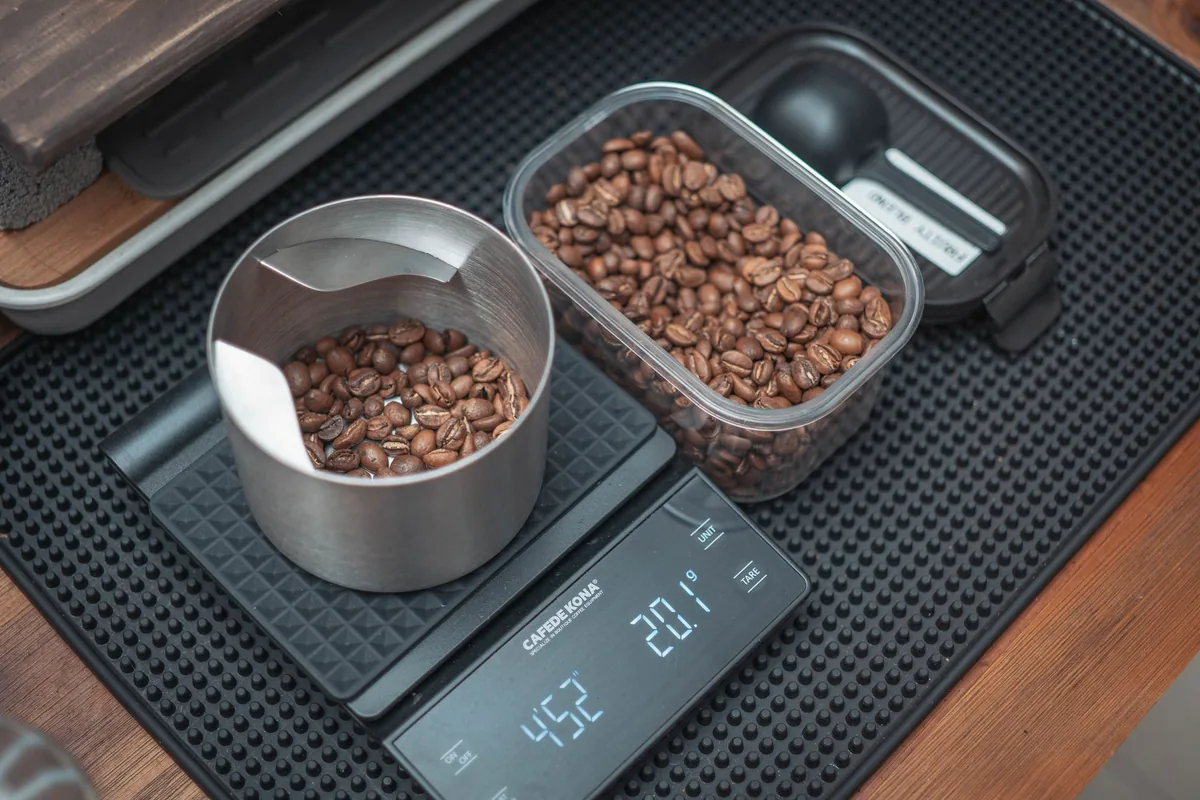
The four weights are tightly bunched: under 0.1 g, under 0.1 g, about 0.1 g, and 0.1 to 0.2 g. That whole range fits inside two divisions of the 0.1 g scale most home baristas use, which also means that a scale reading to 0.1 g cannot tell “under 0.1 g” apart from nothing at all. If you want to check a claim like this, you need to weigh beans in and grounds out, and you need patience more than precision.
Burrs run from 40mm conical to 64mm flat. Five grinders state stepless adjustment, which is the feature espresso actually needs; three use numbered steps, and two are unclear. Six name a bellows, a blow-up hopper or a blow-out funnel for clearing the chamber. None of the ten mentions RDT, the habit of misting beans with a drop of water to cut static, so any static control here is built into the machine or not there at all.
And one listing deserves a warning before the table. The Fellow Ode Gen 2 is the most-reviewed grinder on this page, with 713 ratings and “500+ bought in past month”. Its first bullet ends: “Designed specifically for brewed coffee. Not for espresso.” It appears in single dose searches, it is a fine single dose grinder for filter coffee, and it is included here so you can see it clearly and not buy it for an espresso machine.
So read this roundup in grams first, then in stepless or stepped, then in burr size. The adjectives tell you very little, because every listing uses them.
Budget to premium below. The cheapest grinder that prints a retention weight is the AMZCHEF; the cheapest that prints “<0.1 gram” is the MiiCoffee DF54.
Our Quick Picks
 Best OverallMiiCoffee DF64 II
64mm flat burrs, stepless adjustment and a printed “<0.1 gram” retention claim, with 4.4 stars across 278 ratings.
 Best Value Flat BurrMiiCoffee DF54
The same “<0.1 gram” claim and stepless dial on 54mm flat burrs, at a far lower price than its 64mm sibling.
 Best Budget PickAMZCHEF 8306A Single Dose
The cheapest grinder here to print a retention weight — 0.1 to 0.2 g — on a 40mm conical burr, sold well below its list price.
At a Glance
Ten Grinders, Sorted by the Retention Figure They Print
Stated retention first, from “<0.1 gram” down to adjectives only. Then read the adjustment column: for espresso, stepless matters more than another millimetre of burr.
| # | Model | Retention Stated | Burrs | Adjustment | Best Sellers Rank | Standout | Main Drawback | Check Price |
|---|---|---|---|---|---|---|---|---|
| 1 |
 MiiCoffee DF64 II |
<0.1 g | 64mm flat | Stepless | #30 in Electric Burr Grinders | Printed <0.1 g, 64mm flat, SSP-upgradable burrs | 15.0 lb, one-year warranty, top-tier price | View on Amazon |
| 2 |
 MiiCoffee DF54 |
<0.1 g | 54mm flat | Stepless | #21 in Electric Burr Grinders | Same retention claim as the DF64 II, far cheaper | 3.8 across 669 ratings, lowest here | View on Amazon |
| 3 |
 beanglass T64 |
About 0.1 g | 64mm flat | Stepless | #349 in Electric Burr Grinders | Bellow, magnetic chute and 300W motor stated | Warns clogging below setting 5 | View on Amazon |
| 4 |
 AMZCHEF 8306A |
0.1–0.2 g | 40mm conical | 75 settings | #95 in Electric Burr Grinders | Cheapest grinder here that prints a weight | Stepped, not stepless, for espresso | View on Amazon |
| 5 |
 Viesimple Gen 4 |
<0.2% residue | 48mm conical | Not stated | #40 in Electric Burr Grinders | 4.5 across 337 ratings; under 50 dB claimed | Percentage of what? The listing never says | View on Amazon |
| 6 |
 Eureka Mignon Zero |
Words only | 55mm | Stepless | #88 in Electric Burr Grinders | Micrometric stepless dial, built in Milan | No retention figure; burr type not stated | View on Amazon |
| 7 |
 Turin SK40 |
Words only | 40mm conical | Stepless | #92 in Electric Burr Grinders | Cheapest stepless grinder here, bellows included | No figure, no weight, no anti-static stated | View on Amazon |
| 8 |
 HiBREW G5 |
Words only | 48mm conical | 36 settings | #166 in Electric Burr Grinders | Two speeds: 500 and 400 r/min | “36 continuously adjustable” settings is ambiguous | View on Amazon |
| 9 |
 SHARDOR Cordless |
Words only | Conical, size not stated | 80 settings | #61 in Electric Burr Grinders | Battery powered, USB-C, 56 dB claimed | 20W motor; burr size never given | View on Amazon |
| 10 |
 Fellow Ode Gen 2 |
Words only | 64mm flat | 31 settings | #26 in Electric Burr Grinders | 713 ratings, most reviewed here | Listing says: “Not for espresso.” | View on Amazon |
Ratings and specifications are taken from each manufacturer’s Amazon listing as displayed on 5 October 2026 through a United States connection, and may change. Retention wording is reproduced from each listing. The MiiCoffee DF64 II and DF54 state “True Zero Retention <0.1 gram”; the beanglass T64 states “about 0.1g”; the AMZCHEF states “as low as 0.1 to 0.2g”. The Viesimple states “less than 0.2% debris residue” without naming the base. “Words only” means the listing claims low retention or reduced residue but gives no figure. The Eureka gives a 55mm burr but not whether it is flat or conical, and states 45 g for its hopper in one bullet and 46 g capacity in another; both are shown in its card. The HiBREW calls its 36 settings “continuously adjustable”, and we have not counted it as stepless. The SHARDOR names a conical burr but no size. The Fellow Ode Gen 2 is included as a warning: its own listing says it is not for espresso. Adjustment is as stated; the Viesimple publishes no setting count or adjustment type.
Scroll the table sideways to see every column
How We Chose These Ten
We researched current listings, compared manufacturer specifications and documentation, and examined recurring patterns in customer feedback. We did not carry out hands-on testing, and nothing below is presented as measured performance data.
- Retention recorded exactly as published — a weight where a listing gives one, the wording where it does not; four of ten print grams, one prints a percentage, five print adjectives
- Adjustment type read against espresso — stepless where the listing says stepless; a count of settings where it gives steps; “not stated” where it gives neither
- Burr size and type from the listing only — nine of ten state a size; one of those does not say flat or conical, and one conical grinder gives no size at all
- Clearing aids noted where named — bellows, blow-up hoppers, blow-out funnels, knockers, ionisers and anti-static coatings; none of the ten mentions RDT
- A verified live buy box — all ten confirmed in stock on amazon.com on 5 October 2026, with prices taken from the buy box that day
- One near-duplicate removed — a second DF64 listing shares the DF64 II’s dimensions and almost every bullet word for word, so only one appears
- One warning included on purpose — the Fellow Ode Gen 2 says “Not for espresso” and is kept so the most-reviewed single dose grinder on Amazon is not mistaken for an espresso grinder
The Ten Grinders in Detail
1. MiiCoffee DF64 II — Best Overall

A printed retention figure, the larger of the two flat burr sizes here, and a stepless dial: the DF64 II is the grinder the rest of this page gets measured against.
Key Specifications
| Retention stated | “True Zero Retention <0.1 gram” |
|---|---|
| Burrs | 64mm stainless steel flat; upgradable to SSP burrs |
| Adjustment | Stepless, chrome-wrapped dial with metal indicator |
| Clearing aids | Blow-out funnel with lid recommended; works “even without bellow” |
| Static control | Plasma generator (ioniser) at the exit chute |
| Dosing cup | 58mm food-grade aluminium |
| Version | 2.6, with anti-popcorn disc and convex blocker |
| Size and weight | 12.0 x 10.0 x 5.2 in; 15.0 lb |
| Power | 110V US plug |
| Warranty | One year standard |
| Rating | 4.4 across 278 ratings; #30 in Electric Burr Grinders |
| Best For | Espresso-first single dosing with room to change burrs later |
Why We Recommend It
It prints the number. “True Zero Retention <0.1 gram” is the most specific retention claim on this page, and it comes with an honest qualifier attached: the listing says the grinder reaches “almost zero retention” without a bellow, and tells you to use a blow-out funnel with lid “to completely empty the dead space”. That is a maker admitting there is dead space, telling you where it is and how to clear it. It is more useful than any adjective on the page.
64mm flat burrs, with an upgrade path. Flat burrs of this size are what the larger single dose grinders here are built around; three of the ten use 64mm, and this is the only one of the three whose listing names an aftermarket route — “Upgradable to SSP burrs for different coffee tastes.” That matters if you expect your taste to move, say from chocolate-heavy espresso toward lighter roasts. You buy the body once and change the cutting parts.
Stepless is the feature espresso needs. The listing describes a chrome-wrapped dial with a metal indicator and says the adjustment “is stepless” and “can be dialed in for espresso with high precision.” A shot that runs fast at one notch and chokes at the next is the classic stepped-grinder problem, and a stepless collar removes it. Five grinders on this page state stepless; this is the dearest of them, a little above the beanglass.
The static story is told twice, slightly differently. One bullet says the plasma generator is “inside exit chute”. The version bullet says that on v2.5 and later “the plasma generator probes wrap around the inner chute” and that “the old version has probes inside the chute.” Both statements are reported here; the practical point is the same either way. There is active static control at the exit, which is where clumping and grounds clinging to plastic usually start.
What it asks of you. 15.0 lb and 12.0 inches tall, a one-year warranty against two years on the Fellow and Viesimple, and stock flagged at “Only 18 left” on the capture date. 4.4 across 278 ratings is a solid record on a mid-sized sample. It sits level with the Fellow, which is the comparison that matters: one of those two premium grinders is built for espresso and says so, and the other says the opposite.
Pros
- Prints “<0.1 gram” retention, the tightest claim here
- 64mm flat burrs, upgradable to SSP
- Stepless dial with a metal indicator
- Plasma generator for static at the exit chute
- 58mm aluminium dosing cup included
- 4.4 across 278 ratings
Cons
- Joint-dearest espresso grinder here
- 15.0 lb and 12.0 inches tall
- One-year warranty only
- Ioniser location described two ways in one listing
- Full emptying relies on a blow-out funnel
- Stock flagged as limited on the capture date
Best for: Espresso drinkers who single dose daily and want a stated retention figure plus a burr upgrade route.
2. MiiCoffee DF54 — Best Value Flat Burr

Everything the DF64 II claims about retention and adjustment, on smaller 54mm burrs, at a much lower price.
Key Specifications
| Retention stated | “True Zero Retention <0.1 gram” |
|---|---|
| Burrs | 54mm custom stainless steel flat |
| Adjustment | Stepless, chrome-wrapped dial with metal indicator |
| Clearing aids | Blow-out funnel with lid recommended; bellow referenced |
| Static control | Plasma generator wrapping the exit chute |
| Dosing cup | 58mm transparent food-grade plastic |
| Version | 1.5: larger anti-popcorn disc, convex blocker, metal declumper from v1.4 |
| Size and weight | 12.0 x 7.0 x 4.5 in; 10.0 lb |
| Warranty | Not stated |
| Rating | 3.8 across 669 ratings; #21 in Electric Burr Grinders |
| Best For | Stepless flat burr espresso at the middle of the price range |
Why We Recommend It
Same claim, smaller burrs, lower price. The DF54’s retention bullet is word for word the DF64 II’s: “True Zero Retention <0.1 gram. Even without bellow this grinder reaches almost zero retention.” The stepless dial bullet is identical too. What changes is 10mm of burr diameter and 5.0 lb of weight. If the reason you want a single dose grinder is to stop old coffee getting into new shots, this listing makes the same promise as the dearer one.
54mm flat is still flat. A flat burr set grinds between two parallel discs, and the listing calls these “custom made 54mm stainless steel flat burrs”. It is the smallest flat burr on the page, and it sits closer in size to the 48mm conical burrs on the Viesimple and HiBREW than to the 64mm sets. The listing makes no claim that the burrs can be swapped for an aftermarket set, which is the one thing the DF64 II offers that this does not.
The version notes are unusually candid. Version 1.5 has an anti-popcorn disc with “a slightly larger diameter so that the bellow stays where it is” and a convex blocker “so that beans won’t stay on it”. Version 1.4 brought an enlarged chute and an upgraded metal declumper. Read plainly, that is a list of the places beans and grounds used to get stuck, and what was changed. It is also a reminder that a listing’s retention figure describes the current revision.
The rating is the weakest here, on a large sample. 3.8 across 669 ratings is the lowest score on this page and the second-largest sample. That combination says something is going wrong for a meaningful share of buyers, and the listing cannot tell us what. It is still in the top 21 of Electric Burr Grinders, with “200+ bought in past month”, so it is clearly selling. Weigh the price saving against the possibility of a less consistent unit.
The plastic cup and the stock. The DF64 II ships an aluminium dosing cup; the DF54 ships a 58mm transparent plastic one, and plastic is where static clings. The listing’s own advice is to use the cup rather than the portafilter rest unless your portafilter is 58mm. On the capture date it showed “Only 2 left in stock”. If it is gone when you look, the DF64 II is the same promise at a higher price.
Pros
- Prints “<0.1 gram” retention
- Stepless dial, identical to the DF64 II’s
- Far below the DF64 II
- Plasma generator around the exit chute
- Version history names the fixes
- 200+ bought in past month
Cons
- 3.8 across 669 ratings, lowest score here
- Smallest flat burrs on the page
- Plastic dosing cup, not aluminium
- No burr upgrade path stated
- Warranty not stated
- Only 2 left in stock on the capture date
Best for: Buyers who want a printed retention figure and stepless espresso adjustment without paying for 64mm burrs.
3. beanglass T64 — Best 64mm Alternative

64mm titanium-plated flat burrs, a bellow and a removable chute, with a retention figure that comes with its own method: “tested for a long time”.
Key Specifications
| Retention stated | “very low retention (about 0.1g)” |
|---|---|
| Burrs | 64mm titanium-plated stainless steel flat |
| Adjustment | Stepless; 10–20 recommended for espresso, not below 5 |
| Clearing aids | Bellow; magnetic removable exit chute |
| Static control | Not stated |
| Motor | 300W |
| Dosing cup | 58mm food-grade aluminium |
| Size and weight | 12.6 x 8.3 x 5.1 in; 15.0 lb |
| Warranty | One year |
| Rating | 4.0 across 47 ratings; #349 in Electric Burr Grinders |
| Best For | 64mm flat burr espresso with a bellow, below the DF64 II |
Why We Recommend It
“About 0.1g” is a slightly softer number than “<0.1 gram”. The beanglass listing says the grinder “has been tested for a long time that is very low retention (about 0.1g)”. “About” allows a little either side, where the MiiCoffee listings give a ceiling. In practice the two claims sit within a few hundredths of a gram of each other, which no ordinary kitchen scale can separate. What matters is that both makers committed to a figure you can check.
A bellow and a removable chute. This is the only 64mm flat burr grinder here whose listing names a bellow as part of the machine, and the only grinder on the page that pairs one with a magnetic removable exit chute. The bellow pushes a puff of air through the chamber after grinding, which is how most single dose grinders get their last few tenths of a gram out. A chute that comes off by hand means you can see and brush what is left without tools. Both are workflow features, and both work on the retention number.
The listing tells you where the floor is. “We recommend the grinding setting between 10 and 20 for espresso (Note: Please do not set it below 5, otherwise clogging is very likely to occur).” That is a rare and useful warning. It also tells you that espresso sits fairly close to the bottom of the dial, so you will be working in the lower part of the range. The adjustment is stated as stepless, so within that band you can move as finely as your hand allows.
Built heavy. A cast aluminium body, a stated 300W motor — the only motor wattage published by a corded grinder here — and “approximately 15 pounds”, matching the 15.0 lb in the spec field. Titanium plating on the burrs is described as giving “a longer service life”. The dosing cup is 58mm aluminium, the same size and material as the DF64 II’s.
The record is thin. 4.0 across 47 ratings is a small sample, and the sales rank of #1,752,782 overall is the weakest on the page. It sells below its list price and below the DF64 II. It states no static control and no burr upgrade path. If you value the bellow and the chute, this is the 64mm grinder to look at; if you value a long track record, the DF64 II has more of one.
Pros
- States about 0.1 g retention
- 64mm titanium-plated flat burrs
- Stepless, with a published espresso range
- Bellow plus magnetic removable chute
- 300W motor and cast aluminium body
- Below the DF64 II
Cons
- 4.0 across only 47 ratings
- Weakest overall sales rank on the page
- Clogging warned below setting 5
- No static control stated
- 15.0 lb
- One-year warranty
Best for: Espresso drinkers who want 64mm flat burrs and a bellow without paying the DF64 II premium.
4. AMZCHEF 8306A Single Dose — Best Budget Pick

It is the cheapest grinder on this page and the cheapest to print a retention weight: 0.1 to 0.2 g.
Key Specifications
| Retention stated | “as low as 0.1 to 0.2g” |
|---|---|
| Burrs | 40mm six-star forged conical |
| Adjustment | 75 settings, espresso to French press |
| Clearing aids | Detachable magnetic outlet; knock tool included |
| Static control | Anti-static technology stated |
| Motor | DC motor with full metal gearbox |
| Timer | 5 to 60 seconds |
| Dosing | 58mm and 51 or 54mm dosing funnel stands; built-in LED |
| Size | 11.93 x 8.85 x 6.14 in; weight not stated |
| Rating | 4.0 across 199 ratings; #95 in Electric Burr Grinders |
| Best For | A first single dose grinder for espresso on a budget |
Why We Recommend It
A number, at the bottom of the range. “Retention as low as 0.1 to 0.2g helps reduce old grounds carrying into your next dose.” It is the widest of the four published figures and it comes with “as low as”, which is a best case rather than a ceiling. It is also a figure, and two grinders costing several times as much give none. You get a claim you can hold the machine to.
The burr is conical, and the dial has steps. 40mm six-star forged conical burrs, the same diameter as the Turin SK40’s, with 75 settings spanning “fine espresso to coarser pour over and French press”. Seventy-five steps is a lot of steps, and the listing calls them “precise”, but they are steps. If your shot runs fast at one setting and slow at the next, there is nothing in between. With a pressurised basket that rarely matters; with an unpressurised one it sometimes will.
The clearing kit is practical. A detachable magnetic outlet and an included knock tool “help clear the grinding path, making frequent bean changes cleaner”. That is the single dose use case stated in plain words: switching beans without the last coffee contaminating the next. The anti-static claim is in words only, without an ioniser named.
It thinks about your portafilter. The listing includes 58mm and “51 or 54mm” dosing funnel stands, the only grinder here to name smaller portafilter sizes explicitly. Many home espresso machines use 51mm or 54mm baskets, so this is a grinder priced and equipped for those machines. The 5 to 60 second timer and built-in LED round out a feature list that is long for the money.
What the price leaves out. 4.0 across 199 ratings is middling. The listing gives no weight, no warranty and no burr upgrade route, and the colour field reads “Rose Gold” while the part number ends “-BK”, so check the colour you are sent. It sells well below its list price. As an entry point into single dosing for espresso it is the strongest stated case on the page at the budget end.
Pros
- Cheapest grinder here
- Prints 0.1 to 0.2 g retention
- Funnel stands for 58mm and 51 or 54mm portafilters
- Magnetic outlet plus knock tool
- 5 to 60 second timer
- DC motor and metal gearbox stated
Cons
- 75 steps rather than stepless
- “As low as” makes 0.1 g a best case
- 4.0 across 199 ratings
- No weight or warranty stated
- Colour field and part number disagree
- Anti-static claim in words only
Best for: Espresso beginners on a 51mm or 54mm machine who want a stated retention figure on a budget.
5. Viesimple Gen 4 — Quietest Stated

The best-rated grinder in the lower half of the range on a sizeable sample, with a retention claim written in percent rather than grams.
Key Specifications
| Retention stated | “less than 0.2% debris residue” (base not stated) |
|---|---|
| Burrs | 48mm conical, 5-blade |
| Adjustment | Not stated |
| Clearing aids | Blow-out funnel; anti-clogging chute claimed |
| Static control | Food-grade anti-static coating |
| Noise | Less than 50 dB claimed |
| Voltage | 100–240V |
| Dosing cup | Magnetic, with a sealed lid |
| Size and weight | 8.0 x 6.0 x 3.0 in; 3.39 lb |
| Warranty | 2 years |
| Rating | 4.5 across 337 ratings; #40 in Electric Burr Grinders |
| Best For | Quiet mornings and small counters |
Why We Recommend It
A percentage with no denominator. The Viesimple’s claim is that “the food-grade anti-static coating can achieve less than 0.2% debris residue”. 0.2% of what is never stated. If it means 0.2% of an 18 g dose, that would be under 0.04 g, the lowest claim on the page. If it means something else, it means something else. We have left it as written and sorted it below the four gram figures, because a percentage without a base cannot be compared.
The other retention claim is “100%”. An “anti-clogging patent” is said to optimise the powder channel, “discharging 100% of the powder”. That sits awkwardly next to the 0.2% residue figure in the same bullet, and neither is a weight. The physical aids are a blow-out funnel “for less chaff mess” and a magnetic dosing cup with a sealed lid that claims to be “100% anti-flying powder”.
The quietest stated grinder here. “Less than 50 decibels” is the lowest noise figure on the page, below the SHARDOR’s 56 dB. The Eureka and Fellow also claim quiet operation but give no number. A grinder that does not wake the house is a genuine single dose benefit, because you grind fresh for every shot, often first thing.
The adjustment is the gap. The listing gives no number of settings and does not say stepped or stepless. It says the 48mm conical burr suits “all brewing methods, including espresso”. For an espresso grinder that is the most important missing fact on the page, and it is worth checking product photos or the manual before buying if you use an unpressurised basket.
The record is good. 4.5 across 337 ratings, “200+ bought in past month” and a 2-year warranty make this the strongest buyer record in the lower half of the range. At 3.39 lb and 8.0 inches tall it is also the smallest corded grinder here, and it runs on 100–240V. Motor claims of “99% trouble-free” and a lifespan “over 10 years” are the maker’s words, not a measurement.
Pros
- 4.5 across 337 ratings
- Under 50 dB claimed, quietest stated
- 2-year warranty
- Smallest corded body: 8.0 in tall, 3.39 lb
- Blow-out funnel and sealed magnetic cup
- 100–240V
Cons
- Retention as a percentage with no base
- “100%” and “0.2%” claims in one bullet
- No setting count or adjustment type stated
- Motor lifespan claims unverifiable
- Conical 48mm, no upgrade path
- No ioniser, coating only
Best for: Single dosers in shared homes who want quiet operation and a strong rating on a mid-range budget.
6. Eureka Mignon Zero — Best Italian-Built

Hand-built in Milan with a micrometric stepless dial, and the most honest retention wording on the page, even without a number.
Key Specifications
| Retention stated | Words only: Blow Up hopper “reduces most retention” |
|---|---|
| Burrs | 55mm Eureka espresso burrs (type not stated) |
| Adjustment | Stepless micrometric, multiple revolutions |
| Clearing aids | Single Dose Blow Up hopper |
| Capacity | 45 g hopper and 45 g dosing cup; 46g capacity in another bullet |
| Noise | Silent Technology (no figure) |
| Controls | Side ON/OFF switch; adjustable portafilter fork |
| Size and weight | 13.75 x 6.75 x 4.75 in; 15.0 lb |
| Origin | Built by hand in Milan, Italy |
| Rating | 4.6 across 33 ratings; #88 in Electric Burr Grinders |
| Best For | Espresso-only households that value build and fine adjustment |
Why We Recommend It
No number, but no pretence either. The Eureka listing describes the problem accurately: “Burr chambers and chutes can retain grounds leading to old coffee being exchanged with new.” Then it says the Blow Up hopper “reduces most retention with a few firm pushes”. “Most” is not “zero”, and it is not a figure. It is the plainest admission on the page that something stays behind, which reads as more credible than “zero” would.
The adjustment is the selling point. “Eureka’s micrometric adjustment system gives the users multiple revolutions of grind size adjustment.” Multiple turns of the dial across the range means each degree of rotation moves the burrs a very small distance, which is exactly what dialling in espresso asks for. The oversized “Extra-Comfort Knob” is there to make those small turns easy. Of the five stepless grinders here, this is the only one that describes the mechanism in this way.
55mm, flat or conical unstated. “55mm Eureka espresso burrs that create fluffy, uniform grounds” is all the listing says. It does not say flat or conical, and we have not filled the gap. The single dose design bullet says it is for “espresso and occasional pour over”, so this is an espresso grinder first.
Two capacity figures. The accessories bullet lists a dosing cup “with 45 g capacity” and a single dose hopper “with 45 g capacity”; the single dose design bullet says “46g capacity”. Both are reported. Either is more than a double shot needs. The adjustable all-in-one fork holds a portafilter directly, and the side-mounted switch replaces a timer.
Small sample, strong score, Italian build. 4.6 across 33 ratings is the joint-highest score here on one of the smallest samples. It is sold by Seattle Coffee Gear, weighs 15.0 lb and stands 13.75 inches, the tallest on the page. You are paying for Milan assembly and the dial, not for a published retention figure.
Pros
- Micrometric stepless adjustment, multiple turns
- Built by hand in Milan
- Candid retention wording
- Blow Up hopper and adjustable fork
- 4.6 across 33 ratings
- Quiet operation claimed
Cons
- No retention figure
- Burr type not stated
- 45 g and 46g capacity both appear
- Tallest grinder here at 13.75 in
- Only 33 ratings
- No stated warranty
Best for: Espresso drinkers who prize fine adjustment and build over a printed retention number.
7. Turin SK40 — Best Stepless Conical

The cheapest stepless grinder on this page, with a tilted body and bellows in the box, and the shortest listing of the ten.
Key Specifications
| Retention stated | Words only: “Low-retention design” |
|---|---|
| Burrs | 40mm stainless steel conical |
| Adjustment | Stepless |
| Clearing aids | Tilted body; rubber bellows included |
| Static control | Not stated |
| Included | Wood lid, metal hopper, rubber bellows, stainless dosing cup |
| Size | 12.5 x 6.75 x 3.75 in; weight not stated |
| Warranty | Not stated |
| Rating | 4.6 across 38 ratings; #92 in Electric Burr Grinders |
| Best For | Stepless espresso adjustment at the lowest price here |
Why We Recommend It
Five bullets, all relevant. The Turin SK40 listing is the shortest here, and almost every line is something a single doser needs: 40mm conical burrs, stepless adjustment “when dialing in espresso”, a single dose workflow that lets you “switch coffees without emptying a full hopper”, and a low-retention design built on a “tilted body and bellows”. There is no number. There is also nothing padded.
Stepless on a budget. Five grinders here state stepless adjustment, and this is the cheapest of them, below the DF54. For espresso that is the headline. A conical burr at 40mm is the same diameter as the AMZCHEF’s, but the AMZCHEF steps through 75 positions and the Turin does not step at all.
The tilt and the bellows do the clearing. A tilted body puts gravity on the side of the grounds, and rubber bellows push air through the chamber after the beans are gone. Both are listed, and the bellows are in the box along with a wood lid, a metal hopper and a stainless steel dosing cup. Stainless steel is a better material for a dosing cup than plastic where static is concerned.
The silences are long. No retention figure, no weight, no motor, no static control, no warranty, no setting range. The seller is Espresso Outlet rather than the brand. Standard delivery was given as Oct 8 – 13 on the capture date. None of these is a fault on its own; together they mean you are buying on a short, sensible list of features and 38 ratings.
The ratings are high on a small sample. 4.6 across 38 ratings is the joint-highest score on the page alongside the Eureka. That is a small base. But for a buyer whose priority is stepless espresso adjustment on a budget, this is the clearest stated case in the lower half of the range.
Pros
- Cheapest stepless grinder here
- Rubber bellows included
- Tilted body to clear grounds
- Stainless steel dosing cup
- 4.6 across 38 ratings
- Concise listing with no filler
Cons
- No retention figure
- No weight or motor stated
- No static control stated
- Warranty not stated
- 40mm conical, no upgrade path
- Only 38 ratings
Best for: Espresso drinkers who want stepless adjustment and bellows without a premium budget.
8. HiBREW G5 — Best Two-Speed

The only grinder here with a stated choice of two motor speeds, wrapped in an aluminium body tilted 15° to help grounds fall out.
Key Specifications
| Retention stated | Words only: reduces “accumulation and residue” |
|---|---|
| Burrs | 48mm conical CNC |
| Adjustment | 36 settings, described as “continuously adjustable” |
| Speeds | 500 r/min fast; 400 r/min slow |
| Clearing aids | Powder discharger; 15° tilted body |
| Static control | Anti-static coating |
| Bean container | 50 g |
| Size and weight | W 10.5 cm x D 19 cm x H 31 cm; 5.7 lb |
| Rating | 4.5 across 90 ratings; #166 in Electric Burr Grinders |
| Best For | Espresso and filter from one compact metal grinder |
Why We Recommend It
Two speeds, stated in r/min. “Fast grinding speed is 500r/min, slow grinding speed is 400r/min.” The listing argues that slow grinding “can reduce the heat generated during the grinding process and better preserve the original flavor”. That is the maker’s claim, and we cannot measure it. What is certain is that it is the only grinder here to give you a choice of speed at all, and the only one to publish its speed.
The settings are described two ways at once. “36 continuously adjustable grind settings” is a contradiction in terms: a stepless grinder has no fixed count, and a stepped one is not continuous. It may mean a numbered dial that can rest between numbers. It may not. We have recorded it as 36 settings and not counted it among the stepless five.
Retention is handled by geometry and coating. A “powder discharger and an anti-static coating” are said to “effectively reduce the accumulation and residue of coffee grounds inside the machine”, and the body is tilted 15° to help empty it. No bellows is named and no figure is given. The tilt is the same idea as the Turin’s.
Compact and metal. The listing gives its own dimensions in centimetres — 10.5 wide, 19 deep, 31 high — which match the spec field at roughly 4.1, 7.5 and 12.2 inches. 5.7 lb. A 50 g bean container is enough for two double shots. The housing is aluminium alloy with a textured surface.
Ratings are good, sales are quiet. 4.5 across 90 ratings is a healthy score on a modest sample, but the overall rank of #726,911 and no “bought in past month” figure suggest a low-volume listing. It is sold by Mioexpresso, not by HiBREW. It is a mid-priced conical grinder whose case rests on the two speeds and the tilt.
Pros
- Two stated speeds: 500 and 400 r/min
- 15° tilted body for emptying
- Anti-static coating plus powder discharger
- Aluminium alloy housing
- 4.5 across 90 ratings
- Mid-priced conical grinder
Cons
- No retention figure
- “36 continuously adjustable settings” is ambiguous
- No bellows named
- Low sales rank overall
- Sold by a third party
- Warranty not stated
Best for: Single dosers who want speed control and a compact metal body on a mid-range budget.
9. SHARDOR Cordless Single Dose — Best Cordless

A battery-powered single dose grinder with a USB-C port and 80 numbered settings — and the listing’s own note that it is “not a corded counter grinder”.
Key Specifications
| Retention stated | Words only: “low-retention path” |
|---|---|
| Burrs | Conical (size not stated) |
| Adjustment | 80 settings; espresso about 1–20 |
| Motor | 20W DC, 7.4V |
| Power | 1800mAh battery; USB-C charging, 5V adapter (0.6–2A) |
| Capacity | 60 g max |
| Noise | 56 dB claimed |
| Size | 3.9 x 2.3 x 7 in; weight not stated |
| Included | Magnetic dosing cup, USB-C cable, 15 ml scoop |
| Rating | 3.9 across 86 ratings; #61 in Electric Burr Grinders |
| Best For | Travel and small spaces, light espresso use |
Why We Recommend It
A different kind of grinder. “Cordless 20W DC motor with USB-C: 1800mAh battery, 7.4V… Not a corded counter grinder.” Every other grinder on this page plugs into the wall. The SHARDOR charges from a 5V USB-C adapter and runs from a battery, which makes it the only one here you can take to an office, a holiday rental or a campsite. It auto-stops when the dose is done.
20 watts against 300. The beanglass T64 states a 300W motor; the SHARDOR states 20W. Espresso is the finest and slowest grind, and it is the one that asks most of a small motor. The listing does claim an espresso range — “fine espresso (about 1–20)” on an 80-step ring — but a buyer making two or three espresso doses a day should expect this to be slower than a mains grinder. The listing gives no grind time.
Retention in a phrase. “Magnetic dosing cup and low-retention path help keep leftover grounds from mixing into the next cup.” No figure, no bellows, no static control. The conical burr has no stated size, the only grinder here that names a burr type without a diameter.
Small and quiet. 3.9 x 2.3 x 7 inches is the smallest body on the page by a distance, and 56 dB is the second-quietest stated figure, behind only the Viesimple’s “less than 50”. 60 g max capacity is generous for single dosing. A wood lid and metal housing, wipe-clean only.
The record is weak. 3.9 across 86 ratings is among the lowest scores here. It sits level with the AMZCHEF, which prints a retention figure and plugs in. Buy this one for the battery, not for espresso performance.
Pros
- Battery powered with USB-C charging
- Smallest body on the page
- 56 dB claimed
- 80 numbered settings, espresso range marked
- 60 g capacity
- Auto-stop when the dose is done
Cons
- 20W motor for espresso
- Burr size not stated
- No retention figure
- 3.9 across 86 ratings
- Stepped, not stepless
- No static control stated
Best for: Travellers and tiny kitchens that want single dosing without a socket.
10. Fellow Ode Gen 2 — Brewed Coffee Only

The most-reviewed single dose grinder on this page, and the only one whose listing says, in its first bullet, that it is not for espresso.
Key Specifications
| Espresso | “Designed specifically for brewed coffee. Not for espresso.” |
|---|---|
| Retention stated | Words only: “Low grind retention” |
| Burrs | 64mm flat, two-stage geometry |
| Adjustment | 31 grind settings for pour-over to cold brew |
| Clearing aids | Built-in knocker; optimised grind path |
| Static control | Anti-static technology |
| Capacity | 100 g single dose load bin |
| Size and weight | 9.40943 x 4.13385 x 9.775571 in; 9.92 lb |
| Warranty | 2 years standard, extendable |
| Rating | 3.9 across 713 ratings; #26 in Electric Burr Grinders |
| Best For | Pour-over, drip and French press — not espresso |
Why We Recommend It
Read the first bullet. “With 31 grind settings optimized for pour-over, drip coffee, French press, and cold brew, Ode Gen 2 lets you dial in your favorite brewing methods with precision. Designed specifically for brewed coffee. Not for espresso.” Fellow could not be clearer. The burrs and the settings are aimed at the coarser end of the range, and the finest setting is not fine enough for an espresso basket.
So why is it here? Because it is the grinder most people find when they search for single dosing. 713 ratings is the largest sample on this page, “500+ bought in past month” is the highest sales figure, and the title reads “Single Dose”. It is also the dearest grinder here, a notch above the DF64 II. Two premium single dose grinders, one built for espresso and one built not to be. That is the distinction this card exists to make.
As a single dose grinder for filter, it is well specified. 64mm flat burrs with “a unique two-stage grinding geometry”, anti-static technology, a built-in knocker, a 100 g single dose load bin, a magnetically aligned catch cup and auto-stop. The 2-year warranty, extendable, is the joint-longest here. The retention claim is “LOW GRIND RETENTION + LESS MESS”, without a number.
The rating is modest for the price. 3.9 across 713 ratings is the joint second-lowest score on the page, level with the SHARDOR. A share of those ratings may reflect buyers who wanted espresso and found it would not go fine enough; the listing cannot tell us, and we will not guess. The spec field gives dimensions to six decimal places — about 9.8 inches tall, 9.4 long and 4.1 wide — and 9.92 lb.
The honest recommendation. If your coffee is pour-over, drip or French press and you want to single dose, this is a serious grinder and the listing supports it. If you own or plan to own an espresso machine, choose any stepless grinder above it on this page.
Pros
- 64mm flat burrs with two-stage geometry
- 713 ratings, the largest sample here
- Anti-static technology and built-in knocker
- 100 g single dose load bin
- Auto-stop and magnetic catch cup
- 2-year warranty, extendable
Cons
- “Not for espresso” in its own listing
- Dearest grinder here
- 3.9 across 713 ratings
- No retention figure
- 31 settings, all for brewed coffee
- Built for filter, sold beside espresso grinders
Best for: Filter coffee drinkers who want a premium single dose grinder and never plan to pull a shot.
Four Numbers, Six Without One: What the Retention Claims Actually Say
Every grinder on this page makes a claim about what it leaves behind. Here is each claim in the listing’s own words, sorted by how specific it is. The question for each row is simple: could you check it with a scale?
| Grinder | Retention Wording | Weight Given? |
|---|---|---|
| MiiCoffee DF64 II | “True Zero Retention <0.1 gram” | Yes: under 0.1 g |
| MiiCoffee DF54 | “True Zero Retention <0.1 gram” | Yes: under 0.1 g |
| beanglass T64 | “very low retention (about 0.1g)” | Yes: about 0.1 g |
| AMZCHEF 8306A | “as low as 0.1 to 0.2g” | Yes: 0.1–0.2 g |
| Viesimple Gen 4 | “less than 0.2% debris residue” | No: a percentage, base not stated |
| Eureka Mignon Zero | “reduces most retention with a few firm pushes” | No |
| Turin SK40 | “Low-retention design” | No |
| HiBREW G5 | “reduce the accumulation and residue” | No |
| SHARDOR Cordless | “low-retention path” | No |
| Fellow Ode Gen 2 | “LOW GRIND RETENTION” | No |
Four weights, and they are close together. The best case among them is “under 0.1 g”, the worst case is 0.2 g, and the gap between those is a tenth of a gram. Against an 18 g double shot, 0.1 g is about 0.6% of the dose and 0.2 g is about 1.1%. If you are switching from a dark roast to a light one, that is the share of yesterday’s coffee that may land in today’s first shot. Small, but not nothing, and the reason single dosing exists.
The word “zero” appears twice, both times from MiiCoffee, and both times it is defined on the spot as “<0.1 gram”. That is the useful way to read every zero retention claim you meet: as a ceiling of a tenth of a gram, reached with help. The same bullet says the grinder gets to “almost zero” without a bellow and tells you to use a blow-out funnel “to completely empty the dead space”. So the best zero retention espresso grinder on this page is honest about two things: the number, and the work.
The six without a weight are not necessarily worse. The Eureka’s wording is arguably the most candid on the page: it names the problem, offers a fix, and stops at “most”. The Turin pairs its adjective with a tilt and bellows, which are the physical features that produce low retention in the first place. But a grinder whose listing gives no figure has made no promise you can test, and that matters if the reason you are buying is retention.
One more thing. A typical coffee scale reads to 0.1 g. That means it cannot distinguish “under 0.1 g” from zero, and it can only just show the difference between the AMZCHEF’s best case and its worst. The figures on this page are below the resolution most buyers have at home. Check them over several doses, not one.
Burr Size Does Not Predict the Number
It would be tidy if the big flat burr grinders printed figures and the small conical ones did not. The listings do not cooperate.
| Grinder | Burrs | Adjustment | Clearing Aids Named |
|---|---|---|---|
| MiiCoffee DF64 II | 64mm flat | Stepless | Blow-out funnel; ioniser |
| beanglass T64 | 64mm flat, titanium-plated | Stepless | Bellow; magnetic removable chute |
| Fellow Ode Gen 2 | 64mm flat | 31 settings | Knocker; anti-static |
| Eureka Mignon Zero | 55mm, type not stated | Stepless, micrometric | Blow Up hopper |
| MiiCoffee DF54 | 54mm flat | Stepless | Blow-out funnel; ioniser |
| Viesimple Gen 4 | 48mm conical | Not stated | Blow-out funnel; anti-static coating |
| HiBREW G5 | 48mm conical | 36 settings | 15° tilt; anti-static coating |
| AMZCHEF 8306A | 40mm conical | 75 settings | Magnetic outlet; knock tool |
| Turin SK40 | 40mm conical | Stepless | Tilted body; rubber bellows |
| SHARDOR Cordless | Conical, size not stated | 80 settings | None named |
Three of the four grinders that print a weight have flat burrs of 54mm or 64mm. The fourth is the 40mm conical AMZCHEF, the cheapest grinder on the page. Meanwhile the third 64mm flat burr grinder, the Fellow, prints no figure at all. Burr size tells you about grind character and speed. It does not tell you what stays in the chamber. That is decided by the path the grounds take out of the burrs, by how much static holds them, and by whether something pushes the last of them out.
Look at the clearing aids column. Every grinder that prints a figure also names a specific way of getting grounds out: a blow-out funnel, a bellow, a removable chute, a knock tool. Retention is not only a property of the machine. It is a property of the machine plus what you do after the motor stops. A listing that quotes 0.1 g is quoting the result of a routine.
Stepless adjustment splits differently again. Five grinders state it: both MiiCoffees, the beanglass, the Eureka and the Turin. That list covers 40mm conical and 64mm flat, from the Turin up to the DF64 II. Three use numbered steps (31, 75, 80), the HiBREW’s “36 continuously adjustable” settings could be read either way, and the Viesimple does not say. For filter coffee, steps are fine. For espresso, where a few seconds of shot time can decide whether a coffee is sour or bitter, stepless is the feature to put first, ahead of an extra 10mm of burr.
None of the ten mentions RDT — the Ross Droplet Technique, a single spritz of water on the beans before grinding to cut static. That is not a criticism; it is a technique, not a feature. But it means every anti-static claim here is about the hardware: two ionisers on the MiiCoffees, coatings on the Viesimple and HiBREW, unspecified “anti-static technology” on the Fellow and AMZCHEF. Four listings state no static control at all.
The Bestseller That Says It Is Not for Espresso
The Fellow Ode Gen 2 has 713 ratings, more than any other grinder here, and “500+ bought in past month”, also the most. It is titled “Single Dose”. It is the dearest grinder on the page. And its first bullet ends with four words: “Not for espresso.”
That is not a hidden caveat. It is the most prominent line on the listing, and it is entirely consistent with everything else Fellow says: 31 settings “optimized for pour-over, drip coffee, French press, and cold brew”, and a grind guide under the lid for those methods. The Ode is a single dose grinder for brewed coffee, and a good one by its specification.
The problem is the search, not the grinder. Anyone looking for a single dose espresso grinder will meet the Ode early, and it shares a price point almost exactly with the DF64 II. Both have 64mm flat burrs. Only one of them has a dial that the maker says will reach espresso, and only one prints a retention figure. If you are reading this page because you own an espresso machine, the Ode is the one grinder here not to buy.
Its 3.9 across 713 ratings is also worth noting, without over-reading. It is the joint second-lowest score on the page. We cannot tell from the listing how many of those ratings come from buyers who expected espresso.
Best Alternatives
| Alternative | Why Consider It | Better For | Main Trade-Off |
|---|---|---|---|
| A manual hand grinder | Single dosing by design; there is no hopper to retain anything | One or two shots a day, travel, tight budgets | Grinding fine for espresso by hand takes effort and time |
| A hopper-fed espresso grinder | Built to grind on demand from a full hopper, shot after shot | Households pulling many shots of one bean | Retention is higher by design; switching beans means purging |
| An all-purpose burr grinder | Wider choice and lower prices across filter and espresso | Mostly filter coffee, occasional espresso | Often stepped and rarely quotes a retention figure |
| An espresso machine with a built-in grinder | One appliance, one footprint, one purchase | Small kitchens and first-time espresso buyers | Built-in grinders are rarely single dose or stepless |
If most of your coffee is filter and espresso is an occasional treat, the wider field in our coffee grinder roundup is the better place to start. If you have not chosen the machine yet, choose it first: the basket size and whether it is pressurised decide how fine and how precise the grinder needs to be, and our espresso machine guide covers that side of the purchase.
What Each Step Up Actually Buys
The budget tier — AMZCHEF 8306A, SHARDOR Cordless. Two grinders at nearly the same level that could hardly be more different. The AMZCHEF plugs in, prints 0.1 to 0.2 g retention, steps through 75 settings on a 40mm conical burr and ships funnel stands for 58mm and 51 or 54mm portafilters. The SHARDOR runs on a battery, prints no figure and states a 20W motor. For espresso at home, the AMZCHEF is the stronger stated case; the SHARDOR is for when there is no socket.
The middle tier — HiBREW G5, Viesimple Gen 4, Turin SK40, MiiCoffee DF54. The middle tier, and the most interesting. The HiBREW buys two speeds. The Viesimple buys quiet, a 2-year warranty and 4.5 across 337 ratings, but no adjustment detail. The Turin buys stepless adjustment and bellows. The DF54 buys stepless adjustment, flat burrs and a printed <0.1 g. For most espresso single dosers, this is where the decision sits, and it is between the Turin and the DF54.
The premium tier — Eureka Mignon Zero, beanglass T64, MiiCoffee DF64 II, Fellow Ode Gen 2. Three espresso grinders and one filter grinder. The Eureka buys Milan assembly and a micrometric dial. The beanglass buys 64mm titanium-plated burrs and a bellow. The DF64 II buys 64mm burrs, a printed <0.1 g and an SSP upgrade path. The Fellow buys a premium filter grinder that says it is not for espresso. Above the middle tier, nothing on this page prints a lower retention figure than the DF54 already does; the step up buys burr size, build and adjustment feel.

What to Check Before You Buy
Ask for a Gram Figure, Then Read the Words Around It
Four listings here print a retention weight and six do not. If low retention is the reason you are buying a single dose grinder, the first filter is simple: does the listing commit to a number? Then read the qualifier. “<0.1 gram” is a ceiling. “About 0.1g” allows a little either side. “As low as 0.1 to 0.2g” is a best case. “Less than 0.2% debris residue” is a percentage of something the listing does not name. And look for the routine behind the figure. The MiiCoffee listings say “almost zero” without help and point you to a blow-out funnel to finish the job. A number achieved with a bellows and a number achieved without one are different numbers.
Weigh It Yourself, Over Several Doses
Retention is easy to check at home if you are patient. Weigh the beans in, grind, clear the chamber the way you intend to every day, and weigh the grounds out. The difference is what stayed behind. Do it over five or ten doses, because the first dose through a new grinder seasons the burrs and the chamber, and because a single reading at these weights is mostly noise. A scale that reads to 0.1 g is the minimum; it cannot tell under 0.1 g from zero, but it can show you whether a grinder is consistently near 0.1 g or consistently near 0.5 g. Our kitchen scale roundup covers scales with the resolution this needs.
Put Stepless Ahead of Burr Size for Espresso
Espresso is the grind most sensitive to small changes. A few seconds of shot time can turn a balanced shot sour or bitter, and on a stepped grinder the right setting may sit between two clicks. Five grinders here state stepless adjustment: the MiiCoffee DF64 II and DF54, the beanglass T64, the Eureka Mignon Zero and the Turin SK40. Three use numbered steps of 31, 75 and 80. The HiBREW’s “36 continuously adjustable” settings are ambiguous, and the Viesimple says nothing. If you use an unpressurised basket, start your shortlist with the stepless five.
Choose Flat or Conical for Taste, Not for Retention
Flat burrs here run from 54mm to 64mm; conical burrs from 40mm to 48mm, plus one conical burr of unstated size and one 55mm burr of unstated type. Flat and conical burrs produce grounds with different particle spreads, and coffee drinkers argue about which tastes better for which roast. That argument is real but outside what these listings can settle. What they do show is that burr type does not predict retention: a 40mm conical grinder prints 0.1 to 0.2 g, and a 64mm flat grinder prints nothing. Decide burr type on the coffee you drink, and retention on the listing’s figure and clearing aids.
Look for a Bellows, a Funnel or a Knocker
Single dose grinders get their last tenth of a gram out with a puff of air or a tap. The Turin includes rubber bellows; the beanglass names a bellow; the Eureka has a Blow Up hopper; the MiiCoffees and the Viesimple refer to a blow-out funnel; the AMZCHEF includes a knock tool; the Fellow has a built-in knocker. The SHARDOR names none. A tilted body, as on the Turin and the HiBREW’s 15° tilt, uses gravity for the same job. If a listing names no clearing aid at all, expect to tap the grinder by hand, and expect its retention to be higher than a grinder that does.
Check What Handles the Static
Static makes grounds cling to the chute and the cup, and it is the main reason a single dose grinder holds more on a dry winter day than a humid summer one. Two grinders here name an ioniser or “plasma generator” at the exit chute, both MiiCoffees. Two state an anti-static coating, the Viesimple and the HiBREW. The Fellow and the AMZCHEF state anti-static technology without saying what it is. Four state nothing. None mentions RDT, the single spritz of water on the beans that many single dosers use; it works on any grinder and costs nothing. Note the dosing cup material too: aluminium or stainless steel holds less static than plastic.
Match the Dosing Cup to Your Portafilter
Several grinders ship a dosing cup sized to a 58mm portafilter: the DF64 II’s is aluminium, the DF54’s transparent plastic, the beanglass’s aluminium. The MiiCoffee listings say plainly that the cup is the better route “especially if your portafilter isn’t 58mm”. The AMZCHEF is the only one to include stands for 51 or 54mm as well as 58mm, and many home espresso machines use those smaller baskets. The Eureka offers an adjustable fork to hold a portafilter directly. Know your basket size before you buy, and expect to pour from the cup if it does not match.
Common Mistakes
- Buying the Fellow Ode Gen 2 for espresso. Its own listing says “Not for espresso”, and it is the dearest grinder here.
- Reading “zero retention” as zero. Both listings that use the word define it as “<0.1 gram”, with a blow-out funnel to finish the job.
- Treating a percentage as a weight. The Viesimple’s “less than 0.2% debris residue” never says 0.2% of what.
- Paying for burr size when you need a stepless dial. Five grinders here are stepless, the cheapest being the Turin; 10mm of burr will not fix a shot that sits between two clicks.
- Judging retention from one dose. At 0.1 g, a single weighing on a 0.1 g scale is mostly noise; average over five to ten doses.
- Skipping the bellows or funnel. Every printed figure here assumes a clearing step; skip it and expect more than 0.1 g behind.
- Ignoring the portafilter size. Three grinders ship 58mm dosing cups; only the AMZCHEF names 51 or 54mm stands.
- Expecting espresso speed from a 20W battery motor. The SHARDOR claims an espresso range, but the beanglass states 300W.
Who Should Buy Which
Buy the MiiCoffee DF64 II if espresso is daily and you want the tightest stated retention with room to grow. A printed “<0.1 gram”, 64mm flat burrs with an SSP upgrade path, a stepless dial and an ioniser, with 4.4 across 278 ratings.
Buy the MiiCoffee DF54 if you want the same retention claim for far less. The retention and adjustment bullets match the DF64 II word for word on 54mm flat burrs. Accept the 3.8 across 669 ratings and the plastic cup as the cost of the saving.
Buy the beanglass T64 if you want 64mm flat burrs and a bellow for less than the DF64 II. About 0.1 g stated, titanium-plated burrs, a magnetic removable chute and a 300W motor, on a thin record of 4.0 across 47 ratings.
Buy the AMZCHEF 8306A if you want a printed retention figure on a budget. 0.1 to 0.2 g, a 40mm conical burr, 75 steps and funnel stands for 58mm and 51 or 54mm portafilters. Best on a pressurised or smaller-basket machine.
Buy the Viesimple Gen 4 if quiet and a good rating matter more than a retention weight. Under 50 dB claimed, 4.5 across 337 ratings, 2-year warranty and the smallest corded body here. Check its adjustment type before you rely on it for espresso.
Buy the Eureka Mignon Zero if you want Italian build and the finest dial on the page. Micrometric stepless adjustment over multiple turns, a Blow Up hopper and Milan assembly, with 4.6 across 33 ratings. No retention figure.
Buy the Turin SK40 if stepless espresso adjustment on a budget is the priority. The cheapest stepless grinder here, with a tilted body, rubber bellows and 4.6 across 38 ratings.
Buy the HiBREW G5 if you want a choice of grind speed. 500 or 400 r/min, a 15° tilt, an anti-static coating and 4.5 across 90 ratings, though its 36 settings may not be truly stepless.
Buy the SHARDOR Cordless if you need to grind away from a socket. Battery and USB-C, 56 dB, 80 settings and the smallest body here. Not the one for heavy daily espresso.
Buy the Fellow Ode Gen 2 only if you drink filter coffee. 64mm flat burrs, 31 settings for pour-over to cold brew, a 2-year warranty and 713 ratings. Its listing says “Not for espresso”, and it means it.
Frequently Asked Questions
What is the best single dose espresso grinder?
On the stated specifications, the MiiCoffee DF64 II. It prints the tightest retention claim on this page, “True Zero Retention <0.1 gram”, pairs it with 64mm flat burrs that can be upgraded to SSP burrs, and adjusts steplessly, which is the feature espresso needs most. It carries 4.4 stars across 278 ratings. If it is more than you need, the MiiCoffee DF54 makes the identical retention and adjustment claims on 54mm flat burrs, though its 3.8 across 669 ratings is the weakest score here. On a tighter budget, the Turin SK40 is the cheapest stepless grinder here, and the AMZCHEF 8306A is the only budget grinder that prints a retention weight, at 0.1 to 0.2 g. Avoid the Fellow Ode Gen 2 for espresso; its own listing says it is not for espresso.
What does zero retention actually mean on a coffee grinder?
On the listings in this roundup, it means under a tenth of a gram. The only two grinders that use the word zero, the MiiCoffee DF64 II and DF54, define it immediately as “<0.1 gram”. The same bullet says the grinder reaches “almost zero retention” without a bellow and recommends a blow-out funnel with lid to empty the remaining dead space. So zero retention is best read as a ceiling of about 0.1 g, achieved with a clearing step after each dose. No grinder sends every particle out of the burrs; there is always a chamber and a chute. Against an 18 g espresso dose, 0.1 g is about half of one percent, which is small enough that most drinkers will not taste it, and the reason a single dose grinder is worth having when you switch beans often.
What is the best zero retention espresso grinder?
Of the ten here, two make a zero retention claim with a number attached: the MiiCoffee DF64 II and the MiiCoffee DF54, both stating “True Zero Retention <0.1 gram”. The DF64 II has the larger 64mm flat burrs, an aluminium dosing cup, an SSP upgrade route and 4.4 across 278 ratings. The DF54 has 54mm flat burrs, a plastic dosing cup and 3.8 across 669 ratings. Both have stepless dials and a plasma generator for static. The beanglass T64 states “about 0.1g”, which is effectively the same claim with a softer qualifier, and adds a bellow and a magnetic removable chute. If a printed figure close to zero is your main requirement, those three are the shortlist. Remember that every one of those figures assumes you clear the chamber after grinding.
What is the best low retention espresso grinder for a tight budget?
It depends whether you want a number or a stepless dial, because no grinder in the lower half of the range here offers both. The AMZCHEF 8306A is the only budget grinder to print a retention weight, “as low as 0.1 to 0.2g”, with a 40mm conical burr, 75 numbered settings and funnel stands for 58mm and 51 or 54mm portafilters. It carries 4.0 across 199 ratings. The Turin SK40 gives no figure but is stepless, includes rubber bellows and has a tilted body to clear grounds, with 4.6 across 38 ratings. The Viesimple Gen 4 has the strongest record, 4.5 across 337 ratings, but expresses retention as a percentage without a base and gives no adjustment detail. For an unpressurised basket, the Turin is the safer espresso pick; for a pressurised one, the AMZCHEF.
Can I use the Fellow Ode Gen 2 for espresso?
Not according to Fellow. The first bullet on the Ode Gen 2 listing ends with “Designed specifically for brewed coffee. Not for espresso.” Its 31 grind settings are described as optimised for pour-over, drip coffee, French press and cold brew, and the grind guide under the lid covers those methods. Espresso needs a much finer grind and finer control than that range offers. That matters because the Ode Gen 2 is the most-reviewed single dose grinder on this page, with 713 ratings and 500+ bought in the past month, and it sits at almost exactly the same level as the MiiCoffee DF64 II, which is designed for espresso. If you drink filter coffee only, the Ode is a well-specified single dose grinder with 64mm flat burrs and a 2-year warranty. If you have an espresso machine, choose a stepless grinder instead.
Is a flat burr or conical burr better for single dosing?
For retention, the listings suggest it does not decide much. Three of the four grinders here that print a retention weight use flat burrs of 54mm or 64mm, but the fourth is the 40mm conical AMZCHEF, which states 0.1 to 0.2 g, and the Fellow’s 64mm flat burrs come with no figure at all. What controls retention is the path out of the burrs, static and the clearing step: bellows, blow-out funnels, knockers and tilted bodies. Flat and conical burrs differ more in the grounds they produce, and that is a matter of taste and roast that these listings cannot settle. In this group, flat burrs run from 54mm to 64mm and conical burrs from 40mm to 48mm; the conical grinders sit mostly in the lower half of the range. Choose burr type on the coffee you drink, then check the retention figure separately.
Do I need stepless adjustment for single dose espresso?
If you use an unpressurised espresso basket, it is the feature most worth paying for. Espresso is extremely sensitive to grind size, and a few seconds of shot time can separate a sour shot from a bitter one. On a stepped grinder, the right setting may lie between two clicks with no way to reach it. Five grinders here state stepless adjustment: the MiiCoffee DF64 II and DF54, the beanglass T64, the Eureka Mignon Zero with its micrometric multi-turn dial, and the Turin SK40. Three use numbered steps of 31, 75 and 80. The HiBREW G5 describes 36 continuously adjustable settings, which is ambiguous, and the Viesimple gives no detail. With a pressurised basket, which compensates for grind variation, a grinder with many fine steps, such as the 75-step AMZCHEF, is usually enough.
How do I measure my grinder's retention at home?
Weigh in, weigh out, and repeat. Put a measured dose of beans on a scale, say 18 g, grind it, clear the chamber with whatever your grinder provides, whether bellows, a blow-out funnel or a knock, and weigh the grounds that come out. The difference is what stayed behind, less a little chaff and moisture. Do it five to ten times and average the results, because the first doses through a new grinder coat the burrs and chamber, and because single readings at these weights are close to the limit of most scales. A scale that reads to 0.1 g is the practical minimum. It cannot separate under 0.1 g from zero, but it will show whether a grinder sits consistently near 0.1 g, as four listings here claim, or noticeably higher. Repeat the test after changing beans.
Final Verdict
A printed “<0.1 gram”, 64mm flat burrs with an SSP upgrade path, a stepless dial and an ioniser, with 4.4 across 278 ratings.
The same “<0.1 gram” claim and stepless dial on 54mm flat burrs, well below the DF64 II. Mind the 3.8 across 669 ratings.
The cheapest grinder here and the cheapest to print a retention weight: 0.1 to 0.2 g, a 40mm conical burr and 75 settings.
Every grinder on this page claims low retention. Four print a weight. Those four sit between “under 0.1 g” and 0.2 g, and the two that say “zero” define it as “<0.1 gram” with a blow-out funnel to finish the job. That is the honest shape of the best low retention espresso grinder: a tenth of a gram, reached with a routine.
Burr size does not predict who prints a number. A budget conical grinder publishes one; a premium flat burr grinder does not. What the printed figures share is a named clearing aid — funnel, bellow, chute or knock tool — and, for espresso, the more important split is stepless against stepped. Five grinders here are stepless, from the Turin to the DF64 II.
And one listing says the quiet part out loud. The Fellow Ode Gen 2 is the most-reviewed single dose grinder here and its first bullet says “Not for espresso.” Take it at its word.
If you buy one grinder from this page, make it the MiiCoffee DF64 II — the tightest stated retention, the largest flat burrs, a stepless dial and a burr upgrade path, on 278 ratings. If it is more than you need, the DF54 makes the same retention promise on smaller burrs; if stepless matters more than a printed number, the Turin SK40 is the cheapest way there.