Affiliate Disclosure: As an Amazon Associate, we earn from qualifying purchases. This does not affect the price you pay.
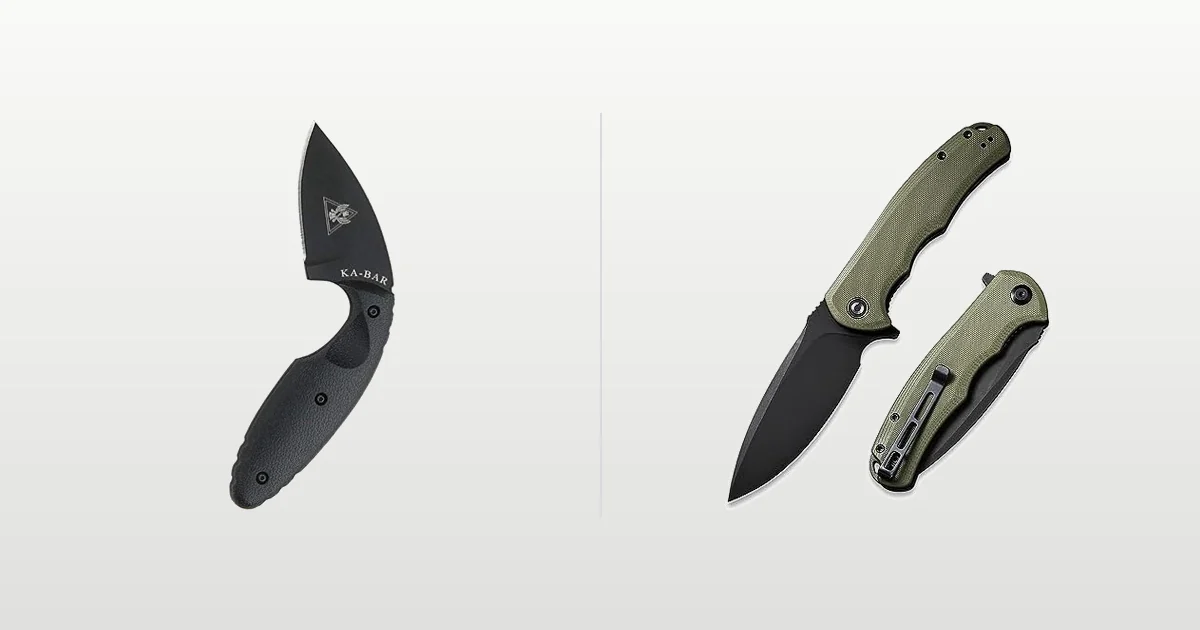
The two knives in this roundup that were actually designed for police work have blades of 2.31 and 2.3 inches. The tactical-styled folders sitting beside them in the same search results run 3.4 to 3.75 inches.
The purpose-built knives are the shortest ones on the page, and that is not a compromise. A duty knife works at arm’s length on things directly in front of the officer — a seatbelt, a jammed strap, clothing that has to come off an injured person. None of that rewards reach.
The second pattern is clearer still. Look at what the purpose-built products lead on. CRKT’s M16-14ZLEK — a model number ending in the letters LEK, for Law Enforcement Knife — puts “Emergency Rescue: Seat belt cutter and glass breaker included” in its third bullet. SOG’s Escape adds a wire stripper and a line cutter. ASP, a company that equips officers professionally, leads its Police Duty Knife with the words “Daily Utility Focus” and follows with advice on oiling the pivot.
Three of the ten below carry a seatbelt cutter, a glass breaker, or both. One has no edge at all — it is a red polymer training replica, and it is here because it explains what a great deal of this equipment is really used for.
Ten knives, $24.95 to $97.99, sorted by what their makers actually built them to do.
Our Quick Picks
 Best OverallKA-BAR TDI Law Enforcement
A 2.31-inch drop point on an angled Zytel handle — the knife most often meant when officers say duty knife.
 Best Rescue FeaturesCRKT M16-14ZLEK
Triple Point serrations, an automated liner safety, a seat belt cutter and a glass breaker — designed by Kit Carson.
 Best BudgetPolice Rescue Knife
A seatbelt cutter and a hardened glass breaker on an assisted-opening folder, sold openly as a gift for officers.
At a Glance
Ten Knives, and What Each Was Built For
Blade length where published, steel, construction, and the one specification each maker chose to lead on.
| # | Model | Blade | Steel | Build | Detail | Standout | Main Drawback | Check Price |
|---|---|---|---|---|---|---|---|---|
| 1 |
 KA-BAR TDI Law Enforcement KA-BAR TDI Law Enforcement |
2.31 in | AUS-8 | Zytel | Angled handle | The archetype, and one of the two shortest blades here | 2.31 inches is not a general-purpose knife | View on Amazon |
| 2 |
 SOG Snarl SOG Snarl |
2.3 in | 9Cr18MoV | 1.9 oz | Ring pommel | Two point three inches and 1.9 ounces, full tang | Too small to be a general-purpose knife | View on Amazon |
| 3 |
 CRKT M16-14ZLEK CRKT M16-14ZLEK |
Serrated | AUS-8 | Liner + safety | Cutter + breaker | The model name ends in LEK — Law Enforcement Knife | Serrated edges are hard to resharpen | View on Amazon |
| 4 |
 CIVIVI Praxis CIVIVI Praxis |
3.75 in | G10 | Ball bearing | Deep carry | The best-ranked knife on this page at $42.50 | No duty-specific design features at all | View on Amazon |
| 5 |
 ASP Police Duty Knife ASP Police Duty Knife |
AUS-8 | Assisted flipper | Reversible clip | Officer designed | Designed with serving officers and knife engineers together | Rank #356,737 — very low | View on Amazon |
| 6 |
 SOG Escape SOG Escape |
3.4 in | 9Cr18MoV | 58–60 HRC | 4 functions | Glass breaker, wire stripper and line cutter in one folder | Fully serrated edge limits fine cutting | View on Amazon |
| 7 |
 CRKT CEO CRKT CEO |
AUS-8 | IKBS bearing | Liner lock | Pen profile | Shaped like a pen so it reads as office equipment | Slim profile means a weak grip under load | View on Amazon |
| 8 |
 Police Rescue Knife Police Rescue Knife |
Stainless | Assisted | Belt clip | Cutter + breaker | Both rescue tools for $24.95 | Nothing published about steel or blade length | View on Amazon |
| 9 |
 Off-Grid Rapid Fire Coyote Off-Grid Rapid Fire Coyote |
3.75 in | Cryo D2 | TiNi coated | G10 scales | Cryogenically treated D2, the best steel on this page | $97.99 — most expensive here | View on Amazon |
| 10 |
 ASP Red Training Knife ASP Red Training Knife |
Polymer | No edge | Training | Red by law | A moulded polymer replica with no edge at all | It cannot cut anything, by design | View on Amazon |
Specifications and prices are taken from each manufacturer’s Amazon listing as displayed on 23 August 2026 through a United States connection, and may change. Blade lengths are recorded only where published; four of these listings give no figure. One product in this roundup is a moulded polymer training replica with no cutting edge and is included because it appears in the same search results and should not be bought by mistake. Knife carry is regulated by state and often by city, and rules commonly cover blade length, locking mechanisms and assisted opening separately. Being employed in law enforcement does not automatically exempt anyone from those rules, and department policy is a separate matter again — check both before buying. Sales ranks are shown as displayed and can be pooled across a variant family; the ASP PDK appears under at least three ASINs at one price, two sharing a rank.
Scroll the table sideways to see every column
How We Chose These Ten
We researched current listings, compared manufacturer specifications and documentation, and examined recurring patterns in customer feedback. We did not carry out hands-on testing, and nothing below is presented as measured performance data.
- Blade length recorded where published — because the purpose-built knives here are the shortest, which is the finding
- Rescue tools noted — three of ten carry a seatbelt cutter, a glass breaker or both
- A verified live buy box — all ten confirmed purchasable in the United States on 23 August 2026
- No overlap with our thirteen published knife guides — every knife here is new to the site
- Purpose-built and general-purpose both included — so the difference in design priorities is visible
- Steel named wherever the maker gives it — three of these use the same mid-grade stainless, which is itself informative
- One training replica included — it has no edge, appears in this search, and explains the category
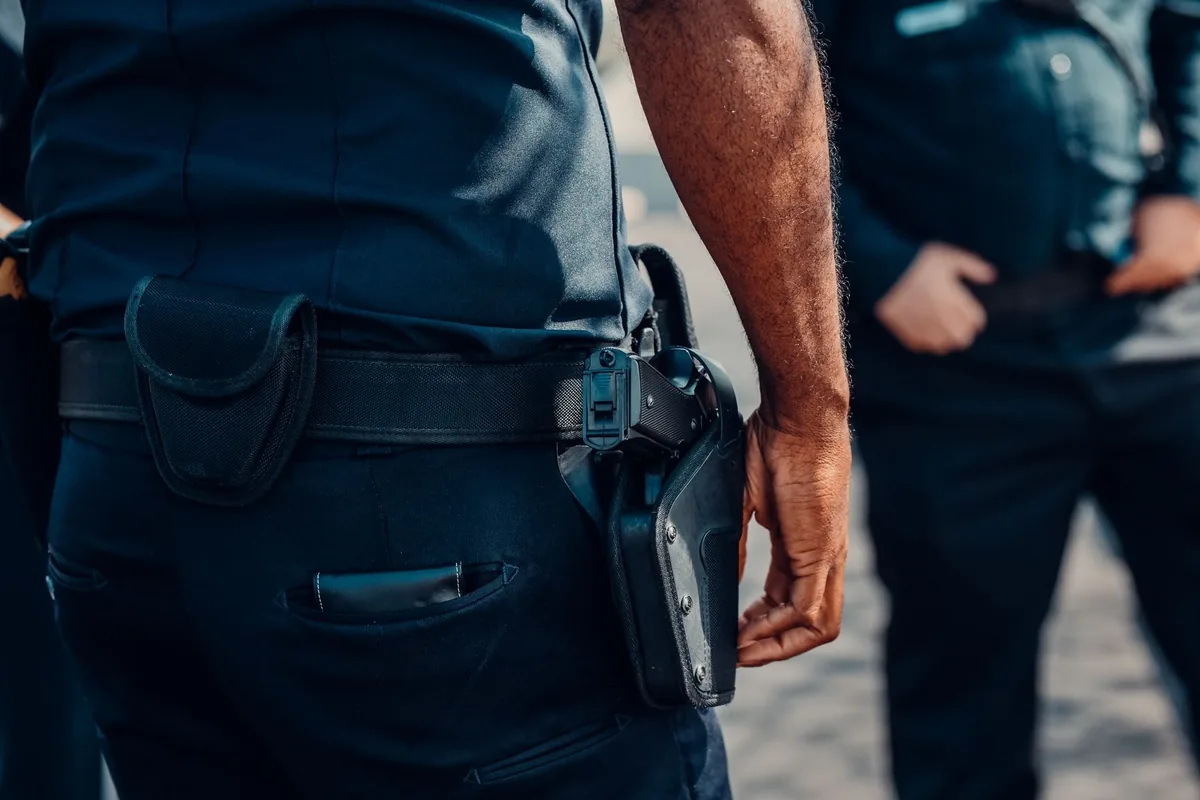
The Ten Knives in Detail
1. KA-BAR TDI Law Enforcement — Best Overall

Two and five-sixteenths of an inch. The knife built for this job is shorter than almost every “tactical” folder sold beside it.
Key Specifications
| Blade length | 2.3125 inches, drop point |
|---|---|
| Overall length | 5-5/8 inches |
| Steel | AUS-8, matte finish |
| Handle | Black Zytel, angled geometry |
| Why angled | Promotes a natural grip position for controlled handling |
| Sheath | Fitted, included |
| Finish | Matte, to reduce glare |
| Rank | #133,783 in its category |
| Price | $65.09 |
| Best For | The reference point for what a duty knife is |
Why We Recommend It
The angled handle is the design. Everything else about the TDI is ordinary — AUS-8 steel, a Zytel handle, a plain drop point — and the geometry is what makes it specific. The handle sits at an angle to the blade so that it can be worn flat against a belt and drawn in a natural closed-fist grip rather than a conventional knife grip. KA-BAR describes this as promoting a natural grip position for controlled handling, which is a careful way of saying it is meant to be drawn quickly with either hand while wearing gloves.
Short is the point, not a compromise. A duty knife works at contact distance on things immediately in front of the officer — cutting a seatbelt, cutting clothing away, cutting a strap. None of that benefits from reach, and a long blade in close quarters is a liability rather than an advantage.
AUS-8 is a mid-grade Japanese stainless that sharpens easily on a stone and resists corrosion well. For a knife carried daily against a body in all weather, easy maintenance matters more than exotic edge retention.
Rank #133,783 is low and should be read as a niche product selling to a professional audience rather than as a judgement on the knife.
Pros
- Angled handle geometry designed for belt draw
- 2.31-inch blade suited to contact-distance work
- AUS-8 sharpens easily and resists corrosion
- Fitted sheath included
- Matte finish reduces glare
- The design most other duty knives are measured against
Cons
- 2.31 inches is too short for general utility
- Rank #133,783 — a niche product
- $65.09 for a simple fixed blade
- AUS-8 is mid-grade, not premium steel
- Zytel handle is functional rather than comfortable
- Sold in many near-identical variants, which confuses buying
Best for: Anyone who wants the knife this whole category is built around.
2. SOG Snarl — Shortest Blade

A ring pommel and an oversized finger choil. This knife is built to stay in the hand.
Key Specifications
| Blade length | 2.3 inches, wharncliffe/sheepsfoot |
|---|---|
| Overall length | 4.3 inches |
| Weight | 1.9 ounces |
| Steel | 9Cr18MoV, satin polished, full tang |
| Grip | Oversized ring finger choil, ring pommel, jimping |
| Sheath | Kydex with clip and neck chain |
| Designer | Jason Brous |
| Rank | #63,201 in its category |
| Price | $41.65 |
| Best For | Retention carry where the knife must not be dropped or taken |
Why We Recommend It
Retention is the design brief. A ring for the finger at the front and a ring at the pommel mean the knife can be held in several grips and is difficult to knock loose — which matters in exactly the circumstances a duty knife gets used, where hands are wet or gloved and things are moving. It is the same reasoning behind karambit-style rings, applied to a small utility blade.
A wharncliffe blade is a straight edge with the spine curving down to meet it. That gives a very fine point and, more usefully, a completely straight cutting edge with no belly — ideal for slicing through webbing, cord and clothing pressed flat against something, which is the commonest cutting task in this work.
At 1.9 ounces it disappears. Full tang, Kydex sheath, and a neck chain or belt clip — it can be carried somewhere other than the belt, which is the argument for it over the TDI.
9Cr18MoV is a decent budget stainless, roughly comparable to 440C, and $41.65 is reasonable for a full-tang knife with a moulded sheath.
Pros
- Ring pommel and finger choil resist being dropped
- 2.3-inch wharncliffe with a fully straight edge
- 1.9 ounces and 4.3 inches overall
- Full tang with a Kydex sheath
- Neck, belt or pocket carry options
- $41.65 for a properly made small fixed blade
Cons
- 2.3 inches limits it to cutting tasks
- Rank #63,201
- Ring pommel snags on clothing
- 9Cr18MoV is budget-grade steel
- Wharncliffe point is fine and can chip
- Too small for anything requiring leverage
Best for: Officers who want a retention-focused backup carried off the belt.
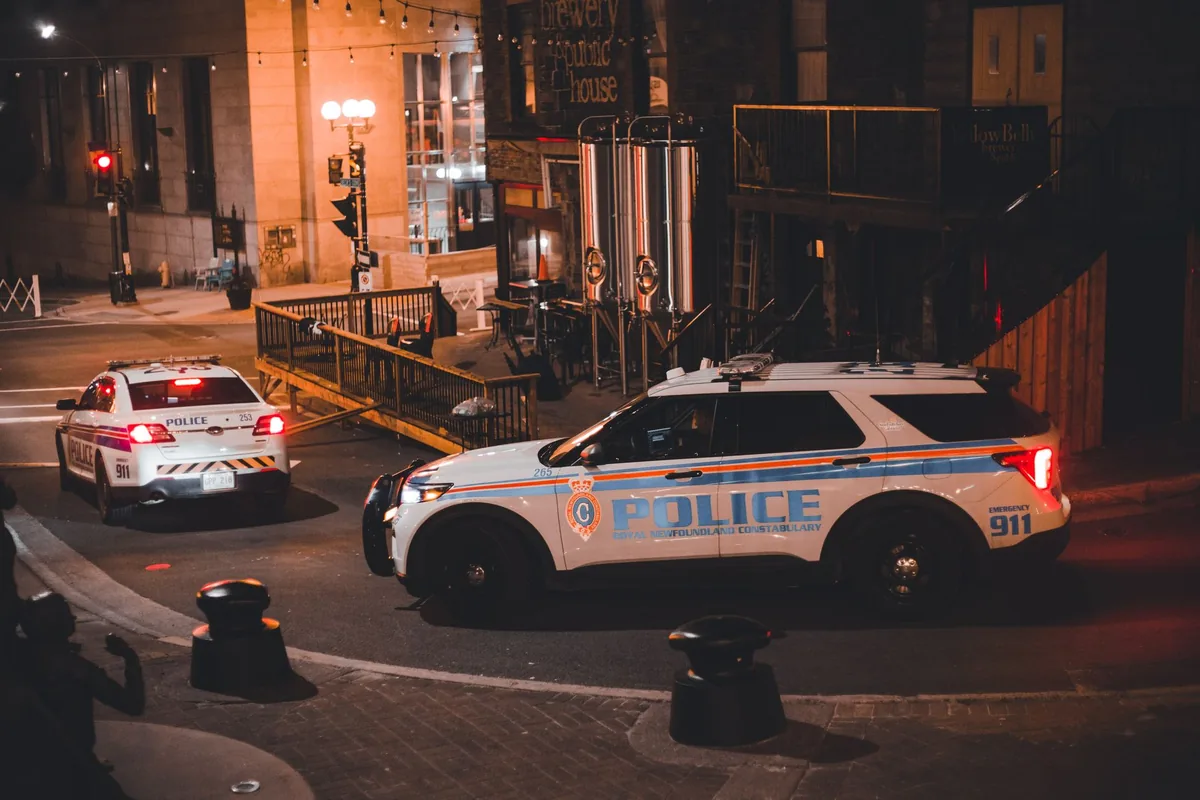
3. CRKT M16-14ZLEK — Best Rescue Features

The model number literally ends in LEK — Law Enforcement Knife — and the third bullet on the listing is “Emergency Rescue.”
Key Specifications
| Model | M16-14ZLEK — LEK stands for Law Enforcement Knife |
|---|---|
| Blade | AUS-8 with Triple Point serrations |
| Lock | Liner lock with automated liner safety |
| Rescue tools | Seat belt cutter and glass breaker included |
| Handle | Glass-reinforced nylon |
| Clip | Reversible pocket clip |
| Designer | Kit Carson, Vine Grove, Kentucky |
| Warranty | Limited lifetime |
| Rank | #34,682 in its category |
| Price | $76.99 |
| Best For | The rescue side of the job, which is most of it |
Why We Recommend It
Read what the purpose-built product leads on. CRKT had every opportunity to sell this knife on penetration, on tactical capability, on being a weapon. What the listing actually leads on is serrations that cut fibrous material, a seat belt cutter and a glass breaker. That is a knife for getting people out of cars, and it is the most honest description in this roundup of what the job involves.
Triple Point serrations are CRKT’s pattern — groups of three small scallops rather than a uniform wave. Serrations cut webbing, rope and seatbelt material far better than a plain edge because each point concentrates force and saws rather than slices.
The automated liner safety is unusual and worth understanding. A standard liner lock can be pushed closed if the liner is struck; this adds a secondary catch that engages when the blade is fully open, so the lock cannot release accidentally under load.
Serrations are the trade. They cut aggressively and are genuinely difficult to resharpen without a tapered rod and patience — most people send them away or replace the knife.
Pros
- Seat belt cutter and glass breaker built in
- Triple Point serrations cut webbing and rope
- Automated liner safety backs up the lock
- Designed by Kit Carson
- Reversible clip and lifetime warranty
- Rank #34,682, second best here
Cons
- Serrations are hard to resharpen at home
- $76.99 — second most expensive here
- AUS-8 is mid-grade steel
- Glass-reinforced nylon feels cheap for the money
- Fully serrated edge is poor for fine cutting
- Bulky in the pocket
Best for: Anyone whose knife will be used on seatbelts and glass more than anything else.
4. CIVIVI Praxis — Best Rank

Rank #4,958 — twenty-seven times better than anything actually designed for police work in this search.
Key Specifications
| Blade length | 3.75 inches |
|---|---|
| Blade stock | 0.12 inches, thin sharp point |
| Handle | Lightweight G-10 scales |
| Pivot | Ball bearings for smooth flipping |
| Clip | Reversible deep-carry pocket clip |
| Warranty | CIVIVI lifetime guarantee against defects |
| Rank | #4,958 — best on this page |
| Price | $42.50 |
| Best For | Everyday carry, with no duty-specific design |
Why We Recommend It
This is a very good EDC knife and it is not a duty knife, and the gap between those two statements is the most useful thing on this page. Nothing about the Praxis is designed for law enforcement: no rescue tools, no retention geometry, no angled handle. It appears in this search because it is a well-regarded tactical-styled folder, and it outranks the purpose-built options by a wide margin because far more people buy knives than work patrol.
G10 is glass fibre in epoxy resin, compressed and cured — dimensionally stable, unaffected by water, and much harder-wearing than the nylon handles on the CRKT and ASP knives here.
Deep carry means the clip sits the knife low so almost nothing shows above the pocket seam. For plain clothes that is genuinely useful; on a duty belt it is irrelevant.
Note the 0.12-inch blade stock and thin point. CIVIVI sells this on piercing, which is worth weighing against the fact that a thin point is the first thing to break if the knife is used for prying.
Pros
- Rank #4,958, far ahead of anything else here
- G10 handle, best material on this page
- Ball bearing pivot flips smoothly
- Reversible deep-carry clip
- $42.50 with a lifetime defect guarantee
- 3.75 inches is genuinely useful for utility work
Cons
- No duty-specific design features whatsoever
- No rescue tools of any kind
- 3.75 inches exceeds many local carry limits
- Thin 0.12-inch point breaks if used for prying
- Steel grade not named in the summary
- Its rank reflects the general market, not this use
Best for: Everyday carry. Understand that its rank is not evidence of duty suitability.
5. ASP Police Duty Knife — Best Collaboration

ASP makes batons, restraints and lights for police. When they made a knife, they called it a duty knife and sold it on utility.
Key Specifications
| Design | Collaboration between officers, ASP designers and knife engineers |
|---|---|
| Steel | AUS-8, black finish |
| Opening | Assisted flipper mechanism |
| Clip | Reversible pocket clip, blade-facing carry |
| Grip | Grooved |
| Stated focus | Daily utility, easy maintenance |
| Brand | ASP — long-established duty equipment maker |
| Rank | #356,737 in its category |
| Price | $72.00 |
| Best For | Buyers who want provenance from a duty-equipment brand |
Why We Recommend It
The listing’s own framing is the story. Its first bullet is “Daily Utility Focus” and its second is about oiling the pivot. A company that equips officers professionally, building a knife in collaboration with officers, chose to describe it as a tool that needs maintaining. That is consistent with everything else on this page that was actually designed for the work.
An assisted flipper is a sensible duty mechanism. A spring completes the opening once you push the flipper tab past a detent, which means reliable one-handed deployment without the legal complications of a fully automatic knife in the many places those are restricted.
AUS-8 again, which is now three knives on this page using it — a mid-grade stainless chosen repeatedly for duty knives because it sharpens back quickly with basic equipment.
Be careful buying this one. ASP lists the PDK under at least three separate ASINs at the same $72.00 price, two of which share a single pooled sales rank. Check which variant and finish you are ordering.
Pros
- Designed with serving officers and knife engineers
- From an established duty-equipment manufacturer
- Assisted flipper avoids automatic-knife restrictions
- AUS-8 sharpens easily in the field
- Reversible clip for either-side carry
- Sold explicitly as a utility tool
Cons
- Rank #356,737 — very low
- Listed under at least three ASINs at the same price
- Two of those variants share a pooled rank
- $72.00 with no blade length published
- AUS-8 is mid-grade
- No rescue tools included
Best for: Buyers who want a knife from the company that made the rest of the belt.
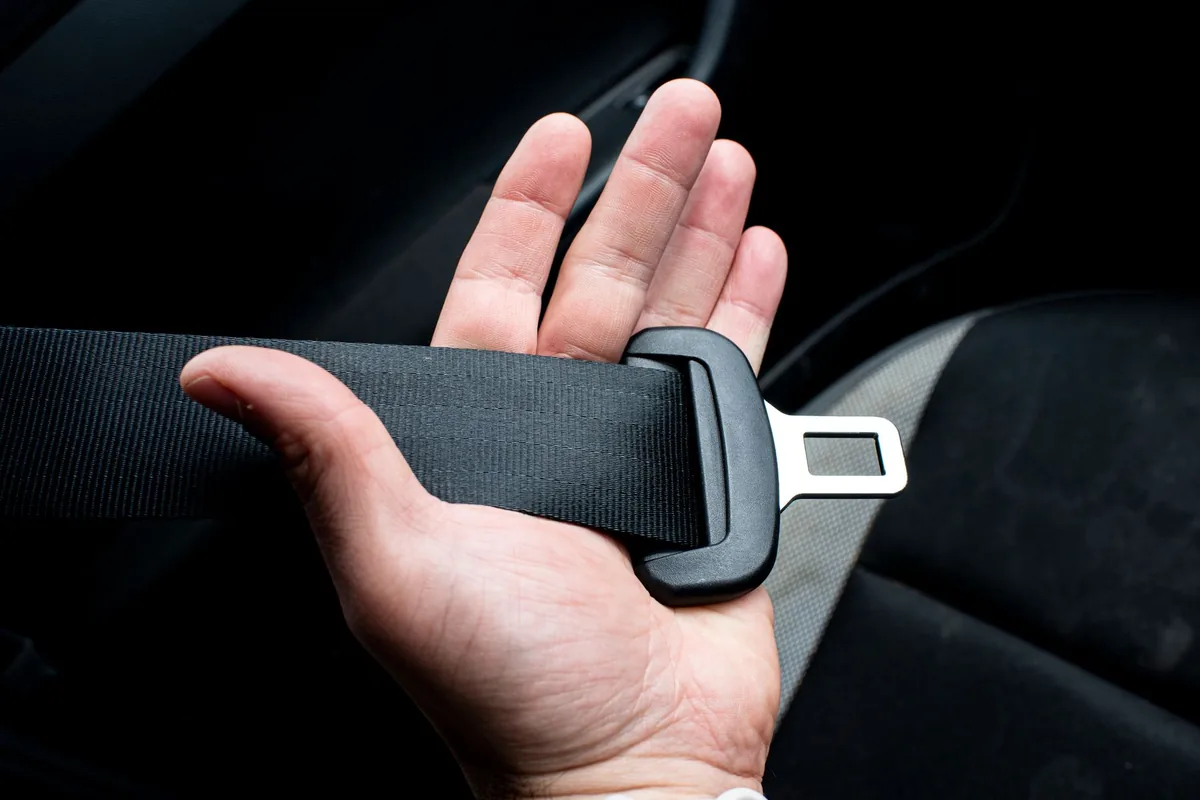
6. SOG Escape — Most Tools
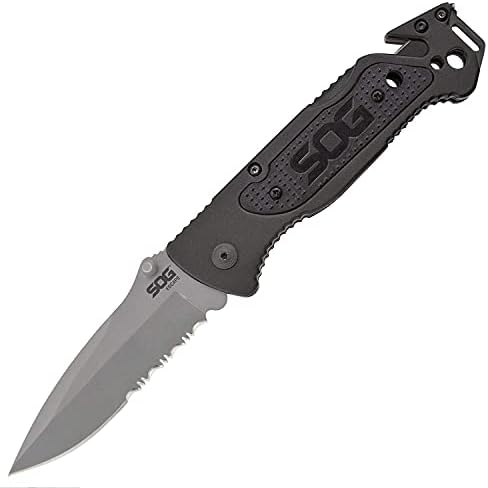
Four cutting and breaking functions in one folder, and a published hardness figure to go with them.
Key Specifications
| Blade length | 3.4 inches, serrated |
|---|---|
| Steel | 9Cr18MoV at 58–60 HRC |
| Handle | Anodized aluminium 6061-T6 |
| Lock | Lockback |
| Extra tools | Glass breaker, wire stripper, line cutter blades |
| Serrations | For belts, ropes, fabric and textured materials |
| Rank | #54,745 in its category |
| Price | $40.68 |
| Best For | Extraction work — getting people and things free |
Why We Recommend It
58 to 60 HRC is the number almost nobody prints. A steel designation names the alloy; the hardness tells you how it was heat treated, which is what actually determines edge retention. 9Cr18MoV run at 58–60 is properly hardened, and SOG stating it is a small mark of confidence.
The tool set describes the job. Serrations for belts and rope, a glass breaker, a wire stripper and a dedicated line cutter — every one of those is about freeing something or someone, not about confrontation. Read alongside the CRKT above, the pattern across purpose-built knives in this search is unmistakable.
Aluminium 6061-T6 is a structural alloy, anodised for corrosion resistance. It is lighter than steel liners and considerably more rigid than the glass-reinforced nylon used on several knives here.
A lockback is the right choice for a tool that gets used hard — the lock bar engages a notch in the tang and releases from the spine, well away from the closing path.
Pros
- Glass breaker, wire stripper and line cutter included
- Publishes 58–60 HRC hardness
- 9Cr18MoV in anodised 6061-T6 aluminium
- Lockback releases away from the blade path
- 3.4-inch serrated edge cuts webbing well
- $40.68 for four functions
Cons
- Fully serrated edge is poor for fine cutting
- Serrations are difficult to resharpen
- Rank #54,745
- Aluminium handle is cold and slippery when wet
- Multiple tools mean more to clean
- No plain-edge option in this configuration
Best for: Anyone whose knife is mostly for cutting people and things free.
7. CRKT CEO — Most Discreet

It is shaped like a pen, and that is the entire proposition.
Key Specifications
| Steel | AUS-8 high carbon stainless, plain edge |
|---|---|
| Pivot | IKBS ball bearing system |
| Opening | Flipper, fast deployment |
| Lock | Liner lock, one-handed close |
| Handle | Glass-reinforced nylon, slim |
| Clip | Reversible pocket clip |
| Profile | Deliberately pen-like |
| Rank | #15,455 in its category |
| Price | $64.99 |
| Best For | Plain clothes, or anywhere a visible knife is unwelcome |
Why We Recommend It
Discretion is a real professional requirement, and the CEO is the only knife here that addresses it. Detectives, court officers and anyone in plain clothes have the same cutting needs as uniformed officers and a much stronger reason not to display a knife. Clipped in a shirt pocket this reads as a pen at any distance.
IKBS is a ball bearing pivot system — loose bearings running in races machined into the liners, rather than washers. It flips faster and more smoothly than a bushing pivot and is why a slim knife like this deploys as quickly as it does.
The slim profile costs grip. There is not much handle to hold, and under hard cutting the narrow scales press into the fingers. This is a knife for opening packages and cutting cord, not for sustained heavy work.
Rank #15,455 is third best here, and AUS-8 with a lifetime warranty at $64.99 is fair rather than remarkable — you are paying for the shape.
Pros
- Pen profile is genuinely discreet in a shirt pocket
- IKBS ball bearing pivot deploys fast
- Rank #15,455, third best on this page
- AUS-8 takes an edge easily
- Liner lock closes one-handed
- Reversible clip for either side
Cons
- Slim handle gives a poor grip under load
- $64.99 for AUS-8 and nylon
- Not suited to sustained heavy cutting
- No rescue tools
- Glass-reinforced nylon rather than G10
- Pen shape is a compromise, not an upgrade
Best for: Plain clothes work, and anywhere a visible knife causes problems.
8. Police Rescue Knife — Best Budget

Both rescue tools for $24.95, which is a third of what the CRKT costs for the same two functions.
Key Specifications
| Rescue tools | Integrated seatbelt cutter and hardened glass breaker tip |
|---|---|
| Opening | Assisted, one-handed |
| Carry | Belt clip |
| Blade | Stainless steel, grade not named |
| Blade length | Not stated |
| Audience | Officers, deputies, corrections, dispatchers, security |
| Positioning | Also sold as an academy graduation and retirement gift |
| Rank | #153,983 in its category |
| Price | $24.95 |
| Best For | The cheapest way to get both rescue tools on a belt |
Why We Recommend It
The rescue tools are the product, and they are the two that matter. A seatbelt cutter is a recessed hooked blade that catches webbing and slices it without any exposed edge that could reach the person in the seat. A glass breaker is a hardened point that shatters tempered side glass with a tap — tempered glass fails catastrophically at a point load, which is why a small hardened tip works where a hammer blow to the middle of the pane does not.
Nothing else is published. No steel grade, no blade length, no weight, no lock type. For a $24.95 knife that is unremarkable, and it does mean you are buying the two tools and accepting whatever the blade turns out to be.
Half the listing sells it as a gift — academy graduation, retirement, promotion. That is honest about a real market and worth knowing if you are buying it to actually carry.
Rank #153,983 is low. Buy it for the price and the tools, not on evidence of durability.
Pros
- Seatbelt cutter and glass breaker for $24.95
- Assisted one-handed opening
- Belt clip for duty carry
- A third the price of the CRKT for the same two tools
- Cheapest product on this page
- Presents well as a gift
Cons
- No steel grade published
- No blade length or weight stated
- No lock type described
- Rank #153,983
- Half the listing is gift copy
- Unbranded, with no durability record
Best for: Getting both rescue tools onto a belt for the least money.
9. Off-Grid Rapid Fire Coyote — Best Steel
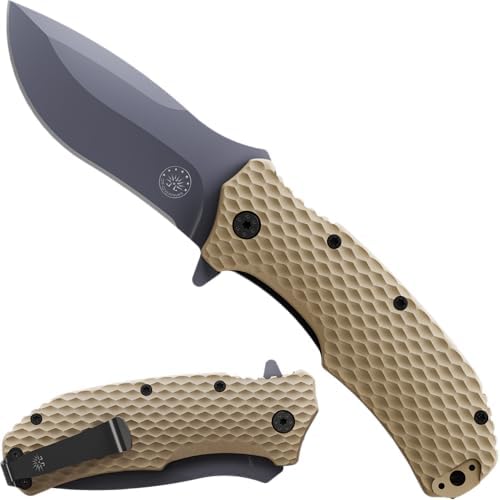
Cryogenic D2 is a real process and a genuine upgrade, and it is the only premium steel on this page.
Key Specifications
| Blade length | 3.75 inches, 1.25 inches wide |
|---|---|
| Blade thickness | 3 mm |
| Handle length | 4.75 inches |
| Steel | Cryogenically treated D2 |
| Why cryogenic | More toughness, more wear resistance, fewer micro-chips |
| Coating | Titanium nitride, non-reflective |
| Handle | G10 scales |
| Carry | Deep pocket carry |
| Rank | #74,866 in its category |
| Price | $97.99 |
| Best For | Anyone who wants the best blade material in this search |
Why We Recommend It
Cryogenic treatment is a step in heat treating, not a coating. After hardening, some austenite remains in the steel untransformed; chilling the blade to well below freezing converts more of it to martensite. The result is a harder, more dimensionally stable blade with fewer soft spots — which shows up as better wear resistance and less micro-chipping at the edge. Off-Grid naming it is unusual at any price.
D2 is a tool steel rather than a stainless. It holds an edge substantially longer than the AUS-8 used on three knives here, and it has only about 12 percent chromium, so it can spot and stain if left wet. The titanium nitride coating addresses that on the flats but not on the sharpened edge.
The listing says it is used by law enforcement and immediately compares itself on price to Zero Tolerance folders, which places it as a value-premium EDC knife rather than a duty-specific design. It has no rescue tools.
Every dimension is published — blade length, width, thickness and handle length — which almost nothing else here manages.
Pros
- Cryogenically treated D2, best steel here
- Publishes blade length, width, thickness and handle length
- G10 scales and titanium nitride coating
- 3 mm blade stock is genuinely robust
- Deep pocket carry clip
- Assisted opening
Cons
- $97.99 — most expensive on this page
- D2 is not stainless and can spot if left wet
- No rescue tools of any kind
- No duty-specific design features
- 3.75 inches exceeds several local carry limits
- Rank #74,866
Best for: Anyone prioritising blade material over duty-specific design.
10. ASP Red Training Knife — Not a Knife

It is red because red means inert. That convention exists so that nobody in a training room ever has to guess.
Key Specifications
| Type | Training replica — not a functional knife |
|---|---|
| Material | Moulded polymer |
| Edge | None |
| Colour | Red, the training-equipment convention |
| Purpose | Safe, realistic training with detailed replicas |
| Range | Part of ASP’s Red Gun training equipment line |
| Rank | #102,218 in its category |
| Price | $25.90 |
| Best For | Training, which is what most of this equipment is used for |
Why We Recommend It
It is included here deliberately. Search for a law enforcement knife and this appears alongside the real ones, and it is worth understanding why it exists rather than scrolling past it. ASP’s Red Gun line makes detailed, weighted, edgeless replicas of duty equipment so that techniques can be practised at full speed with a partner. The knife is the same idea as the training pistol.
What it tells you about the category is the useful part. A significant portion of the market for duty knives is training, and a significant portion of what officers are trained in is retention — keeping equipment from being taken — rather than use. That is consistent with the SOG Snarl’s ring pommel and the TDI’s angled handle further up this page.
Do not buy it expecting a knife. It has no edge, no point and no cutting capability of any kind, and that is the entire specification.
At $25.90 it costs more than the functional rescue folder above, which tells you it is priced as professional training equipment rather than as a toy.
Pros
- Genuinely useful for safe partner training
- Red colour prevents any confusion with a live blade
- Precisely detailed replica of real equipment
- From an established duty-equipment maker
- No edge means no injury risk in drills
- Explains what much of this market is actually for
Cons
- Not a knife — it cannot cut anything
- No edge, no point, no function
- $25.90, more than a working rescue folder
- Appears in knife searches and is easy to buy by mistake
- Rank #102,218
- Useless outside a training context
Best for: Training. It is here so you do not buy it thinking it is a knife.
Purpose-Built Against Popular
The knife designed for this job, and the knife that outsells it twenty-seven to one.
| KA-BAR TDI | CIVIVI Praxis | |
|---|---|---|
| Blade length | 2.31 in | 3.75 in |
| Designed for duty use | Yes | No |
| Handle geometry | Angled for belt draw | Conventional |
| Rescue tools | None | None |
| Handle material | Zytel | G10 |
| Rank | #133,783 | #4,958 |
| Price | $65.09 | $42.50 |
The CIVIVI is cheaper, better made, uses a better handle material and ranks twenty-seven times higher. It is also not a duty knife in any respect — no rescue tools, no retention geometry, no angled handle, and a blade long enough to be a problem in several jurisdictions. Rank measures how many people bought something, and vastly more people buy pocket knives than work patrol. It is the wrong instrument for this particular question.
Which Knives Carry Rescue Tools
Three of ten. All three were designed with this work in mind.
| Knife | Seatbelt cutter | Glass breaker | Other tools | Blade | Price |
|---|---|---|---|---|---|
| CRKT M16-14ZLEK | Yes | Yes | Serrations | Serrated | $76.99 |
| SOG Escape | Serrations | Yes | Wire stripper, line cutter | 3.4 in | $40.68 |
| Police Rescue Knife | Yes | Yes | None | Not stated | $24.95 |
| KA-BAR TDI | No | No | None | 2.31 in | $65.09 |
| SOG Snarl | No | No | Ring pommel | 2.3 in | $41.65 |
| ASP Police Duty Knife | No | No | None | Not stated | $72.00 |
| CRKT CEO | No | No | None | Not stated | $64.99 |
| CIVIVI Praxis | No | No | None | 3.75 in | $42.50 |
| Off-Grid Rapid Fire | No | No | None | 3.75 in | $97.99 |
The $24.95 knife carries both tools; the $97.99 knife carries neither. If the reason you want a knife on a duty belt is extraction work — and for most officers, most of the time, it is — the rescue column is the one that should decide the purchase, and it does not track price at all.
Best Alternatives
| Alternative | Why Consider It | Better For | Main Trade-Off |
|---|---|---|---|
| A dedicated rescue tool | Seatbelt hook and spring-loaded window punch, no blade at all | Extraction, and jurisdictions where knives are restricted | Cannot do any general cutting |
| A pair of trauma shears | Cut clothing off safely with no exposed point | Medical response and anything near a person | Bulky, and useless on webbing under tension |
| A multi-tool | Pliers and screwdrivers alongside a blade | Equipment problems rather than cutting problems | Heavier, and the blade is an afterthought |
| A department-issued knife | Guaranteed to meet policy, and replaced if lost | Anyone whose employer supplies one | No choice in the specification |
What the Money Actually Buys
$24.95 to $42.50 — Police Rescue Knife, SOG Escape, SOG Snarl, CIVIVI Praxis. The best-value tier by some distance, and it contains both rescue-tool knives and the best-ranked product on the page. The $24.95 folder carries a seatbelt cutter and a glass breaker, which no knife above $76.99 here manages.
$64.99 to $76.99 — CRKT CEO, KA-BAR TDI, ASP PDK, CRKT M16-14ZLEK. Where provenance appears. The TDI’s angled handle, ASP’s collaboration with serving officers, and CRKT’s LEK line are all genuine duty-specific design. Three of these four use AUS-8, chosen for how easily it sharpens rather than for edge retention.
$97.99 — Off-Grid Rapid Fire Coyote. The only premium steel on the page, cryogenically treated D2 under a titanium nitride coating, with every dimension published. It has no duty-specific features at all — you are buying blade material.
What to Check Before You Buy
Check Your State, Your City and Your Department
These are three separate sets of rules and all of them apply. State law commonly regulates blade length, and many states treat double-edged blades, automatic knives and sometimes assisted-opening knives as distinct categories with their own restrictions. Cities frequently impose tighter limits than the state around them. And department policy is a separate matter again, often specifying what may be carried on a duty belt and in what position. Working in law enforcement does not create a general exemption from the first two, and none of the three can be inferred from an Amazon listing.
Understand Why the Purpose-Built Knives Are Short
The two knives here actually designed for duty use have 2.3-inch blades, and every general-purpose folder beside them is longer. A duty knife is used at contact distance on webbing, cord and clothing, where a short blade is easier to control, less likely to reach something behind what you are cutting, and quicker to deploy from an awkward position. Length in this category is a liability rather than a capability, which is the opposite of how blade length works in almost every other knife roundup.
Buy the Rescue Tools, Not the Tactical Styling
A seatbelt cutter is a recessed hooked blade that catches webbing and slices it with no exposed edge that could reach the person in the seat. A glass breaker is a hardened point that shatters tempered side glass at a point load — which is why a small tip works where hitting the middle of the pane does not. Those two tools cover the overwhelming majority of what a knife gets used for on a shift. Three of the ten knives here have them, and the cheapest product on the page is one of the three.
Prefer Steel That Sharpens Easily
Three of these knives use AUS-8, and that is not a coincidence or a cost saving. A knife carried daily against a body in all weather, used on abrasive materials and sharpened by its owner with whatever is to hand, benefits far more from easy restoration than from exotic edge retention. AUS-8 comes back quickly on a basic stone and resists corrosion well. The one premium steel here, cryogenically treated D2, holds an edge longer and is not stainless — it will spot if left wet.
Consider Where It Will Be Carried
Belt space on a duty rig is the scarcest resource there is, and it is why several knives here are designed to be carried somewhere else. The SOG Snarl weighs 1.9 ounces and ships with a neck chain and a clip. The CRKT CEO is shaped like a pen so it can ride in a shirt pocket in plain clothes. The KA-BAR TDI’s angled handle exists so it can sit flat against a belt behind other equipment. Decide the carry position first; it eliminates most of this page.
Retention Is a Design Feature, Not an Accessory
Two knives here are built around keeping the knife in the hand and out of anyone else’s. The SOG Snarl has an oversized finger choil and a ring pommel; the KA-BAR TDI has a handle angled to be held in a closed fist. Both are answers to the same concern — that a tool on a belt can be reached for by someone other than its owner, and that a knife being used in a struggle can be dropped. The existence of a whole line of edgeless red training replicas for practising exactly this is the clearest evidence of what the category is really about.
Treat Serrations as a Commitment
Two knives here have serrated edges, and serrations genuinely outperform a plain edge on webbing, rope and fibrous material because each point concentrates force and saws rather than slices. The cost is that they are difficult to resharpen without a tapered diamond rod and real patience, and most owners never do it — they replace the knife instead. If your cutting is overwhelmingly seatbelts and cord, take the serrations; if it is mixed, a plain edge you can maintain will serve better.

Common Mistakes
- Buying on sales rank. The best-ranked knife here has no duty-specific features at all.
- Assuming a longer blade is more capable. The two purpose-built knives here are the shortest on the page.
- Paying for steel instead of tools. The $24.95 folder has both rescue tools; the $97.99 one has neither.
- Assuming employment exempts you from carry law. State, city and department rules are three separate things.
- Buying the red training knife by mistake. It is moulded polymer with no edge, and it appears in this search.
- Taking serrations without meaning to. They cut webbing well and are very hard to resharpen at home.
- Ordering the wrong variant. The ASP PDK is listed under at least three ASINs at the same price.
Who Should Buy Which
Buy the KA-BAR TDI at $65.09 if you want the reference design. A 2.31-inch drop point on an angled handle built to be drawn from a belt — the knife most other duty knives are measured against.
Buy the CRKT M16-14ZLEK at $76.99 for the rescue side of the job. Seat belt cutter, glass breaker, Triple Point serrations and an automated liner safety, from the line whose name means Law Enforcement Knife.
Buy the Police Rescue Knife at $24.95 to get both tools for the least money. It publishes nothing about its steel, and it costs a third of the CRKT for the same two functions.
Buy the SOG Snarl at $41.65 for a retention-focused backup. Ring pommel, finger choil, 1.9 ounces, and it carries anywhere but the belt.
Buy the CRKT CEO at $64.99 for plain clothes. It reads as a pen in a shirt pocket, which is the only knife here that solves that problem.
Frequently Asked Questions
Why are law enforcement knives so short?
Because of what they are used for. The two knives in this roundup that were genuinely designed for duty use have blades of 2.31 and 2.3 inches, while the general-purpose tactical folders alongside them run 3.4 to 3.75 inches. A duty knife’s work is almost entirely cutting at contact distance — seatbelt webbing, cord, straps, clothing that has to come off someone injured — and a short blade is easier to control, quicker to deploy from an awkward position, and less likely to reach whatever is behind the thing being cut. Length also creates legal exposure, since many jurisdictions set limits between 2.5 and 4 inches. In this category a long blade is a liability rather than a capability.
What is the KA-BAR TDI actually designed to do?
Its distinguishing feature is the angle between the handle and the blade, which lets it be worn flat against a belt and drawn in a natural closed-fist grip rather than a conventional knife grip. KA-BAR describes this as promoting a natural grip position for controlled handling. The practical effect is that it can be deployed quickly with either hand, including while wearing gloves, without needing to reorient the knife after drawing it. Everything else about it is deliberately ordinary — AUS-8 steel, a Zytel handle, a plain 2.31-inch drop point — because the geometry is the design and the rest just has to be reliable and easy to sharpen.
Do I need a seatbelt cutter and a glass breaker?
For most officers most of the time, those two tools cover the majority of what a knife actually gets used for. A seatbelt cutter is a recessed hooked blade that catches webbing and cuts it with no exposed edge that could reach the person still in the seat, which matters when someone is suspended in a belt after a collision. A glass breaker is a hardened point that shatters tempered side glass by concentrating force at a single spot — tempered glass fails catastrophically under a point load, which is why a small tip works where striking the middle of the pane with a fist does not. Three of the ten knives here have both, and the cheapest product on the page is one of them.
Is AUS-8 good enough for a duty knife?
For this use, yes, and its repeated appearance is a deliberate choice rather than cost-cutting. Three knives in this roundup use AUS-8, a mid-grade Japanese stainless that sharpens back quickly on ordinary equipment and resists corrosion well. A knife carried daily against a body in all weather, used on abrasive materials, and maintained by its owner with whatever is available benefits far more from easy restoration than from long edge retention. The one premium steel here is cryogenically treated D2, which holds an edge substantially longer, is harder to bring back, and is not stainless — it will spot if it is left wet.
Can police officers carry any knife they want?
No, and this is a common misunderstanding. Three separate sets of rules apply. State law usually regulates blade length and frequently treats double-edged blades, automatic knives and sometimes assisted-opening knives as distinct restricted categories. City ordinances often impose tighter limits than the surrounding state. And department policy is separate again, commonly specifying what may be carried on a duty belt, in what position, and whether off-duty carry is covered. Employment in law enforcement does not create a blanket exemption from the first two, and none of the three can be determined from a product listing. Check all three before buying.
Why is there a knife with no blade in this roundup?
The ASP Red Knife is a moulded polymer training replica with no edge, no point and no cutting capability, coloured red because red is the universal convention for inert training equipment. It is part of ASP’s Red Gun line, which makes detailed replicas of duty gear so techniques can be practised at full speed with a partner and nobody in the room ever has to guess whether an item is live. We included it because it appears in the same search results as the working knives and is easy to buy by mistake — and because its existence tells you something real about the category. A great deal of duty-knife training is about retention, which is also what the SOG Snarl’s ring pommel and the TDI’s angled handle are for.
Final Verdict
A 2.31-inch drop point on an angled handle built for belt draw — the design this whole category is measured against. $65.09.
Seat belt cutter, glass breaker, Triple Point serrations and an automated liner safety, from the LEK line. $76.99.
Both rescue tools for $24.95, which is a third of what the same two functions cost elsewhere on this page.
The knives built for this job are short, and they are sold on rescue. Two point three inches, a seatbelt cutter, a glass breaker, a wire stripper. That is what the manufacturers who actually designed for duty use chose to lead on, and it is a considerably more accurate description of the work than the styling on the knives around them suggests.
Rank will mislead you here. The best-selling knife on this page has no duty-specific feature of any kind and outranks the purpose-built options twenty-seven to one, because far more people buy pocket knives than work patrol.
And check all three sets of rules before you buy — state, city and department. They are separate, they frequently disagree, and none of them appears on a product listing.
Buy the TDI for the design, the CRKT for the tools, or the $24.95 folder if what you actually need is a cutter and a breaker on a belt.