Affiliate Disclosure: As an Amazon Associate, we earn from qualifying purchases. This does not affect the price you pay.
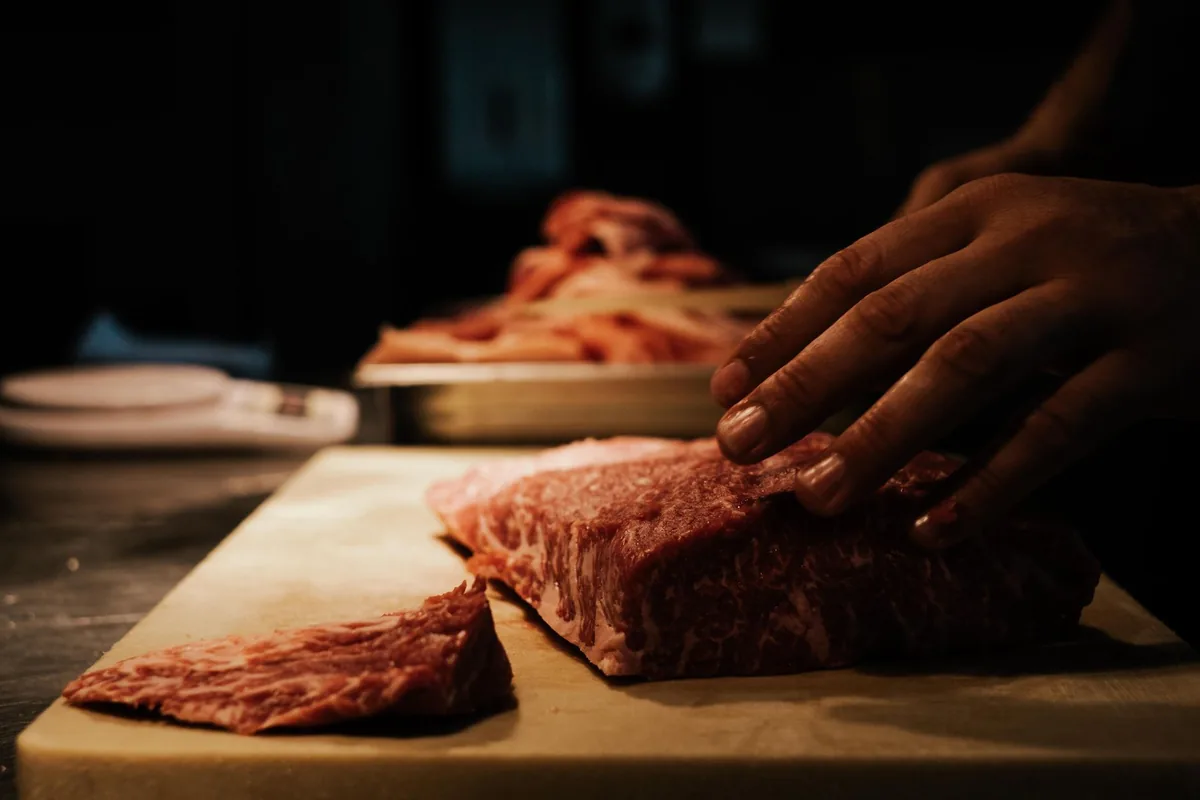
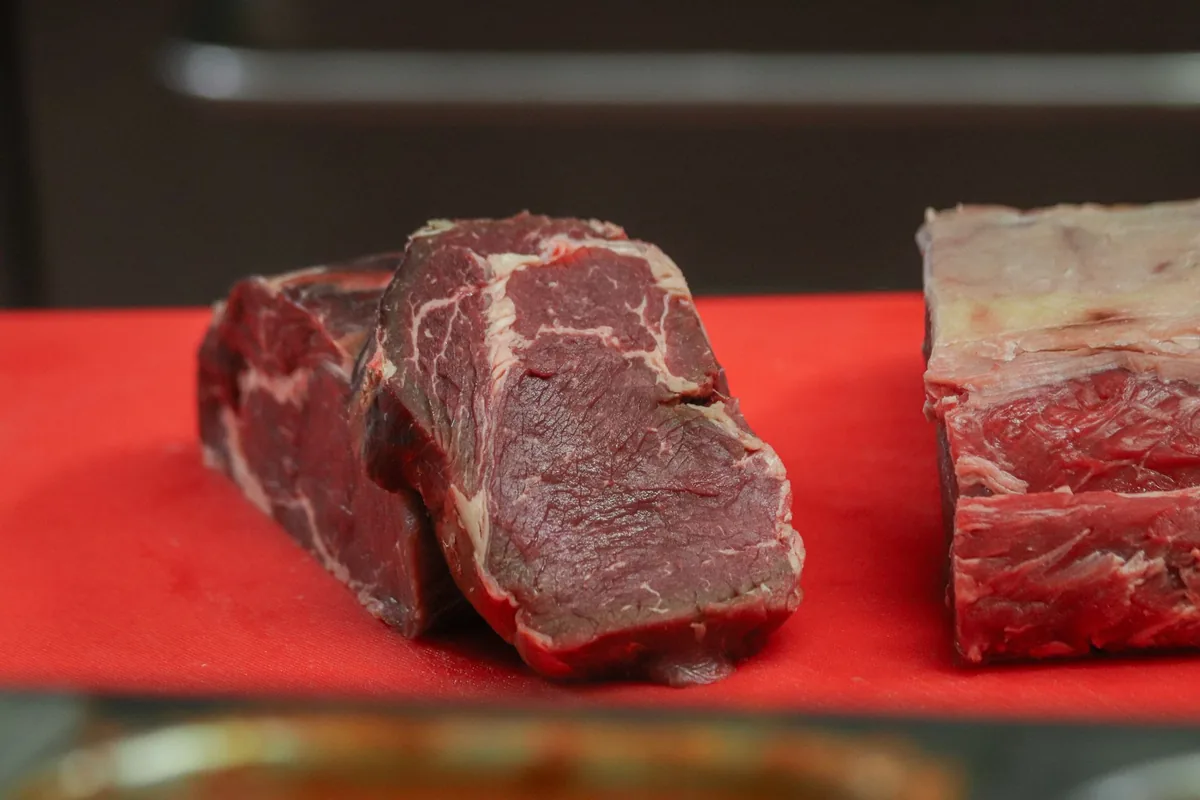
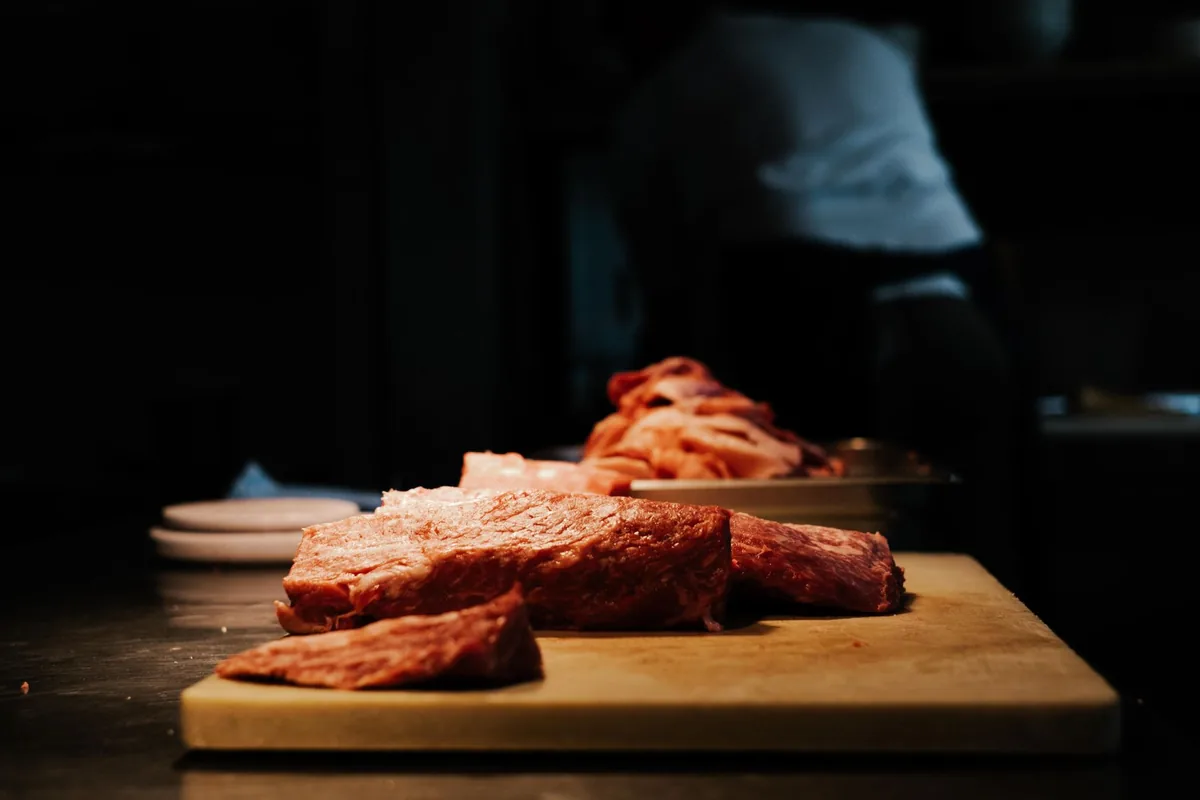
The cut matters more than the cooker. Beef stew works because collagen-rich muscle breaks down into gelatin over long, gentle heat — and that only happens in hard-working cuts. Chuck is the standard answer; shin, oxtail, short rib and brisket all work and each wants a different cooking time.
What almost never works is lean meat. Braising steak sold as "stewing beef" is often trimmed offcuts from several muscles, and anything from the rump or round has too little connective tissue to become tender — it just dries out.
Once the cut is right, the cooker has to suit it: an oval crock for a whole joint, enough programmable hours for shin, and ideally a way to brown the meat first. We compared ten current models on exactly those points.
Our Quick Picks
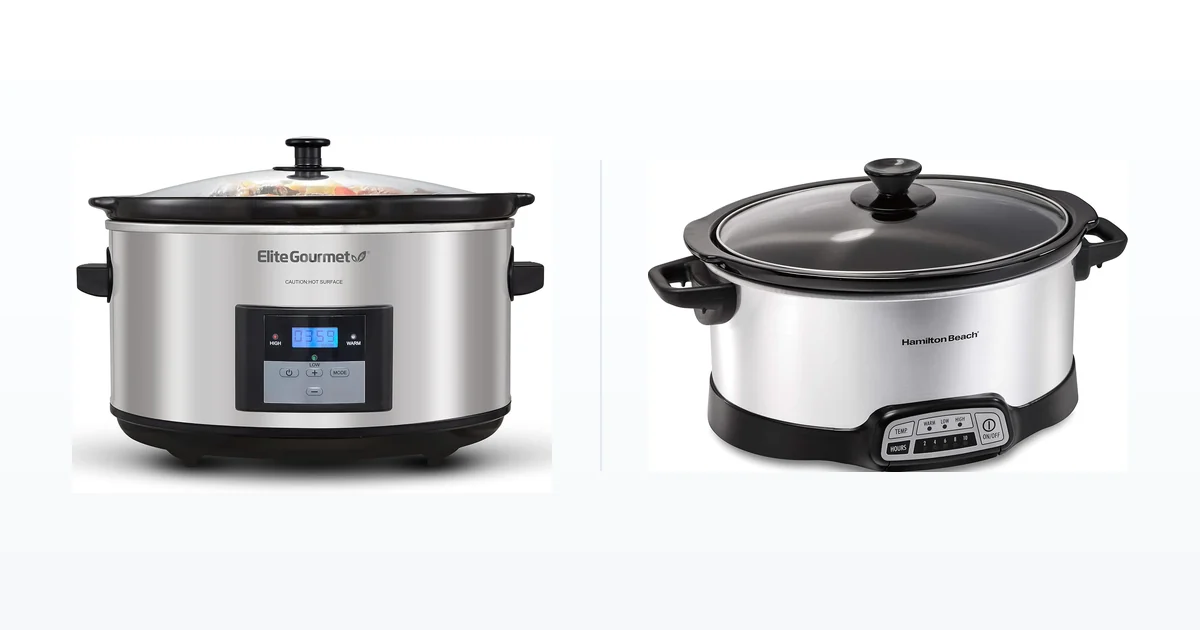
 Best for Whole CutsElite Gourmet MST-900D 8.5 Qt
An oval 8.5-quart crock, so a whole chuck roast lies flat and cooks evenly before you break it up.
 Best Overall ValueHamilton Beach Set & Forget 7 Qt
Seven quarts and automatic keep-warm — ample for a family stew from a 3 lb chuck roast.
 Best for BrowningNinja PossibleCooker PLUS
Sears the beef and builds the base in the same pot, which is where a stew gets its depth.
At a Glance
Beef Stew Slow Cooker Comparison
Ten cookers compared on crock shape, cooking hours and browning — what different cuts of beef actually need.
| # | Model | Capacity | Controls | Best For | Crock | Key Advantage | Main Drawback | Check Price |
|---|---|---|---|---|---|---|---|---|
| 1 |
 Elite Gourmet MST-900D 8.5 Qt Elite Gourmet MST-900D 8.5 Qt |
8.5 qt | Up to 20 h | Braising a whole chuck | Stoneware, oval | Oval crock takes a whole joint | Listing disagrees on wattage | View on Amazon |
| 2 |
 Hamilton Beach Set & Forget 7 Qt Hamilton Beach Set & Forget 7 Qt |
7 qt | 15 options | Everyday beef stew | Stoneware | Programmable at the lowest price | Fixed 2-hour timer steps | View on Amazon |
| 3 |
 Ninja PossibleCooker PLUS Ninja PossibleCooker PLUS |
8.5 qt | 6 functions | Searing the beef properly | Aluminum, oven safe | Sears the meat in the pot | Costs far more than a crock | View on Amazon |
| 4 |
 Hamilton Beach Set & Forget 8 Qt Hamilton Beach Set & Forget 8 Qt |
8 qt | 30 min–18 h | Big stews and tough cuts | Stoneware | Timing to 18 hours in 30-minute steps | Large permanent footprint | View on Amazon |
| 5 |
 Crock-Pot 6 Qt Cook & Carry Crock-Pot 6 Qt Cook & Carry |
6 qt | 30 min–20 h | Stew that improves overnight | Stoneware | Crock is microwave safe | Six quarts limits the joint size | View on Amazon |
| 6 |
 Hamilton Beach 6 Qt 3-Setting Hamilton Beach 6 Qt 3-Setting |
6 qt | Low / High / Warm | Stew without electronics | Stoneware | One dial and a warm position | No timer at all | View on Amazon |
| 7 |
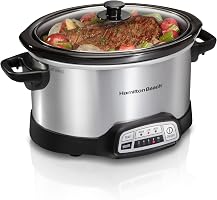 Hamilton Beach Set & Forget 4 Qt Hamilton Beach Set & Forget 4 Qt |
4 qt | 15 options | Stew for one or two | Stoneware | Right depth for a 1 lb joint | Only three or four bowls | View on Amazon |
| 8 |
 Instant Pot Duo Mini 3 Qt Instant Pot Duo Mini 3 Qt |
3 qt | 11 programs | Stew the same evening | Stainless (18/8) | Pressure cooks chuck in about an hour | Around three portions | View on Amazon |
| 9 |
 Crock-Pot 8 Qt Manual XL Crock-Pot 8 Qt Manual XL |
8 qt | High / Low / Warm | Large stews cheaply | Stoneware | Eight quarts at the lowest price | Amazon lists an impossible wattage | View on Amazon |
| 10 |
 Crock-Pot Cook N Carry 6 Qt Crock-Pot Cook N Carry 6 Qt |
6 qt | Manual | Taking stew elsewhere | Stoneware, oval | Oval crock in a travel design | Listing text is for another product | View on Amazon |
Two listings here carry clear errors — the Crock-Pot Cook N Carry bullet describes a toaster, and the 8-quart manual claims 1500 W. Both are flagged in their reviews.
Scroll the table sideways to see every column
How We Chose These Slow Cookers for Beef Stew
We researched current listings, compared manufacturer specifications and documentation, and examined recurring patterns in customer feedback. We did not carry out hands-on testing, and nothing below is presented as measured performance data.
- Crock shape — oval for whole joints, round for pre-cut meat
- Maximum cooking hours — chuck needs 8–10, shin and oxtail want 12 or more
- Browning ability — whether the beef can be seared in the pot
- Capacity — meat, root vegetables and enough stock to cover
- Depth — keeping the joint submerged rather than drying on top
- Keep-warm behaviour — holding a stew that is ready before you are
- Reheating — whether the crock can go in fridge and microwave
- Cleaning — which parts the maker states are dishwasher safe
- Listing accuracy — whether stated specifications hold together
- Support — brand track record and replacement parts
The 10 Best Slow Cookers for Beef Stew
1. Elite Gourmet MST-900D 8.5 Qt — Best for Whole Cuts

The best beef stew starts with a whole cut rather than pre-diced meat, and a whole chuck roast needs an oval crock to lie flat under the liquid.
Key Specifications
| Capacity | 8.5 quarts |
|---|---|
| Shape | Oval |
| Programming | Up to 20 hours, Low / High / Keep Warm |
| Power | 200 W per Amazon’s spec table; the listing text says 300 W |
| Crock | Removable oval stoneware, dishwasher safe |
| Weight | 14.6 lb |
| Best For | Whole chuck, brisket and shin braised then broken into chunks |
Why We Recommend It
Buying chuck whole and cutting it yourself is both cheaper and better: supermarket "stewing steak" is usually offcuts from several muscles, so the pieces cook at different rates and some end up dry while others are still tough.
Twenty hours of programming covers even shin and oxtail, which want far longer than a standard eight-hour cook.
Pros
- Oval crock takes a whole chuck or brisket flat
- Twenty-hour programming suits shin and oxtail
- 8.5 quarts fits meat, vegetables and liquid
- Cool-touch handles and dishwasher-safe crock
Cons
- Listing contradicts itself on wattage
- Heaviest cooker here at 14.6 lb
- Low power for the volume means a slow start
Best for: Cooks who buy chuck whole and cut it themselves.
2. Hamilton Beach Set & Forget 7 Qt — Best Overall Value

A 3 lb chuck roast plus root vegetables and stock is about five quarts of ingredients. Seven quarts gives that room to move without crowding.
Key Specifications
| Capacity | 7 quarts |
|---|---|
| Settings | Warm, Low or High × 2, 4, 6, 8 or 10 hours |
| Power | 340 W |
| Crock | Removable stoneware, dishwasher safe |
| Lid | Glass, dishwasher safe |
| Weight | 12.3 lb |
| Best For | Family beef stew from a standard chuck roast |
Why We Recommend It
Chuck wants eight to ten hours on Low to break its connective tissue down into gelatin, and the fixed 8 and 10-hour settings here land exactly on that.
Automatic keep-warm matters for stew because it is usually ready before you are — it holds without cooking the beef past the point where it starts to dry.
Pros
- Right size for a standard chuck roast and vegetables
- 8 and 10-hour settings suit chuck perfectly
- Automatic keep-warm holds the stew safely
- Cheapest programmable cooker here
Cons
- Round crock forces a whole joint upright
- No searing, so beef needs a separate pan
- Cannot set a seven-hour cook
Best for: Everyday beef stew from diced or home-cut chuck.
3. Ninja PossibleCooker PLUS — Best for Browning

Beef stew without browned meat is beef soup. The fond — the sticky browned residue left after searing — is most of what separates a good stew from a bland one.
Key Specifications
| Capacity | 8.5 quarts |
|---|---|
| Functions | Slow cook, sear/sauté, keep warm, sous vide, braise, proof |
| Power | 1200 W |
| Pot | Removable, oven safe to 500°F |
| Weight | 6.76 kg |
| Best For | Stew where browning and fond matter |
Why We Recommend It
Searing in the pot means that fond ends up in the stew rather than in a frying pan you then have to deglaze and pour. It also handles the onions and flour stage in the same vessel.
At 8.5 quarts you can brown several pounds of beef in two batches rather than four, which matters because crowding the pan is what stops meat browning in the first place.
Pros
- Sears beef properly rather than steaming it
- Fond stays in the pot instead of a frying pan
- Large enough to brown in fewer batches
- Oven safe to 500°F for finishing
Cons
- Costs several times a conventional crock
- Heavy at nearly 7 kg
- Metal pot cools faster than stoneware
Best for: Anyone who takes the browning stage of a stew seriously.
4. Hamilton Beach Set & Forget 8 Qt — Best Large Batch

Chuck is done in eight to ten hours. Shin, oxtail and short rib are not — they want twelve or more, and fixed-block cookers simply cannot be set that long.
Key Specifications
| Capacity | 8 quarts |
|---|---|
| Programming | Warm, Low or High; 30 minutes to 18 hours |
| Power | 375 W |
| Display | Countdown timer |
| Crock | Removable stoneware, dishwasher safe |
| Weight | 13 lb |
| Best For | Large stews and cuts needing more than ten hours |
Why We Recommend It
Adjustable programming to 18 hours in 30-minute steps covers every cut you would reasonably stew, and the countdown display tells you where you are.
At 375 W it is the best-powered conventional cooker here, which matters when a full crock starts from cold with a large piece of meat in it.
Pros
- Timing to 18 hours suits shin and oxtail
- Exact 30-minute steps rather than fixed blocks
- Best-powered conventional cooker here
- Eight quarts for large batches
Cons
- No searing, so beef needs a separate pan
- Round crock forces a whole joint upright
- Large permanent footprint
Best for: Cooks using shin, oxtail or short rib, which need longer than chuck.
5. Crock-Pot 6 Qt Cook & Carry — Best for Leftovers

Beef stew is one of the few dishes that genuinely improves overnight — the gelatin sets, the flavours settle, and the fat can be lifted off cold.
Key Specifications
| Capacity | 6 quarts |
|---|---|
| Timer | 30 minutes to 20 hours |
| Crock | Oven safe to 400°F and microwave safe |
| Lid | Locking, with rubber gasket |
| Power | 240 W |
| Weight | 11.9 lb |
| Best For | Stew cooked ahead and reheated |
Why We Recommend It
A crock rated microwave safe means the whole thing goes in the fridge and portions reheat from the same dish, which removes both a container and a pan.
Six quarts suits a 2 to 2.5 lb joint with vegetables. For a larger roast, size up.
Pros
- Crock is microwave safe for reheating portions
- Also oven safe to 400°F
- Widest timer range here at 30 minutes to 20 hours
- Gasketed lid for carrying stew
Cons
- Six quarts limits the size of joint you can fit
- No searing function
- Basic control panel
Best for: Cooks who make stew a day ahead and reheat it.
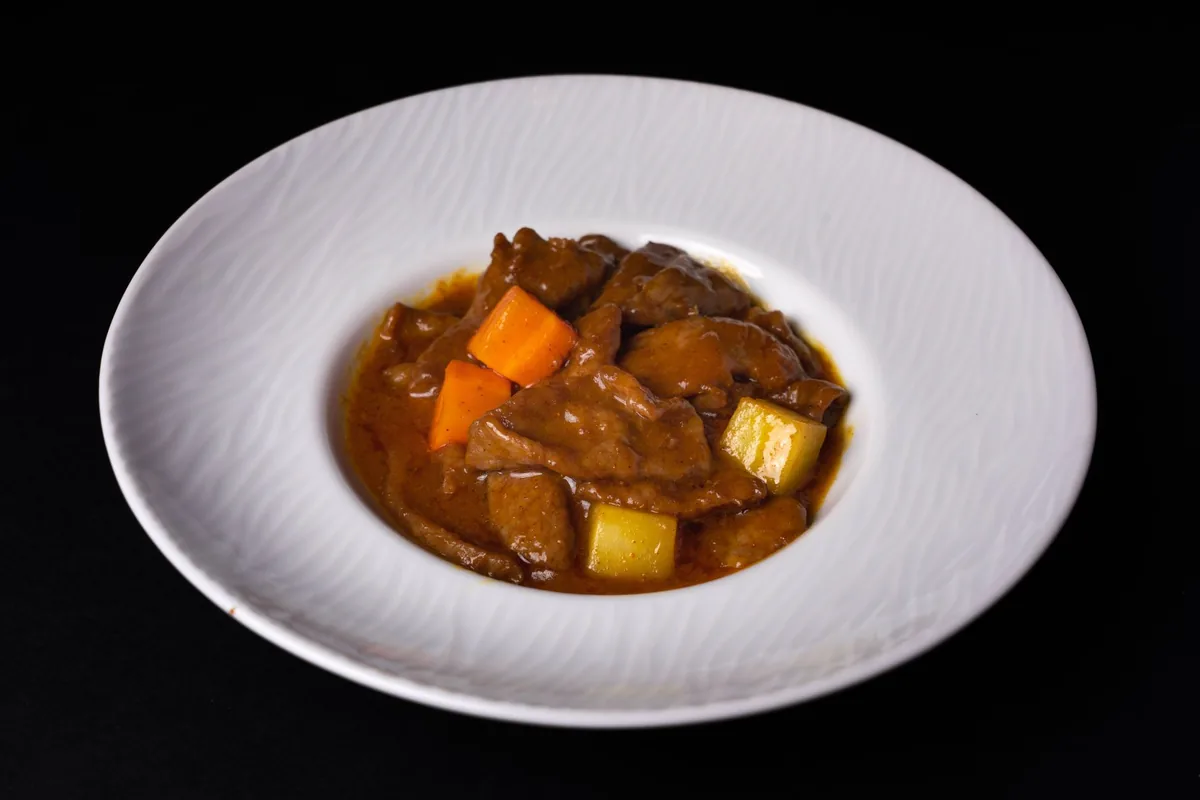
6. Hamilton Beach 6 Qt 3-Setting — Best Simple

Stew is forgiving in a way that few dishes are. Chuck at ten hours and chuck at eleven are hard to tell apart, which makes programming much less critical.
Key Specifications
| Capacity | 6 quarts |
|---|---|
| Settings | Low, High and Keep Warm via a dial |
| Power | 265 W |
| Crock | Stoneware with glass lid |
| Handles | Full-grip |
| Weight | 12 lb |
| Best For | Weekend stews made while you are home |
Why We Recommend It
The Keep Warm position lets you hold the stew while you finish potatoes or dumplings, and at 265 W it is sensibly matched to six quarts.
Full-grip handles help when the crock is full of meat and liquid, which is heavier than it looks.
Pros
- Simplest operation for a forgiving dish
- Keep Warm while you finish sides
- Sensibly powered for six quarts
- Full-grip handles for a heavy load
Cons
- No timer, so it cannot run while you are out
- No automatic switch to keep-warm
- No searing function
Best for: Weekend stew cooks who are home while it runs.
7. Hamilton Beach Set & Forget 4 Qt — Best Small Batch
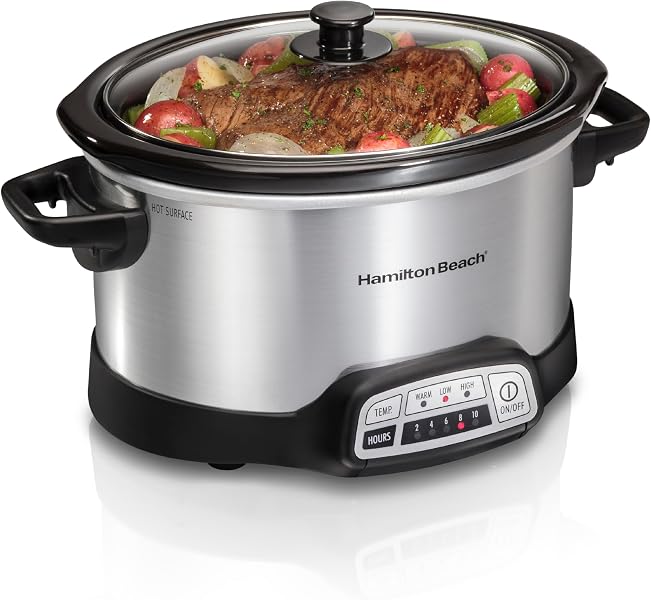
A pound of chuck in a 7-quart crock sits above the liquid line and dries on top. Four quarts keeps it covered, which is the whole mechanism of braising.
Key Specifications
| Capacity | 4 quarts |
|---|---|
| Settings | Warm, Low or High × 2, 4, 6, 8 or 10 hours |
| Power | 215 W |
| Crock | Removable stoneware, dishwasher safe |
| Handles | Full-grip |
| Weight | 8.3 lb |
| Best For | Beef stew for one or two people |
Why We Recommend It
The full 15-option programming carries over, including the 8 and 10-hour settings that chuck actually wants.
At 8.3 lb it is light enough to lift and pour without help, which matters with hot stock.
Pros
- Keeps a small joint properly submerged
- Full programming, not a cut-down model
- Light at 8.3 lb
- Automatic keep-warm
Cons
- Three or four bowls maximum
- No searing function
- Too small for a whole chuck roast
Best for: Beef stew for one or two, at the right depth.
8. Instant Pot Duo Mini 3 Qt — Best Fast Stew

Chuck becomes tender through collagen breaking down into gelatin, and pressure accelerates that dramatically — roughly an hour rather than ten.
Key Specifications
| Capacity | 3 quarts |
|---|---|
| Functions | Pressure cook, slow cook, sauté, steam, rice, yogurt, keep warm |
| Programs | 11 one-touch |
| Power | 700 W |
| Inner pot | Stainless steel (18/8), tri-ply base |
| Weight | 8.2 lb |
| Best For | Beef stew decided on the day |
Why We Recommend It
It sautés too, so the beef browns in the pot before the liquid goes in. That is both stages of a proper stew in one vessel.
Three quarts caps you at about three portions, so this suits one or two people rather than a family.
Pros
- Chuck tender in about an hour under pressure
- Browns the beef in the same pot
- Stainless tri-ply pot browns properly
- Also cooks the potatoes or rice
Cons
- Around three portions per batch
- Vegetables can overcook under pressure
- More controls to learn than a dial
Best for: Cooks who decide on stew at six rather than eight in the morning.
9. Crock-Pot 8 Qt Manual XL — Best Budget Large

Stew is cheap food made from cheap cuts, so paying a lot for the pot slightly defeats the point. Eight quarts at this price is the value option.
Key Specifications
| Capacity | 8 quarts |
|---|---|
| Settings | High, Low and Warm |
| Serves | Stated as 10+ people |
| Crock | Removable stoneware, dishwasher safe |
| Weight | 8 lb |
| Best For | Large batches of stew on a budget |
Why We Recommend It
At 8 lb it is lighter than several 6-quart cookers, which helps when lifting a full crock of beef and stock.
Two cautions: no timer, so it holds whatever setting you left it on; and Amazon lists 1500 W, which is not credible for a slow cooker.
Pros
- Eight quarts at a very low price
- Lighter than most 6-quart cookers
- Warm setting for holding stew
- Dishwasher-safe removable stoneware
Cons
- No timer or automatic keep-warm
- Amazon’s listed wattage is not credible
- No searing function
Best for: Budget cooks making large stews while at home.
10. Crock-Pot Cook N Carry 6 Qt — Best Portable Oval

Oval matters for stew because a whole joint lies flat and stays submerged. This is the cheapest oval crock here, in a design built to travel.
Key Specifications
| Capacity | 6 quarts |
|---|---|
| Shape | Oval |
| Type | Manual portable slow cooker |
| Design | Cook N Carry, built for transport |
| Crock | Removable stoneware |
| Best For | Stew cooked at home and eaten elsewhere |
Why We Recommend It
If stew regularly goes to family or a gathering, an oval transport crock covers both requirements without paying for programming.
A clear warning: Amazon’s bullet describes an 1800-watt 4-slice cooker with "Element IQ technology" — a toaster description on a slow cooker listing. Use only the title and capacity.
Pros
- Oval crock keeps a joint submerged
- Built for carrying a full pot
- Cheapest oval option here
- Removable stoneware crock
Cons
- Listing bullet describes an entirely different appliance
- Stated wattage is not credible
- No timer or automatic keep-warm
Best for: Cooks who take a full pot of stew to other people’s tables.
Chuck vs Shin: Which Cooker Suits Which Cut
The two best stewing cuts want quite different cooking times, and that decides which cooker suits you.
| Factor | Chuck (blade / shoulder) | Shin, oxtail and short rib |
|---|---|---|
| Typical time on Low | 8–10 hours | 12 hours or more |
| Suitable cooker | Fixed-block programmable is fine | Needs adjustable timing past 10 hours |
| Example here | Hamilton Beach Set & Forget 7 Qt | Hamilton Beach 8 Qt or Elite Gourmet MST-900D |
| Texture | Pulls into soft chunks | Falls apart, very rich and gelatinous |
| Cost | Cheap and widely available | Cheaper still, but less commonly stocked |
| Main advantage | Forgiving and predictable | Far more body from the gelatin |
| Main drawback | Can dry if cooked far too long | Needs a cooker that runs beyond ten hours |
Choose a fixed-block cooker if: you stew chuck, where 8 and 10-hour settings land exactly where you need them.
Choose adjustable timing if: you use shin, oxtail or short rib, which simply are not done at ten hours.
Slow Cooked or Pressure Cooked Stew?
Both break collagen down into gelatin. The difference is time, and what happens to the vegetables.
| Feature | Hamilton Beach Set & Forget 7 Qt | Instant Pot Duo Mini |
|---|---|---|
| Time for chuck | 8–10 hours | About an hour under pressure |
| Browning | Separate pan | Sautés in the pot |
| Vegetables | Hold their shape over a long cook | Can overcook quickly |
| Capacity | 7 quarts | 3 quarts |
| Planning needed | Decide in the morning | Decide on the day |
| Main advantage | Big batch, very forgiving | Stew tonight, not tomorrow |
| Main drawback | Requires forward planning | Small batch, vegetables need care |
Choose slow cooking if: you want a large batch, forgiving timing and vegetables that hold together.
Choose pressure cooking if: you decide on stew the same day and are cooking for one or two.
Best Alternatives
| Alternative | Why Consider It | Better For | Main Trade-Off |
|---|---|---|---|
| Crock-Pot 6 Qt Cook & Carry | Microwave-safe crock | Stew made a day ahead | Limits the joint size |
| Hamilton Beach 4 Qt | Keeps a small joint submerged | Stew for one or two | Three or four bowls |
| Hamilton Beach 6 Qt 3-Setting | One dial, keep-warm position | Weekend stews at home | No timer |
| Crock-Pot 8 Qt Manual | Eight quarts very cheaply | Big batches on a budget | No timer at all |
| Crock-Pot Cook N Carry 6 Qt | Cheapest oval crock here | Joints, and stew that travels | Listing text is unreliable |
Which Cuts of Beef Actually Work in a Slow Cooker?
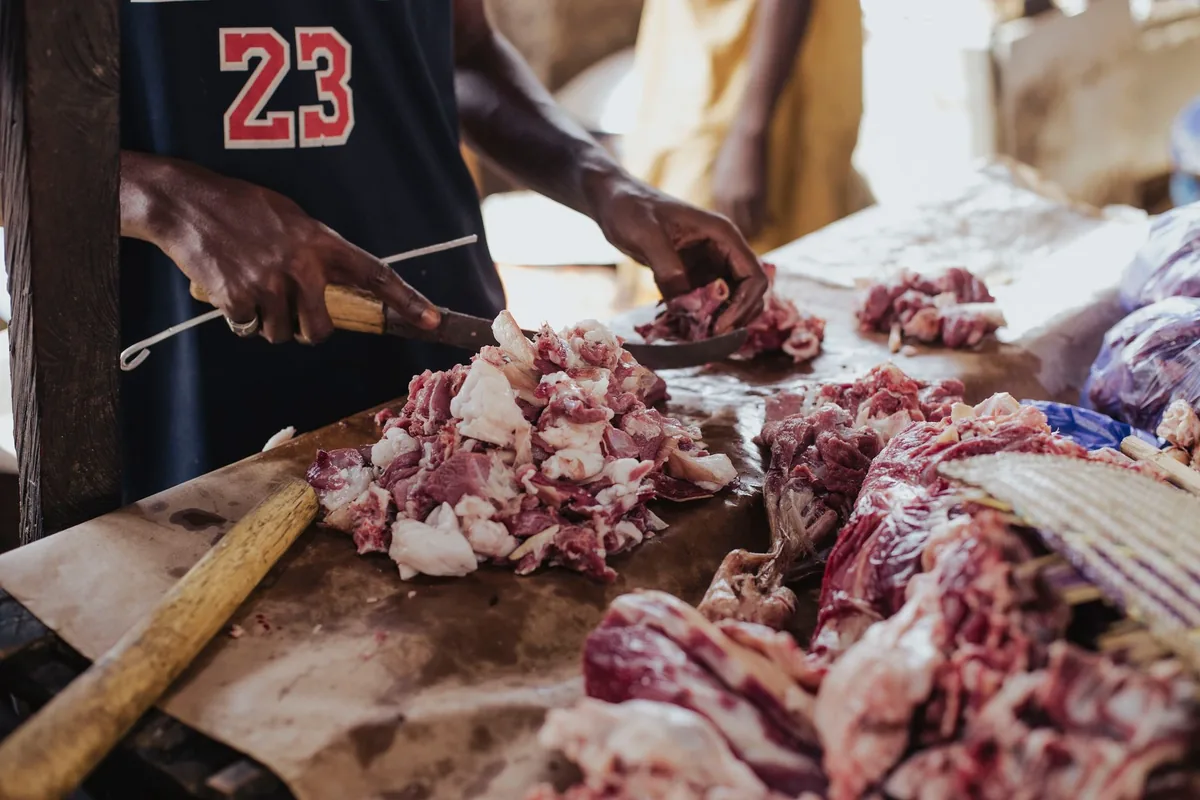
Chuck is the default and the right first answer. It comes from the shoulder, has generous connective tissue and marbling, and turns tender in eight to ten hours. Buy it as a whole roast and cut it into large chunks yourself rather than buying pre-diced.
Shin, oxtail and short rib are richer and cheaper still, and produce a far more gelatinous stew. They need twelve hours or more, so they rule out any cooker whose timer stops at ten.
Brisket and skirt both work with long cooking, though brisket is better sliced than cubed. What does not work is lean meat — rump, round and anything sold as "lean stewing steak" has too little collagen and simply dries out however long you give it.
How to Choose Meat and a Cooker for Beef Stew
Buy the Cut, Not the Label
"Stewing steak" and "casserole beef" are packaging terms, not cuts, and are often trimmings from several different muscles. Those pieces cook at different rates, so some are dry before others are tender. Ask for chuck, shin or short rib by name and cut it yourself.
Cut Bigger Than You Think
Two-inch chunks are right for a long cook. Small pieces lose their moisture and shred into threads over eight hours, while large chunks hold together and stay succulent. Uniform size matters more than small size.
Match Cooking Hours to the Cut
This is where the cooker choice actually bites. Chuck is done at eight to ten hours, which every programmable model here can set. Shin and oxtail want twelve or more, which only the adjustable-timing models reach.
Brown the Meat, and Do It in Batches
Browning creates the fond that gives stew its depth. The mistake is crowding the pan — meat then steams in its own liquid and goes grey. Work in batches with space between the pieces, whether in a frying pan or a searing multicooker.
Oval Crocks for Whole Joints
If you braise a whole chuck roast rather than cubes, an oval crock lets it lie flat and stay under the liquid. In a round crock the same joint stands upright with its top edge exposed, which dries out.
Use Less Liquid Than You Expect
Slow cookers lose almost nothing to evaporation, so a hob recipe transferred directly will give you thin, watery gravy. Cut the liquid by roughly a third, and remember the meat and vegetables release plenty of their own.
Add Vegetables by Cooking Time
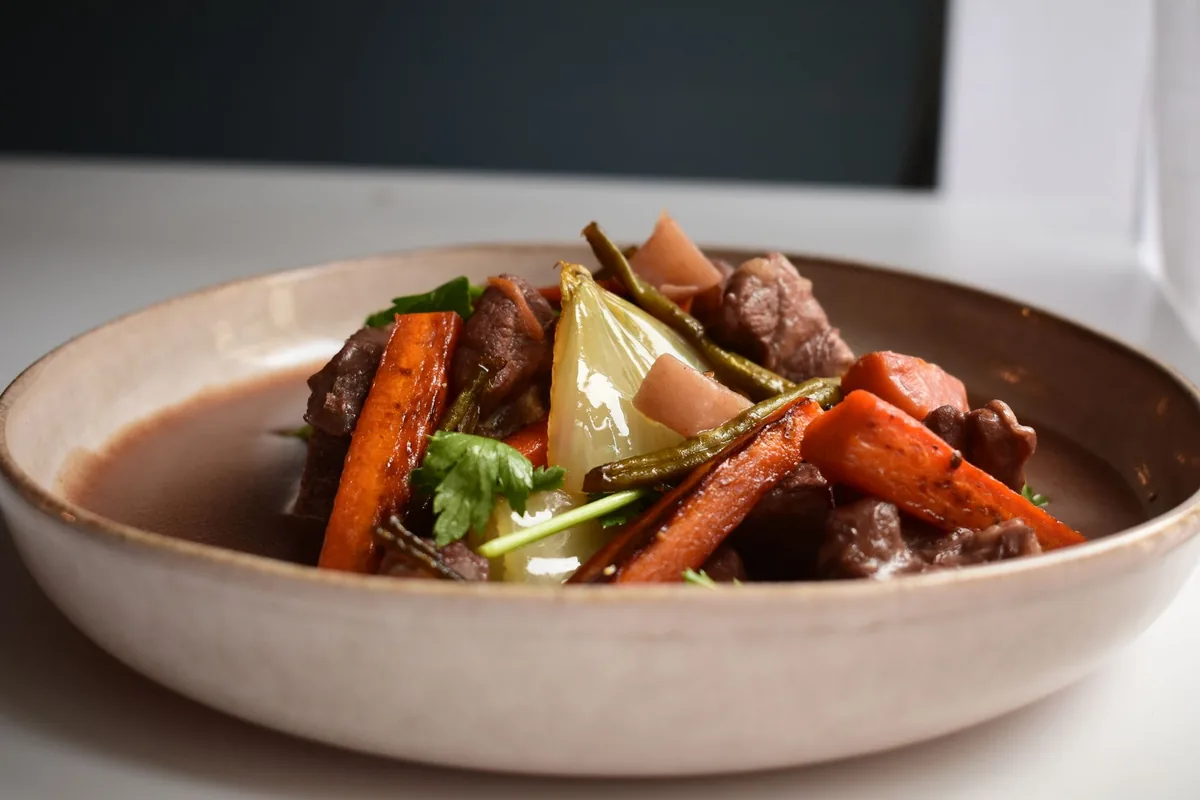
Carrots, swede and potatoes take the full cook and should go in at the start, underneath the meat where the heat is highest. Peas, greens and herbs belong in the last half hour, and dairy at the very end.
Make It a Day Ahead
Beef stew is genuinely better on the second day — the gelatin sets, the flavours settle, and any excess fat lifts straight off once chilled. A crock rated microwave safe makes that plan considerably easier.
Common Beef Stew Mistakes
- Using lean beef. Rump and round have no collagen to break down, so they dry out rather than tenderise.
- Buying pre-diced stewing steak. Mixed offcuts cook at different rates and some will always be tough.
- Cutting the pieces too small. Two-inch chunks survive a long cook; small cubes shred.
- Skipping the browning. Without fond, stew tastes boiled rather than braised.
- Crowding the pan when searing. The meat steams grey instead of browning.
- Using a hob quantity of liquid. Slow cookers barely reduce — cut it by about a third.
- Adding all vegetables at once. Roots go in first, delicate greens in the last half hour.
- Stopping at eight hours with shin or oxtail. Those cuts are still tough — they want twelve or more.
Who Should Buy a Slow Cooker for Beef Stew?
A slow cooker suits stew cooking if you:
- Buy cheaper cuts — chuck, shin and oxtail are transformed by long gentle heat
- Want dinner ready when you get home — stew is the classic case for this
- Cook ahead deliberately — stew genuinely improves overnight
- Batch cook for the freezer — it freezes and reheats better than most dishes
- Feed a family — a 7 or 8-quart crock produces a lot from an inexpensive joint
- Prefer hands-off cooking — no stirring, no watching, no scorching
Who May Be Better With Something Else?
If you want stew the same evening, a pressure cooker gets chuck tender in about an hour and lets you brown in the same pot. If you want a properly reduced, glossy gravy, a Dutch oven in the oven is still better, because a slow cooker cannot reduce. And if you only ever use lean beef, no appliance will help — the cut is the problem.
Frequently Asked Questions
What is the best meat for beef stew in a slow cooker?
Chuck, from the shoulder, is the standard answer — well marbled, full of connective tissue and tender in eight to ten hours. Shin, oxtail and short rib are richer and cheaper still, but need twelve hours or more. Avoid lean cuts such as rump or round, which dry out rather than tenderise.
Should I buy pre-cut stewing beef?
Preferably not. Packs labelled stewing steak or casserole beef are often trimmings from several different muscles, so the pieces cook at different rates and some stay tough. Buying a whole chuck roast and cutting it into two-inch chunks yourself is cheaper and gives a far more even result.
Do I need to brown beef before slow cooking stew?
It is the single biggest improvement you can make. Browning creates fond, the sticky residue that carries most of a stew’s depth. Sear in batches with space between the pieces — crowding makes the meat steam grey instead of browning.
How long should beef stew cook in a slow cooker?
Chuck needs eight to ten hours on Low. Shin, oxtail and short rib want twelve or more. High is faster but gives a less silky texture, because collagen converts to gelatin better at lower temperatures over longer periods. Check the cooker’s maximum timer before buying for the tougher cuts.
Why is my slow cooker beef stew tough?
Usually one of two things: the wrong cut, or not enough time. Lean beef will never become tender because it has no collagen to convert. And a cut that is still tough at eight hours is almost always undercooked rather than overcooked — give it longer rather than less.
Why is my beef stew watery?
Slow cookers keep the lid on and lose almost no moisture, so a recipe written for the hob has far too much liquid. Cut it by roughly a third. To fix a finished stew, remove the lid and cook on High for the last 30 to 45 minutes, or stir in a cornflour slurry.
Should I cut the beef into large or small pieces?
Large. Two-inch chunks hold their structure and stay succulent through a long cook, while small cubes lose moisture and shred into threads. Consistent size matters as much as absolute size, so trim to roughly equal pieces.
Can I make beef stew in a pressure cooker instead?
Yes, and chuck becomes tender in about an hour rather than ten. The trade-offs are batch size and the vegetables, which overcook far more easily under pressure — many people pressure cook the meat first and add vegetables for a short second stage.
Final Verdict
An oval 8.5-quart crock with 20-hour programming, so a whole chuck or a shin can lie flat and cook as long as it needs.
Seven quarts with 8 and 10-hour settings that land exactly where chuck wants them, at the lowest programmable price.
Sears the beef in the pot so the fond ends up in the stew rather than in a frying pan you have to deglaze.
Beef stew comes down to five things, and only two of them are the appliance: choose a collagen-rich cut, cut it into large even chunks, brown it properly in batches, give it enough hours for that specific cut, and use less liquid than a hob recipe suggests. Get the cut right first — no cooker on this list will rescue lean beef.