Affiliate Disclosure: As an Amazon Associate, we earn from qualifying purchases. This does not affect the price you pay.
One listing in this search prints the sentence that decides the whole category: “Every processing should not exceed 30s. Please rest for 20s to prevent overheating.”
That is the KOIOS, and it is the only machine here honest enough to publish a duty cycle. The limit is not unusual — domestic food processors are built for intermittent household use, a bowl of onions and then off. Most of the others in this roundup have similar ceilings and simply do not mention them. Two more state that an overheat cut-out will stop the machine and that you should wait several minutes before restarting.
Canning is not intermittent work. A seven-jar batch of salsa starts with six to eight pounds of produce. A tomato canning afternoon might be twenty pounds or more. That is thirty to forty-five minutes of near-continuous processing, which is precisely the workload these machines are not rated for.
Capacity is the other problem, and it is stark: the median bowl in this search holds about three cups. The best-ranked product on the page — #168, and a genuinely excellent chopper — holds exactly that.
And for the most common canning job of all, tomato sauce, a food processor is the wrong machine entirely. It purees the skins and seeds into your jars. One product below removes them instead.
Our Quick Picks
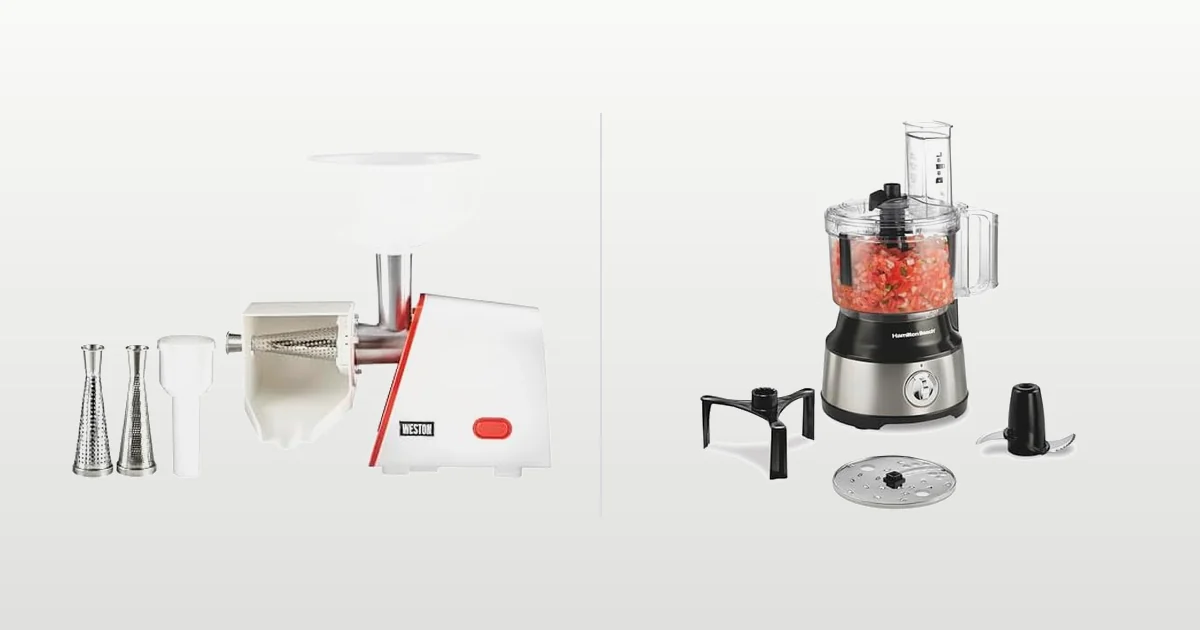
 Best for CanningWeston Deluxe Electric Tomato Strainer
It does not chop. It presses fruit through a screen, sending pulp one way and skins and seeds the other — which is the actual job in tomato canning.
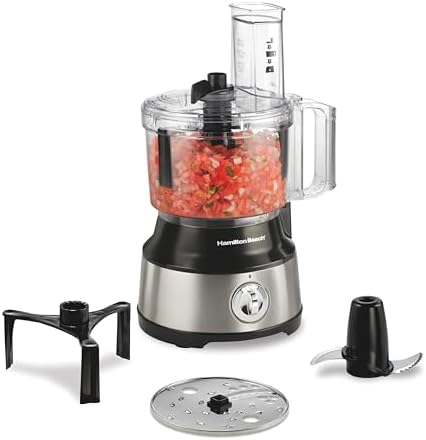 Best All-RounderHamilton Beach 70730 10-Cup
Ten cups, a 450-watt motor, slicing and shredding discs, and a built-in scraper that clears the bowl wall without opening the lid.
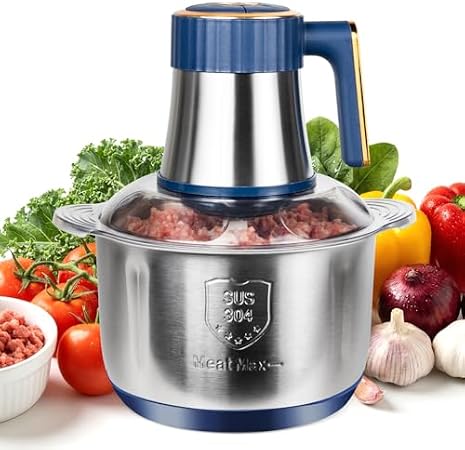 Largest Bowl20-Cup Large Capacity Processor
Five litres of 304 stainless bowl, a 500-watt motor, five speeds and six bi-level blades — built for volume rather than for a countertop.
At a Glance
Ten Machines, Compared on Volume and Endurance
Bowl capacity, motor rating, how you control it, and the one specification each maker chose to lead on — because canning tests throughput, not features.
| # | Model | Capacity | Motor | Control | Detail | Standout | Main Drawback | Check Price |
|---|---|---|---|---|---|---|---|---|
| 1 |
 Weston Deluxe Electric Tomato Strainer Weston Deluxe Electric Tomato Strainer |
1 gal hopper | 250 W, 2 speed | 3 screens | Removes skins and seeds | The only machine here that separates skins and seeds | Not a food processor, and cannot chop | View on Amazon |
| 2 |
 20-Cup Large Capacity Processor 20-Cup Large Capacity Processor |
20 cups / 5 L | 500 W | 5 speeds | 6 blades | Twenty cups is nearly seven times the median here | Requires two-hand operation for stability | View on Amazon |
| 3 |
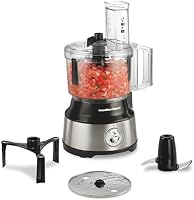 Hamilton Beach 70730 10-Cup Hamilton Beach 70730 10-Cup |
10 cups | 450 W | 2 speeds + pulse | Bowl scraper | A built-in scraper you work without stopping the machine | Rank pooled with sibling Hamilton Beach listings | View on Amazon |
| 4 |
 Ninja PrecisionPro BZ601 Ninja PrecisionPro BZ601 |
9 cups | 1000 peak W | 4 Auto-iQ | Slice/shred disc | A thousand peak watts and four preset programs | Peak watts is not continuous watts | View on Amazon |
| 5 |
 Ganiza Dual-Bowl 450W Ganiza Dual-Bowl 450W |
8 + 8 cups | 450 W copper | 2 speeds | Glass + steel | Two 8-cup bowls in different materials, deliberately | Auto-stop halts the machine when it overheats | View on Amazon |
| 6 |
 Manual 8-Cup Crank Chopper Manual 8-Cup Crank Chopper |
8 cups | Hand crank | 420 stainless | No duty cycle | The only machine here with no motor to overheat | Eight cups of hand cranking is real work | View on Amazon |
| 7 |
 Salsa Master Manual Processor Salsa Master Manual Processor |
Manual | Triple blade | Surgical steel | Pull cord | Built and named for exactly one preserving recipe | Small capacity and no stated volume | View on Amazon |
| 8 |
 KOIOS 500W Dual-Bowl KOIOS 500W Dual-Bowl |
2 bowls | 500 W copper | Bi-level blades | 30 s max run | Publishes its duty cycle outright — 30 seconds on, 20 off | That duty cycle is the problem for canning | View on Amazon |
| 9 |
 Cuisinart Mini-Prep Plus Cuisinart Mini-Prep Plus |
3 cups / 24 oz | 250 W | Reversible blade | 18-month warranty | A reversible blade with a sharp side and a blunt side | Three cups is far too small for canning | View on Amazon |
| 10 |
 Hamilton Beach 3-Cup Stack & Press Hamilton Beach 3-Cup Stack & Press |
3 cups | 350 W | Stack and press | Rank #168 | The best-ranked product on this page by a wide margin | Three cups against twenty pounds of tomatoes | View on Amazon |
Specifications and prices are taken from each manufacturer’s Amazon listing as displayed on 23 August 2026 through a United States connection, and may change. Duty cycle figures are recorded only where the manufacturer publishes them: one listing states a 30-second maximum run with a 20-second rest, and two others describe an automatic overheat cut-out requiring a wait before restarting. The absence of a stated limit on the other seven should not be read as the absence of a limit. Motor ratings are not directly comparable — one machine is rated in peak watts and the rest in continuous watts. The Weston is a tomato strainer and food mill rather than a food processor, and cannot chop or slice; it is included because it is the correct tool for tomato canning. Sales ranks are shown as displayed and can be pooled across a variant family.
Scroll the table sideways to see every column
How We Chose These Ten
We researched current listings, compared manufacturer specifications and documentation, and examined recurring patterns in customer feedback. We did not carry out hands-on testing, and nothing below is presented as measured performance data.
- Capacity published — because throughput is the binding constraint in canning, not features
- Any stated duty cycle or thermal limit recorded — one machine publishes one; two describe cut-outs; seven say nothing
- A verified live buy box — all ten confirmed purchasable in the United States on 23 August 2026
- No overlap with our five published food processor guides — every machine here is new to the site
- Bowl material noted — because canning is acidic and plastic stains where glass and steel do not
- Manual options included — a hand crank has no motor to overheat, which is a real advantage here
- The correct tool included even though it is not a food processor — a tomato strainer does the main canning job, and buyers should know it exists
The Ten Machines in Detail
1. Weston Deluxe Electric Tomato Strainer — Best for Canning

Every other machine on this page purees the skins and seeds into your sauce. This one takes them out.
Key Specifications
| Type | Electric tomato strainer, food mill and sauce maker |
|---|---|
| Motor | 250 W, two speeds with reverse |
| Hopper | 1 gallon — largest here by a wide margin |
| Screens | 3 stainless: 1.5 mm for tomatoes and berries, 3 mm for larger vegetables, plus a third |
| Function | Removes skins, separates seeds, continuous output |
| Reverse | Backs the auger off to clear jams |
| Included | Stomper for safely feeding the hopper |
| Rank | #6,216 in its category |
| Price | $119.72 |
| Best For | Tomato sauce, passata, purees and jellies in canning quantities |
Why We Recommend It
This is the single most important distinction in the article. A food processor has one output: everything you put in comes back out, chopped. For most cooking that is what you want. For tomato canning it is not — skins turn leathery and separate in the jar, and seeds carry a bitterness that concentrates as the sauce reduces. The traditional answer is to blanch, peel and seed by hand, which for twenty pounds of tomatoes takes a long evening.
A strainer does it mechanically and continuously. An auger presses the fruit against a perforated screen; pulp goes through into one chute, skins and seeds are carried out of another. You feed whole tomatoes into a one-gallon hopper and it does not stop.
Continuous output is the second advantage, and it is why the modest 250-watt motor is not a limitation. There is no bowl to fill, empty and refit between batches, and no thermal duty cycle to observe, because the motor is turning an auger rather than spinning a blade against resistance.
Three screens make it more than a tomato tool — 1.5 mm handles berries for jelly, 3 mm handles larger vegetables for puree.
Pros
- Removes skins and separates seeds — unique here
- 1 gallon hopper and continuous output
- No batch cycle and no cooling pauses
- Three stainless screens for different produce
- Reverse speed clears jams
- Replaces hours of blanching and peeling
Cons
- Not a food processor — it cannot chop or slice
- 250 W is the lowest wattage here
- Single purpose: pureeing and straining only
- $119.72, second most expensive here
- More parts to wash than a processor bowl
- Rank #6,216, well behind the mainstream choppers
Best for: Anyone canning tomatoes in quantity. It is the right tool, and it is not a food processor.
2. 20-Cup Large Capacity Processor — Largest Bowl
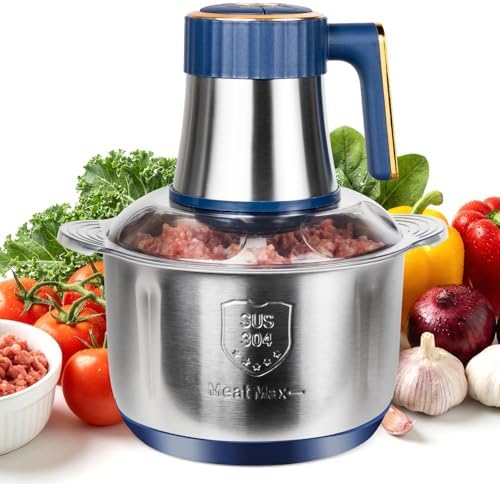
Twenty cups for $49.54. The median capacity in this search is about three.
Key Specifications
| Capacity | 20 cups / 5 L, 304 stainless steel bowl |
|---|---|
| Motor | 500 W |
| Speeds | 5 — speed I for soft fruit and vegetables upward |
| Blades | 6 S-shaped bi-level |
| Stability | Silicone non-slip ring required; two-hand operation specified |
| Functions | Chopping, mincing, pureeing, mixing |
| Warranty | 2-year after-sales service |
| Rank | #52,359 in its category |
| Price | $49.54 |
| Best For | Batch prep volume at the lowest price per cup on this page |
Why We Recommend It
Capacity is the obvious canning constraint and the easiest one to solve. A salsa batch that fills seven pint jars starts with roughly six to eight pounds of tomatoes, peppers and onions — which is four or five passes through a 3-cup chopper and one pass through this. Fewer passes means less time, less washing up and less opportunity for the motor to heat.
The 304 stainless bowl matters more than it would elsewhere. Canning work is acidic by definition — tomatoes, vinegar, citrus — and prolonged contact with acid is what stains and degrades plastic bowls. 304 is the standard food-grade austenitic stainless and is unaffected.
The stability instructions are a warning worth heeding. The listing specifies fitting a silicone non-slip ring before use and operating with two hands, which tells you this is a tall bowl with a powerful motor that can walk across a wet counter.
Rank #52,359 is very low, and this is an unbranded design sold under a generic title — buy it for the capacity figure, which is genuine, rather than for a track record.
Pros
- 20 cups — largest bowl in this roundup
- 304 stainless resists acidic canning ingredients
- $49.54, cheapest per cup by a distance
- 500 W with 5 speeds and 6 blades
- Fewer passes means less motor heating
- 2-year after-sales service offered
Cons
- Rank #52,359 — very low
- Unbranded generic listing with no track record
- Requires two-hand operation and a non-slip ring
- Tall bowl, awkward under cabinets
- No slicing or shredding discs
- Purees and chops only
Best for: Volume chopping for salsa, relish and chutney at the lowest price per cup.
3. Hamilton Beach 70730 10-Cup — Best All-Rounder
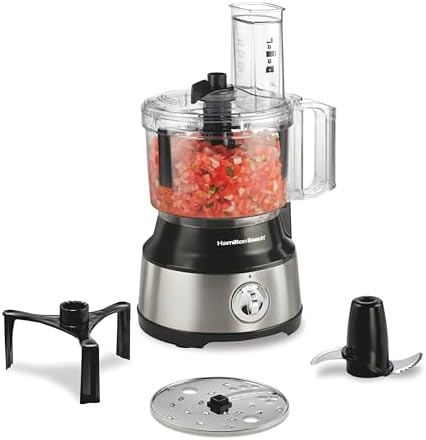
The bowl scraper sounds like a gimmick until you have processed six batches of anything sticky.
Key Specifications
| Capacity | 10 cups |
|---|---|
| Motor | 450 W |
| Controls | 2 speeds plus pulse |
| Functions | Slice, shred, chop, mix, puree — 5 in total |
| Attachments | Stainless S-blade plus reversible disc |
| Bowl scraper | Built-in, moved side to side while running |
| Feed chute | Large, reduces pre-cutting |
| Cleaning | Blades, bowl and lid dishwasher safe, BPA-free food zones |
| Rank | #1,296 in its category |
| Price | $59.99 |
| Best For | The best balance of capacity, function and record here |
Why We Recommend It
Scraping is the hidden time cost of batch work. Chopped onion and tomato climbs the bowl wall and stops circulating, so the machine keeps running on the material at the bottom while the rest sits still. Normally you stop, unlock, lift the lid, scrape with a spatula, refit and restart — perhaps twenty seconds, repeated every batch. Over a canning session of ten or fifteen batches that is real time, and this removes it.
Ten cups is the sensible middle. It handles a full salsa batch in two passes rather than five, without the height and stability issues of a twenty-cup bowl.
Slicing and shredding discs matter for canning specifically, because a great deal of preserving is not chopping at all — bread and butter pickles want even cucumber slices, relish wants shredded cabbage or carrot, and an S-blade does neither.
Rank #1,296 is the strongest of the full-size processors here, though it is shared across Hamilton Beach’s processor family.
Pros
- Built-in scraper works without stopping the machine
- 10 cups handles a salsa batch in two passes
- Slicing and shredding discs, not just an S-blade
- 450 W with 2 speeds and pulse
- Rank #1,296, best of the full-size machines
- Dishwasher-safe, BPA-free food zones
Cons
- Rank pooled across Hamilton Beach processor listings
- No duty cycle published
- Plastic bowl will stain with tomato and turmeric
- 450 W is mid-range for the capacity
- Large feed chute still needs produce halved
- No dough or specialist blades
Best for: Anyone who wants one machine to do most canning prep well.
4. Ninja PrecisionPro BZ601 — Most Powerful

A thousand peak watts against 250 to 500 for everything else here. Read the word peak carefully.
Key Specifications
| Capacity | 9 cups with large feed chute |
|---|---|
| Motor | 1000 peak watts — highest here |
| Auto-iQ | 4 preset programs for chopping, slicing, shredding and more |
| Discs | Reversible slicing and shredding |
| Dough blade | Included, for doughs and shredding cooked meat |
| Blades | Stainless Ninja precision chopping blades |
| Cleaning | Blades, discs, containers, lids and pusher dishwasher safe |
| Rank | #1,088, pooled with a sibling Ninja listing |
| Price | $129.99 |
| Best For | Anyone processing tough or dense produce in quantity |
Why We Recommend It
Peak wattage is a measurement at maximum load for an instant, not the power the motor sustains. It is a legitimate figure and it is not comparable with the continuous ratings other makers on this page publish, so a 1000-peak-watt Ninja and a 500-watt continuous motor are closer than the numbers suggest. What peak power genuinely helps with is starting into a full bowl of dense produce without stalling — which is exactly what a canning batch looks like.
Auto-iQ presets are timed pulse patterns rather than simple speeds. For repetitive batch work that is useful: press once, get a consistent result, and every jar in the batch matches the last.
The reversible disc is the canning-relevant attachment. Even slices are what separate a good jar of pickles from a bad one, because uneven thickness means uneven brine penetration and inconsistent texture through the jar.
Nine cups and $129.99 makes this the most expensive processor here, and its rank is pooled with a sibling Ninja listing.
Pros
- 1000 peak watts starts into dense full loads
- 4 Auto-iQ presets give repeatable batch results
- Reversible slicing and shredding disc
- Dough blade included
- 9-cup bowl with large feed chute
- All parts dishwasher safe and BPA-free
Cons
- Peak watts is not a continuous rating
- $129.99 — most expensive processor here
- 9 cups is less than the 10 and 20-cup rivals
- Rank pooled with a sibling Ninja listing
- No duty cycle published
- Plastic bowl stains with tomato
Best for: Dense produce and repeatable results across a long batch session.
5. Ganiza Dual-Bowl 450W — Best Two-Bowl

Two eight-cup bowls is sixteen cups of capacity, and you can fill the second while the first is in use.
Key Specifications
| Capacity | 2 x 8 cups — one glass, one 304 stainless |
|---|---|
| Motor | 450 W full copper |
| Speeds | 2, with bi-level S blades |
| Why two materials | Keeps raw meat and produce separate |
| Protection | Patented automatic stopping and overheat protection |
| Note | If it stops, the listing says wait several minutes before restarting |
| Rank | #682 in its category |
| Price | $34.99 |
| Best For | Anyone who wants sixteen cups of capacity in two separate bowls |
Why We Recommend It
The second bowl is a genuine throughput advantage in canning. A single-bowl machine has to be emptied and often rinsed between ingredients — onions, then peppers, then tomatoes — and each changeover is dead time. Two bowls lets you chop, swap, and deal with the first bowl while the second is running.
Glass and 304 stainless is a deliberate pairing, and both resist what plastic does not. Neither stains from tomato or turmeric, neither absorbs garlic or onion, and neither is affected by the acid that defines most preserving recipes.
Read the overheat note before you commit. The listing states that the machine has automatic overheat protection and that if it stops you should wait several minutes before restarting. That is honest and it is also a description of exactly what a long canning session will provoke. Plan the work in stages rather than as one continuous run.
Rank #682 is the second best on this page, which for a $34.99 machine with sixteen cups of bowl capacity is a strong showing.
Pros
- Two 8-cup bowls, glass and 304 stainless
- Neither bowl stains or absorbs odours
- Rank #682, second best here
- Full copper motor, 450 W
- $34.99 for sixteen cups of total capacity
- Two blade sets included
Cons
- Overheat protection stops the machine mid-session
- Listing advises waiting several minutes after a stop
- No slicing or shredding discs
- Only 2 speeds
- Bowls are 8 cups each, not combined
- Glass bowl is heavy when full
Best for: Multi-ingredient prep where swapping bowls beats washing one.
6. Manual 8-Cup Crank Chopper — No Power Needed

No motor means no thermal limit. You are the duty cycle, and you can rest for as long as you like.
Key Specifications
| Capacity | 8 cups |
|---|---|
| Power | Hand crank — none required |
| Blades | 420 stainless steel rotating |
| Container | Food-grade PC plastic, BPA-free, clear |
| Base | Anti-skid, with soft-grip lid |
| Duty cycle | None — there is no motor to overheat |
| Noise | Silent operation |
| Rank | #36,929 in its category |
| Price | $20.74 |
| Best For | Long sessions where an electric motor would need cooling breaks |
Why We Recommend It
This is a more serious canning suggestion than it first appears. Several electric machines on this page publish run-time limits or automatic cut-outs, and a canning afternoon is precisely the workload that triggers them. A crank chopper has no such ceiling: it processes eight cups, then eight more, then eight more, at whatever pace you can sustain, with no cooling pause and no risk of stalling a motor in a dense load.
The control is also better than an electric machine’s. Salsa and relish want a distinct dice rather than a puree, and the difference between the two on a powered chopper is about one second. Cranking by hand you can see exactly where you are and stop.
It is genuinely hard work at volume. Eight cups of firm onion takes noticeable effort, and twenty pounds of produce will be felt the next day. Consider it the reliable backup rather than the primary tool.
PC plastic will stain with tomato, unlike the glass and stainless bowls elsewhere here, and rank #36,929 is low.
Pros
- No motor, so no duty cycle or cooling pauses
- 8 cups per load with no run-time limit
- Complete control over dice size
- Silent, and needs no power outlet
- $20.74 — cheapest here
- 420 stainless blades and anti-skid base
Cons
- Genuinely hard work at canning volumes
- Rank #36,929 — low
- PC plastic container stains with tomato
- No slicing or shredding capability
- Slower than any electric machine
- Unbranded generic listing
Best for: A backup that never overheats, and full control over how coarse the result is.
7. Salsa Master Manual Processor — Best for Salsa

It is called the Salsa Master. Salsa is the most-canned recipe in this category, so the naming is at least aimed correctly.
Key Specifications
| Type | Manual pull-cord chopper |
|---|---|
| Blades | Triple, surgical stainless steel — will not bend or rust |
| Named uses | Salsa, hummus, guacamole, vegetables, nuts, herbs |
| Power | None required |
| Assembly | Comes apart for cleaning |
| Positioning | Alternative to bulky, noisy electric choppers |
| Rank | #28,809 in its category |
| Price | $26.99 |
| Best For | Salsa specifically, in small repeated batches |
Why We Recommend It
Manual choppers give a texture electric machines struggle with. Salsa should be diced, not pureed, and the failure mode on a powered processor is going from chunky to soup in a single extra pulse. A pull-cord mechanism cuts a defined number of times per pull, so you can count — three pulls for coarse, six for fine — and get the same result every jar.
Surgical stainless is a meaningful claim on a manual tool, where the blades are thin and unsupported by a heavy motor. Bending is the usual failure, and the listing addresses it directly.
No capacity is published anywhere, which for a canning purchase is the specification you most need. Manual pull choppers of this type are typically two to four cups, meaning many repeats for a full batch.
Rank #28,809 is low, and at $26.99 it costs more than the 8-cup crank chopper above while almost certainly holding less.
Pros
- Named and designed for salsa specifically
- Repeatable dice by counting pulls
- Surgical stainless triple blades
- No power, no noise, no duty cycle
- Comes apart for cleaning
- Better texture control than a powered chopper
Cons
- Capacity never stated on the listing
- Rank #28,809 — low
- Costs more than an 8-cup crank chopper
- Almost certainly small-batch only
- No slicing or shredding
- Pull cords are the usual wear point on these
Best for: Salsa in small repeated batches where the dice matters more than the speed.
8. KOIOS 500W Dual-Bowl — Most Honest Limits

“Every processing should not exceed 30s. Please rest for 20s to prevent overheating.” No other listing here tells you this.
Key Specifications
| Motor | 500 W pure copper |
|---|---|
| Bowls | 1 stainless steel, 1 glass |
| Blades | 2 sets of S-shaped bi-level, plus 8 blade protectors |
| Duty cycle | Maximum 30 seconds per run |
| Rest | 20 seconds between runs to prevent overheating |
| Functions | Chop, blend, puree, mix, mince |
| Support | Lifelong technical consultation offered |
| Rank | #2,725 in its category |
| Price | $29.99 |
| Best For | Understanding what every machine here is actually rated for |
Why We Recommend It
That sentence is the most useful thing on this page, and it almost certainly applies to most of the electric machines in this roundup — KOIOS is simply the one that printed it. Domestic food processors are designed for intermittent household use: a bowl of onions, a batch of breadcrumbs, then off. They are not rated for continuous operation, and canning is continuous operation.
Do the arithmetic for a canning session. Thirty seconds on and twenty off is a duty cycle of sixty percent. Processing twenty pounds of produce through a small bowl might be fifteen or twenty runs, which with mandated rests turns a fifteen-minute job into twenty-five — and that assumes you observe the rests rather than pushing on until the thermal cut-out does it for you.
Two bowls in different materials is the same sensible arrangement as the Ganiza, and neither glass nor stainless stains from tomato.
Rank #2,725 at $29.99 is respectable, and the transparency deserves credit rather than a penalty — the other machines have limits too, they just do not say so.
Pros
- Publishes its duty cycle, which nothing else here does
- 500 W pure copper motor
- Stainless and glass bowls, neither stains
- 2 blade sets and 8 blade protectors
- $29.99 with lifelong technical support
- Rank #2,725
Cons
- 30-second run limit is short for canning volumes
- 20-second rest between runs mandated
- Bowl capacity never stated
- No slicing or shredding discs
- Loses power if overheated, requiring a wait
- The honesty does not make the limit smaller
Best for: Anyone who wants to know what they are actually buying. The limit is real, and shared.
9. Cuisinart Mini-Prep Plus — Best Small

Rank #653 and three cups. It is an excellent small chopper and it is the wrong size for this job.
Key Specifications
| Capacity | 3 cups / 24 oz |
|---|---|
| Motor | 250 W with auto-reversing SmartPower |
| Blade | Patented reversible stainless — sharp and blunt edges |
| Controls | Push button panel |
| Included | Work bowl with handle, blade, spatula, recipe book |
| Body | Lightweight plastic, BPA-free |
| Warranty | Limited 18-month |
| Rank | #653 in its category |
| Price | $39.95 |
| Best For | Spice blends and small aromatics alongside a larger machine |
Why We Recommend It
The reversible blade is genuinely clever. One edge is sharpened for chopping wet ingredients; the other is deliberately blunt for grinding dry ones like spices and hard cheese, where a sharp edge glances off rather than shattering. Auto-reversing means the motor picks the direction, so you get the right edge without disassembly.
That matters for canning in a specific and limited way. Pickling spice, mustard seed and peppercorns for a brine want grinding, not chopping, and a large processor with a big S-blade does that badly — the volume is too small to reach the blade. Three cups is right for spice work and hopeless for tomatoes.
Three cups is roughly a pound and a half of chopped produce. A seven-jar salsa batch would be eight or nine passes, with washing between ingredient changes.
Buy it as a second machine, not a first. Rank #653, an 18-month warranty and a long production record make it a safe small purchase.
Pros
- Reversible blade grinds dry spices and chops wet
- Rank #653, third best here
- Auto-reversing SmartPower picks the edge
- 18-month limited warranty
- Right size for pickling spice and aromatics
- Dishwasher-safe bowl and lid
Cons
- 3 cups is far too small for canning batches
- 250 W, joint lowest here
- Eight or nine passes for one salsa batch
- Plastic bowl stains with tomato
- No slicing or shredding
- 18 months is the shortest warranty here
Best for: Grinding pickling spice beside a larger machine. Not a canning processor on its own.
10. Hamilton Beach 3-Cup Stack & Press — Best Rank

Rank #168 and $21.59. It is the most popular product in this search and it holds three cups.
Key Specifications
| Capacity | 3 cups |
|---|---|
| Motor | 350 W |
| Operation | Patented stack and press — press the lid to chop, release to stop |
| Blades | Stainless steel, removable |
| Functions | Chop, puree, emulsify |
| Cleaning | Bowl, lid and blades all dishwasher safe |
| Rank | #168 — best on this page |
| Price | $21.59 |
| Best For | Everything except the job this article is about |
Why We Recommend It
It is here to make the central point of the article. Search for a food processor for canning and this is near the top of what you are shown, because it is a superb everyday chopper that vast numbers of people have bought. Its rank reflects daily onion-and-garlic duty, not preserving, and nothing about #168 indicates suitability for processing twenty pounds of tomatoes.
The stack and press mechanism is the reason for the popularity. There is no switch and no locking collar — you press the lid and it runs, you let go and it stops. That makes the dice size controllable in a way most powered choppers are not, since you are timing it directly with your hand.
Press-to-run also caps your session. Holding a lid down through fifteen consecutive batches is its own kind of tiring, and there is no way to walk away mid-run.
Buy it, but not for this. At $21.59 it is the best small chopper here and it will be used constantly — just not on canning day.
Pros
- Rank #168 — by far the best here
- $21.59
- Press-to-run gives precise dice control
- No switch or locking collar to fumble
- 350 W, more than the Cuisinart mini
- All parts dishwasher safe
Cons
- 3 cups is nowhere near a canning batch
- Press-and-hold operation tires over long sessions
- Cannot be left running unattended
- No slicing or shredding
- Plastic bowl stains with tomato
- Its rank reflects everyday use, not preserving
Best for: Everyday chopping. Its rank is real and it does not mean what a canning search implies.
What a Processor Does to a Tomato, and What a Strainer Does
The same twenty pounds of tomatoes, two machines, two completely different outputs.
| Any food processor here | Weston Tomato Strainer | |
|---|---|---|
| Skins | Pureed into the sauce | Removed and ejected |
| Seeds | Pureed into the sauce | Separated out |
| Preparation needed | Blanch, peel and seed by hand first | Feed in whole |
| Output | Batch — stop, empty, refit | Continuous |
| Hopper or bowl | 3 to 20 cups | 1 gallon |
| Thermal limit | Stated or implied on all | Auger load, not blade load |
| Can it chop or slice? | Yes | No |
This is not a case of one machine being better. They do different things, and a canning kitchen doing tomatoes at volume genuinely wants both — the strainer for sauce and passata, a processor for the salsa, relish and chutney that need a dice rather than a puree. If you buy only one and tomatoes are the reason you are canning, buy the strainer.
Capacity Against What a Batch Actually Needs
A seven-jar salsa batch is roughly eight pounds of produce. Here is what that means per machine.
| Machine | Capacity | Passes for a salsa batch | Stated limit | Price |
|---|---|---|---|---|
| Weston Strainer | 1 gallon hopper | Continuous | None stated | $119.72 |
| 20-Cup Processor | 20 cups | 1 | None stated | $49.54 |
| Hamilton Beach 70730 | 10 cups | 2 | None stated | $59.99 |
| Ninja PrecisionPro | 9 cups | 2 | None stated | $129.99 |
| Ganiza dual-bowl | 8 + 8 cups | 2 | Auto-stop on overheat | $34.99 |
| Manual crank chopper | 8 cups | 3 | None — no motor | $20.74 |
| KOIOS dual-bowl | Not stated | Unknown | 30 s run, 20 s rest | $29.99 |
| Cuisinart Mini-Prep | 3 cups | 8–9 | None stated | $39.95 |
| Hamilton Beach 3-cup | 3 cups | 8–9 | None stated | $21.59 |
Eight or nine passes through a three-cup bowl, with a rinse between ingredients, is not a small inconvenience — it is most of an hour, and it is the point at which people stop canning. The two best-ranked products in this search are both three-cup machines, which tells you what the category is really selling and why rank is a poor guide for this particular purchase.
Best Alternatives
| Alternative | Why Consider It | Better For | Main Trade-Off |
|---|---|---|---|
| A hand-crank food mill | No motor, removes skins and seeds, costs far less than an electric strainer | Small tomato batches | Slow and physically tiring at volume |
| A mandoline slicer | Perfectly even slices for pickles, no motor to overheat | Cucumbers, and anything sliced rather than chopped | Genuinely dangerous without the guard, and no chopping |
| A commercial-duty processor | Rated for continuous operation, unlike anything here | Anyone canning every week through the season | Several times the price of the machines on this page |
| Doing it by hand with a good knife | No limits of any kind, complete texture control | Small batches and coarse textures | Hours of work at canning volumes |
What the Money Actually Buys
$20.74 to $34.99 — manual crank, Hamilton Beach 3-cup, Salsa Master, KOIOS, Ganiza. The most interesting tier, because two of the five have no motor at all and therefore no duty cycle. The Ganiza’s sixteen cups across two bowls at $34.99 is the best capacity-per-dollar of any electric machine here.
$39.95 to $59.99 — Cuisinart Mini-Prep, 20-cup processor, Hamilton Beach 70730. The range where canning becomes practical. The 20-cup at $49.54 does a salsa batch in one pass; the Hamilton Beach 70730 adds slicing and shredding discs, which matter for pickles and relish.
$119.72 to $129.99 — Weston Strainer, Ninja PrecisionPro. Two different arguments for spending more. The Ninja buys peak power and preset programs in a nine-cup bowl. The Weston buys a different machine entirely — one that separates skins and seeds and runs continuously, which no processor at any price on this page can do.
What to Check Before You Buy
Look for a Duty Cycle, and Assume One Exists
Exactly one listing in this roundup publishes a run-time limit: thirty seconds on, twenty seconds off. Two more state that an automatic cut-out will stop the machine and that you must wait before restarting. The remaining seven say nothing, which is not evidence that they can run continuously — domestic processors are broadly designed for intermittent use and most share similar ceilings. Assume a limit exists, plan your session in stages, and treat a machine that stops mid-batch as behaving normally rather than failing.
Count Passes, Not Cups
Bowl capacity only becomes meaningful when you convert it into how many times you will fill it. A seven-jar salsa batch is roughly eight pounds of produce, which is one pass through a twenty-cup bowl and eight or nine through a three-cup one — plus a rinse each time you change ingredient. That difference is roughly forty-five minutes of your afternoon, and it compounds with the duty cycle, because more passes means more heat.
Understand What a Processor Cannot Do to a Tomato
A food processor has one output. Everything that goes in comes back out, chopped, including skins and seeds. In a jar of sauce the skins separate into tough curls and the seeds contribute a bitterness that concentrates as the sauce reduces — which is why traditional recipes have you blanch, peel and seed first. A tomato strainer or food mill removes both mechanically as it works. If tomato sauce is your main canning output, this single distinction matters more than every specification in the comparison table.
Prefer Glass or Stainless Bowls for Preserving
Canning is acidic almost by definition — tomatoes, vinegar brines, citrus for pectin. Acid, combined with the carotenoid pigments in tomato and the curcumin in turmeric-based pickle spices, is what permanently stains a plastic bowl orange and what leaves garlic and onion detectable in the next thing you make. Glass and 304 stainless are unaffected by all of it. Three machines in this roundup offer one or both, and two of those give you a bowl of each.
Discs Matter More Than You Expect
A surprising amount of preserving is slicing rather than chopping: bread and butter pickles, dilly beans, pickled onions, and any relish built on shredded cabbage or carrot. An S-blade does none of it — it chops, and on a cucumber it produces mush. Even thickness is not cosmetic either, because uneven slices take up brine at different rates and give you a jar with inconsistent texture. Two machines here include a reversible slicing and shredding disc.
Consider a Manual Machine Seriously
It sounds like a step backwards and it solves the exact problem this category has. A hand-crank chopper has no motor, so it has no thermal limit, no cut-out and no cooling pause — you can work for an hour at whatever pace suits. It also gives far better control over dice size, which matters because salsa and relish want a distinct dice and a powered chopper crosses from chunky to pureed in about a second. The cost is genuine physical effort at volume.
Read Peak Watts Carefully
One machine here is rated at 1000 peak watts and the rest at 250 to 500 continuous watts, and those figures are not comparable. Peak measures maximum draw for an instant under load; continuous measures what the motor sustains. Peak power does genuinely help with starting into a densely packed bowl without stalling, which is what a canning batch looks like — but a 1000-peak-watt motor and a 500-watt continuous motor are far closer in sustained capability than the numbers suggest.
Common Mistakes
- Buying on sales rank. The two best-ranked machines here hold three cups, because rank reflects everyday chopping.
- Assuming no stated duty cycle means no duty cycle. One listing publishes 30 seconds; the rest simply do not mention theirs.
- Using a food processor for tomato sauce. It purees the skins and seeds into the jar instead of removing them.
- Choosing a plastic bowl for acidic work. Tomato and turmeric stain it permanently; glass and stainless do not.
- Ignoring slicing discs. Pickles and relish need even slices, and an S-blade cannot produce them.
- Over-processing salsa. One extra pulse turns a dice into soup, and there is no way back.
- Buying capacity you cannot lift. A full 20-cup stainless bowl is heavy and tall under a cabinet.
Who Should Buy Which
Buy the Weston Tomato Strainer at $119.72 if tomatoes are why you are canning. It removes the skins and seeds, takes whole fruit into a one-gallon hopper, and runs continuously. No food processor on this page can do any of that.
Buy the 20-Cup Processor at $49.54 for salsa, relish and chutney volume. One pass per batch, a 304 stainless bowl that acid will not touch, and the cheapest capacity here by a distance.
Buy the Hamilton Beach 70730 at $59.99 if you want one sensible machine. Ten cups, slicing and shredding discs for pickles, and a bowl scraper that saves real time across a long session.
Buy the manual crank chopper at $20.74 as a backup that cannot overheat. When the electric machine cuts out mid-batch, this one carries on.
Buy the Ganiza at $34.99 if you want sixteen cups across two bowls — and read its overheat note before canning day rather than during it.
Frequently Asked Questions
Can I use a regular food processor for canning?
Yes, for a great deal of it, with two significant caveats. The first is endurance: home food processors are designed for intermittent use and several listings in this roundup either publish a run limit or describe an automatic overheat cut-out. A canning session is thirty to forty-five minutes of near-continuous processing, so plan the work in stages and expect the machine to want cooling breaks. The second is that a processor is the wrong tool for tomato sauce specifically, because it purees skins and seeds into the product rather than removing them. For salsa, relish, chutney, pickles and anything that wants a dice or a slice, a processor is entirely appropriate — you simply need enough bowl capacity that you are not doing nine passes.
Why does a food processor not work well for tomato sauce?
Because sauce making is a separation job and a processor cannot separate. Everything that goes into the bowl comes back out chopped, skins and seeds included. In a finished jar the skins separate out into tough curls that float and catch, and the seeds contribute a bitterness that becomes noticeably stronger as the sauce reduces and concentrates. The traditional workaround is to blanch the tomatoes, slip the skins off and scoop the seeds by hand before processing, which is entirely effective and takes a long evening for twenty pounds of fruit. A tomato strainer or food mill does the same separation mechanically and continuously, which is why it remains the standard tool for this job.
How big a food processor do I need for canning?
Work backwards from your batch size rather than picking a number. A seven-jar batch of salsa — a typical canner load — starts from roughly eight pounds of tomatoes, peppers and onions. That is one pass through a twenty-cup bowl, two through a ten-cup, and eight or nine through the three-cup machines that dominate this search, with a rinse each time you switch ingredient. Ten cups is the practical minimum for comfortable canning work and twenty cups turns most batches into a single pass. Bear in mind that a full twenty-cup stainless bowl is heavy and tall, so check it fits under your cabinets before buying.
What does a duty cycle mean on a food processor?
It is the proportion of time the motor is rated to run against the time it needs to cool. One listing in this roundup states it plainly: a maximum of thirty seconds per run with a twenty-second rest, which is a sixty percent duty cycle. Exceeding it causes the motor to heat, and most machines have a thermal cut-out that stops them until they cool — two other listings here describe exactly that behaviour and advise waiting several minutes before restarting. This matters far more in canning than in everyday cooking, because canning asks for many consecutive runs rather than one. Only one manufacturer here publishes the figure, but the limits exist on the others too.
Is a tomato strainer worth it if I only can a few times a year?
It depends almost entirely on whether you make tomato sauce or passata. If you do, even two or three sessions a year is enough to justify it, because the alternative is blanching and peeling by hand and that is the single most tedious task in home preserving — it is what stops people doing it again. If your canning is salsa, pickles, jams and chutneys, a strainer is largely redundant, because those recipes want a dice or a slice and often keep the skins. There is also a middle option worth knowing about: a hand-crank food mill does the same separation for a fraction of the price, more slowly and with more effort.
Should I buy the highest-ranked food processor in the search results?
Not for this purpose, and this category is a clear illustration of why rank can mislead. The two best-ranked products in this search, at #168 and #653, are both three-cup mini choppers. Those ranks are entirely genuine and entirely earned — they are excellent everyday tools that enormous numbers of people use for onions, garlic and herbs several times a week. But sales rank measures how many people bought something, and almost nobody buys a mini chopper in order to can. When your use case is a minority one within a category, rank tells you about the majority’s needs rather than about yours, and capacity and endurance are the specifications that matter here.
Final Verdict
Removes skins and separates seeds, takes whole fruit into a 1-gallon hopper, and runs continuously. The right tool, and not a food processor. $119.72.
Twenty cups in a 304 stainless bowl that acid cannot stain, for $49.54 — one pass per salsa batch.
Ten cups, slicing and shredding discs for pickles, and a bowl scraper that saves real time. $59.99.
The honest answer to this search is that the best tool for the main job is not a food processor. If you are canning tomatoes, a strainer removes the skins and seeds that a processor would puree into your jars, takes whole fruit, and does not stop. That is a different machine, and it is the one to buy.
For everything else — salsa, relish, chutney, pickles — a processor is right, and two specifications decide it. Capacity, because eight or nine passes through a three-cup bowl is where people give up. And endurance, because these machines are built for a bowl of onions and then off, not for forty-five minutes of continuous work.
Only one listing here tells you its limit. Thirty seconds on, twenty off. Credit to KOIOS for printing it; the ceiling exists on the others too, and knowing that changes how you plan the day.
Buy the capacity, respect the cooling breaks, and keep something manual on the shelf for when the motor decides it has had enough.