Affiliate Disclosure: As an Amazon Associate, we earn from qualifying purchases. This does not affect the price you pay.
Two things decide how well a boning knife does its job: its shape and, more importantly, how far the blade bends. A flexible blade follows the curve of a chicken thigh bone. A stiff one pushes through the hard fat on a brisket without wandering. So we read ten boning knife listings for that one word.
Five say how far their blades bend. Three say flexible: the Victorinox Swiss Classic, the Dexter-Russell Basics and the Outdoor Edge Wild Game. The Victorinox Wood says semi-stiff, and the Mercer Millennia M22306 says stiff. The other five never say. The biggest of them is the best seller: the Mercer Ultimate White curved knife ranks #1 in Amazon’s Boning Knives category and states its shape, length and steel, but not its flex.
This guide sorts the ten by what each listing tells you about the blade: shape, flex, length and steel first, then handle, NSF and warranty. We pair every stated flex with the jobs it fits and flag every knife that leaves you guessing. Star ratings and review counts were not captured for this roundup; popularity below is Amazon’s Best Sellers Rank only.
Our Quick Picks
 Best OverallVictorinox Swiss Classic 6-Inch Flexible Boning Knife
Flexible, NSF-approved handle and a lifetime warranty against defects, all stated, on a 6-inch blade sold by Amazon.com.
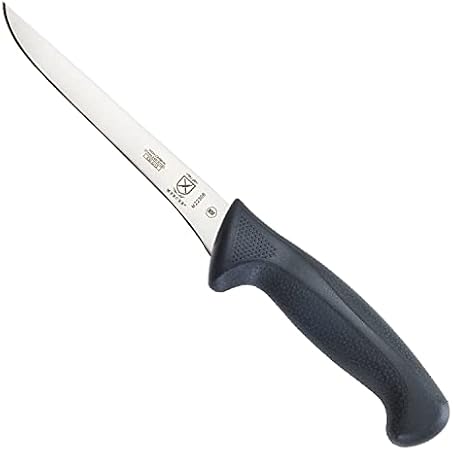 Best for BrisketMercer Millennia M22306 6-Inch Stiff Boning Knife
The only blade here sold as stiff, ranked #214 overall, with one-piece high-carbon Japanese steel and a written defect warranty.
 Best CurvedVictorinox Wood 6-Inch Curved Semi-Stiff Boning Knife
The only listing that states both a curved shape and a flex, semi-stiff, on an extra-narrow 6-inch blade with a maple handle.
At a Glance
Ten Boning Knives, Read for Shape and Flex
Read the first two columns before anything else: flex decides which meat a boning knife suits, and five of these listings leave that column blank.
| # | Model | Blade Shape | Flex | Handle / NSF | Best Sellers Rank | Standout | Main Drawback | Check Price |
|---|---|---|---|---|---|---|---|---|
| 1 |
 Mercer Millennia M22306 |
Not stated | Stiff | Black, textured / not stated | #214 overall | Only stiff blade; best overall rank; warranty written out | Shape not stated; filed under Bread Knives | View on Amazon |
| 2 |
 Mercer Ultimate White M18180 |
Curved | Not stated | White, textured / not stated | #865 overall | #1 in Boning Knives; curved stated | Flex and warranty both unstated | View on Amazon |
| 3 |
 Shun Premier TDM0774 |
Curved | Not stated | Pakkawood / not stated | #53,677 overall | VG-MAX, 68-layer cladding, 16-degree edge stated | Flex and warranty unstated; highest-priced by far | View on Amazon |
| 4 |
 Mercer Millennia Colors M23820BL |
Curved | Not stated | Blue, for seafood / not stated | #7,587 overall | Colour-coded blue for fish and seafood | Flex and warranty unstated; Bread Knives rank | View on Amazon |
| 5 |
 Dexter-Russell Basics P94818 |
Not stated (narrow) | Flexible | Polypropylene / NSF in title | #10,861 overall | NSF, made in USA, limited lifetime warranty | Fields also call it a fillet knife | View on Amazon |
| 6 |
 Victorinox Wood 5.6606.15 |
Curved | Semi-stiff | Maple / not stated | #11,360 overall | Only listing stating both curve and flex | Wood handle; warranty unstated; scarce stock | View on Amazon |
| 7 |
 Rondauno CUCH-FLT |
Not stated | Not stated | ABS, textured / not stated | #12,634 overall | Edge angle stated, 15 degrees per side | No shape, flex or warranty stated | View on Amazon |
| 8 |
 Victorinox Swiss Classic 6.8413.15B |
“S”-shaped edge | Flexible | Fibro Pro / NSF approved | #13,415 overall | Flexible, NSF and lifetime warranty all stated | Steel not stated | View on Amazon |
| 9 |
 Outdoor Edge Wild Game WGB-50C |
Not named | Flexible | Orange TPR / not stated | #20,413 overall | Only game-specific listing; 420J2 full tang | 5-inch blade; filed as Sports, not Kitchen | View on Amazon |
| 10 |
 Winco KWP-60R |
Not stated | Not stated | Red plastic / NSF listed | #21,967 overall | NSF listed; X50CrMoV15 German steel named | No shape, flex or warranty stated | View on Amazon |
Best Sellers Ranks and specifications are taken from each manufacturer’s Amazon listing as displayed on 5 October 2026 through a United States connection, and may change. Shape and flex are recorded exactly as each listing states them, from the title, bullets or spec table. “Not stated” means the word does not appear anywhere in the listing. The Shun is sold as a boning and fillet knife; its listing does not state a flex, so none is recorded. Handle materials are as stated; where a listing describes a handle without naming a material, the cell says so. NSF is shown only where a listing names it. Ranks are overall Best Sellers Ranks as returned on 5 October 2026; Amazon files two of the Mercers under Bread Knives and the Outdoor Edge under Sports, which affects their category ranks but not the overall figures. Seven knives were sold by Amazon.com at capture, and the Victorinox Wood was flagged as scarce stock. Star ratings and review counts were not captured for any product here.
Scroll the table sideways to see every column
How We Chose These Ten
We researched current listings, compared manufacturer specifications and documentation, and read each listing’s claims about blade shape, flex, length, steel, handle and warranty line by line. We did not carry out hands-on testing, and nothing below is presented as measured performance data. Star ratings and review counts were not captured for this roundup. We used Amazon Best Sellers Rank, buy-box stock and listing specifications instead, and nothing on this page describes or implies how owners have scored these knives.
- Dedicated boning knives only — every product here is sold as a boning or deboning knife with a fixed blade. Fillet knives sold only as fillet knives, cleavers and multi-knife sets were not in the running.
- Flex recorded word for word — flexible, semi-stiff or stiff, only where the listing uses the word. We do not infer flex from a series name, a photo or a model code, and a listing that never names it is marked not stated.
- Shape recorded word for word — curved, straight or the listing’s own description. Where the title and a bullet disagree, both are reported.
- Steel as named — a grade where the listing gives one, otherwise the listing’s phrase, such as “high-carbon Japanese steel”. We do not assign grades to unnamed steels.
- NSF only where printed — NSF is the food-equipment certification commercial kitchens are often required to use. We credit it only where the listing names it, in the title, a bullet or the spec table.
- Warranty only where printed — a brand may offer cover that a particular listing does not mention. We report what the listing says, and say so where a sibling listing from the same brand states cover that this one leaves out.
- Model numbers compared — we lined up every model and part number to check whether any two listings were the same knife with a different handle or colour. None matched; the closest-looking pair is set out below.
- Popularity from Best Sellers Rank only — ranks are quoted exactly as returned on 5 October 2026, overall and in the category Amazon assigned. Each product was the buy-box offer and in stock on amazon.com on that date.
The Ten Boning Knives in Detail
1. Mercer Culinary M22306 Millennia Black Handle, 6-Inch Stiff Boning Knife — Best for Brisket
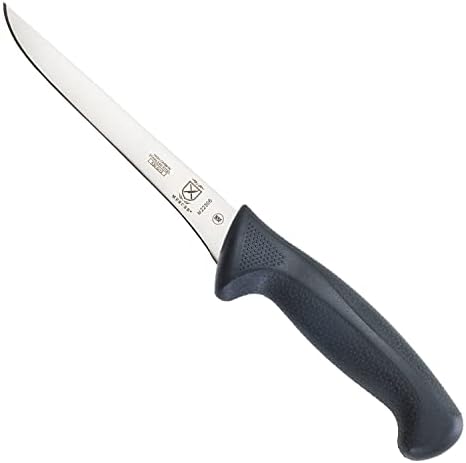
The only blade on the page sold as stiff, and the best-ranked knife here by a long way.
Key Specifications
| Blade shape | Not stated |
|---|---|
| Flex | Stiff, stated in title |
| Blade length | 6 in |
| Steel | One-piece high-carbon Japanese steel, stated |
| Handle | Black Millennia handle, textured finger points; material not stated |
| NSF | Not stated |
| Warranty | Repair or replace if defective in material or workmanship; dishwasher damage excluded |
| Care | Hand wash; no dishwasher; do not soak |
| Model | M22306 |
| Seller | Amazon.com |
| Best Sellers Rank | #214 overall; #1 in Bread Knives |
| Best For | Trimming brisket, pork shoulder and other large cuts |
Why We Recommend It
This is the only boning knife on the page that says it is stiff. The word is in the title: “6-Inch Stiff, Boning Knife”. Three listings say flexible and one says semi-stiff, so the M22306 sits alone at the rigid end of the range. That matters because a stiff blade does a different job from a flexible one. It does not follow the curve of a small bone; it holds its line when you push it through hard fat, cartilage or the thick connective tissue on a large cut. If your boning knife is mostly for trimming a brisket or breaking down a pork shoulder, stiff is the flex that general butchery guidance points to, and this is the one listing that promises it.
It is also the best-selling knife here, by Amazon’s overall rank. At #214 overall it is roughly four times better placed than the next knife, the Mercer Ultimate White at #865. Oddly, Amazon files it as “#1 in Bread Knives”. It is plainly not a bread knife: the bullets say it is “For separating meat from the bone. Ideal for deboning chicken, ham, and fish, or trimming fat and sinew.” The misfiling means the knife does not appear in the Boning Knives ranking at all, which is why the Ultimate White can be #1 there while selling less overall.
The steel is described, not graded. The listing says the knife is “crafted with one-piece high-carbon Japanese steel for easy edge maintenance and long-lasting sharpness”. “One-piece” tells you the blade is a single piece of steel rather than a welded construction; “high-carbon Japanese steel” tells you where it comes from and roughly what family it belongs to, but not a grade or a hardness. Four listings on this page give a grade or a named family; this is not one of them. For a working boning knife, edge maintenance matters more than the last word on edge retention, and Mercer leads with the former.
Shape is the gap. The listing never says curved or straight. The blue Millennia Colors knife from the same series says curved in its title, but it carries a different model number, M23820BL, and its listing does not say stiff. So you cannot borrow its shape for this one. If the profile matters to you, check the product photo against the curved Mercers before buying. On a stiff blade, a straighter profile tends to suit long trimming strokes along a flat cut, which is the job the stiff spec already suits.
It is the only Mercer here that states a warranty. The spec table reads: “Mercer Tool Corp. promises the original purchaser to repair or replace any knife found to be defective in material or workmanship when put to everyday use and cared for according to instructions.” It goes on to exclude “damage from misuse or abuse, such as dishwasher use”. The care bullet is just as clear: “Do not place in dishwasher or submerge for long periods of time.” The other two Mercers carry the same care bullet but no warranty text. Mercer’s cover may well extend to them; their listings do not say.
What to weigh. It is sold by Amazon.com. The handle is described as “ergonomic” with “textured finger points” for a non-slip grip; the material is not named, and NSF is not stated. The listed weight is 0.2 pounds, about 3.2 ounces by our conversion. If you cut poultry more than beef, a stiff blade is the wrong tool and one of the flexible knives below will serve you better. If you trim large cuts, this is the clearest promise on the page.
Pros
- Only blade here sold as stiff
- Best overall rank on the page, #214
- One-piece high-carbon Japanese steel
- Warranty terms written out in the listing
- Sold by Amazon.com
- Textured, non-slip handle
Cons
- Blade shape not stated
- NSF not stated
- Handle material not named
- Steel grade not given
- Filed under Bread Knives, not Boning Knives
- Too rigid for following poultry bones
Best for: A barbecue cook who trims brisket and pork shoulder and wants a blade that holds its line through hard fat.
2. Mercer Culinary Ultimate White, 6 Inch Curved Boning Knife — Best Seller in Boning Knives

Number one in Amazon’s Boning Knives category, and silent on the spec that decides what it is for.
Key Specifications
| Blade shape | Curved, stated in title |
|---|---|
| Flex | Not stated |
| Blade length | 6 in |
| Steel | High-carbon Japanese steel, stated |
| Handle | White, ergonomic, textured finger points; material not stated |
| NSF | Not stated |
| Warranty | Not stated |
| Care | Hand wash; no dishwasher; do not soak |
| Model | M18180 |
| Seller | Amazon.com |
| Best Sellers Rank | #865 overall; #1 in Boning Knives |
| Best For | General trimming where you can check the flex in hand |
Why We Recommend It
This is the best-selling boning knife in Amazon’s Boning Knives category, and its listing does not say how far it bends. The title gives three facts: Ultimate White, six inches, curved. The bullets add “high-carbon Japanese steel”, an ergonomic handle and the same use statement as the other Mercers, “For separating meat from the bone. Ideal for deboning chicken, ham, and fish, or trimming fat and sinew.” Flexible, semi-stiff and stiff do not appear anywhere. For a knife whose job depends on its flex, that is the most important line missing from the page.
The use statement does not settle it. Deboning chicken, ham and fish covers almost the whole range of boning work. General butchery guidance would put chicken and fish with a flexible blade and ham, a large joint with a big bone, closer to a stiffer one. A single knife can do all three, with more effort on some than others, but the listing’s list of jobs tells you nothing about where on that range this blade sits. The identical sentence appears on the stiff M22306, which shows it is series copy rather than a description of this blade.
Curved is the one blade fact you do get. Only four listings on the page say curved outright, and this is one. A curved boning blade sweeps up towards the tip, which helps with lifting skin and silverskin away from meat and with working around a joint, because the tip can follow a rounded surface while the belly of the blade stays clear of the board. It is the shape most people picture when they think of a boning knife, and if you are shopping for the best curved boning knife, this listing at least confirms the profile.
The Ultimate White series is pitched at value. The fifth bullet calls it “An exceptional combination of quality, design, materials and craftsmanship for the value minded kitchen”. Unlike the two Millennia knives, this listing does not say one-piece; it says the knives are “crafted with high-carbon Japanese steel for easy edge maintenance and a razor sharp blade that lasts”. That is a different sentence from the Millennia copy, and the model number, M18180, belongs to a different series. It is not a white-handled twin of either Millennia knife.
No warranty is stated. The M22306 listing spells out Mercer’s repair-or-replace promise; this one does not mention cover at all. The care bullet is the same: hand wash, dry with a soft towel, no dishwasher, no long soaking. The handle is described with “textured finger points” and no named material, and NSF is not stated. A white handle is common in commercial kitchens, but the listing does not claim any certification for it.
What to weigh. It is sold by Amazon.com, ranks #865 overall and #1 in Boning Knives, and lists 0.26 pounds. It is among the lowest-priced knives here. If you can tolerate not knowing the flex until it arrives, it is a widely bought, curved, six-inch boning knife from a brand whose stiff model states a warranty. If the flex matters for the meat you cut, buy a listing that names it.
Pros
- #1 in Amazon’s Boning Knives category
- Curved blade, stated
- High-carbon Japanese steel
- Sold by Amazon.com
- Textured, non-slip handle
- Among the lowest-priced knives here
Cons
- Flex not stated anywhere
- Warranty not stated
- NSF not stated
- Handle material not named
- Use statement is shared series copy
- Steel grade not given
Best for: A home cook who wants a curved, widely bought boning knife and can live without knowing its flex in advance.
3. Shun Premier 6" Boning & Fillet Knife — Best Premium

The most detailed steel description on the page, and no word on how far the blade bends.
Key Specifications
| Blade shape | Narrow, curved, stated |
|---|---|
| Flex | Not stated |
| Blade length | 6 in |
| Overall length | 11.25 in |
| Steel | VG-MAX with 68 layers of Damascus cladding; hammered tsuchime finish |
| Edge angle | 16-degree edge, stated |
| Handle | Contoured Pakkawood; for left and right-handed users |
| NSF | Not stated |
| Warranty | Not stated; “Supported by free sharpening and honing” |
| Made in | Japan, handcrafted, stated |
| Model | TDM0774 |
| Seller | Amazon.com |
| Best Sellers Rank | #53,677 overall; #29 in Boning Knives |
Why We Recommend It
This is the premium knife on the page, and it is sold as two knives in one. The title says “Boning & Fillet Knife”, and the first bullet calls it “The Shun Premier 6-inch Gokujo Boning & Fillet Knife”, with “a narrow, curved and extremely sharp blade that gets close to the bone and cuts fibrous tissue with ease”. It is by a wide margin the highest-priced knife here. It is also one of four listings that say curved outright, which makes it a candidate for anyone shopping for the best curved boning knife.
It does not say how far the blade bends. Flexible, semi-stiff and stiff appear nowhere in the title, bullets or spec table. The word “fillet” in the name suggests a blade meant to work along fish as well as meat, and fillet blades are usually flexible, but the listing does not say this one is. It is one of five listings on the page that leave flex blank, and the only premium one. For a buyer choosing between brisket, poultry and game, that is the spec that matters most, and the most detailed listing here leaves it out.
The steel is described in more detail than any other on the page. “Crafted with VG-MAX steel and 68 layers of Damascus cladding, this knife delivers razor-sharp precision with a 16-degree edge”. VG-MAX is a named grade, one of four steels on the page given a grade or family. The cladding is the layered steel wrapped around the core, and the second bullet adds “a beautiful hammered tsuchime finish to reduce drag and prevent food from sticking to the blade”. The 16-degree edge is one of two edge angles stated on the page; the Rondauno gives 15 degrees per side. The listing does not say whether 16 degrees is per side.
The handle is Pakkawood, and it is ambidextrous. “The contoured Pakkawood handle offers a comfortable and secure grip, providing optimal control for both left and right-handed users.” Pakkawood is a resin-impregnated wood composite, more moisture-resistant than plain wood such as the Victorinox Wood’s maple. NSF is not stated. A polished composite handle is a different proposition on a greasy brisket from the textured plastics and rubbers on most of the other listings, so weigh the grip if you trim a lot of fat.
No warranty is stated, but a service is. The fifth bullet says “Each Shun knife is meticulously handcrafted in Japan” and ends “Supported by free sharpening and honing.” That is a maintenance offer rather than cover against defects, and the listing does not explain how to use it. We do not count it among the listings that state a warranty.
What to weigh. It is sold by Amazon.com and ranks #53,677 overall and #29 in Boning Knives, the lowest of both on the page. The listed weight is about 0.28 pounds, rounded from the spec table’s figure, and the overall length 11.25 inches. What the premium buys is a named steel, layered cladding, a hammered finish, a stated edge angle, Japanese manufacture and a sharpening service. What it does not buy is a stated flex, NSF or a warranty.
Pros
- Curved, narrow blade, stated
- VG-MAX steel, a named grade
- 68-layer Damascus cladding and hammered finish
- Stated 16-degree edge
- Pakkawood handle for left or right hand
- Free sharpening and honing offered
Cons
- Flex not stated
- Highest-priced knife by a wide margin
- No warranty stated
- NSF not stated
- Lowest overall rank on the page
- Smooth handle may suit greasy work less well
Best for: A cook who wants a premium Japanese curved blade for boning and filleting and values steel and finish over a stated flex.
4. Mercer Culinary Millennia Colors 6-Inch Curved Boning Knife, Blue — Best Colour-Coded

A curved Millennia blade with a blue handle meant for seafood, and no word on flex or warranty.
Key Specifications
| Blade shape | Curved, stated in title |
|---|---|
| Flex | Not stated |
| Blade length | 6 in |
| Steel | One-piece high-carbon Japanese steel, stated |
| Handle | Blue, textured finger points, colour-coded for fish and seafood; material not stated |
| NSF | Not stated |
| Warranty | Not stated |
| Care | Hand wash; no dishwasher; do not soak |
| Model | M23820BL |
| Seller | Amazon.com |
| Best Sellers Rank | #7,587 overall; #16 in Bread Knives |
| Best For | A kitchen that colour-codes knives by food group |
Why We Recommend It
The handle colour is the point of this listing. The second bullet says the handle is “color-coded blue for fish and other seafood”. Colour coding is how many commercial kitchens keep raw fish, raw meat and cooked food apart: one colour per food group, on boards and knife handles alike, so a blade used on raw fish never ends up on something else by accident. If your kitchen works that way, this is the only boning knife here that states a colour assignment, and blue for seafood is the one it states.
The Millennia copy is almost word for word the M22306’s. Both say “one-piece high-carbon Japanese steel”, both have the same handle sentence and both have the same care and series bullets. The only added line is the colour coding. That makes it tempting to read the blue knife as the stiff black knife with a coloured handle. The listings do not support that. The black knife is M22306 and says stiff; the blue one is M23820BL and says curved. Different model numbers and different blade descriptions mean different blades, as far as the listings show.
Curved is stated; flex is not. This is one of four listings that say curved outright, which helps with skinning, lifting silverskin and following the rounded side of a joint. It is also one of five listings that never name a flex. For a seafood-coded knife, that is an awkward gap: fish work generally suits a flexible blade, and the listing does not say this one is. If you intend it mainly for fish, our fillet knife roundup covers longer and thinner blades built for that job.
Amazon files it under Bread Knives, as it does the M22306. The category rank is “#16 in Bread Knives”, and the overall rank is #7,587. Like the stiff Millennia, it is therefore missing from the Boning Knives category ranking that the other knives here are compared in. The misfiling says nothing about the knife; it does mean that its rank in that category is not comparable with the others.
No warranty is stated. The M22306 listing carries Mercer’s repair-or-replace text; this one, from the same Millennia series, does not. NSF is not stated either, and the handle material is not named. The listed weight is about 0.29 pounds, rounded from the spec table’s figure, the heaviest listed weight on the page, though the listing does not say whether it is the knife alone or the knife in its packaging.
What to weigh. It is sold by Amazon.com. Buy it for the colour coding and the curve. If you do not colour-code, the curved Ultimate White sells far better and the curved Victorinox Wood states its flex; this blue Millennia does neither of those things better.
Pros
- Handle colour-coded for fish and seafood, stated
- Curved blade, stated
- One-piece high-carbon Japanese steel
- Sold by Amazon.com
- Textured, non-slip handle
- Same Millennia series as the stiff M22306
Cons
- Flex not stated
- Warranty not stated in this listing
- NSF not stated
- Handle material not named
- Filed under Bread Knives
- Seafood coding without a stated flexible blade
Best for: A colour-coded kitchen that wants a curved boning knife set aside for fish and seafood.
5. Dexter-Russell P94818 Basics 6" Narrow Flexible Boning Knife, NSF — Best Made in USA

Flexible and NSF in the title, made in the USA, and described elsewhere in its own fields as a fillet knife.
Key Specifications
| Blade shape | Not stated; narrow |
|---|---|
| Flex | Flexible, stated in title |
| Blade length | 6 in |
| Steel | 400 series stain-free high-carbon steel; hollow ground |
| Handle | Polypropylene, slip resistant, white |
| NSF | Yes, stated in title |
| Made in | USA, stated |
| Warranty | Limited lifetime manufacturer |
| Model | P94818 (part number); 31614 (model field) |
| Seller | Dexter Cutlery |
| Best Sellers Rank | #10,861 overall; #23 in Boning Knives |
| Best For | Commercial or home kitchens that need NSF and a flexible blade |
Why We Recommend It
The title packs in more of the spec sheet than any other on the page. “Dexter-Russell P94818 Basics 6″ Narrow Flexible Boning Knife, NSF” gives you the length, the flex, the narrow profile and the certification before you read a bullet. It is one of three flexible knives here and one of three with NSF stated, and it is the only knife that is both flexible and NSF in the title. For a kitchen that needs certified equipment and mostly bones poultry or pork, that is the combination the title promises.
It names a steel family and a grind. The second bullet says “400 series stain-free high-carbon steel blade”, and the fourth says “Blades are hollow ground for easy edge maintenance and rapid re-sharpening”. “400 series” is a family of stainless steels rather than a single grade, so it is less exact than the Shun’s VG-MAX, the Outdoor Edge’s 420J2 or the Winco’s X50CrMoV15, but it is more than the other six listings give. Hollow grinding thins the blade behind the edge, which is why it re-sharpens quickly; it is the only grind stated on the page besides the Outdoor Edge’s taper grind.
Its own fields disagree about what it is. The title says boning knife. Further down the bullets, a line reads “included components: 6″ Flexible fillet knife”, and another “sport type: Fishing”. The manufacturer field says “Dexter Outdoor”. The part number is P94818, matching the title, but the model field says 31614. A narrow, flexible six-inch blade sits close to fillet-knife territory, so the overlap may be a catalogue quirk rather than a different knife. We report both and note that the title and part number agree with each other.
The handle is named and certified. “Durable and slip resistant polypropylene handles” is one of five handle materials actually named on the page, with maple, Pakkawood, ABS and TPR. Polypropylene is the common commercial-kitchen handle plastic: it takes hot water and sanitiser and does not absorb moisture. The listing says “care instructions: Hand Wash”, which is the same advice as every other listing that gives care instructions.
The warranty and origin are stated. The spec table reads “Limited Lifetime manufacturer”, and a bullet says “Made in USA”. It is the only knife on the page with a stated US origin; the Victorinox Swiss Classic states Swiss manufacture and the Shun Japanese. The first bullet positions it as “Dexter quality at its most affordable”, and the Basics name is Dexter’s entry line.
What to weigh. It is sold by Dexter Cutlery and ranks #10,861 overall and #23 in Boning Knives. The listed weight is 0.25 pounds. Blade shape is not stated beyond “narrow”. If you want NSF, a flexible blade and a stated steel family in one listing, this is the only one that gives all three.
Pros
- Flexible and NSF, both in the title
- 400 series high-carbon stainless steel named
- Hollow ground for quick re-sharpening
- Polypropylene handle, named
- Made in USA, stated
- Limited lifetime warranty
Cons
- Blade shape not stated beyond narrow
- Fields also call it a fillet knife
- Part number and model field differ
- #23 in Boning Knives
- Steel family, not a grade
- Sold by the brand, not Amazon.com
Best for: A kitchen that needs NSF-certified equipment and bones mostly poultry and pork with a flexible blade.
6. Victorinox Wood 6" Boning Knife, Curved Blade, Semi-stiff, Maple Handle — Best Curved

The one listing on the page that tells you both the shape and the flex.
Key Specifications
| Blade shape | Curved, extra narrow, stated |
|---|---|
| Flex | Semi-stiff, stated in title and bullet |
| Blade length | 6 in (title); 5.9 in (size field) |
| Overall length | 11.34 in |
| Steel | Wear-resistant stainless steel, stated |
| Handle | Maple wood |
| NSF | Not stated |
| Warranty | Not stated |
| Model | 5.6606.15 |
| Seller | Amazon.com; scarce stock at capture |
| Best Sellers Rank | #11,360 overall; #4 in Boning Knives |
| Best For | Brisket trimming, deer and general meat work |
Why We Recommend It
Shape and flex, both in writing, on one listing. The title says “Curved Blade, Semi-stiff”, and the third bullet repeats both: “This 6″ extra narrow, semi-stiff and curved blade is perfect for delicate trimming and deboning tasks.” No other knife on the page states both properties. Four say curved, five name a flex, and this is the only overlap. If you are choosing a boning knife by the two specs that decide what it is for, this is the one listing that lets you choose without guessing.
Semi-stiff is the middle of the range, and the middle suits a lot of meat. In general butchery guidance, a semi-stiff blade has enough give to follow a seam between muscles and enough backbone to push through fat and connective tissue without flexing away. That makes it a common choice for the jobs between poultry and big beef: trimming a brisket’s fat cap and silverskin, breaking a deer hindquarter into its muscle groups along the seams, taking down a pork shoulder. For both the best boning knife for brisket and the best boning knife for deer, a curved semi-stiff blade is a reasonable default, and only this listing promises one.
The blade is extra narrow. “Narrow, curved blade for agile meat trimming”, says the first bullet, and the third calls it “extra narrow”. A narrow blade has less steel beside the edge to drag in a cut, which helps in tight spaces round a joint. The size field gives 5.9 inches against the title’s 6, a small difference most likely down to rounding or a metric blade length, but we report both. Overall length is 11.34 inches.
The handle is maple, and that is a trade-off. “Crafted in wear-resistant stainless steel with the finest quality wooden handle” is the only description of a natural handle on the page. A wooden handle looks and feels warmer than plastic. It also wants more care: it should not soak, and it should be dried promptly. NSF is not stated, and as a general rule commercial kitchens that must use NSF-certified tools choose synthetic handles. For a home cook, that matters less than how the knife sits in the hand.
The steel is named only as stainless. “Wear-resistant stainless steel” is more than the Swiss Classic gives, which names no steel at all, but it is not a grade. No warranty is stated in this listing, although the Swiss Classic listing states Victorinox’s lifetime cover against defects. No weight is listed.
What to weigh. It is sold by Amazon.com, flagged as scarce stock at capture, and ranks #11,360 overall and #4 in Boning Knives. It is the second-highest-priced knife here, after the Shun. What the premium buys is the fullest blade description on the page and a wooden handle; what it does not buy is NSF or a warranty in writing.
Pros
- Only listing that states both curve and flex
- Semi-stiff, a middle-of-the-range flex
- Extra-narrow blade for tight work
- Maple wooden handle
- #4 in Boning Knives
- Sold by Amazon.com
Cons
- Second-highest-priced knife here
- Warranty not stated in this listing
- NSF not stated
- Wooden handle needs more care
- Steel grade not given
- Scarce stock at capture
Best for: A cook who trims brisket and breaks down deer and wants a curved, semi-stiff blade stated in writing.
7. Rondauno Boning Knife, Deboning Knife 6 in Razor Sharp Blade — Lowest-Priced

The lowest-priced knife here gives an edge angle and nothing about shape, flex or warranty.
Key Specifications
| Blade shape | Not stated |
|---|---|
| Flex | Not stated |
| Blade length | 6 in |
| Overall length | 11.8 in |
| Steel | High carbon stainless steel, stated |
| Edge angle | 15 degrees per side, hand sharpened, stated |
| Handle | ABS, textured, slip resistant |
| NSF | Not stated |
| Warranty | Not stated |
| Model | CUCH-FLT |
| Seller | Rondauno Select |
| Best Sellers Rank | #12,634 overall; #6 in Boning Knives |
Why We Recommend It
It gives the most usable edge angle on the page. The fourth bullet says the blade is “Hand sharpened to 15 degrees per side for superior sharpness and edge retention”. That is a real number, and a useful one: it tells you what angle to hold on a stone or set on a sharpener to keep the factory edge. Fifteen degrees per side is a fine edge. Only one other listing gives an angle, the Shun’s “16-degree edge”, and that one does not say whether it is per side; the Rondauno does.
It does not say how far the blade bends. Neither flex nor shape appears in the title, bullets or spec table. The model code is CUCH-FLT, which the listing does not explain. The bullets describe the blade as “Ultra Razor-Sharp” and “Professional Grade”, and say it “makes meat and fish preparation smooth and effortless”, which tells you what it is for but not what kind of boning knife it is. It is one of five listings that leave flex blank.
The steel and handle are named, loosely. “premium high carbon stainless steel” is a description rather than a grade. The handle is “The Rondauno-designed ABS handle”, “textured, slip-resistant, and ergonomically shaped”. ABS is a hard, common plastic; it is one of five named handle materials on the page. NSF is not stated.
The listed weight is the lightest here. The spec table gives 0.1 pounds, about 1.6 ounces by our conversion, against 0.16 to 0.29 pounds on the other listings that give a weight. The overall length is 11.8 inches, the longest stated on the page, and the width field 0.5 inches. Taken together, those figures suggest a thin, light knife, though the listing does not say whether the weight is the knife alone and does not give a blade thickness.
No warranty is stated, and the brand is the least established here. The other nine knives come from Mercer, Victorinox, Shun, Dexter-Russell, Outdoor Edge and Winco, all long-standing cutlery or foodservice brands. Rondauno is sold by Rondauno Select and gives no warranty or country of manufacture. The fifth bullet calls its knives “the preferred choice for both home cooks and professional chefs alike”, a claim the listing does not support with anything measurable.
What to weigh. It ranks #12,634 overall and #6 in Boning Knives, ahead of the Swiss Classic in that category. It is by some distance the lowest-priced knife on the page. If you want a cheap, light, finely sharpened boning knife to try and will find out its flex when it arrives, the listing gives you the angle to maintain it at. If you need to know the flex first, buy one of the six listings that state it.
Pros
- Edge angle stated, 15 degrees per side
- Lowest-priced knife here
- High carbon stainless steel
- ABS handle, textured and slip resistant
- #6 in Boning Knives
- Lightest listed weight, 0.1 lb
Cons
- Flex not stated
- Blade shape not stated
- No warranty stated
- NSF not stated
- Steel grade not given
- Model code CUCH-FLT not explained
Best for: A budget buyer who wants a light, finely sharpened boning knife to try, and can find out its flex on arrival.
8. Victorinox Swiss Classic 6-Inch Boning Knife with Narrow, Flexible Blade — Best Overall

Flexible, NSF and lifetime-warranted in one listing, the only knife on the page that states all three.
Key Specifications
| Blade shape | “S”-shaped edge; narrow |
|---|---|
| Flex | Flexible, stated in title and bullet |
| Blade length | 6 in |
| Overall length | 11.457 in |
| Steel | Not stated |
| Handle | Fibro Pro, NSF approved, stated |
| NSF | Yes, handle NSF approved |
| Made in | Switzerland, stated |
| Warranty | Lifetime against defects in material and workmanship |
| Model | 6.8413.15B; ships marked 6.8413.15 |
| Seller | Amazon.com |
| Best Sellers Rank | #13,415 overall; #7 in Boning Knives |
Why We Recommend It
This listing answers more of the questions that matter than any other here. Flex: “Narrow, Flexible Blade” in the title, and “a thin blade and enhanced flexibility” in the first bullet. Certification: “The National sanitary foundation (NSF) approved Fibro Pro handle”. Warranty: “Lifetime against defects in material and workmanship”, stated in a bullet and again in the spec table. It is sold by Amazon.com. Of the ten, only this knife and the Dexter combine a stated flex with NSF, and only this one adds a lifetime warranty without a “limited”.
Flexible makes it a poultry and pork knife first. The first bullet says the blade offers “superior control using its ‘s’ Shaped edge that’s perfect for separating meat, poultry, or fish from the bone”. In general butchery guidance, that is what a flexible blade is for: bending round the curve of a chicken carcass, following a rib cage, lifting meat cleanly off a bone without leaving a layer behind. It is less suited to pushing through the hard fat on a brisket, where a stiffer blade holds its line better. Buy it for the meat you cut most often.
The shape is described, not named. The listing never says curved or straight. It describes an “‘s’ Shaped edge”, a profile that runs in a gentle double curve from heel to tip. That is not the same as the sweeping upturn of the curved Mercers or the Victorinox Wood, and we do not count it among the curved listings. If you specifically want a curved boning knife, this is not the listing that promises one.
The model number needs reading carefully. The fifth bullet says “this item ships with the item number 6. 8413. 15 on the blade and not 6. 6413. 15US1, but is the same 6″ Swiss Classic Boning Knife”. The spec table gives 6.8413.15B. So the knife you receive is marked 6.8413.15, and the listing tells you a differently numbered knife is the same product. No other listing on this page carries any of those numbers, so if you see the knife elsewhere as 6.6413.15US1, the listing itself says it is the same knife.
The steel is not named. This is the only listing on the page that gives no steel type or grade at all. It says the knife has been “Expertly crafted in Switzerland since 1884” and is “designed for professionals who use knives all day, every day”. The overall length is 11.457 inches and the listed weight 0.22 pounds. The handle is named Fibro Pro and described as designed “to minimize wrist tension and provide superior grip”.
What to weigh. It ranks #13,415 overall and #7 in Boning Knives, so it sells less than the Mercers. It sits in the upper middle of the page on price, far below the Shun. What it gives you for that is the most complete set of stated answers: flex, NSF, warranty, origin and a seller you can return to. For most buyers who bone chicken and pork, that is the best overall case on the page.
Pros
- Flexible, stated in title and bullet
- NSF-approved handle, stated
- Lifetime warranty against defects
- Swiss made, stated
- Sold by Amazon.com
- Model numbering explained in the listing
Cons
- Steel not stated
- Shape described as “S”, not curved
- Flexible blade is less suited to brisket fat
- #7 in Boning Knives
- Spec table and blade marking differ
- Overall rank below the Mercers
Best for: Most buyers who bone poultry and pork and want flex, NSF and a lifetime warranty in writing.
9. Outdoor Edge 5" Wild Game Boning Knife, Fixed Blade, TPR Handle — Best for Deer

The only knife here built for game, with the only full tang and a 5-inch blade.
Key Specifications
| Blade shape | Not named; boning/fillet blade |
|---|---|
| Flex | Flexible, stated |
| Blade length | 5 in |
| Overall length | 9.4 in (size field) |
| Steel | 420J2 stainless, full tang, taper ground, hand finished |
| Handle | Rubberised TPR, blaze orange |
| NSF | Not stated |
| Warranty | “Service for life”; replacement and service requests addressed |
| Model | WGB-50C |
| Seller | Colorado Knife and Tool |
| Best Sellers Rank | #20,413 overall; #9 in Boning Knives |
| Best For | Processing deer and other game at home |
Why We Recommend It
This is the only boning knife on the page sold for game. The title says “Wild Game Boning Knife”, and the first bullet says “This flexible 5” boning/fillet blade is the #1 most popular blade shape that professional meat processors use to debone and process game.” It goes on to pitch home processing directly: “Create hand cut steaks and roasts”. If you are looking for the best boning knife for deer, this is the one listing on the page written for that job.
Flexible and short suit the work, by general guidance. Breaking down a deer at home is mostly seam work: separating the muscle groups of a hindquarter along the natural lines between them, taking the backstrap off the spine, and cleaning silverskin off the cuts. A flexible blade follows those seams and the curve of the bones. A 5-inch blade, an inch shorter than every other knife here by our arithmetic, gives more control at close quarters. For field dressing, where the job is different, our hunting knife guide covers shorter, sturdier blades.
It names a specific steel grade and the only tang on the page. “Perfectly balanced full-tang 420J2 stainless steel blade is precisely heat treated, taper ground, then hand finished to a shaving sharp edge”. 420J2 is a named grade: a highly corrosion-resistant stainless steel that is easy to sharpen, at the cost of some edge retention compared with harder steels. Full tang means the steel runs the length of the handle. No other listing here states a tang at all; the Shun’s VG-MAX and the Winco’s X50CrMoV15 are the other named grades.
The handle is built for wet, cold hands. “Ergonomically shaped, high visibility blaze-orange TPR handle reduces hand fatigue after long periods of use and ensures a safe and comfortable grip, even in the slickest conditions.” TPR is a rubbery plastic, and blaze orange makes the knife easy to find if it is set down outdoors. Those are hunter’s features, not kitchen ones. NSF is not stated, and Amazon files the knife in its Sports group rather than Kitchen.
The warranty is a promise of service. “SERVICE FOR LIFE – Outdoor Edge produces quality tools that are built to last. If you have a problem with your Outdoor Edge knife contact us. We address all replacement and service requests.” It is less formal than a written lifetime warranty against defects, and it does not define what is covered, but it is one of four listings on the page that state any warranty or after-sales cover.
What to weigh. It is sold by Colorado Knife and Tool and ranks #20,413 overall and #9 in Boning Knives. The listed weight is 0.16 pounds. The listing does not mention a sheath. The blade shape is not named beyond “boning/fillet”. If you process your own game, it is the most purpose-built knife on the page; for kitchen work on large beef cuts, a longer, stiffer blade will suit better.
Pros
- Only listing written for game processing
- Flexible, stated
- 420J2 stainless steel, a named grade
- Only stated full tang
- High-visibility blaze-orange TPR handle
- Service-for-life promise
Cons
- 5-inch blade, shortest here
- NSF not stated
- Blade shape not named
- Warranty terms not defined
- Sheath not mentioned
- Filed under Sports, not Kitchen
Best for: A hunter who processes deer and other game at home and wants a flexible, grippy, full-tang blade.
10. Winco 6" Red Plastic Commercial-Grade Boning Knife — Best German Steel

A named German steel and an NSF listing, and nothing on shape, flex or warranty.
Key Specifications
| Blade shape | Not stated |
|---|---|
| Flex | Not stated |
| Blade length | 6 in |
| Steel | X50CrMoV15 German steel, stated |
| Handle | Red plastic, slip resistant, finger indentations |
| NSF | NSF listed, stated |
| Warranty | Not stated |
| Rating for use | Commercial-grade, stated |
| Model | KWP-60R |
| Seller | Amazon.com |
| Best Sellers Rank | #21,967 overall; #11 in Boning Knives |
| Best For | Foodservice kitchens that colour-code raw meat |
Why We Recommend It
The steel is named by grade. The first bullet says “X50 Cr MoV15 German steel blade is extremely sharp ideal for removing meat from bones”. That is a specific grade designation rather than a description, and it is one of four steels on the page given a grade or family, with the Shun’s VG-MAX, the Outdoor Edge’s 420J2 and the Dexter’s 400 series. The listing says nothing more about the steel, such as its hardness or how the blade is ground.
It is one of three knives here with NSF stated. The fourth bullet says simply “NSF listed”. The third says “Commercial-Grade – Designed to withstand daily use in commercial foodservice environment”. Winco is a foodservice supply brand, and the listing is written for a restaurant buyer: a certification, a named steel and a handle colour.
The red handle fits a colour-coded kitchen. The title says “Red Plastic”, and the handle is “Slip resistant plastic handle features finger indentations for exceptional comfort during extended use”. The listing does not assign red to a food group. In many common colour-coding schemes red marks raw meat, which would make this a natural partner to Mercer’s blue seafood knife in a kitchen that keeps them apart. Check your own kitchen’s scheme; the listing does not state one.
It says nothing about shape or flex. Neither curved, straight, flexible, semi-stiff nor stiff appears. Like the Mercer Ultimate White, the Millennia Colors, the Rondauno and the Shun, it leaves you to find out the flex when the knife arrives. For a commercial buyer ordering by the case, that may be acceptable; for a home cook choosing one boning knife for brisket or poultry, it is the spec that matters most.
No warranty is stated. The listing gives no cover, no country of manufacture and no dimensions beyond the 6-inch size. The listed weight is about 0.24 pounds, rounded from the spec table’s figure. Finger indentations suit some hands and not others, and our chef knife guide explains why moulded grips can be a mixed blessing.
What to weigh. It is sold by Amazon.com and ranks #21,967 overall, second lowest on the page after the Shun, and #11 in Boning Knives. It is among the lower-priced knives here. Buy it for the named steel and the NSF listing; confirm the flex before you buy if it matters for your work.
Pros
- X50CrMoV15 German steel, a named grade
- NSF listed, stated
- Commercial-grade, stated
- Red handle suits colour-coded kitchens
- Sold by Amazon.com
- Among the lower-priced knives here
Cons
- Flex not stated
- Blade shape not stated
- No warranty stated
- Second-lowest overall rank here
- Finger indentations do not suit every hand
- No colour assignment stated
Best for: A foodservice kitchen that needs NSF and a named steel, and colour-codes raw meat in red.
Three Say Flexible, One Semi-Stiff, One Stiff, Five Nothing
Flex is the spec that decides what a boning knife is for, so it is the one we counted first. The table sets each listing’s stated flex beside its stated shape and the jobs that flex suits in general butchery guidance. The last column is our guidance, not the listing’s claim.
| Knife | Flex stated | Shape stated | Length | Suits, by general guidance |
|---|---|---|---|---|
| Mercer Millennia M22306 | Stiff | Not stated | 6 in | Brisket, pork shoulder, large beef cuts |
| Victorinox Wood 5.6606.15 | Semi-stiff | Curved | 6 in (5.9 in field) | Brisket, deer, pork, general trimming |
| Victorinox Swiss Classic 6.8413.15B | Flexible | “S”-shaped edge | 6 in | Poultry, pork, fish |
| Dexter-Russell Basics P94818 | Flexible | Narrow; shape not stated | 6 in | Poultry, fish, pork |
| Outdoor Edge WGB-50C | Flexible | Not named | 5 in | Deer and game, seam work |
| Mercer Ultimate White M18180 | Not stated | Curved | 6 in | Unknown until in hand |
| Shun Premier TDM0774 | Not stated | Narrow, curved | 6 in | Unknown until in hand; sold as boning and fillet |
| Mercer Millennia Colors M23820BL | Not stated | Curved | 6 in | Unknown until in hand |
| Rondauno CUCH-FLT | Not stated | Not stated | 6 in | Unknown until in hand |
| Winco KWP-60R | Not stated | Not stated | 6 in | Unknown until in hand |
The split is not what the ranks suggest. The two best-selling knives here are both Mercers, at #214 and #865 overall. One is the only stiff blade on the page. The other never says. So the most-bought boning knife in the Boning Knives category is one whose flex you cannot know from its listing, and the most-bought knife overall is the most specialised one, a stiff blade that suits big beef cuts better than chicken.
Why flex matters more than shape. A boning knife spends its life close to bone, and the question every cut asks is whether the blade should bend round an obstacle or hold its line through it. On a chicken, the obstacles are small curved bones, and a flexible blade follows them. On a brisket, the obstacle is a thick, hard fat cap and a layer of silverskin over a large, flat muscle, and a stiff or semi-stiff blade pushes through without skating away. On a deer, the work is mostly separating muscle along seams, and a flexible or semi-stiff blade follows the seam. Shape refines all of that, but a curved stiff blade and a curved flexible blade are still very different tools.
Flexible leads the stated answers. Of the five listings that name a flex, three say flexible. That fits the classic picture of the boning knife as a poultry and pork tool, and it means the buyer who wants a stiffer blade for beef has two stated choices: the stiff M22306 and the semi-stiff Victorinox Wood. If you are looking for the best boning knife for brisket, those are the two listings that state a flex that suits it.
The five silent listings span the whole page. They include the #1 knife in Boning Knives, a Mercer from the same series as the stiff M22306, the lowest-priced knife and the highest-priced one, the Shun. Three of the five are curved, so you know their shape but not their flex, which is the less useful half of the information. If you buy one, check the flex when it arrives by pressing the flat of the blade gently against a cutting board and watching how far it bends, and return it if it does not suit your meat.
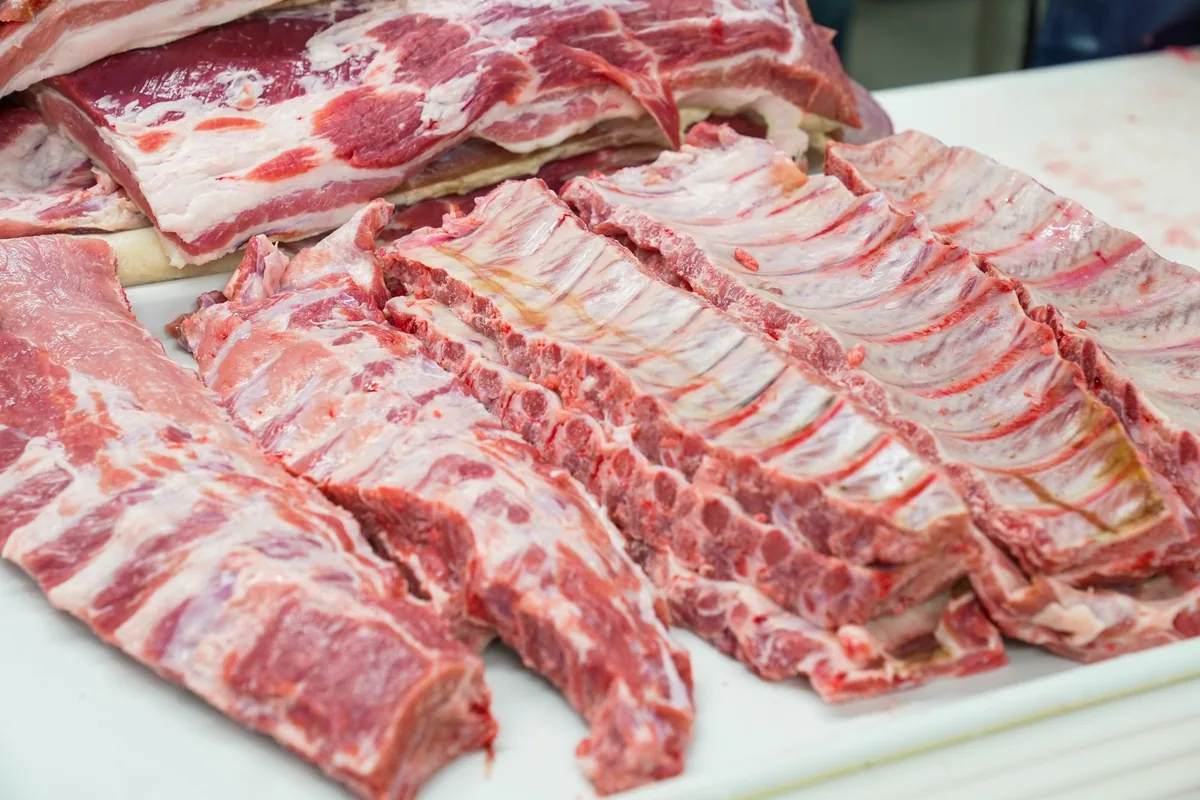
Ten Model Numbers, No Twins
Three Mercers and two Victorinox knives make it easy to assume that each brand is selling one blade in several handles. We lined up every model and part number on the page to check. No two listings carry the same model number. One pairing, the two Millennia Mercers, is close enough to need a closer look.
| Knife | Model | Series | Shape | Flex | Handle | Warranty stated |
|---|---|---|---|---|---|---|
| Mercer black | M22306 | Millennia | Not stated | Stiff | Black | Yes, repair or replace |
| Mercer blue | M23820BL | Millennia Colors | Curved | Not stated | Blue, seafood | Not stated |
| Mercer white | M18180 | Ultimate White | Curved | Not stated | White | Not stated |
| Victorinox Swiss Classic | 6.8413.15B | Swiss Classic | “S”-shaped edge | Flexible | Fibro Pro, black, NSF | Lifetime |
| Victorinox Wood | 5.6606.15 | Wood | Curved | Semi-stiff | Maple | Not stated |
| Shun Premier | TDM0774 | Premier | Narrow, curved | Not stated | Pakkawood | Not stated |
| Dexter-Russell Basics | P94818 (model field 31614) | Basics | Narrow | Flexible | Polypropylene, NSF | Limited lifetime |
| Rondauno | CUCH-FLT | Not stated | Not stated | Not stated | ABS | Not stated |
| Outdoor Edge Wild Game | WGB-50C | Not stated | Not named | Flexible | TPR | Service for life |
| Winco | KWP-60R | Not stated | Not stated | Not stated | Red plastic, NSF | Not stated |
The two Millennia Mercers share their copy, not their blade. The M22306 and M23820BL listings are word for word the same apart from the blue colour-coding line: same “one-piece high-carbon Japanese steel”, same handle sentence, same care and series bullets. But the black knife says stiff and gives no shape, and the blue one says curved and gives no flex, and their model numbers belong to different blade designations. On the listings’ evidence, these are two different Millennia blades, not one blade with two handle colours. The Ultimate White M18180 is a different series with different steel copy.
The two Victorinox knives are plainly different. The Swiss Classic is flexible with a black, NSF-approved Fibro Pro handle; the Wood is curved and semi-stiff with a maple handle. Different model numbers, different flex, different handles. Choosing between them is a choice of flex first: flexible for poultry and pork, semi-stiff for brisket and game.
Two listings carry number quirks worth knowing. The Dexter’s part number, P94818, matches its title, but its model field says 31614. The Swiss Classic’s listing says the knife ships marked 6.8413.15 rather than 6.6413.15US1, and that both numbers are the same knife. Neither quirk points to another knife on this page.
Steel, Handle, NSF and Warranty, Counted
Once shape and flex are settled, the rest of a boning knife’s spec decides how long it lasts, how it feels wet and whether a commercial kitchen can use it. Here is what each listing states.
| Knife | Steel as stated | Handle as stated | NSF | Warranty |
|---|---|---|---|---|
| Mercer M22306 | One-piece high-carbon Japanese | Textured; material not named | Not stated | Repair or replace defects |
| Mercer M18180 | High-carbon Japanese | Textured; material not named | Not stated | Not stated |
| Shun TDM0774 | VG-MAX, 68 layers of Damascus cladding | Pakkawood | Not stated | Not stated; free sharpening and honing |
| Mercer M23820BL | One-piece high-carbon Japanese | Textured, blue; material not named | Not stated | Not stated |
| Dexter P94818 | 400 series stain-free high-carbon | Polypropylene | Yes | Limited lifetime |
| Victorinox 5.6606.15 | Wear-resistant stainless | Maple | Not stated | Not stated |
| Rondauno CUCH-FLT | High carbon stainless | ABS | Not stated | Not stated |
| Victorinox 6.8413.15B | Not stated | Fibro Pro | Yes, handle | Lifetime, defects |
| Outdoor Edge WGB-50C | 420J2 stainless, full tang | TPR | Not stated | Service for life |
| Winco KWP-60R | X50CrMoV15 German | Plastic, finger indentations | Yes, listed | Not stated |
Steel: nine name something, four name a grade or family. VG-MAX on the Shun, 420J2 on the Outdoor Edge and X50CrMoV15 on the Winco are specific grades; “400 series” on the Dexter is a family. The three Mercers say high-carbon Japanese steel, the Rondauno high carbon stainless, the Victorinox Wood wear-resistant stainless. The Swiss Classic names nothing. For a boning knife, which works through fat, cartilage and wet meat, corrosion resistance and easy re-sharpening matter at least as much as hardness.
Handles: five materials named, five described. Polypropylene on the Dexter, maple on the Victorinox Wood, Pakkawood on the Shun, ABS on the Rondauno and TPR on the Outdoor Edge are the named materials. The Mercers describe textured finger points without naming the plastic; the Swiss Classic names its brand material, Fibro Pro; the Winco says plastic. A boning knife handle gets greasy, so a textured or rubberised grip is a safety feature, not a nicety.
NSF: three of ten. The Dexter, the Swiss Classic and the Winco state it. If you work in a kitchen where inspectors expect NSF-certified tools, those three are the only listings that let you show it in writing. For a home cook, NSF is a useful sign of a cleanable, non-porous handle, but not a requirement.
Warranty: four of ten. The Swiss Classic says lifetime against defects; the Dexter says limited lifetime; the Mercer M22306 spells out a repair-or-replace promise that excludes dishwasher damage; the Outdoor Edge promises service for life. The Shun offers free sharpening and honing, a service rather than cover against defects. The Mercer Ultimate White, Mercer Millennia Colors, Victorinox Wood, Shun, Rondauno and Winco listings state no warranty. For the Mercer and Victorinox knives, the brand’s cover may extend further than the listing says; ask before relying on it.
Best Alternatives
| Alternative | Why Consider It | Better For | Main Trade-Off |
|---|---|---|---|
| A fillet knife | Longer, thinner and more flexible than most boning knives | Filleting whole fish | Too whippy for beef or game joints |
| A hunting knife | Shorter, thicker blade built for field use | Field dressing deer before butchery | Too thick for fine trimming |
| A chef’s knife | One knife for most kitchen jobs | Portioning boneless meat and vegetables | Too wide to follow bones |
| A knife block set with a boning knife | Boning knife plus the rest of the kit | Equipping a kitchen from scratch | Flex rarely stated for the set’s boning blade |
What Each Step Up Actually Buys
The budget end — Rondauno, Mercer Ultimate White, Winco. The lowest-priced knives here buy a six-inch blade from a named steel description and, in the Winco’s case, an NSF listing and a specific German grade. The Rondauno adds a stated edge angle, 15 degrees per side. What none of them buys is a stated flex, and only the Mercer adds a stated shape. You are buying a boning knife and finding out what kind when it arrives.
The working middle — Mercer Millennia pair, Dexter, Outdoor Edge. Stepping up buys stated answers. The Millennia M22306 adds the only stiff blade and a written warranty; the blue Millennia adds a seafood colour code and a stated curve. The Dexter adds flexible, NSF, a named steel family, a polypropylene handle and US manufacture. The Outdoor Edge adds a game-specific design, 420J2 steel, a full tang and a service promise.
The upper tier — Swiss Classic, Victorinox Wood. The Victorinox pair buys Swiss manufacture on the Swiss Classic and the fullest blade description on the Wood. The Swiss Classic adds flexible, NSF and the only plain lifetime warranty on the page; the Wood adds the only stated curved, semi-stiff combination and a maple handle. What neither buys is a named steel grade.
The premium outlier — Shun Premier. By a wide margin the highest-priced knife here, it buys the most detailed steel description on the page, VG-MAX with 68 layers of Damascus cladding, a hammered finish, a stated 16-degree edge, a Pakkawood handle, Japanese manufacture and free sharpening and honing. It does not buy a stated flex, NSF or a warranty, the things that decide whether a boning knife suits your meat and your kitchen.
Price does not track how much a listing tells you. The most complete listing on the page, the Swiss Classic, sits in the upper middle on price. The highest-priced knife, the Shun, describes its steel in detail but states no flex, NSF or warranty. The best-selling boning knife is among the lowest-priced and states neither flex nor warranty. Pay for the specs you need stated, not for the position on the page.
What to Check Before You Buy
Find the Flex First
Look for flexible, semi-stiff or stiff in the title or bullets. Three of these ten listings say flexible, one semi-stiff and one stiff; five never say, including the #1 knife in Boning Knives and the premium Shun. Match the flex to your meat: flexible for poultry, pork and fish, semi-stiff for brisket and game, stiff for big beef cuts, as a general rule. If the listing is silent, plan to check the knife on arrival and keep the packaging.
Then Check the Shape
Four listings say curved: the Mercer Ultimate White, the Mercer Millennia Colors, the Victorinox Wood and the Shun Premier. None says straight; the Swiss Classic describes an S-shaped edge. A curved blade helps lift skin and silverskin and work round joints; a straighter one suits long trimming strokes on flat cuts. If you want the best curved boning knife with a stated flex, only the Victorinox Wood gives both.
Pick Five or Six Inches
Nine of the ten knives here have a six-inch blade; the Outdoor Edge has five. Six inches is the standard boning length and covers most kitchen work. A five-inch blade gives more control in tight spaces, such as working round a deer’s joints. Longer boning blades exist, but none are in this pack.
Read the Steel Line Carefully
Only four listings give a grade or family: VG-MAX, 420J2, X50CrMoV15 and 400 series. Phrases such as high-carbon Japanese steel or wear-resistant stainless tell you the type, not the grade. The Swiss Classic names no steel at all. Two listings give an edge angle: 15 degrees per side on the Rondauno and a 16-degree edge on the Shun. For a boning knife, stain resistance and easy sharpening matter more than hardness, and our electric knife sharpener guide covers keeping a thin edge in shape.
Choose a Grip That Works Greasy
A boning knife handle is often slick with fat. Textured, rubberised or slip-resistant handles appear on most of these listings; the Outdoor Edge’s TPR is the most explicitly built for wet hands, the Victorinox Wood’s maple and the Shun’s Pakkawood the least. Finger indentations, as on the Winco, suit some hands and not others. Store the knife where the edge is protected; our magnetic knife strip roundup covers magnetic strips that keep thin blades off each other.
Look for NSF If You Cook Commercially
Three listings state NSF: the Dexter, the Swiss Classic and the Winco. If you work in a commercial kitchen that needs certified equipment, buy one of those three, or ask the seller for documentation. At home, NSF is a sign of a cleanable handle rather than a requirement.
Check the Warranty Wording
Four listings state cover: lifetime on the Victorinox Swiss Classic, limited lifetime on the Dexter, repair or replace on the Mercer M22306 and service for life on the Outdoor Edge. The Shun offers free sharpening and honing, which is a service, not a warranty. Mercer’s written terms exclude dishwasher damage, and every listing that gives care instructions says hand wash. Use a board that is kind to edges; our cutting board roundup explains which surfaces dull knives fastest.
Common Mistakes
- Buying the best-seller and assuming its flex. The #1 knife in Boning Knives, the Mercer Ultimate White, never says flexible, semi-stiff or stiff.
- Using a flexible blade on brisket fat. Three of the five stated flexes are flexible; only the stiff M22306 and semi-stiff Victorinox Wood state a flex that suits a fat cap.
- Reading the same series as the same blade. The two Millennia Mercers share their copy word for word, but one says stiff and the other curved, under different model numbers.
- Paying for steel and assuming the flex. The Shun lists VG-MAX and 68 layers of cladding, but never says flexible, semi-stiff or stiff.
- Assuming every knife has NSF. Only three of ten state it: the Dexter, the Swiss Classic and the Winco.
- Assuming a warranty because of the brand. Four listings state cover; the two curved Mercers, the Victorinox Wood and the Shun do not.
- Putting a boning knife in the dishwasher. Mercer’s written warranty excludes dishwasher damage, and every listing with care instructions says hand wash.
- Taking a field knife to the kitchen, or the reverse. The Outdoor Edge is a 5-inch game blade with a blaze-orange grip; for big beef cuts a 6-inch stiffer blade suits better.
Who Should Buy Which
Buy the Victorinox Swiss Classic if you bone chicken and pork and want the answers in writing. Flexible, NSF-approved handle and a lifetime warranty against defects, all stated, sold by Amazon.com. Accept that the steel is not named and the shape is an S-shaped edge rather than a stated curve.
Buy the Mercer Millennia M22306 if you trim brisket and big beef cuts. It is the only blade here sold as stiff, the best-ranked knife on the page at #214 overall, and the only Mercer with its warranty written out. Accept that its shape is not stated and that it is the wrong tool for following poultry bones.
Buy the Victorinox Wood if you want a curved boning knife with a known flex. Curved and semi-stiff, both stated, on an extra-narrow blade, a middle-of-the-range choice for brisket, deer and general trimming. Accept the second-highest price here, a wooden handle that needs care, and no warranty or NSF stated in this listing.
Buy the Outdoor Edge Wild Game if you process deer yourself. Flexible, 5 inches, full-tang 420J2 steel and a blaze-orange TPR grip for wet hands, written for game processing. Accept the shorter blade and a service promise in place of a defined warranty.
Buy the Dexter-Russell Basics if your kitchen needs NSF and a flexible blade. Both in the title, plus 400 series steel, a polypropylene handle, US manufacture and a limited lifetime warranty. Accept that its own fields also call it a fillet knife.
Buy the Shun Premier if you want a premium Japanese curved blade for boning and filleting. VG-MAX steel with 68 layers of Damascus cladding, a hammered finish, a stated 16-degree edge, a Pakkawood handle and free sharpening and honing. Accept the highest price here by a wide margin, and that flex, NSF and a warranty are not stated.
Buy the Mercer Ultimate White if you want the most-bought curved boning knife and can learn its flex on arrival. #1 in Boning Knives, curved and among the lowest-priced here. Accept that neither flex nor warranty is stated.
Buy the Mercer Millennia Colors if your kitchen colour-codes. The blue handle is assigned to fish and seafood, and the blade is curved. Accept that flex and warranty are not stated.
Buy the Winco if you want NSF and a named German steel for a commercial kitchen. X50CrMoV15 and NSF listed, with a red handle that suits raw-meat coding. Accept that shape, flex and warranty are not stated.
Buy the Rondauno if you want the cheapest knife here and the angle to sharpen it at. 15 degrees per side, stated, and the lightest listed weight. Accept that shape, flex and warranty are all missing.
Frequently Asked Questions
What is the best boning knife?
For most buyers, the Victorinox Swiss Classic 6-Inch Boning Knife with a narrow, flexible blade. Of the ten listings we compared, it is the one that answers the most of the questions that matter in writing: it says flexible in the title and first bullet, it says its Fibro Pro handle is NSF approved, and it states a lifetime warranty against defects in material and workmanship. It was sold by Amazon.com at capture. The catch is that its listing names no steel, and it describes an S-shaped edge rather than a curved blade. If you mostly trim brisket and big beef cuts, the Mercer Millennia M22306 is the better choice, because it is the only blade here sold as stiff. If you want a curved blade with a stated flex, the Victorinox Wood is the only listing that gives both, curved and semi-stiff. Star ratings and review counts were not captured for this roundup, so this answer rests on the listings’ stated specifications and Best Sellers Rank only.
What is the best boning knife for brisket?
Brisket trimming means taking a thick, hard fat cap down to an even layer and lifting silverskin off a large, flat muscle. As a general rule, a stiff or semi-stiff blade suits that work better than a flexible one, because it holds its line through hard fat instead of bending away. On this page, two listings state a flex that fits. The Mercer Millennia M22306 is the only knife sold as stiff, and it is also the best-ranked knife here at #214 overall. The Victorinox Wood is curved and semi-stiff, both stated, which gives a little more give for following the seam between the point and the flat and a curved tip for lifting silverskin. Three listings say flexible, which is better suited to poultry. Five never say, including the best-selling Mercer Ultimate White. A six-inch blade, which nine of these ten have, is a comfortable length for brisket. Keep it sharp; a dull boning knife on fat is slower and less safe than a sharp one.
What is the best curved boning knife?
Four listings on this page say curved outright: the Mercer Ultimate White M18180, the Shun Premier TDM0774, the Mercer Millennia Colors M23820BL and the Victorinox Wood 5.6606.15. Of those, only the Victorinox Wood also states its flex, semi-stiff, which makes it the one curved knife you can buy knowing what it will do. It is extra narrow and six inches long, with a maple handle, though its listing states no warranty or NSF. The Mercer Ultimate White is the best-selling boning knife in Amazon’s Boning Knives category at #1 and among the lowest-priced, but its listing never says how far it bends. The blue Millennia Colors is curved and colour-coded for seafood, again with no flex stated. The Shun Premier is the premium choice, with VG-MAX steel and a narrow, curved blade, but it too leaves flex unstated. A curved blade helps with lifting skin and silverskin and working round joints.
What is the best boning knife for deer?
The Outdoor Edge Wild Game Boning Knife is the only listing on this page written for game. It says flexible, it has a 5-inch blade of full-tang 420J2 stainless steel, and its blaze-orange rubberised TPR handle is described as giving a safe grip even in the slickest conditions. Processing a deer at home is mostly seam work, separating the muscles of each quarter along their natural lines and cleaning off silverskin, and a flexible or semi-stiff blade of five or six inches suits that, as a general rule. If you would rather have a kitchen knife that can also do brisket, the Victorinox Wood is curved and semi-stiff, a middle choice that handles both. Field dressing in the woods is a different job, better suited to a shorter, thicker hunting knife. Whatever you use, work on a stable surface, cut away from yourself and keep the edge sharp, because a dull blade on tough connective tissue slips more easily.
Should a boning knife be flexible or stiff?
It depends on the meat. As general butchery guidance, a flexible blade bends to follow small, curved bones, which makes it the usual choice for poultry, fish and pork loin. A stiff blade holds its line through hard fat and connective tissue, which suits brisket, pork shoulder and large beef cuts. A semi-stiff blade sits in between and is a common choice for game and general trimming. On this page, three listings say flexible, one says semi-stiff and one says stiff, so most of the stated choices lean towards poultry and pork. Five listings never say, which leaves you to find out on arrival. If you cut a bit of everything and can own only one, a semi-stiff blade is the most versatile; if you cut mostly chicken, go flexible; if you mostly trim beef for the smoker, go stiff.
Are any of these boning knives the same knife with a different handle?
Not on the evidence of their model numbers. No two of the ten listings share a model number. The closest-looking pair is the two Mercer Millennia knives, M22306 and M23820BL. Their listings are word for word the same apart from the blue colour-coding line, but one says stiff and gives no shape, and the other says curved and gives no flex, so we treat them as different blades rather than one blade with two handle colours. The Mercer Ultimate White M18180 belongs to a different series with different steel copy. The two Victorinox knives are clearly different: the Swiss Classic 6.8413.15B is flexible with an NSF-approved Fibro Pro handle, and the Wood 5.6606.15 is curved and semi-stiff with maple. Two listings carry number quirks: the Dexter’s model field says 31614 against its P94818 part number, and the Swiss Classic says it ships marked 6.8413.15. Neither points to another knife here.
Does a boning knife need to be NSF certified?
Only if your kitchen requires it. NSF certification shows that a piece of food equipment meets a public health standard for materials, design and cleanability, and many commercial kitchens and food businesses are expected to use NSF-certified tools. For a home cook it is not required, though it is a useful sign of a non-porous, easily cleaned handle. Of the ten listings here, three state NSF: the Dexter-Russell Basics, which puts it in the title; the Victorinox Swiss Classic, which says its Fibro Pro handle is NSF approved; and the Winco, which says NSF listed. The other seven do not mention it, which does not prove they are not certified but means the listing will not help you show an inspector. Wooden handles, like the Victorinox Wood’s maple, are generally not the choice in kitchens that must use NSF-certified knives.
How do I look after a boning knife?
Hand wash it, dry it straight away and store it so the edge does not knock against other metal. Every listing here that gives care instructions says hand wash, and Mercer’s written warranty on the M22306 specifically excludes dishwasher damage and tells you not to submerge the knife for long periods. A dishwasher knocks the thin edge against racks and other utensils and exposes handles to heat and harsh detergent; wooden handles like the Victorinox Wood’s suffer most. Sharpen at the angle the knife was made with where you know it; the Rondauno states 15 degrees per side and the Shun a 16-degree edge. Hone between sharpenings to keep the edge aligned. Use a cutting board that is kind to edges, such as wood or a softer plastic, rather than glass or stone. A sharp boning knife is safer than a dull one, because it needs less force and is less likely to slip off a bone.
Final Verdict
Flexible, NSF-approved handle and a lifetime warranty, all stated, sold by Amazon.com.
The only stiff blade here, ranked #214 overall, with Mercer’s warranty written out.
The only listing that states both a curved shape and a flex, semi-stiff, for brisket and deer alike.
Ten boning knives, one job, and five of them never say how far they bend. Flex is what decides whether a boning knife suits chicken, brisket or deer. Three listings here say flexible, one semi-stiff and one stiff. The other five, including the #1 knife in Amazon’s Boning Knives category and the premium Shun, leave it out.
Shape and the rest of the spec sheet are patchier still. Four listings say curved and five are silent. Four give a steel grade or family, three state NSF and four state a warranty. Only one listing, the Victorinox Wood, tells you both the shape and the flex. And the three Mercers, which look like one knife in three handles, carry three different model numbers; no two knives on the page share one.
So buy a boning knife by its stated flex, matched to your meat. Flexible for poultry, pork and fish; semi-stiff for brisket, game and a bit of everything; stiff for big beef cuts. Then check the shape, the handle, NSF if you cook commercially, and the warranty wording. If a listing will not tell you the flex, plan to check it on arrival and keep the box.
If you buy one boning knife from this page, make it the Victorinox Swiss Classic: flexible, NSF-approved handle and a lifetime warranty against defects, all in writing, sold by Amazon.com. If you trim brisket for the smoker, the stiff Mercer Millennia M22306 is the better tool; if you want a curved blade with a known flex for brisket and deer alike, the Victorinox Wood is the only listing that promises one.