Affiliate Disclosure: As an Amazon Associate, we earn from qualifying purchases. This does not affect the price you pay.
Every Dutch oven on this page says it works on induction. That part of the shopping is done for you: all ten are enamelled iron or steel, both of which an induction hob can heat, and all ten listings use the word. The question the listings do not answer is whether the pot will suit your burner.
An induction coil heats only the metal that sits over it. On a gas hob, flame licks up the sides of a pot. On a radiant glass top, the glowing element warms the glass, which warms the pot. On induction, the magnetic field makes heat inside the base itself, and only in the part of the base that sits over the coil. A wide pot on a small ring heats in a disc in the middle and relies on the iron to carry heat outwards. A small base on a large ring may leave part of the coil with nothing to work on. So the size that matters for induction is not the capacity in quarts, or the length with handles. It is the flat diameter of the base.
Read the ten listings for that number and you find it nowhere. Not one prints a base diameter, a bottom diameter or a cooking-surface diameter. The closest any comes is the Nuwave, which gives its base a thickness: “0.16-inch thick base”. Staub describes its bottom, “Smooth enamel bottom works on all stovetops”, without measuring it. The other eight say nothing about the base at all.
What they print instead is an outline. Eight give a length and width that look usable, from 9.5 by 9.5 inches on the CAROTE to 15.0 by 11.8 inches on the Staub. None says whether that outline includes the handles, and none says how much of it is flat base. The Umite Chef lists 1.0 by 1.0 by 1.0 inches, which cannot describe a 5-quart pot, and the Martha Stewart lists 0.0 for all three. For induction, those outlines are an upper bound at best.
The secondary question is glass. Induction hobs and radiant hobs both have a smooth glass-ceramic top, and that is what most buyers mean by a glass top stove. Only Staub uses the word glass. Eight listings name ceramic stovetops, and the two JINCHUFURI listings name only gas, electric and induction. None of the ten gives any advice about protecting a glass surface. Two give heat-up advice that matters on any smooth top: CAROTE says to start “on medium-low heat for 5-7 minutes”, and Umite Chef says to “Preheat 2-3 mins on medium-low only”.
So this guide sorts the ten by what each listing tells you about its base and your glass: the one base measurement, the one smooth-bottom statement, the eight ceramic-cooktop claims and the two that stop at electric. Where the listings fall silent, we set out what to measure yourself, and how to lift six to sixteen pounds of iron off a glass surface without marking it. Star ratings and review counts were not captured for this roundup; popularity below is Amazon’s Best Sellers Rank only.
All ten were captured on 5 October 2026. Their overall Best Sellers Ranks run from #256 to #144,881, and the only listing that measures anything about its base sits sixth, at #8,356.
Our Quick Picks
 Best OverallNuwave 6 Qt PFAS-Free Enameled Cast Iron Dutch Oven
The only listing that measures its base, 0.16 in thick, on a 10.2 in outline, with ceramic and induction named and Amazon.com as seller.
 Best PremiumStaub 7-qt Round Cocotte
The only listing that names glass stovetops and describes a smooth enamel bottom, with a 900F oven figure without the lid.
 Best ValueOvermont 5.5QT Enameled Cast Iron Dutch Oven
Ranked #3 in Dutch Ovens, with ceramic and induction named, a 12.13 lb stated weight and a 1 Year Manufacturer warranty.
At a Glance
Ten Dutch Ovens, Sorted by What They Say About the Base and the Glass
Read the first column first: it is the size an induction coil cares about, and only one listing prints anything there. The second column is the glass-top answer, in each listing’s own words.
| # | Model | Base Measurement | Smooth Tops Named | Listed Weight | Best Sellers Rank | Standout | Main Drawback | Check Price |
|---|---|---|---|---|---|---|---|---|
| 1 |
 Nuwave 6 Qt PFAS-Free |
0.16 in thick; diameter not stated | Ceramic, induction | 12.4 lb | #8,356 overall | Only base measurement on the page; rim fully enamelled | Base diameter still not given | View on Amazon |
| 2 |
 Staub 7-qt Round Cocotte |
Not stated; “smooth enamel bottom” | Glass, ceramic, halogen, induction | 15.21 lb | #28,258 overall | Only listing to name glass and describe its bottom | Heaviest stated weight; stock scarce at capture | View on Amazon |
| 3 |
 Overmont 5.5QT |
Not stated | Ceramic, induction | 12.13 lb | #475 overall | #3 in Dutch Ovens; cookbook and handle covers | Nothing stated about the base | View on Amazon |
| 4 |
 Umite Chef 5QT |
Not stated | Ceramic, induction | Field not credible | #256 overall | #1 in Dutch Ovens; gentle preheat advice | Size and weight fields cannot be right | View on Amazon |
| 5 |
 Mueller DuraCast 6 Quart |
Not stated | Ceramic, halogen, induction | 12.5 lb | #1,406 overall | Five cooktop types named; steel knob | Brand field reads JANSKA; tallest outline | View on Amazon |
| 6 |
 CAROTE 5QT |
Not stated | Ceramic, induction | Not stated | #3,293 overall | Smallest outline; medium-low heat-up advice | No weight stated | View on Amazon |
| 7 |
 Miereirl 6 Quart |
Not stated | Ceramic, induction | 13.75 lb | #17,631 overall | Grill use named; 6 qt on a 10.2 in outline | Second-heaviest stated weight | View on Amazon |
| 8 |
 Martha Stewart Thayer 6.4-Quart |
Not stated | Ceramic, halogen, induction | Not stated | #144,881 overall | Enamel on steel, lighter than cast iron as a material | Every size field reads 0.0 | View on Amazon |
| 9 |
 Enameled Cast Iron 5 Qt, Cream |
Not stated | Not named; gas, electric, induction | 11.68 lb | #13,098 overall | Lightest stated weight on the page | No brand in title; ceramic tops not named | View on Amazon |
| 10 |
 JINCHUFURI 5 Qt, Cream |
Not stated | Not named; gas, electric, induction | Not stated | #6,943 overall | Same seller and outline as the unbranded 5 Qt | No weight; ceramic tops not named | View on Amazon |
Best Sellers Ranks and specifications are taken from each manufacturer’s Amazon listing as displayed on 5 October 2026 through a United States connection, and may change. No listing prints a base or bottom diameter. The Nuwave’s 0.16 in is a thickness. Weights are as listed by each seller; listings do not say whether a weight is the pot alone or the shipping weight. The Overmont weight is rounded here from the listed 12.12542441 pounds. The Umite Chef lists 0.8157103694 pounds and 1.0 by 1.0 by 1.0 inches, neither of which can describe a 5-quart cast iron pot, so both are left out. The Martha Stewart lists 0.0 inches for height, length and width and gives no weight. “Smooth tops named” lists only the cooktop words each listing uses beyond gas and electric; all ten name electric. Ranks are overall Best Sellers Ranks as returned on 5 October 2026; all ten are filed in Dutch Ovens. The Nuwave and Martha Stewart were sold by Amazon.com at capture; the other eight by brands or third-party sellers. Star ratings and review counts were not captured for any product here.
Scroll the table sideways to see every column
How We Chose These Ten
We researched current listings, compared manufacturer specifications and documentation, and read each listing’s claims about its base, its size and the cooktops it names, line by line. We did not carry out hands-on testing, and nothing below is presented as measured performance data. Star ratings and review counts were not captured for this roundup. We used Amazon Best Sellers Rank, buy-box stock and listing specifications instead, and nothing on this page describes or implies how owners have scored these pots.
- Induction named in every listing — each of the ten uses the word induction in its title or bullets. We did not include any pot whose induction use we would have had to infer from its material.
- Round Dutch ovens with lids — every product here is a lidded pot of 5 to 7 quarts as stated. Nine are enamelled cast iron; one, the Martha Stewart Thayer, is enamel on steel. Bare cast iron and stainless steel pots were left to their own roundups.
- Base information recorded exactly as printed — a measurement where one exists, a description where one does not, and “not stated” otherwise. We looked for base diameter, bottom diameter, cooking surface and base thickness in titles, bullets and spec fields.
- Cooktop list recorded word for word — gas, electric, ceramic, glass, halogen, induction, grill and open fire, logged only where the listing names them. We treat “ceramic” and “glass” as the listing’s words, not ours.
- Implausible fields left out — where a listed size or weight cannot describe the product, we say so and do not print it. Where two fields on one listing disagree, such as a title capacity and a size field, we report both.
- Our arithmetic is labelled — unit conversions, weight per quart and the weight of a filled pot are our calculations from the listed figures, and are marked as such wherever they appear.
- Popularity from Best Sellers Rank only — ranks are quoted exactly as returned on 5 October 2026, overall and in Dutch Ovens. Ranks move constantly.
- Verified stock and seller — each product was the buy-box offer and in stock on amazon.com on 5 October 2026. The Staub was flagged as scarce stock at capture.

The Ten Induction Dutch Ovens in Detail
1. Nuwave 6 Qt PFAS-Free Enameled Cast Iron Dutch Oven Pot with Lid, Santorini — Best Overall

The only listing on the page that measures anything about its base, and the only one that says its rim is fully enamelled.
Key Specifications
| Base | 0.16 in thick, stated; diameter not stated |
|---|---|
| Capacity | 6 quarts |
| Outline | 10.2 x 10.2 x 5.0 in |
| Listed weight | 12.4 pounds |
| Cooktops named | Gas, electric, ceramic, induction |
| Oven safe | Up to 500°F, with metal lid |
| Interior | Black enamel; 7-layer enamel stated |
| Rim | Enamel seals body and lid rim, stated |
| Lid | 54 condensation channels |
| Seller | Amazon.com |
| Best Sellers Rank | #8,356 overall; #31 in Dutch Ovens |
Why We Recommend It
This is the one listing that gives you a number for the base. “0.16 Reinforced Base for Efficient Heat Distribution — Nuwave’s upgraded 0.16-inch thick base utilizes far-infrared radiant heat technology to support rapid, even temperature distribution.” 0.16 inches is about 4mm, by our arithmetic. It is a thickness, not a diameter, so it still does not tell you whether the pot will sit well on your ring. But it is the only base measurement of any kind among the ten, and on induction the base is where all the heat is made.
Why a base thickness helps on induction. The coil heats the disc of iron above it. Everything outside that disc, the outer edge of the base and the walls, is warmed by heat travelling sideways and upwards through the iron. A thicker base gives that heat more metal to travel through, which is the general reason induction cooks prefer a substantial base on a wide pot. The listing’s phrase “far-infrared radiant heat technology” is marketing; the 0.16-inch figure is the useful part.
The outline suggests a pot that fits most rings. The spec table gives 10.2 by 10.2 by 5.0 inches. The listing does not say whether that includes the handles; a pot with two side handles is usually longer across the handles than front to back, and equal figures may mean the outline is the body alone. Either way, a 10.2 inch outline is one of the smaller footprints here, level with the Miereirl and a little smaller than the two JINCHUFURI listings. On induction, a base closer to the size of your largest ring is easier to heat evenly than a much wider one. Measure the pot’s flat base when it arrives and compare it with the printed ring on your hob.
It is the only listing that addresses the rim. “Nuwave engineered enhanced enamel coverage that fully seals both the main body and lid rim, while traditional Dutch ovens may leave vulnerable edges exposed.” The listing pitches this as rust protection. For a glass-top owner the general point is related: bare iron at an edge is rougher than enamel, and rough iron is what scratches glass when a pot is slid. The listing talks about the lid rim and the body; it does not say in words that the underside of the base is enamelled, so lift it rather than slide it all the same.
The rest of the listing is detailed. A black enamel interior that “helps make stains, residue, and discoloration less noticeable”, a “heavy-duty 7-layer enamel design and a solid recycled cast iron core”, a lid with “54 precisely engineered condensation channels”, and “Made without PFAS”. It names “gas, electric, ceramic, and induction cooktops” and is “Oven-safe up to 500°F with full metal lid compatibility”. A storage protector is included. One line is worth reading with care: the listing says you can “move directly from refrigerator to stovetop”, while CAROTE and Umite Chef both warn against sudden temperature changes on enamel. On any glass top, starting a cold pot on a low setting is the gentler habit.
What to weigh. It is sold by Amazon.com and ranks #8,356 overall and #31 in Dutch Ovens. The listed weight is 12.4 pounds for 6 quarts, about 2.1 pounds per quart of capacity by our arithmetic, among the lightest per quart of the six usable weights. No warranty is stated. Against the Staub, it gives up the glass statement, the 900F oven figure and the lifetime warranty, and gains the only base measurement on the page and an enamelled rim.
Pros
- Only base measurement here: 0.16 in thick
- Enamel fully seals body and lid rim, stated
- Ceramic and induction named
- Sold by Amazon.com
- 12.4 lb for 6 qt, light per quart by our arithmetic
- PFAS-free; storage protector included
Cons
- Base diameter not stated
- Glass tops not named in words
- Fridge-to-stovetop claim sits oddly with enamel care
- Outline may exclude handles; not stated
- No warranty stated
- Oven figure 500°F, below the Staub
Best for: An induction or glass-top cook who wants the most base information available and a fully enamelled rim, sold by Amazon.com.
2. Staub Cast Iron 7-qt Round Cocotte, Basil, Made in France — Best Premium

The only listing that names glass stovetops and the only one that describes its bottom, on the heaviest pot here.
Key Specifications
| Base | Not measured; “smooth enamel bottom” |
|---|---|
| Capacity | 7-qt |
| Outline | 15.0 x 11.8 x 6.4 in |
| Listed weight | 15.21 pounds |
| Cooktops named | Gas, electric, glass, ceramic, induction, halogen |
| Oven safe | Up to 900F/482C without lid; lid up to 500F/260C |
| Interior | Matte texture, stated |
| Knob | Nickel steel |
| Warranty | Lifetime warranty |
| Stock | In stock, flagged scarce at capture |
| Seller | Chefs Corner Store |
| Best Sellers Rank | #28,258 overall; #90 in Dutch Ovens |
Why We Recommend It
This is the only listing that answers the glass-top question in words. “Smooth enamel bottom works on all stovetops, including gas, electric, glass, ceramic, induction, and halogen.” Two things in that bullet matter. It is the only one of the ten to use the word glass. And it is the only one to say what the bottom of the pot is: smooth enamel. A smooth, enamelled underside is what you want on any glass top, because it is less likely to scratch the surface than rough, bare iron.
It still does not give a base diameter. The outline is 15.0 by 11.8 by 6.4 inches, the largest length on the page and the only one that is clearly not square. A round pot measuring 15.0 inches one way and 11.8 the other is almost certainly being measured across its handles, so the body is narrower than 15 inches; how much of the underside is flat, the listing does not say. For induction, that matters more on a 7-quart pot than on a 5-quart one. A wide base on a ring much smaller than itself heats in the centre first. Check your largest ring against the base when the pot arrives, and use that ring.
It is the heaviest stated weight here, and that is a glass-top issue. The listing gives 15.21 pounds, about 6.9 kilograms by our arithmetic, before anything goes in. Five quarts of stew adds roughly another 10 pounds, our arithmetic using the weight of water. A pot that heavy should be lifted clear of a glass top, not slid across it, and set down gently rather than dropped. The listing’s “Heavy weight, tight-fitting lid retains moisture” is the reason for the weight and the reason to plan for it.
The oven figure is the highest here, with a split. “Oven safe up to 900F/482C without lid, Lids are oven safe up to 500F/260C.” Every other listing gives 500°F for the whole pot. In practice, no home oven gets near 900F, so the useful reading is that the pot itself will not be what limits you, and the lid is rated like everyone else’s. The knob is “Nickel steel”, and the lid has “spikes on the lid create a rain-forest effect evenly returning juices back onto food”.
The interior is different from the other nine. “Unique, interior matte texture results in exceptional browning.” The others describe glossy or smooth enamel interiors. A matte interior is a design choice for searing; it is the one Staub is known for, and the listing says it is “Made in France”. It is “Dishwasher safe, hand wash recommended”.
What to weigh. It is sold by Chefs Corner Store, with stock flagged as scarce at capture, the only listing here so marked. It ranks #28,258 overall and #90 in Dutch Ovens, ninth of ten on the page. It is the only listing with a “Lifetime warranty” in its spec table. If glass is your main concern and you will lift every time, this is the best-documented pot here; if you want to lift less, choose a smaller one.
Pros
- Only listing to name glass stovetops
- Smooth enamel bottom, stated
- Six cooktop types named, induction included
- Oven safe to 900F without lid
- Lifetime warranty
- Made in France; matte interior for browning
Cons
- Heaviest stated weight: 15.21 lb
- Base diameter not stated
- Stock scarce at capture
- Lid limited to 500F
- Sold by a third-party seller
- #28,258 overall, ninth here
Best for: A glass-top or induction cook who wants the base described in writing and a lifetime warranty, and does not mind lifting a heavy pot.
3. Overmont Enameled Cast Iron Dutch Oven, 5.5QT Pot with Lid, Cookbook — Best Value

A top-three seller in Dutch Ovens that names ceramic and induction, and says nothing about its base.
Key Specifications
| Base | Not stated |
|---|---|
| Capacity | 5.5QT |
| Outline | 13.2 x 13.2 x 7.1 in |
| Listed weight | 12.12542441 pounds |
| Cooktops named | Gas, electric, ceramic, induction |
| Oven safe | Up to 500°F |
| Enamel | Triple-layer, stated |
| Included | Cookbook and cotton handle covers |
| Warranty | 1 Year Manufacturer |
| Seller | Overmontoutdoor |
| Best Sellers Rank | #475 overall; #3 in Dutch Ovens |
Why We Recommend It
This is one of the best-selling Dutch ovens on Amazon, on the evidence of its rank. It sits at #475 overall and #3 in Dutch Ovens, second only to the Umite Chef on this page. The listing names “gas, electric, ceramic, and induction cooktops”, so both the induction buyer and the glass-top buyer get a stated yes. It gives a weight, an outline and a warranty, which is more than several pots here manage.
The outline is wide, and the listing does not say what it measures. The spec table gives 13.2 by 13.2 by 7.1 inches. Equal length and width are odd for a pot with two side handles, which is usually longer across the handles; the figures may describe a box, or a body with handles folded into a square, or something else. The listing does not say. What it does mean is that you cannot read the base from it. For a 5.5-quart pot, the flat underside will be well under 13.2 inches, but how far under is not stated. The part number contains “Ena26”, and 26 is a common centimetre size for a round Dutch oven; 26cm is about 10.2 inches, by our arithmetic. That is a reading of a code, not a measurement, and it would refer to the rim, not the base.
The weight is ordinary for its capacity. 12.12542441 pounds is about 12.13, or about 2.2 pounds per quart of capacity, by our arithmetic. Every usable weight on this page lands between about 2.1 and 2.3 pounds per quart. In other words, enamelled cast iron weighs what enamelled cast iron weighs, whatever the brand. The listing’s “premium heavy-duty cast iron” and “heavy self-basting lid” are consistent with that. On a glass top, a 12-pound pot plus a stew is a lift-it pot, not a slide-it pot.
The heat claims are general. “Crafted from premium heavy-duty cast iron, this Dutch oven delivers exceptional heat retention, helps reduce hot spots, and supports consistent edge-to-edge heating throughout the cooking process.” Cast iron’s strength is holding heat once it has it. Its weakness on induction is spreading heat sideways quickly, which is why a base that roughly matches your ring matters, and why a gentle preheat helps. The listing gives no preheat advice; CAROTE’s and Umite Chef’s would serve here too.
The box has extras. “The set includes a curated cookbook and cotton handle covers”. The enamel is “premium triple-layer enamel coating” and “requires no seasoning”; the lid has “continuous condensation bumps”. It is oven safe to 500°F, like most here.
What to weigh. It is sold by Overmontoutdoor, with a “1 Year Manufacturer” warranty in the spec table. It is one of the budget pots on the page, with the second-best rank. Against the Nuwave, it gives up the base thickness figure and the enamelled-rim statement, and gains a much better rank, a stated warranty and handle covers in the box.
Pros
- #475 overall, #3 in Dutch Ovens
- Ceramic and induction named
- 1 Year Manufacturer warranty
- Cookbook and cotton handle covers included
- Triple-layer enamel, stated
- Weight and outline both given
Cons
- Nothing stated about the base
- Outline does not say what it measures
- Glass tops not named in words
- No preheat advice
- 12.13 lb before food
- Sold by the brand, not Amazon.com
Best for: A buyer who wants a well-ranked, budget enamelled pot with ceramic and induction named and a written warranty.
4. Umite Chef 5QT Enameled Cast Iron Dutch Oven with Lid and Cotton Potholders, Cream White — Best Ranked

The best-selling pot on the page, with the most useful heat-up advice and size fields that cannot be right.
Key Specifications
| Base | Not stated |
|---|---|
| Capacity | 5QT |
| Outline | Fields not credible; treated as not stated |
| Listed weight | Field not credible; treated as not stated |
| Cooktops named | Induction, gas, electric, ceramic |
| Oven safe | Up to 500°F |
| Heat-up advice | Preheat 2-3 mins on medium-low only |
| Handles | Extra-wide stainless steel |
| Included | Cotton oven mitts; user manual |
| Seller | umiten us |
| Best Sellers Rank | #256 overall; #1 in Dutch Ovens |
Why We Recommend It
This is the best-ranked Dutch oven on the page, and in its category. #256 overall and #1 in Dutch Ovens at capture. The listing says “Induction-compatible Dutch oven (also works on induction, gas, electric, ceramic)”, so both induction and ceramic glass tops are named. On rank alone, more shoppers buy this pot than any other here.
Its size fields tell you nothing. The spec table gives 1.0 by 1.0 by 1.0 inches and a weight of 0.8157103694 pounds. Neither can describe a 5-quart enamelled cast iron pot; a pot that size holds more than five pounds of water on its own. We have left both out. That makes the Umite Chef one of two listings, with the Martha Stewart, that give you no usable outline at all, and it means the induction buyer has to measure everything after delivery: the base, the overall width with handles, and the height under any extractor.
Its heat advice is the most specific here. “Superior heat retention after preheating (allow 5-7 mins for even distribution).” “CRITICAL: Always cool naturally for 45+ mins before cleaning. Thermal shock (hot-to-cold contact) cracks enamel. USE TIP: Preheat 2-3 mins on medium-low only.” That is good practice on any hob and especially on induction, where a high or boost setting can heat the centre of a cast iron base far faster than the iron can carry the heat to the edges. A gentle start lets the base even out. The 45-minute cooling note matters on a glass top too: let the pot cool where it is, or on a trivet, not on a cold wet surface.
The handles are a lifting feature. “Our dutch oven features extra-wide stainless steel handles that provide a comfortable, slip-free grip—even with oven mitts on.” The box includes “a pair of thick cotton oven mitts”. On a glass top, where the right move is to lift rather than slide, a handle you can grip properly with mitts on is worth more than it sounds. The listing also notes the lid is “packed separately in foam” and asks you to check the wrap before discarding it.
The lid and enamel claims are standard. “The interior raised nodes promote even condensation”, a “precision-engineered lid that creates a tight seal”, and “food-grade enamel coating”. It is oven safe to 500°F and pitched for “fry and sauté, sear, slow cook, stew, braise, boil, deep fry, roast, broil & bake”.
What to weigh. It is sold by umiten us and holds the best rank on the page. No warranty is stated. If you want the pot most people are buying, with clear care instructions, this is it; just assume nothing about its size until it is on your counter with a tape measure beside it.
Pros
- #256 overall, #1 in Dutch Ovens
- Induction and ceramic named
- Most specific heat-up and cooling advice here
- Extra-wide stainless steel handles
- Cotton oven mitts included
- Oven safe to 500°F
Cons
- Size fields not credible
- Weight field not credible
- Nothing stated about the base
- Glass tops not named in words
- No warranty stated
- Lid packed separately; check the foam
Best for: A buyer who wants the most popular pot here and clear care advice, and will measure the base and footprint on arrival.
5. Mueller DuraCast 6 Quart Enameled Cast Iron Dutch Oven Pot with Lid — Most Cooktops Named

Five cooktop types named in capitals, a tall outline, and a brand field that reads JANSKA.
Key Specifications
| Base | Not stated |
|---|---|
| Capacity | 6 Quart, round |
| Outline | 13.3 x 11.0 x 7.7 in |
| Listed weight | 12.5 pounds |
| Cooktops named | Gas, electric, ceramic, halogen, induction |
| Oven safe | 500°F |
| Interior | Porcelain enamel; PFOA- and PTFE-free, stated |
| Knob | Solid stainless steel |
| Brand field | JANSKA |
| Warranty | Manufacturers Warranty (term not stated) |
| Seller | DOCTORS BEST PRODUCTS INC |
| Best Sellers Rank | #1,406 overall; #6 in Dutch Ovens |
Why We Recommend It
This listing makes the broadest cooktop statement after Staub’s. “WORKS ON EVERY COOKTOP: GAS, ELECTRIC, CERAMIC, HALOGEN & INDUCTION – One pot, every heat source.” Ceramic covers the usual radiant glass top, and halogen covers the older glass tops that use halogen lamps under the surface. Only Staub, Mueller and Martha Stewart name halogen. Glass is not named in so many words.
The outline is the tallest on the page. The spec table gives 13.3 by 11.0 by 7.7 inches. The unequal length and width suggest the 13.3 inches is measured across the handles, which would make the body about 11 inches across at most. Again, how much of that is flat base is not stated. The 7.7-inch height is the most here, which matters under a low extractor hood or a microwave mounted over the hob. For induction, a pot that is tall for its width puts its food higher above the base, which is the part being heated; that is normal for a 6-quart round pot and one reason a gentle, steady setting suits it.
The brand fields disagree. The title says Mueller DuraCast. The spec table says Brand JANSKA and Manufacturer JANSKA, and the seller is DOCTORS BEST PRODUCTS INC. We cannot tell from the listing how the three relate. It is worth knowing if you plan to contact the maker about the “Manufacturers Warranty”, which the spec table names without a term.
The weight sits in the middle. 12.5 pounds for 6 quarts is about 2.1 pounds per quart, by our arithmetic, level with the Nuwave. The listing is honest about it: “Wide, ergonomic dual handles provide a secure grip even wearing thick oven mitts, so carrying a full heavy pot is safe and confident every time.” Full and heavy is the right expectation, and lifting rather than sliding is the right habit on glass.
The rest of the listing sells the lid and the enamel. “The DuraCast lid features raised condensation nodes on the interior”, and the enamel interior “contains zero PFOA, PTFE, or synthetic coatings”. “The solid stainless steel knob won’t warp, crack, or discolour under repeated oven use”, and the pot is 500°F oven-safe. It is offered in more than seven colours.
What to weigh. It ranks #1,406 overall and #6 in Dutch Ovens, third on this page. Against the Overmont, it adds halogen to the cooktop list and a stainless steel knob, and asks you to clear 7.7 inches of height.
Pros
- Gas, electric, ceramic, halogen and induction named
- #1,406 overall, #6 in Dutch Ovens
- Solid stainless steel knob
- PFOA- and PTFE-free enamel, stated
- 12.5 lb for 6 qt, about 2.1 lb per quart (ours)
- Wide handles for mitts
Cons
- Nothing stated about the base
- Brand field reads JANSKA, not Mueller
- Tallest outline here: 7.7 in
- Warranty term not stated
- Glass tops not named in words
- Third-party seller
Best for: A cook with a halogen or ceramic glass top, or an induction hob, who wants all of them named and has headroom above the hob.
6. CAROTE 5QT Enameled Cast Iron Dutch Oven Pot with Lid — Smallest Footprint

The smallest outline on the page and the clearest heat-up instruction, with no weight given.
Key Specifications
| Base | Not stated |
|---|---|
| Capacity | 5 quart; 4-6 people |
| Outline | 9.5 x 9.5 x 4.9 in |
| Listed weight | Not stated |
| Cooktops named | Gas, electric, ceramic, induction |
| Oven safe | Up to 500°F |
| Heat-up advice | Medium-low for 5-7 minutes, then increase |
| Care | Cool naturally; no cold water on a hot pot |
| Seller | Carote Brands |
| Best Sellers Rank | #3,293 overall; #15 in Dutch Ovens |
Why We Recommend It
This is the most compact outline here. The spec table gives 9.5 by 9.5 by 4.9 inches for a 5-quart pot. Whether that includes the handles is not stated. If it does, the body is narrower still. Either way, it is the outline most likely to sit within a single large induction ring, which is the simplest case for even heating: the coil sees most of the base, and the iron has less distance to carry heat to the edge. The base itself is not measured, and the listing should have said.
Its heat-up instruction is the clearest on the page. “For best practices, we recommend starting on medium-low heat for 5-7 minutes before increasing the high temperature. After cooking, allow the pot to cool down naturally before cleaning—avoid placing a hot Dutch oven pot directly under cold water to protect the enamel coating from sudden temperature changes.” On induction, that is the right advice. Induction can put a lot of power into a cast iron base very quickly, and enamel over iron does not like large, sudden temperature differences. Medium-low first lets the base even out before you turn it up.
It names both smooth-top types. “Designed to perform on all stovetops, use on any stovetop, including gas, electric, ceramic, and induction.” Ceramic is the term most listings use for a radiant glass top. Glass is not named in words, and the listing says nothing about the underside of the pot.
It is the one compact pot with no weight. The spec table has no weight field. Every enamelled cast iron pot with a usable weight on this page comes in at about 2.1 to 2.3 pounds per quart, by our arithmetic, so a 5-quart pot of the same material would likely land somewhere near the JINCHUFURI’s 11.68 pounds. That is an estimate from other listings, not a figure for this pot. Ask the seller if weight matters to you.
The rest is standard. “Engineered with premium enameled cast iron and solid integral molding”, a dome lid with “interior raised nodes”, a “smooth, flat enamel glaze” inside, and 500°F oven use. The dual handles are described as “comfortable, slip-resistant”. The listing’s “Carote Customer-First Promise” is not a warranty term.
What to weigh. It is sold by Carote Brands and ranks #3,293 overall and #15 in Dutch Ovens. No warranty is stated. If your largest induction ring is modest, or you want the gentlest heat-up advice in writing, this is the pot to look at first.
Pros
- Smallest outline: 9.5 x 9.5 in
- Clearest heat-up instruction on the page
- Ceramic and induction named
- Thermal-shock warning included
- #3,293 overall, #15 in Dutch Ovens
- Oven safe to 500°F
Cons
- No weight stated
- Nothing stated about the base
- Glass tops not named in words
- No warranty term stated
- Outline may exclude handles; not stated
- 5 qt, smaller than most here
Best for: An induction cook with a modest largest ring, or anyone who wants the gentlest heat-up advice and a compact pot.
7. Miereirl 6 Quart Enameled Cast Iron Dutch Oven Pot with Lid, Green — Best Indoor-Outdoor

Six quarts on a 10.2-inch outline, the only listing to name a grill, and the second-heaviest stated weight.
Key Specifications
| Base | Not stated |
|---|---|
| Capacity | 6 QT |
| Outline | 10.2 x 10.2 x 4.7 in |
| Listed weight | 13.75 pounds |
| Cooktops named | Gas, electric, ceramic, induction; grill |
| Oven safe | Up to 500°F |
| Open fire note | Bottom may darken over open fire |
| Care | No steel wire or scratching tools |
| Warranty | One-year quality warranty, in bullets |
| Seller | Miereirl |
| Best Sellers Rank | #17,631 overall; #59 in Dutch Ovens |
Why We Recommend It
This pot puts 6 quarts on one of the smaller outlines here. The spec table gives 10.2 by 10.2 by 4.7 inches. That is the same width as the 6-quart Nuwave and lower, at 4.7 inches the shortest height on the page. A low, wide pot is a reasonable shape for induction: more of the food sits close to the heated base. The base itself is not measured, and the listing does not say whether the outline includes the handles.
It is the only listing that names a grill. “Suitable for gas, electric, ceramic, induction stovetops, even on a grill. It can be used for cooking, roasting, chilled storage. The bottom may be darkened if it is used over open fire.” That last sentence is unusually candid about what happens to enamel over flame. It is also a useful warning for a glass-top owner: a pot that has been used on a grill or over a fire may carry soot or roughness on its base. Clean and check the underside before it goes back on glass.
It is the second-heaviest stated weight. 13.75 pounds, about 2.3 pounds per quart by our arithmetic, the highest per quart of the six usable weights, level with the unbranded 5-quart. Add four quarts of soup and you are lifting over 20 pounds, by our arithmetic using the weight of water. On glass, lift it clear with both hands and set it down flat.
Its cleaning note protects the enamel. “Do not clean with a stainless-steel wire ball or other tools that may leave scratches.” The listing calls the interior a “non-stick coating”, which on an enamelled pot means the enamel glaze. For stubborn marks it suggests soaking “in warm water for 1 to 2 hours or longer” and baking soda.
The lid and warranty are stated. A “circulating shower type lid”, “The highest temperature tolerance is as high as 500°F”, and “we promise to provide a one-year quality warranty” in the bullets, though the spec table has no warranty field.
What to weigh. It is sold by Miereirl and ranks #17,631 overall and #59 in Dutch Ovens. Against the Nuwave, it offers the same capacity and width, a lower profile, grill use and a one-year warranty, and gives up the base thickness, the enamelled-rim statement and 1.35 pounds of weight.
Pros
- 6 qt on a 10.2 x 10.2 in outline
- Lowest height here: 4.7 in
- Ceramic, induction and grill named
- Candid open-fire note
- One-year warranty in bullets
- Clear cleaning guidance
Cons
- 13.75 lb, second-heaviest stated
- Nothing stated about the base
- Glass tops not named in words
- Bottom may darken over fire, stated
- #17,631 overall
- Warranty not in spec table
Best for: A cook who wants one 6-quart pot for an induction or ceramic hob and the occasional grill, and can lift a heavy pot.
8. Martha Stewart Thayer 6.4-Quart Enamel on Steel Dutch Oven with Lid, Martha Blue, Induction Safe — Best Lighter Material

The only pot here made of enamel on steel rather than cast iron, with every size field left at zero.
Key Specifications
| Material | Enamel on steel |
|---|---|
| Base | Not stated |
| Capacity | 6.4-quart |
| Outline | Listed as 0.0 in; treated as not stated |
| Listed weight | Not stated |
| Cooktops named | Gas, electric, ceramic, halogen, induction |
| Oven safe | Up to 500°F |
| Handles | Cast handles |
| Care | Hand wash only |
| Manufacturer | Gibson Overseas, Inc |
| Seller | Amazon.com |
| Best Sellers Rank | #144,881 overall; #388 in Dutch Ovens |
Why We Recommend It
This is the one pot on the page that is not cast iron. “One 6.4-quart enamel on steel Dutch oven with lid.” Enamel on steel uses a much thinner shell of steel than a cast iron pot uses iron, so as a material it is lighter for the same size. For a glass-top owner who struggles to lift a 12 to 15 pound pot clear of the surface, that is the main reason to look at it. The listing does not give a weight, so we cannot say how much lighter this particular pot is.
It is induction-safe in the title. “INDUCTION SAFE: Suitable on gas, electric, ceramic, halogen, and induction stovetops.” Steel is magnetic, like cast iron, so induction works. What changes is how the base behaves. A thin steel base heats fast where the coil is and spreads heat sideways less than a thick iron one. In general, enamel on steel suits soups, stocks, pasta water and anything stirred or liquid, and is less forgiving for long, dry searing. The listing’s own uses fit that: “Perfect for making soups and stews, reducing sauce, cooking noodles, and more.”
Its size fields are empty. Height, length and width all read 0.0 inches. There is no outline, no base and no weight. Of the ten, the Martha Stewart and the Umite Chef are the two with no usable size at all. For induction, that means measuring the base and comparing it with your ring after delivery.
It claims scratch resistance. The title says “Scratch Resistant”, and the finish is “Glossy enamel finish protects both the exterior and interior of the pot from stains and offers easy cleanup”. That describes the pot’s own enamel, not what the pot does to your hob. Lift rather than slide it on glass, as with the others.
The handles and care are stated. “CAST HANDLES: Offers balance and support when lifting, pouring, and transferring.” It is oven safe to 500°F and “Hand wash only”. The manufacturer field reads Gibson Overseas, Inc. For a steel pot made a different way, see our stainless steel Dutch oven guide.
What to weigh. It is sold by Amazon.com and holds the lowest rank on the page, #144,881 overall and #388 in Dutch Ovens. No warranty is stated. Buy it for the material, a lighter pot for liquid cooking on induction or glass, and measure it when it arrives.
Pros
- Enamel on steel, a lighter material than cast iron
- 6.4 qt, the second-largest capacity here
- Ceramic, halogen and induction named
- Sold by Amazon.com
- Cast handles for lifting and pouring
- Oven safe to 500°F
Cons
- Every size field reads 0.0
- No weight stated
- Thin steel spreads heat less than thick iron
- Lowest rank here: #144,881
- Hand wash only
- No warranty stated
Best for: A glass-top or induction cook who mostly makes soups, stocks and pasta and wants a lighter material than cast iron.
9. Enameled Cast Iron Dutch Oven 5 Qt with Lid, Cream — Lightest Stated Weight

No brand in the title, JINCHUFURI in the spec table, and the lightest usable weight on the page.
Key Specifications
| Base | Not stated |
|---|---|
| Capacity | 5 Qt (title); 5.2 quarts (size field) |
| Outline | 10.24 x 10.24 x 5.12 in |
| Listed weight | 11.68 pounds |
| Cooktops named | Gas, electric, induction |
| Oven safe | Up to 500F |
| Brand field | JINCHUFURI |
| Colour | Cream (title); Ivory (colour field) |
| Seller | US-JINCHU |
| Best Sellers Rank | #13,098 overall; #45 in Dutch Ovens |
Why We Recommend It
This listing has no brand in its title, and a brand in its spec table. The title is simply “Enameled Cast Iron Dutch Oven 5 Qt with Lid, Cream”. The spec table says Brand JINCHUFURI, Manufacturer JINCHUFURI, model FTJ-A, and the seller is US-JINCHU, the same seller as the branded JINCHUFURI pot below. The two share an outline of 10.24 by 10.24 inches. Read them as close relatives from one seller.
It gives the lightest usable weight here. 11.68 pounds, about 5.3 kilograms by our arithmetic. Per quart it is not light: about 2.3 pounds per quart on the title’s 5 quarts, or about 2.2 on the size field’s 5.2, by our arithmetic. The low total comes from the smaller capacity, not a lighter build. For a glass-top owner, a 5-quart pot is still the easiest cast iron to lift on this page, simply because there is less of it, and less food in it.
It does not name ceramic or glass tops. “All-Stovetop & Oven Safe to 500F: Works on gas, electric, and induction.” The heading says all-stovetop; the list stops at three. Most radiant glass tops are electric, so the listing arguably covers them, but it does not say ceramic or glass the way eight of the other listings do. If your hob is a radiant glass top and you want it in writing, the CAROTE or Overmont say ceramic.
The capacity and colour fields disagree. The title says 5 Qt; the size field says 5.2 quarts. The title says Cream; the colour field says Ivory, and one bullet says “Glossy crem enamel”. None of that affects cooking, but it is a sign that fields were filled in at different times.
The rest is standard. “Premium enameled cast iron distributes heat evenly”, a “Tight-fitting lid locks in moisture”, a “Chip-resistant surface”, and a nod to “dutch oven camping”. It is oven safe to 500F. No heat-up advice is given.
What to weigh. It ranks #13,098 overall and #45 in Dutch Ovens. No warranty is stated. Buy it if you want the least weight to lift and accept that the listing stops at gas, electric and induction.
Pros
- Lightest stated weight: 11.68 lb
- Compact 10.24 x 10.24 in outline
- Induction named
- Oven safe to 500F
- #13,098 overall, #45 in Dutch Ovens
- Chip-resistant enamel, stated
Cons
- No brand in the title
- Ceramic and glass tops not named
- Capacity 5 or 5.2 qt, depending on field
- Nothing stated about the base
- No heat-up advice
- No warranty stated
Best for: A buyer who wants the lightest stated cast iron pot here and cooks on induction rather than a radiant glass top.
10. JINCHUFURI 5 Qt Enameled Cast Iron Dutch Oven with Lid, Cream — Twin Listing

The branded twin of the unbranded 5-quart: same seller, same outline, a little taller, and no weight.
Key Specifications
| Base | Not stated |
|---|---|
| Capacity | 5 Qt (title); 5.2 Qt (bullet); 5QT (size field) |
| Outline | 10.24 x 10.24 x 5.31 in |
| Listed weight | Not stated |
| Cooktops named | Gas, electric, induction |
| Oven safe | Up to 500°F |
| Model | FTJ-B02; part number FTJ-B00 |
| Seller | US-JINCHU |
| Best Sellers Rank | #6,943 overall; #26 in Dutch Ovens |
Why We Recommend It
This is the branded version of the pot above, near enough. Same seller, US-JINCHU. Same brand in the spec table, JINCHUFURI. Same 10.24 by 10.24 inch outline, with a height of 5.31 inches against the unbranded pot’s 5.12. The model is FTJ-B02 against FTJ-A, so they are listed as different models. The listings do not say what separates them beyond the height.
It names the same three heat sources. “Oven Safe to 500°F & All Stovetops: Searing, simmering, roasting, and no-knead bread baking; compatible with gas, electric, and induction.” As with its twin, the heading says all stovetops and the list names three. Ceramic and glass tops are not mentioned. Nothing is said about the base.
It ranks higher than its twin and gives less. #6,943 overall and #26 in Dutch Ovens, against #13,098 and #45 for the unbranded pot. But it has no weight field, where the unbranded pot lists 11.68 pounds. Given the shared outline and seller, a similar weight is plausible; the listing does not say.
The capacity appears three ways. The title says 5 Qt. A bullet says “Versatile 5.2 Qt for Family Meals” and “serves 4-6 people”. The size field says 5QT. The difference is small; the inconsistency is the point.
The claims are brief. “Premium enameled cast iron delivers superior heat distribution and retention; no hot spots”, a “Smooth, non-stick enamel surface” that is “chip-resistant and durable”, and “Sturdy ergonomic handles for confident grip”. No heat-up advice, no warranty and no country of manufacture are stated.
What to weigh. Choose between the two JINCHUFURI listings on rank or on a stated weight: this one sells better, the other tells you what it weighs. Neither names ceramic or glass tops.
Pros
- #6,943 overall, #26 in Dutch Ovens
- Compact 10.24 x 10.24 in outline
- Induction named
- Oven safe to 500°F
- Chip-resistant enamel, stated
- Serves 4-6, stated
Cons
- No weight stated
- Ceramic and glass tops not named
- Nothing stated about the base
- Capacity stated three ways
- No heat-up advice
- No warranty stated
Best for: An induction cook who wants a compact 5-quart pot from a better-ranked listing and does not need a stated weight.
Ten Listings, Zero Base Diameters
An induction coil makes heat only in the metal above it, so the size that decides how evenly a Dutch oven heats on induction is the flat diameter of its base. Here is every figure each listing gives that could stand in for it. Weight per quart is our arithmetic, from the listed weight and the capacity in the title.
| Dutch oven | Base figure | Outline as listed | Capacity | Listed weight | Lb per quart (ours) |
|---|---|---|---|---|---|
| Nuwave | 0.16 in thick | 10.2 x 10.2 x 5.0 in | 6 qt | 12.4 lb | About 2.1 |
| Staub | “Smooth enamel bottom” | 15.0 x 11.8 x 6.4 in | 7 qt | 15.21 lb | About 2.2 |
| Overmont | Not stated | 13.2 x 13.2 x 7.1 in | 5.5 qt | 12.13 lb | About 2.2 |
| Umite Chef | Not stated | Not credible | 5 qt | Not credible | — |
| Mueller DuraCast | Not stated | 13.3 x 11.0 x 7.7 in | 6 qt | 12.5 lb | About 2.1 |
| CAROTE | Not stated | 9.5 x 9.5 x 4.9 in | 5 qt | Not stated | — |
| Miereirl | Not stated | 10.2 x 10.2 x 4.7 in | 6 qt | 13.75 lb | About 2.3 |
| Martha Stewart | Not stated | 0.0 in, all fields | 6.4 qt | Not stated | — |
| Unbranded 5 Qt | Not stated | 10.24 x 10.24 x 5.12 in | 5 qt (5.2 in size field) | 11.68 lb | About 2.3 |
| JINCHUFURI | Not stated | 10.24 x 10.24 x 5.31 in | 5 qt (5.2 in a bullet) | Not stated | — |
No listing gives a base diameter. One gives a base thickness and one describes its bottom. The other eight leave the base out entirely. For a pot whose whole job on induction depends on how its base meets a coil, that is a striking gap, and it is not one any of the ten fills.
The outlines are not base sizes. Eight usable outlines run from 9.5 by 9.5 inches to 15.0 by 11.8 inches. None says whether it includes handles. Two are clearly unequal, Staub and Mueller, which suggests they are measured across the handles. Six are square, which for a pot with two side handles suggests something else is being measured, perhaps the body alone or the box. Either way, a round Dutch oven’s flat base is smaller than its body, because the bottom edge curves up into the wall. Treat every outline here as a ceiling on the base, never as the base.
The weights tell you about material, not about the base. The six usable weights run from 11.68 to 15.21 pounds, but per quart of capacity they sit in a narrow band of about 2.1 to 2.3 pounds, by our arithmetic. Brand, enamel layers and lid design barely move that number. A heavier pot here is mostly a bigger pot. That matters for lifting on glass; it does not tell you whether the base fits your ring.
Why Base Size Matters More on Induction Than on Gas
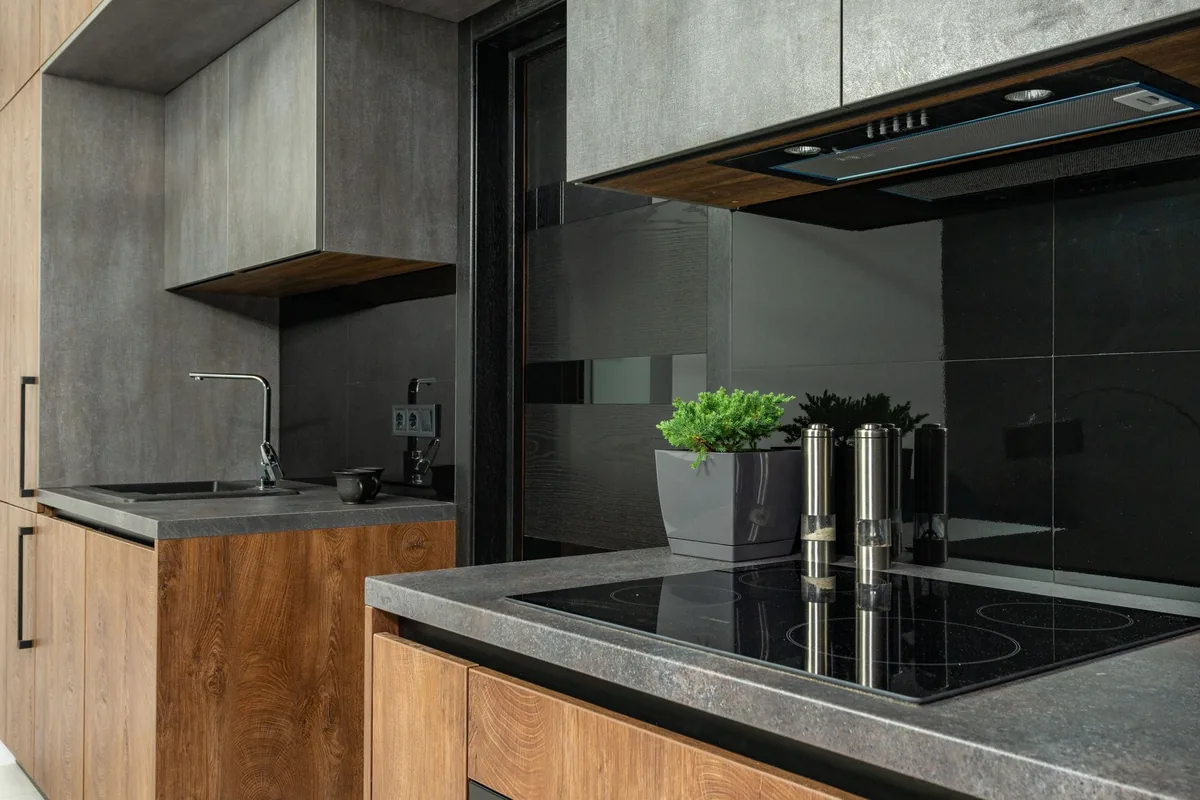
On gas, heat comes to the pot. A flame spreads across the underside and up the sides, so a wide pot on a small burner still gets heat towards its edges. On induction, heat is made in the pot. The coil under the glass sets up a changing magnetic field, and the iron or steel directly above it heats itself. Metal that is not over the coil is heated only by conduction from the metal that is.
Cast iron conducts heat slowly. That is a general property of the material, and it is why cast iron holds heat so well once hot. It also means that on induction, a cast iron base much wider than the ring heats from the centre outwards, with the edge lagging behind. Give it time and a moderate setting, and the iron evens out. Turn it straight to a high or boost setting, and the centre can run well ahead of the edge, which is hard on enamel and uneven for searing. CAROTE’s “medium-low heat for 5-7 minutes” and Umite Chef’s “Preheat 2-3 mins on medium-low only” are the two listings that say so.
The opposite mismatch matters too. Many induction hobs need a minimum amount of magnetic metal over a ring before they switch on, and a base that covers only part of a large ring leaves the rest of the coil with nothing to heat. Dutch ovens of 5 to 7 quarts are rarely too small for a ring, but a large ring under a compact base, such as the CAROTE’s, is worth a check. Your hob’s manual gives the minimum pan size for each zone.
So the practical rule is simple. Measure the flat part of the pot’s base when it arrives, measure the printed ring you plan to use, and pick the ring closest to the base. If the base is much wider than your largest ring, plan on a gentle, longer preheat. If your hob has a bridge or flexible zone, check whether it can run as one large area under a round pot. For a pan shape that has the same problem in a longer form, our induction griddle pan guide covers bridging two zones.
What Each Listing Says About Glass and Ceramic Tops
A glass top stove usually means a smooth glass-ceramic surface, whether it heats by radiant elements underneath or by induction coils. Here is every listing’s cooktop list, in its own words, and any advice it gives that matters on a smooth top.
| Dutch oven | Glass | Ceramic | Halogen | Other named | Smooth-top advice given |
|---|---|---|---|---|---|
| Nuwave | Not named | Yes | Not named | Gas, electric, induction | None; says fridge to stovetop is fine |
| Staub | Yes | Yes | Yes | Gas, electric, induction | “Smooth enamel bottom” |
| Overmont | Not named | Yes | Not named | Gas, electric, induction | None |
| Umite Chef | Not named | Yes | Not named | Gas, electric, induction | Medium-low preheat; cool 45+ mins |
| Mueller DuraCast | Not named | Yes | Yes | Gas, electric, induction | None |
| CAROTE | Not named | Yes | Not named | Gas, electric, induction | Medium-low 5-7 min; cool naturally |
| Miereirl | Not named | Yes | Not named | Gas, electric, induction, grill | Bottom may darken over open fire |
| Martha Stewart | Not named | Yes | Yes | Gas, electric, induction | None |
| Unbranded 5 Qt | Not named | Not named | Not named | Gas, electric, induction | None |
| JINCHUFURI | Not named | Not named | Not named | Gas, electric, induction | None |
For the best Dutch oven for a glass top stove, eight listings say ceramic and one says glass. Staub is the only one to use the word glass, and the only one to describe the underside of the pot. Nuwave, Overmont, Umite Chef, Mueller, CAROTE, Miereirl and Martha Stewart name ceramic. Mueller, Staub and Martha Stewart also name halogen. The two JINCHUFURI listings name gas, electric and induction only; most radiant glass tops are electric, but those listings do not say ceramic or glass.
No listing gives advice about protecting the glass. None says to lift rather than slide, none mentions scratches to the hob, and none warns about dropping a pot. The advice that does appear is about the pot: CAROTE and Umite Chef on gentle heating and natural cooling, Miereirl on darkening over fire. Nuwave goes the other way with “move directly from refrigerator to stovetop”.
So here is the general guidance the listings leave out. Lift a heavy cast iron pot clear of the glass to move it, rather than sliding it, because a rough or unenamelled rim on the underside can scratch the surface. Set it down gently and never drop it; the glass can crack under a sharp knock from a heavy pot. Keep the underside clean and dry, since grit or burnt-on residue between pot and glass is what scratches. And on a radiant glass top, which heats by contact, a flat base that sits evenly on the glass works better than one that rocks.
The weights make lifting a real consideration. Empty, the six usable weights run from 11.68 pounds to 15.21. A filled pot is heavier still: four quarts of stew in the 6-quart Nuwave adds roughly 8.3 pounds, and five quarts in the 7-quart Staub roughly 10.4, by our arithmetic using the weight of water. That puts a full Staub at over 25 pounds. If lifting that clear of the glass is a struggle, a smaller pot or a lighter material is the better choice; our lightweight Dutch oven roundup covers the lighter end of the category.
Enamel on Steel Versus Enamelled Cast Iron on Induction
Nine of the ten are enamelled cast iron. The Martha Stewart Thayer is enamel on steel, and the two behave differently on an induction hob.
- Weight: enamel on steel uses a thin steel shell, so it is generally much lighter than cast iron of the same size. The Martha Stewart listing gives no weight, so we cannot quantify it for this pot. The six cast iron pots with a usable weight land at about 2.1 to 2.3 pounds per quart, by our arithmetic.
- Heat spread: a thin steel base heats quickly over the coil and spreads heat sideways less than a thick cast iron base. Expect a hotter centre on a ring smaller than the base, and stir more.
- Heat holding: cast iron’s mass keeps a braise steady when the lid comes off or cold food goes in. Steel recovers faster when the hob turns up, and cools faster when it turns down.
- Best jobs: enamel on steel suits soups, stocks, pasta and anything liquid. Cast iron suits searing, long braises and bread baking.
- Glass tops: a lighter pot is easier to lift clear of the glass. The lift-not-slide rule still applies to both.
The listings frame it the same way. Martha Stewart sells its pot for “soups and stews, reducing sauce, cooking noodles, and more”. The cast iron listings sell searing, braising and sourdough. For more on the enamel side of the category, see our enamel Dutch oven guide.
Popularity Ignores the Base
Star ratings were not captured for this roundup, so the only popularity measure here is Amazon’s Best Sellers Rank, as returned on 5 October 2026. All ten are ranked in Dutch Ovens, so the category ranks compare directly. Ranks move constantly; read the order, not the precise numbers.
| Dutch oven | Overall rank | Dutch Ovens rank | Base figure |
|---|---|---|---|
| Umite Chef | #256 | #1 | Not stated |
| Overmont | #475 | #3 | Not stated |
| Mueller DuraCast | #1,406 | #6 | Not stated |
| CAROTE | #3,293 | #15 | Not stated |
| JINCHUFURI | #6,943 | #26 | Not stated |
| Nuwave | #8,356 | #31 | 0.16 in thick |
| Unbranded 5 Qt | #13,098 | #45 | Not stated |
| Miereirl | #17,631 | #59 | Not stated |
| Staub | #28,258 | #90 | Smooth enamel bottom |
| Martha Stewart | #144,881 | #388 | Not stated |
The top five say nothing about their base. The two listings that do, Nuwave and Staub, sit sixth and ninth. The best-selling pot here, the Umite Chef, is also one of two whose size fields are unusable. Shoppers are buying on capacity, colour and the word induction, which every listing supplies. The fit to the burner is left for the buyer to discover. For the wider Dutch oven market beyond induction, our Dutch oven roundup sets out what is selling and why.
Best Alternatives
| Alternative | Why Consider It | Better For | Main Trade-Off |
|---|---|---|---|
| A tri-ply stainless steel Dutch oven | Aluminium core spreads heat sideways faster than iron | Even heating on a ring smaller than the base | Holds less heat; induction depends on the outer layer |
| A bare cast iron Dutch oven | Same induction behaviour, no enamel to chip | Campfire and oven use as well as the hob | Rough unenamelled base is riskier on glass; needs seasoning |
| An induction-ready frying pan; see our ceramic induction frying pan guide | Flat, shallow base with more contact per quart | Searing and everyday cooking on induction | Not for braises, stews or bread |
| A stock pot | Lighter and taller for liquid volume | Stocks, pasta and soups for a crowd | No heavy lid or heat-holding mass for braising |
What the Step Up Buys
The compact 5-quart pots — CAROTE, Umite Chef, unbranded 5 Qt, JINCHUFURI. The smallest outlines here, 9.5 to 10.24 inches where stated, and the lightest stated weight, 11.68 pounds on the unbranded pot. A compact base is the easiest fit for a single induction ring. Umite Chef and CAROTE add the best heat-up advice on the page; the two JINCHUFURI listings stop at gas, electric and induction.
The mid-size 5.5 to 6.4-quart pots — Overmont, Mueller, Miereirl, Nuwave, Martha Stewart. Stepping up a quart or so buys room for a whole chicken and adds about two pounds of iron, by the per-quart arithmetic above. Overmont and Mueller rank in the top six of the category; Nuwave adds the only base measurement and an enamelled rim; Miereirl adds a grill; Martha Stewart swaps cast iron for lighter enamel on steel.
The 7-quart flagship — Staub. The premium step buys the only glass statement, the only smooth-bottom statement, a 900F oven figure without the lid, a matte interior, French manufacture and a lifetime warranty. It also buys the heaviest pot here, 15.21 pounds empty, and the widest outline. On a glass top it is the best-documented pot; it is also the one most worth lifting with care.
What no step buys is a base diameter. From the budget pots to the premium one, none of the ten tells you the size an induction coil responds to. You measure that yourself, at every level.
What to Check Before You Buy
Measure Your Induction Rings First
Every induction hob prints or marks its zones. Measure the diameter of the ring you will use most, and note the largest one. Because no listing here gives a base diameter, your ring size is the only fixed number you will have before the pot arrives, so know it before you shop.
Measure the Pot’s Flat Base on Arrival
Turn the pot over and measure only the flat part that will touch the glass, not the curved edge or the rim. Compare it with your rings and use the closest. If the base is much wider than your largest ring, plan on a longer, gentler preheat; if it is much smaller than a ring, use a smaller one.
Treat Listed Outlines as Upper Limits
Eight listings give an outline, from 9.5 by 9.5 inches to 15.0 by 11.8 inches, and none says whether it includes handles. A round pot’s base is always smaller than its body. Two listings, Umite Chef and Martha Stewart, give sizes that cannot be used at all.
Check the Cooktop List in Words
All ten say induction. For a radiant glass top, eight say ceramic and only Staub says glass. The two JINCHUFURI listings stop at gas, electric and induction. If your hob is halogen, Staub, Mueller and Martha Stewart name it.
Look at the Underside Before It Touches Glass
Only Staub says its bottom is smooth enamel. On the others, check the underside when it arrives: a smooth, even enamel base is kinder to glass than a rough, bare iron ring. Keep it clean and dry, and wipe off any grit before setting it down.
Plan for the Weight When Full
Six usable weights run from 11.68 to 15.21 pounds empty, about 2.1 to 2.3 pounds per quart by our arithmetic. Add the food and a 6 or 7-quart pot can pass 20 pounds. On glass, you must be able to lift it clear with both hands; if you cannot, choose a smaller pot or enamel on steel.
Start Low and Let It Cool Naturally
CAROTE advises medium-low for 5-7 minutes before turning up; Umite Chef says preheat 2-3 minutes on medium-low only and cool for 45 or more minutes before cleaning. On induction, avoid boost settings with an empty enamelled pot, and on any glass top, do not move a hot pot onto a cold wet surface.
Common Mistakes
- Reading the outline as the base. Eight listings give an outline from 9.5 to 15.0 inches; none is the flat base an induction coil heats.
- Assuming capacity tells you the fit. Quarts say nothing about base size; the 6-quart Nuwave and Miereirl share a 10.2-inch outline with the 5-quart JINCHUFURI pots.
- Starting cast iron on boost. CAROTE advises medium-low for 5-7 minutes; the centre of a cast iron base heats far faster than its edge on induction.
- Sliding a heavy pot across glass. Six usable weights run from 11.68 to 15.21 lb empty; lift them clear rather than dragging iron over the surface.
- Taking a size field on trust. Umite Chef lists 1.0 x 1.0 x 1.0 inches and Martha Stewart 0.0; neither can describe the pot.
- Assuming electric means glass. Two listings stop at gas, electric and induction; only Staub names glass, and eight name ceramic.
- Cleaning a hot pot under cold water. CAROTE and Umite Chef both warn that sudden temperature changes damage enamel; Umite says cool 45+ minutes.
- Putting a fire-darkened pot back on glass. Miereirl says its bottom may darken over open fire; clean and check the underside first.
Who Should Buy Which
Buy the Nuwave 6 Qt if you want the most base information available. The only listing with a base measurement, 0.16 inches thick, plus a fully enamelled rim, ceramic and induction named, a 10.2-inch outline and Amazon.com as seller. Accept that it still gives no base diameter and does not name glass in words.
Buy the Staub 7-qt if your glass top is the main concern. The only listing to name glass and describe a smooth enamel bottom, with a 900F oven figure and a lifetime warranty. Accept 15.21 pounds empty, scarce stock at capture and a pot you must lift every time.
Buy the Overmont 5.5QT if you want a well-ranked budget pot with a warranty. #3 in Dutch Ovens, ceramic and induction named, 12.13 pounds, 1 Year Manufacturer warranty, cookbook and handle covers. Accept that it says nothing about its base.
Buy the Umite Chef 5QT if you want the pot most people are buying and the best care advice. #1 in Dutch Ovens, medium-low preheat and natural cooling spelled out, wide steel handles and mitts. Accept that its size and weight fields are unusable.
Buy the Mueller DuraCast if your glass top is halogen or ceramic and you have headroom. Five cooktop types named and a stainless steel knob. Accept a 7.7-inch height and a brand field that reads JANSKA.
Buy the CAROTE 5QT if your largest induction ring is modest. The smallest outline, 9.5 by 9.5 inches, and the clearest heat-up instruction. Accept that no weight is given.
Buy the Miereirl 6 Quart if one pot has to do hob and grill. 6 quarts on a 10.2-inch, 4.7-inch-high outline, grill named and a one-year warranty. Accept 13.75 pounds and clean the base before it returns to glass.
Buy the Martha Stewart Thayer if lifting cast iron is the problem. Enamel on steel, a lighter material, 6.4 quarts, induction and ceramic named, sold by Amazon.com. Accept empty size fields and a thin base suited to liquid cooking.
Buy the unbranded 5 Qt if you want the lightest stated cast iron here and cook on induction. 11.68 pounds on a 10.24-inch outline. Accept that ceramic and glass are not named.
Buy the JINCHUFURI 5 Qt if you prefer the better-ranked twin. The same seller and outline as the unbranded pot, at #26 in Dutch Ovens. Accept that it gives no weight and does not name ceramic or glass.
Frequently Asked Questions
What is the best Dutch oven for an induction cooktop?
For most buyers, the Nuwave 6 Qt PFAS-Free Enameled Cast Iron Dutch Oven. All ten pots on this page say they work on induction, so the deciding question is what each tells you about its base, and the Nuwave is the only listing that measures anything: a 0.16-inch thick base. It also says its enamel fully seals the body and lid rim, names ceramic and induction cooktops, lists 12.4 pounds for 6 quarts and is sold by Amazon.com. If a glass top is your bigger worry and you can lift a heavy pot, the Staub 7-qt is the only listing that names glass and describes a smooth enamel bottom. On a budget, the Overmont 5.5QT ranks #3 in Dutch Ovens and names ceramic and induction. None of the ten gives a base diameter, so measure the base on arrival and match it to your ring.
What is the best Dutch oven for a glass top stove?
The Staub 7-qt Round Cocotte is the best documented for glass. It is the only one of the ten listings that uses the word glass, and the only one that describes the underside of the pot: a smooth enamel bottom. It also names ceramic, halogen and induction, and carries a lifetime warranty. Its drawback on glass is weight, 15.21 pounds empty, which means lifting it clear every time you move it. Eight listings name ceramic stovetops, the usual term for a radiant glass top: Nuwave, Staub, Overmont, Umite Chef, Mueller, CAROTE, Miereirl and Martha Stewart. The two JINCHUFURI listings name only gas, electric and induction. Whatever you choose, lift rather than slide, set it down gently, never drop it, and keep the underside clean and dry. If lifting a heavy pot is hard, the enamel on steel Martha Stewart is a lighter material.
Does the size of a Dutch oven matter on induction?
Yes, and the size that matters is the flat diameter of the base, not the capacity. An induction coil heats only the metal sitting directly over it. If a cast iron base is much wider than the ring, the centre heats first and the edge catches up slowly, because cast iron conducts heat sideways slowly. If a base is much smaller than a large ring, part of the coil has nothing to heat, and some hobs will not switch on below a minimum pan size. None of the ten listings here prints a base diameter. Eight give an outline, from 9.5 by 9.5 inches on the CAROTE to 15.0 by 11.8 inches on the Staub, but none says whether that includes handles, and a round pot’s base is always smaller than its body. Measure the flat underside when the pot arrives and use the ring closest to it.
Can enameled cast iron scratch a glass or induction cooktop?
It can, mainly when it is slid. Enamel is smooth, but many cast iron pots have a rougher or unenamelled ring on the underside, and grit or burnt residue trapped between pot and glass will scratch the surface when the pot is dragged. Only one listing here, the Staub, says its bottom is smooth enamel. Nuwave says its enamel fully seals the body and lid rim, which it pitches against rust. The other eight say nothing about the underside. None of the ten gives advice about protecting the glass. The general guidance is to lift the pot clear to move it, set it down gently, never drop it, and wipe both the base and the glass before cooking. With six usable weights between 11.68 and 15.21 pounds empty, lifting takes both hands, and more once the pot is full.
How should I preheat a cast iron Dutch oven on induction?
Slowly. Induction can put heat into the centre of a cast iron base much faster than the iron can carry it to the edge, and enamel does not like sharp temperature differences. Two listings on this page give specific advice. CAROTE recommends starting on medium-low heat for 5-7 minutes before increasing the temperature. Umite Chef says to preheat 2-3 minutes on medium-low only, and to allow 5-7 minutes for even heat distribution. Both warn against thermal shock: CAROTE says to let the pot cool naturally and avoid cold water on a hot pot, and Umite Chef says to cool for 45 or more minutes before cleaning. In general, avoid boost settings with an empty enamelled pot, add oil or liquid before turning up, and if the base is much wider than your ring, give it longer at a moderate setting.
Is enamel on steel or enameled cast iron better for induction?
Both work, because both steel and cast iron are magnetic, but they suit different cooking. Enameled cast iron, nine of the ten pots here, holds heat well once hot and evens out a base wider than the ring given time, which suits searing, braising and bread. It is heavy: the six usable weights here run from 11.68 to 15.21 pounds, about 2.1 to 2.3 pounds per quart by our arithmetic. Enamel on steel, the Martha Stewart Thayer, uses a thin steel shell, so it is lighter as a material and heats quickly, but spreads heat sideways less and holds it less. It suits soups, stocks, pasta and sauces, which is how Martha Stewart sells its pot. Its listing gives no weight, so we cannot say how much lighter it is. On a glass top, a lighter pot is easier to lift clear.
Why do none of these listings give a base diameter?
We cannot say why, but the pattern is consistent. All ten listings name induction, and all ten describe capacity, lids and enamel in detail. None prints a base diameter, a bottom diameter or a cooking-surface diameter. The Nuwave gives a base thickness of 0.16 inches, and the Staub describes its bottom as smooth enamel; the rest are silent. Spec tables give length, width and height instead, and two of those are unusable: the Umite Chef lists 1.0 by 1.0 by 1.0 inches and the Martha Stewart 0.0. The practical answer is to ask the seller before you buy if your hob has small rings, and to measure the flat underside yourself on arrival. Your hob’s manual will tell you the ring sizes and the minimum pan size each zone needs, which gives you the other half of the comparison.
How heavy is a full Dutch oven, and does it matter on a glass top?
Heavier than most buyers expect. The six usable weights on this page run from 11.68 pounds on the unbranded 5-quart pot to 15.21 pounds on the 7-quart Staub, empty. Food adds roughly two pounds per quart, using the weight of water as a guide. By our arithmetic, four quarts of stew in the 6-quart Nuwave adds about 8.3 pounds, for a total over 20, and five quarts in the Staub adds about 10.4, for a total over 25. On a glass top that matters, because the safe way to move a heavy pot is to lift it clear with both hands, not to slide it, and a pot dropped from even a short height can crack the glass. If that weight is a struggle, choose a 5-quart pot, or the enamel on steel Martha Stewart, which is a lighter material.
Final Verdict
The only base measurement on the page, 0.16 in thick, with a fully enamelled rim, ceramic and induction named, sold by Amazon.com.
The only listing to name glass and describe a smooth enamel bottom, with a lifetime warranty and a 900F oven figure.
#3 in Dutch Ovens, ceramic and induction named, 12.13 lb and a 1 Year Manufacturer warranty.
Every Dutch oven on this page says induction, and not one tells you the size an induction coil responds to. No listing prints a base diameter. The Nuwave gives a base thickness, 0.16 inches. The Staub describes a smooth enamel bottom. The other eight are silent about the base, and the outlines they print, from 9.5 to 15.0 inches, are ceilings on the base, not measurements of it.
The glass-top answer is thin too. Only Staub names glass; eight name ceramic; two stop at gas, electric and induction. None gives advice about protecting a glass surface. The useful heat advice comes from CAROTE and Umite Chef, both of which say start on medium-low and let the pot cool naturally.
So buy on what you can measure. Know your induction rings before you shop. Measure the pot’s flat base when it arrives and use the closest ring. Start low, especially on a base wider than the ring. On any glass top, lift rather than slide, set it down gently and keep the underside clean. And plan for the weight: six usable figures run from 11.68 to 15.21 pounds empty, before the food.
If you buy one Dutch oven from this page for an induction cooktop, make it the Nuwave 6 Qt: the only listing that measures its base, a fully enamelled rim, ceramic and induction named and Amazon.com as seller. If your glass top worries you more than the weight, the Staub is the only listing that answers the question in writing; if budget comes first, the Overmont ranks #3 in Dutch Ovens and names both smooth-top types.