Affiliate Disclosure: As an Amazon Associate, we earn from qualifying purchases. This does not affect the price you pay.
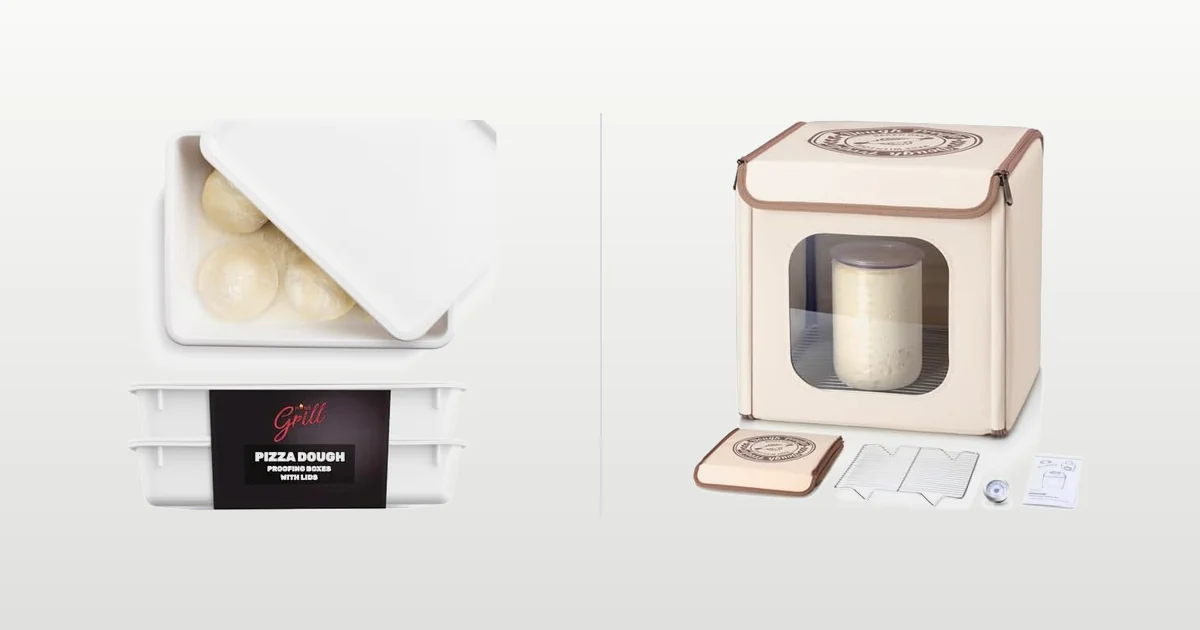
Search this term and you get two unrelated appliances back, priced within forty dollars of each other.
Eight of the ten below are plastic trays. They hold dough at whatever temperature the room or the fridge happens to be, they cost $21.99 to $60.00, and they all claim four to six dough balls.
Two of them are heated cabinets. They set the temperature — one runs 50 to 113°F on a 48-hour timer — and they hold one bowl, not six balls. They cost $64.95 and $65.95.
If you are making pizza for Friday, you want a tray. If your kitchen is 62°F in February and your sourdough has stopped rising, you want a cabinet. Buying one when you needed the other is the main way this purchase goes wrong.
Among the trays, the specification that separates them is height, and almost nobody compares it. Every tray here says four to six balls; the interior height ranges from 2.75 inches to 5.31 inches. One listing states plainly that the extra height “prevents fermented dough from being squashed”. Two publish no height at all.
And two of these listings flatly disagree about whether the lid should seal.
Our Quick Picks
 Best ValueChef Pomodoro Pizza Proofing Box
Fourteen by eleven inches, transparent walls, snap-shut clasps and a carry handle, for $24.99.
 Tallest TrayVtopmart 2 Pcs with Latches
The tallest interior on this page at 5.31 inches, and the only listing that explains why height matters.
 Best HeatedGIYUDOT Folding Proofer 50-113°F
A thermostatted, insulated 12-inch cube running 50–113°F on a 48-hour timer — a different product entirely from the trays on this page.
At a Glance
Ten Boxes, and Whether They Heat Anything
Capacity, interior height, whether there is a thermostat, and what the lid is designed to do. Height is the number the category does not talk about.
| # | Model | Capacity | Height | Heated | Lid | Standout | Main Drawback | Check Price |
|---|---|---|---|---|---|---|---|---|
| 1 |
 Chef Pomodoro Pizza Proofing Box Chef Pomodoro Pizza Proofing Box |
4–6 balls | 3 in | Unheated | Snap-shut | Transparent, so you can read the rise without opening the lid | 3 inches is on the low side for a long ferment | View on Amazon |
| 2 |
 Vtopmart 2 Pcs with Latches Vtopmart 2 Pcs with Latches |
4–6 balls | 5.31 in | Unheated | Latching | 5.31 inches — the most headroom of any tray here | 14.96 inches deep may not fit a narrow fridge shelf | View on Amazon |
| 3 |
 GIYUDOT Folding Proofer 50-113°F GIYUDOT Folding Proofer 50-113°F |
One bowl or jar | 12 in cube | Yes | Insulated | A thermostat and a 48-hour timer, not a plastic box | It holds one container, not six dough balls | View on Amazon |
| 4 |
 Hans Grill Proofing Box 2 Pack Hans Grill Proofing Box 2 Pack |
6 balls each | Not published | Unheated | Optional | Rank #4,347 — the most bought item on this page by a wide margin | No interior height is published anywhere | View on Amazon |
| 5 |
 Brod & Taylor 6L Proofing Container Brod & Taylor 6L Proofing Container |
3000 g dough | 4 in | Unheated | Sealing | Volume markings on translucent walls read the rise numerically | Sized for bulk dough, not for separated balls | View on Amazon |
| 6 |
 Commercial Grade 17.25 x 13 Inch Commercial Grade 17.25 x 13 Inch |
Commercial | 3.54 in | Unheated | Stacking | 17.25 x 13 inches is the biggest tray on this page | That size does not fit every domestic fridge shelf | View on Amazon |
| 7 |
 GATBO with Label and Markers GATBO with Label and Markers |
6 balls | 4.09 in | Unheated | Non-airtight | A deliberately non-airtight lid, and it explains why | One box at this price, where rivals sell two | View on Amazon |
| 8 |
 DoughMate Proofing Box & Tray Kit DoughMate Proofing Box & Tray Kit |
6 balls of 8–10 oz | 2.75 in | Unheated | One lid | NSF certified, which nothing else here claims | 2.75 inches is the shallowest interior on this page | View on Amazon |
| 9 |
 Ooni Pizza Dough Proofing Box Ooni Pizza Dough Proofing Box |
Six 250 g balls | Not published | Unheated | Sealing | The only listing to state a gram weight per ball | No dimensions are published anywhere in the listing | View on Amazon |
| 10 |
 Cozy Bread Proofing Mat & Box Cozy Bread Proofing Mat & Box |
One bowl or jar | 10 x 21 in mat | Yes | Insulated | A heating mat plus an insulation box, rather than a sealed cabinet | No temperature range is published, only ‘thermostat controlled’ | View on Amazon |
Dimensions, prices and specifications are taken from each manufacturer’s Amazon listing as displayed on 24 August 2026 through a United States connection, and may change. Two products here are heated cabinets rather than trays and are not interchangeable with the other eight; they are included because they are sold under the same term. Three listings omit a specification we consider material: two publish no interior height, one publishes no dimensions at all, and the Cozy Bread kit publishes no temperature range despite being thermostat controlled. Each omission is noted in that product’s entry rather than estimated. Note also that two listings argue opposite positions on lid design — one seals moisture in, another is deliberately non-airtight — and both give reasons that hold. Sales ranks are shown as displayed and can be pooled across a variant family.
Scroll the table sideways to see every column
How We Chose These Ten
We researched current listings, compared manufacturer specifications and documentation, and examined recurring patterns in customer feedback. We did not carry out hands-on testing, and nothing below is presented as measured performance data.
- Heated and unheated both included — because both are sold under this search term and they are not substitutes
- Interior height recorded, or its absence noted — the specification that decides whether a long ferment works
- Capacity read as published — ball counts where given, gram weights where a maker bothered
- A verified live buy box — all ten confirmed purchasable in the United States on 24 August 2026
- Lid behaviour compared — two listings here take opposite positions and both are defensible
- Omissions reported rather than filled in — three listings leave out something material and we say so
- No overlap with our published pizza peel, oven or stone guides — every item here is new to the site
The Ten Boxes in Detail
1. Chef Pomodoro Pizza Proofing Box — Best Value

Being able to see the dough is worth more than it sounds, because opening the lid costs you something.
Key Specifications
| Capacity | 4—6 balls for 12–14 inch thin-crust pizzas |
|---|---|
| Dimensions | 14 in x 11 in x 3 in |
| Interior height | 3 inches |
| Heated | No |
| Lid | Snap-shut clasps |
| Visibility | Transparent, checkable without opening |
| Handle | Recessed carry handle, stacks flat when unused |
| Rank | #18,819 in its category |
| Price | $24.99 |
| Best For | Reading the rise without disturbing it |
Why We Recommend It
Every time you lift a lid you vent the humidity. A proofing box works by holding a saturated pocket of air around the dough so the surface does not dry into a skin, and a skin is what makes a ball tear rather than stretch when you open it. A transparent wall lets you judge the rise from outside, which means you check five times and open once.
The recessed handle is a real design decision. A protruding handle stops boxes stacking; recessing it keeps the top flat, which is what lets these go three high in a fridge.
Three inches of interior height is the caveat. The listing says the dough will not touch the lid when fully proofed, and for a same-day proof at room temperature that is true. For a 48-hour cold ferment, where the balls keep expanding slowly, three inches is the shallowest usable figure — other boxes here go to 5.31.
Snap clasps rather than a friction lid matter if the box ever travels.
Pros
- Transparent — read the rise without venting humidity
- Snap-shut clasps hold in transit
- Recessed handle keeps the stack flat
- 4—6 balls for 12–14 inch pizzas
- Publishes full interior dimensions
- $24.99
Cons
- 3 inches is the shallowest but one here
- Single box, not a pair
- Grey tint reduces visibility slightly against clear rivals
- No date labelling
- Not heated
- Rank #18,819
Best for: Home pizza nights where the dough is proofed and used the same day.
2. Vtopmart 2 Pcs with Latches — Tallest Tray

Every tray here claims four to six dough balls. Almost none of them mention how tall the box is, and that is the number that decides whether a long ferment works.
Key Specifications
| Capacity | 4—6 balls per box, two boxes |
|---|---|
| Dimensions | 14.96 in L x 10.43 in W x 5.31 in H |
| Interior height | 5.31 inches — tallest here |
| Heated | No |
| Lid | Snap-on with locking latches |
| Maker’s reasoning | Increased height “prevents fermented dough from being squashed” |
| Temperature range | Fridge, freezer and room temperature |
| Rank | #17,368 in its category |
| Price | $25.99 |
| Best For | Long cold ferments where the dough keeps growing |
Why We Recommend It
Dough does not stop expanding when you put it in the fridge; it slows down. A 48- or 72-hour cold ferment is exactly the technique that produces the flavour people buy proofing boxes for, and over that span a 250-gram ball can double. When it reaches the lid it flattens against it, and the top surface tears off when you try to lift it out — taking the gas structure with it. Vtopmart is the only listing on this page to say so in plain words.
5.31 inches is 93% more headroom than the 2.75-inch tray also on this page. Both say four to six balls.
Latching lids rather than friction fits mean a stack can be carried without the top box opening.
Check the shelf before buying. At 14.96 inches deep these are among the largest here, and a narrow fridge shelf will not take them.
Pros
- 5.31 inches of interior height — most on this page
- States why height matters, which no rival does
- Two boxes for $25.99
- Locking latches survive stacking and transport
- Rated for fridge, freezer and countertop
- Dishwasher safe
Cons
- 14.96 inches deep — check your shelf
- Opaque white walls, so you must open to check
- No date labelling
- Not heated
- Latches are a moving part that can fatigue
- Rank #17,368
Best for: The 48- to 72-hour cold ferments that actually need the headroom.
3. GIYUDOT Folding Proofer 50-113°F — Best Heated

This is not the same product as the other nine. It happens to share the search term.
Key Specifications
| Type | Heated proofer — not a tray |
|---|---|
| Temperature range | 50—113°F, adjustable |
| Timer | Up to 48 hours |
| Sensor | NTC sensor monitoring air temperature continuously |
| Insulation | Five layers; waterproof interior |
| Size | 12 x 12 x 12 inches; folds flat |
| Rack | Stainless steel shelf to prevent bottom overheating |
| Also for | Yogurt, kombucha and other fermentation |
| Rank | #21,205 in its category |
| Price | $65.95 |
| Best For | Cold kitchens, sourdough, and anything that needs a held temperature |
Why We Recommend It
Eight items on this page are plastic boxes that hold dough at whatever temperature the room happens to be. This one sets the temperature. Fermentation rate roughly doubles for every 15°F, so a dough that proofs in two hours at 78°F takes four at 63°F — which is why bread recipes fail in winter kitchens and work in summer ones. A thermostat removes the season from the recipe.
The 50°F bottom of the range is as useful as the top. Holding dough at 50°F is a controlled retard, which is what a professional bakery does overnight; most home bakers approximate it with a fridge that actually runs at 38°F.
Five layers of insulation and a 48-hour timer are what separate this from a heating mat. The stainless shelf keeping dough off the heated base is the detail that prevents a cooked bottom.
It holds one bowl or jar, not six dough balls. If you are making pizza for eight, you want a tray, or both.
Pros
- Sets the temperature rather than accepting the room’s
- 50—113°F range covers retarding and proofing
- 48-hour timer and continuous NTC sensing
- Five layers of insulation
- Folds flat for storage
- Also does yogurt and kombucha
Cons
- Holds one container, not six dough balls
- $65.95 — second dearest here
- 12-inch cube takes real counter space
- Needs a power outlet
- Not a substitute for a dough tray
- Rank #21,205
Best for: Winter kitchens, sourdough schedules and anyone tired of guessing at rise time.
4. Hans Grill Proofing Box 2 Pack — Most Popular

Rank #4,347 against a field where the next best is #5,674 and most sit above #17,000. That gap is the story.
Key Specifications
| Capacity | Up to 6 dough balls per container |
|---|---|
| Quantity | Pack of 2 with covers |
| Interior height | Not published |
| Heated | No |
| Lid | Usable with or without; stacks either way |
| Material | BPA-free food-safe plastic |
| Secondary use | Fruit, vegetable and prep storage |
| Rank | #4,347 — highest on this page |
| Price | $39.99 |
| Best For | Buying the thing most people buy, in a pair |
Why We Recommend It
A rank four times better than most of this page means volume, and volume in a category this simple usually means the product does the job. There is not much to get wrong in a plastic tray with a lid, and the differences that do exist — height, transparency, latching — are ones most buyers do not know to look for. Hans Grill sells two trays with covers for $39.99 and has clearly satisfied a very large number of people.
Stackable with or without the lids is more useful than it reads. Lidless stacking means the tray above becomes the lid below, which saves an inch of fridge height per box across a stack.
The listing never publishes an interior height, which on this page is a real omission — it is the specification that separates a tray suitable for a 72-hour ferment from one that is not.
$39.99 for two is mid-priced. Vtopmart sells two for $25.99 and publishes its dimensions.
Pros
- Rank #4,347 — far and away the most bought here
- Two trays with covers
- Stacks with or without lids
- Explicitly rated for sourdough and yeast fermentation
- Doubles as fruit and vegetable storage
- BPA-free and easy to clean
Cons
- No interior height published
- No external dimensions either
- $39.99 for two against $25.99 for a specified rival
- Opaque, so checking means opening
- No latches
- Not heated
Best for: Anyone who wants the popular choice and does not want to compare dimensions.
5. Brod & Taylor 6L Proofing Container — Best for Sourdough

This is the only container here that lets you measure the rise instead of judging it.
Key Specifications
| Capacity | 6 L, up to 3000 g of dough |
|---|---|
| Dimensions | 10.5 in x 12.8 in x 4 in |
| Interior height | 4 inches |
| Heated | No — but designed to sit inside a heated proofer |
| Lid | Seals moisture in to prevent a dry skin |
| Markings | Volume graduations on translucent walls |
| Use | Mix, bulk ferment and fold in one container |
| Material | BPA-free polypropylene; dishwasher and freezer safe |
| Rank | #5,674 — second highest here |
| Price | $24.95 |
| Best For | Bulk fermentation where you need to know the exact rise |
Why We Recommend It
Sourdough instructions are written as percentages: bulk ferment until the dough has risen 50%, or doubled. In an opaque tray that is a guess, and guessing is where home sourdough goes wrong — under-fermented dough is dense, over-fermented dough will not hold shape. Volume graduations on a translucent wall turn a judgement call into a reading. It is a small feature that changes the failure rate.
The wide base is for stretch-and-fold, performed inside the container rather than on a counter, which is both less mess and less flour worked into the dough.
Note the direct disagreement with another listing on this page. Brød & Taylor seal moisture in to stop a skin forming; GATBO deliberately makes its lid non-airtight to let condensation escape. Both are defensible — a sealed lid protects the surface, a vented one prevents water dripping back onto it.
It is sized to fit the maker’s own folding proofer, which is a compatibility note worth knowing if you own one.
Pros
- Volume markings turn rise judgement into a reading
- Translucent — check without opening
- 3000 g capacity in 6 litres
- Wide base for stretch-and-fold inside the container
- Sealing lid prevents surface skin
- Rank #5,674, second highest here
Cons
- Sized for bulk dough, not separated pizza balls
- 4 inches of height
- Single container at $24.95 where rivals sell pairs
- Sealed lid traps condensation, which some bakers avoid
- Fit is optimised for one brand’s proofer
- Not heated on its own
Best for: Sourdough bulk ferments, where the percentage rise is the instruction.
6. Commercial Grade 17.25 x 13 Inch — Largest Footprint

Nesting and stacking are different things, and this listing is the only one to distinguish them.
Key Specifications
| Dimensions | 17.25 in x 13 in x 3.54 in |
|---|---|
| Interior height | 3.54 inches |
| Quantity | 2 trays and 2 covers |
| Heated | No |
| Nesting | Basins nest together when covers are removed |
| Material | Food-grade white BPA-free plastic |
| Intended use | Described as commercial quality for restaurant service |
| Rank | #9,157 in its category |
| Price | $44.99 |
| Best For | Large batches, and storage when the batch is finished |
Why We Recommend It
Stacking means full boxes sit on top of each other; nesting means empty ones collapse into each other. A proofing tray is in use for perhaps two days a month and in a cupboard for the rest, so the empty footprint matters more than the full one. Basins that nest take roughly the space of one tray plus a few millimetres each; boxes that only stack take the same space empty as full. Over a pair of 17-inch trays that is a shelf’s worth of cupboard.
17.25 by 13 inches is the largest footprint here, which buys spacing between balls — dough balls that touch during proofing merge, and pulling them apart tears the surface.
3.54 inches is mid-range for height, adequate for an overnight ferment and short of the 5.31-inch tray here.
Measure your fridge shelf first. At 17.25 inches these are wider than many domestic shelves are deep.
Pros
- Largest footprint here — balls do not touch
- Basins nest when empty, not just stack
- Two trays and two covers
- Publishes exact dimensions
- Genuinely commercial proportions
- Rank #9,157
Cons
- 17.25 inches will not fit every fridge shelf
- 3.54 inches of height is mid-range
- Opaque white, so checking means opening
- $44.99
- No latches or handles
- Not heated
Best for: Batch cooking, catering and anyone making more than six pizzas at once.
7. GATBO with Label and Markers — Cheapest Here

Almost every proofing box sells you an airtight seal. This one sells you the opposite, and gives its reasons.
Key Specifications
| Capacity | Up to 6 dough balls |
|---|---|
| Dimensions | 15.67 in x 11.69 in x 4.09 in |
| Interior height | 4.09 inches |
| Heated | No |
| Lid | Deliberately non-airtight to allow slight airflow |
| Maker’s reasoning | Reduces excessive condensation, supports natural fermentation |
| Labelling | FIFO label sticker plus 2 erasable markers |
| Material | Commercial-grade polypropylene, stain resistant |
| Rank | #18,482 in its category |
| Price | $21.99 — cheapest here |
| Best For | Anyone running dough on a rotation and needing to date it |
Why We Recommend It
Condensation is the argument. Dough gives off moisture as it ferments, and in a fully sealed box that moisture has nowhere to go, so it collects on the underside of the lid and eventually drips back onto the dough — leaving wet patches that go slack and stick. A slightly vented lid lets the excess escape while still keeping humidity high enough to prevent a skin. Brød & Taylor’s listing on this same page argues the other way, for a full seal. Both are describing real failure modes; which one bites you depends on your kitchen’s humidity and how long you proof.
The FIFO label and markers are a professional habit worth copying. Cold-fermented dough is only good within a window, and a box with a date on it removes the ‘is this Tuesday’s or Thursday’s?’ problem entirely.
4.09 inches is above average height for this page and enough for a 48-hour ferment.
$21.99 is the cheapest here, though it is one box rather than a pair.
Pros
- Cheapest on this page at $21.99
- 4.09 inches of height, above average here
- Non-airtight lid prevents condensation dripping back
- FIFO label and two erasable markers included
- Stacks with or without lids
- Publishes exact dimensions
Cons
- One box, where several rivals sell two
- Non-airtight means slightly faster surface drying
- Opaque, so checking means opening
- No latches
- Rank #18,482
- Not heated
Best for: Rotating batches of dough where dating matters more than a perfect seal.
8. DoughMate Proofing Box & Tray Kit — Best Certified

NSF certification is the only genuine credential on this page, and it is worth understanding what it covers.
Key Specifications
| Contents | 2 trays, 1 cover, 1 plastic dough scraper |
|---|---|
| Capacity | 6 balls of 8—10 oz per tray |
| Interior dimensions | 16 in L x 11 in W x 2.75 in H |
| Interior height | 2.75 inches — shallowest here |
| Stacked kit size | 17.75 in x 13 in x 7 in |
| Heated | No |
| Certification | NSF certified and BPA-free |
| Construction | High-impact copolymer polypropylene, reinforced corners, smooth walls |
| Rank | #19,727 in its category |
| Price | $58.50 |
| Best For | Commercial kitchens, or home use held to that standard |
Why We Recommend It
NSF certifies that a food-contact product has been tested against a standard and audited, rather than merely described as food-safe by whoever is selling it. “BPA-free” and “food-grade” are self-declared on almost every listing here; NSF is third-party. For a home cook it is reassurance; for anyone selling food, it may be a requirement of their local health code.
Smooth walls with no ribs or grooves is the detail that follows from commercial use. Ribbed interiors trap dough in the corners, where it sours and is impossible to reach.
2.75 inches is the shallowest interior here, and it is the one specification that gives us pause. The listing pairs it with a defined ball weight of 8 to 10 ounces, which is the right way to state it — but for a long cold ferment this is the tray most likely to have dough meeting lid.
Only one lid for two trays, because the trays are meant to stack with the upper acting as the lower’s cover.
Pros
- NSF certified — the only third-party credential here
- Smooth walls with no dough-trapping grooves
- Reinforced corners and high-impact copolymer
- Specifies ball weight, not just ball count
- Scraper included
- Publishes both interior and stacked dimensions
Cons
- 2.75 inches — shallowest interior on this page
- $58.50 is expensive for two trays
- Only one lid supplied for two trays
- Opaque
- No latches or handles
- Rank #19,727
Best for: Anyone whose dough boxes need to satisfy a health inspector.
9. Ooni Pizza Dough Proofing Box — Best Specified Balls

Six 250-gram balls for 12-inch pizzas. That is one sentence, and it is more useful than most full spec sheets on this page.
Key Specifications
| Capacity | Six 250 g dough balls per box, for 12-inch pizzas |
|---|---|
| Quantity | 2 boxes, 2 lids |
| Interior height | Not published |
| External dimensions | Not published |
| Heated | No |
| Lid | Keeps dough from drying out |
| Locations | Counter, fridge or freezer |
| Maker’s caveat | Fits most domestic fridge shelves, but check first |
| Rank | #27,358 in its category |
| Price | $60.00 |
| Best For | Anyone following a recipe written in grams |
Why We Recommend It
Every other listing here counts balls; this one weighs them. “Four to six dough balls” is meaningless without a size, because a 200-gram ball and a 320-gram ball differ by 60% in volume — and pizza recipes are written in grams for exactly that reason. Stating 250 g for a 12-inch pizza lets you work out what will actually fit, and incidentally tells you Ooni’s own dough calculation.
Having done that, the listing then publishes no dimensions at all, which is a strange omission from the most precise capacity statement on the page. The advice to check your fridge shelf is sound, but it is hard to follow when neither length nor width is given.
Rated for the freezer as well as the fridge, which matters if you batch dough and freeze balls — a technique that works well and needs a container that will not crack cold.
$60.00 for two is the second dearest tray set here, and you are paying something for the brand.
Pros
- Specifies 250 g per ball — unique on this page
- Two boxes with two lids
- Rated for counter, fridge and freezer
- Stackable
- Tells you to check your shelf rather than assuming
- Matches the maker’s own dough recipes
Cons
- No dimensions published at all
- $60.00 for two trays
- Opaque, so checking means opening
- Rank #27,358
- No latches or handles
- Not heated
Best for: Following a gram-based recipe, especially one of Ooni’s own.
10. Cozy Bread Proofing Mat & Box — Best Warm Kit

The oven-light trick is what this replaces, and the listing says so directly.
Key Specifications
| Type | Heated kit — mat plus insulation box |
|---|---|
| Mat size | 10 in x 21 in |
| Control | Thermostat controlled, adjustable |
| Temperature range | Not published |
| Warm-up | 1—2 minutes |
| Holds | A dough container, bowl or starter jar |
| Purpose stated | Replaces oven-light and warm-countertop workarounds |
| Origin | US brand |
| Rank | #29,110 in its category |
| Price | $64.95 |
| Best For | Keeping a sourdough starter alive through a cold winter |
Why We Recommend It
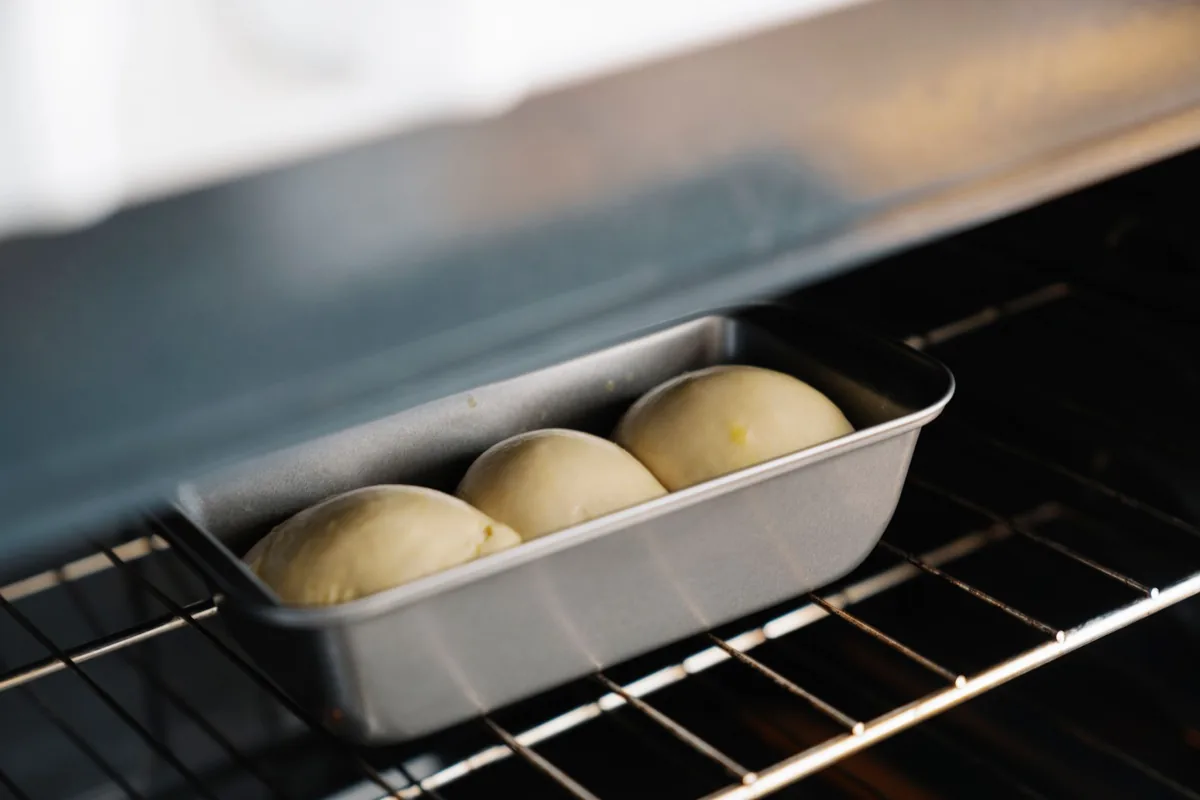
Proofing dough in an oven with the light on is the standard workaround, and it is unreliable for a specific reason: the bulb is a fixed heat source with no thermostat. Depending on the oven’s size, insulation and bulb wattage, it settles anywhere between 80 and 110°F, and it drifts as the room does. A thermostat-controlled mat inside an insulated box holds a chosen temperature instead of finding one.
A mat plus a box is a different architecture from a cabinet. The cabinet on this page is a fixed 12-inch cube; a mat is flexible about what sits on it, so a tall starter jar, a wide banneton or a dough tray all work. The box goes over the top to keep the warmth in.
The listing does not publish a temperature range, only that the thermostat is adjustable. That is the one specification we would want and it is not there, so we are reporting its absence rather than filling the gap.
Warming in one to two minutes makes this practical for a starter you feed twice a day.
Pros
- Replaces the unreliable oven-light method
- Mat plus box suits jars, bannetons and trays alike
- Warms in 1—2 minutes
- Thermostat controlled rather than fixed output
- Packs down small for storage
- US brand
Cons
- No temperature range published
- No timer
- $64.95 for a mat and a box
- Less insulated than a five-layer cabinet
- Holds one container
- Rank #29,110
Best for: Sourdough starters and winter kitchens, where the mat’s flexibility beats a fixed cabinet.
Every Tray Says Six Balls. The Heights Differ by 93%.
Capacity is the number on the listing. Height is the number that decides whether a cold ferment survives.
| Tray | Stated Capacity | Interior Height | Price |
|---|---|---|---|
| Vtopmart 2 Pcs | 4–6 balls | 5.31 in | $25.99 |
| GATBO | 6 balls | 4.09 in | $21.99 |
| Brød & Taylor 6L | 3000 g | 4.00 in | $24.95 |
| Commercial 17.25×13 | Commercial | 3.54 in | $44.99 |
| Chef Pomodoro | 4–6 balls | 3.00 in | $24.99 |
| DoughMate Kit | 6 balls, 8–10 oz | 2.75 in | $58.50 |
| Hans Grill 2 Pack | 6 balls each | Not published | $39.99 |
| Ooni | Six 250 g balls | Not published | $60.00 |
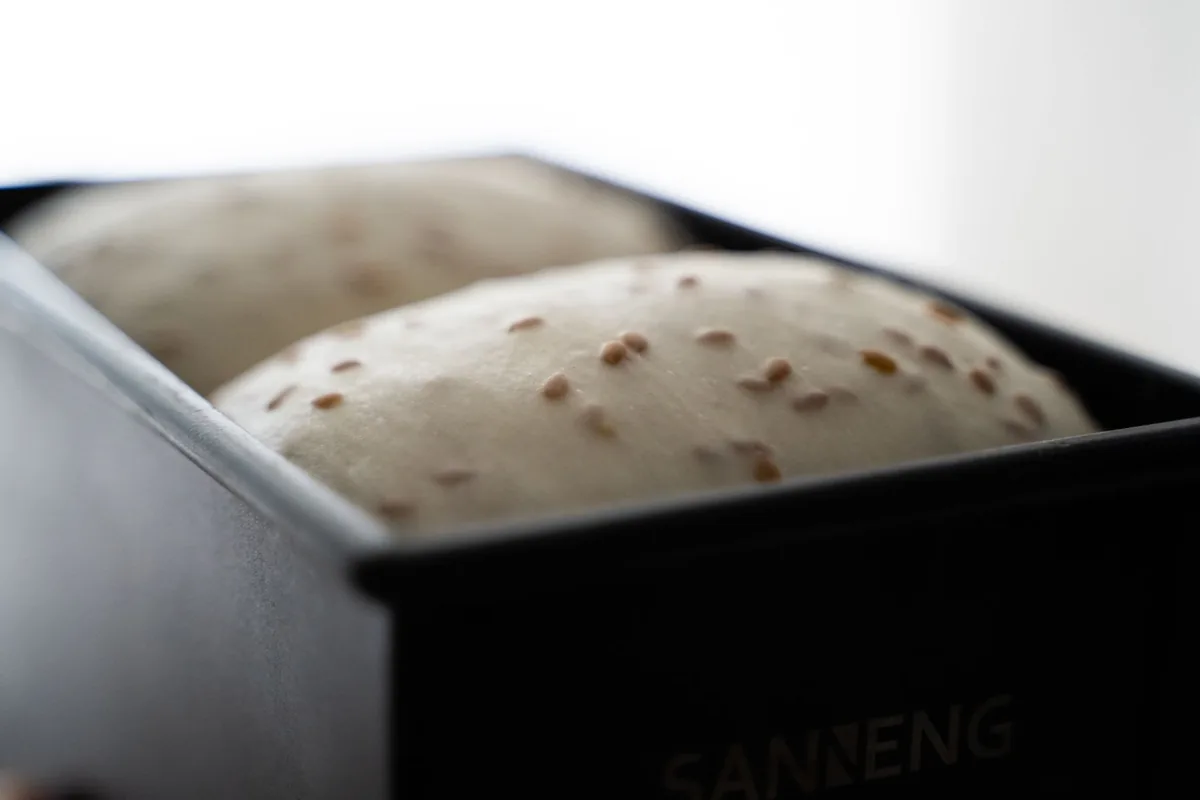
The tallest tray here has 93% more headroom than the shallowest, and both describe themselves as holding six dough balls. For a same-day proof it makes no difference. For the 48- and 72-hour cold ferments that people buy proofing boxes to do, it is the difference between lifting a ball out intact and tearing its top off against the lid. Note that the two most expensive trays on this page are the shallowest and the one that publishes no height at all.
Should the Lid Seal? Two Listings Say Opposite Things.
This is a genuine disagreement between two manufacturers, in writing, about the same problem.
| Brød & Taylor — Seal It | GATBO — Vent It | |
|---|---|---|
| Lid design | Seals moisture in | Deliberately non-airtight |
| Stated reason | Prevents a dry skin forming | Reduces excessive condensation |
| Failure it prevents | Surface tears instead of stretching | Water drips back, dough goes slack |
| Best in | Dry kitchens, short proofs | Humid kitchens, long proofs |
| Visibility | Translucent with markings | Opaque |
| Price | $24.95 | $21.99 |
Both are describing real failure modes and neither is wrong. A sealed lid protects the dough surface from drying, which is the commoner problem in a dry kitchen or a frost-free fridge. A vented lid stops condensation collecting on the underside and dripping back onto the balls, which is the commoner problem over a 72-hour ferment in a humid kitchen. If you have had dough go slack and wet on top, vent it. If you have had it form a papery skin, seal it.
Best Alternatives
| Alternative | Why Consider It | Better For | Main Trade-Off |
|---|---|---|---|
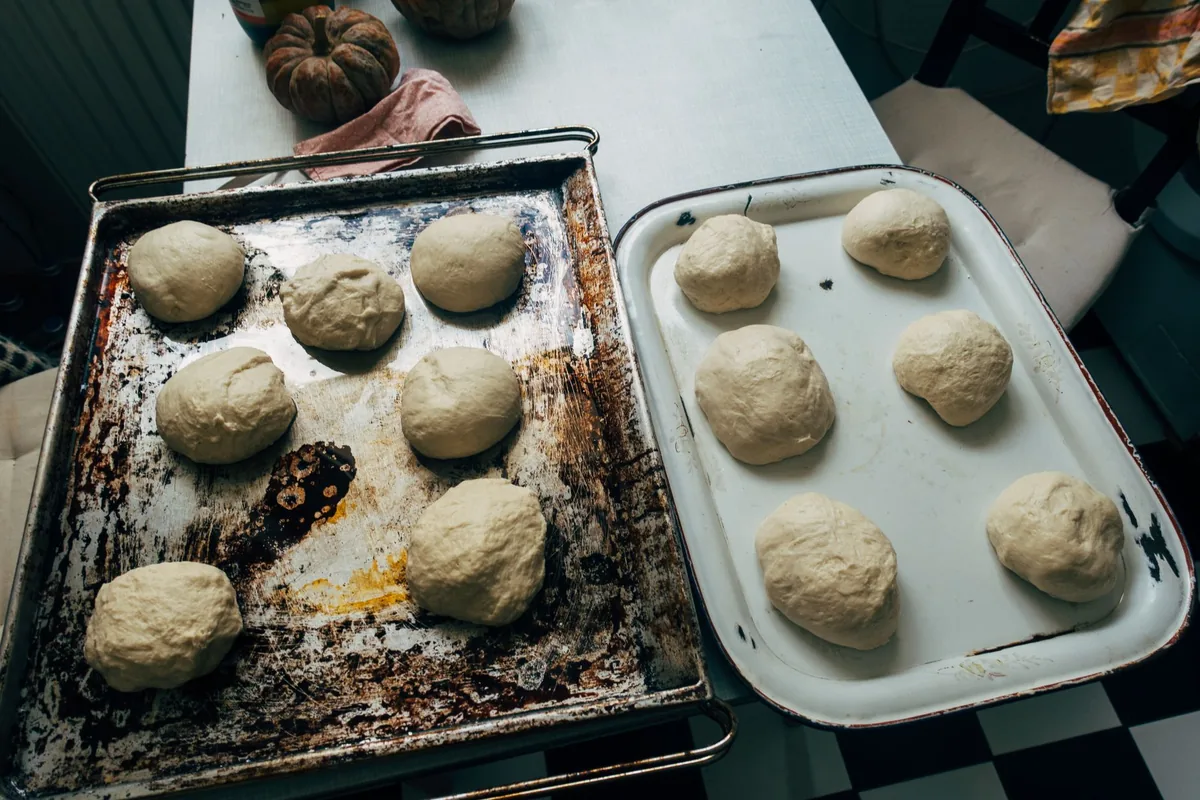
| A bowl with cling film | Costs nothing and you own one | A single dough, proofed and used same day | Wasteful, and balls cannot be separated |
| Sheet pan plus a second pan inverted | Free, and holds six balls easily | Trying a cold ferment before committing | Not sealed, dries at the edges |
| Deli containers | Cheap, stackable, one ball each | Freezing individual balls | A lot of lids to lose |
| An oven with the light on | The classic warm-proofing workaround | Bread on a cold day | Unthermostatted, drifts 80–110°F |
What the Money Actually Buys
$21.99 to $25.99 — GATBO, Brød & Taylor, Chef Pomodoro, Vtopmart. The best part of this page. Every genuinely useful feature in the category appears somewhere in this band: the tallest interior, volume markings, transparency, latching lids, FIFO labelling. Nothing above it improves on the dough.
$39.99 to $44.99 — Hans Grill and the commercial 17.25-inch pair. Two-tray sets. You are buying quantity and, in the commercial box’s case, a footprint large enough that balls do not touch.
$58.50 to $60.00 — DoughMate and Ooni. Credentials and brand. NSF certification is real and matters if you sell food; Ooni’s 250-gram specification is genuinely useful. Neither buys more dough capacity than the $25.99 pair.
$64.95 to $65.95 — Cozy Bread and GIYUDOT. A different product. This is where you stop buying a container and start buying a temperature, and if your kitchen is cold it is the only money on this page that changes the bread.
What to Check Before You Buy
Work Out Whether You Need a Tray or a Thermostat
These are two products with one name, and the mistake is expensive in wasted effort rather than money. A tray holds dough in a humid pocket at whatever temperature it is surrounded by — the counter, the fridge. A heated proofer sets the temperature independently of the room, typically between 50 and 113°F. If your problem is that dough dries out, sticks together or has nowhere tidy to live in the fridge, buy a tray. If your problem is that recipes work in July and fail in February, no tray will fix it; fermentation rate roughly doubles for every 15°F, so a 62°F kitchen runs at less than half the speed the recipe assumes.
Read the Interior Height, Not the Ball Count
Every tray in this roundup claims four to six dough balls, and the interior heights range from 2.75 inches to 5.31 inches — a 93% difference in headroom behind an identical capacity claim. Height is what matters because dough does not stop expanding in the fridge, it slows down, and a long cold ferment is precisely the technique that produces the flavour people buy these boxes for. A ball that reaches the lid flattens against it and tears when you lift it out, destroying the gas structure you spent two days building. One listing here says this outright; two do not publish a height at all.
Measure the Fridge Shelf First
The trays in this roundup run up to 17.25 inches long and 13 inches wide, and many domestic fridge shelves are shallower than that. It is worth measuring before ordering, because a tray that does not fit is a tray you use on the counter for a four-hour proof rather than in the fridge for a two-day one. Also check the vertical clearance between shelves: a 5.31-inch tray needs 5.31 inches plus whatever is stacked on it, and the whole point of stackable boxes is defeated if only one fits under the shelf above. One maker here explicitly tells you to check, which is fair of them.
Decide Whether You Want to Seal or Vent
Two listings in this roundup take opposite positions in writing. One seals moisture in, arguing that it prevents a dry skin from forming on the dough surface — and a skinned ball tears rather than stretches when you open it. The other is deliberately non-airtight, arguing that it lets excess condensation escape rather than collecting on the lid and dripping back onto the dough, leaving wet slack patches. Both failures are real and which one you meet depends on your kitchen’s humidity and how long you proof. If your dough comes out papery, seal it; if it comes out wet on top, vent it.
Prefer Transparent Walls If You Can Get Them
Every time you lift the lid to look, you vent the humid air the box exists to hold. Transparent or translucent walls let you judge the rise from the outside, so you check five times and open once. One container here goes further and prints volume graduations up the wall, which turns the standard sourdough instruction — bulk ferment until risen 50%, or until doubled — from a guess into a reading. Under-fermented dough is dense and over-fermented dough will not hold its shape, and both are usually judgement failures rather than technique failures.
Check Whether the Boxes Nest as Well as Stack
Stacking and nesting are different, and only one listing here distinguishes them. Stacking means loaded boxes sit on top of each other in the fridge, which is what you need for two days a month. Nesting means the empty basins collapse into each other, which is what you need for the other twenty-eight days. A pair of 17-inch trays that only stack occupies the same cupboard space empty as full; a pair that nests takes roughly the space of one. Several boxes here also stack without their lids, using the tray above as the cover below, which saves an inch of fridge height per box.
Note What NSF Certification Actually Means
“Food-grade” and “BPA-free” appear on nearly every listing in this roundup and are self-declared by the seller. NSF certification is third-party: the product has been tested against a published standard and the facility audited. For home use it is reassurance rather than a requirement, and plenty of uncertified plastic is perfectly safe. If you sell food, though, your local health code may require certified food-contact equipment, and only one product in this roundup carries the certification. It is the clearest thing the extra money buys on that particular listing.
Common Mistakes
- Buying a tray when the problem is a cold kitchen. No plastic box adds heat.
- Comparing ball counts instead of heights. Every tray here claims six; the heights differ by 93%.
- Ordering before measuring the fridge shelf. Several here are over 15 inches deep.
- Opening the lid to check the rise. Each look vents the humidity the box is holding.
- Letting balls touch during proofing. They merge, and separating them tears the surface.
- Assuming a sealed lid is always better. Over a 72-hour ferment condensation drips back.
- Proofing in an oven with the light on and expecting consistency. It drifts 80–110°F.
Who Should Buy Which
Buy the Chef Pomodoro at $24.99 for same-day pizza. Transparent, snap-shut, and you can read the rise without venting the box.
Buy the Vtopmart pair at $25.99 for cold ferments. 5.31 inches of headroom is the most on this page and the only listing that explains why that matters.
Buy the GIYUDOT at $65.95 if your kitchen is cold. 50 to 113°F on a 48-hour timer is the only thing here that changes fermentation rather than storing it.
Buy the Brød & Taylor at $24.95 for sourdough. Volume markings turn ‘risen 50%’ from a guess into a reading.
Buy the DoughMate kit at $58.50 if you sell what you bake. NSF certification is the only third-party credential here.
Frequently Asked Questions
What is the difference between a dough proofing box and a bread proofer?
They are two different products sold under the same search term, and eight of the ten items in this roundup are the first kind while two are the second. A dough proofing box is an unheated plastic tray with a lid: it holds several dough balls in a humid pocket, keeps them from drying out or merging, and stacks in the fridge. It costs roughly $22 to $60. A bread proofer or proofing cabinet is a heated, insulated enclosure with a thermostat — one here runs 50 to 113°F on a 48-hour timer — and it holds one bowl or jar rather than six balls. It costs $65 or so. The tray solves storage; the proofer solves temperature. If your kitchen is cold in winter, no tray will help you.
What size dough proofing box do I need?
Look at the interior height rather than the advertised ball count, because in this roundup every tray claims four to six balls while the heights range from 2.75 to 5.31 inches. Dough continues to expand in the fridge, only more slowly, so over a 48- or 72-hour cold ferment a 250-gram ball can approach double its original volume. When it meets the lid it flattens against it, and the top tears off when you lift it out, which destroys the gas structure the long ferment created. For same-day proofing at room temperature, three inches is fine. For anything longer, look for four inches or more. Also measure your fridge shelf: trays here run to 17.25 inches long.
Should the lid on a proofing box be airtight?
Two manufacturers in this roundup take opposite positions in their own listings, and both are describing real problems. The sealing argument is that dough gives up moisture from its surface and a sealed lid keeps the surrounding air saturated, preventing a dry papery skin — and a skinned ball tears rather than stretches when you open it out. The venting argument is that dough also releases moisture as it ferments, and in a fully sealed box that water collects on the underside of the lid and eventually drips back down, leaving slack wet patches that stick. Which failure you meet depends on your kitchen’s humidity and how long you proof. Papery surface means seal it; wet top means vent it.
How long can dough stay in a proofing box in the fridge?
Most pizza doughs are good for 24 to 72 hours cold, and many bakers consider 48 hours the sweet spot for flavour. Beyond about 72 hours the yeast begins to exhaust the available sugars and the gluten structure degrades, so the dough goes slack, tears easily and will not hold gas. This is exactly why one box in this roundup includes a FIFO label sticker and erasable markers — it is a professional habit and worth copying, because a box with a date on it removes the question of whether the dough is Tuesday’s or Thursday’s. Frozen, individually portioned balls last far longer, and several trays here are rated for the freezer as well as the fridge.
Do I need a heated proofer for sourdough?
Not necessarily, but it removes the largest source of inconsistency. Fermentation rate roughly doubles for every 15°F, which means a recipe developed in a 78°F kitchen takes more than twice as long in a 62°F one, and the timings printed in the recipe become useless. Most home bakers work around this with an oven light, a warm spot near a radiator, or simply by waiting longer and judging by eye. A thermostatted proofer holds a chosen temperature instead of finding one — and the low end of the range matters too, since holding dough at 50°F is a controlled retard, closer to what a bakery does overnight than a domestic fridge running at 38°F.
Can I just use a bowl and cling film instead?
For a single dough proofed and baked the same day, yes, and there is no shame in it. The reasons to move on are practical rather than magical. Separated balls need to sit apart or they merge, and pulling merged balls apart tears the surface you have been protecting. A stack of trays uses fridge space efficiently in a way bowls never will. Cling film is wasteful over a routine you repeat weekly, and it does not seal well enough to prevent a skin over 48 hours. And a rigid container with a flat base lets you slide a ball out with a scraper rather than pulling it, which is the difference between a round ball and a deflated one.
Final Verdict
Transparent walls, snap-shut clasps and a recessed stacking handle for $24.99. Read the rise without venting the box.
5.31 inches of headroom — the most here — and the only listing to explain why height decides a cold ferment. $25.99 for two.
50 to 113°F on a 48-hour timer, five layers of insulation, folds flat. The only product here that changes fermentation rather than storing it. $65.95.
Two different products are sold under this one name, and buying the wrong one wastes a season rather than a lot of money. Eight trays that store dough; two cabinets that set a temperature.
Among the trays, ignore the ball count and read the height. Every one of them claims four to six balls. The interiors run from 2.75 inches to 5.31, and over a 72-hour ferment that is the whole difference.
Everything genuinely useful in this category costs between $21.99 and $25.99 — the tallest tray, the volume markings, the transparency, the latches, the FIFO labels. The two dearest trays here are the shallowest and the one that publishes no dimensions at all.
Unless your kitchen is cold. Then the $65.95 thermostat is the only thing on this page that will fix it.