Affiliate Disclosure: As an Amazon Associate, we earn from qualifying purchases. This does not affect the price you pay.
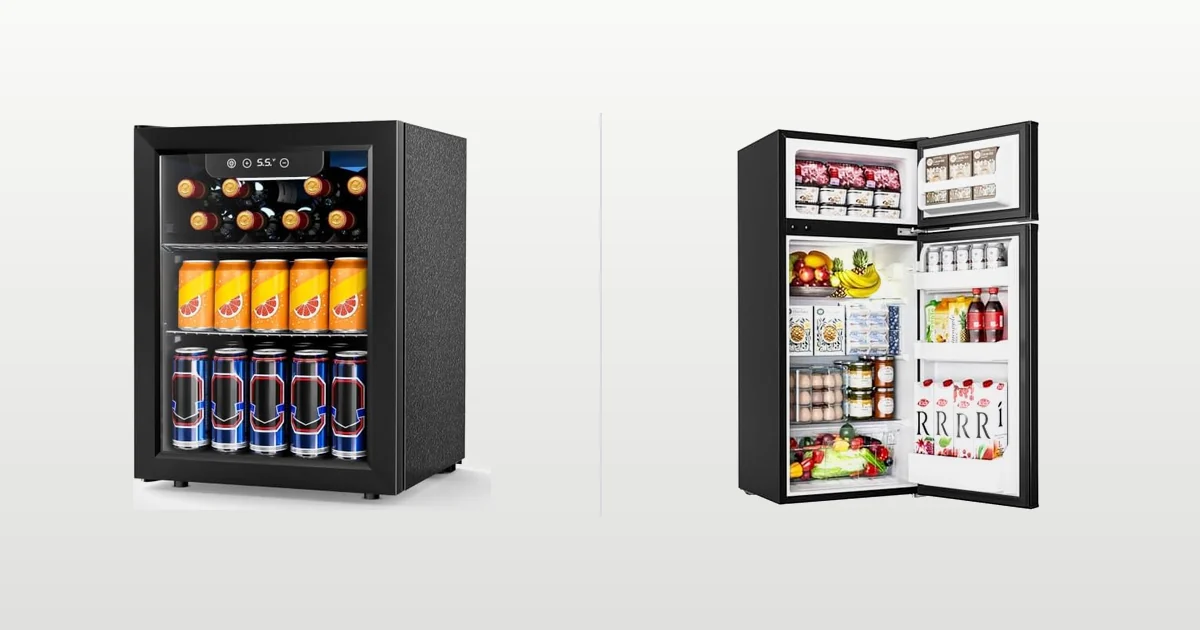
Nothing in this search is sixteen cubic feet. Nothing is close. The largest mini fridge on this page is 4.5 cubic feet, and the median is 1.7.
That is not a gap in the market. Sixteen cubic feet is a full-size domestic refrigerator — the sort with two doors and an ice dispenser, roughly six feet tall. It is not a category any manufacturer would describe as mini, and none does.
The number appears to be traceable. The third best-selling product in this search is a COWSAR whose title reads “16 Bottle 68 Can Beverage Refrigerator”. In a category where every product is measured in cubic feet, a high-ranking listing carrying the number 16 is a very plausible route for “16 cu ft mini fridge” to enter circulation. The sixteen is a bottle count.
There is a second and more consequential thing to know. Six of the ten units below have a stated temperature range of 40°F to 61°F — meaning 40°F is the coldest they reach. USDA guidance for refrigerated food is at or below 40°F, so those six sit exactly at the top of the safe band with no margin. They are drinks coolers. Food does not belong in them.
Ten below, from 0.6 to 4.5 cubic feet and $95.99 to $259.99, with every published measurement recorded.
Our Quick Picks
 Best OverallFeelfunn 1.7 Cu.Ft
One point seven cubic feet, 16.9 by 16.3 by 22.6 inches, with a double-pane LOW-E glass door and touchscreen control.
 Best for FoodMidea 1.6 Cu.ft
Down to 28.4°F, Energy Star certified at 207 kWh a year, under 42 dB, with a reversible door and a removable glass shelf.
 Largest HereEUHOMY 4.5 Cu.Ft 2-Door
Four point five cubic feet across two doors, with a freezer reaching -7.6°F and a stated 38 decibels.
At a Glance
Ten Fridges, Compared on Actual Capacity
Cubic feet, what each maker claims it holds, how cold it gets, and the one specification each chose to lead on.
| # | Model | Capacity | Holds | Cooling | Detail | Standout | Main Drawback | Check Price |
|---|---|---|---|---|---|---|---|---|
| 1 |
 Feelfunn 1.7 Cu.Ft Feelfunn 1.7 Cu.Ft |
1.7 cu ft | 68 cans | 40–61°F | LOW-E glass | Rank #27, and every external dimension published | 40°F is its coldest setting, not its warmest | View on Amazon |
| 2 |
 Midea 1.6 Cu.ft Midea 1.6 Cu.ft |
1.6 cu ft | 28.4°F | 207 kWh/yr | Energy Star | The only unit here that reaches 28.4°F, and the only one Energy Star certified | Solid door — you cannot see in | View on Amazon |
| 3 |
 COWSAR 16 Bottle 68 Can COWSAR 16 Bottle 68 Can |
1.7 cu ft | 16 bottles | 40–61°F | Touch panel | Its title says 16 Bottle, which is very likely the source of the search term | Still only 1.7 cubic feet | View on Amazon |
| 4 |
 EUHOMY 4.5 Cu.Ft 2-Door EUHOMY 4.5 Cu.Ft 2-Door |
4.5 cu ft | -7.6°F | 38 dB | 2 doors | Four and a half cubic feet, and a freezer that genuinely freezes | Still less than a third of 16 cu ft | View on Amazon |
| 5 |
 Icyglee 1.7 Cu.Ft Icyglee 1.7 Cu.Ft |
1.7 cu ft | 68 cans | Under 38 dB | Reversible | Under 38 decibels, the lowest figure published here | 40°F floor, like every beverage cooler here | View on Amazon |
| 6 |
 Igloo 3.2 Cu.Ft Igloo 3.2 Cu.Ft |
3.2 cu ft | 32–50°F | Freezer | Static cooling | Reaches 32°F and has a separate freezer compartment | Static cooling means uneven temperatures | View on Amazon |
| 7 |
 COSTWAY 18L Countertop COSTWAY 18L Countertop |
0.6 cu ft | 24 cans | 40–61°F | Tri-layer door | Zero point six cubic feet — a twenty-sixth of the search term | Holds 24 cans and nothing else | View on Amazon |
| 8 |
 Frestec 3.2 Cu.Ft Frestec 3.2 Cu.Ft |
3.2 cu ft | 0.55 kWh/day | 6 settings | One-touch defrost | Publishes a daily running cost of seven cents | Rank #9,478, lowest here | View on Amazon |
| 9 |
 EUHOMY 68 Can 1.7 Cu.Ft EUHOMY 68 Can 1.7 Cu.Ft |
1.7 cu ft | 68 cans | Double glass | LED | A double-layer glass door and a digital display | Publishes less than its identically sized rivals | View on Amazon |
| 10 |
 Antarctic Star 18L Antarctic Star 18L |
0.6 cu ft | 24 bottles | 40–61°F | Wire shelf | Twenty-four bottles in 18 litres for $109.99 | 0.6 cu ft, and no dimensions published | View on Amazon |
Specifications and prices are taken from each manufacturer’s Amazon listing as displayed on 23 August 2026 through a United States connection, and may change. No product in this search is 16 cubic feet; the range is 0.6 to 4.5. Capacity claims stated in cans or bottles are the manufacturer’s figures and generally assume shelves removed and optimal packing — 68 twelve-ounce cans is roughly 0.68 cubic feet of liquid in a 1.7 cubic foot cabinet, with the remainder taken by shelving, air gaps and the shape of the cans. Temperature ranges are as published; where a unit’s minimum is 40°F it is a beverage cooler and is not suitable for storing perishable food, for which USDA guidance is at or below 40°F. Noise and energy figures are recorded only where the manufacturer publishes them; most do not. Sales ranks are shown as displayed and can be pooled across a variant family.
Scroll the table sideways to see every column
How We Chose These Ten
We researched current listings, compared manufacturer specifications and documentation, and examined recurring patterns in customer feedback. We did not carry out hands-on testing, and nothing below is presented as measured performance data.
- Actual cubic feet recorded for every unit — because the search term names a capacity that does not exist here
- Minimum temperature recorded where published — six of ten stop at 40°F and cannot safely hold food
- A verified live buy box — all ten confirmed purchasable in the United States on 23 August 2026
- No overlap with our published mini fridge guide — two results were excluded as already covered
- The full size range represented — 0.6, 1.6, 1.7, 3.2 and 4.5 cubic feet all appear
- External dimensions noted where given — only four of ten publish width, depth and height
- Noise and energy figures recorded where published — three give a decibel figure; two give an energy figure

The Ten Fridges in Detail
1. Feelfunn 1.7 Cu.Ft — Best Overall

Rank #27, and it publishes width, depth and height. Very few appliances at this price do both.
Key Specifications
| Capacity | 1.7 cu ft — stated 68 cans |
|---|---|
| Dimensions | 16.9 in W x 16.3 in D x 22.6 in H |
| Temperature range | 40°F to 61°F |
| Door | Double-pane glass with LOW-E coating |
| Control | Precision touchscreen |
| Cooling | 3D circulating air, R600a refrigerant, low-frost |
| Shelf | Removable |
| Rank | #27 — best on this page |
| Price | $159.99 |
| Best For | Drinks, and only drinks |
Why We Recommend It
Read the temperature range before anything else. Forty to sixty-one degrees Fahrenheit means 40°F is the coldest this unit goes. The USDA guidance for refrigerated food storage is at or below 40°F, so this sits exactly at the top of the safe band with no margin at all. It is a beverage cooler, it is sold as a beverage cooler, and food does not belong in it.
LOW-E on a double-pane door is a genuine feature. It is a microscopically thin metallic oxide layer that reflects infrared while passing visible light — the same coating used on modern window glazing. On a glass-door fridge it cuts the radiant heat load substantially, which is the main thermal weakness of showing off what is inside.
R600a is isobutane, now the standard refrigerant in small appliances. It has a negligible global warming potential compared with the R134a it replaced, and it runs efficiently in small charges.
Sixteen point nine inches wide by 22.6 high means it fits under most desks and on most counters. Check the depth against a countertop overhang.
Pros
- Rank #27, best on this page
- Publishes width, depth and height
- LOW-E double-pane door cuts radiant heat
- Touchscreen control with a wide range
- R600a refrigerant, efficient and low-impact
- Removable shelf for taller bottles
Cons
- Only cools to 40°F — not for food
- $159.99, joint most expensive of the 1.7 cu ft units
- No noise figure published
- Glass doors always cost efficiency
- 68-can figure assumes the shelf is removed
- No freezer compartment
Best for: Drinks at a desk or a bar, where 40°F is cold enough.
2. Midea 1.6 Cu.ft — Best for Food

Twenty-eight point four degrees. Six of the ten units on this page stop at forty.
Key Specifications
| Capacity | 1.6 cu ft |
|---|---|
| Dimensions | 18.6 in W x 17.7 in D x 19.4 in H |
| Minimum temperature | 28.4°F — genuinely below freezing |
| Energy | Energy Star certified, 207 kWh per year |
| Noise | Under 42 dB |
| Refrigerant | R600a high-efficiency compressor |
| Door | Reversible, opens left or right |
| Shelf | Removable glass |
| Rank | #2,515 in its category |
| Price | $129.91 |
| Best For | Anyone who actually wants to keep food cold |
Why We Recommend It
This is the specification that separates a refrigerator from a drinks cooler, and it is the reason to buy this one. The USDA recommends food be stored at or below 40°F, and a unit whose coldest setting is exactly 40°F leaves you no margin for a warm room, a door left ajar or a thermostat that drifts. The Midea reaching 28.4°F means milk, leftovers and anything perishable are genuinely safe in it.
Energy Star certification with a published figure is the other thing nothing else here offers. Two hundred and seven kilowatt hours a year is roughly thirty dollars of electricity at typical US rates — and it is a verified number rather than a claim, which is the whole point of the certification.
A reversible door matters more in small spaces than large ones. In a dorm room or a narrow galley, which side the door opens can decide whether the fridge is usable at all.
A solid door is the trade. You cannot see what is inside, and it is far more thermally efficient than any glass door on this page.
Pros
- Reaches 28.4°F — safe for food
- Energy Star certified with a published 207 kWh/yr
- Under 42 dB and R600a refrigerant
- Reversible door for either-side opening
- Removable glass shelf
- Publishes all three external dimensions
Cons
- Solid door — no visibility of contents
- Mechanical thermostat rather than digital
- 1.6 cu ft is small for food storage
- No separate freezer compartment
- Rank #2,515, well behind the beverage coolers
- 18.6 inches wide is broader than most here
Best for: Anyone storing food rather than drinks. It is the only sub-2 cu ft unit here that can.
3. COWSAR 16 Bottle 68 Can — Where the 16 Comes From

“16 Bottle 68 Can”. That is where the sixteen comes from, and it has nothing to do with cubic feet.
Key Specifications
| Capacity | 1.7 cu ft — stated 16 bottles or 68 cans |
|---|---|
| Note | The 16 refers to bottles, not cubic feet |
| Temperature range | 40°F to 61°F |
| Control | Digital touchscreen panel |
| Certification | ETL approved |
| Frame | Stainless steel with soft blue LED |
| Shelving | Wire |
| Rank | #178 — third best here |
| Price | $149.98 |
| Best For | Wine and bottles rather than cans |
Why We Recommend It
This is very probably the origin of the whole search term. A high-ranking listing carrying the number 16 in its title, in a category where every product is measured in cubic feet, is exactly how a phrase like “16 cu ft mini fridge” enters circulation. The sixteen is a bottle count. The unit is 1.7 cubic feet, the same as five other products on this page.
Bottle capacity is a more useful figure than can capacity if you are storing wine or long-neck beers, because those are what actually fail to fit. Sixteen bottles laid on wire shelving is a real specification; sixty-eight cans is a theoretical maximum with the shelves out.
ETL approval is a genuine safety certification — testing to the same standards UL uses, by a different accredited laboratory. Two units on this page mention it and the rest do not.
Forty to sixty-one degrees again, which is the wine-and-drinks range. Not for food.
Pros
- Rank #178, third best on this page
- 16-bottle capacity is a genuinely useful figure
- ETL safety certification
- Digital touchscreen with a 40–61°F range
- Stainless frame and wire shelving
- Suits wine as well as cans
Cons
- Only cools to 40°F — not for food
- The ’16’ is bottles, not cubic feet
- No external dimensions published
- No noise figure given
- Wire shelves rattle with bottles
- $149.98 for 1.7 cu ft
Best for: Bottles and wine at drinking temperature, not food storage.
4. EUHOMY 4.5 Cu.Ft 2-Door — Largest Here

Four point five cubic feet is the ceiling of this entire category, and it is 28 percent of what the search term asks for.
Key Specifications
| Capacity | 4.5 cu ft — largest on this page |
|---|---|
| Configuration | Two doors, separate freezer |
| Freezer temperature | Down to -7.6°F |
| Cooling levels | 3, adjustable |
| Dimensions | 18.1 x 18.9 x 42.9 inches |
| Noise | 38 dB |
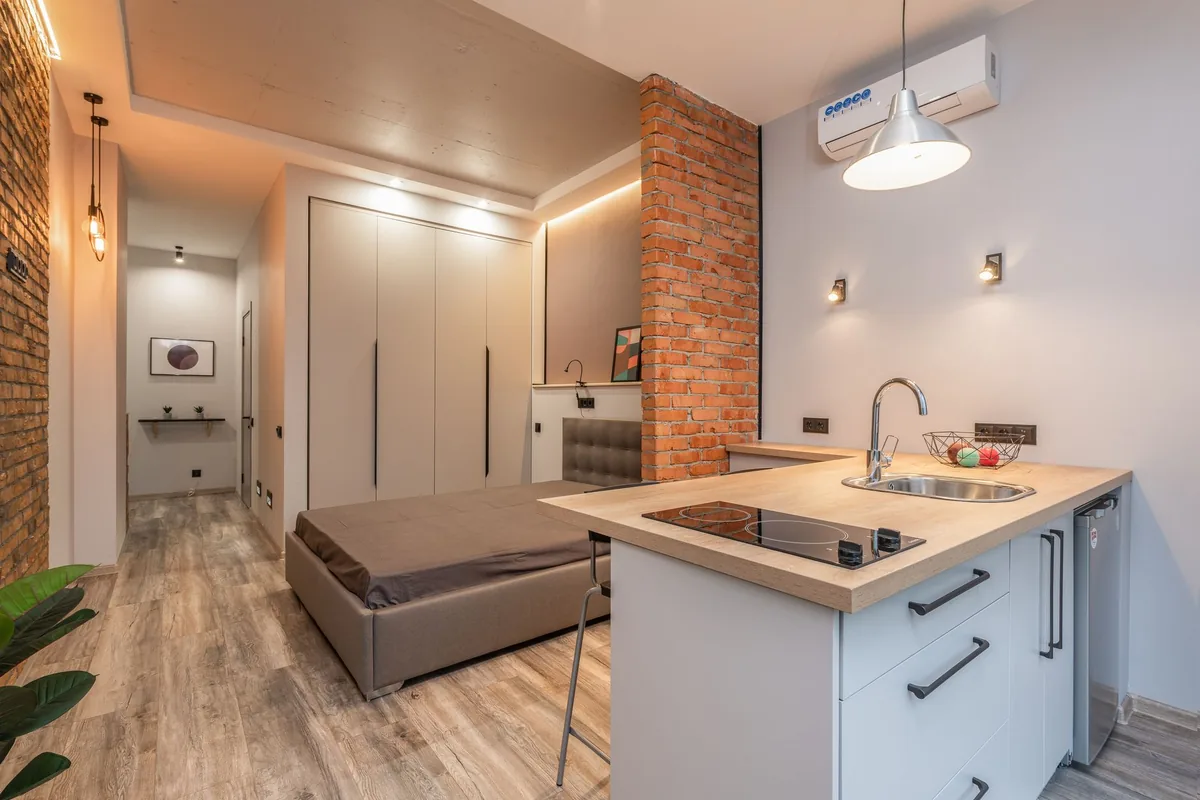
| Suitability | Dorms, apartments, bedrooms, offices, RVs |
| Rank | #3,382 in its category |
| Price | $259.99 |
| Best For | The most capacity this category actually offers |
Why We Recommend It
Minus seven point six degrees is a real freezer. Domestic freezers are specified at 0°F, so this comfortably clears it — frozen food will keep for months rather than turning to slush over a fortnight. That is a genuine two-door refrigerator-freezer in miniature, not a chilled box with an ice compartment.
Forty-two point nine inches tall is the figure to check. This is a waist-height appliance, not a countertop one, and at 18.9 inches deep it protrudes further than a standard kitchen counter in many rooms.
Thirty-eight decibels is quiet — roughly a library — and is the joint lowest figure published here. In a bedroom or a studio flat that matters more than almost any other specification.
At $259.99 it is by far the most expensive product here, and the price per cubic foot is nonetheless among the best on the page. That is what buying up the range gets you.
Pros
- 4.5 cu ft — largest capacity here
- Freezer reaches -7.6°F, genuinely below 0
- Two doors keep freezer and fridge separate
- 38 dB, joint quietest on this page
- Publishes all three external dimensions
- Best price per cubic foot here
Cons
- $259.99 — most expensive on this page
- 42.9 inches tall, not a countertop unit
- 18.9 inches deep protrudes past most counters
- Rank #3,382
- Two doors mean two seals to fail
- Still under a third of 16 cu ft
Best for: Anyone who needs the most a mini fridge can actually give them.
5. Icyglee 1.7 Cu.Ft — Quietest

Under thirty-eight decibels is quieter than a whisper at a metre, and it is the number that decides whether a fridge belongs in a bedroom.
Key Specifications
| Capacity | 1.7 cu ft — stated 68 cans |
|---|---|
| Noise | Under 38 dB — quietest here |
| Compressor | Energy-efficient R600a with rapid cooling |
| Control | Digital temperature control |
| Door | Fully reversible |
| Certification | ETL |
| Rank | #43 — second best here |
| Price | $149.99 |
| Best For | Bedrooms, where noise decides everything |
Why We Recommend It
Compressor noise is the most common regret in this category. A compressor does not run constantly — it cycles, which means it starts and stops through the night, and the transition is more noticeable than the steady running. Only three units on this page publish a decibel figure at all, and this is the lowest of them.
A fully reversible door on a 1.7 cu ft unit is more thoughtful than it sounds. Beverage coolers usually go under a desk or beside a chair, where the hinge side determines whether you can reach in without standing up.
Rank #43 with ETL certification at $149.99 makes this the value pick among the six near-identical 1.7 cubic foot beverage coolers here — it is ten dollars less than two of them and publishes more.
The temperature floor is the same 40°F. Everything in this size class on this page is a drinks cooler.
Pros
- Under 38 dB — quietest published figure here
- Rank #43, second best on this page
- Fully reversible door
- ETL certified
- R600a compressor with rapid cooling
- $149.99, cheaper than two identical rivals
Cons
- 40°F floor — not suitable for food
- No external dimensions published
- No freezer compartment
- 68-can figure assumes shelves removed
- Glass door costs thermal efficiency
- Unfamiliar brand
Best for: A bedroom or a quiet office, where compressor cycling would otherwise wake you.

6. Igloo 3.2 Cu.Ft — Best Known Brand

Thirty-two to fifty degrees. It reaches freezing point, which puts it in a different class from the beverage coolers above.
Key Specifications
| Capacity | 3.2 cu ft |
|---|---|
| Cooling range | 32°F to 50°F |
| Freezer | Separate compartment for frozen food |
| Thermostat | Adjustable mechanical |
| Cooling type | Compressor static cooling, no fan |
| Shelves | Glass |
| Brand | Igloo |
| Rank | #2,716 in its category |
| Price | $159.52 |
| Best For | Food storage from a name people recognise |
Why We Recommend It
Static cooling is worth understanding before you buy. There is no fan circulating air inside — the evaporator chills the cabinet by conduction and convection alone. That makes the unit quieter and cheaper, and it means temperatures vary noticeably between the top and bottom of the cabinet and around the freezer compartment. Frost also builds up, so it will need manual defrosting.
A separate freezer compartment in 3.2 cubic feet is a small internal box rather than a second sealed door, and it will hold ice trays and a few frozen items. Do not expect it to hold food for months the way the two-door unit above will.
A mechanical thermostat is a dial, not a temperature setting. You choose a number from one to seven and find the right position by trial, which is less precise than the digital controls on the beverage coolers here and considerably more durable.
Igloo is a recognised brand, which at $159.52 is a real part of what you are paying for.
Pros
- Cools to 32°F — safe for food
- Separate freezer compartment
- Recognised brand with a returns path
- Glass shelves are easy to clean
- Static cooling is quiet and simple
- 3.2 cu ft, double most units here
Cons
- Static cooling gives uneven internal temperatures
- Frost builds up and needs manual defrosting
- Mechanical dial rather than a temperature setting
- No external dimensions published
- No noise figure given
- Freezer compartment is small and unsealed
Best for: Food storage in a dorm or office, from a brand you have heard of.
7. COSTWAY 18L Countertop — Smallest

Zero point six cubic feet. To reach sixteen you would need twenty-six of these.
Key Specifications
| Capacity | 18 L / 0.6 cu ft — smallest here |
|---|---|
| Stated capacity | 24 standard 330 ml cans |
| Temperature range | 40°F to 61°F |
| Cooling | High-efficiency compressor with 360° air circulation |
| Door | Tri-layer insulated, blocks sunlight |
| Lighting | Soft blue LED |
| Placement | Countertop |
| Rank | #567 in its category |
| Price | $95.99 |
| Best For | A desk, and a genuinely small number of drinks |
Why We Recommend It
It is a compressor unit, not a thermoelectric one, and that is the important distinction at this size. Many small desktop coolers use a Peltier element, which can only chill to a fixed number of degrees below the room and struggles in summer. A compressor holds a set temperature regardless of ambient, which is why this can promise 40°F and mean it.
360° air circulation is a fan, which is what distinguishes this from the static-cooled Igloo further up. Air movement evens the temperature through the cabinet and reduces frost, at the cost of a little noise.
A tri-layer insulated door blocking sunlight addresses the real weakness of a glass front. Radiant heat through glass is a substantial load on a cabinet this small, and it is why glass-door units are less efficient than solid ones.
Ninety-six dollars is the cheapest entry here, and rank #567 is respectable. Just be clear it holds two dozen cans.
Pros
- Compressor rather than thermoelectric cooling
- 360° air circulation evens the temperature
- Tri-layer insulated door blocks sunlight
- $95.99, cheapest on this page
- Genuinely countertop sized
- Rank #567
Cons
- 0.6 cu ft holds only 24 cans
- 40°F floor — not for food
- No external dimensions published
- No noise figure given
- Fan adds some noise over static cooling
- No freezer of any kind
Best for: A desk or a small office, for two dozen drinks and nothing more.
8. Frestec 3.2 Cu.Ft — Cheapest Running Cost

Fifty-five hundredths of a kilowatt hour a day, and the listing does the arithmetic for you: about seven cents.
Key Specifications
| Capacity | 3.2 cu ft |
|---|---|
| Dimensions | 17.83 in W x 16.73 in D x 33.27 in H |
| Energy use | 0.55 kWh per day, stated as about $0.07 |
| Thermostat | 6 adjustable settings |
| Defrost | One-touch |
| Freezer | Included |
| Guarantee | 1 year |
| Rank | #9,478 in its category |
| Price | $102.99 |
| Best For | The lowest cost of ownership on this page |
Why We Recommend It
Running cost is the specification nobody publishes and everybody pays. A fridge is one of the few appliances that runs continuously for years, so the difference between an efficient and an inefficient unit compounds quietly. Frestec quoting a daily figure — roughly twenty-five dollars a year — is more useful than the annual kilowatt-hour figures that require you to know your own tariff, and only one other product here publishes anything comparable.
One-touch defrost is a real convenience on a unit with a freezer compartment. The alternative on cheap fridges is switching it off and waiting with a towel, which is why frost tends to be left until the compartment is unusable.
Thirty-three inches tall by 17.8 wide puts it under a worktop but not on one, and all three dimensions are published.
Rank #9,478 is the lowest on this page by a wide margin, and the listing leans heavily on decorative typography rather than specification. The numbers it does give are good ones.
Pros
- Publishes daily energy use and running cost
- 3.2 cu ft with a freezer for $102.99
- One-touch defrost
- 6 adjustable thermostat settings
- All three external dimensions published
- Cheapest per cubic foot here
Cons
- Rank #9,478 — lowest on this page
- No temperature range published
- Only a 1-year guarantee
- Unfamiliar brand
- No noise figure given
- Listing relies on styled text over specification
Best for: Anyone weighing what the fridge costs to run rather than to buy.
9. EUHOMY 68 Can 1.7 Cu.Ft — Best Door

Rank #447, and a listing that describes rather than measures.
Key Specifications
| Capacity | 1.7 cu ft — stated 68 cans |
|---|---|
| Door | Double-layer glass for insulation |
| Control | Digital display |
| Lighting | Interior LED |
| Noise | Described as whisper-quiet; no figure given |
| Energy | Described as low consumption; no figure given |
| Rank | #447 in its category |
| Price | $159.99 |
| Best For | Display, if you like the door and accept the vagueness |
Why We Recommend It
Whisper-quiet, low energy consumption, superior chilling — all three are claims without numbers, and all three are numbers its direct rivals on this page do publish. The Icyglee states under 38 dB; the Midea states 207 kWh a year and Energy Star certification; the Feelfunn gives full external dimensions. EUHOMY gives none of those and costs the same as the most expensive of them.
The double-layer glass door is real and worth having. Two panes with a gas gap between them roughly halve the conducted heat compared with single glazing, which on a glass-fronted cabinet is the single largest thermal loss. It is the same principle as domestic double glazing.
At 1.7 cubic feet and 40°F this is functionally the same appliance as four others on this page, and the differences between them are the specifications each maker chose to publish.
Buy it if you prefer the look, because on paper the Icyglee at ten dollars less tells you more.
Pros
- Double-layer glass door halves conducted heat
- Rank #447
- Digital display and interior LED
- 1.7 cu ft holding a stated 68 cans
- Established seller in this category
- Clean appearance
Cons
- No noise figure, energy figure or dimensions published
- $159.99 — joint most expensive 1.7 cu ft unit here
- Claims are qualitative where rivals give numbers
- 40°F floor — not for food
- Outspecified by a cheaper identical-size rival
- No freezer
Best for: Buyers choosing on appearance among six near-identical beverage coolers.
10. Antarctic Star 18L — Best Small Value

Rank #267 at 0.6 cubic feet. It is the best-ranked of the two smallest units here.
Key Specifications
| Capacity | 18 L / 0.6 cu ft |
|---|---|
| Stated capacity | 24 bottles of beverage |
| Temperature range | 40°F to 61°F |
| Compressor | Quiet, freestanding |
| Door | LED glass |
| Shelf | Steel wire, matched to the cabinet |
| Electrical | 115 V / 60 Hz, electronic control |
| Rank | #267 in its category |
| Price | $109.99 |
| Best For | Bottles at wine temperature in the smallest footprint |
Why We Recommend It
Twenty-four bottles rather than twenty-four cans is the distinction worth noting against the COSTWAY at a similar size. Bottles are taller and take shelf height rather than shelf area, so a cabinet rated for bottles is usually the more flexible of the two — cans will always fit where bottles do, and the reverse is not true.
The 40°F to 61°F range is the wine range, and the listing says so, mentioning red wine explicitly. Fifty-five to sixty degrees is conventional for reds and this reaches it comfortably, which most food-capable fridges cannot do at the warm end.
Stating 115 V / 60 Hz is a small thing almost nobody bothers with, and it confirms this is a US-market unit rather than a relabelled import with an adapter.
At $109.99 it costs fourteen dollars more than the COSTWAY for the same volume, and ranks three hundred places better.
Pros
- Rank #267, best of the sub-1 cu ft units
- Rated for 24 bottles, not just cans
- Reaches wine service temperature at the warm end
- Steel wire shelf matched to the cabinet
- Publishes its electrical specification
- Quiet freestanding compressor
Cons
- 0.6 cu ft is very small
- 40°F floor — not for food
- No external dimensions published
- No noise figure given
- $109.99 against $95.99 for the same volume
- No freezer
Best for: Wine and bottles, in the smallest cabinet that will take them.
A Beverage Cooler Against a Refrigerator
Similar size, similar price, and one of them cannot safely hold food.
| Feelfunn 1.7 Cu.Ft | Midea 1.6 Cu.ft | |
|---|---|---|
| Capacity | 1.7 cu ft | 1.6 cu ft |
| Coldest setting | 40°F | 28.4°F |
| Safe for perishable food | No | Yes |
| Energy figure published | No | 207 kWh/yr, Energy Star |
| Noise figure published | No | Under 42 dB |
| Door | Glass, LOW-E double pane | Solid, reversible |
| Rank | #27 | #2,515 |
| Price | $159.99 | $129.91 |
The beverage cooler ranks ninety times better and costs thirty dollars more. It is a good product and it is not a refrigerator — at 40°F, milk and leftovers are sitting at the very top of the USDA safe band with no margin for a warm room or a door left open. If you want to keep food, the specification to look for is a minimum temperature below 40°F, and on this page only four of ten units have one.

What ‘Mini’ Actually Spans, and Where 16 Would Sit
Every capacity in this search, in order.
| Fridge | Capacity | Coldest | Freezer | Rank | Price |
|---|---|---|---|---|---|
| COSTWAY 18L | 0.6 cu ft | 40°F | No | #567 | $95.99 |
| Antarctic Star 18L | 0.6 cu ft | 40°F | No | #267 | $109.99 |
| Midea | 1.6 cu ft | 28.4°F | No | #2,515 | $129.91 |
| Icyglee | 1.7 cu ft | 40°F | No | #43 | $149.99 |
| COWSAR ’16 Bottle’ | 1.7 cu ft | 40°F | No | #178 | $149.98 |
| Feelfunn | 1.7 cu ft | 40°F | No | #27 | $159.99 |
| EUHOMY 68 Can | 1.7 cu ft | Not stated | No | #447 | $159.99 |
| Frestec | 3.2 cu ft | Not stated | Yes | #9,478 | $102.99 |
| Igloo | 3.2 cu ft | 32°F | Yes | #2,716 | $159.52 |
| EUHOMY 2-Door | 4.5 cu ft | -7.6°F freezer | Yes | #3,382 | $259.99 |
Sixteen cubic feet would be more than three times the largest unit here and twenty-six times the smallest. To get there you are looking at a full-size domestic refrigerator, typically around 30 inches wide and 65 to 70 inches tall — a different product category with a different price, sold as an apartment or full-size fridge rather than a mini one.
Best Alternatives
| Alternative | Why Consider It | Better For | Main Trade-Off |
|---|---|---|---|
| A full-size apartment fridge | Actually reaches 10 to 18 cu ft, which is what the search implies | Anyone genuinely needing that capacity | Needs floor space, and costs several times more |
| Two mini fridges | One for food at 32°F, one for drinks at 45°F | Dorms and offices with mixed needs | Two compressors running, and two power draws |
| A chest freezer plus a small fridge | Far more frozen storage per dollar | Bulk buying and batch cooking | Chest freezers need real floor area |
| A thermoelectric cooler | Silent, with no compressor to cycle | Bedside use where noise is unacceptable | Only chills relative to the room, and fails in summer |
What the Money Actually Buys
$95.99 to $129.91 — COSTWAY, Frestec, Antarctic Star, Midea. The most interesting tier, and it contains both the smallest unit here and the only Energy Star certified one. The Frestec gives you 3.2 cubic feet and a freezer for $102.99, and the Midea is the only sub-2 cubic foot fridge on this page that can safely hold food.
$149.98 to $159.99 — Icyglee, COWSAR, Igloo, Feelfunn, EUHOMY. Where five near-identical 1.7 cubic foot beverage coolers sit, separated almost entirely by which specifications each maker chose to publish. The Igloo is the exception, offering 3.2 cubic feet and a freezer for the same money.
$259.99 — EUHOMY 4.5 Cu.Ft. The only unit here with a genuine two-door configuration and a freezer reaching -7.6°F. It is the most expensive product on the page and among the best value per cubic foot, which is what buying up the range usually looks like.
What to Check Before You Buy
Check the Minimum Temperature Before Anything Else
This is the specification that decides whether you have bought a refrigerator or a drinks cabinet, and six of the ten units here fail it. A stated range of 40°F to 61°F means 40°F is the coldest the unit reaches. USDA guidance for refrigerated food is at or below 40°F, so a fridge whose floor is exactly 40°F gives you no margin at all — not for a warm room, not for a door left ajar, not for a thermostat that drifts a degree. If you intend to keep milk, leftovers or anything perishable, look for a published minimum below 40°F.
Translate Can Counts Into Cubic Feet
Manufacturers in this category advertise capacity in cans because the number is larger and more vivid than the volume. Do the arithmetic once and the claims lose their power: 68 standard twelve-ounce cans is about 816 fluid ounces, which is roughly 0.68 cubic feet of liquid sitting in a 1.7 cubic foot cabinet. The rest is shelving, air gaps and the fact that cylinders do not tessellate. Can ratings also generally assume you have removed the shelves and stacked the cans on their sides, which nobody does.
Look for a Published Decibel Figure
A compressor does not run continuously — it cycles on and off, and the moment it starts is far more noticeable than the steady hum. In a bedroom, a studio flat or a small office, this is the specification most likely to produce regret, and only three of the ten units here publish a number. The two that do are at 38 dB and under 42 dB, which is the difference between a library and a quiet conversation. Where no figure is given, phrases like whisper-quiet are a claim rather than a measurement.
Prefer a Published Energy Figure
A fridge is among the very few appliances that runs continuously for years, so a difference in efficiency compounds quietly into real money. Two products here publish something useful: an Energy Star certification with 207 kWh a year, and a daily figure of 0.55 kWh which the seller helpfully converts to about seven cents. Everything else describes itself as energy efficient without a number. Energy Star in particular is a verified certification rather than a marketing claim, which is precisely what makes it worth looking for.
Measure the Space, Then Check It Publishes Dimensions
Only four of these ten listings give width, depth and height, which for an appliance that has to fit somewhere specific is a remarkable omission. Depth is the one that catches people out: a standard kitchen counter is about 24 inches deep with the overhang, and a unit at 18.9 inches deep plus door clearance will protrude further than you expect. Height matters for under-desk placement, and the 4.5 cubic foot unit here is 42.9 inches tall, which is waist height rather than desk height.
Understand Static Cooling Versus Fan Circulation
Two approaches appear on this page and they behave differently. Static cooling has no fan; the evaporator chills the cabinet by conduction and convection, which is quieter and cheaper and produces noticeably uneven temperatures between the top and bottom of the cabinet, along with frost that needs manual defrosting. Fan circulation, described on some listings as 360° air circulation, evens the temperature and reduces frost at the cost of a little noise. For food storage the fan is worth having; for drinks it matters very little.
Glass Doors Cost Efficiency, and Some Mitigate It
Every beverage cooler here has a glass door, because the point is displaying what is inside, and glass is a far worse insulator than an insulated panel. The better products address this in ways worth looking for: double-pane construction with a gas gap roughly halves conducted heat, a LOW-E coating reflects infrared while passing visible light, and a tri-layer door blocks solar gain if the unit sits anywhere near a window. Three units here name one of these. A single-pane glass door in a sunny room is the least efficient combination in this category.
Common Mistakes
- Searching for a capacity that does not exist. Mini fridges top out around 4.5 cu ft; 16 is a full-size fridge.
- Reading ’16 Bottle’ as 16 cubic feet. One high-ranking listing here has exactly that in its title.
- Putting food in a beverage cooler. Six of these ten stop at 40°F, the top of the USDA safe band.
- Trusting can counts. 68 cans is about 0.68 cu ft of liquid, with shelves removed.
- Ignoring noise. Compressors cycle, and only three listings here publish a decibel figure.
- Not measuring depth. Four of ten publish no dimensions, and depth is what protrudes past a counter.
- Assuming a freezer compartment freezes. Only the 4.5 cu ft unit here states a figure below 0°F.
Who Should Buy Which
Buy the Midea at $129.91 if you want to keep food. It reaches 28.4°F, it is the only Energy Star certified unit here with a published 207 kWh a year, and it is the only sub-2 cubic foot fridge on this page that is genuinely safe for perishables.
Buy the Feelfunn at $159.99 for drinks. Rank #27, a LOW-E double-pane door, touchscreen control and full external dimensions — the best-selling product in this search, and a good one.
Buy the EUHOMY 4.5 Cu.Ft at $259.99 if you need the most a mini fridge can give. Two doors, a freezer reaching -7.6°F, and 38 decibels.
Buy the Frestec at $102.99 for the lowest cost of ownership. Three point two cubic feet with a freezer, and a published running cost of about seven cents a day.
Buy the Icyglee at $149.99 if the fridge goes in a bedroom. Under 38 decibels is the lowest published figure on this page.
Frequently Asked Questions
Is there such a thing as a 16 cubic foot mini fridge?
No. Sixteen cubic feet is a full-size domestic refrigerator, typically around 30 inches wide and 65 to 70 inches tall, and no manufacturer describes a unit that size as mini. Across the whole of this search the largest capacity available is 4.5 cubic feet and the median is 1.7, so sixteen would be more than three times the biggest unit here and twenty-six times the smallest. If you genuinely need that capacity, the products to look at are sold as apartment-size or full-size refrigerators, which is a different category at a considerably higher price. The term appears to be a misreading, and the likely source is identifiable: the third best-selling product in this search is a COWSAR whose title begins ’16 Bottle 68 Can Beverage Refrigerator’. The sixteen is a bottle count, not a volume.
Can I store food in a mini fridge?
Only in some of them, and the specification to check is the minimum temperature rather than the size. Six of the ten units in this roundup publish a range of 40°F to 61°F, which means 40°F is the coldest they will go. USDA guidance is that refrigerated food should be held at or below 40°F, so those units sit precisely at the top of the safe band with no margin for a warm room, a door left ajar, or a thermostat drifting a degree over time. They are beverage coolers and are sold as such. Four units here do better: one reaches 28.4°F, one covers 32 to 50°F, and two include freezer compartments, one of which reaches -7.6°F. If you plan to keep milk, leftovers or anything perishable, look for a published minimum below 40°F and treat its absence as a warning.
How many cans does a mini fridge actually hold?
Fewer than the listing says, in practice. A 68-can rating on a 1.7 cubic foot cabinet is arithmetically possible but assumes you have removed the shelving and packed the cans on their sides in an optimal arrangement. Sixty-eight standard twelve-ounce cans is about 816 fluid ounces, roughly 0.68 cubic feet of actual liquid, and the remaining cubic foot is taken up by the cans’ own material, the air gaps between cylinders, and the shelves you probably want to keep. In normal use with shelves fitted, expect meaningfully less. Bottle ratings tend to be more realistic because bottles are stored upright on shelves, which is how people actually use these cabinets — one unit here is rated for 16 bottles and another for 24.
What is the difference between a beverage cooler and a mini fridge?
Temperature range, and it is a bigger difference than the similar appearance suggests. A beverage cooler is designed to hold drinks at drinking temperature, typically 40 to 61°F, which covers everything from chilled beer to red wine at cellar temperature. It usually has a glass door so you can see the contents and often wire or glass shelving sized for bottles. A mini fridge is a scaled-down refrigerator: it reaches lower temperatures, frequently has a solid insulated door, and may include a freezer compartment. The practical consequence is that a beverage cooler cannot safely store perishable food, and six of the ten products in this search are beverage coolers even though all ten appear under the same search term.
Are mini fridges noisy?
It depends on the unit, and the frustrating part is that most listings will not tell you. A compressor fridge does not hum continuously — it cycles on and off to hold temperature, and the moment the compressor starts is far more noticeable than its steady running, particularly at night. Only three of the ten products here publish a decibel figure at all: one states under 38 dB, one 38 dB and one under 42 dB. For reference, 38 dB is roughly a quiet library and 42 dB approaches a soft conversation. Where a listing says whisper-quiet without a number, that is a claim rather than a measurement. If the fridge is going in a bedroom or a studio flat, treat a published figure as close to essential.
How much does a mini fridge cost to run?
Less than most people expect, though the units vary and almost none of them say. Two products in this roundup publish something useful. One is Energy Star certified at 207 kilowatt hours a year, which at typical US electricity rates is roughly thirty dollars annually. The other states 0.55 kilowatt hours a day and converts it to about seven cents, which works out at around twenty-five dollars a year. Every other listing here describes itself as energy efficient or low consumption without giving a figure. Since a fridge runs continuously for years, this is one of the few appliance specifications where a small difference genuinely compounds, and Energy Star certification is worth seeking out because it is verified rather than asserted.
Final Verdict
Rank #27 in its category, a LOW-E double-pane door, touchscreen control and full external dimensions. $159.99.
The only unit here reaching 28.4°F and the only Energy Star certification, at 207 kWh a year. $129.91.
Four and a half cubic feet across two doors with a freezer reaching -7.6°F — the ceiling of this category. $259.99.
There is no sixteen cubic foot mini fridge, and the number is traceable. The largest unit in this entire search is 4.5 cubic feet. The third best seller has “16 Bottle” in its title, in a category where everything else is measured in cubic feet, which is a very plausible way for the phrase to have got loose.
The finding that actually matters is colder than that. Six of these ten stop at 40°F, which is the top of the USDA safe band for refrigerated food and therefore no margin at all. They are drinks coolers, sold as drinks coolers, and putting perishable food in one is the real mistake this search leads people toward.
So check the minimum temperature first, then the decibels, then the dimensions. Four of ten publish no width, depth or height; only three publish a noise figure; only two publish anything about energy.
Buy the Midea if food is going in it, the Feelfunn if drinks are, and the 4.5 cubic foot EUHOMY if what you actually wanted was a bigger fridge all along.