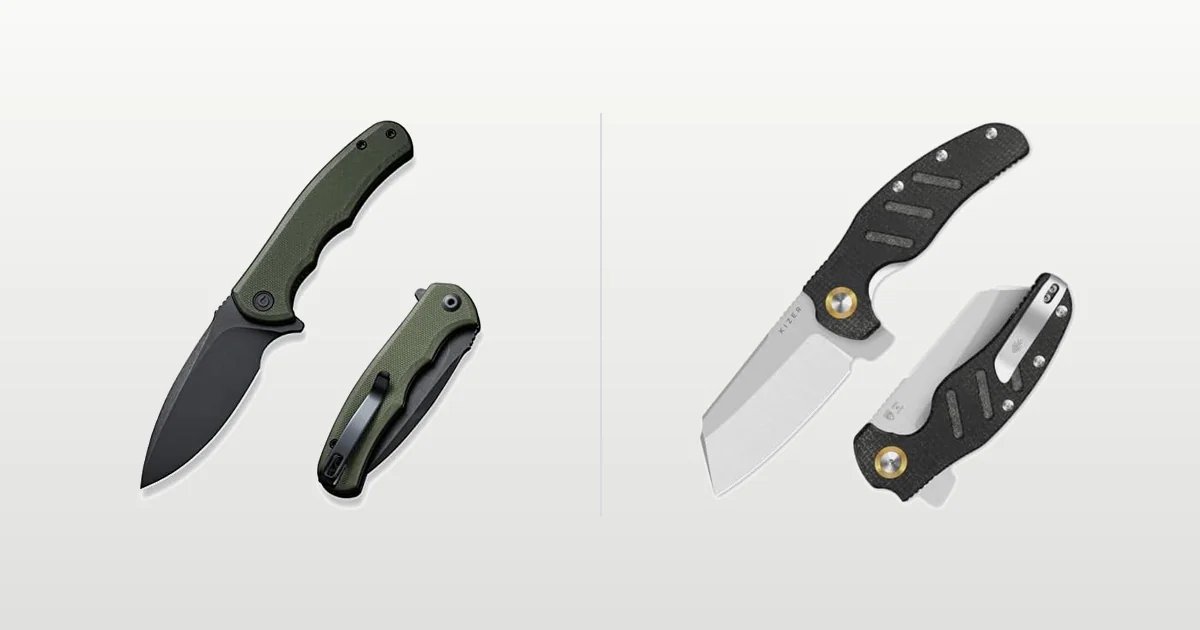
Affiliate Disclosure: As an Amazon Associate, we earn from qualifying purchases. This does not affect the price you pay.
A flipper knife is defined by one motion: a finger pushes a tab, and the blade snaps open and locks. Whether that motion works well is decided by two small parts, and most listings mention neither.
The first is the detent — a ball bearing set in the lock bar, pressing into a dimple in the blade to hold it closed. When you push the flipper tab you are loading against that tension until the ball pops free, and the stored energy throws the blade. Too weak and the blade lolls out halfway. Too strong and the tab bites your finger. Getting it right is the entire craft.
The second is the pivot. Ball bearings roll, so the blade accelerates freely. Phosphor bronze washers slide, which is smoother over years and more tolerant of pocket grit but slower off the detent.
Of the ten knives here, six name a bearing pivot. Exactly one names its detent — and it is not the $79.90 knife, it is the $29.74 one, from the same manufacturer.
Ten flipper knives below, from $17.99 to $79.90, judged on what their listings actually disclose about the mechanism you are buying them for.
Our Quick Picks
 Best OverallCIVIVI Mini Praxis
Ceramic ball bearings, a D2 blade and the one listing on this page that names the part actually responsible for flipping.
 Most SpecifiedEafengrow EF16
Every dimension published, plus the one number nobody else gives: blade hardness at 58 to 60 HRC.
 Best Small CarryCVLIFE 14C28N Compact
A 2.12-inch 14C28N blade on ball bearings for $17.99 — short enough to carry almost anywhere.
At a Glance
Ten Flipper Knives, Compared on the Mechanism
Blade length, steel where a grade is named, what the pivot runs on, and the one extra detail each listing chose to publish.
| # | Model | Blade | Steel | Pivot | Detail | Standout | Main Drawback | Check Price |
|---|---|---|---|---|---|---|---|---|
| 1 |
 CIVIVI Mini Praxis CIVIVI Mini Praxis |
2.98 in | D2 | Ceramic ball bearing | Detent named | The only listing here that names the detent at all | 2.98 inches is small for larger hands | View on Amazon |
| 2 |
 CRKT CEO CRKT CEO |
3.35 in | High carbon stainless | IKBS ball bearing | Flipper deploy | Names its bearing system by name — IKBS | Steel named only as high carbon stainless | View on Amazon |
| 3 |
 Kizer C01C XL Sheepdog Kizer C01C XL Sheepdog |
3.9 in | 14C28N | Precision ball bearing | 9.3 in overall | The largest knife here, sized deliberately for big hands | 3.9 inches exceeds carry limits in some places | View on Amazon |
| 4 |
 Petrified Fish PF818 Petrified Fish PF818 |
3.54 in | D2 | Ball bearing | G10 handle | D2 and bearings at under thirty dollars | Very little brand history behind it | View on Amazon |
| 5 |
 Eafengrow EF16 Eafengrow EF16 |
3.74 in | D2 at 58-60 HRC | Ball bearing | Full dimensions | The only listing here publishing a hardness figure | Bulky at 8.42 inches overall | View on Amazon |
| 6 |
 Kizer Nice Guy Kizer Nice Guy |
D2 | D2 | Not stated | Compact carry | D2 from an established brand at $29.00 | Pivot mechanism not described anywhere | View on Amazon |
| 7 |
 CVLIFE 14C28N Compact CVLIFE 14C28N Compact |
2.12 in | 14C28N | Ball bearing | Pocket size | 14C28N and bearings under eighteen dollars | 2.12 inches is very short | View on Amazon |
| 8 |
 OKNIFE AION OKNIFE AION |
3.53 in | 14C28N | Not stated | Micarta | Micarta handle that improves with use, designed by a named maker | No pivot mechanism described | View on Amazon |
| 9 |
 CIVIVI Biophase CIVIVI Biophase |
3.48 in | Nitro-V | Not stated | 2.66 oz | German Nitro-V steel at just 2.66 ounces | Pivot not described, unlike its Mini Praxis sibling | View on Amazon |
| 10 |
 CJRB Lanky CJRB Lanky |
3.5 in | Not named | Not stated | Slim carry | A long slim blade in a flat-carrying handle | Neither steel nor pivot named on the listing | View on Amazon |
Specifications and prices are taken from each manufacturer’s Amazon listing as displayed on 23 August 2026 through a United States connection, and may change. The Pivot column records only what a listing states; “Not stated” means the mechanism is undescribed, which is not a claim that a knife lacks bearings. Steel is recorded only where a grade is named, and two products here name none. Blade lengths are the manufacturer’s figures. Carry laws vary by country, state and city, and blade-length limits commonly fall between 2.5 and 4 inches — check the rules where you are before buying, particularly for the longer knives here. Sales ranks are shown as displayed and can be pooled across a variant family.
Scroll the table sideways to see every column
How We Chose These Ten
We researched current listings, compared manufacturer specifications and documentation, and examined recurring patterns in customer feedback. We did not carry out hands-on testing, and nothing below is presented as measured performance data.
- Whether it is actually a flipper — the search returns thumb-stud folders, spring-assisted knives and fixed blades; only flipper-tab knives are here
- What the listing says about the pivot — bearings, washers or silence — recorded as stated
- A verified live buy box — all ten confirmed purchasable in the United States on 23 August 2026
- No overlap with our other knife roundups — zero of these ten appear in our hunting, survival, rescue, pocket or sharpener guides
- A named steel grade, or an honest note that there is none — two of the ten name no grade at all
- Blade length published, because it is a legal specification — limits vary widely and the spread here is 2.12 to 3.9 inches
- Brand and price spread — nine brands from $17.99 to $79.90
The Ten Flipper Knives in Detail
1. CIVIVI Mini Praxis — Best Overall

“EXCELLENT DETENT” is its own bullet point. No other listing in this roundup uses the word once.
Key Specifications
| Blade length | 2.98 inches |
|---|---|
| Steel | D2, black stonewashed |
| Pivot | Ceramic ball bearing |
| Detent | Named explicitly on the listing |
| Handle | G10, moisture and temperature resistant |
| Stated aim | Quick and snappy deployment |
| Rank | #1,022 — the best in this roundup |
| Price | $29.74 |
| Best For | Anyone who wants the mechanism described rather than implied |
Why We Recommend It
The detent is what makes a flipper flip, and almost nobody explains it. A small ball set in the lock bar presses into a dimple in the blade, holding it closed under tension. When you push the flipper tab, you are loading against that tension until the ball pops out of the dimple — and the stored energy throws the blade open. A weak detent means the blade lolls out halfway. Too strong and the tab hurts your finger. Getting it right is the whole craft of a flipper.
Ceramic bearings rather than steel is a genuine detail. Ceramic balls are harder, do not corrode, and do not need lubrication to stay smooth. On a knife that lives in a pocket collecting lint and moisture, that is the difference between a mechanism that stays crisp and one that gets gritty.
D2 is a sensible choice here. The listing frames it as balancing edge retention, corrosion resistance and ease of sharpening, which is a fair description — D2 holds an edge far longer than the 8Cr13MoV in the budget knives here and is harder to bring back once gone.
Rank #1,022 is the strongest in this roundup by a wide margin, and at $29.74 the combination of a named pivot, a named detent and a named steel is not matched anywhere else on this page.
Pros
- Names its detent — unique on this page
- Ceramic ball-bearing pivot resists grit and corrosion
- D2 steel with a stated rationale
- G10 handle resists moisture and temperature
- Best rank in this roundup at #1,022
- $29.74 for a fully specified mechanism
Cons
- 2.98 inches is small for large hands
- D2 is harder to resharpen than 8Cr13MoV
- Stonewash finish shows wear
- Small handle limits grip options
- No lock type stated on the listing
- Ceramic bearings cannot be serviced at home
Best for: Anyone buying their first proper flipper who wants to know what is inside it.
2. CRKT CEO — Best Named Bearing

IKBS is a specific bearing system with a name, which puts this ahead of the listings that just say “smooth”.
Key Specifications
| Blade length | 3.35 inches |
|---|---|
| Pivot | IKBS ball bearing system |
| Steel | High carbon stainless, no grade named |
| Design intent | Everyday carry, office-appropriate |
| Deployment | Flipper tab |
| Sharpening | Listing states it takes an edge well |
| Rank | #15,415 in its category |
| Price | $55.95 |
| Best For | Carrying a real flipper somewhere a tactical knife would not fit |
Why We Recommend It
Naming the bearing system matters more than it sounds. IKBS — the Ikoma Korth Bearing System — is a specific design licensed across several brands, with loose bearings running in machined races rather than a caged cartridge. Whether you prefer it is a matter of taste; the point is that a named system can be looked up and compared, and “ball bearing pivot” with no further detail cannot.
The CEO’s shape is the actual product. It is long, flat and pen-like, and it disappears in a shirt pocket. A flipper knife is a fidgety, fast-opening object that reads as tactical to a lot of people; this one does not, which for an office or a client-facing job is a genuine consideration rather than a style point.
“High carbon stainless steel” without a grade is the specification gap, and it is the same phrase we flagged on knives in our hunting and rescue roundups. It tells you the family and nothing more.
A thin, long blade is a trade. Excellent for opening boxes, letters and packaging; less good for anything requiring lateral strength.
Pros
- Names its bearing system specifically (IKBS)
- Pen-like profile carries anywhere discreetly
- 3.35 inches of usable blade in a slim body
- Listing states it sharpens easily
- Genuine flipper deployment
- Established brand with warranty support
Cons
- Steel named only as “high carbon stainless”
- $55.95 is high for an unnamed steel
- Thin blade is weak laterally
- No detent quality described
- Slim handle offers limited grip
- Not suited to heavy cutting
Best for: Someone who wants a real flipper that does not look like a tactical knife.
3. Kizer C01C XL Sheepdog — Best For Large Hands

Most pocket knives are designed around an average hand. This one says outright that it is not.
Key Specifications
| Blade length | 3.9 inches |
|---|---|
| Overall length | 9.3 inches |
| Steel | 14C28N |
| Pivot | Precision ball bearing |
| Design intent | Explicitly for larger hands |
| Handle | Contoured for fatigue-free prolonged use |
| Rank | #40,559 in its category |
| Price | $67.87 |
| Best For | Larger hands, where a 3-inch knife is a nuisance |
Why We Recommend It
Handle length is the specification larger-handed people actually need, and almost nobody publishes it. At 9.3 inches overall with a 3.9-inch blade, the handle is about 5.4 inches — enough for a full four-finger grip rather than three fingers and a thumb hooked over the end. On a knife you use with force, that is the difference between control and a hot spot on your palm.
14C28N is Sandvik’s answer to the mid-range problem, and it is a good one. It sharpens more easily than D2 and resists corrosion better, at the cost of some edge retention. For a knife carried daily and touched up often rather than sharpened rarely, that trade is the right way round.
Check your local law before buying this one. A 3.9-inch blade exceeds the carry limit in a number of US cities and states, several of which draw the line at 3 or 3.5 inches. Blade length limits vary enormously and this is the only knife in this roundup where that is likely to be the deciding factor.
A precision bearing is named but not specified further — no material, no system name. Better than silence, short of the CIVIVI’s detail.
Pros
- Explicitly designed for larger hands
- 9.3 inches overall gives a full four-finger grip
- 14C28N sharpens easily and resists corrosion
- Precision ball bearing pivot named
- Contoured handle for prolonged use
- Genuine flipper deployment
Cons
- 3.9 inches exceeds carry limits in many jurisdictions
- $67.87
- Too large for discreet pocket carry
- Bearing named but not specified
- 14C28N holds an edge less long than D2
- Low rank in the category
Best for: Larger-handed users who have found standard folders cramped.
4. Petrified Fish PF818 — Best Value Bearing

D2 steel, a ball-bearing pivot and a G10 handle for $28.99. The same three things on a known brand cost twice that.
Key Specifications
| Blade length | 3.54 inches |
|---|---|
| Steel | D2 |
| Pivot | Ball bearing |
| Handle | G10 |
| Position | D2 plus bearings at the low end of the price range |
| Rank | #20,435 in its category |
| Price | $28.99 |
| Best For | The full flipper specification at the lowest price it appears |
Why We Recommend It
This is the specification that defines the category, at its floor price. D2 for edge retention, bearings for a fast flip, G10 because it does not care about moisture. What you are not buying is heat treatment you can verify, tolerances you can trust, or a company that will still exist to honour a warranty.
Heat treatment is the invisible variable. D2 is only as good as its hardening, and two knives with identical steel can differ substantially in how long an edge lasts. That is the specific thing a budget brand cannot demonstrate on a listing, and it is why $28.99 D2 and $67.87 14C28N are not simply a matter of who is overcharging.
3.54 inches sits at a useful size — enough blade to be genuinely useful, short enough to carry in most places, though still above the 3-inch limit some jurisdictions apply.
Rank #20,435 is mid-table, which for an unknown brand at this price is neither a warning nor an endorsement.
Pros
- D2, bearings and G10 for $28.99
- 3.54 inches is a genuinely useful blade length
- Full flipper specification at the price floor
- G10 handle resists moisture
- Reasonable rank for an unknown brand
- Good entry into bearing-pivot knives
Cons
- Heat treatment quality is unverifiable
- Little brand history or warranty confidence
- Bearing type not specified
- No detent quality described
- 3.54 inches exceeds some local carry limits
- D2 will rust if neglected
Best for: Anyone wanting the full specification cheaply and accepting unverifiable heat treatment.
5. Eafengrow EF16 — Most Specified

Total length, blade length, handle length, blade width, blade thickness, weight in two units — and a Rockwell hardness figure. For $19.99.
Key Specifications
| Blade length | 3.74 inches |
|---|---|
| Overall length | 8.42 inches |
| Handle length | 4.68 inches |
| Blade thickness | 0.4 cm |
| Steel | D2, hardness 58–60 HRC |
| Pivot | Ball bearing |
| Weight | 3.76 oz / 106.7 g |
| Price | $19.99 |
| Best For | Anyone who wants numbers rather than adjectives |
Why We Recommend It
A published hardness figure is genuinely rare and genuinely useful. D2 at 58–60 HRC is a sensible working hardness: hard enough to hold an edge properly, soft enough that the edge chips rather than shatters and can be restored. D2 run softer than about 57 gives up its main advantage; run harder it becomes brittle. Nobody else on this page tells you where their steel sits.
Publishing every dimension is the same instinct. Handle length at 4.68 inches tells a larger-handed buyer more than a blade length ever will, and blade thickness at 4 mm tells you this is a stout knife rather than a slicer.
Four millimetres of stock is thick for a folder, and it cuts both ways: strong, and a poor slicer because the wedge behind the edge is fat. At 3.76 ounces it is not heavy for its size, which suggests reasonable grinding.
At $19.99 with this much disclosure, the gap to the branded knives is heat treatment consistency and support rather than specification — and the hardness figure at least states what the heat treatment was aiming at.
Pros
- Publishes a Rockwell hardness figure — 58–60 HRC
- Every dimension stated, including handle length
- D2 with ball bearings for $19.99
- Blade thickness published at 4 mm
- Weight given in two units
- Most disclosed specification on this page
Cons
- 8.42 inches overall is bulky in a pocket
- 4 mm stock makes it a poor slicer
- 3.74 inches exceeds many carry limits
- No brand track record
- Bearing type not specified
- D2 needs drying to avoid rust
Best for: Buyers who want the numbers published and will judge for themselves.
6. Kizer Nice Guy — Best Mid-Size

Twenty-nine dollars for D2 from a maker with a real reputation — and silence about the pivot.
Key Specifications
| Steel | D2 |
|---|---|
| Pivot | Not stated on the listing |
| Brand | Kizer, established knife maker |
| Format | Compact folding pocket knife |
| Price position | Half the price of the C01C XL from the same maker |
| Rank | #17,170 in its category |
| Price | $29.00 |
| Best For | Brand confidence at a budget price |
Why We Recommend It
The missing pivot detail is the point of including this one. Kizer is a serious manufacturer and its more expensive C01C XL explicitly names a precision ball bearing. This listing names nothing, which usually means washers rather than bearings — a perfectly good and arguably more durable arrangement, but a different feel and a slower flip. Where a maker specifies on one model and not another, the silence is informative.
Washers are not a downgrade in every respect. Phosphor bronze washers are more tolerant of grit, easier to clean, and cheaper to replace. Bearings are faster and smoother. A flipper on washers needs a stronger detent to work well, which is why detent and pivot have to be judged together.
Brand does real work at this price. Same D2 as the $28.99 unknown brand, with a manufacturer whose heat treatment is consistent and who will handle a warranty claim.
Rank #17,170 is respectable and better than several more expensive knives here.
Pros
- D2 from an established maker at $29.00
- Kizer’s heat treatment is consistent and known
- Compact size suits most carry limits
- Warranty support behind it
- Good rank at #17,170
- Simple, robust construction
Cons
- Pivot mechanism not stated anywhere
- Likely washers rather than bearings
- No hardness figure
- No handle material named in the listing summary
- Slower deployment than a bearing knife
- No detent description
Best for: Someone who values a known manufacturer over a specified mechanism.
7. CVLIFE 14C28N Compact — Best Small Carry
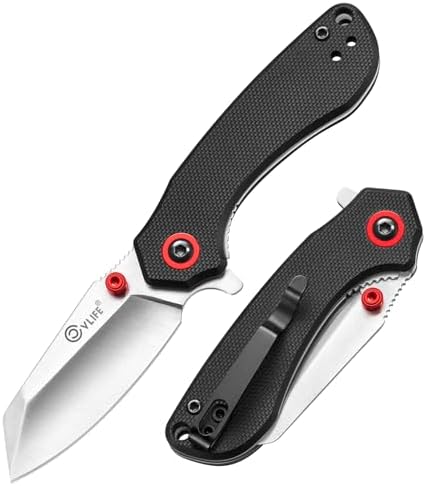
Two point one two inches is short enough to sit under most local blade-length limits, and it still runs on bearings.
Key Specifications
| Blade length | 2.12 inches |
|---|---|
| Steel | 14C28N |
| Pivot | Ball bearing |
| Size | Compact pocket carry |
| Legal position | Under the 2.5 and 3 inch limits common in strict jurisdictions |
| Rank | #18,693 in its category |
| Price | $17.99 |
| Best For | Carrying legally where longer blades are restricted |
Why We Recommend It
Blade length is a legal specification as much as a practical one. A number of US cities and states set carry limits at 2.5 or 3 inches, and several other countries are stricter still. At 2.12 inches this sits below most of them, which for someone who travels or commutes across jurisdictions is worth more than an extra inch of cutting edge. Check the rules where you actually are — they vary widely and change.
14C28N at this price is a good deal. It is a proper mid-range stainless that sharpens quickly and resists corrosion, which suits a small knife that will be used for everyday tasks and touched up often.
Bearings on a small flipper are more necessary, not less. A short blade has less mass and therefore less momentum, so the mechanism has to be smooth or the flip will not carry the blade to lock-up. This is why bearings appearing at $17.99 is worth noting.
Two inches limits what you can do with it. Boxes, cord, food, packaging — yes. Anything requiring reach or leverage — no.
Pros
- 2.12 inches sits under most carry limits
- 14C28N sharpens easily and resists rust
- Ball bearings on a small blade, where they matter most
- $17.99
- Genuinely pocketable
- Good rank at #18,693
Cons
- 2.12 inches is too short for many tasks
- Little leverage or reach
- Bearing type not specified
- No hardness figure
- Small handle for larger hands
- Budget fit and finish
Best for: Commuters and travellers who need to stay under a local blade limit.
8. OKNIFE AION — Best Handle

Micarta is the one handle material that gets better the longer you own it, and this is the only knife here using it.
Key Specifications
| Blade length | 3.53 inches |
|---|---|
| Steel | 14C28N |
| Handle | Micarta |
| Designer | Ostap Hel |
| Handedness | Symmetric, ambidextrous |
| Blade shape | Slim drop point with extended jimping |
| Pivot | Not stated |
| Price | $48.99 |
| Best For | Anyone who cares how a knife feels over years of use |
Why We Recommend It
Micarta is layered fabric set in resin, and unlike G10 it is slightly porous. In use it absorbs a trace of skin oil and develops a patina and a grip that improves rather than wears away. G10 is harder and more weather-proof; Micarta feels better in the hand and ages into something personal. It is a genuine preference rather than a hierarchy.
A symmetric handle for ambidextrous use is rarer than it should be. Most folders put the clip and the flipper geometry in favour of right-handed users. Symmetry costs nothing to a right-hander and matters a great deal to the roughly one in ten people it excludes otherwise.
Extended jimping on the spine is a control feature — the milled grooves give a thumb somewhere positive to sit for precise cuts, which suits the slim drop point this knife is built around.
No pivot mechanism is named, on a knife at $48.99 where the maker was happy to name the designer. That is a curious omission on a flipper, and we record it as unstated.
Pros
- Micarta handle improves with use
- Symmetric handle for genuinely ambidextrous carry
- Named designer with a real reputation
- Extended jimping aids precise control
- 14C28N is easy to maintain
- Slim drop point suits detailed work
Cons
- Pivot mechanism not stated on a flipper
- $48.99 without a named bearing
- Micarta is more porous than G10 and stains
- No hardness figure
- Lowest rank in this roundup
- Slim blade is not for heavy work
Best for: Someone choosing a knife by how it will feel in five years.
9. CIVIVI Biophase — Lightest

Two point six six ounces for a 3.48-inch knife. The Eafengrow at a similar blade length weighs 3.76.
Key Specifications
| Blade length | 3.48 inches |
|---|---|
| Steel | German Nitro-V |
| Weight | 2.66 ounces |
| Handle | Skeletonised aluminium with G10 |
| Why Nitro-V | Edge retention, toughness and corrosion resistance |
| Pivot | Not stated |
| Rank | #42,865 in its category |
| Price | $79.90 |
| Best For | Carrying a full-size blade without noticing the weight |
Why We Recommend It
Weight is what decides whether a knife gets carried. An ounce sounds trivial and is not, in a trouser pocket, every day, for years. Skeletonising the aluminium liner removes metal from places that are not carrying load, which is a manufacturing cost rather than a materials one — part of what the price buys.
Nitro-V is a nitrogen-enriched stainless in the same family as 14C28N, with the nitrogen improving corrosion resistance and edge stability. It is a good working steel and not an exotic one, and CIVIVI describes it accurately rather than overselling it.
The comparison with its own sibling is the interesting part. The $29.74 Mini Praxis names its ceramic ball-bearing pivot and its detent. This one, at $79.90, names neither. Same maker, higher price, less mechanical disclosure — which suggests this model is sold on weight and materials rather than on action.
Aluminium handles get cold, and skeletonised ones concentrate pressure on the edges of the cutouts under a hard grip.
Pros
- 2.66 ounces for a 3.48-inch blade
- Nitro-V resists corrosion well
- Skeletonised aluminium and G10 construction
- Full-size blade in a pocketable weight
- CIVIVI build quality
- Accurate rather than oversold steel description
Cons
- Pivot not stated, unlike its cheaper sibling
- $79.90 — the most expensive here
- Aluminium is cold in winter
- Skeletonised cutouts press into the hand under load
- No detent description
- Low rank at #42,865
Best for: Daily carriers who want a full-size blade they stop noticing.
10. CJRB Lanky — Best Slim Profile

Forty-eight dollars, and the listing names neither the blade steel nor what the pivot runs on.
Key Specifications
| Blade length | 3.5 inches |
|---|---|
| Steel | Not named on the listing |
| Pivot | Not stated |
| Profile | Slim, flat-carrying |
| Brand | CJRB, an Artisan Cutlery sub-brand |
| Rank | #26,380 in its category |
| Price | $47.99 |
| Best For | Flat pocket carry, if you will accept unstated specifications |
Why We Recommend It
Two unstated specifications on a flipper at this price is the mark against it. Steel determines how the edge behaves; pivot determines whether the flipper flips. Those are the two questions this category exists around, and neither is answered. CJRB is a real brand with a decent reputation, so this is a listing problem rather than necessarily a product one — but a buyer can only judge what is published.
Slim is a genuine virtue and it is what this is selling. A knife’s thickness, not its length, is what makes a pocket bulge and what digs into a leg when you sit. A long blade in a flat handle carries better than a short blade in a fat one.
3.5 inches is at the upper end of common carry limits, so check locally before buying.
We have recorded the gaps rather than inferring from the brand, which is the same approach we took to the unspecified knives in our survival and rescue roundups. A reputation is not a specification.
Pros
- Slim profile carries flat in a pocket
- 3.5 inches of usable blade
- CJRB has a solid reputation under Artisan Cutlery
- Long blade in a comfortable handle
- Mid-table rank
- Understated appearance
Cons
- Blade steel not named anywhere
- Pivot mechanism not stated
- $47.99 with two key specifications missing
- 3.5 inches exceeds several carry limits
- No hardness or weight figures
- Least-specified knife in this roundup
Best for: Someone prioritising flat carry who will accept an unspecified blade.
Same Maker, Opposite Disclosure
Two CIVIVI knives. The cheaper one tells you how the action works; the dearer one does not.
| CIVIVI Mini Praxis | CIVIVI Biophase | |
|---|---|---|
| Price | $29.74 | $79.90 |
| Steel | D2 | Nitro-V |
| Pivot stated | Ceramic ball bearing | Not stated |
| Detent stated | Yes | No |
| Weight | Not stated | 2.66 oz |
| Blade | 2.98 in | 3.48 in |
| Rank | #1,022 | #42,865 |
The Biophase is sold on weight and materials; the Mini Praxis is sold on action. Neither approach is wrong, but if the reason you want a flipper is the flip, the $29.74 knife is the one telling you about it — and it outranks its expensive sibling forty times over.
Bearings Against Washers
Only one of these is faster. The other is easier to live with.
| Ball bearings | Phosphor bronze washers | |
|---|---|---|
| Action off the detent | Fast, free-spinning | Slower, more damped |
| Tolerance of pocket grit | Lower | Higher |
| Cleaning | Fiddly, many small parts | Simple |
| Long-term wear | Balls can pit | Washers are replaceable |
| Detent strength needed | Lower | Higher |
| Typical price signal | Named on the listing | Usually unstated |
The practical tell is that makers name bearings and stay quiet about washers, because bearings sell. A knife whose listing does not mention the pivot is more likely than not running on washers — which is fine, and worth knowing, and means the detent has to be doing more work.
Best Alternatives
| Alternative | Why Consider It | Better For | Main Trade-Off |
|---|---|---|---|
| A thumb-stud folder | Slower but more discreet to open | Places where a fast-opening knife draws attention | No one-motion deployment |
| A slipjoint or traditional folder | Legal almost everywhere, no lock | Strict jurisdictions, and pocket-friendly | No lock, and two hands to open |
| A fixed blade | Stronger, nothing to fail, easier to clean | Outdoor work and heavy cutting | Cannot be pocket-carried discreetly |
| A utility knife with replaceable blades | Always sharp, very cheap | Cardboard, packaging, site work | Not a pocket knife in any real sense |
What the Money Actually Buys
$17.99 to $29.74 — CVLIFE, Eafengrow, Petrified Fish, Kizer Nice Guy, CIVIVI Mini Praxis. The most interesting tier on the page and the one containing our overall pick. D2 and bearings both appear here, and so does the only published hardness figure. What you cannot verify at this price is heat treatment consistency, which is exactly what a known brand is selling.
$47.99 to $55.95 — CJRB Lanky, OKNIFE AION, CRKT CEO. Here you are buying design and materials rather than mechanism: a Micarta handle, a named designer, a pen-like profile, a named bearing system. Two of the three do not describe their pivot at all.
$67.87 to $79.90 — Kizer C01C XL, CIVIVI Biophase. Size and weight respectively. The C01C XL is genuinely built for larger hands, which nothing cheaper here addresses. The Biophase buys 2.66 ounces. Neither is buying you a better flip than the $29.74 knife.
What to Check Before You Buy
Look for the Word ‘Detent’
It is the single part most responsible for whether a flipper works, and almost no listing mentions it. The detent ball holds the blade closed and stores the tension your finger releases. A knife with excellent bearings and a weak detent will not flip properly; a knife on plain washers with a well-tuned detent will. Where a maker names it, they are telling you they thought about the action rather than the parts list.
Bearings Are Faster, Washers Are Easier
Ball bearings roll, so the blade accelerates freely off the detent and the action feels effortless. Phosphor bronze washers slide, which is slower but far more tolerant of the lint and grit that a pocket knife lives in, and simpler to clean and replace. Neither is better in the abstract. What matters is that makers advertise bearings and stay silent about washers, so an unstated pivot usually means washers.
Check the Blade Length Against Local Law
This is the one specification with legal consequences, and the range on this page is 2.12 to 3.9 inches. Carry limits vary by country, state and often by city, commonly falling somewhere between 2.5 and 4 inches, and some jurisdictions treat locking knives differently again. Look up the rules where you actually live and travel before spending anything — it is the cheapest research in this entire category.
A Named Steel Beats a Steel Family
“High carbon stainless steel” describes hundreds of alloys and predicts nothing. D2, 14C28N and Nitro-V behave differently in edge retention, corrosion resistance and how easily they come back on a stone. Two knives here at $47.99 and $55.95 name no grade at all, which at that price is a real omission.
Hardness Tells You What the Steel Was Aiming At
Exactly one listing in this roundup publishes a Rockwell figure — D2 at 58 to 60 HRC. That is a sensible working range: hard enough to hold an edge, soft enough to chip rather than shatter and to be restored. The same steel run softer gives up its advantage entirely. Since heat treatment is invisible on a listing, a published hardness number is the closest thing to evidence you will get.
Judge Thickness, Not Length, for Carry
What makes a knife unpleasant to carry is how far it sticks out from your leg, not how long it is. A 3.5-inch blade in a slim flat handle disappears; a 3-inch blade in a chunky one does not. Weight matters too and compounds — the lightest knife here is 2.66 ounces and the heaviest published figure is 3.76.
Small Blades Need Good Mechanisms More
A short blade has less mass and therefore less momentum, so a sluggish pivot or a weak detent will leave it short of lock-up. That is why bearings appearing on a 2.12-inch knife at $17.99 is worth more than bearings on a large one — the small knife needs them.
Common Mistakes
- Buying on bearings alone. A great pivot with a weak detent still will not flip properly.
- Ignoring local blade-length law. It is the only specification here that can cause you a legal problem.
- Assuming an unstated pivot means bearings. Makers advertise bearings; silence usually means washers.
- Reading “high carbon stainless” as a specification. It describes a family, not an alloy.
- Confusing a flipper with a spring-assisted knife. They open differently and are treated differently in law in several places.
- Choosing by blade length for comfort. Thickness in the pocket is what you will actually notice.
- Over-oiling a bearing pivot. Heavy oil collects grit; a bearing knife wants a light lubricant and a rinse.
Who Should Buy Which
Buy the CIVIVI Mini Praxis if you want the mechanism done right. Ceramic bearings, D2, and the only detent described on this page, for $29.74 — and the best rank here by a factor of sixteen.
Buy the Eafengrow EF16 if you want the numbers. Every dimension plus a 58–60 HRC hardness figure for $19.99, which is more disclosure than knives at four times the price.
Buy the Kizer C01C XL if standard folders feel cramped. It is the only knife here explicitly designed around larger hands — check your local limit first, because 3.9 inches is over the line in many places.
Buy the CVLIFE if you need to stay under a strict limit. 2.12 inches, 14C28N and bearings for $17.99.
Buy the CRKT CEO if a tactical-looking knife would be a problem where you work. It is a real flipper that reads as a pen.

Frequently Asked Questions
What actually makes a flipper knife flip?
Two parts working together. The detent is a small ball in the lock bar that presses into a dimple in the blade, holding it closed under spring tension. When you push the flipper tab you are loading against that tension until the ball pops out of the dimple, and the energy stored in the lock bar throws the blade open. The pivot — ball bearings or phosphor bronze washers — then determines how freely the blade travels the rest of the way. A strong detent with a poor pivot is stiff; a great pivot with a weak detent will not launch the blade at all. Only one listing in this roundup describes its detent, which tells you how little of this the category explains.
Are ball bearings better than washers?
Faster, not better. Bearings roll, so the blade accelerates freely and the action feels effortless, which is why makers advertise them. Phosphor bronze washers slide instead: slower off the detent, but far more tolerant of the lint, dust and grit that accumulates in a pocket, simpler to clean, and cheap to replace when worn. Many highly regarded knives use washers deliberately. The practical point for a buyer is asymmetry of disclosure — bearings get named because they sell, so a listing that says nothing about the pivot is more likely running washers than hiding bearings.
What blade length can I legally carry?
It depends entirely on where you are, and it is the one specification in this category with legal consequences. Limits are set at national, state and often city level, commonly landing somewhere between 2.5 and 4 inches, and some places also regulate locking mechanisms, one-handed opening or assisted opening separately from length. The knives on this page span 2.12 to 3.9 inches, which crosses several common thresholds. Look up the rules for where you live and anywhere you routinely travel before buying — this article cannot tell you what is legal where you are, and the answer changes.
Is a flipper the same as a spring-assisted knife?
No, and the difference matters both mechanically and legally. A flipper is entirely manual: your finger provides all the force, and the detent stores and releases it. A spring-assisted knife has a spring that takes over once you have moved the blade past a certain point, doing most of the opening for you. They feel similar in the hand and they are treated differently under the law in a number of jurisdictions, with assisted opening restricted in places where manual flippers are not. Several results returned by this search are assisted knives rather than flippers, and are not included here.
Which steel should I choose?
For a knife you will use often and touch up regularly, 14C28N or Nitro-V are the easier companions — both are nitrogen-enriched stainless steels that resist corrosion well and come back quickly on a stone. For a knife you would rather sharpen rarely, D2 holds an edge substantially longer, at the cost of being harder to restore and more inclined to spot if left damp. What matters more than the choice is that a grade is named at all: two knives here at $47.99 and $55.95 name none, and “high carbon stainless” describes a family rather than an alloy.
How do I stop the action getting gritty?
Rinse rather than oil, in most cases. Pocket lint and dust are what slow a flipper down, and heavy oil in the pivot collects both into a paste. A bearing pivot wants a very light lubricant applied sparingly, or in many cases nothing at all beyond flushing the pivot with warm water and drying it thoroughly. Washer pivots tolerate neglect far better, which is one of their genuine advantages. If the action has gone stiff, the cause is almost always debris rather than wear.
Final Verdict
Ceramic ball bearings, D2, and the only detent described on this page — for $29.74, with the best rank in the roundup.
Every dimension published plus a 58–60 HRC hardness figure, for $19.99. More disclosure than knives four times the price.
3.9 inches and 9.3 inches overall, explicitly designed around bigger hands — check your local carry limit first.
Buy the CIVIVI Mini Praxis. At $29.74 it names its ceramic ball-bearing pivot, names its D2 steel, and is the only knife on this page to name its detent — the part that actually decides whether a flipper flips. It also holds rank #1,022 against #42,865 for its own maker’s $79.90 model, which is a fairly clear verdict from everyone who has already bought both.
If you would rather have numbers than adjectives, buy the Eafengrow EF16 at $19.99. Total length, blade length, handle length, thickness, weight in two units and a Rockwell hardness figure of 58 to 60 — disclosure that knives at four times the price do not offer. What you are trusting is that the heat treatment matched the number.
The pattern across this category is that price buys materials and design, and says almost nothing about action. Two knives here at $47.99 and $55.95 do not name their steel or their pivot. The cheapest knife publishes a hardness figure. And the most expensive knife on the page is outranked forty times over by its own maker’s model at a third of the price.
Before anything else, check the blade length against the law where you live. It is the only specification here that can cost you more than money.