Affiliate Disclosure: As an Amazon Associate, we earn from qualifying purchases. This does not affect the price you pay.
Two of the appliances on this page cost $29.98 and $199.99. Both are sold as mini fridges. They do not do the same thing, and the difference is not size.
One uses a compressor, the same technology as your kitchen fridge, and states an absolute temperature: 40°F to 61°F. Tell it 40 and it holds 40, whether the room is 65°F or 90°F.
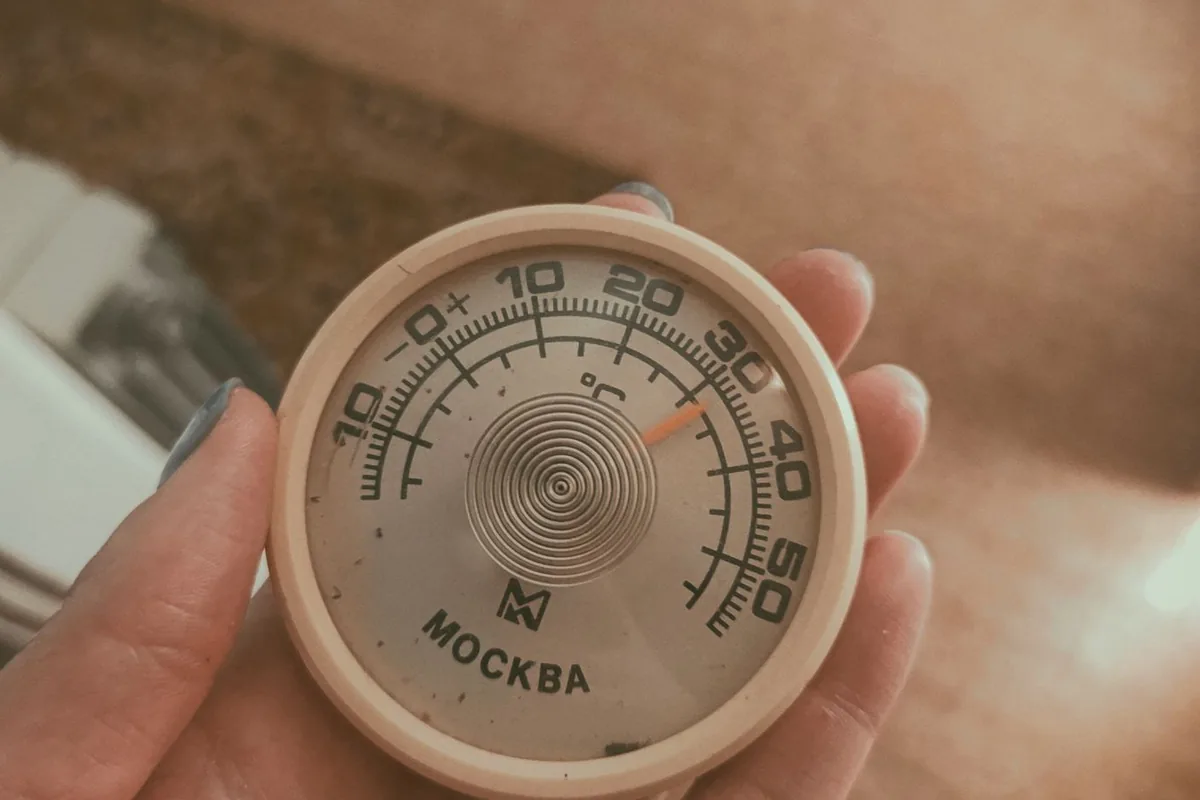
The other uses a thermoelectric module, and states its performance as a subtraction: “up to 32°F below ambient temperature”. That is not a temperature. It is a discount off whatever your room happens to be. In a 72°F kitchen it lands near 40°F. In a 78°F room in July it is 46°F — above the 40°F line generally used for food safety. In a 90°F garage it is 58°F, which is not refrigeration at all.
Both are legitimate products. Only one of them can keep food cold in a warm room, and the listings do not make the distinction obvious — several publish no cooling figure whatsoever, and one suggests storing baby bottles and soup while giving no temperature at all.
Ten units verified in stock, from $29.98 to $199.99, split by the thing that actually separates them.
Our Quick Picks
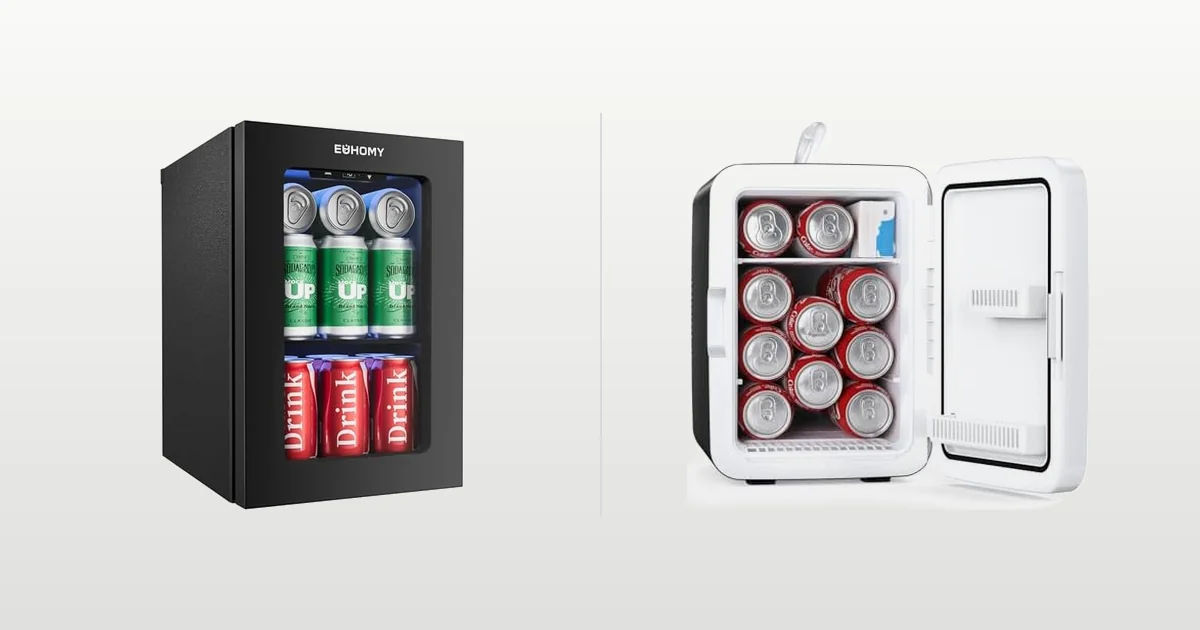
 Best OverallEUHOMY 24 Can Beverage Fridge
A stated 40°F to 61°F and a listing that explicitly contrasts itself with semiconductor cooling — the clearest specification on this page.
 Best With FreezerUpstreman 3.2 Cu Ft With Freezer
Three point two cubic feet with an actual freezer compartment — the only unit on this page that can keep anything frozen.
 Best ThermoelectricAntarctic Star 10 L Thermoelectric
Ten litres, a carry handle, and the most honest specification on this page — it tells you plainly that it cools relative to the room.
At a Glance
Ten Mini Fridges, Split by How They Cool
Capacity, cooling technology, the temperature each listing states — and crucially whether that figure is an absolute temperature or a number of degrees below your room.
| # | Model | Capacity | Cooling | Stated Temp | Figure Type | Standout | Main Drawback | Check Price |
|---|---|---|---|---|---|---|---|---|
| 1 |
 EUHOMY 24 Can Beverage Fridge EUHOMY 24 Can Beverage Fridge |
0.6 cu ft / 18 L | Compressor | 40°F to 61°F | Absolute range | Names compressor cooling and states an absolute range | 61°F top end is warm for leftovers | View on Amazon |
| 2 |
 Electactic 50 Can Beverage Fridge Electactic 50 Can Beverage Fridge |
1.3 cu ft | Compressor | Cabinet-style | Absolute range | Fifty cans and a compressor for $121.98 | Still a beverage cabinet, not a food fridge | View on Amazon |
| 3 |
 Icyglee 24 Can Mini Fridge Icyglee 24 Can Mini Fridge |
0.6 cu ft | Compressor | Beverage cabinet | Absolute range | Compressor cooling at $89.99, the cheapest here | Same 0.6 cu ft limits as its rivals | View on Amazon |
| 4 |
 Feelfunn 3.2 Cu Ft Glass Door Feelfunn 3.2 Cu Ft Glass Door |
3.2 cu ft | Compressor | 126 cans | Absolute range | Over five times the volume of the entry units | At 3.2 cu ft this is a full appliance, not a desk unit | View on Amazon |
| 5 |
 Upstreman 3.2 Cu Ft With Freezer Upstreman 3.2 Cu Ft With Freezer |
3.2 cu ft | Compressor | Separate freezer | Absolute range | The only unit here with a freezer compartment | A small freezer in a small fridge costs fridge space | View on Amazon |
| 6 |
 DUMOS 3.2 Cu Ft With Freezer DUMOS 3.2 Cu Ft With Freezer |
3.2 cu ft | Compressor | Freezer included | Absolute range | 3.2 cu ft with a freezer for $129.93 | Least-known brand at this capacity | View on Amazon |
| 7 |
 Antarctic Star 10 L Thermoelectric Antarctic Star 10 L Thermoelectric |
10 L | Thermoelectric | 32°F below ambient | Relative — read this carefully | States its cooling as degrees below ambient, not an absolute | In a 78°F room that is 46°F, above the food-safety line | View on Amazon |
| 8 |
 Cooluli Classic 4 L Cooluli Classic 4 L |
4 L | Thermoelectric | 40–45°F below ambient | Relative, and also warms | Warms as well as cools, and states its figure | Four litres is six cans and nothing more | View on Amazon |
| 9 |
 Frigidaire 10 L Personal Cooler Frigidaire 10 L Personal Cooler |
10 L / 15 cans | Thermoelectric | No figure stated | No cooling figure at all | A familiar name on a personal cooler | Its listing gives no cooling performance figure whatsoever | View on Amazon |
| 10 |
 CURTIS Pepsi 6-Can Micro Fridge CURTIS Pepsi 6-Can Micro Fridge |
4 L / 6 cans | Thermoelectric | No figure stated | No cooling figure at all | Twenty-nine dollars, and it is honest about being a novelty | Listing suggests storing baby bottles and soup with no temperature given | View on Amazon |
Specifications and prices are taken from each manufacturer’s Amazon listing as displayed on 23 August 2026 through a United States connection, and may change. The Figure Type column records whether a listing’s cooling claim is absolute (a cabinet temperature the unit holds) or relative (a stated number of degrees below ambient room temperature); these are not comparable and the distinction is the single most important one in this category. Where a listing publishes no cooling figure at all, that is recorded as stated rather than estimated. Worked examples of relative figures assume a stable room and a closed door, which is a best case. The 40°F reference is the threshold commonly cited for chilled food storage. Sales ranks are shown as displayed and can be pooled across a variant family.
Scroll the table sideways to see every column
How We Chose These Ten
We researched current listings, compared manufacturer specifications and documentation, and examined recurring patterns in customer feedback. We did not carry out hands-on testing, and nothing below is presented as measured performance data.
- Cooling technology identified — every unit is classified compressor or thermoelectric, because that decides what it can do
- Whether the temperature claim is absolute or relative — the distinction the category’s marketing consistently blurs
- A verified live buy box — all ten were confirmed purchasable in the United States on 23 August 2026
- Both technologies represented — six compressor and four thermoelectric, so the comparison is possible rather than assumed
- Stated capacity in cubic feet or litres — quoted as the listing gives it; can counts are a marketing figure
- Whether any cooling figure is published at all — three units here publish none, which is recorded rather than filled in
- Brand spread — ten brands across ten slots, with no pooled sales ranks between picks
The Ten Mini Fridges in Detail
1. EUHOMY 24 Can Beverage Fridge — Best Overall

Forty degrees at the bottom of its range, stated as an absolute number. Nothing on this page matters more than that distinction.
Key Specifications
| Capacity | 0.6 cu ft / 18 L, 24 cans |
|---|---|
| Cooling | Compressor |
| Temperature | 40°F to 61°F, one-touch control |
| Type of figure | Absolute — not relative to the room |
| Weight | 21 lbs |
| Listing note | States it uses compressor rather than semiconductor cooling |
| Rank | #6 in its category |
| Price | $99.99 |
| Best For | Drinks kept genuinely cold whatever the room does |
Why We Recommend It
An absolute temperature range is the whole reason to prefer a compressor unit. This listing says 40°F to 61°F. That is a promise about the inside of the cabinet regardless of what the room is doing — the same promise your kitchen fridge makes. The thermoelectric units further down this page instead quote a number of degrees below ambient, which is a completely different kind of claim.
EUHOMY draws the comparison itself, which is unusual and useful: the listing states that “unlike traditional semiconductor refrigeration, this mini refrigerator uses advanced compressor refrigeration”. Semiconductor is the industry’s polite word for thermoelectric. When a manufacturer volunteers the distinction, it is because the distinction sells.
Forty degrees is the number that matters for food. The widely used food-safety threshold is 40°F; below that, bacterial growth slows sharply. This unit reaches it. Read the top of the range too, though — at 61°F it will happily sit at cellar temperature if you set it there, which is fine for drinks and wrong for dairy.
Twenty-one pounds for 0.6 cubic feet is the weight of a compressor and its refrigerant. Thermoelectric units of similar volume weigh a fraction of that, and the difference in the box is the difference in what it can do.
Pros
- States an absolute 40°F to 61°F range
- Reaches the 40°F food-safety threshold
- Explicitly names compressor over semiconductor cooling
- One-touch temperature control
- $99.99 for genuine refrigeration
- Glass door with a clear interior view
Cons
- 61°F top end is too warm for dairy or leftovers
- 0.6 cu ft holds 24 cans and little else
- 21 lbs is heavy for its size
- Compressor cycles audibly
- Rank is pooled across EUHOMY’s range
- No freezer compartment
Best for: Anyone who wants drinks properly cold and is choosing between the two technologies.
2. Electactic 50 Can Beverage Fridge — Best Mid-Size

Fifty cans and 1.3 cubic feet for $121.98 — twice the space of the entry compressor units for about twenty dollars more.
Key Specifications
| Capacity | 1.3 cu ft, 50 cans |
|---|---|
| Cooling | Compressor |
| Type of figure | Absolute cabinet temperature |
| Format | Freestanding beverage cabinet |
| Door | Glass |
| Relative size | Roughly double the 0.6 cu ft entry units |
| Rank | #9 in its category |
| Price | $121.98 |
| Best For | A household drinks fridge rather than a desk cooler |
Why We Recommend It
This is the size where a beverage fridge stops being a novelty. Half a cubic foot holds a couple of dozen cans and nothing else; 1.3 cubic feet takes a party’s worth of drinks or a week’s worth for a household, with room for bottles standing up rather than laid on their side.
Compressor cooling at this capacity is not optional. Thermoelectric modules scale badly — they move a fixed amount of heat, so doubling the cabinet roughly halves the effectiveness. Every unit on this page above about 15 litres uses a compressor for exactly that reason, and the technology split maps almost perfectly onto the size split.
Rank #9 in its category puts it among the best-selling units in this roundup, though as with several products here that figure is shared across a family of related listings rather than earned by this model alone.
It remains a beverage cabinet. Glass door, cabinet shelving, drinks-oriented temperature range. It is not a substitute for a compact fridge with a freezer if you need to store food.
Pros
- 1.3 cu ft — double the entry compressor units
- Compressor cooling at a mid-size capacity
- 50-can stated capacity
- Glass door and cabinet shelving
- $121.98 for twice the space of a $99.99 unit
- Strong category rank
Cons
- A drinks cabinet rather than a food fridge
- No freezer
- Rank likely pooled across related listings
- Compressor noise in a bedroom
- Needs floor or counter space, not a desk
- Glass door loses cold faster than solid
Best for: A household wanting a real drinks fridge for the kitchen, garage or den.

3. Icyglee 24 Can Mini Fridge — Best Compact Compressor
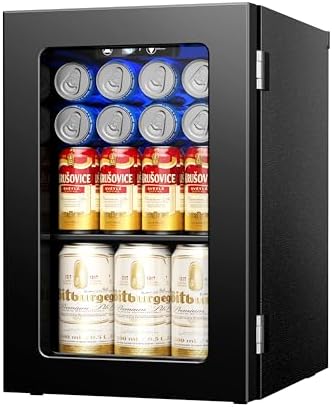
Eighty-nine ninety-nine is the price of admission to compressor cooling. Below it, everything on this page is thermoelectric.
Key Specifications
| Capacity | 0.6 cu ft, 24 cans |
|---|---|
| Cooling | Compressor |
| Type of figure | Absolute cabinet temperature |
| Format | Compact beverage fridge |
| Position | Cheapest compressor unit in this roundup |
| Price gap | About $27 above the dearest thermoelectric here |
| Rank | #43 in its category |
| Price | $89.99 |
| Best For | The smallest budget that still buys real refrigeration |
Why We Recommend It
The gap between technologies is smaller than people assume. The most expensive thermoelectric unit here is $62.98; this is $89.99. Twenty-seven dollars separates a cooler that works relative to your room from a fridge that holds a set temperature. Framed that way, the decision is easy for most buyers — and the reason it does not feel easy is that both are sold under the same words.
Half a cubic foot is genuinely small. Twenty-four cans, or a shelf of drinks and one or two other things. Judge it as a beverage fridge and it is fine; expect it to take a week’s groceries and it will disappoint.
Compressor units run in cycles, which means periodic noise rather than the constant fan hum of a thermoelectric unit. In a bedroom that is a real consideration and it cuts both ways — louder, but silent between cycles.
Rank #43 is respectable without being top-tier, and unlike several products here it does not appear to be sharing a figure across a family.
Pros
- Cheapest compressor unit here at $89.99
- Holds an absolute temperature, not a relative one
- Only about $27 more than the dearest thermoelectric
- 24-can capacity in a compact body
- Rank not obviously pooled with siblings
- Real refrigeration at entry price
Cons
- 0.6 cu ft is genuinely small
- Beverage-oriented, not for food storage
- Compressor cycling is audible
- No freezer compartment
- Less established brand than EUHOMY
- Glass door loses cold on opening
Best for: Anyone on the smallest budget that still buys a fridge rather than a cooler.
4. Feelfunn 3.2 Cu Ft Glass Door — Best Large

Three point two cubic feet is more than five times the entry units on this page and roughly a fifth of a full kitchen fridge.
Key Specifications
| Capacity | 3.2 cu ft, 126 cans |
|---|---|
| Cooling | Compressor |
| Type of figure | Absolute cabinet temperature |
| Door | Glass |
| Relative size | Over 5x the 0.6 cu ft entry units |
| Placement | Floor-standing |
| Rank | #24 in its category |
| Price | $199.99 |
| Best For | A garage, den or office drinks fridge |
Why We Recommend It
This is where the category stops being portable. A 3.2 cubic foot cabinet is a floor-standing appliance you position once. Everything about the buying decision changes: you are choosing where it lives, whether the door swing works, and how much noise the room tolerates — not whether it will fit on a desk.
The per-can economics invert at this size. A hundred and twenty-six cans for $199.99 is about a dollar sixty per can of capacity; the 24-can units are around four dollars. If you actually need the volume, large is dramatically better value, which is the opposite of how most appliance categories work.
A glass door at this size is a real trade-off. It is what you want in a den or a bar area and it is the wrong choice in a sunny garage, where the cabinet has to fight radiant heat through the glass all day.
Nothing at this capacity uses thermoelectric cooling, and that is not a coincidence — the technology cannot move enough heat to hold a big cabinet cold.
Pros
- 3.2 cu ft — over five times the entry units
- 126 cans, about $1.60 per can of capacity
- Compressor cooling with an absolute range
- Glass door suits a den or bar area
- Best value per unit of volume here
- Genuine second-fridge capacity
Cons
- Floor-standing — not a desk or dorm-shelf unit
- Glass door is wrong for a sunny garage
- $199.99 is a real appliance purchase
- Compressor noise in a living space
- Needs clearance for airflow
- No freezer
Best for: A garage, den or office that needs a genuine second fridge for drinks.
5. Upstreman 3.2 Cu Ft With Freezer — Best With Freezer

The only product in this roundup with a freezer, which makes it the only one that can be a household’s single fridge.
Key Specifications
| Capacity | 3.2 cu ft total |
|---|---|
| Cooling | Compressor |
| Freezer | Separate compartment |
| Type of figure | Absolute cabinet temperature |
| Door | Solid, not glass |
| Format | Floor-standing compact fridge |
| Rank | #1,108 in its category |
| Price | $149.99 |
| Best For | A dorm or studio needing one appliance to do everything |
Why We Recommend It
A freezer compartment changes what the appliance is for. Every other unit here is a drinks cabinet or a cooler. This one can hold ice, frozen food and leftovers, which is the difference between supplementing a kitchen and being the kitchen — the relevant case for a dorm room, a studio flat or an annexe.
Thermoelectric cooling cannot do this at any price. Freezing requires pulling a cabinet well below ambient and holding it there, which is exactly what a semiconductor module cannot manage. If a freezer matters, the technology decision is made for you.
A solid door rather than glass is the right choice here. Glass suits displaying drinks; a solid door insulates better, which matters far more when a compartment has to stay below freezing.
The freezer costs fridge space, and in 3.2 cubic feet that is a real subtraction. Compared with the Feelfunn at the same nominal capacity, you are trading drinks volume for the ability to freeze. Which is right depends entirely on whether this is your only fridge.
Pros
- The only unit here with a freezer compartment
- Can serve as a single fridge for a dorm or studio
- Solid door insulates better than glass
- 3.2 cu ft total capacity
- Compressor cooling with an absolute range
- $149.99 — cheaper than the glass-door 3.2
Cons
- Freezer compartment eats into fridge space
- Small freezers frost up and need defrosting
- Solid door means you cannot see the contents
- Lowest rank among the compressor units here
- Floor-standing footprint
- Compressor cycling noise
Best for: A dorm, studio or annexe where this has to be the only fridge.
6. DUMOS 3.2 Cu Ft With Freezer — Best Value Large

Three point two cubic feet, a freezer, and $129.93 — about twenty dollars under the closest equivalent here.
Key Specifications
| Capacity | 3.2 cu ft |
|---|---|
| Cooling | Compressor |
| Freezer | Included |
| Type of figure | Absolute cabinet temperature |
| Format | Floor-standing compact fridge |
| Price position | About $20 under the comparable Upstreman |
| Rank | #1,481 in its category |
| Price | $129.93 |
| Best For | Maximum capacity per dollar with freezing capability |
Why We Recommend It
Same format, lower price, less track record. This is functionally the Upstreman’s specification for twenty dollars less, from a brand with a considerably thinner history. On an appliance containing a compressor and a sealed refrigerant circuit, brand history is a reasonable thing to pay something for — but twenty dollars is a modest premium to give up.
Capacity per dollar is the best on this page. At 3.2 cubic feet for $129.93 it beats every other unit here on volume for money, including the units a fifth of its size.
The freezer carries the same caveats as any small freezer compartment: it will frost up, it will need manual defrosting, and it subtracts from the fridge volume above it.
Rank #1,481 is the second-weakest here, which for a large appliance is worth weighing against the saving. Sales rank is not quality, but on sealed-system appliances the number of units in the field correlates with how quickly problems surface.
Pros
- Best capacity per dollar in this roundup
- 3.2 cu ft with a freezer for $129.93
- About $20 below the equivalent Upstreman
- Compressor cooling, absolute range
- Solid door insulates well
- Full compact-fridge format
Cons
- Least-established brand at this capacity
- Rank #1,481, second-weakest here
- Freezer frosts and needs manual defrosting
- Freezer subtracts from fridge space
- Sealed-system repairs are rarely economic
- Floor-standing footprint
Best for: Buyers prioritising capacity per dollar who accept a less-known brand.
7. Antarctic Star 10 L Thermoelectric — Best Thermoelectric

“Cool up to 32°F (18°C) below ambient temperature.” That sentence is the most important one in this roundup.
Key Specifications
| Capacity | 10 L |
|---|---|
| Cooling | Thermoelectric — stated on the listing |
| Stated performance | Up to 32°F (18°C) below ambient |
| Type of figure | Relative to room temperature |
| In a 72°F room | About 40°F |
| In a 78°F room | About 46°F — above the 40°F line |
| Dimensions | 9.8 x 12.8 x 13.9 inches |
| Price | $62.98 |
| Best For | Chilling drinks in a room you keep cool |
Why We Recommend It
Below ambient means the room sets the floor. A compressor fridge is told to reach 40°F and does so whether the kitchen is 65°F or 90°F. A thermoelectric unit subtracts a fixed amount from whatever the room is doing. Thirty-two degrees below a 72°F room is 40°F, which is fine. Thirty-two below a 78°F summer room is 46°F, which is above the widely used 40°F food-safety threshold. In a 90°F garage it is 58°F, which is not refrigeration in any useful sense.
Credit where it is due: this listing states the figure clearly, including the hourly performance from 86°F. Several thermoelectric units on this page describe themselves as keeping things “chilled” and give no number at all, which is far less useful.
Ten litres and a handle is the actual use case. This is a portable drinks cooler for a bedroom, an office or a car, and judged as that it is a good one. The problem is not the product; it is that it is sold beside compressor fridges under identical words.
Thermoelectric units run a constant quiet fan rather than cycling a compressor, which many people prefer in a bedroom.
Pros
- States its cooling figure plainly: 32°F below ambient
- Includes hourly performance data from 86°F
- 10 L with a carry handle and removable shelf
- Constant quiet fan rather than compressor cycling
- $62.98
- Genuinely portable
Cons
- Cools relative to the room, not to a set temperature
- About 46°F in a 78°F room — above the food-safety line
- Cannot keep food safely cold in a warm room
- No freezing capability at all
- 10 L is small
- Performance degrades exactly when you need it most, in summer
Best for: Chilling drinks in a bedroom or office that stays reliably cool.
8. Cooluli Classic 4 L — Best Portable
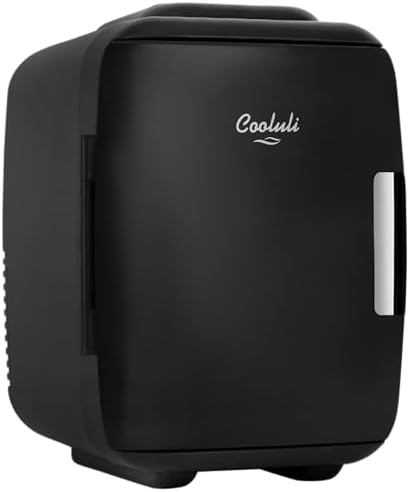
Forty to forty-five degrees below ambient is the strongest thermoelectric figure here — and it is still a subtraction, not a temperature.
Key Specifications
| Capacity | 4 L, about 6 cans |
|---|---|
| Cooling | Thermoelectric semiconductor |
| Stated performance | 40–45°F below ambient |
| Type of figure | Relative to room temperature |
| Also does | Warming as well as cooling |
| Dimensions | 7.25 x 10.25 x 10.5 inches |
| Noise | Ultra-quiet, no compressor |
| Price | $59.99 |
| Best For | A desk, a car, or skincare — not food storage |
Why We Recommend It
The larger delta makes a real difference. Forty-five degrees below a 72°F room is about 27°F, which is genuinely cold; below a 78°F room it is about 33°F. That is better than the other thermoelectric units here and, on paper, cold enough. The caveat remains that the figure is a maximum under ideal conditions with the unit closed and the room stable, not a temperature it holds.
Warming is a genuine feature of the technology, not a bolt-on. A Peltier module moves heat in whichever direction the current flows, so reversing it turns a cooler into a warmer. No compressor fridge on this page can do that at any price.
Four litres is six cans. This is a desk or car unit, and the listing is honest about that framing. It is also the reason thermoelectric persists — nothing with a compressor is this small, this light or this quiet.
Silent operation is the real selling point. A semiconductor cooler makes fan noise and nothing else, which is why these sell into bedrooms and offices where a cycling compressor would be intolerable.
Pros
- Strongest thermoelectric figure here: 40–45°F below ambient
- Warms as well as cools — no compressor unit can
- Ultra-quiet, no compressor cycling
- Genuinely portable at 4 L
- Works from mains or car power
- States its cooling figure rather than saying ‘chilled’
Cons
- Still relative to ambient, not a set temperature
- 4 L holds six cans and nothing else
- Quoted figure is a best case, not a held temperature
- No freezing
- $59.99 is close to compressor money for far less capability
- Performance falls away in a hot room
Best for: A desk, a car or a bedside table where silence matters more than capacity.
9. Frigidaire 10 L Personal Cooler — Best Known Brand

Ten litres, fifteen cans, a name everyone recognises — and not a single number about how cold it gets.
Key Specifications
| Capacity | 10 L, up to 15 cans |
|---|---|
| Cooling | Thermoelectric |
| Stated performance | None given |
| What the listing says | Keeps contents “chilled and ready to enjoy” |
| Also marketed for | Skincare and beauty products |
| Format | Countertop personal cooler |
| Rank | #1,072 in its category |
| Price | $56.98 |
| Best For | Buyers who want a known name on a desk cooler |
Why We Recommend It
The missing specification is the review. Across the whole listing there is no temperature, no delta below ambient, no range. “Chilled and ready to enjoy” is the entire performance claim. Compare that with the Antarctic Star, which publishes 32°F below ambient and its hourly performance from 86°F, and it is clear which listing expects you to check.
The Frigidaire name is doing real work here. It is one of the most recognised names in American refrigeration, and on a thermoelectric personal cooler it sets an expectation the technology cannot meet — this shares its cooling method with the $29.98 Curtis unit further down, not with the compressor fridges above.
Fifteen cans in 10 litres is decent for the format, and the skincare framing in the listing tells you the intended use plainly: a bedroom or bathroom countertop, not a food store.
Judge it as a desk cooler and it is fine. Just do not let the badge persuade you it is doing what a Frigidaire kitchen fridge does.
Pros
- Recognised brand name
- 10 L / 15 cans is good capacity for a personal cooler
- Countertop size suits a bedroom or office
- Quiet thermoelectric operation
- $56.98
- Doubles as a skincare cooler
Cons
- No cooling figure published anywhere on the listing
- Thermoelectric, so cooling is relative to the room
- Brand name implies capability the technology cannot deliver
- Cannot hold food at a safe temperature in a warm room
- Same cooling method as the $29.98 unit here
- No freezing
Best for: Someone who wants a familiar brand on a bedroom or office cooler.
10. CURTIS Pepsi 6-Can Micro Fridge — Cheapest

Twenty-nine dollars and no temperature figure — while the listing suggests storing baby bottles and soup in it.
Key Specifications
| Capacity | 4 L, six 12 oz cans |
|---|---|
| Cooling | Thermoelectric |
| Stated performance | None given |
| Interior | 5 x 5 x 7.5 inches, removable shelf |
| Suggested uses | Drinks, lunch, beer, baby bottles, soup |
| Branding | Licensed Pepsi livery |
| Rank | #23,557 in its category |
| Price | $29.98 |
| Best For | A gift or a desk novelty for canned drinks |
Why We Recommend It
This is where the category’s labelling problem becomes concrete. The listing suggests using it to “store and cool your lunch, drinks, beer, baby bottles or even soup”, and publishes no cooling performance figure at all. Baby bottles and soup are foods with real temperature requirements. A thermoelectric unit in a warm room may sit well above 40°F, and nothing on the listing tells a buyer that.
None of which makes it a bad object for its actual job. Six cans on a desk, kept noticeably cooler than the room, for thirty dollars, in Pepsi livery. As a novelty or a gift it does exactly what it looks like it does.
Treat it as a can cooler and it is honest value. Treat the suggested uses as a specification and you are relying on a claim the listing never actually makes about temperature.
The rank tells its own story — #23,557 is by far the weakest here, which suggests most buyers in this category are choosing something with more capability.
Pros
- $29.98 — cheapest here by a wide margin
- Six cans in a genuinely tiny footprint
- Removable shelf for small items
- Quiet, no compressor
- Licensed Pepsi branding makes an easy gift
- Fine for its actual job of cooling cans
Cons
- No cooling figure published at all
- Suggests storing baby bottles and soup without a temperature
- Thermoelectric, so cooling depends on the room
- Weakest rank in this roundup
- 4 L holds six cans and nothing else
- No freezing, and no thermostat
Best for: A desk novelty or a gift, for cans and nothing that matters.
Compressor Against Thermoelectric
The decision that matters. Everything else on this page is detail.
| Compressor | Thermoelectric | |
|---|---|---|
| Temperature claim | Absolute (e.g. 40–61°F) | Relative (e.g. 32°F below ambient) |
| In a 90°F garage | Still holds 40°F | About 58°F |
| Can it freeze? | Yes, on models with a freezer | No |
| Safe for food? | Yes | Only in a cool room |
| Noise | Cycles audibly | Constant quiet fan |
| Weight for 0.6 cu ft | About 21 lbs | A few pounds |
| Entry price here | $89.99 | $29.98 |
The gap in this roundup is $27: the dearest thermoelectric unit is $62.98 and the cheapest compressor is $89.99. If anything you plan to put inside is food rather than sealed cans, that $27 is the whole decision.

What ‘Below Ambient’ Means in Real Rooms
Taking the Antarctic Star’s stated 32°F below ambient and applying it to rooms people actually have.
| Room temperature | Resulting interior | Safe for food? |
|---|---|---|
| 65°F cool basement | 33°F | Yes |
| 72°F air-conditioned room | 40°F | Borderline |
| 78°F summer bedroom | 46°F | No |
| 85°F un-conditioned room | 53°F | No |
| 90°F garage | 58°F | No |
These are best-case figures assuming a stable room and a closed door; opening it repeatedly makes them worse. The unit is not faulty in any of these rooms — it is doing precisely what it says. The problem is that what it says is a subtraction, and buyers read it as a temperature.
Best Alternatives
| Alternative | Why Consider It | Better For | Main Trade-Off |
|---|---|---|---|
| A full compact fridge | Real capacity and a proper freezer | A studio or annexe as the only fridge | Much larger and needs permanent placement |
| A 12 V compressor cooler | Holds an absolute temperature and runs off a car | Camping, road trips, vehicle use | Expensive for the volume |
| A cool box and ice packs | No power, no noise, no failure mode | A day out, or a picnic | Needs re-freezing and drains as ice melts |
| A wine cooler | Precise control in the 45–65°F band | Wine specifically | Too warm for food, by design |
What the Money Actually Buys
$29.98 to $62.98 — Curtis, Frigidaire, Cooluli, Antarctic Star. Every unit in this tier is thermoelectric. What you are buying is portability, near-silence and low cost; what you are not buying is a temperature. Two of the four publish no cooling figure at all. Judged as desk coolers for cans they are fine, and the Antarctic Star is the most honest of them because it publishes its delta.
$89.99 to $149.99 — Icyglee, EUHOMY, Electactic, DUMOS, Upstreman. This is where compressors start, and with them absolute temperature control. The step from the dearest cooler to the cheapest fridge is $27. Within this tier the choice is capacity and whether you need a freezer.
$199.99 — Feelfunn 3.2 cu ft. Large-format compressor cooling with a glass door. Per unit of volume it is the best value here, at roughly $1.60 per can of capacity against about $4 for the small units — which inverts the usual rule that small is cheap.
What to Check Before You Buy
Find Out Which Technology It Uses
This is the first and most important question, and many listings do not answer it directly. Clues: a stated absolute temperature range means compressor; a figure quoted as degrees “below ambient” means thermoelectric; the words semiconductor or Peltier mean thermoelectric. Weight is the giveaway when nothing is stated — a compressor unit of 0.6 cu ft weighs around 21 lbs, a thermoelectric one of similar volume a fraction of that.
Absolute Temperature or Degrees Below Ambient
“40°F to 61°F” is a promise about the inside of the cabinet. “Up to 32°F below ambient” is a promise about the difference between inside and outside. The first works in any room; the second hands the outcome to your thermostat. Do the subtraction for the warmest your room gets, not the average, because the warmest is when you most want it working.
Decide Whether Food Is Going In It
If the answer is anything other than sealed cans and bottles, you need a compressor and an absolute temperature. The 40°F threshold generally used for chilled food is reachable by a thermoelectric unit only in a room already cooler than about 72°F, and not reliably then. This is the point at which $27 stops being a saving.
Treat a Missing Cooling Figure as a Red Flag
Three units in this roundup publish no cooling performance figure whatsoever, describing contents only as “chilled”. One of those simultaneously suggests storing baby bottles and soup. A listing that names a number — even an unflattering one like 32°F below ambient — is being more useful to you than one that does not.
Do Not Read the Brand as a Specification
A famous refrigeration name on a personal cooler does not change the physics inside it. One unit here carries a household American fridge brand and shares its cooling technology with the $29.98 novelty unit rather than with the compressor fridges above it.
Match Capacity to the Format, Not the Can Count
Can counts are a marketing figure that assumes the cabinet is packed with nothing but 12 oz cans. Cubic feet or litres tell you more. And note how the economics invert with size: the large units here cost around $1.60 per can of capacity against roughly $4 for the small ones.
Consider Where the Noise Lands
Compressors cycle: periods of audible running, then silence. Thermoelectric units run a constant low fan. In a bedroom many people prefer the constant hum to the intermittent start-up; in a kitchen or garage nobody cares. It is one of the few genuine advantages thermoelectric retains.
Common Mistakes
- Reading “32°F below ambient” as 32°F. It is a subtraction from your room, not a temperature.
- Putting food in a thermoelectric cooler in summer. A 78°F room puts the interior around 46°F, above the food-safety line.
- Buying on the brand badge. A famous fridge name on a personal cooler is still a personal cooler.
- Assuming a mini fridge can freeze. Only one unit in this roundup has a freezer, and no thermoelectric unit can freeze at any price.
- Putting a glass-door unit in a sunny garage. It spends all day fighting radiant heat through the glass.
- Comparing on can count. It assumes a cabinet packed with nothing but cans; cubic feet is the honest figure.
- Ignoring a missing specification. Three listings here publish no cooling figure at all, and that silence is information.
Who Should Buy Which
Buy the EUHOMY 24 Can if you want the clearest specification. A stated 40°F to 61°F, compressor cooling named outright, $99.99.
Buy the Upstreman 3.2 cu ft if this is your only fridge. It is the one unit here with a freezer, which is what a dorm or studio actually needs.
Buy the Feelfunn 3.2 cu ft for a garage, den or office. Best value per unit of volume on the page by a wide margin.
Buy the Antarctic Star only if you want a cooler and know it. It is the most honest thermoelectric listing here because it publishes its delta — use it in a cool room, for drinks.
Buy the Cooluli if silence and portability are the point. Four litres, warms as well as cools, and no compressor to cycle at 3am.

Frequently Asked Questions
What is the difference between a mini fridge and a mini cooler?
In practice the words are used interchangeably, which is the problem. The real difference is the technology inside. A compressor unit works exactly like your kitchen fridge: you set a temperature and it holds it regardless of the room. A thermoelectric or semiconductor unit uses a Peltier module that moves a fixed amount of heat, so its performance is quoted as a number of degrees below the room — typically 30 to 45°F below ambient. Both get sold as “mini fridges”. Only the first can be relied on to hold food at a safe temperature in a warm room, and the price gap between them in this roundup is just $27.
Can a thermoelectric mini fridge keep food safe?
Only in a room that is already cool, and not reliably. The commonly used threshold for chilled food is 40°F. A unit rated at 32°F below ambient reaches that only if the room is at or below about 72°F. At 78°F — an ordinary summer bedroom — the interior sits around 46°F, above the line. In a 90°F garage it is about 58°F. The unit is not malfunctioning in any of those cases; it is doing exactly what its specification says. If you intend to store anything other than sealed cans and bottles, buy a compressor unit.
Why do some listings not state any temperature at all?
Three units in this roundup publish no cooling figure whatsoever, describing their contents only as kept “chilled”. There is no requirement to publish one, and for a thermoelectric unit the honest figure is not flattering. It is worth noticing which listings do publish numbers: one here states 32°F below ambient plus its hourly performance from an 86°F start, which is far more useful than a vaguer claim even though the number itself is modest. Treat a missing figure as information about the product, not as a neutral omission.
Can any mini fridge make ice or keep things frozen?
Only a compressor unit with a dedicated freezer compartment, and there is exactly one in this roundup. No thermoelectric unit can freeze at any price or in any room, because the technology cannot pull a cabinet far enough below ambient and hold it there. If you need ice, frozen food or the ability to keep leftovers for more than a day or two, you are looking for a compact fridge with a freezer rather than a beverage cooler — and you should expect a floor-standing appliance rather than a desktop one.
Are the bigger ones better value?
Substantially, which inverts the usual rule. The 3.2 cu ft units here work out at roughly $1.60 per can of stated capacity, while the 24-can units are around $4. The reason is that a compressor, a thermostat and a sealed refrigerant circuit cost roughly the same whether they are cooling half a cubic foot or three, so the fixed cost is spread over far more space in a large cabinet. If you have the floor space, large is the better purchase. If you need something on a desk, you are paying a genuine premium for the format.
Which is quieter?
Thermoelectric, in the sense that matters to most people. It runs a constant low fan and nothing else — no start-up thump, no cycling. A compressor unit is silent between cycles and clearly audible during them, which some people find more intrusive in a bedroom precisely because it is intermittent. This is the one area where the cheaper technology has a real and lasting advantage, and it is why thermoelectric coolers continue to sell for bedside and office use where nothing perishable is going inside.
Final Verdict
States an absolute 40°F to 61°F, names compressor cooling outright, and reaches the 40°F food-safety threshold. $99.99.
The only unit here that can freeze — which makes it the only one that can serve as a dorm or studio’s single fridge.
Publishes its delta plainly at 32°F below ambient instead of vaguely promising ‘chilled’. Buy it as a cooler, for a cool room.
Buy the EUHOMY 24 Can if you want a fridge. It states 40°F to 61°F, it names its cooling technology, and at $99.99 it is only $27 above the most expensive cooler on this page. That $27 is the difference between an appliance that holds a temperature and one that offers a discount off your room.
Buy the Upstreman if this has to be your only fridge, because it is the one unit here with a freezer. Buy the Feelfunn 3.2 cu ft if you have the floor space — at roughly $1.60 per can of capacity it is far better value than anything small.
And if a cooler is genuinely what you want, buy the Antarctic Star. Not because it cools hardest, but because it tells you what it does: 32°F below ambient, with hourly figures from an 86°F start. That is a listing written for someone who intends to check.
The rule to carry away is short. If the cooling claim contains the words “below ambient”, it is a cooler and the room decides the outcome. If it names two temperatures, it is a fridge. And if it names nothing at all — as three listings on this page do, one of them while suggesting you store baby bottles in it — assume the number was not worth printing.