Affiliate Disclosure: As an Amazon Associate, we earn from qualifying purchases. This does not affect the price you pay.
A mandoline is the only tool in a home kitchen that is designed to remove material faster than you can react. That is the whole point of it. A fixed blade, a flat runway, and produce driven across the edge under your own hand — it makes slices a knife cannot match, and it does not care what else is moving across it.
Which is why the interesting specification is not the blade. It is the small plastic thing that comes in the box with it.
Nine of the ten slicers here describe a hand guard or food holder — the pronged puck that grips produce so your fingers never approach the edge. One does not. It is the OXO Good Grips Handheld, and at #1,017 in Kitchen & Dining it is the highest-ranked true mandoline on this page. Its safety bullet promises “a large non-slip handle and stable foot”, both of which stop the tool from sliding. Neither puts anything between your hand and the blade.
Meanwhile the cheapest slicer in this roundup, at $13.92, ships a full-cover food holder. Whatever the money is buying on a mandoline, it is not the guard.
Below: ten mandoline slicers verified in stock, what each one actually gives you to keep your fingers, and where the listings quietly use the word “guard” to mean three different things.
Our Quick Picks
 Best OverallOXO Good Grips Chef’s Mandoline 2.0
A sprung food holder, a thickness window you read from above, and four cut styles in one blade — the bench mandoline that treats the guard as part of the tool.
 Best Japanese ClassicBenriner Mandoline Slicer
The Japanese slicer that professional kitchens buy by the dozen — four blades, a 0.5 mm floor, and a guard that grips the last small piece.
 Best BudgetZKIRON Handheld Slicer
Under fourteen dollars, a thumb-slide between three settings, and a full-cover food holder rather than a token one.
At a Glance
Ten Mandoline Slicers, Compared by What Protects You
Thickness range, blade count, form factor and — the column that matters — what each one gives you to hold the food with.
| # | Model | Thickness | Blades | Form | Hand Guard | Standout | Main Drawback | Check Price |
|---|---|---|---|---|---|---|---|---|
| 1 |
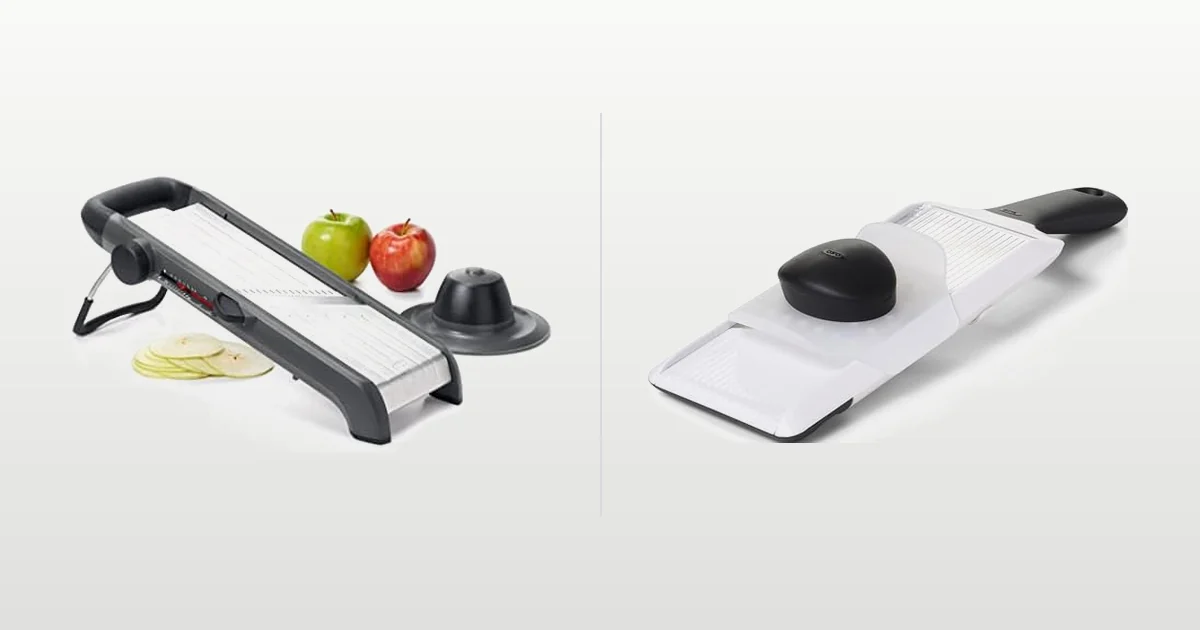
 OXO Good Grips Chef’s Mandoline 2.0 OXO Good Grips Chef’s Mandoline 2.0 |
0.5 to 6 mm, dialled | Straight, crinkle, julienne, French fry | Fold-out bench | Spring-loaded, wide rim | The only holder here that is sprung rather than pushed | $99.99 — five times the median on this page | View on Amazon |
| 2 |
 OXO Good Grips Handheld OXO Good Grips Handheld |
1, 2.5 or 4 mm | One, fixed | Handheld | Not listed | The highest-ranked true mandoline here | Its listing names no hand guard at all | View on Amazon |
| 3 |
 Benriner Mandoline Slicer Benriner Mandoline Slicer |
0.5 to 8 mm, dialled | Four: fixed plus coarse, medium, fine | Bench, hooks on bowls | Safety guard, holds small pieces | The restaurant standard, at 2.5 inches wide | 2.5-inch surface is narrow for cabbage or melon | View on Amazon |
| 4 |
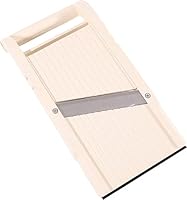 Benriner Jumbo Slicer Benriner Jumbo Slicer |
0.5 to 10 mm, dialled | One wide straight blade | Bench, hooks on bowls | Safety guard, holds small pieces | A 5-inch surface — double the standard Benriner | One blade only, so no julienne at all | View on Amazon |
| 5 |
 Gramercy 12-Setting Slicer Gramercy 12-Setting Slicer |
12 settings, dialled | Rotating blade cylinder | Bench, stainless frame | Gloves and a blade guard | A rotating cylinder instead of loose blades | Its guard is for the blade in storage, not your hand in use | View on Amazon |
| 6 |
 Mueller Austria Mandoline Mueller Austria Mandoline |
1 to 9 mm, julienne 6 to 9 mm | Five interchangeable | Fold-out legs, bowl or board | Safety food pusher | Folding legs let it work over a bowl or flat | Blade changes mean handling five loose edges | View on Amazon |
| 7 |
 Fullstar Handheld Slicer Fullstar Handheld Slicer |
1, 2, 3 or 4 mm | Two: slice and julienne | Handheld | Steel-tipped hand guard | The handheld that does include a guard — with steel tips | Four settings is the ceiling on a handheld | View on Amazon |
| 8 |
 PrepSolutions Adjust-A-Slice PrepSolutions Adjust-A-Slice |
Adjustable dial | One | Compact bench | Hand guard, non-slip base | Smallest bench footprint that still has a guard | Listing never states the thickness range in millimetres | View on Amazon |
| 9 |
 ZKIRON Handheld Slicer ZKIRON Handheld Slicer |
1, 2 or 3 mm, thumb slide | One | Handheld, bowl-hook | Full-cover food holder | Cheapest here, and the holder is full-cover | Three thin settings only — nothing thick | View on Amazon |
| 10 |
 Ourokhome 6-Blade Slicer Ourokhome 6-Blade Slicer |
2 mm and 4 mm slicing | Six interchangeable | Bench with 2 L tray | Expanded hand guard | Six blades including wave, grate, shred and mash | Only two plain slice thicknesses despite six blades | View on Amazon |
Specifications and prices are taken from each manufacturer’s Amazon listing as displayed on 23 August 2026 through a United States connection, and may change. The Hand Guard column records what each listing states, using the listing’s own words; where a listing describes no in-use hand protection, that is recorded as stated rather than inferred. Note that “blade guard” on some listings means a storage cover for the blade, not a holder for the food. Sales ranks are shown as displayed and can be pooled across a variant family, so a rank may reflect a sibling product rather than the model listed.
Scroll the table sideways to see every column
How We Chose These Ten
We researched current listings, compared manufacturer specifications and documentation, and examined recurring patterns in customer feedback. We did not carry out hands-on testing, and nothing below is presented as measured performance data.
- What the listing says protects your hand — recorded in the listing’s own words, because three different objects here are called a guard
- A verified live buy box — every one of the ten was confirmed purchasable in the United States on 23 August 2026
- Whether it is actually a mandoline — the two highest-ranked results for this search are box choppers, which do a different job and are excluded
- Stated thickness range in millimetres — quoted where the listing gives figures, and flagged where it does not
- Slicing width against real produce — a 2.5-inch runway and a cabbage are not compatible
- How blades are changed — a rotating cylinder and five loose edges are not the same risk
- Brand spread — eight brands across ten slots, so the page is not one maker’s catalogue
The Ten Mandoline Slicers in Detail
1. OXO Good Grips Chef’s Mandoline 2.0 — Best Overall

The holder is sprung, so it keeps pressure on the food as the food gets smaller. That is the part of the last inch that goes wrong on everything else here.
Key Specifications
| Form | Fold-out bench mandoline |
|---|---|
| Hand guard | Spring-loaded food holder with a wide rim |
| Guard storage | Clips to the underside of the body |
| Blade | Japanese stainless, two-sided |
| Cut styles | Straight, crinkle/waffle, julienne, French fry |
| Thickness display | Indicator window in inches and millimetres |
| Rank | #14,522 in Kitchen & Dining |
| Price | $99.99 |
| Best For | Anyone who slices often enough to want both hands out of the way |
Why We Recommend It
A spring-loaded holder solves the specific moment that hurts. Every mandoline is safe while the potato is big. The danger is the last inch, when there is not enough left to grip and the temptation is to steady it with a fingertip. A pushed holder needs you to keep pressing down as the food shortens; a sprung one keeps that pressure itself. It is a small mechanical difference and it applies at exactly the moment the injury happens.
The wide rim matters as much as the spring. A narrow holder concentrates on a small area of the food and lets the edges escape; the wide rim keeps a flat slice flat against the runway. That is also why the slices stay even down to the end rather than turning into wedges.
Four cut styles without a blade change. The blade is two-sided for straight and crinkle cuts, and the julienne and French fry blades are integrated rather than loose. Nothing on this page has fewer parts to lose, which is a real safety point in itself — a loose blade in a drawer is a hazard that has nothing to do with slicing.
The thickness window is read from above. Most of the mandolines here set thickness with a dial underneath or at the back, which means checking the setting by turning the tool over. Reading it from the working side is the difference between confirming a setting and assuming one.
Pros
- Spring-loaded holder keeps pressure as the food shortens
- Wide rim keeps slices flat and even to the end
- Guard stores on the tool, so it is not lost in a drawer
- Four cut styles from one integrated blade set
- Thickness window readable from above in both units
- Textured runway stops sticking
Cons
- $99.99 is five times the median price here
- Bench footprint needs storage space
- Heavier to bring out for one cucumber
- Rank is the lowest of the four bench models
- More mechanism means more to rinse
- Overkill for occasional slicing
Best for: Households that slice weekly and want the guard designed in rather than supplied alongside.
2. OXO Good Grips Handheld — Best Seller, No Holder

Rank 1,017 makes this the highest-placed genuine mandoline in this roundup. Read its safety bullet closely before you buy it.
Key Specifications
| Form | Handheld, hooks over a bowl |
|---|---|
| Hand guard | Not listed among the features |
| Stated safety features | Large non-slip handle, stable foot |
| Thickness | 1 mm, 2.5 mm or 4 mm |
| Blade | Single fixed blade |
| Extras | Window to judge volume as you slice |
| Rank | #1,017 in Kitchen & Dining |
| Price | $18.21 |
| Best For | Confident slicers who already own a cut-resistant glove |
Why We Recommend It
What the listing actually claims is worth quoting. The safety feature is described as “the large non-slip handle and stable foot are designed for comfort and security while slicing”. Both of those stop the tool from moving. Neither puts anything between your hand and the blade. Across five bullet points there is no food holder, no hand guard and no glove.
That is not the same as saying it is unsafe. It is a well-made slicer with three genuinely useful thickness steps and the best rank on this page, and plenty of cooks use a handheld mandoline over a bowl with a cut glove and never have a problem. But the protection is something you supply, and the listing does not tell you that you need to.
Three steps beats a continuous dial more often than you would think. 1 mm, 2.5 mm and 4 mm are detented positions rather than a sweep, so the setting you used last time is the setting you get this time. Continuous dials drift, and a drifted dial is why a batch of gratin potatoes comes out uneven.
The volume window is a small, genuinely original idea. It lets you see how much you have sliced without stopping to look in the bowl, which is the sort of thing that only matters after you have overshot a recipe once.
Pros
- Highest-ranked true mandoline in this roundup
- Three detented thickness steps repeat exactly
- Hooks over a bowl, so slices land where you want them
- Window shows volume without stopping
- $18.21
- Light and quick to rinse
Cons
- No hand guard or food holder listed anywhere in the features
- Safety bullet describes tool stability, not finger protection
- Single fixed blade — no julienne
- Only three thicknesses
- You will want to buy a cut-resistant glove separately
- Handheld means one hand is always holding the tool
Best for: Cooks who already own a cut glove and want the most popular handheld on Amazon.
3. Benriner Mandoline Slicer — Best Japanese Classic

Half a millimetre at the bottom of the dial, three tooth blades for julienne, and a guard specifically described as holding the small pieces.
Key Specifications
| Form | Bench slicer, hooks onto a bowl |
|---|---|
| Hand guard | Safety guard that holds smaller pieces |
| Thickness | 0.5 to 8 mm by easy-turn dial |
| Blades | 1 fixed straight plus coarse, medium and fine tooth |
| Slicing surface | 2.5 inches wide |
| Body | BPA-free plastic, non-skid rubber base |
| Rank | #1,337 in Kitchen & Dining |
| Price | $29.99 |
| Best For | Julienne, garnish work and anything needing a 0.5 mm floor |
Why We Recommend It
A 0.5 mm floor is the reason this is the restaurant default. Most of the page starts at 1 mm. Half a millimetre is the difference between a potato slice and something you can see through, and it is what makes crisps, gratins and pickled garnish possible on the same tool. The dial is continuous rather than detented, so it is worth checking against a first slice.
Three tooth blades, not one julienne setting. Coarse, medium and fine are separate interchangeable blades rather than positions, which is more to store but produces genuinely different cuts — matchstick, shred and thread. The trade is that changing them means handling a bare blade.
The guard is described by what it does, which is unusual here. “Holds smaller pieces and protects fingers” names the actual failure mode: it is not the first cut that gets you, it is the last one. Several listings on this page describe a guard only as a feature that exists.
A note on the rank. This slicer shows #1,337 in Kitchen & Dining — and so does the Benriner Super Slicer, a different product at $38.99. Amazon pools rank across a variant family, so both display the family’s position rather than their own. Treat it as a family signal, not a per-model one.
Pros
- 0.5 mm floor, the finest on this page
- Three separate tooth blades for real julienne variety
- Guard specifically holds small pieces
- The slicer professional kitchens actually buy
- Hooks onto bowls; non-skid base
- Disassembles fully for cleaning
Cons
- 2.5-inch surface is narrow for cabbage, melon or large potatoes
- Changing blades means handling a bare edge
- Continuous dial can drift between sessions
- Rank is shared with the Super Slicer variant
- Plastic body looks utilitarian
- No julienne without a blade swap
Best for: Anyone doing garnish, julienne or crisp-thin work rather than bulk slicing.
4. Benriner Jumbo Slicer — Best for Large Produce
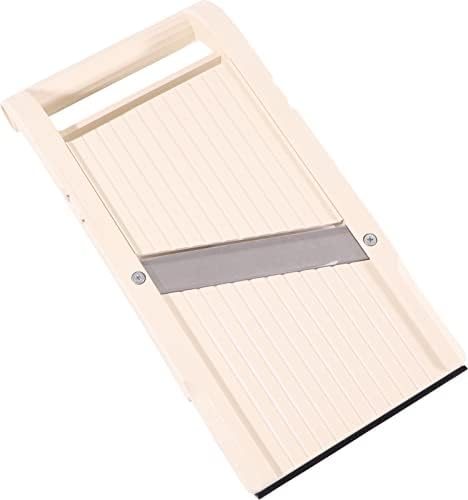
Five inches of slicing surface against the standard Benriner’s 2.5, and a ceiling of 10 mm rather than 8.
Key Specifications
| Form | Bench slicer, hooks onto a bowl |
|---|---|
| Hand guard | Safety guard that holds smaller pieces |
| Thickness | 0.5 to 10 mm by easy-turn dial |
| Blades | One wide straight-edge blade |
| Slicing surface | 5 inches wide |
| Body | 13 x 6.5 inches, BPA-free plastic, non-skid base |
| Rank | #1,317 in Kitchen & Dining |
| Price | $41.99 |
| Best For | Cabbage, melon and bulk slicing of wide produce |
Why We Recommend It
Width is the specification nobody checks and everybody needs. A cabbage is wider than 2.5 inches. So is a large potato laid flat, a melon, a swede. On a narrow slicer the food overhangs the runway, rocks, and cuts unevenly — and rocking food is food your hand is fighting to control. Five inches removes the problem rather than managing it.
The 10 mm ceiling is the other half of the same idea. Thick-cut slices for roasting or gratin need real depth, and 8 mm on the standard model is a genuine limit. Ten millimetres covers chip-shop thickness comfortably.
One blade is the price of the width. There are no tooth blades and no julienne here at all. If you want both, the honest answer is that the standard Benriner and this one are complementary rather than alternatives, which is an awkward thing for a buying guide to admit but it is what the specifications say.
Same guard, same sensible description. It holds smaller pieces and protects fingers, which is what you want when a half-cabbage becomes a quarter and then a wedge.
Pros
- Five-inch surface handles cabbage and melon without overhang
- 10 mm ceiling for genuinely thick cuts
- 0.5 mm floor retained at the fine end
- Guard holds small pieces
- Non-skid base and bowl hooks
- Wide blade cuts a full slice in one pass
Cons
- One blade only — no julienne, no tooth cuts
- $41.99 is the second-highest price here
- 13 x 6.5 inches takes real drawer space
- Continuous dial rather than detents
- Overkill if you mostly slice cucumbers
- Complementary to the standard model rather than a replacement
Best for: Anyone who slices cabbage, melon or large roots often enough to have been annoyed by overhang.
5. Gramercy 12-Setting Slicer — Best Bundled Kit

A rotating cylinder means blade changes without touching an edge — and the box includes gloves rather than a food holder.
Key Specifications
| Form | Bench slicer, stainless steel frame |
|---|---|
| Blade change | Rotating cylinder — no loose blades to handle |
| Hand protection | Cut-resistant gloves included |
| Blade guard | Removable, for the blade in storage |
| Blade steel | Professional 4CR15 stainless |
| Settings | 12 slice settings by dial |
| Rank | #1,529 in Kitchen & Dining |
| Price | $39.95 |
| Best For | Anyone who would rather wear protection than push a holder |
Why We Recommend It
The rotating cylinder is the real innovation here. On most of this page, changing from straight to julienne means removing a blade with your fingers and fitting another. That is a genuine hazard that has nothing to do with slicing. A cylinder that turns between cutting styles removes the handling entirely.
Read the safety bundle carefully, because two different things are called guards. The listing includes “cut-resistant gloves, a removable blade guard and a cleaning brush”. A blade guard covers the blade when the tool is put away. A food holder keeps your hand off the blade while you are using it. They are not substitutes, and this is the only product here whose in-use protection is worn rather than held.
Gloves are a legitimate strategy, with one caveat. A cut-resistant glove protects the hand holding the food, which is the hand at risk, and it keeps working when the food gets too small for any holder to grip. What it does not do is stop the food sliding, so control is on you.
Twelve settings is more resolution than most cooks will use, but the stainless frame is the thing you notice — it does not flex under pressure the way a plastic body does, and flex is what turns an even slice into a wedge.
Pros
- Rotating cylinder means never handling a loose blade
- Cut-resistant gloves included in the box
- Stainless steel frame does not flex under pressure
- 12 settings from paper-thin to thick
- 4CR15 blade steel named on the listing
- Top-rack dishwasher safe
Cons
- In-use protection is gloves, not a food holder
- The included “guard” is for storage, not for slicing
- Gloves do not stop food sliding
- 16.5 inches long — the largest footprint here
- Twelve settings is more than most people need
- $39.95
Best for: Cooks who would rather wear cut-resistant gloves than push food with a holder.
6. Mueller Austria Mandoline — Most Adjustable

Julienne sized separately from slice thickness, and legs that fold to work either over a bowl or flat on a board.
Key Specifications
| Form | Fold-out legs — board or bowl |
|---|---|
| Hand guard | Safety food pusher, held by a handle |
| Thickness | 1 to 9 mm by knob dial |
| Julienne | Separately sized, 6 mm to 9 mm |
| Blades | Five interchangeable |
| Also does | Cheese slicing, grating, julienne shredding |
| Rank | #9,935 in Kitchen & Dining |
| Price | $34.99 |
| Best For | A single tool replacing a slicer, grater and shredder |
Why We Recommend It
Separate julienne sizing is rarer than it sounds. On most slicers the julienne blade produces whatever width it produces and the thickness dial does the rest. Here the julienne has its own 6 to 9 mm range, so matchsticks and thicker batons are both available without changing what a plain slice does.
The folding legs are a genuine convenience. Unfolded, it stands over a board and slices onto it. Folded, it lies across a bowl. Most bench slicers commit to one posture, and the one they commit to is usually not the one your kitchen wants.
A food pusher is a pushed holder, not a sprung one. The listing is clear about the method: prepare the food, use the pusher to move it over the blades, secure it by holding the handle. That works, and it works less well as the food shortens, which is the same limit every non-sprung holder has.
Five loose blades is the honest drawback. Versatility here is delivered by swapping edges, and every swap is a moment of handling a bare blade. The rotating-cylinder approach on the Gramercy avoids that entirely, at the cost of fewer cut styles.
Pros
- Julienne sized separately from slice thickness
- Legs fold for either a bowl or a board
- Five blades cover slicing, grating and shredding
- 1 to 9 mm covers crisp to roast thickness
- Slim enough to replace a food processor for small jobs
- Top-rack dishwasher safe
Cons
- Five loose blades to handle and store
- Pushed food pusher, not spring-loaded
- 1 mm floor is coarser than the Benriner’s 0.5 mm
- Rank is the second-lowest here
- More parts to rinse than a handheld
- $34.99
Best for: Anyone wanting one tool for slicing, grating and shredding rather than three.
7. Fullstar Handheld Slicer — Best Handheld With a Holder

Four thickness settings, a built-in julienne blade, and the one thing the best-selling handheld does not list: a hand guard.
Key Specifications
| Form | Handheld |
|---|---|
| Hand guard | Included, with stainless steel guard tips |
| Thickness | 1 mm, 2 mm, 3 mm or 4 mm |
| Blades | Slice plus built-in julienne, 420 stainless |
| Why steel tips | Grip produce that plastic prongs slide off |
| Care | Dishwasher safe, BPA-free |
| Rank | #3,634 in Kitchen & Dining |
| Price | $16.99 |
| Best For | Handheld slicing without supplying your own protection |
Why We Recommend It
Steel-tipped prongs are a real distinction, not marketing. A hand guard grips food with small spikes. Plastic spikes flatten, and once flattened they slide off a wet potato at exactly the wrong moment. Steel tips keep biting. The listing makes the comparison explicitly — “stainless steel-tipped hand guard vs flimsy plastic competitors” — and on this page it is the only handheld that names the material of its guard at all.
Four settings on a handheld is the practical maximum. 1, 2, 3 and 4 mm are evenly spaced and detented. There is no 0.5 mm here, so translucent crisps are out, but the spacing is more useful day to day than a fine floor most people never dial in.
The julienne is built in rather than a separate blade. That means no swapping and nothing loose to store, which on a handheld tool that lives in a drawer is worth more than an extra cut style.
The comparison that matters is with the OXO handheld. Both are handhelds around the same money. One lists a hand guard with steel tips and four settings; the other lists three settings and no guard, and ranks far higher. Rank is measuring popularity, not protection.
Pros
- Includes a hand guard, unlike the category’s best seller
- Steel guard tips keep gripping wet produce
- Four evenly spaced thickness settings
- Julienne built in, nothing loose to store
- $16.99
- Dishwasher safe and BPA-free
Cons
- No 0.5 mm setting for translucent slices
- Handheld, so one hand is always holding the tool
- Two cut styles only
- Rank well below the OXO handheld
- Compact body is less stable than a bench slicer
- 420 steel is workmanlike, not premium
Best for: Anyone who wants a handheld and does not want to buy protection separately.
8. PrepSolutions Adjust-A-Slice — Best Compact

Seventeen dollars for a bench slicer that lists both a hand guard and a non-slip base — the two halves of the safety problem.
Key Specifications
| Form | Compact bench slicer |
|---|---|
| Hand guard | Included, for finger protection |
| Base | Non-slip, for stability in use |
| Thickness | Adjustable dial, paper-thin to thick |
| Range stated | No millimetre figures given on the listing |
| Body | Stainless steel blades, space-saving design |
| Rank | #4,154 in Kitchen & Dining |
| Price | $17.14 |
| Best For | Small kitchens that still want a guard and a stable base |
Why We Recommend It
It names both halves of the problem, which is rarer than it should be. Slicing safely needs the tool not to move and the hand not to reach the blade. This listing addresses both in one sentence: a hand guard for finger protection, a non-slip base for stability. Several more expensive products here address only one.
The missing specification is thickness. “Paper-thin to thick” is the entire range description — no millimetres anywhere. That is a real gap when the rest of the page quotes figures, and it means you cannot know before buying whether it reaches the 0.5 mm the Benriner does or stops at 1 mm like most handhelds. We have recorded it as the listing states it rather than guessing.
Compact is the point. It is a space-saving design in a category where the good bench models are 13 to 16 inches long. If a mandoline has to live in a small drawer to get used at all, that is a functional advantage rather than a compromise.
One blade, and no claim otherwise. This is a plain slicer. There is no julienne, no crinkle, no grating.
Pros
- Lists both a hand guard and a non-slip base
- Smallest bench footprint on this page
- $17.14
- Adjustable thickness dial
- Stainless blades, dishwasher safe
- Fits a drawer that will not take a Benriner
Cons
- No millimetre range stated anywhere on the listing
- One blade — no julienne or crinkle
- Cannot confirm whether it reaches 0.5 mm
- Small surface limits produce width
- Least-specified product in this roundup
- Dial is unmarked
Best for: Small kitchens, and anyone who will only use a mandoline that fits in a drawer.
9. ZKIRON Handheld Slicer — Best Budget

The cheapest slicer here, and its holder is described as full-cover rather than as an accessory.
Key Specifications
| Form | Handheld with bowl-hook grooves |
|---|---|
| Hand guard | Full-cover food holder |
| Thickness | 1 mm, 2 mm or 3 mm by thumb slide |
| Adjustment | Thumb slide — no loose parts |
| Weight | 0.55 lb |
| Cleaning | Rinse immediately; hand wash recommended |
| Rank | #12,111 in Kitchen & Dining |
| Price | $13.92 |
| Best For | A first mandoline, or a second one for the holiday kitchen |
Why We Recommend It
Price does not predict protection, and this is the proof. At $13.92 this is the least expensive product in the roundup, and it ships a full-cover food holder. The best-selling handheld, at $18.21, lists none. Whatever the price of a mandoline is buying, it is not the guard.
A thumb slide is the right adjustment for a handheld. Changing thickness one-handed while the other hand holds food is exactly when you do not want to be fitting a part. Three settings by slide means no loose inserts and nothing to lose.
The bowl-hook grooves are non-slip rather than a hook. The listing describes grooves on the tip that grip the rim of a standard mixing bowl. That is a slightly weaker claim than a moulded hook, and worth knowing if you plan to slice over a bowl rather than a board.
Rinse it immediately. The listing is unusually direct about this: rinse under the tap straight after use to clear starch, and hand wash by preference. Starch that dries on a blade is what dulls cheap stainless.
Pros
- $13.92 — the cheapest here, with a full-cover holder
- Thumb slide changes thickness one-handed
- No loose blades or inserts to store
- Grooves grip a standard mixing bowl rim
- 0.55 lb, so no wrist fatigue
- Rinses clean in seconds
Cons
- Three settings, all thin — nothing above 3 mm
- Hand wash recommended rather than dishwasher
- Grooves grip the bowl rim rather than hooking it
- Single blade, no julienne
- Rank is low in the category
- Budget stainless will dull sooner
Best for: A first mandoline, or a cheap second one to keep in the holiday kitchen.
10. Ourokhome 6-Blade Slicer — Most Blades

Six blades and a two-litre tray — but only two of those blades produce a plain slice.
Key Specifications
| Form | Bench slicer over a 2 L collection tray |
|---|---|
| Hand guard | Expanded hand guard, detachable for cleaning |
| Slice thicknesses | 2 mm and 4 mm blades |
| Other blades | Wave cutting, coarse grating, shredding, mashing |
| Blades | Six interchangeable, stainless |
| Extras | Cleaning brush included |
| Rank | #3,443 in Kitchen & Dining |
| Price | $20.99 |
| Best For | Bulk prep where the catching tray matters as much as the cut |
Why We Recommend It
Count the blades by what they do, not how many there are. Six sounds comprehensive, and the spread is genuinely wide: wave cutting, coarse grating, shredding and mashing are four distinct jobs. But plain slicing is covered by exactly two fixed thicknesses, 2 mm and 4 mm. There is no dial. If you want 1 mm or 6 mm, this tool does not have it at any setting.
The tray is the underrated part. Two litres catches a whole cabbage or several potatoes without stopping to empty a bowl, and slicing into an enclosed tray rather than over an open bowl removes the balancing act that makes bowl-hooked slicers awkward.
“Expanded” hand guard is a claim about area. A larger guard spreads pressure over more of the food, which helps it stay flat and keeps the hand further back. The guard also detaches for cleaning, which matters because a guard with food trapped in its prongs is one people stop using.
A mashing blade is unusual and genuinely useful for potatoes going straight into a mash, though it is doing a different job from everything else on this page.
Pros
- Six blades covering slice, wave, grate, shred and mash
- Two-litre tray catches a full cabbage
- Expanded hand guard, detachable for cleaning
- Cleaning brush included
- $20.99 for the widest blade set here
- Enclosed tray removes the bowl-balancing problem
Cons
- Only 2 mm and 4 mm plain slicing — no dial
- Six loose blades to handle and store
- No setting between or beyond those two thicknesses
- Tray adds bulk to store
- Mashing blade is a different job from slicing
- Blade changes mean handling bare edges
Best for: Bulk prep, and anyone who wants grating and shredding from the same tool.
Two Handhelds, One With a Holder
The best-selling handheld against the one that includes what it is missing. Similar money, different safety model.
| OXO Good Grips Handheld | Fullstar Handheld | |
|---|---|---|
| Price | $18.21 | $16.99 |
| Hand guard listed | None | Yes, steel-tipped |
| Stated safety feature | Non-slip handle, stable foot | Guard holds produce, fingers protected |
| Thickness settings | 1, 2.5, 4 mm | 1, 2, 3, 4 mm |
| Julienne | No | Built in |
| Rank in Kitchen & Dining | #1,017 | #3,634 |
The higher-ranked product is the one without the guard. Rank measures how many people bought it, which is not the same as how well protected they were when they used it. If you buy the OXO, buy a cut-resistant glove in the same order.
Sprung Holder Against Pushed Holder
Every holder works while the potato is large. They differ at the end.
| Spring-loaded (OXO Chef’s 2.0) | Pushed (Mueller Austria) | |
|---|---|---|
| Pressure as food shortens | Maintained by the spring | You must keep pressing |
| Hand position at the last inch | Behind the spring | Directly above the blade |
| Rim | Wide, keeps slices flat | Standard pusher face |
| Guard storage | Clips to the tool | Loose |
| Price | $99.99 | $34.99 |
Sixty-five dollars is a lot for a spring. Whether it is worth it depends entirely on how often you slice something down to its last inch — which, for anyone making gratin or crisps, is every single time.
Best Alternatives
| Alternative | Why Consider It | Better For | Main Trade-Off |
|---|---|---|---|
| A very sharp chef’s knife | No new tool, no new hazard | Anything under about twenty slices | Nowhere near as even, and much slower |
| A food processor slicing disc | Volume without a hand near a blade | Bulk prep, a whole sack of potatoes | Bulky, expensive, and a chore to wash |
| A box chopper | Push-through dicing with the hand fully above | Onions, dicing, salsa | Not a slicer — it dices, it cannot shave |
| A cut-resistant glove | Turns any slicer here into a safer one | Pairing with the OXO handheld | Does not stop the food itself from sliding |
What the Money Actually Buys
$13.92 to $20.99 — ZKIRON, Fullstar, PrepSolutions, OXO Handheld, Ourokhome. Four of these five list a hand guard, and the cheapest lists a full-cover one. This tier also contains the highest-ranked mandoline on the page and the only product with no stated hand protection at all. Protection and price are simply not correlated here, and if you take one thing from this article, take that.
$29.99 to $41.99 — Benriner, Benriner Jumbo, Mueller Austria, Gramercy. This is where the specifications get serious: a 0.5 mm floor, a five-inch runway, separately sized julienne, a rotating blade cylinder. It is also where you stop guessing what a slicer does, because these listings quote figures.
$99.99 — OXO Chef’s Mandoline 2.0. One product, and what it buys is a sprung holder, four integrated cut styles, and a guard that stores on the tool. Whether that is worth five times the median depends on frequency of use rather than skill.
What to Check Before You Buy
Find the Hand Guard Before Anything Else
Not the word “safe”, not “non-slip” — the object. You are looking for a food holder, hand guard or food pusher: a thing you hold that holds the food. A non-slip base and a stable foot stop the tool from moving, which is a different problem and a smaller one. If a listing’s entire safety claim is about stability, it is telling you the tool will stay put while you slice, and nothing at all about your hand.
Three Different Objects Are Called a Guard
A food holder or hand guard keeps your hand off the blade while slicing. A blade guard is a cover that protects the blade, and you, while the tool is in a drawer. A cut-resistant glove protects the hand but leaves the food unheld. The Gramercy on this page includes a blade guard and gloves but no food holder, and its listing is not being deceptive — it says exactly that, if you read it slowly. Search the bullet points for what the object does, not what it is called.
Check Whether the Holder Is Sprung
This is the single biggest functional difference between a $17 slicer and a $99 one. A pushed holder needs continuous downward force from you, and the force required goes up as the food gets smaller and less stable — which is precisely backwards from what you want. A sprung holder supplies that pressure itself. Only one product here has one.
Measure Your Widest Regular Vegetable
The standard Benriner runway is 2.5 inches. A cabbage, a large potato laid flat, a melon — none of those fit. Food that overhangs the runway rocks, and rocking food cuts unevenly and fights your hand. If cabbage is on your regular list, you need the five-inch Jumbo and you should accept losing julienne to get it.
Read the Range in Millimetres
“Paper-thin to thick” is not a specification. A 0.5 mm floor gives you translucent crisps and fine gratin; a 1 mm floor does not. At the other end, 8 to 10 mm is what roast-thickness slices need. One product on this page states no figures anywhere in its listing, and we have flagged that rather than filling the gap in with a guess.
Count How Often You Handle a Bare Blade
Six interchangeable blades means six edges to fit, remove and store. That is a hazard entirely separate from slicing, and it is why the Gramercy’s rotating cylinder is a genuine design advantage rather than a gimmick. Versatility bought with loose blades is versatility with a cost attached.
Decide Where the Slices Land
Handheld over a bowl, bench onto a board, or bench into a fitted tray. This sounds trivial and it decides whether the tool gets used at all — a slicer that needs you to balance it over a mixing bowl with one hand while pushing produce with the other is a slicer that stays in the drawer.
Common Mistakes
- Reading “non-slip” as finger protection. It stops the tool sliding on the counter. Your hand is a separate problem.
- Assuming the best seller is the safest. The highest-ranked mandoline here lists no hand guard at all.
- Confusing a blade guard with a food holder. One protects the blade in storage; the other protects you in use.
- Buying by blade count. Six blades on the Ourokhome deliver exactly two plain slice thicknesses.
- Ignoring runway width. A 2.5-inch surface and a cabbage will never get along.
- Pushing through the last inch. This is when almost every mandoline injury happens. Stop, and keep the offcut for stock.
- Trusting a continuous dial to hold its setting. Check it against a first slice before committing a bag of potatoes.
Who Should Buy Which
Buy the OXO Chef’s Mandoline 2.0 if you slice weekly. The sprung holder earns its money at the end of every vegetable, and the guard living on the tool means it is actually there when you need it.
Buy the Benriner if you want fine work. The 0.5 mm floor and three tooth blades are what the restaurant standard is standard for, and $29.99 is not much for it. Buy the Jumbo instead if cabbage is on your list.
Buy the Fullstar if you want a handheld. It costs less than the category’s best seller and includes the guard that one leaves out, with steel tips rather than plastic.
Buy the ZKIRON if you are trying a mandoline for the first time. Under fourteen dollars, three sensible settings, and a full-cover holder.
Buy the OXO Good Grips Handheld only alongside a cut-resistant glove. It is a good, popular, well-made slicer, and its listing does not mention hand protection. Supply that yourself.
Frequently Asked Questions
Do I really need the hand guard, or is careful technique enough?
Technique is what protects you for the first nine slices; the guard is what protects you on the tenth, when the potato is an inch thick and there is nothing safe left to hold. Mandoline injuries are overwhelmingly end-of-vegetable injuries, and they happen to experienced cooks precisely because confidence grows faster than the vegetable shrinks. Use the holder from the start rather than reaching for it at the end — and when the offcut gets too small even for the holder, stop and keep it for stock. On this page nine of ten listings include some form of holder; the exception is the best-selling model, which is worth knowing before you buy it.
What is the difference between a mandoline and a vegetable chopper?
A mandoline shaves: produce travels across a fixed blade and comes off as a slice whose thickness you set. A chopper dices: produce is pressed down through a grid of blades and comes out in cubes of a fixed size. They are different tools for different jobs, and a chopper cannot produce a translucent gratin slice at any setting. This matters when shopping, because the two highest-ranked products returned for “mandoline slicer” are box choppers — they are not on this page for that reason, not because they are bad at what they do.
Why do two products here show the same sales rank?
Amazon pools sales rank across a variant family, so several related listings can display the same figure. The Benriner Mandoline Slicer and the Benriner Super Slicer both show #1,337 in Kitchen & Dining despite being different products at different prices. The rank is real, but it belongs to the family rather than to the individual model, so it is not a reliable way to compare two products from the same maker. We record what each listing displays and note where pooling is the likely explanation.
What thickness should I actually use?
For crisps and anything you want translucent, 0.5 to 1 mm — and note that only the two Benriners on this page reach 0.5 mm. For a potato gratin, 2 to 3 mm gives slices that hold their shape and still cook through. For roasting, sauteing or thick-cut chips, 6 to 10 mm. For cucumber in a salad, 1 to 2 mm. If a listing does not quote millimetres, you cannot plan any of this, which is why the missing range on one product here is recorded as a drawback rather than glossed over.
Are the expensive ones sharper?
Not meaningfully, and sharpness is not what separates these. Every slicer here uses stainless steel and every one of them arrives sharp enough to take a fingertip. What the money buys is the mechanism around the blade: a sprung holder rather than a pushed one, a stainless frame that does not flex under pressure, a rotating cylinder so you never handle a loose edge, a wider runway, a finer floor. A cheap mandoline is not a blunt mandoline — it is a mandoline with less around the blade.
Can I put a mandoline in the dishwasher?
Most here say top rack, and two are explicit exceptions: the ZKIRON recommends hand washing, and the Ourokhome supplies a brush because its blades trap residue. Whatever the listing says, rinse immediately after use rather than leaving it. Dried starch is what dulls a cheap stainless blade, and a blade that has gone dull is more dangerous than a sharp one because it needs more force to push through — and force is what makes a hand slip.
Final Verdict
A spring-loaded holder that keeps its grip as the food shortens, four cut styles in one blade, and the guard stores on the tool. $99.99.
The restaurant standard at $29.99 — a 0.5 mm floor, three tooth blades, and a guard described by the job it does.
$16.99, four thickness settings, built-in julienne, and the steel-tipped hand guard the category’s best seller leaves out.
The OXO Chef’s Mandoline 2.0 is the one to buy if you slice regularly. The spring-loaded holder is not a luxury feature; it is the only mechanism here that keeps working at the exact moment every other design starts asking you to press harder on something too small to press safely. At $99.99 it is five times the median on this page, and it is the only product that treats the guard as part of the tool rather than as an accessory in the box.
For most kitchens the Benriner at $29.99 is the better buy, and it is what professional kitchens actually use. Take the Jumbo at $41.99 instead if you slice cabbage or melon, and accept that you lose julienne entirely to get the width. If you want a handheld, buy the Fullstar rather than the OXO: it is cheaper, adds a thickness setting and a built-in julienne, and includes a steel-tipped hand guard.
The finding that should change how you shop is that across these ten, price predicts almost nothing about protection. The cheapest product on the page ships a full-cover food holder for $13.92. The best-selling one lists none at all for $18.21. The most expensive has the best holder in the category. Whatever a mandoline’s price is buying — width, fineness, blade count, a frame that does not flex — it is not the guard, so check separately that the guard is there.
And one piece of advice that costs nothing. When the vegetable gets down to a piece too small for the holder to grip, stop. Put it in the stock bag. The last two slices of any potato are worth considerably less than the tip of a finger, and that trade is the entire reason the guard is in the box.