Frankford Avenue is one of the oldest and longest streets in Philadelphia, and by the time it reaches our stretch of the Lower Northeast, it’s passed through more neighborhood character changes than almost any other road in the city. Most people who drive it every day have never actually heard the story behind the blocks they’re passing.
Here’s a real look at the neighborhood around 4263 Frankford Ave — where the names came from, how the area actually developed, and why a pizza-and-Mexican-food kitchen fits here as well as it does.
Frankford Itself Predates the United States
The Frankford name goes back further than most people expect. The area started as a village founded in 1682 by Quaker settlers, on land known as the Manor of Frank, purchased by the Free Society of Traders. The name most likely traces to the Frankfurt Company, a group of Quaker businessmen tied to the settlement along Frankford Creek.
Frankford operated as its own incorporated borough starting in 1800, with its own local government, before Philadelphia absorbed it into the city during a major 1854 consolidation that merged dozens of surrounding townships and boroughs into one unified Philadelphia. In other words, this stretch of the city was its own independent town for over half a century before it was ever officially “Philadelphia” at all.
Where “Wissinoming” Actually Comes From
If you’ve ever wondered about the name Wissinoming, it’s not a made-up developer word — it’s Lenni Lenape in origin, and it reportedly means “where the grapes grow,” a reference to the wild vineyards that once covered the area. It later became attached to the estate of Matthias Baldwin, the locomotive builder, whose property near Tacony and Van Kirk Streets lent the neighborhood its name.
There was even a real Wissinoming Creek running through the area, with its own tributary called Little Wissinoming Creek. Both were buried underground in the 1930s as the neighborhood urbanized, but the name survived long after the water disappeared from view. According to Wikipedia’s history of Wissinoming, the neighborhood today spans both the 19124 and 19135 zip codes.
Burying a creek isn’t a small engineering decision, either. It usually means a neighborhood is being built up densely enough that an open waterway has become more of a liability than an asset — a sign of exactly how much this stretch of the city was developing at the time.
Mayfair: From Farmland to Rowhomes
Just up the avenue, Mayfair tells a completely different story. Before the late 1920s, most of the land was farmland, home to little more than the Edwin Forrest Home for Children and a poorhouse. Development began around 1929 and picked up speed dramatically after World War II.
What went up wasn’t random. Developers built rowhouses with rear parking garages, an early example of the car-centered suburban layout that would later spread across the whole country. Shopping centers followed along Frankford Avenue, Roosevelt Boulevard, and Cottman Avenue, turning the corridor into the retail spine it still is today.
That garage detail matters more than it sounds like it should. Rowhomes built decades earlier, closer to Center City, were designed around foot traffic and streetcars, with no real accommodation for a car in the picture. Mayfair’s builders were designing for a future where nearly every household owned one, which is exactly the future that actually arrived.
An Elevated Line Shaped How People Got Around
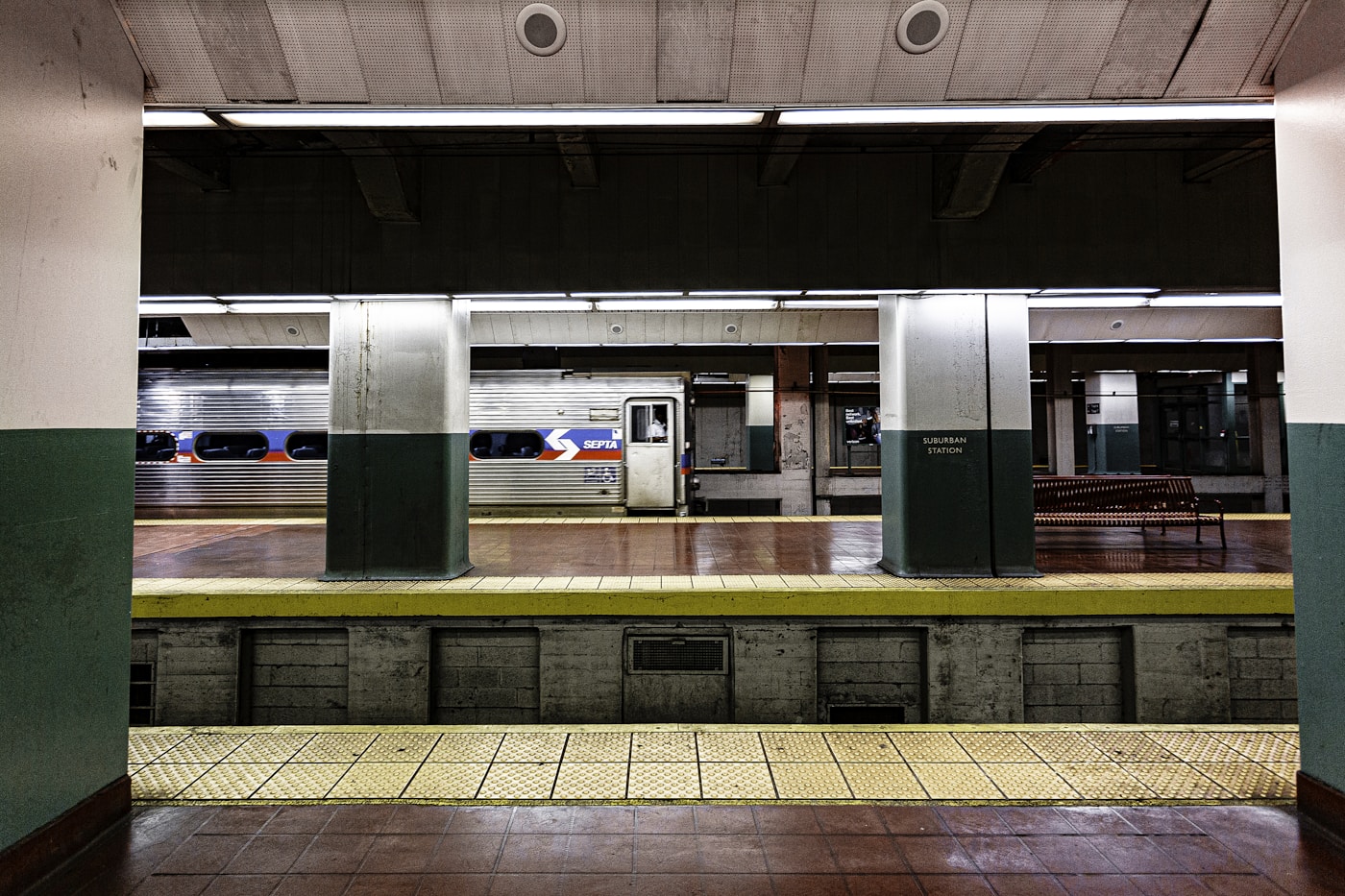
Transit has always mattered more here than in neighborhoods built around the car alone. The Frankford corridor grew up alongside Philadelphia’s elevated rail system, which made it realistic for people to live in the Northeast and still work downtown — a pattern that shaped rowhome development the entire length of the avenue, not just in one neighborhood.
That’s a different growth pattern than a lot of American suburbs, which expanded almost entirely around highway access. Here, the rail line came first in a lot of ways, and the housing filled in around it, block by block, as commuting into Center City became realistic for working families who couldn’t afford to live closer in.
A Neighborhood That Changed, and Kept Changing
Mayfair was historically an Irish-American neighborhood, but that’s changed significantly since 2000, with Asian, Russian, Hispanic, and Middle Eastern families now part of the community alongside longtime residents. Wissinoming and the surrounding blocks have followed a similar pattern.
That kind of layered, changing identity is exactly the environment a pizza-and-Mexican-food kitchen makes sense in. Nobody here is choosing between “the neighborhood restaurant” and “the ethnic food place” — the neighborhood itself has always been a mix, and the menu just reflects that back.
It’s worth saying plainly: neighborhoods like this one don’t stay the same generation after generation, and the ones that do best usually aren’t the ones that resist that change. They’re the ones where longtime residents and newer arrivals end up sharing the same corner stores, the same bus stops, and eventually, the same food.

Neighborhoods Along Frankford Ave in 19124
| Neighborhood | Name Origin | Character Today |
|---|---|---|
| Frankford | Likely named after the Frankfurt Company, the Quaker land group tied to the area since 1682 | Historic commercial hub of the Lower Northeast |
| Wissinoming | Lenni Lenape for “where the grapes grow” | Residential rowhome blocks, spans 19124 and 19135 |
| Mayfair | Developer-era name from the 1920s-30s | Postwar rowhomes, car-friendly layout, diverse population |
| Holmesburg | Named for Thomas Holme, Pennsylvania’s colonial Surveyor General | Northernmost stretch before Pennypack Creek |
Part of This Corridor, Not Just Located On It
We’re not trying to be a destination restaurant people drive across the city for. We’re built around this specific stretch of Frankford Ave and the real people who live along it — which is also why our delivery zone stays tight to the neighborhood instead of stretching thin across all of Philadelphia.
That’s a deliberate choice, not a limitation. A restaurant that tries to serve the entire city ends up serving no neighborhood particularly well. Staying close to Frankford, Wissinoming, Mayfair, and Holmesburg means we can actually know the area we’re cooking for, instead of treating it as one delivery zone among dozens spread across the map.

It shows up in small ways day to day — knowing which orders come from the same few blocks, recognizing regulars by their usual order, keeping ingredients on hand for the combinations this specific neighborhood actually asks for. That kind of familiarity is hard to fake, and it’s not something a restaurant chasing citywide delivery coverage usually bothers building.
If you’re curious about the name behind the business itself, we’ve also written about what “paisa” actually means — a word about belonging to a place, which fits this neighborhood’s story as much as ours.
Frequently Asked Questions
- What does “Wissinoming” mean?
- It comes from a Lenni Lenape term meaning “where the grapes grow,” later attached to locomotive builder Matthias Baldwin’s estate in the area.
- What zip codes cover this part of Frankford Ave?
- Primarily 19124, with Wissinoming also extending into 19135.
- Was Mayfair always a residential neighborhood?
- No. It was mostly farmland until development began around 1929, expanding significantly after World War II.
- Is this the same Frankford Avenue people talk about near Fishtown?
- Yes, it’s the same street, but a very different stretch. Frankford Avenue runs for miles through completely different neighborhoods, and our location sits well north in the Lower Northeast, not the trendier blocks closer to Center City.
- Does Paisa’s Pizza deliver throughout this whole area?
- We deliver to 19124 and the surrounding zip codes. Check our delivery coverage page for the full list.
Order from the neighborhood kitchen built for this block.