Every cheesesteak we serve traces back to one very specific moment: a South Philadelphia hot dog cart, a bored vendor, and a cab driver who wanted something different for lunch. Nearly a century later, that one improvised sandwich has spawned an entire category of Philadelphia food culture — including the ten variations on our own menu.
Here’s the real history behind the sandwich, not the shortened version.
It’s a story worth knowing even if you’re just ordering lunch, because almost everything distinctive about a cheesesteak — the hot griddle, the melted cheese, the fact that it’s sold on nearly every corner in the city — traces back to specific, documented decisions made by real people, not a slow evolution nobody can point to.
1930: A Hot Dog Cart Gets Bored of Hot Dogs
The cheesesteak’s origin story starts with Pat Olivieri, an Italian-American vendor who ran a hot dog cart in South Philadelphia. In 1930, instead of his usual hot dogs, he sent out for some chopped beef, grilled it up, and put it on an Italian roll with some onions — just something different for his own lunch.
A cab driver passing by smelled it and asked for one instead of his usual hot dog. According to the account preserved by National Geographic’s history of the sandwich, the driver told Pat to forget about hot dogs and start selling steak sandwiches instead. Pat took the advice, and the sandwich that would eventually become the cheesesteak was born.
What makes this origin story unusual is how undeliberate it was. Pat wasn’t trying to invent a new category of sandwich or build a signature dish — he was bored of hot dogs and grabbed whatever was on hand. The entire cheesesteak tradition, everything that followed from it, started as one vendor’s improvised lunch rather than a planned menu addition.
The Original Cheesesteak Had No Cheese
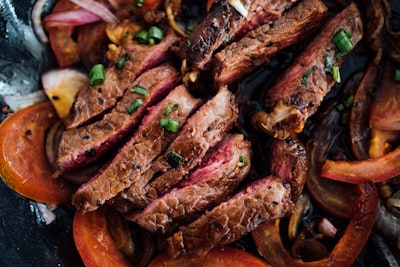
Here’s the part that surprises most people: the sandwich Pat sold in 1930 was just steak, onions, and bread. No cheese at all.
The most commonly cited account credits cheese being added roughly a decade or two later, at Pat’s own shop, by a manager known as “Cocky” Joe Lorenzo — though the exact year and even which cheese (American or provolone) is genuinely disputed among different tellings of the story. What’s not disputed is that once cheese was added, it stuck permanently, and the sandwich as we know it today — the version every cheesesteak on our menu is still built around — was set.
It’s worth sitting with that for a second: the single ingredient most people now consider non-negotiable on a cheesesteak wasn’t even part of the original idea. The name “cheesesteak” itself only makes sense in hindsight, once cheese became permanent — for a stretch of years, Pat was selling what was functionally just a steak sandwich under a name that hadn’t caught up yet.
Pat’s vs. Geno’s: The Rivalry That Made It Famous
Pat’s stayed the only cheesesteak game in town for over three decades. That changed in 1966, when Joey Vento opened Geno’s Steaks directly across the intersection at 9th and Passyunk — reportedly starting with just two boxes of steak, a few hot dogs, and six dollars.
The two shops coexisted fairly quietly for years. The rivalry didn’t really ignite until 1976, after the movie Rocky put Philadelphia’s food culture on a national stage and both shops leaned into the competition for tourists and press attention. That good-natured rivalry, playing out on the same South Philly corner for decades, is a big part of why the cheesesteak became internationally famous rather than staying a regional specialty.
What’s easy to miss in the Pat’s-versus-Geno’s story is that the competition never actually split the cheesesteak into two different sandwiches — both shops still serve some version of Pat’s original steak-cheese-onion formula. The rivalry was about attention and loyalty, not about reinventing the recipe. That’s part of why “authentic” Philly cheesesteak still means roughly the same thing no matter which shop you’re asking.
Joey Vento ran Geno’s until his death in 2011, after which his son Geno took over — the shop still operates at the same 9th and Passyunk corner today, directly across from Pat’s, exactly where it started nearly sixty years ago.
From One Sandwich to a Full Menu
For decades, the cheesesteak stayed close to Pat’s original formula: steak, cheese, and grilled onions, maybe peppers. The variations we make today — chicken versions, buffalo and BBQ sauces, a pizza-flavored take with mozzarella and marinara, a jalapeño-loaded version — are a much more recent evolution, built on top of that original 1930 foundation rather than replacing it.
Peppers, onions, and mushrooms together — the combination behind our Classic Philly Cheese Steak — represent the traditional “loaded” direction the sandwich took as it spread beyond Pat’s original counter. Chicken versions came later still, offering the same format to people who wanted the cheesesteak experience without beef. Sauced versions like our Buffalo Chicken and BBQ Chicken Cheese Steak are newer again, borrowing flavors from outside the original Italian-American tradition entirely.
That’s really the throughline connecting our whole cheesesteak menu to a hot dog cart from nearly a hundred years ago: every version, however loaded, still starts with the same basic idea Pat Olivieri stumbled into by accident — hot steak, melted cheese, a fresh roll. Everything else is just variation on that original theme. See our full cheesesteak guide for how all ten of ours compare.
It’s also worth remembering that the cheesesteak’s sibling sandwich, the hoagie, has a completely separate origin story from a different part of the city entirely — Hog Island’s WWI-era shipyards rather than a 1930s hot dog cart. If you’ve ever wondered how the two ended up sharing a menu despite such different histories, our cheesesteak vs. hoagie breakdown covers both stories side by side.
Frequently Asked Questions
- Who actually invented the cheesesteak?
- Pat Olivieri, a South Philadelphia hot dog vendor, is credited with the original 1930 sandwich — though cheese wasn’t added until later.
- Did the original cheesesteak have cheese?
- No. The first version in 1930 was just steak, onions, and bread. Cheese was added later, most commonly credited to a Pat’s manager known as “Cocky” Joe Lorenzo.
- What’s the rivalry between Pat’s and Geno’s about?
- Geno’s opened directly across the street from Pat’s in 1966. The friendly rivalry between the two shops, which intensified after the movie Rocky in 1976, helped make the Philly cheesesteak internationally famous.
- Is the cheesesteak still made the same way today?
- The core formula — griddled steak, melted cheese, a fresh Italian roll — hasn’t changed. What’s changed is the variety built on top of it, from chicken versions to sauced and loaded variations.
- Where did the Philly cheesesteak originate?
- South Philadelphia, at the intersection of 9th Street and Passyunk Avenue — still the location of both Pat’s and Geno’s today.
- Why did the movie Rocky matter to cheesesteak history?
- It put Philadelphia’s food culture on a national stage in 1976, which is when the friendly Pat’s-versus-Geno’s rivalry really intensified and helped push the sandwich toward international recognition.
- Has the cheesesteak recipe changed much since 1930?
- The core formula hasn’t — griddled steak, melted cheese, and a fresh roll are still the foundation of every cheesesteak. What’s expanded is the variety of toppings, proteins, and sauces built on top of that same base.
Craving a piece of that history? We make ours fresh to order.