Affiliate Disclosure: As an Amazon Associate, we earn from qualifying purchases. This does not affect the price you pay.
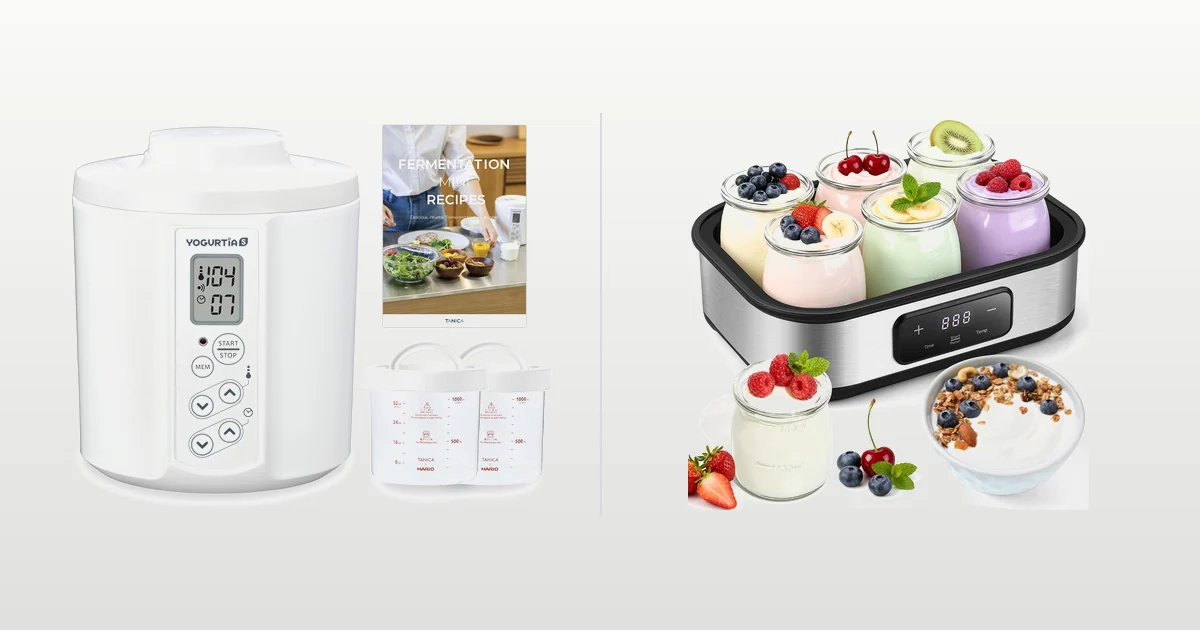
A yogurt maker is a box that holds one temperature for eight to twelve hours. That is the entire job, and it is why the temperature specification is the only one worth reading closely.
Yogurt cultures want about 108 to 112°F. Every machine below manages that. What separates them is how far either side of it they will go, and that decides whether you have bought a yogurt maker or a fermentation box.
The ceilings here run from 122°F to 158°F. Koji sits around 86°F, tempeh around 88°F, natto around 100°F — all comfortably inside every machine here. Amazake wants roughly 140°F, and exactly one of these ten can reach it.
Two machines break the pattern entirely and are worth flagging before you compare specifications. One has no adjustable temperature at all — a fixed element and a timer, which its maker presents as the feature rather than the limitation. And one has no plug: an insulated stainless jacket that holds warm water around a jar, with no element and nothing to fail.
The other figure to look for is accuracy, and only two of these ten publish one.
Our Quick Picks
 Best OverallTANICA YOGURTiA
Seventy-seven to 158°F in one-degree steps — a range that covers every ferment in the kitchen, not just yogurt.
 Most Precise BudgetANZKTOS 6-Jar
A stated accuracy of ±2°F from a probe — the only machine under a hundred dollars here that publishes one.
 Best Value 8-JarGDOR 8-Jar Digital
The same eight-jar format with a 68–131°F range and a 48-hour digital timer, for forty dollars.
At a Glance
Ten Yogurt Makers Compared
Temperature range and control against vessel format — because range decides what you can ferment and format decides how you strain it.
| # | Model | Temp Range | Control | Vessels | Weight | Standout | Main Drawback | Check Price |
|---|---|---|---|---|---|---|---|---|
| 1 |
 TANICA YOGURTiA TANICA YOGURTiA |
77–158°F | 1°F steps | 2 glass pots | 1100 ml | The only one that reaches 158°F | $249.99, five times the field | View on Amazon |
| 2 |
 Euro Cuisine YM260 Euro Cuisine YM260 |
78–132°F | Adjustable | 2 qt glass jar | 4 pounds | One 2-quart jar instead of eight small ones | Higher floor than rivals at 78°F | View on Amazon |
| 3 |
 Suteck 8-Jar Suteck 8-Jar |
Adjustable | Time and temp | 8 x 6 oz glass | Stainless shell | Eight jars for eight flavours | Eight jars is eight things to wash | View on Amazon |
| 4 |
 GDOR 8-Jar Digital GDOR 8-Jar Digital |
68–131°F | 48-hour timer | 8 x 6 oz glass | 5.39 lbs | Same eight jars, ten dollars less | No stated temperature accuracy | View on Amazon |
| 5 |
 ANZKTOS 6-Jar ANZKTOS 6-Jar |
68–122°F | ±2°F probe | 6 jars | 3.63 lbs | States its accuracy, which almost nobody does | Tops out at 122°F, lowest ceiling here | View on Amazon |
| 6 |
 Suteck 2-Quart Glass Suteck 2-Quart Glass |
68–131°F | 0–48 hours | 2 x glass jars | 4.95 lbs | Two-quart capacity at forty dollars | Two jars, so two flavours at most | View on Amazon |
| 7 |
 Probiotic 48H Bowls Probiotic 48H Bowls |
68–127°F | 48-hour timer | 2 large glass bowls | 5.02 lbs | Wide bowls instead of tall jars | No stated accuracy, and no brand behind it | View on Amazon |
| 8 |
 ZHU-011 Compact ZHU-011 Compact |
Adjustable | Time and temp | 2 x 10 oz glass | 3.67 lbs | Adjustable control at thirty-five dollars | Twenty ounces total, smallest capacity here | View on Amazon |
| 9 |
 Euro Cuisine YM80 Euro Cuisine YM80 |
Not adjustable | Timer only | 7 glass jars | 4 pounds | The simplest machine here, deliberately | States no adjustable temperature at all | View on Amazon |
| 10 |
 Non-Electric Yogurt Maker Non-Electric Yogurt Maker |
No power | Insulation only | 1 qt glass jar | 2.42 lbs | No plug, no element, nothing to fail | Relies on the water you pour in | View on Amazon |
Specifications, prices and ratings are taken from each manufacturer’s Amazon listing as displayed on 20 August 2026 and may change. Temperature ranges are the manufacturers’ stated figures; four listings give a range, two state only that temperature is adjustable, one states none at all, and one is non-electric. Only the TANICA and the ANZKTOS publish an accuracy tolerance. Fermentation temperatures quoted for koji, tempeh, natto and amazake are widely published general guidance rather than figures from these listings, and cultures vary. All ten machines rate 4.5 out of 5 stars, which is unusually uniform and means ratings do not differentiate this category. Standalone Greek yogurt strainers and a tofu press returned by the same Amazon category were excluded as they are not yogurt makers.
Scroll the table sideways to see every column
How We Chose These Yogurt Makers
We researched current listings, compared manufacturer specifications and documentation, and examined recurring patterns in customer feedback. We did not carry out hands-on testing, and nothing below is presented as measured performance data.
- Stated temperature range — the ceiling decides what else you can ferment, and the floor decides whether it doubles as a proofing box
- Whether an accuracy figure is published — only two of these ten give one, and it is the specification the whole product depends on
- Vessel format — one large jar strains easily for Greek; eight small jars give portions and flavours
- Glass or plastic — live culture in a scratched plastic pot is harder to clean properly
- Timer length — yogurt wants 8 to 12 hours; other cultures run past 24
- Yogurt makers only — standalone strainers and a tofu press from the same category were excluded
The 10 Best Yogurt Makers, Reviewed
1. TANICA YOGURTiA — Best Overall

Every other machine in this roundup tops out somewhere between 122 and 132°F. This one reaches 158°F, and adjusts in single degrees.
Two glass pots, microcomputer control, and a 100–240 V supply so it works anywhere.
Key Specifications
| Temperature range | 25–70°C, or 77–158°F |
|---|---|
| Increments | 1°F / 1°C, finest here |
| Capacity | 1100 ml |
| Vessels | Two glass pots included |
| Voltage | 100–240 V worldwide, no converter |
| Control | Microcomputer |
| Dimensions | 7.4″L x 6.3″W x 7.4″H |
| Model | YS02GW-U |
| Best For | Anyone fermenting more than yogurt |
Why We Recommend It
The top of the range is what decides how much of a fermentation cupboard the machine replaces. Yogurt needs about 110°F and everything here manages that. But koji sits around 86°F, tempeh around 88°F, natto around 100°F, and amazake wants roughly 140°F — which is above what any other machine on this page can reach.
One-degree increments matter for the same reason. The difference between a tangy yogurt and a mild one is a couple of degrees held over eight hours, and a machine that steps in fives cannot place you between them.
At $249.99 it costs five times the field. That is only justified if you ferment beyond yogurt; for yogurt alone the $34.95 machine further down does the same job.
Pros
- 77–158°F, by far the widest range here
- 1°F increments, finest control in the roundup
- Reaches amazake and koji temperatures nothing else here can
- Two glass pots included
- 100–240 V, works on any supply
Cons
- $249.99, five times the price of the field
- 1100 ml is mid-sized, not large
- Overkill if you only want yogurt
- Specialist brand with limited local support
Best for: Fermenting koji, natto, tempeh and amazake as well as yogurt.
2. Euro Cuisine YM260 — Best Large Jar

Most yogurt makers use six or eight small jars. This uses one two-quart jar, which is a different proposition entirely.
Seventy-eight to 132°F adjustable, with a thermometer included.
Key Specifications
| Temperature range | 78–132°F, adjustable |
|---|---|
| Vessel | Single 2-quart glass jar |
| Timer | Adjustable |
| Included | Free thermometer |
| Weight | 4 pounds |
| Brand | Euro Cuisine |
| Model | YM260 |
| Rating | 4.5 out of 5 stars |
| Best For | Making yogurt in bulk and straining it for Greek |
Why We Recommend It
A single large jar is the right format if you strain. Greek yogurt is ordinary yogurt with the whey drained off, and you cannot strain conveniently from eight separate six-ounce pots — you tip them all into one strainer anyway. Starting in one vessel removes a step and eight things to wash.
Euro Cuisine has been making yogurt makers longer than almost anyone in this category, and including a thermometer is a small sign of a company that expects you to care about the temperature rather than just press a button.
Its floor is 78°F, higher than the 68°F most rivals offer. That rules out the coolest ferments — sourdough starter and some vegetable ferments sit in the low seventies — though it covers every yogurt culture comfortably.
Pros
- Single 2-quart jar suits straining for Greek yogurt
- 78–132°F adjustable with a timer
- Thermometer included in the box
- Euro Cuisine, the longest-running name here
- Glass rather than plastic vessel
Cons
- 78°F floor is higher than the 68°F rivals offer
- $57.79, second dearest here
- One jar means one batch of one flavour
- No published wattage
Best for: Bulk yogurt, especially if you strain it for Greek.
3. Suteck 8-Jar — Most Jars

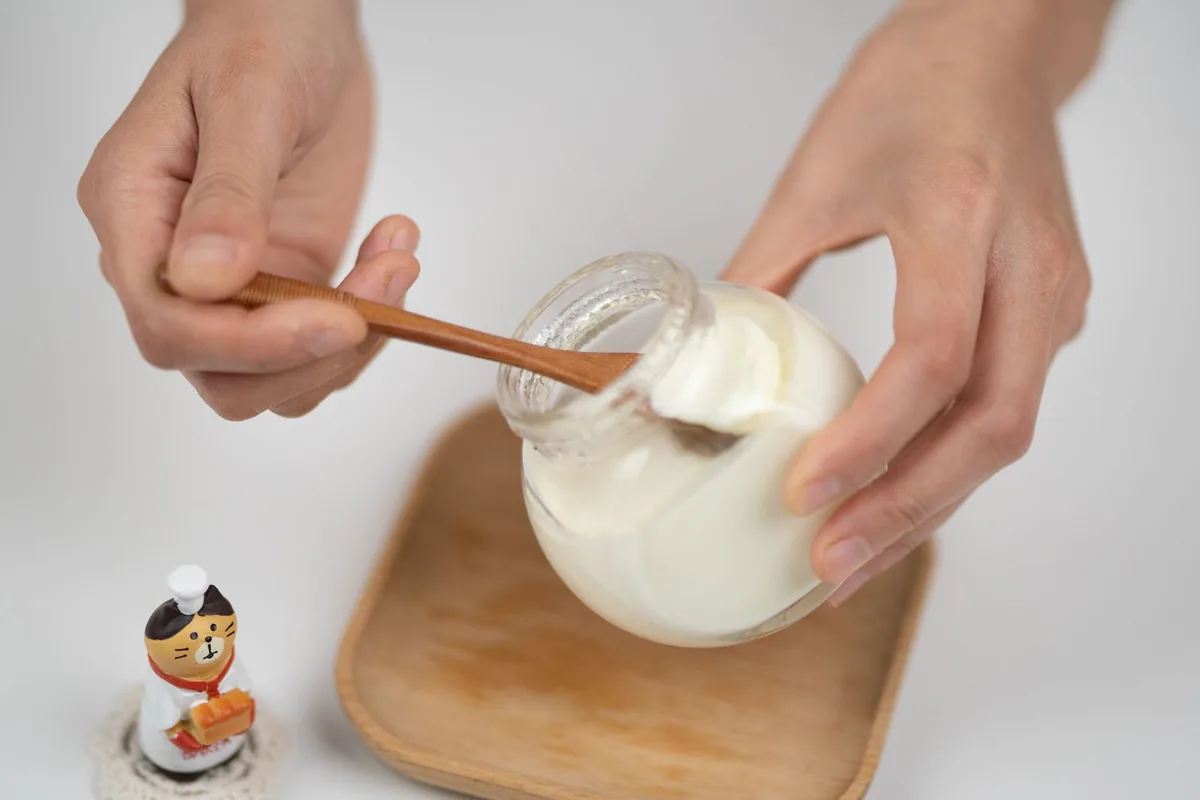
Eight sealed six-ounce jars, forty-eight ounces in total, in a stainless steel shell rather than the usual plastic.
Adjustable time and temperature, at $49.99.
Key Specifications
| Jars | 8 x 6 oz, BPA-free glass with sealing lids |
|---|---|
| Total capacity | 48 oz |
| Control | Adjustable time and temperature |
| Shell | Food-grade stainless steel |
| Weight | 5.55 pounds |
| Model | BZ-721-SNJ-BK |
| Price | $49.99 |
| Rating | 4.5 out of 5 stars |
| Best For | Households where everyone wants a different yogurt |
Why We Recommend It
The argument for separate jars is flavour and portability rather than volume. Fruit, honey or vanilla can go into individual jars before culturing, so one batch produces eight different yogurts. The sealed lids then mean each jar goes straight into a lunchbox without decanting.
Against that, a single large jar is easier to strain for Greek yogurt and leaves you one thing to wash rather than eight.
A stainless shell is genuinely better than plastic here for a reason specific to this appliance: it sits at 110°F for eight to twelve hours at a time, repeatedly, and heat cycling is what makes cheap plastic go brittle.
Pros
- 8 x 6 oz jars, most in this roundup
- Sealed lids so jars go straight into a lunchbox
- Food-grade stainless shell rather than plastic
- Adjustable time and temperature
- Eight separate flavours from one batch
Cons
- Eight jars is eight things to wash
- Awkward to strain for Greek yogurt
- 5.55 pounds
- 15.5 inches long, a wide footprint
Best for: Families who want several flavours and grab-and-go portions.
4. GDOR 8-Jar Digital — Best Value 8-Jar

Thirty-nine ninety-nine buys the eight-jar format with a wider temperature range than the Suteck states and the same 48-hour timer.
Sixty-eight degrees at the bottom is the useful end here.
Key Specifications
| Temperature range | 68–131°F |
|---|---|
| Timer | Up to 48 hours, digital |
| Jars | 8 x 6 oz, BPA-free glass |
| Weight | 5.39 pounds |
| Model | SNJ159 |
| Price | $39.99 |
| Rating | 4.5 out of 5 stars |
| Display | Digital |
| Best For | Eight jars and a wide range at the lowest price |
Why We Recommend It
A 68°F floor opens up ferments that a 78°F machine cannot hold. Sourdough starter is happiest in the low to mid seventies; kefir and some vegetable ferments sit similarly low. A machine that will not go below 78°F simply cannot be used as a proofing box for those.
A 48-hour timer is more than yogurt needs — eight to twelve hours is typical — but long ferments for very tangy yogurt, and for other cultures entirely, run past a day.
It publishes no accuracy figure, which two machines in this roundup do, and that is the specification that separates a controlled ferment from a warm box.
Pros
- 68–131°F, wider range than dearer rivals
- 8 x 6 oz jars for $39.99
- 48-hour digital timer
- Ten dollars less than the same format from Suteck
- Low floor allows sourdough and kefir
Cons
- No stated temperature accuracy
- 5.39 pounds and a 15.7-inch footprint
- Eight jars to wash
- Unfamiliar brand
Best for: The eight-jar format with a wide range, cheaply.
5. ANZKTOS 6-Jar — Most Precise Budget

Thirty-four ninety-five, six jars, and the specification that actually matters: a probe holding temperature to ±2°F.
Only this and the $249.99 TANICA state an accuracy figure at all.
Key Specifications
| Temperature range | 68–122°F |
|---|---|
| Stated accuracy | ±2°F, via probe |
| Jars | 6 |
| Timer | Adjustable |
| Dimensions | 10.47″L x 7.71″W x 5.23″H, smallest here |
| Weight | 3.63 pounds, lightest here |
| Model | SNJ-166C |
| Price | $34.95 |
| Best For | Consistent yogurt without paying for a wide range |
Why We Recommend It
Accuracy is the whole product in a yogurt maker. Culturing is a biological process with a narrow optimum — most yogurt cultures want 108 to 112°F, and drifting five degrees either way changes the texture and the tang or stalls the culture. A machine that holds 110°F to within two degrees is doing the job; one that wanders is a warm box.
At 3.63 pounds and 10.47 inches long it is also the smallest and lightest machine in this roundup by a clear margin.
Its ceiling of 122°F is the lowest here. That is comfortably above every yogurt culture and comfortably below amazake, so it is a yogurt machine rather than a general fermentation box — which at this price is a fair trade.
Pros
- States ±2°F accuracy, rare below $100
- Smallest and lightest machine here at 3.63 lbs
- 68–122°F covers every yogurt culture
- 6 jars at $34.95
- Low floor suits sourdough starter
Cons
- 122°F ceiling is the lowest in this roundup
- Cannot reach amazake or high-temperature ferments
- 6 jars rather than 8
- Unfamiliar brand
Best for: Reliable yogurt, from the cheapest machine that states how reliably.
6. Suteck 2-Quart Glass — Best Value Large

Two quarts is the same bulk capacity as the Euro Cuisine YM260 at seventeen dollars less, split across two jars rather than one.
Sixty-eight to 131°F with a 48-hour timer.
Key Specifications
| Temperature range | 68–131°F |
|---|---|
| Timer | 0–48 hours |
| Capacity | 2 quarts |
| Jars | 2 BPA-free glass |
| Weight | 4.95 pounds |
| Model | BZ-2387-214 |
| Price | $40.54 |
| Rating | 4.5 out of 5 stars |
| Best For | Bulk yogurt without paying Euro Cuisine prices |
Why We Recommend It
Two jars is a sensible middle position between one and eight. You can strain a whole jar for Greek yogurt and leave the other plain, or run two flavours, without the eight-vessel washing-up problem. And the wide range here beats the YM260’s 78°F floor for anything cooler than yogurt.
Glass rather than plastic vessels is the right choice for a container that will hold live culture repeatedly — glass does not scratch, and scratches are where old culture survives a wash.
Like most of this field it publishes no accuracy figure, so the temperature range tells you where it can sit but not how steadily.
Pros
- 2 quarts for $40.54, cheapest bulk capacity here
- 68–131°F, wider than the dearer Euro Cuisine
- Two glass jars allow straining one and not the other
- 48-hour timer
- Glass vessels rather than plastic
Cons
- No stated temperature accuracy
- 4.95 pounds and 15.5 inches long
- Two flavours at most per batch
- Unfamiliar brand
Best for: Bulk yogurt and Greek straining, at the lowest price.
7. Probiotic 48H Bowls — Best Bowls

Bowls rather than jars is an unusual choice and a practical one: a wide, shallow vessel is far easier to spoon from, to strain, and to clean than a tall narrow jar.
Sixty-eight to 127°F with a 48-hour timer and an LED display.
Key Specifications
| Temperature range | 68–127°F |
|---|---|
| Timer | 48 hours |
| Vessels | 2 large glass bowls |
| Display | LED |
| Shut-off | Automatic |
| Weight | 5.02 pounds |
| Model | SNJ-102A |
| Price | $49.99 |
| Best For | Straining, and anything you want to spoon out easily |
Why We Recommend It
Shape matters more for straining than capacity does. To make Greek yogurt you line a sieve and pour the set yogurt in; getting set yogurt out of a narrow jar without breaking it up is fiddly, and out of a wide bowl is trivial.
Automatic shut-off is worth having on a machine that runs for eight to twelve hours, often overnight — culturing stops when it stops, and yogurt left warming afterwards keeps souring.
At $49.99 it is the same money as the eight-jar Suteck, and the choice between them is really bowls versus portions.
Pros
- Two wide glass bowls, easiest format to strain from
- 68–127°F with a 48-hour timer
- Automatic shut-off for overnight runs
- LED display
- Spooning and cleaning far easier than tall jars
Cons
- No stated temperature accuracy
- No real brand behind the listing
- 5.02 pounds
- 127°F ceiling rules out high-temperature ferments
Best for: Anyone who strains for Greek yogurt regularly.
8. ZHU-011 Compact — Cheapest Adjustable

Thirty-four ninety-nine for adjustable time and temperature and a food-grade stainless body, with two ten-ounce glasses.
Twenty ounces total is the smallest capacity in this roundup.
Key Specifications
| Control | Adjustable temperature and timer |
|---|---|
| Vessels | 2 x 10 oz glasses |
| Total capacity | 20 oz, smallest here |
| Body | BPA-free, food-grade stainless steel |
| Weight | 3.67 pounds |
| Model | ZHU-011 |
| Price | $34.99 |
| Rating | 4.5 out of 5 stars |
| Best For | One or two people, at the lowest price with real control |
Why We Recommend It
For one or two people that is closer to right than it looks. Homemade yogurt keeps about a week, and a two-quart batch made by a single person is mostly a race against the fridge. Twenty ounces is two or three servings, made fresh more often.
Adjustable control at this price is the notable part — the alternative at the bottom of this category is a fixed-temperature box with a timer and nothing else.
Stainless rather than plastic on a machine that heat-cycles for hours at a time is the same durability argument that applies to the dearer Suteck.
Pros
- Adjustable time and temperature at $34.99
- Food-grade stainless steel body
- Two glass vessels rather than plastic
- 3.67 pounds, among the lightest here
- Right-sized for one or two people
Cons
- 20 oz total, smallest capacity in this roundup
- No stated temperature range figures
- No stated accuracy
- Unfamiliar brand
Best for: One or two people who would rather make small batches often.
9. Euro Cuisine YM80 — Best Classic

Euro Cuisine’s own copy says it plainly: no confusing buttons here. The YM80 has a timer and a heating element preset to yogurt temperature, and that is all.
Seven glass jars, four pounds, $29.99.
Key Specifications
| Temperature control | None stated — fixed |
|---|---|
| Timer | Built in |
| Jars | 7, glass |
| Dimensions | 9.5″L x 9.5″W x 6″H |
| Weight | 4 pounds |
| Brand | Euro Cuisine |
| Model | YM80 |
| Price | $29.99 |
| Best For | Yogurt and nothing else, with nothing to get wrong |
Why We Recommend It
A fixed-temperature machine is a legitimate design rather than a cheap one, and this is the oldest continuously sold model in the category. Yogurt wants about 110°F; if the machine holds 110°F, an adjustment dial adds nothing except a way to get it wrong.
Glass jars, a genuine brand with spares available, and a footprint of 9.5 inches square.
What you give up is everything except yogurt. No adjustable range means no koji, no tempeh, no sourdough proofing, no long low ferments — and no way to run a slightly cooler, milder batch. If yogurt is the entire ambition, that costs you nothing. If it is a first step, it is a ceiling.
Pros
- The longest-running model in the category
- Seven glass jars at $29.99
- Nothing to set, so nothing to get wrong
- Euro Cuisine spares and lids available
- 9.5-inch square footprint
Cons
- No adjustable temperature at all
- Yogurt only, no other ferments
- No way to run a milder or tangier batch
- No stated wattage or accuracy
Best for: Yogurt, made the same way every time, with no settings.
10. Non-Electric Yogurt Maker — Best Non-Electric

This is not an electrical appliance. You warm water, pour it into an insulated stainless jacket around a one-quart glass jar, and the assembly holds the culture warm for the eight to twelve hours it needs.
A vacuum flask, essentially, sized for yogurt.
Key Specifications
| Power | None — non-electric |
|---|---|
| Method | Insulated jacket holds warm water around the jar |
| Vessel | 1 quart glass jar |
| Included | 42-page yogurt recipe book |
| Dimensions | 4.92″L x 4.92″W x 8.07″H |
| Weight | 2.42 pounds |
| Body | Stainless steel |
| Price | $49.95 |
| Best For | Anyone who does not want another appliance to plug in |
Why We Recommend It
The appeal is that there is nothing to fail and nothing to plug in. No element, no thermostat, no circuit board, no socket occupied overnight. It also travels, which no other machine here does.
Shipping a 42-page recipe book instead of an instruction manual is a sensible admission about where the difficulty actually lies: with a non-electric maker your starting water temperature is the setting, so technique matters more than it does on a machine with a dial.
The trade is drift. An insulated jacket loses heat slowly over twelve hours rather than holding a set point, so a long ferment finishes cooler than it started. For standard yogurt that is fine and traditional. For a precise result, it is not the tool.
Pros
- No power, no element, nothing to fail
- Travels, unlike every other maker here
- 1 quart glass jar in a stainless jacket
- 42-page recipe book included
- 2.42 pounds, lightest thing in this roundup
Cons
- Temperature drifts down over a long ferment
- Your starting water temperature is the only control
- $49.95 without any electronics
- No use for ferments needing a held set point
Best for: Anyone who would rather not add another plugged-in appliance.
What the Temperature Range Lets You Ferment
Yogurt needs about 110°F and every machine here does it. The range either side is what decides whether the machine has a second use.
| Ferment | Roughly wants | Machines here that reach it |
|---|---|---|
| Sourdough starter, kefir | About 75°F | The five with a 68°F floor |
| Koji | About 86°F | All adjustable machines here |
| Tempeh | About 88°F | All adjustable machines here |
| Natto | About 100°F | All adjustable machines here |
| Yogurt and Greek yogurt | 108–112°F | All ten, including the fixed one |
| Amazake | About 140°F | TANICA only, at 158°F |
Read the top row and the bottom row. The floor matters if you want the machine to double as a proofing box — a 68°F minimum will hold a sourdough starter, and a 78°F minimum will not. The ceiling only matters for amazake and similar high-temperature ferments, which is a narrow enough use that paying $249.99 for it is a decision about your hobby rather than about yogurt. Everything in the middle — koji, tempeh, natto — is comfortably within reach of every adjustable machine in this roundup, including the $34.95 one.
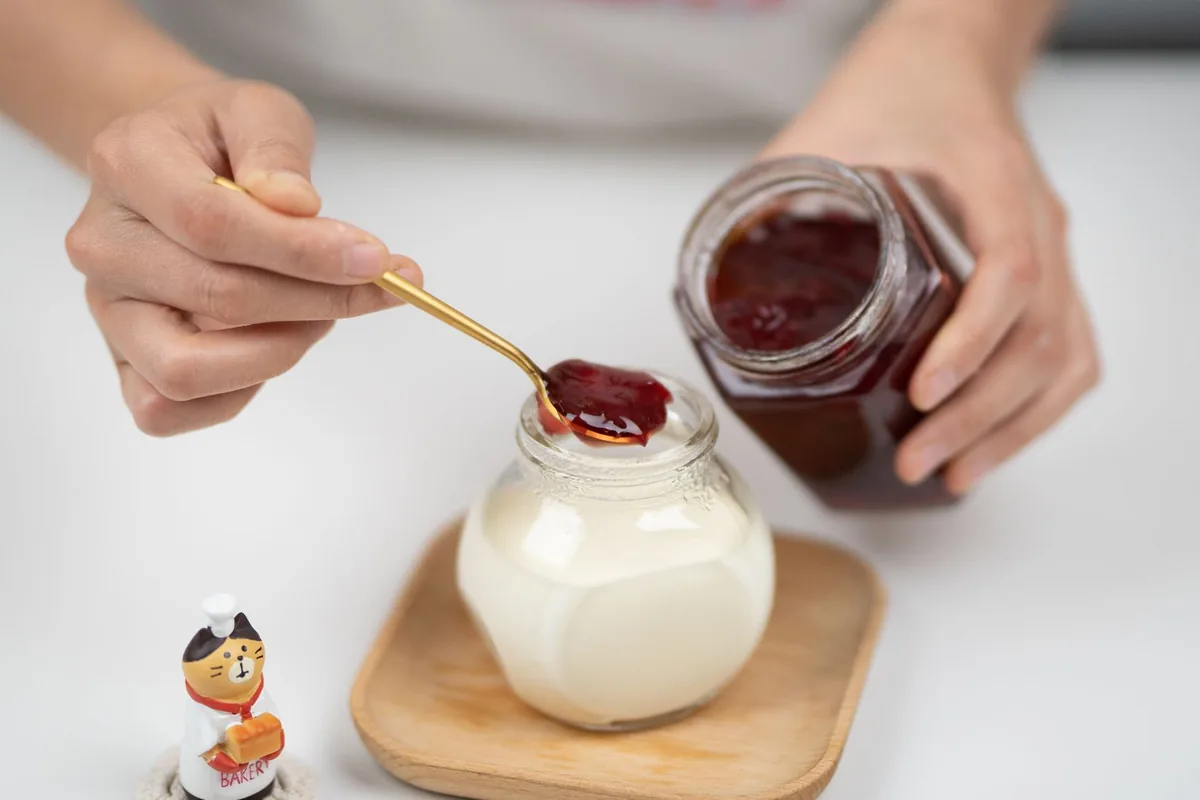
One Jar, Two Jars or Eight?
The vessel format changes what you can do with the yogurt afterwards more than it changes the yogurt.
| One large jar | Two jars or bowls | Eight small jars | |
|---|---|---|---|
| Machines here | Euro Cuisine YM260, non-electric maker | Suteck 2-Quart, Probiotic Bowls, ZHU-011 | Suteck 8-Jar, GDOR |
| Straining for Greek | Easiest | Easy, especially from bowls | Awkward, you decant them all anyway |
| Separate flavours | One | Two | Eight |
| Lunchbox portions | Decant into pots | Decant into pots | Straight from the jar |
| Washing up | One vessel | Two | Eight |
| Capacity here | 1–2 quarts | 20 oz to 2 quarts | 48 oz |
The eight-jar format sells itself on flavour variety, and that is real, but the washing-up row is the one people notice by the third batch. If you make plain yogurt and strain it for Greek, one or two large vessels is straightforwardly better — you cannot conveniently strain from eight small pots, so you end up tipping them all into one sieve and washing nine things instead of two. If you want grab-and-go portions with different fruit in each, the sealed jars earn their keep. Wide bowls, which one machine here uses, are the easiest of all to strain and spoon from.
Best Alternatives
| Alternative | Why Consider It | Better For | Main Trade-Off |
|---|---|---|---|
| An oven with the light on | Free, and many hold roughly the right temperature | Trying yogurt once before buying | Unreliable, and it ties up the oven overnight |
| An Instant Pot with a yogurt setting | You may already own one | Households with a multicooker | One large batch only, and the pot is out of action |
| A vacuum flask | A pound or two, and it genuinely works | Occasional small batches | Temperature drifts down, and no timer |
| A sous vide circulator in a water bath | Precise to a fraction of a degree | Anyone who already owns one | Fiddly for yogurt, and the bath needs a container |
| Shop-bought yogurt | No equipment and no waiting | People who eat yogurt rarely | Dearer per portion, and you choose from what is stocked |
What Each Price Tier Actually Buys
$30 to $35 — Euro Cuisine YM80, ANZKTOS, ZHU-011. The most interesting tier in this roundup. The YM80 gives you seven glass jars and no temperature control at all; the ANZKTOS gives you a stated ±2°F accuracy, which the $50 machines do not; the ZHU-011 gives you adjustable control in a stainless body. Three quite different philosophies for about the same money.
$40 to $50 — GDOR, Suteck 2-Quart, Suteck 8-Jar, Probiotic Bowls, non-electric maker. Capacity and format. Eight jars, two quarts, wide bowls, or no plug at all. None of these states an accuracy figure, so what you are choosing between is vessels rather than control.
$58 — Euro Cuisine YM260. Two quarts in a single glass jar with adjustable 78–132°F control, a thermometer in the box, and the longest-established name in the category behind it.
$250 — TANICA YOGURTiA. A different product. Seventy-seven to 158°F in one-degree steps, which turns it from a yogurt maker into a general fermentation chamber. Only worth it if you ferment beyond yogurt.
The pattern: every machine here rates 4.5 stars, so reviews will not choose for you. Price buys capacity and range, not reliability, and the cheapest machine that publishes an accuracy figure costs $34.95.
How to Choose a Yogurt Maker
Decide Whether You Are Fermenting Anything Other Than Yogurt
If the answer is no, almost any machine here will do and you should buy on vessel format and price — every one of these holds the 108 to 112°F that yogurt needs. If the answer is yes, the range becomes the specification: a 68°F floor lets the machine proof sourdough, and only a 158°F ceiling reaches amazake.
Look for a Published Accuracy Figure
Only two machines in this roundup state one, at ±2°F and ±1°F. Holding a set point is the entire function of the appliance, so a stated tolerance is more meaningful than another ten degrees of range. Where none is published you are relying on reviews, and in this category every machine has the same 4.5-star rating, so reviews do not separate them either.
Match the Vessel Format to Whether You Strain
Greek yogurt is strained yogurt. If you make it, you want one or two large vessels — ideally wide bowls — because tipping eight small jars into a sieve defeats the point of having eight jars. If you want portions with different fruit in each, sealed six-ounce jars go straight into a lunchbox and are worth the extra washing up.
Prefer Glass Vessels to Plastic
These containers hold live culture at body temperature for hours at a time, repeatedly. Plastic scratches, and scratches are exactly where old culture survives a wash and contaminates the next batch. Glass does not scratch, does not stain and does not retain smells. Most machines here use glass; it is worth confirming.
Size the Batch to How Fast You Eat It
Homemade yogurt keeps about a week in the fridge. A two-quart batch made by one person is largely a race against time; twenty ounces made twice a week is fresher and wastes less. Capacity here runs from 20 ounces to two quarts, and the smallest machine is not a compromise for a single household.
A Fixed-Temperature Machine Is Not Automatically Worse
One machine here has no temperature control at all, and its maker says so plainly in the copy. If it holds the right temperature, a dial adds a way to get it wrong rather than a capability. The question is only whether you will ever want a milder batch, a tangier one, or a different culture — because a fixed machine forecloses all three.
Common Yogurt Maker Buying Mistakes
- Buying on temperature range when you only make yogurt. Every machine here holds the 108 to 112°F yogurt needs; the range only matters for other cultures.
- Ignoring the floor if you want a proofing box. A 68°F minimum will hold a sourdough starter; a 78°F minimum will not.
- Choosing eight jars and then making Greek yogurt. You cannot strain conveniently from eight small pots, so you decant them all and wash nine things.
- Assuming a higher price means better control. The cheapest machine here that publishes an accuracy tolerance costs $34.95; several $50 machines publish none.
- Using ratings to choose. All ten machines in this roundup rate 4.5 stars, so the reviews do not separate them at all.
- Buying two quarts for one person. Homemade yogurt keeps about a week, and a large batch mostly becomes a deadline.
- Reusing scratched plastic vessels. Scratches harbour old culture through a wash, which is why glass is the better material here.
Which Yogurt Maker Should You Buy?
Buy the TANICA YOGURTiA if yogurt is one of several things you ferment. Seventy-seven to 158°F in one-degree steps is a fermentation chamber, not a yogurt maker, and nothing else here comes close.
Buy the ANZKTOS 6-Jar if you want reliable yogurt cheaply. It is the only machine under $100 here that states an accuracy figure, at ±2°F, and it is the smallest and lightest.
Buy the GDOR 8-Jar if you want portions and flavours. Eight jars and a 68–131°F range for $39.99.
Buy the Euro Cuisine YM260 if you make Greek yogurt in bulk. One two-quart glass jar is the easiest format to strain, and it ships with a thermometer.
Buy the Probiotic Bowls machine if you strain often. Wide bowls are easier to fill, spoon and clean than any jar.
Buy the Euro Cuisine YM80 if you want yogurt and nothing else. Seven glass jars, a timer, no settings and nothing to get wrong.
Buy the non-electric maker if you do not want another appliance plugged in overnight. No element, nothing to fail, and it travels.
Frequently Asked Questions
What temperature does a yogurt maker need to hold?
About 108 to 112°F for standard yogurt cultures, held steadily for eight to twelve hours. That is the whole job, and every machine in this roundup does it, including the one with no adjustable control. Drifting five degrees either way changes the texture and the tang, and going much cooler can stall the culture altogether, which is why a stated accuracy tolerance is worth more than extra range. Only two of these ten publish one.
Can you use a yogurt maker for other ferments?
Most of them, yes, and it is the main argument for an adjustable machine. Koji sits around 86°F, tempeh around 88°F and natto around 100°F, all comfortably inside the range of every adjustable machine here. Amazake is the exception at roughly 140°F, which only one machine in this roundup reaches. At the other end, a 68°F floor lets the machine double as a proofing box for sourdough starter, which a 78°F floor does not.
Is a yogurt maker with one big jar or lots of small jars better?
It depends entirely on whether you strain. Greek yogurt is ordinary yogurt with the whey drained off, and straining from eight small pots means tipping them all into one sieve anyway — so a single large jar or a wide bowl saves a step and seven items of washing up. Small sealed jars win if you want individual portions with different fruit or honey in each, because they go straight from the machine to a lunchbox.
How long does homemade yogurt take?
Typically eight to twelve hours, and the length is what sets the tang: longer fermentation means more acid and a sharper flavour. Most machines here offer timers up to 48 hours, which is far more than yogurt needs but useful for other cultures and for very tangy results. After culturing, yogurt needs several hours in the fridge to set properly, so the practical routine is to start it in the evening and chill it through the following day.
Do you need a yogurt maker at all?
No — yogurt has been made for millennia without one, and an oven with the light on or a vacuum flask will both work. What a maker buys is consistency: it holds one temperature for twelve hours without your attention, which improvised methods do not. If you make yogurt once a month, improvise. If you make it weekly, the consistency is worth the counter space, and the cheapest machine here that states an accuracy figure costs $34.95.
Should yogurt maker jars be glass or plastic?
Glass, for a specific reason rather than a general one. These vessels hold live bacterial culture at body temperature for hours at a time, over and over. Plastic scratches with use, and scratches are exactly where residue from an old batch survives a wash and can affect the next one. Glass does not scratch, stain or hold smells. Most machines in this roundup use glass jars or bowls, which is worth confirming before buying.
What is the difference between a yogurt maker and a fermentation chamber?
Range and precision, rather than principle — both are boxes that hold a temperature. A yogurt maker typically spans roughly 68 to 130°F, which covers yogurt, koji, tempeh and natto. A fermentation chamber goes higher and adjusts more finely; the machine at the top of this roundup reaches 158°F in one-degree steps, which brings amazake and low-temperature cooking into range. For yogurt alone the distinction is academic, which is why the $34.95 machine makes the same yogurt as the $249.99 one.
Why do all these yogurt makers have the same rating?
It is a genuine oddity of this category: all ten machines verified for this article rate 4.5 out of 5 stars. The likely reason is that the job is simple and most machines do it adequately, so reviews cluster. The practical consequence is that ratings cannot be used to choose here in the way they can with, say, air fryers. Compare the published specifications instead — range, accuracy, vessel format and material — because those genuinely differ while the star ratings do not.
Final Verdict
Seventy-seven to 158°F in one-degree steps — the only machine here that ferments well beyond yogurt.
The only maker under $100 that publishes an accuracy tolerance, at ±2°F, and the smallest machine here.
Eight glass jars and a 68–131°F range for $39.99, ten dollars under the same format elsewhere.
A yogurt maker holds one temperature for half a day. Every machine in this roundup manages the 108 to 112°F that yogurt actually needs, which is why all ten carry the same 4.5-star rating and why the reviews will not choose for you.
So choose on the two things that genuinely differ. The range, which decides whether you have bought a yogurt maker or a fermentation box — a 68°F floor proofs sourdough, and only one machine here reaches the 140°F amazake wants. And the vessel format, which decides what happens after: one large jar or a wide bowl if you strain for Greek, eight small sealed jars if you want portions with different fruit in each.
Then look for an accuracy figure, because holding the set point is the entire product and only two of these ten will tell you how well they do it. The cheapest that does costs $34.95, which is a useful thing to know before spending $250 on range you may never use.