Affiliate Disclosure: As an Amazon Associate, we earn from qualifying purchases. This does not affect the price you pay.
Buck’s listing for the 252 Trunk describes its blunt end as a feature. That is the clearest statement anyone on this page makes about what these knives are.
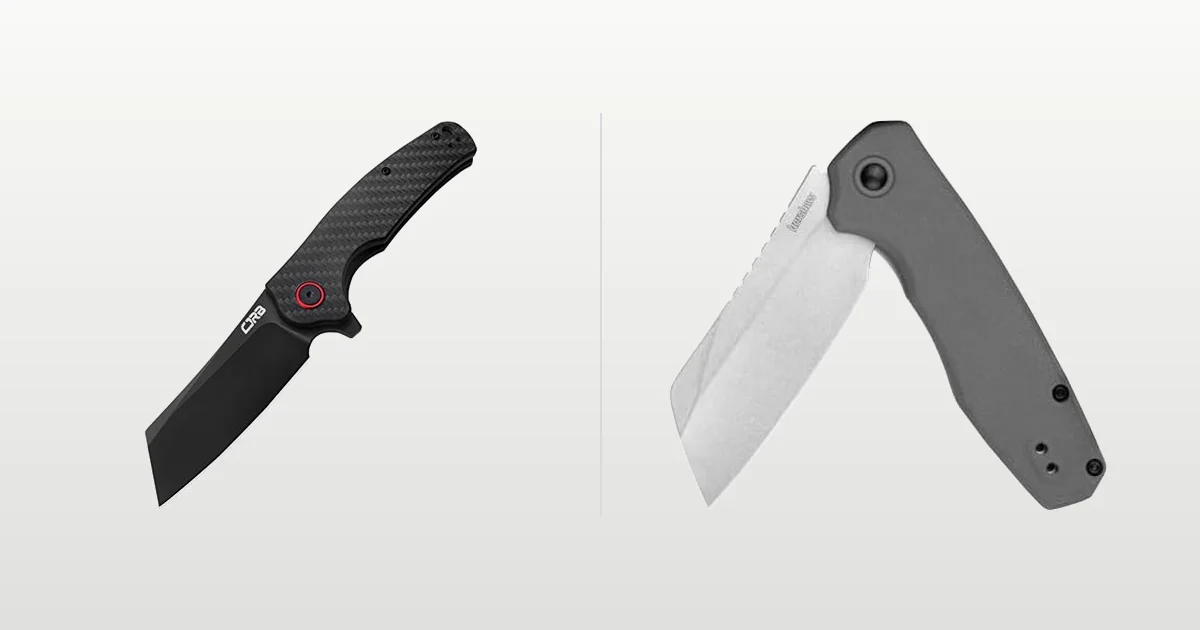
A cleaver-style folder deletes the tip on purpose. Where a drop point tapers to a fine point and loses the last inch of its length to that curve, a cleaver runs straight to a squared-off end — so almost the entire blade is usable cutting edge. Three and three-quarter inches of blade means three and three-quarter inches of edge.
What you give up is everything a tip does: starting a cut in the middle of a surface, piercing, picking out a splinter, scoring a line. What you gain is edge length, knuckle clearance from a tall blade, and nothing fine enough to snap off when it catches.
This is also an unusually good field on steel. Four of the ten below use D2, one uses cryogenically treated D2, one uses Sandvik 14C28N and one uses AR-RPM9 powder steel with a published hardness range. Cleaver folders skew premium in a way most EDC categories do not.
Ten below, $17.84 to $62.84, and blade lengths from 2.4 to 3.75 inches — which is a legal range as much as a practical one.
Our Quick Picks
 Best OverallCJRB Crag J1904
AR-RPM9 powder steel at HRC 59–61 in a 3.43-inch modified sheepsfoot, on a carbon fibre handle with a deep-carry clip.
 Best AssistedKershaw Wharf
A 2.8-inch cleaver point with assisted opening, a finger choil and a reversible deep-carry clip, from a maker with fifty years of record.
 Longest EdgeBuck 252 Trunk
Buck’s first cleaver folder: a 3-3/4 inch blade with a blunt end, G10 scales and the Forever warranty.
At a Glance
Ten Cleaver Folders, Compared on Edge and Steel
Blade length, steel, the lock and handle materials, and the one specification each maker chose to lead on.
| # | Model | Blade | Steel | Detail | Spec | Standout | Main Drawback | Check Price |
|---|---|---|---|---|---|---|---|---|
| 1 |
 CJRB Crag J1904 CJRB Crag J1904 |
3.43 in | AR-RPM9 | HRC 59-61 | Carbon fibre | A published hardness range and carbon fibre for under forty dollars | Modified sheepsfoot rather than a true cleaver | View on Amazon |
| 2 |
 Kershaw Wharf Kershaw Wharf |
2.8 in | 8Cr13MoV | Finger choil | Assisted | A true cleaver point with assisted opening and a finger choil | 8Cr13MoV is entry-grade steel | View on Amazon |
| 3 |
 Buck 252 Trunk Buck 252 Trunk |
3.75 in | 7Cr17MoV | 3.1 oz | G10 | Three and three-quarter inches of straight edge, the most here | 7Cr17MoV is soft for that much edge | View on Amazon |
| 4 |
 Off-Grid CLEAVER V3 Off-Grid CLEAVER V3 |
3 in | 14C28N | 2.9 mm | 4 oz | Every dimension published, which nothing else here manages | Rank #314,148 is very low | View on Amazon |
| 5 |
 Gerber Flatiron Gerber Flatiron |
3.6 in | D2 | 8.5 in | 3.9 oz | D2 steel with every dimension published, from Gerber | 3.9 oz is heavy in a pocket | View on Amazon |
| 6 |
 SOG Stout FLK Cleaver SOG Stout FLK Cleaver |
2.4 in | CRYO D2 | Frame lock | Nail nick | Two point four inches, cryogenically treated D2 and a nail nick | A nail nick means two-handed opening | View on Amazon |
| 7 |
 Buck 263 HiLine Buck 263 HiLine |
3.22 in | D2 | 3.88 oz | Aluminium | D2 on ball bearings with an anodised aluminium frame | Nearly four ounces in the pocket | View on Amazon |
| 8 |
 KANSEPT Korvid V KANSEPT Korvid V |
2.91 in | D2 | Crossbar | G10 | A crossbar lock, which is the safest way to close a knife | Rose gold coating will not suit everyone | View on Amazon |
| 9 |
 Kershaw Static Cleaver Kershaw Static Cleaver |
Cleaver point | 8Cr13MoV | KVT bearings | PVD steel | An all-steel contoured handle with a PVD coating | All-steel means heavier and colder | View on Amazon |
| 10 |
 Smith & Wesson 24/7 Smith & Wesson 24/7 |
3.25 in | 8Cr13MoV | 3.55 oz | 7.75 in | Every dimension published, for under eighteen dollars | A chisel grind is sharpened on one side only | View on Amazon |
Specifications and prices are taken from each manufacturer’s Amazon listing as displayed on 24 August 2026 through a United States connection, and may change. Blade lengths are the manufacturers’ own and range from 2.4 to 3.75 inches; carry limits are set by state and often by city and commonly fall between 2.5 and 4 inches, so only one knife here clears a 2.5-inch threshold. Some jurisdictions also regulate assisted opening and one-handed opening separately from blade length, and one knife here is assisted while another uses a nail nick specifically requiring two hands. D2 is a tool steel rather than a stainless, with roughly 12% chromium against the 16% or more that defines stainless, and it can spot if stored damp. Sales ranks are shown as displayed and can be pooled across a variant family — two Gerber Flatiron listings and two Off-Grid listings here share a rank.
Scroll the table sideways to see every column
How We Chose These Ten
We researched current listings, compared manufacturer specifications and documentation, and examined recurring patterns in customer feedback. We did not carry out hands-on testing, and nothing below is presented as measured performance data.
- A genuine cleaver or near-cleaver profile — kitchen cleavers and unrelated folders were excluded from the results
- Blade length recorded for all ten — because it decides both cutting surface and legality
- Steel named wherever the maker gives it — nine of ten do, which is far better than most knife categories
- A verified live buy box — all ten confirmed purchasable in the United States on 24 August 2026
- No overlap with our published pocket knife guides — every knife here is new to the site
- Lock type recorded — liner, frame and crossbar locks close in meaningfully different ways
- The full price range — $17.84 to $62.84, so the steel gradient is visible
The Ten Knives in Detail
1. CJRB Crag J1904 — Best Overall
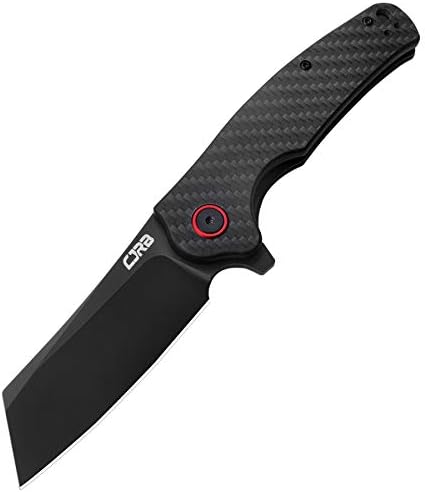
A published hardness range, powder steel and a carbon fibre handle for under forty dollars. Nothing else here manages all three.
Key Specifications
| Blade length | 3.43 inches, modified sheepsfoot |
|---|---|
| Steel | AR-RPM9 — Artisan’s powder metallurgy stainless |
| Hardness | HRC 59–61 — published |
| Handle | Carbon fibre, stable across temperature changes |
| Carry | Stainless deep-carry pocket clip |
| Opening | One-hand with a safety lock |
| Support | CJRB lifetime service, US service centre |
| Rank | #8,226 — best on this page |
| Price | $39.83 |
| Best For | The best steel and handle combination here, at a sane price |
Why We Recommend It
AR-RPM9 is a powder metallurgy steel, which means the alloy was atomised into fine powder and consolidated under pressure rather than cast and rolled. The result is finer, more evenly distributed carbides, so the edge holds longer and can be taken to a keener angle without chipping. Finding that at this price is unusual; finding it with the hardness range printed is rarer still.
Fifty-nine to sixty-one HRC is the useful part of that figure. A steel designation names the alloy but says nothing about how it was hardened, and heat treatment is what determines real-world performance. Almost nobody in this roundup publishes it.
A modified sheepsfoot is a cleaver’s close relative — a straight edge with the spine dropping to meet it, giving a low, blunt-ish tip rather than a squared-off one. It keeps most of the cleaver’s advantages while retaining a usable point for starting a cut.
Carbon fibre is stiff, light and dimensionally stable, and CJRB is right that it does not care about temperature. It also chips if dropped on a hard edge.
Pros
- AR-RPM9 powder steel at a mid-range price
- Publishes HRC 59–61 hardness
- Carbon fibre handle, stable and light
- Rank #8,226 — best on this page
- Deep-carry stainless clip
- Lifetime service with a US service centre
Cons
- Modified sheepsfoot rather than a full cleaver
- Carbon fibre chips if dropped on an edge
- No weight or overall length published
- 3.43 inches exceeds several local carry limits
- Safety lock mechanism not described in detail
- Unfamiliar brand outside knife circles
Best for: Anyone who wants the best materials on this page without paying the most.
2. Kershaw Wharf — Best Assisted

A finger choil on a cleaver blade is more useful than on a pointed one, and Kershaw is the only maker here to mention it.
Key Specifications
| Blade length | 2.8 inches, cleaver point, plain edge |
|---|---|
| Steel | 8Cr13MoV |
| Opening | Assisted, for quick deployment |
| Lock | Liner lock |
| Grip | Finger choil |
| Handle | Glass-filled nylon, contoured |
| Clip | Reversible deep-carry |
| Maker | Kershaw, since 1974 |
| Rank | #53,977 in its category |
| Price | $28.04 |
| Best For | A short cleaver you can deploy one-handed without thinking |
Why We Recommend It
The choil compensates for the missing tip. With no point to guide the cut, a cleaver blade wants to be driven straight down or drawn straight back, and both benefit from choking up close to the edge. A choil — a scalloped cutout just behind the sharpened section — lets your index finger sit forward of the handle, which shortens the effective blade and gives fine control for detail work.
Assisted opening on a 2.8-inch blade is a sensible pairing. Short cleaver blades have little mass to swing open with a flick, so a spring finishing the motion makes deployment reliable rather than fiddly. Note that assisted opening is regulated separately from blade length in some jurisdictions.
Eight Cr13MoV is entry-grade stainless and the one weakness here. It sharpens back in minutes and dulls correspondingly fast, which on a knife with this much straight edge means more time on the stone than a D2 rival would need.
Rank #53,977 is mid-table, and $28.04 for a Kershaw with a lifetime record behind it is fair.
Pros
- True cleaver point at 2.8 inches
- Finger choil for choked-up control
- Assisted opening deploys reliably
- Reversible deep-carry clip
- Kershaw record since 1974
- $28.04
Cons
- 8Cr13MoV is entry-grade and dulls quickly
- Assisted opening is separately regulated in some places
- Glass-filled nylon feels hollow
- No weight or overall length published
- Rank #53,977
- More edge to sharpen with a soft steel
Best for: Anyone who wants a short cleaver that opens itself.
3. Buck 252 Trunk — Longest Edge

Buck describes the blunt end as a feature in its own listing. That is the clearest statement on this page of what a cleaver folder is for.
Key Specifications
| Blade length | 3-3/4 inches — longest here |
|---|---|
| Steel | 7Cr17MoV, rigorously heat treated |
| Tip | Blunt end — stated as offering more utility |
| Weight | 3.1 oz |
| Handle | Durable G10 with a belt clip |
| Significance | Buck’s first cleaver blade pocket knife |
| Warranty | Forever warranty, Buck since 1902 |
| Rank | #61,529 in its category |
| Price | $28.99 |
| Best For | Maximum straight edge, from a maker founded in 1902 |
Why We Recommend It
Three and three-quarter inches of straight edge in a folding knife is a great deal of cutting surface. Because a cleaver profile does not taper to a point, essentially the entire blade length is usable edge — where a drop point of the same length loses the last inch to the curve and the tip. For slicing, board work and drawing cuts, that is the whole argument.
The blunt end also changes how the knife behaves in a pocket and in a hand. There is no fine tip to snap off when it catches, nothing to puncture what is underneath the box you are opening, and nothing to work its way through a pocket lining.
7Cr17MoV is a soft budget stainless, and it is the compromise here. Buck’s heat treatment is genuinely good and the steel is still what it is — with this much edge to maintain, expect more frequent sharpening than the D2 knives lower down this page.
The Forever warranty from a company operating since 1902 is the strongest provenance in this roundup.
Pros
- 3-3/4 inch blade — longest edge here
- Blunt end stated as a deliberate feature
- 3.1 oz with G10 scales and a belt clip
- Buck Forever warranty since 1902
- Nearly the full blade length is usable edge
- $28.99
Cons
- 7Cr17MoV is soft for this much edge
- 3.75 inches exceeds many local carry limits
- Rank #61,529
- No overall length published
- Frequent sharpening with a long soft edge
- No lock type stated on the listing
Best for: Anyone who wants the most straight edge a folder can carry.
4. Off-Grid CLEAVER V3 — Best Specified

Blade, handle, overall, thickness, weight and lock type. It is the only listing on this page that gives you all six.
Key Specifications
| Blade length | 3 inches |
|---|---|
| Handle length | 4 inches |
| Overall length | 7 inches |
| Blade thickness | 2.9 mm |
| Weight | 4 oz |
| Steel | Sandvik 14C28N |
| Bearings | Ceramic ball, drop-shut action |
| Clip | Reversible deep-carry, left or right hand |
| Rank | #314,148 in its category |
| Price | $59.99 |
| Best For | Anyone who wants to know exactly what will arrive |
Why We Recommend It
Handle length is the figure nobody else publishes, and on a folder it matters as much as the blade. Four inches of handle against three of blade is a generous ratio — many folders run handle and blade close to equal, which leaves large hands short. Being able to check that before ordering is genuinely useful.
Sandvik 14C28N is an unusual and sensible choice. It is a Swedish fine-grained stainless developed with Kershaw, with high chromium for corrosion resistance and a very fine carbide structure that takes an exceptionally keen edge. It gives up some edge retention to D2 and is markedly easier to bring back, and unlike D2 it genuinely does not rust.
Ceramic ball bearings with a drop-shut action mean the blade falls closed under its own weight when the lock is released — the standard test for a well-tuned pivot.
Rank #314,148 is very low, which for a well-specified knife from a small maker reflects distribution rather than quality.
Pros
- Publishes blade, handle, overall, thickness and weight
- Sandvik 14C28N resists rust and sharpens easily
- Ceramic bearings with drop-shut action
- Reversible deep-carry clip for either hand
- 4-inch handle is generous against a 3-inch blade
- 2.9 mm blade stock is genuinely stout
Cons
- Rank #314,148 — lowest of the named brands here
- $59.99, second most expensive
- 14C28N gives up edge retention to D2
- Small maker with limited distribution
- 4 oz is heavy for a 3-inch blade
- Flipper tab adds width in the pocket
Best for: Anyone who has been disappointed by a knife that arrived smaller than expected.
5. Gerber Flatiron — Best Big D2

D2 in a 3.6-inch cleaver, with blade, overall length and weight all published. Gerber is consistent about dimensions in a way most of this page is not.
Key Specifications
| Blade length | 3.6 inches, plain edge cleaver |
|---|---|
| Overall length | 8.5 inches |
| Weight | 3.9 oz |
| Steel | D2 — upgraded, for hard use |
| Finish | Stonewash |
| Opening | Thumb hole |
| Warranty | Gerber limited lifetime |
| Rank | #163,570, pooled with a sibling listing |
| Price | $62.84 |
| Best For | Hard use, where D2 edge retention earns its keep |
Why We Recommend It
D2 is a tool steel rather than a stainless, and the distinction matters in a pocket. It has around twelve percent chromium against the sixteen or more that defines stainless, so it holds an edge substantially longer than the 7Cr and 8Cr steels here and it will spot and stain if left damp. A stonewash finish hides that on the flats and does nothing for the edge itself.
A thumb hole rather than a stud or flipper suits a cleaver profile well, because the tall blade has plenty of material to put a hole through without weakening it, and there is no protrusion to catch in a pocket.
Three point nine ounces is heavy for an EDC folder, and 8.5 inches open is a large knife. This is the biggest cleaver folder on this page and it feels like it.
Rank #163,570 is pooled with a sibling Flatiron listing, so it describes the pair.
Pros
- D2 holds an edge far longer than 7Cr or 8Cr
- Publishes blade, overall length and weight
- Thumb hole with nothing to snag
- Stonewash finish hides scratches
- Gerber limited lifetime warranty
- 3.6 inches of usable straight edge
Cons
- D2 is not stainless and will spot if left damp
- 3.9 oz is heavy for pocket carry
- 8.5 inches open is a large knife
- $62.84 — most expensive here
- Rank pooled with a sibling listing
- 3.6 inches exceeds many local carry limits
Best for: Hard use, where you want D2 and do not mind the weight.
6. SOG Stout FLK Cleaver — Smallest

Two point four inches. It is the only cleaver on this page that clears a 2.5-inch carry limit.
Key Specifications
| Blade length | 2.4 inches — shortest here |
|---|---|
| Steel | CRYO D2, cryogenically heat treated to SOG’s specification |
| Lock | Frame lock |
| Handle | G10 and steel |
| Opening | Nail nick — two-handed |
| Clip | Reversible for ambidextrous carry |
| Finish | Black coated stainless components |
| Rank | #370,177 in its category |
| Price | $56.06 |
| Best For | The most carry-legal cleaver here, with premium steel |
Why We Recommend It
That is a real advantage and worth stating plainly. Several jurisdictions set blade limits at 2.5 inches, and every other cleaver folder in this roundup is over it — the next shortest is 2.8. If you live somewhere strict and want this blade profile, the field narrows to one knife.
Cryogenic treatment is a real step in heat treating, not a coating or a marketing term. After hardening, some austenite remains untransformed in the steel; chilling the blade far below freezing converts more of it to martensite, giving a harder, more dimensionally stable blade with fewer soft spots. On D2 it is a meaningful upgrade.
A nail nick is a deliberate throwback, and SOG calls it old-school in its own listing. It means two hands to open, which some people prefer and which sidesteps the one-handed-opening rules that exist in a few places.
Rank #370,177 is the lowest here, and $56.06 for a 2.4-inch blade is a lot — you are paying for the steel and the compliance.
Pros
- 2.4 inches — only cleaver here under 2.5
- Cryogenically treated D2
- Frame lock with a G10 and steel handle
- Reversible clip for either hand
- Nail nick sidesteps one-handed-opening rules
- Black coated for corrosion resistance
Cons
- Nail nick requires two hands to open
- Rank #370,177 — lowest on this page
- $56.06 for 2.4 inches of blade
- D2 will spot if left damp
- Frame lock puts a finger in the blade path to close
- Smallest cutting surface here
Best for: Strict jurisdictions, where this is the only cleaver profile that fits.
7. Buck 263 HiLine — Best Bearings

Aluminium with a G10 inlay is an unusual combination, and it is why this knife looks like nothing else here.
Key Specifications
| Blade length | 3.22 inches, D2 |
|---|---|
| Bearings | Ball bearing pivot for easy opening |
| Handle | Anodised aluminium with G10 inlay |
| Fasteners | Titanium coated |
| Weight | 3.88 oz |
| Heat treat | Rigorous process with performance testing |
| Warranty | Buck Forever warranty |
| Rank | #220,432 in its category |
| Price | $48.99 |
| Best For | D2 and a smooth pivot from a heritage maker |
Why We Recommend It
Anodised aluminium is a genuinely different handle material from the G10 and nylon that dominate this page. It is rigid, dimensionally stable, and anodising grows a hard oxide layer that takes colour without a coating that can chip off. It is also cold in the hand in winter and more slippery than textured G10, which is why Buck has inlaid a panel of G10 where your fingers sit.
Ball bearings in the pivot are what allow a heavy cleaver blade to swing open smoothly. A tall blade has more mass than a slim one, and a bushing pivot makes that feel sluggish where bearings make it feel effortless.
D2 with Buck’s heat treatment is a strong pairing — Buck’s process is one of the better documented in the industry and the company has been refining it since 1902.
Three point eight eight ounces is heavy, and rank #220,432 is low, which for a well-made knife at $48.99 mostly reflects how niche the cleaver profile remains.
Pros
- D2 steel with Buck’s heat treatment
- Ball bearing pivot suits a heavy blade
- Anodised aluminium with a G10 grip inlay
- Titanium coated fasteners
- Buck Forever warranty since 1902
- 3.22 inches of straight edge
Cons
- 3.88 oz is heavy for pocket carry
- Aluminium is cold and slippery in winter
- Rank #220,432
- D2 is not stainless and can spot
- $48.99
- No overall length published
Best for: Anyone who wants D2 and bearings from a company with a real history.
8. KANSEPT Korvid V — Best Lock

A crossbar lock is the one mechanism here that never asks you to put a finger in the path of the closing blade.
Key Specifications
| Blade length | 2.91 inches, wide cleaver |
|---|---|
| Steel | D2 with rose gold coating |
| Lock | Crossbar — smooth one-hand deployment and lock-up |
| Why crossbar | Closes from the spine, ambidextrous, no finger in the blade path |
| Handle | Black G10, textured, non-slip wet or cold |
| Carry | Pocket clip and lanyard hole |
| Rank | #148,845 in its category |
| Price | $58.40 |
| Best For | Anyone who wants the safest lock type on this page |
Why We Recommend It
Compare the three lock types on this page. A liner lock is closed by pushing a leaf sideways, which means a finger inside the blade channel. A frame lock is the same idea with the handle slab itself. A crossbar is a spring-loaded bar running across the handle, retracted by pulling it back from either side with thumb and forefinger — entirely outside the blade path, and identical for left and right-handed users. On a knife with this much edge, that is worth having.
The wide cleaver blade is the point of the design. A tall blade profile gives more knuckle clearance when cutting on a board, which is the same reason kitchen cleavers are tall.
D2 with a rose gold coating is a styling decision that will divide people. The coating is functional on the flats — it slows the spotting D2 is prone to — and it does nothing at the edge.
At $58.40 and rank #148,845 this is a boutique product, and the lock is the reason to choose it.
Pros
- Crossbar lock keeps fingers out of the blade path
- Ambidextrous by design, not by a reversible clip
- D2 with corrosion-slowing coating
- Tall blade gives knuckle clearance
- Textured G10 grips wet or cold
- Pocket clip and lanyard hole
Cons
- Rose gold coating is divisive
- $58.40 from an unfamiliar brand
- Rank #148,845
- D2 will still spot at the edge
- No weight or overall length published
- Crossbar mechanisms have more parts to foul
Best for: Anyone who wants the safest lock on the page and does not mind the finish.
9. Kershaw Static Cleaver — Best All-Steel

An all-steel handle is the opposite decision from everything else on this page, and it is a legitimate one.
Key Specifications
| Blade | Cleaver point, plain edge, 8Cr13MoV |
|---|---|
| Handle | Contoured stainless steel, machine textured |
| Coating | Grey PVD |
| Bearings | KVT ball-bearing system |
| Opening | Manual |
| Maker | Kershaw, since 1974 |
| Rank | #178,167 in its category |
| Price | $41.96 |
| Best For | Anyone who wants a solid metal knife rather than a composite one |
Why We Recommend It
Steel handles do things composites cannot. They are dimensionally rigid under any load, they cannot delaminate or chip the way G10 and carbon fibre can, and machine texturing plus a PVD coating gives grip without a separate scale to come loose. The cost is weight and cold — a steel-handled knife in January is genuinely unpleasant for the first few seconds.
PVD is physical vapour deposition, a coating applied atom by atom in a vacuum chamber. It is far harder and thinner than paint or anodising and it wears rather than chips, which is why it is used on watch cases and tools that get handled constantly.
KVT is Kershaw’s ball-bearing pivot system, which on a manual knife is what makes a heavy cleaver blade open with a thumb rather than a wrist flick.
8Cr13MoV again is the weak point at $41.96, when three knives here at similar money use D2. You are paying for the handle and the bearings.
Pros
- All-steel handle cannot chip or delaminate
- PVD coating wears rather than chips
- KVT ball bearings for smooth manual opening
- Machine texturing for grip
- Kershaw record since 1974
- Contoured rather than flat slab handle
Cons
- 8Cr13MoV at a D2 price point
- Steel handle is heavy and cold
- Rank #178,167
- No blade length published
- No weight published
- Manual opening on a heavy blade takes a deliberate push
Best for: Anyone who wants metal in hand rather than composite.
10. Smith & Wesson 24/7 — Cheapest

Seventeen eighty-four, G10 handles, and blade, overall length and weight all published. Smith & Wesson are consistent about this.
Key Specifications
| Blade length | 3.25 inches, chisel grind |
|---|---|
| Overall length | 7.75 inches |
| Weight | 3.55 oz |
| Steel | 8Cr13MoV |
| Handles | Black G-10 |
| Grind | Chisel — bevelled on one side only |
| Carry | Reversible tip-up pocket clip and finger flipper |
| Lock | Liner lock |
| Rank | #77,049 in its category |
| Price | $17.84 |
| Best For | The cheapest way into the profile, with all the numbers stated |
Why We Recommend It
A chisel grind is worth understanding before you buy. Most knives are bevelled on both sides to a symmetrical edge. A chisel grind is bevelled on one side only, leaving the other perfectly flat — the geometry of a wood chisel or a Japanese usuba. It is easier to sharpen, because there is only one bevel to maintain, and it cuts asymmetrically: the blade steers toward the flat side, which takes some getting used to.
For board work that steering is an advantage, since the flat face rides against the material and gives a very clean cut. For free cutting it is a quirk you have to allow for.
G10 handles at $17.84 is genuinely good value — several knives here at three times the price use glass-filled nylon instead.
Rank #77,049 and a lifetime warranty. The steel is entry-grade, but everything you need to know is on the page, which is more than most of this roundup manages.
Pros
- $17.84 — cheapest on this page
- Publishes blade, overall length and weight
- G10 handles at a budget price
- Chisel grind is easy to sharpen
- Reversible tip-up clip and finger flipper
- Limited lifetime warranty
Cons
- Chisel grind steers toward the flat side
- 8Cr13MoV is entry-grade and dulls quickly
- Takes practice to cut straight with
- Rank #77,049
- 3.55 oz is mid-heavy
- 3.25 inches exceeds several local limits
Best for: The cheapest honest entry to the profile, if the chisel grind suits you.
Longest Edge Against Best Steel
Two ways to spend around thirty dollars on a cleaver folder.
| Buck 252 Trunk | CJRB Crag | |
|---|---|---|
| Blade length | 3.75 in | 3.43 in |
| Steel | 7Cr17MoV | AR-RPM9 powder |
| Hardness published | No | HRC 59–61 |
| Handle | G10 | Carbon fibre |
| Weight | 3.1 oz | Not stated |
| Warranty | Forever, since 1902 | Lifetime service |
| Rank | #61,529 | #8,226 |
| Price | $28.99 | $39.83 |
The Buck gives you a third of an inch more edge, a published weight and a warranty from a company founded in 1902, for eleven dollars less. The CJRB gives you a powder metallurgy steel with its hardness printed, a carbon fibre handle and a rank seven times better. If you sharpen willingly and want maximum cutting surface, take the Buck. If you would rather sharpen less often, the AR-RPM9 will hold its edge substantially longer than 7Cr17MoV ever will.
Every Blade Length, and What It Means for Carry
Shortest first. Only one clears 2.5 inches.
| Knife | Blade | Steel | Lock | Rank | Price |
|---|---|---|---|---|---|
| SOG Stout FLK | 2.4 in | CRYO D2 | Frame | #370,177 | $56.06 |
| Kershaw Wharf | 2.8 in | 8Cr13MoV | Liner, assisted | #53,977 | $28.04 |
| KANSEPT Korvid V | 2.91 in | D2 | Crossbar | #148,845 | $58.40 |
| Off-Grid CLEAVER V3 | 3 in | 14C28N | Liner | #314,148 | $59.99 |
| Buck 263 HiLine | 3.22 in | D2 | Not stated | #220,432 | $48.99 |
| S&W 24/7 | 3.25 in | 8Cr13MoV | Liner | #77,049 | $17.84 |
| CJRB Crag | 3.43 in | AR-RPM9 | Safety lock | #8,226 | $39.83 |
| Gerber Flatiron | 3.6 in | D2 | Not stated | #163,570 | $62.84 |
| Buck 252 Trunk | 3.75 in | 7Cr17MoV | Not stated | #61,529 | $28.99 |
| Kershaw Static | Not stated | 8Cr13MoV | Liner | #178,167 | $41.96 |
Nine of these ten are over 2.5 inches, which is a common city limit, and four are over 3.2. If you live somewhere strict, the SOG at 2.4 inches is effectively the only cleaver folder on this page you can carry — and it costs $56.06 for the shortest blade here, which is the price of compliance. Note too that one knife is assisted-opening and another uses a nail nick requiring two hands, and some jurisdictions treat those differently from each other.
Best Alternatives
| Alternative | Why Consider It | Better For | Main Trade-Off |
|---|---|---|---|
| A sheepsfoot or wharncliffe folder | Straight edge with a low usable point | Anyone who wants edge length and still needs a tip | Less blade height, so less knuckle clearance |
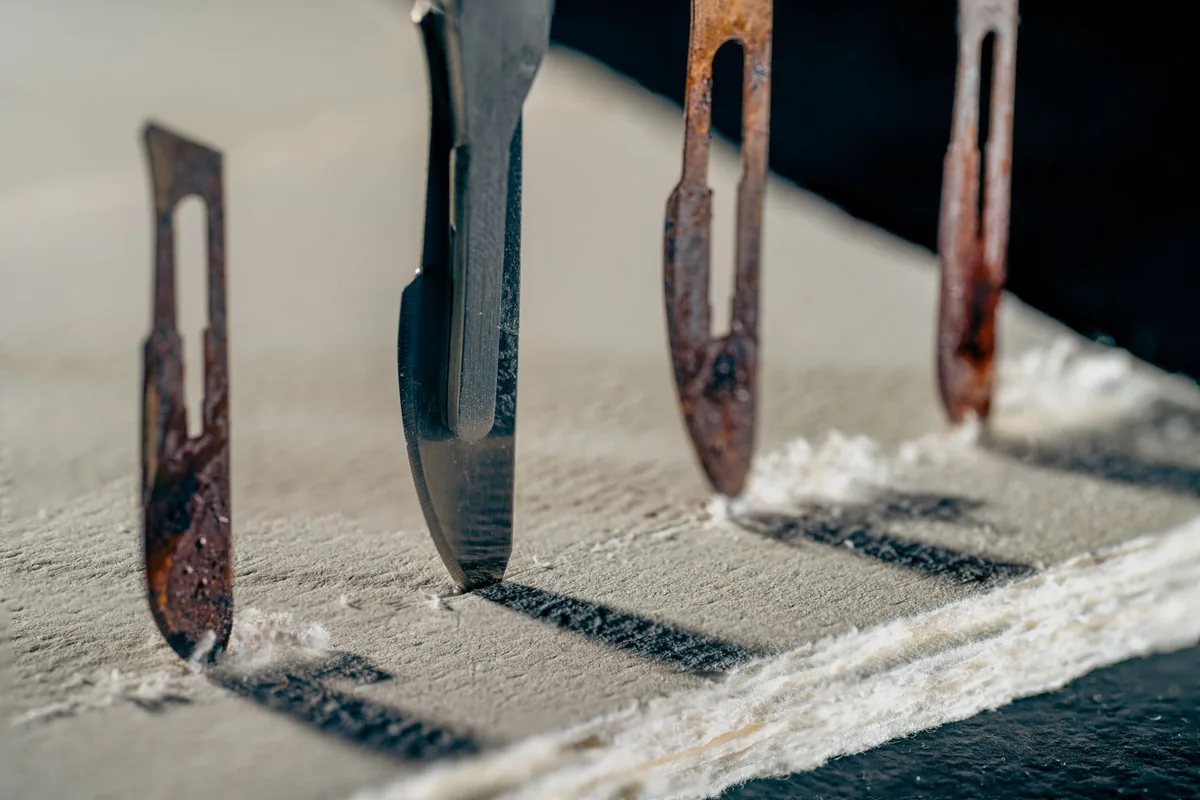
| A drop point folder | The most versatile general profile there is | Everything a cleaver cannot do | Loses the last inch of blade to the taper |
| A fixed-blade cleaver | No pivot, no lock, far stronger | Camp cooking and butchery | Cannot be pocket carried |
| A box cutter | Replaceable razor edge, no sharpening ever | Packaging and cardboard only | No point, no lock, no versatility at all |
What the Money Actually Buys
$17.84 to $28.99 — S&W 24/7, Kershaw Wharf, Buck 252 Trunk. The value tier, and it holds both the longest blade on the page and the cheapest. All three use entry-grade 7Cr or 8Cr steel, which sharpens easily and dulls correspondingly fast — a real consideration when there is this much straight edge to maintain.
$39.83 to $48.99 — CJRB Crag, Kershaw Static, Buck 263 HiLine. Where the steel improves. The CJRB brings powder metallurgy with a published hardness at $39.83, which is the best materials-per-dollar figure here, and the Buck brings D2 on ball bearings from a maker operating since 1902.
$56.06 to $62.84 — SOG Stout FLK, KANSEPT Korvid V, Off-Grid CLEAVER V3, Gerber Flatiron. Premium steel and specific engineering: cryo D2 in the only sub-2.5-inch blade, a crossbar lock, the only complete dimensional specification on the page, and the largest D2 blade here.
What to Check Before You Buy
Understand What You Are Giving Up
A cleaver folder has no point, and that is the design rather than a shortcoming. What a tip does is start a cut in the middle of a surface, pierce, pick, score and dig — opening a taped box from the top, splitting a seam, getting under a staple. A cleaver cannot do any of that. What it gives back is that nearly the whole blade length is sharpened edge, and that there is nothing fine enough to snap when it catches on something. Be honest about which of those you use more often.
Blade Height Is the Underrated Advantage
Cleaver profiles are tall as well as straight, and height is what gives you knuckle clearance when cutting down onto a board. It is exactly why kitchen cleavers are shaped the way they are. If you use a pocket knife for food — cutting cheese and apples at a desk, prepping at a campsite — a tall blade means your fingers clear the surface, where a slim drop point has you rapping your knuckles. None of these listings publishes a blade height figure, but the profile in the product photograph tells you.
Check the Blade Length Against Local Law
This category runs long. Blade lengths here span 2.4 to 3.75 inches, and carry limits are set by state and frequently tightened by city, commonly landing between 2.5 and 4 inches. Nine of the ten knives on this page exceed 2.5 inches. Some jurisdictions additionally regulate assisted opening or one-handed opening separately, which matters here because one knife is spring-assisted and another deliberately uses a nail nick requiring two hands. Look up the rules where you live before choosing on steel.
Know Whether You Are Buying Stainless
Four knives here use D2 and one uses cryogenically treated D2, and D2 is a tool steel rather than a stainless. It carries around twelve percent chromium against the sixteen or more that defines stainless, so it holds an edge substantially longer than the 7Cr and 8Cr grades and it will spot and stain if it is put away damp. Coatings help on the flats and do nothing at the sharpened edge, which is bare metal by definition. If the knife will live in a pocket in wet weather, Sandvik 14C28N or a proper stainless is the safer choice.
Compare Lock Types, Not Just Lock Presence
Three mechanisms appear on this page and they close very differently. A liner lock is released by pushing a leaf of the handle liner sideways, which puts a finger inside the blade channel. A frame lock does the same with the handle slab itself. A crossbar lock is a spring-loaded bar pulled back from either side with thumb and forefinger, entirely outside the closing path and identical for left and right-handed users. On a knife with this much exposed edge and no tip to orient by, the crossbar is meaningfully the safest of the three.
A Chisel Grind Steers
One knife here is chisel ground, meaning it is bevelled on one side only and left perfectly flat on the other, like a wood chisel or a Japanese usuba. Two consequences follow. It is easier to sharpen, because there is only one bevel to maintain and you can lay the flat face straight onto the stone. And it cuts asymmetrically — the blade steers toward the flat side, so cutting a straight line freehand takes practice. Against a board the flat face rides the material and gives a very clean cut, which is why the geometry exists.
More Edge Means More Sharpening
Worth thinking about before choosing the longest blade. Because a cleaver profile is sharpened along essentially its full length, a 3.75-inch cleaver has considerably more edge to maintain than a 3.75-inch drop point, where the last inch is taper and tip. Pair that with a soft entry-grade steel and you will be at the stone noticeably more often. The knives here that combine a long blade with a budget steel are genuine value; they simply ask for more of your time than a shorter blade in D2 would.

Common Mistakes
- Buying one as a general-purpose knife. There is no tip, so piercing and scoring are out.
- Ignoring blade length limits. Nine of these ten exceed the common 2.5-inch city threshold.
- Assuming D2 is stainless. It is a tool steel and will spot if put away damp.
- Pairing the longest blade with the softest steel. More edge plus 7Cr means far more sharpening.
- Overlooking the lock type. Liner and frame locks put a finger in the closing path; a crossbar does not.
- Expecting a chisel grind to cut straight. It steers toward the flat side until you learn it.
- Forgetting assisted opening is regulated separately. One knife here is assisted, another needs two hands.
Who Should Buy Which
Buy the CJRB Crag at $39.83 for the best materials on the page. AR-RPM9 powder steel with HRC 59–61 published, a carbon fibre handle and rank #8,226 — seven times better than anything else here.
Buy the Kershaw Wharf at $28.04 for a short cleaver that opens itself. Assisted deployment, a finger choil for choked-up control, and a reversible deep-carry clip.
Buy the Buck 252 Trunk at $28.99 for the most edge. Three and three-quarter inches of straight cutting surface, G10 scales and a warranty from 1902 — accept that 7Cr17MoV will need the stone.
Buy the SOG Stout FLK at $56.06 if you live somewhere strict. At 2.4 inches it is the only cleaver here under a 2.5-inch limit, and it carries cryogenically treated D2.
Buy the Off-Grid CLEAVER V3 at $59.99 if you want to know exactly what arrives. Blade, handle, overall, thickness, weight and lock type all published, which nothing else on this page does.
Frequently Asked Questions
What is a cleaver style pocket knife actually for?
Cutting things on or against a surface, rather than into them. Because the blade runs straight to a squared-off end with no taper, almost the entire length is sharpened edge — a 3.75-inch cleaver gives you 3.75 inches of cutting surface where a drop point of the same length loses the last inch to the curve and the point. That makes it excellent for draw cuts, slicing, breaking down cardboard, and food preparation, where the tall blade also gives useful knuckle clearance above the board. Buck’s own listing for one of these knives describes the blunt end as a feature, which is the most honest summary available: it is a deliberate trade of piercing ability for edge length and durability.
What can’t a cleaver blade do?
Anything that needs a point. You cannot start a cut in the middle of a flat surface, which means opening a taped box from the top rather than the seam is awkward. You cannot pierce, pick out a splinter, score a line, get under a staple or a label, or drill into anything. For some people none of that matters, because their knife’s whole life is opening packaging along the seam and cutting cord. For others the tip is the most-used part of the knife and a cleaver would be a daily irritation. The honest test is to think back over the last month and count how often you used the point of your current knife.
Why do so many cleaver folders use D2?
Partly design intent and partly market positioning. D2 is a high-carbon tool steel that holds an edge substantially longer than the 7Cr and 8Cr stainless grades common at the budget end, which suits a profile where you are maintaining a long straight edge rather than a short one. It is also a signal: cleaver folders are a niche, enthusiast-driven shape, and manufacturers pitch them at buyers who already know what D2 is. The caveat matters though — D2 has around twelve percent chromium against the sixteen or more that defines stainless, so it is not rust-proof and will develop spots if it is stored damp or carried in wet weather without wiping down.
Are cleaver pocket knives legal to carry?
The blade shape itself is rarely regulated; blade length usually is, and this category runs long. The knives in this roundup span 2.4 to 3.75 inches, and carry limits are set at state level and frequently tightened by city ordinance, commonly falling between 2.5 and 4 inches. Nine of the ten knives here exceed 2.5 inches. Several jurisdictions also treat assisted opening and one-handed opening as separate matters from length, which is directly relevant here because one knife is spring-assisted and another uses a traditional nail nick that requires two hands specifically to sidestep those rules. Check your own state and city before choosing on any other criterion.
What is a chisel grind and should I want one?
It means the blade is bevelled on one side only, leaving the other side perfectly flat — the same geometry as a woodworking chisel or a Japanese usuba. One knife in this roundup uses it. The advantages are that sharpening is simpler, since there is only one bevel to maintain and the flat side lies straight on the stone, and that against a board the flat face rides the material and produces a very clean cut. The drawback is that it cuts asymmetrically: the blade steers toward the flat side, so cutting a straight line freehand takes practice and feels wrong at first. It is a genuine preference rather than a defect, and most people should try one before committing.
Does a cleaver need sharpening more often?
In practice yes, though not because the steel is worse. A cleaver profile is sharpened along essentially its whole length, so there is simply more edge to maintain than on a drop point of the same nominal blade length where the final inch is taper and tip. That effect compounds with steel choice: the longest blade in this roundup at 3.75 inches uses 7Cr17MoV, a soft entry-grade stainless, which means more edge and a steel that gives it up faster. Pairing a long cleaver with D2 or a powder steel reduces the frequency considerably, at the cost of a harder sharpening job when it does finally come round.
Final Verdict
AR-RPM9 powder steel with HRC 59-61 published, a carbon fibre handle and rank #8,226. $39.83.
A true cleaver point at 2.8 inches with assisted opening and a finger choil, from Kershaw. $28.04.
Three and three-quarter inches of straight cutting surface, G10 scales and the Buck Forever warranty. $28.99.
The missing tip is the product. Buck says so on its own listing, calling the blunt end a feature, and it is the right way to read the whole category. You are trading the ability to pierce for a blade that is sharpened end to end and has nothing fine enough to break.
Whether that trade suits you is a question about your own month. If you mostly cut along seams, through cord and down onto boards, a cleaver gives you more usable edge than any other profile at the same blade length. If you regularly start cuts in the middle of things, it will annoy you every day.
The steel here is unusually good — four D2, one cryo D2, one Sandvik, one powder metallurgy with its hardness printed — so this is a category where paying forty dollars genuinely buys you a better blade than paying eighteen.
And check the length first. Nine of these ten are over two and a half inches, and only one of them is not.